 flip
flipFrumenty with Honey and Saffron
Frumenty with Honey and Saffron
Why this dish? On feast days — Christmas, harvest time — even the poor villages of Essex allowed themselves a wheat porridge sweetened with honey. Frumenty, the quintessential peasant sweet, marked for Agnes the rare days of rejoicing.
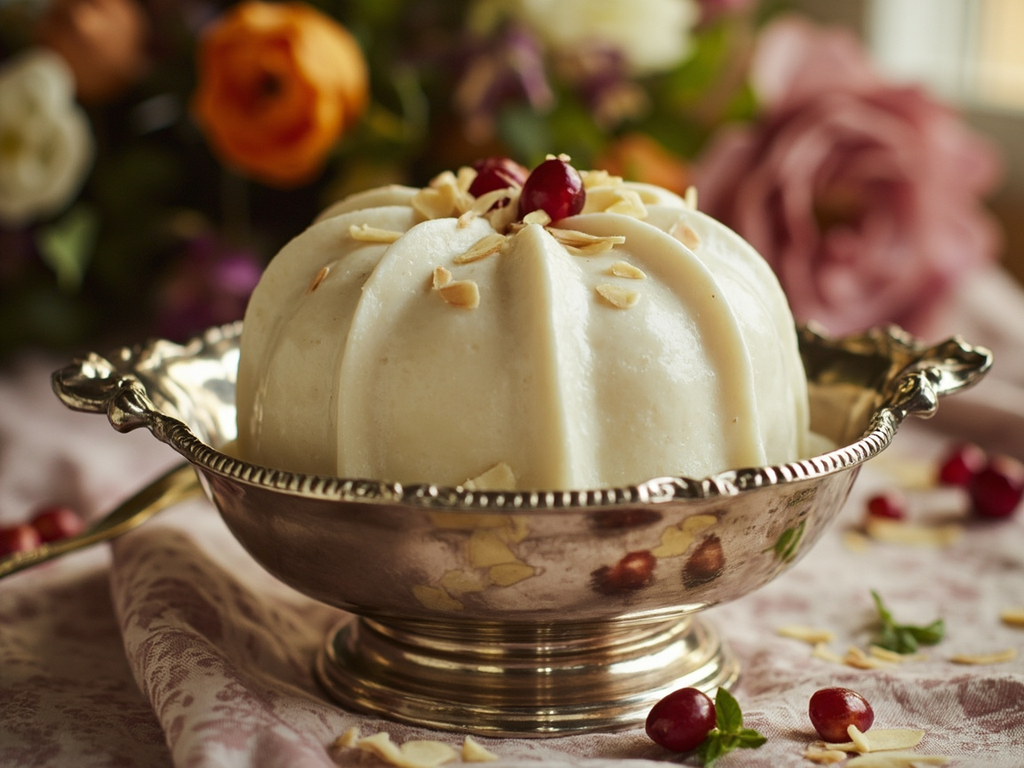
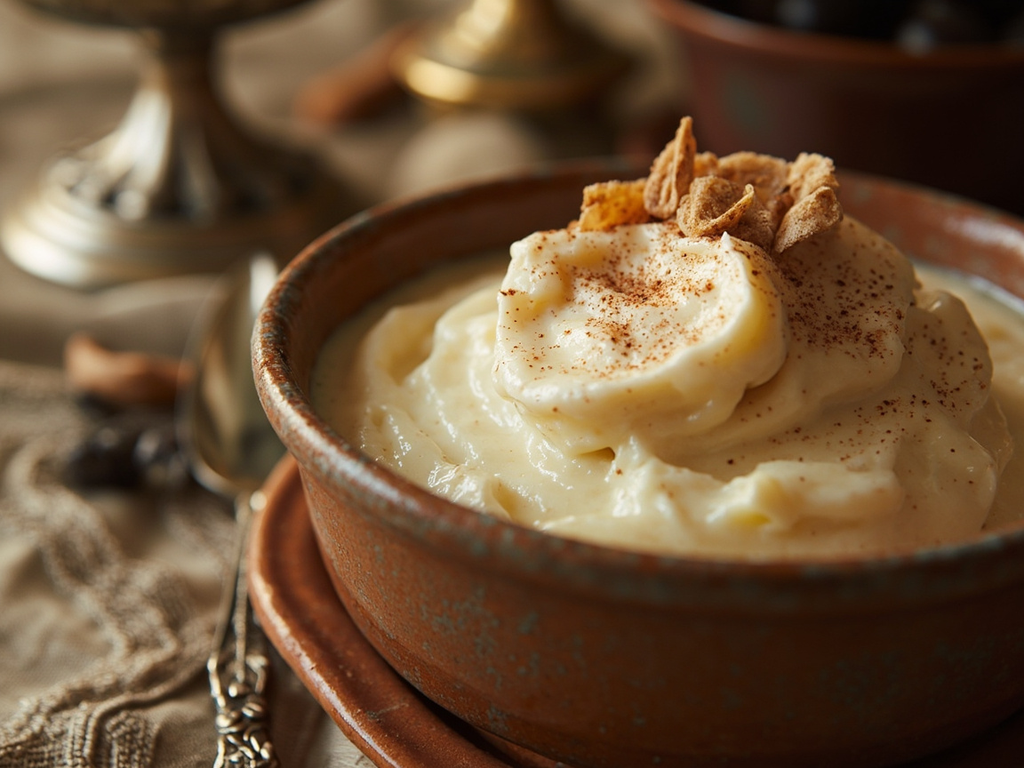
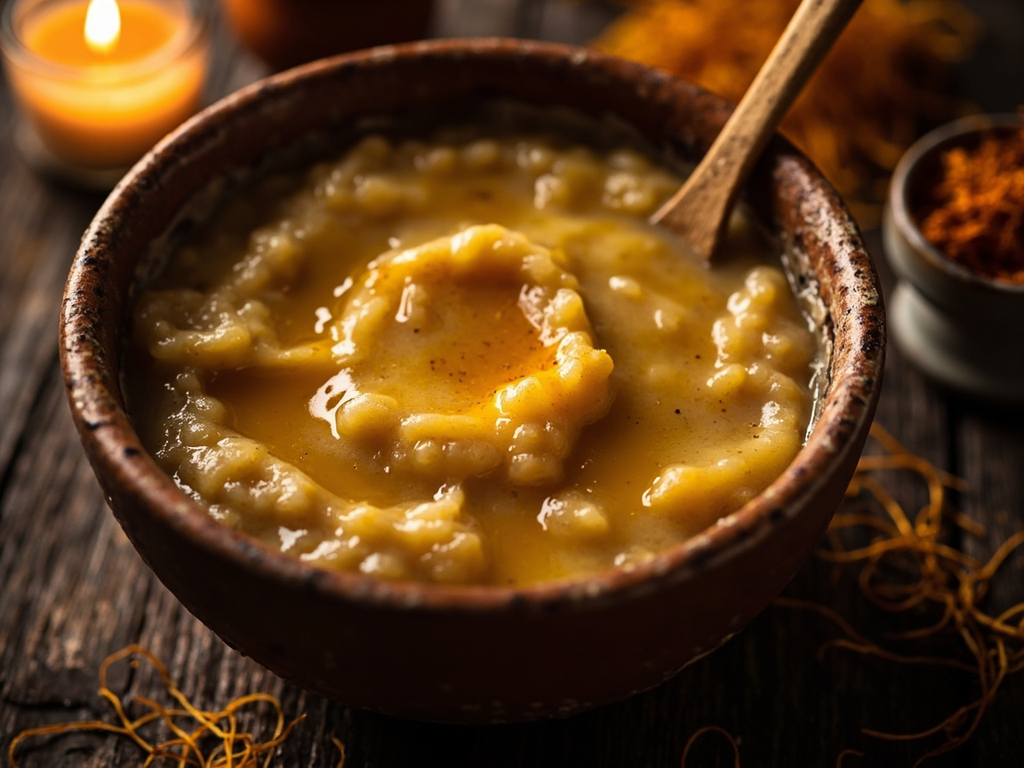
A creamy porridge of wheat grains cooked long, enriched with milk and egg yolk, gilded with a thread of saffron and sweetened with honey. The sweetness reserved for feast days.
At the twelve days of Christmas, when work stops, I make frumenty to cheer the household. I crack the wheat in water all day, then I feed it with milk and an egg yolk, and I pour in honey and three strands of saffron that I keep in a cloth like a treasure. It is golden as the sun and sweet as grace — a treat we do not have every day, believe me. Eat it hot, with a big spoon.
- •Whole wheat grains — two handfuls (cracked base)
- •Milk — a bowl (richness)
- •Egg yolk — one or two (thickener)
- •Honey — as desired (sweetness)
- •Saffron — a few strands (colour and festive aroma)
Frumenty with Honey and Saffron
A creamy porridge of wheat grains cooked long, enriched with milk and egg yolk, gilded with a thread of saffron and sweetened with honey. The sweetness reserved for feast days.
Why this dish? On feast days — Christmas, harvest time — even the poor villages of Essex allowed themselves a wheat porridge sweetened with honey. Frumenty, the quintessential peasant sweet, marked for Agnes the rare days of rejoicing.
At the twelve days of Christmas, when work stops, I make frumenty to cheer the household. I crack the wheat in water all day, then I feed it with milk and an egg yolk, and I pour in honey and three strands of saffron that I keep in a cloth like a treasure. It is golden as the sun and sweet as grace — a treat we do not have every day, believe me. Eat it hot, with a big spoon.
Ingredients (period version)
- Whole wheat grains — two handfuls (cracked base)
- Milk — a bowl (richness)
- Egg yolk — one or two (thickener)
- Honey — as desired (sweetness)
- Saffron — a few strands (colour and festive aroma)
Ingredients
- Whole wheat grains (or spelt grains) — 150 g (base)
- Whole milk — 400 ml (richness)
- Egg yolks — 2 (creamy thickener)
- Honey — 3 tbsp (sweetness)
- Saffron — 1 pinch (5-6 pistils) (colour and aroma)
- Salt — 1 pinch (balance)
Method
- Soak the wheat overnight, then cook in water for 1.5 to 2 hours until it bursts and becomes tender. Drain.
- Return the wheat to the pot with the milk and saffron, simmer gently for 15 min, stirring.
- Off the heat, gradually whisk in the beaten egg yolks to thicken without curdling.
- Sweeten with honey, add the pinch of salt, reheat for a minute without boiling.
- Serve warm in bowls, with an extra drizzle of honey.
How it was made : Frumenty (from Latin frumentum, 'wheat') is one of the oldest English dishes, cooked for Christmas and harvest. Rich manor versions added cinnamon and dried fruits; among the poor, they made do with wheat, a little milk, and on good days a touch of honey and saffron grown locally (Essex saffron, from nearby Saffron Walden, was renowned).
The contemporary twist : Served cold in a glass with a sharp apple compote, frumenty becomes an ancient-grain 'rice pudding', gilded with saffron.
Sources : C. Anne Wilson, Food and Drink in Britain (1973) · Maggie Black, The Medieval Cookbook (1992)
Agnes Waterhouse · Charactorium