 flip
flipSmall Ale (Table Beer)
Small Ale (Table Beer)
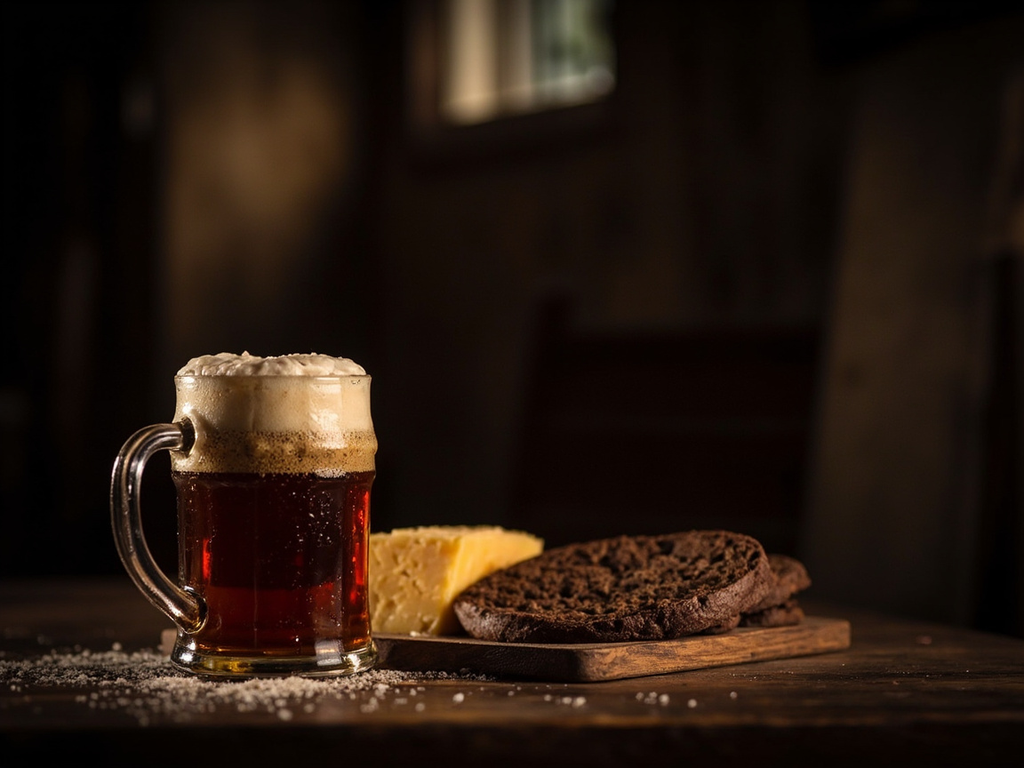
Why this dish? In Agnes's time, village water was often unsafe: small ale, a light beer brewed at home by women, was the drink of everyone, including children. In the Essex peasant home, it was the brewer — often the housewife — who made it.
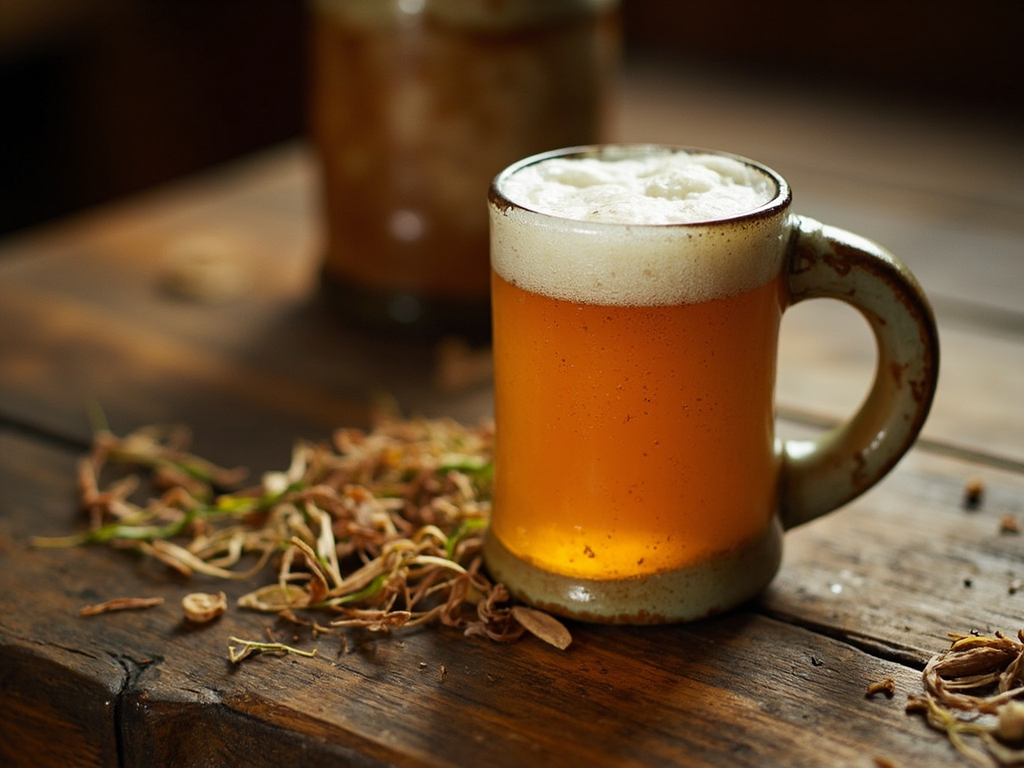
A very low-alcohol household beer, made from malted barley and flavoured with herbs or hops. Thirst-quenching and safe to drink, it accompanied every meal.
The ditch water makes you sick, so we drink small ale, brewed by the women at home. I steep my barley malt in hot water to draw a sweet wort, boil it with a handful of hops, then let the yeast work for a few days in the vat. It is weak and cloudy, but it quenches the thirst of young and old without harm, from morning till night. Drink a cup of it — it's better than stagnant water.
- •Crushed barley malt — a good measure (fermentable sugar)
- •Hot spring water — in proportion (wort extraction)
- •Hops (or bitter herbs: bog myrtle, yarrow) — a handful (bitterness and preservation)
- •Brewer's yeast (barm) — as needed (fermentation)
Small Ale (Table Beer)
A very low-alcohol household beer, made from malted barley and flavoured with herbs or hops. Thirst-quenching and safe to drink, it accompanied every meal.
Why this dish? In Agnes's time, village water was often unsafe: small ale, a light beer brewed at home by women, was the drink of everyone, including children. In the Essex peasant home, it was the brewer — often the housewife — who made it.
The ditch water makes you sick, so we drink small ale, brewed by the women at home. I steep my barley malt in hot water to draw a sweet wort, boil it with a handful of hops, then let the yeast work for a few days in the vat. It is weak and cloudy, but it quenches the thirst of young and old without harm, from morning till night. Drink a cup of it — it's better than stagnant water.
Ingredients (period version)
- Crushed barley malt — a good measure (fermentable sugar)
- Hot spring water — in proportion (wort extraction)
- Hops (or bitter herbs: bog myrtle, yarrow) — a handful (bitterness and preservation)
- Brewer's yeast (barm) — as needed (fermentation)
Ingredients
- Crushed barley malt (pale ale) — 500 g (fermentable sugar)
- Water — 4 L (mashing and sparging)
- Hop cones or pellets (low quantity) — 10 g (bitterness)
- Dried beer yeast (ale) — 1/2 sachet (fermentation)
Method
- Heat 3 L of water to 67 °C, add the crushed malt and maintain this temperature for 1 hour (mashing) to convert starches to sugars.
- Strain the wort; rinse the malt with 1 L hot water to recover remaining sugars.
- Bring the wort to a boil for 45 min with the hops, then cool rapidly to 20 °C.
- Pour into a clean container, add yeast, cover with a cloth or airlock. Let ferment for 4 to 6 days.
- Bottle, wait a few days for slight carbonation. Drink fresh and young (low alcohol).
How it was made : Home brewing was a female task ('alewives'). Small ale was the second runnings, weaker, drawn after the strong beer; low in alcohol, it was drunk by all ages and replaced often contaminated water. Hops, imported from the Netherlands, became widespread in the 16th century, but many still brewed ale without hops, flavoured with bitter herbs.
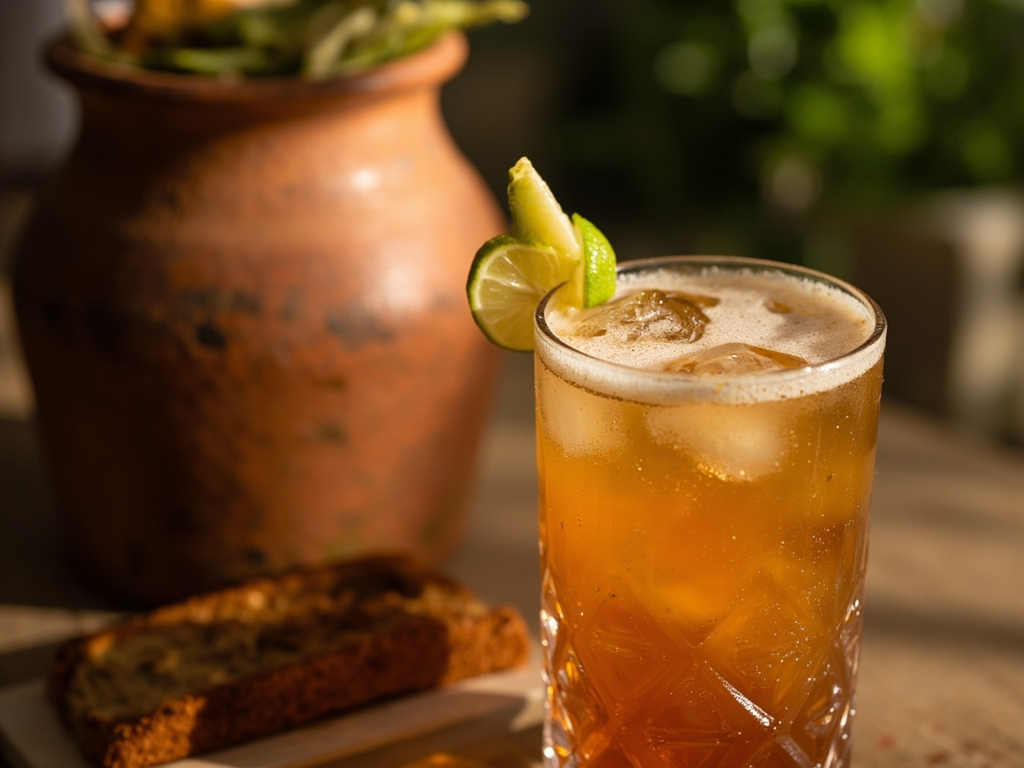
The contemporary twist : A craft 'table beer' at 2% ABV, served cold in a stoneware pitcher: exactly the trend of today's microbreweries, five centuries earlier.
Sources : Judith M. Bennett, Ale, Beer, and Brewsters in England (1996) · C. Anne Wilson, Food and Drink in Britain (1973)
Agnes Waterhouse · Charactorium