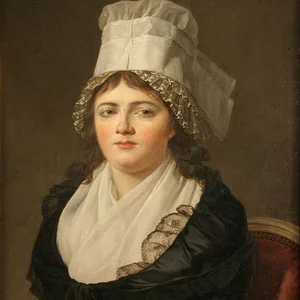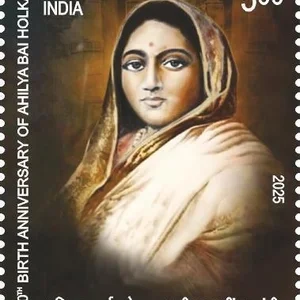

Queen of the Malwa kingdom (Indore) from 1767 to 1795, she ruled with wisdom and justice. Widowed at 29, she refused sati and took charge of the state, personally leading her armies. She had hundreds of temples, wells, and roads built across India.
Ahilyabai Holkar(1725 — 1795)
Ahilyabai Holkar
8 min read
Frequently asked questions
Key Facts
- Born in 1725 in Chondi (Maharashtra), daughter of an educated and virtuous farmer
- Married to Khanderao Holkar, son of the Maratha chief Malhar Rao Holkar
- Widowed in 1754, she refused sati; her father-in-law entrusted her with the governance of the kingdom
- Reigned as sovereign from 1767 to 1795 over the Malwa kingdom from Maheshwar
- She had temples restored or built across the subcontinent, notably at Varanasi, Dwarka, and Somnath
Works & Achievements
Ahilyabai funded the complete reconstruction of this major temple in Varanasi, one of the most sacred sites in Hinduism. This project embodies the ambition of her pan-Indian religious patronage.
The queen transformed Maheshwar into a model capital: palaces, temples, ghats along the Narmada, markets, and textile workshops were all built under her direction. The city became a thriving cultural and economic center.
Ahilyabai had hundreds of kilometers of roads built and maintained across India, lined with dharamshalas providing shelter and food to travelers and pilgrims. These infrastructures greatly aided both commerce and devotion.
Deeply concerned with the welfare of her subjects, the queen had hundreds of wells and water reservoirs dug throughout Malwa and beyond. These hydraulic works stand as lasting testimony to her commitment to the common good.
Ahilyabai attracted renowned weavers to Maheshwar and developed a distinctive textile style — the Maheshwari sari — blending silk and cotton with refined geometric patterns. This industry continues to thrive today.
Though never formally compiled into a single text, Ahilyabai established a system of governance renowned for its fairness: daily public audiences, moderate taxation, and protection for the most vulnerable. Her model was later cited as an example by subsequent administrators.
Anecdotes
When her father-in-law Malhar Rao Holkar first saw her, she was only eight years old and praying with such intense devotion that he decided on the spot to choose her as a bride for his son Khande Rao. This chance encounter in a temple would shape the destiny of an entire kingdom.
After the death of her husband in 1754 and her father-in-law in 1766, Ahilyabai refused to practice sati — the ritual of a widow immolating herself on the funeral pyre — despite considerable social pressure. She wrote to Peshwa Madhavrao to obtain permission to rule alone, arguing that her people needed her. The Peshwa granted her request, acknowledging her exceptional abilities.
Ahilyabai personally led her troops into battle, riding atop a war elephant, during several military campaigns to defend her kingdom against incursions by the Bhils and Rajputs. Enemy soldiers, caught off guard to see a woman commanding an army, were often demoralized before the fighting had even begun.
She commissioned the restoration of the Kashi Vishwanath temple in Varanasi in 1777, one of the holiest sites in Hinduism, which had been partially destroyed. Her generosity toward pilgrims was legendary: she arranged for free food and shelter to be distributed along the major pilgrimage roads throughout India.
Ahilyabai personally managed the judicial affairs of her kingdom, holding daily public audiences where any subject could come and plead their case directly before her. It is said that she read petitions herself late into the night and that no appeal ever went unanswered.
Primary Sources
I am an ignorant woman, yet I administer this territory with the support of my devoted servants and under the protection of God. My only desire is the well-being of my subjects.
The kingdom of Malwa is your servant. I govern in the name of dharma and justice. All that I accomplish, I accomplish for the good of my subjects and the glory of our faith.
Erected by the devotion of Ahilyabai Holkar, Queen of Malwa, for the glory of Shiva and the salvation of her ancestors, in the year... of her benevolent reign.
The reputation of Ahilyabai Holkar reaches far beyond the borders of India. It is said that she governs with a wisdom and fairness that many a European king might envy. Her roads are safe, her temples numerous, and her subjects hold her in genuine affection.
Key Places
The capital chosen by Ahilyabai on the banks of the Narmada River, which she transformed into a thriving cultural, commercial, and religious center. She had her palace, temples, and the famous riverside ghats built there.
The administrative capital of the Malwa kingdom, a city whose economic and political importance Ahilyabai greatly expanded. It remains the largest city in Madhya Pradesh today.
Ahilyabai had this major temple dedicated to Shiva rebuilt after it was destroyed during earlier invasions. This act of devotion and patronage made her celebrated throughout India.
Ahilyabai's birthplace, located in the present-day Ahmednagar district. She returned there several times and commissioned charitable works in tribute to her origins.
One of the twelve jyotirlingas (sacred Shiva temples) that Ahilyabai had restored or enriched. Her religious patronage extended across all of India, from the banks of the Ganges to the shores of Gujarat.
Typical Objects

Ahilyabai led her troops mounted on an elephant, seated in an ornamental howdah of carved wood and metal. This object symbolized both her royal authority and her military courage.

The queen personally managed all administrative correspondence for her kingdom, writing or dictating hundreds of official letters. These writing tools were at the heart of her day-to-day governance.

Ahilyabai was a devoted worshipper of Shiva and prayed several times a day using her rudraksha seed rosary. Spirituality guided her every political decision.

Ahilyabai's official seal bore the symbols of Shaivite devotion and Maratha authority. Every decree and administrative firman was authenticated with this royal seal.

Ahilyabai developed the textile industry of her capital Maheshwar, creating a distinctive weaving style still produced today. She herself wore these silks with their characteristic geometric patterns.

The queen personally oversaw the construction of hundreds of temples, stepwells (baolis), and roads across India. Architectural plans inscribed on palm leaves were the instruments of this vast building endeavor.
School Curriculum
Vocabulary & Tags
Key Vocabulary
Tags
Daily Life
Morning
Ahilyabai rose before dawn to perform her personal puja, a lengthy prayer dedicated to Shiva involving the recitation of mantras and floral offerings. After the religious rites, she reviewed overnight administrative and military reports, preparing for the day's audiences.
Afternoon
Afternoons were devoted to public audiences (durbar), where any subject could submit a petition directly to the queen. She dispensed justice, arbitrated land and commercial disputes, and oversaw the major construction projects underway across her kingdom.
Evening
In the evening, Ahilyabai attended the aarti prayer in the palace temples, surrounded by her ladies-in-waiting and Brahmins reciting the Scriptures. She then devoted time to reading and personal correspondence before retiring for the night with meditation.
Food
The queen followed a strict vegetarian diet in accordance with the Hindu principle of non-violence (ahimsa). Her meals included rice, lentils (dal), vegetables cooked with mild spices, milk, and ghee-based sweets, prepared by Brahmin cooks according to purity rites.
Clothing
Ahilyabai wore primarily the Maheshwari sari, a textile tradition she herself had helped develop: fine silk with geometric patterns in gold and silver, draped in the Maratha style. After her widowhood, she incorporated more white into her wardrobe, but never gave up her devotional adornments — rudraksha bead necklaces and temple bracelets.
Housing
The queen resided in her palace at Maheshwar, a place that served at once as private residence, administrative center, and site of devotion. The royal apartments overlooked the Narmada River, with latticed galleries (jharokhas) allowing the queen to observe life along the riverbank. The palace also housed temples, audience halls, and textile workshops.
Historical Timeline
Period Vocabulary
Visual Style
Un style visuel inspiré de la miniature marathe du XVIIIe siècle, dominé par les ors, ocres et carmins des cours princières et des temples hindous des rives de la Narmada.
Sound Ambience
L'univers sonore d'Ahilyabai mêle la dévotion shivaïte — cloches et mantras des temples — au quotidien d'une capitale marchande et artisanale sur les rives de la Narmada.
Liens externes & ressources
Références
Œuvres
Reconstruction du temple de Kashi Vishwanath
1777
Développement urbain de Maheshwar
1767-1795
Réseau de routes et de dharamshalas (hospices de pèlerins)
1770-1795
Construction de puits et de baolis (puits à degrés)
1767-1795
Fondation de l'industrie textile de Maheshwar
vers 1780
Code administratif et judiciaire de Malwa
1767-1795