Spirituality
Religions, mystique, théologie, sagesse
495 characters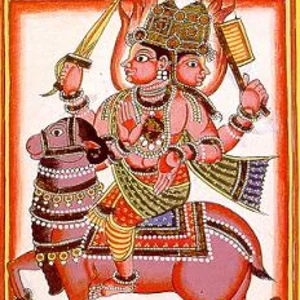
495 characters
Before Christ(158)
Agni
Agni is the god of fire in Vedic and Hindu mythology. The personification of sacrificial fire, he serves as an intermediary between humans and the gods by carrying offerings up to the heavens through smoke. He ranks among the most frequently invoked deities of the Rigveda.
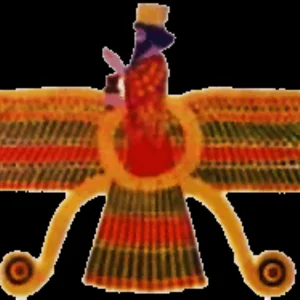
Ahura Mazda
The supreme deity of Zoroastrianism, Ahura Mazda is the creator god of wisdom and light in the religion founded by Zoroaster (Zarathustra) around the 6th century BCE in Persia. He embodies the principle of Good, opposed to Ahriman, the principle of Evil, in a dualistic vision of the cosmos.
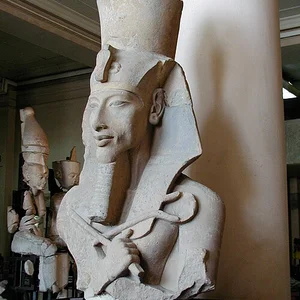
Akhenaten
1400 av. J.-C. — 1335 av. J.-C.
Pharaoh of the 18th Dynasty of Egypt (c. 1353–1336 BCE), Akhenaten revolutionized religion by imposing the monotheistic worship of Aten, the solar disk. He relocated the capital to Akhetaten (Amarna) and profoundly transformed Egyptian art.
Ambika
Ambika is a figure from the Mahabharata, the Sanskrit epic of ancient India. Daughter of the king of Kashi and mother of Dhritarashtra, she plays a central role in the Kuru lineage. Her fate is bound to the practice of niyoga.
Amenhotep III
1399 av. J.-C. — 1350 av. J.-C.
Pharaoh of the 18th Egyptian dynasty (c. 1391–1353 BC), he ruled Egypt at the height of its diplomatic and artistic power. His reign was marked by relative peace, intensive building activity, and exceptional cultural refinement.
Amon
663 av. J.-C. — 639 av. J.-C.
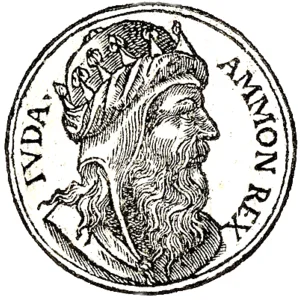
Amon was the fourteenth king of Judah, son of Manasseh, who reigned around 642–640 BC. Like his father, he practiced idol worship and abandoned the Yahwist faith. He was assassinated by his own servants after only two years of rule.
Anahita
Anahita is a major goddess of ancient Iranian mythology, associated with fertilizing waters, fertility, and victory. Venerated throughout the Achaemenid Empire and beyond, she was integrated into Zoroastrianism as a yazata (benevolent celestial being).
Anat
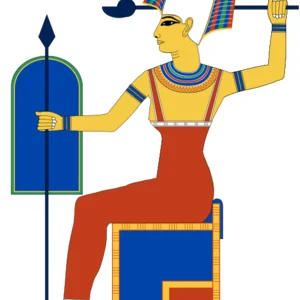
Anat is a warrior goddess of the Ugaritic pantheon (ancient Syria), venerated in the 2nd millennium BCE. A fierce virgin warrior, she is the sister of the god Baal and ranks among the most formidable deities of the ancient Near East.
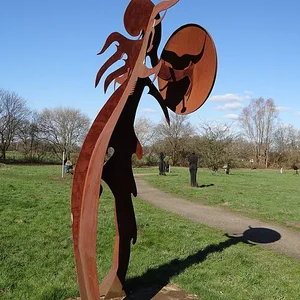
Angra Mainyu
Angra Mainyu, also known as Ahriman, is the evil deity of Zoroastrianism, opposed to Ahura Mazda. The embodiment of evil, deceit, and destruction, he stands at the heart of the cosmic dualism in the ancient Persian religion founded by Zarathustra.
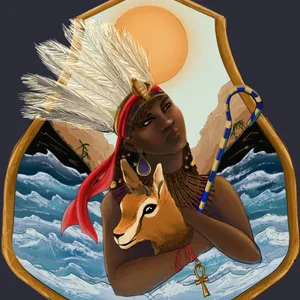
Anuket
Anuket is an Egyptian goddess personifying the Nile and its annual floods, venerated at Elephantine and in Nubia. She is depicted wearing a crown of feathers and is associated with the fertility of lands irrigated by the river.
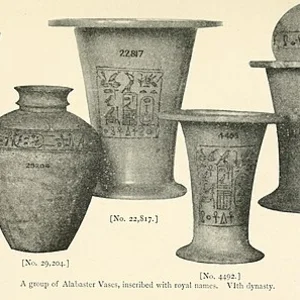
Apep
Apophis, or Apep, is the giant serpent of chaos in ancient Egyptian mythology. Each night, he attacks the solar barque of Ra in the underworld, threatening cosmic order. He is the absolute embodiment of chaos, darkness, and oblivion.
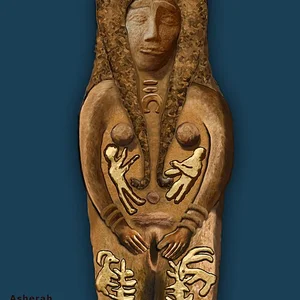
Asherah
Asherah is a major mother goddess of the Canaanite and Syrian pantheon, venerated as queen of the heavens and consort of the god El. Her cult, attested as early as the 2nd millennium BCE, stretched from Phoenicia to Ugarit and influenced the religious practices of the ancient Near East, including in Israel.
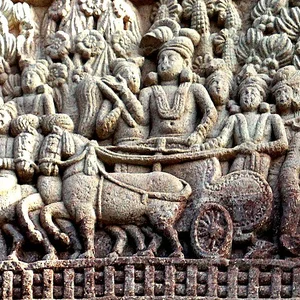
Ashoka
303 av. J.-C. — 231 av. J.-C.
Ashoka was the third emperor of the Maurya dynasty, ruling over nearly the entire Indian subcontinent in the 3rd century BC. Shaken by the carnage of the Kalinga War, he converted to Buddhism and promoted a policy of non-violence (ahimsa) and tolerance. He spread his moral precepts, carved on stone edicts, throughout his empire.
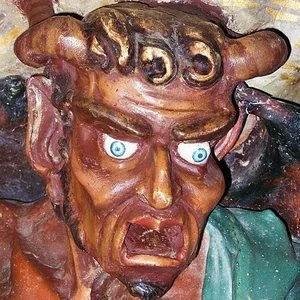
Asmodeus
A demon of lust and wrath in Judeo-Christian and Persian traditions, Asmodeus is one of the oldest demonic figures in religious literature. He appears notably in the Book of Tobit, a deuterocanonical text, under the name Asmodaeus.
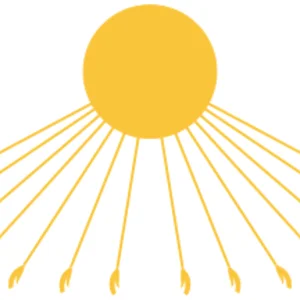
Aten
Aten is the solar deity of ancient Egypt, represented as the sun disk whose rays end in human hands. Elevated to the status of sole god by Pharaoh Akhenaten in the 14th century BCE, Aten stood at the heart of an unprecedented religious revolution.
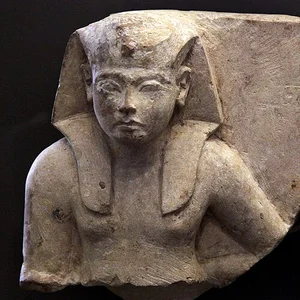
Ay
1400 av. J.-C. — 1400 av. J.-C.
Ay was pharaoh of Egypt around 1323–1319 BCE, successor to Tutankhamun. A senior official and priest, he played a key role at the close of the Amarna period by restoring the traditional worship of the Egyptian gods.

Azazel
Demonic figure from Hebrew traditions and fallen angel of the Book of Enoch. In Leviticus, he is associated with the scapegoat ritual. According to Enochic tradition, he taught humans the metallurgy of weapons and the art of cosmetics.
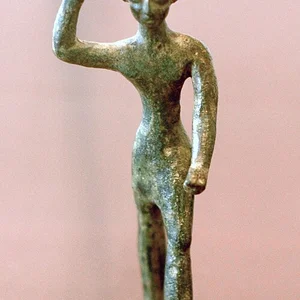
Baal
Supreme god of the Canaanite pantheon, master of rain, storms, and fertility. His cult was practiced across the ancient Near East from the 2nd millennium BCE and came into conflict with Hebrew monotheism. Demonized by the Abrahamic traditions, he became a demonic figure in medieval texts.

Baiame
Baiame is the central creator deity of several Aboriginal peoples of southeastern Australia, notably the Kamilaroi and the Wiradjuri. Supreme being and sky father, he is considered the source of laws, initiation rites, and cosmic order.
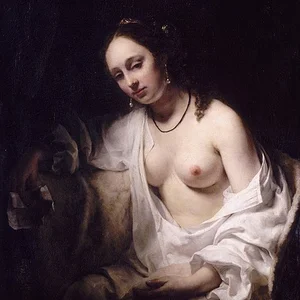
Bathsheba
1008 av. J.-C. — 936 av. J.-C.
Bathsheba is a figure from the Old Testament, wife of Uriah the Hittite and later of King David after Uriah's death. As the mother of Solomon, she played a decisive role in the royal succession by interceding with David to ensure her son would inherit the throne of Israel.
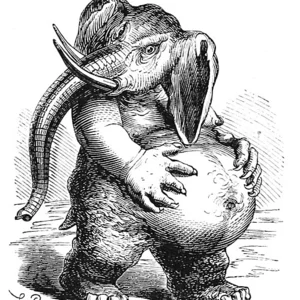
Behemoth
Behemoth is a monstrous creature from the Hebrew Bible, described as a colossal, primordial land beast. In the Book of Job, God invokes it to illustrate his omnipotence before humankind. Jewish tradition makes it the terrestrial counterpart of the sea monster Leviathan.
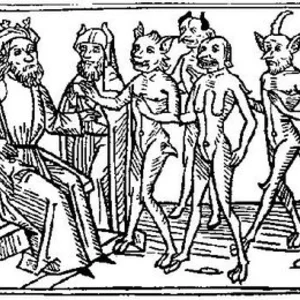
Belial
Belial is a demonic figure from ancient Hebrew and Jewish traditions, whose name means 'worthless' or 'wickedness'. He appears in the Dead Sea Scrolls as a prince of darkness opposed to the Archangel Michael. He is considered one of the four crowned princes of Hell in medieval demonology.
Bhumi Devi
Bhūmi Devi is the goddess of the Earth in Hindu mythology, the personification of the nurturing planet. Wife of the god Vishnu, she is also known by the names Bhūdevi or Prithvi. She embodies the patience, fertility, and generosity of the earth.
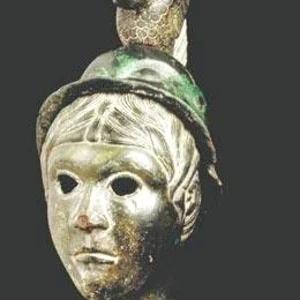
Brigid
A major goddess of Irish Celtic mythology, Brigid is the daughter of the Dagda and patroness of fire, poetry, and healing. Venerated by Celtic peoples, her cult survived Christianization by merging with that of Saint Brigid of Kildare.

Bunyip
The Bunyip is a creature from the mythology of the Aboriginal peoples of Australia, said to haunt swamps, billabongs, creeks, and waterholes. Described as a threatening water spirit that devours those who approach the water at night, it embodies the real dangers of Australian wetlands.
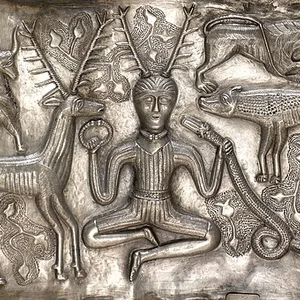
Cernunnos
Cernunnos is a horned Gaulish deity, god of wild animals and nature. His name is attested only once, on the Pillar of the Boatmen discovered in Paris. He is depicted seated cross-legged, wearing antlers, surrounded by deer and serpents.
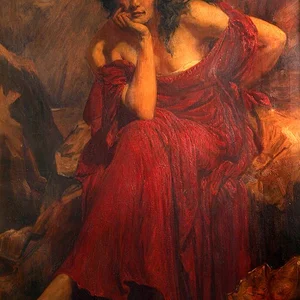
Cerridwen
An enchantress and goddess of Welsh Celtic mythology, Ceridwen is the keeper of the cauldron of knowledge and inspiration (Awen). A figure of wisdom, transformation, and magic, she appears in medieval Welsh tales passed down orally before being recorded in the Mabinogion and other bardic texts.
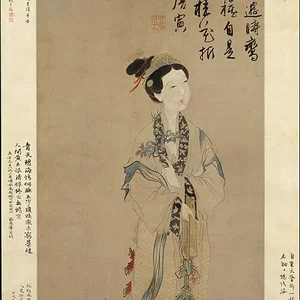
Chang'e
Chang'e is the goddess of the Moon in Chinese mythology. Wife of the divine archer Hou Yi, she swallowed the elixir of immortality and flew to the Moon, where she has resided ever since in her jade palace with the moon rabbit.
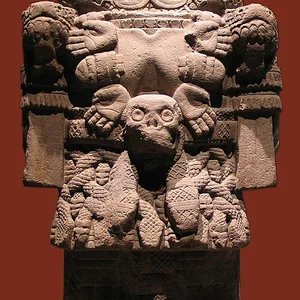
Coatlicue
Mother goddess of Aztec mythology, Coatlicue is the mother of the sun god Huitzilopochtli. Venerated by the Mexica people (Aztecs), she embodies life, death, and regeneration all at once. Her depiction — wearing a necklace of skulls and a skirt of serpents — symbolizes the perpetual cycle of creation and destruction.
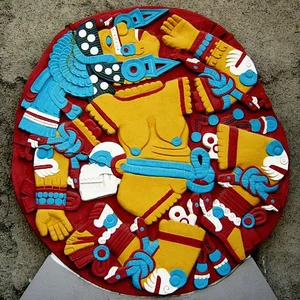
Coyolxauhqui
Coyolxauhqui is a lunar deity of Aztec mythology, daughter of the goddess Coatlicue and sister of the solar god Huitzilopochtli. According to the myth, she was beheaded and dismembered by her brother atop Mount Coatepec, becoming the Moon.
Dagda
The Dagda is one of the great deities of Irish Celtic mythology, father and chief of the Tuatha Dé Danann. God of fertility, wisdom, and the arts, he owns an inexhaustible cauldron of abundance and a club with magical powers.
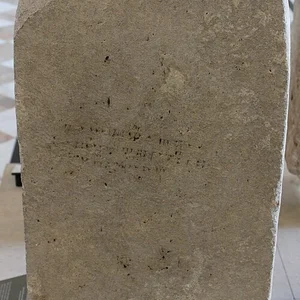
Dagon
Dagon is a Semitic deity worshipped by the Philistines and Canaanites, associated with fertility and the harvest. His cult is attested throughout the ancient Near East, notably at Ugarit and Gaza. He was later reinterpreted as a demonic figure in Christian literature and in John Milton's Paradise Lost.
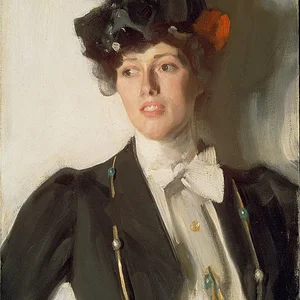
Dana
Mother goddess of Irish Celtic mythology, Dana is the ancestral figure of the Tuatha Dé Danann, the divine people of Ireland. Known only through oral tradition and medieval Irish texts, she embodies the nurturing earth and the primordial forces of nature.
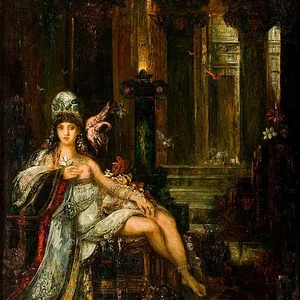
Delilah
1100 av. J.-C. — 1100 av. J.-C.
Delilah is a female figure from the Book of Judges, in the Hebrew Bible. Loved by Samson, she is bribed by the Philistine lords to discover the secret of the hero's superhuman strength: his hair. She betrays him by having his head shaved, thus delivering him to his enemies.
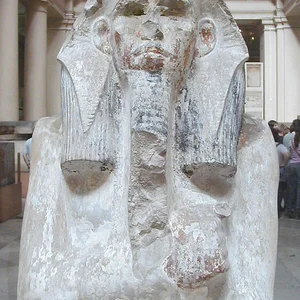
Djoser
2800 av. J.-C. — 2700 av. J.-C.
Pharaoh of the Third Egyptian Dynasty (c. 2650 BCE), Djoser is famous for commissioning the Step Pyramid of Saqqara, the first great funerary monument built in stone in history.
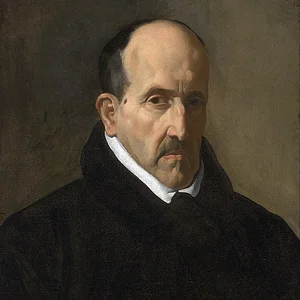
Don
Dôn is the mother goddess of Welsh mythology, ancestor of the divine family known as the “Children of Dôn” (Plant Dôn) mentioned in the Mabinogi. The Welsh equivalent of the Irish goddess Danu, she embodies the matriarchal figure of the Celtic deities of Britain, of whom she is the source.
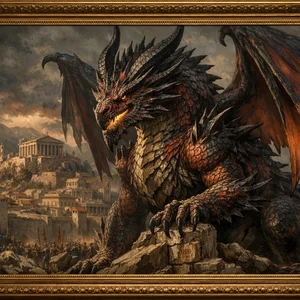
Dragon of Thebes
A monstrous creature sacred to Ares in Greek mythology, it guarded the divine spring near Thebes. Slain by the Phoenician hero Cadmus, its teeth were sown into the earth and gave rise to the Spartoi, the ancestral warriors of Thebes.
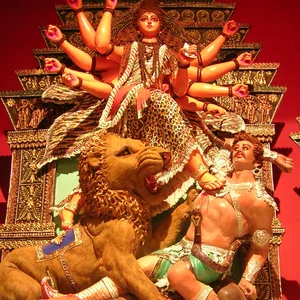
Durga
A warrior goddess of Hinduism, Durga embodies Shakti, the divine feminine energy and protective force of the universe. Venerated in the Hindu tradition since the Vedic era, she is the great goddess (Mahadevi) who vanquishes the forces of evil.
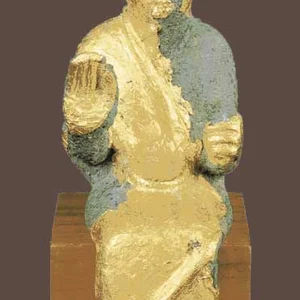
El
El is the supreme deity of the Canaanite and Ugaritic pantheon, father of gods and men. A creator god and divine judge, he presides over the council of the gods. His cult is attested throughout the ancient Semitic Near East.
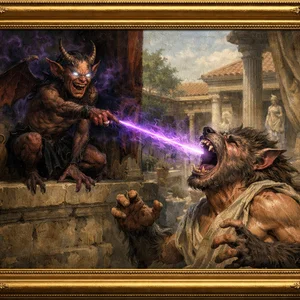
Empousa
A demonic creature of Greek mythology, servant of Hecate. Endowed with one leg of bronze and one leg of a donkey, she transforms herself to seduce lone travelers before devouring them.

Énheduana
High priestess of the moon at Ur and daughter of Sargon of Akkad, Enheduana is the first known author in history. Around 2300 BCE, she composed hymns to the goddess Inanna and songs for the Sumerian temples, laying the foundations of religious literature.
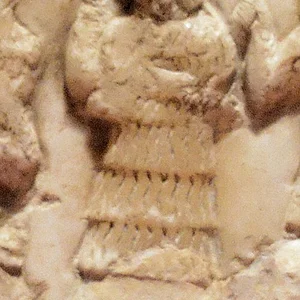
Enheduanna
2300 av. J.-C. — 2300 av. J.-C.
Enheduanna, high priestess of the moon god at Ur and daughter of Sargon of Akkad, is the first known author in history. Around 2300 BCE, she composed hymns to the goddess Inanna of rare poetic power, laying the foundations of world religious literature.
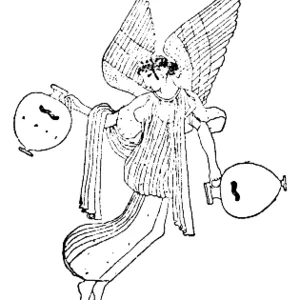
Eos
Eos is the Greek goddess of the Dawn, daughter of the Titans Hyperion and Theia, sister of Helios (the Sun) and Selene (the Moon). Each morning, she opens the gates of the sky to herald the rising of the day, riding her chariot drawn by two winged horses.
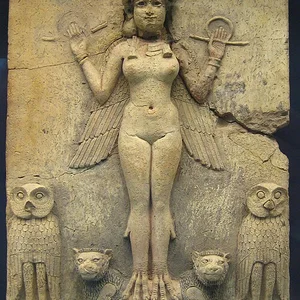
Ereshkigal
Sumerian queen of the Underworld in Mesopotamian mythology, Ereshkigal rules the kingdom of the dead known as Kur or Irkalla. Sister of the goddess Inanna, she embodies the relentless power of death and the underworld, as described in Sumerian cuneiform texts.
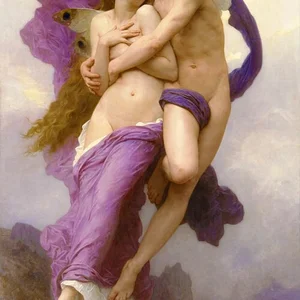
Eros
Eros is the Greek god of love and desire. The son of Aphrodite and Ares according to classical tradition, he is depicted as a winged young child armed with a bow and golden arrows. His Roman equivalent is Cupid.
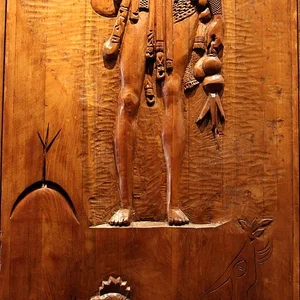
Eshu
Eshu is a trickster orisha from the Yoruba tradition of West Africa, guardian of crossroads and messenger between humans and the gods. Master of communication and cunning, he must be propitiated before any ritual.
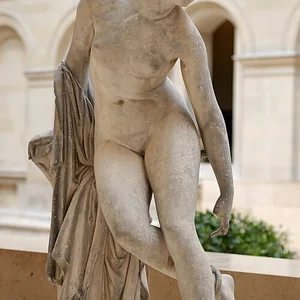
Eurydice
Nymph of Greek mythology and wife of the poet Orpheus. Bitten by a serpent, she descends to the Underworld. Orpheus attempts to bring her back to life through his music, but loses her forever by looking back.
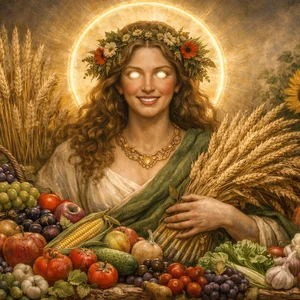
Gaia
A primordial deity of Greek mythology, Gaia personifies the Earth Mother. Emerging from the primordial Chaos, she gives birth to Uranus (the Sky), the Mountains, and Pontus (the Sea). With Uranus, she bears the Titans, the Cyclopes, and the Hecatoncheires.
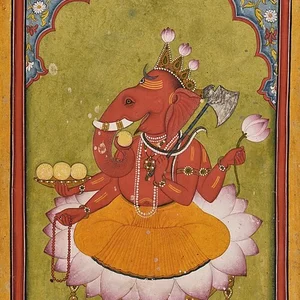
Ganesh
Ganesh is one of the most revered deities in Hinduism, instantly recognizable by his elephant head. Son of Shiva and Parvati, he is the god of wisdom, intellect, and success, and the “Lord of Obstacles,” invoked at the beginning of any new endeavor.
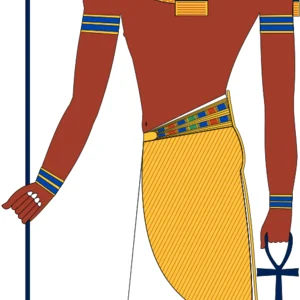
Geb
Geb is the Egyptian god of the Earth, son of Shu and Tefnut, and husband of Nut, the goddess of the sky. He belongs to the Ennead of Heliopolis and is the father of Osiris, Isis, Seth, and Nephthys.
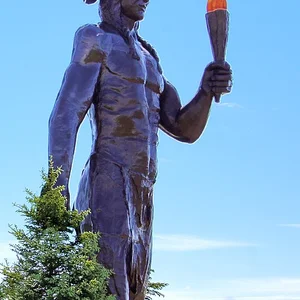
Glooscap
Creator hero and central figure of Mi'kmaq and Abenaki mythology in North America. A cultural being who shaped the world, defeated monsters, and taught humans the arts of survival. A figure from the Indigenous oral tradition of northeastern America, passed down from generation to generation.
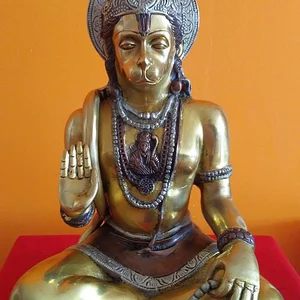
Hanuman
A Hindu deity in the form of a monkey, Hanuman is the devoted servant of the god Rama in the epic Ramayana. A symbol of devotion, strength, and courage, he is one of the most venerated figures in Hinduism.
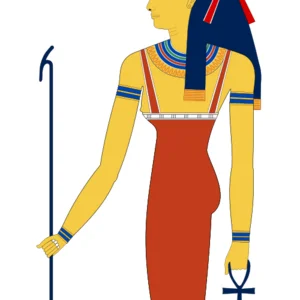
Hathor
An Egyptian goddess venerated since the Old Kingdom (c. 2700 BCE), Hathor is associated with love, music, joy, femininity, and the sky. Depicted as a cow or as a woman with bovine horns bearing the solar disk, she is one of the most popular deities in the Egyptian pantheon.
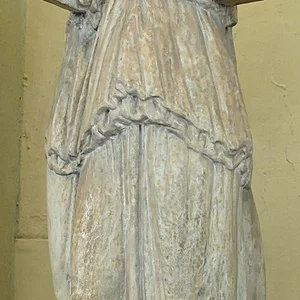
Hecate
Greek goddess of magic, crossroads, and the underworld, daughter of Perses and Asteria. Often depicted with three faces, holding torches and accompanied by dogs. A chthonic deity associated with the moon, nocturnal rites, and witchcraft.

Hiʻiaka
Hiʻiaka is a goddess of Hawaiian mythology, the younger sister of the volcano goddess Pele. Patron of hula dancers, of chant, and of medicine, she is the heroine of a cycle of epic chants recounting her journey across the archipelago.
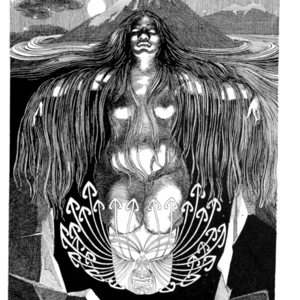
Hine-nui-te-pō
Māori goddess of death and guardian of the underworld (Te Pō), according to Polynesian oral traditions. Daughter of Tāne, she rules over the realm of the dead and receives the souls of the departed. Her myth illustrates the fundamental life-death cycle in Māori cosmology.

Hinetītama
Hinetītama is the “dawn maiden” in the Māori mythology of New Zealand. The daughter of the god Tāne, she becomes Hine-nui-te-pō, the great goddess of night and of the dead, after discovering that he was also her father.
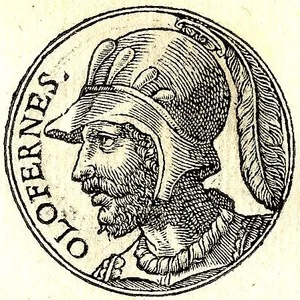
Holofernes
Assyrian general of Nebuchadnezzar's army, Holofernes is the central character of the Book of Judith in the Hebrew Bible. His beheading by Judith, a courageous Hebrew widow, is one of the most celebrated narratives in biblical literature.
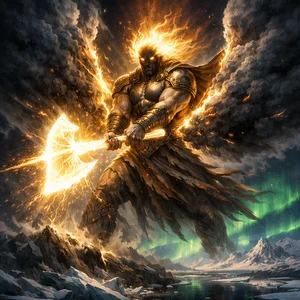
Hyperion
Titan of light in Greek mythology, son of Ouranos and Gaia. Husband of Theia, he is the father of Helios (the Sun), Selene (the Moon), and Eos (the Dawn). His name means "the one who walks above" in ancient Greek.
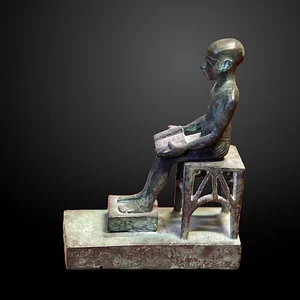
Imhotep
2800 av. J.-C. — 2700 av. J.-C.
A high official, architect, and physician of ancient Egypt in the 3rd millennium BC, Imhotep is considered the first known engineer and architect in history. Designer of the Step Pyramid of Saqqara, he was later deified as a god of medicine.
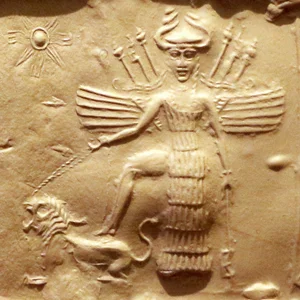
Inanna
Sumerian goddess of love, war, and fertility, venerated in Mesopotamia since the 4th millennium BCE. She is the best-documented female deity of the ancient world, celebrated in cuneiform hymns among the oldest known literary texts. Her cult, centered on the city of Uruk, influenced the religious traditions of the ancient Near East.

Inanna / Ishtar
Inanna (Sumerian) or Ishtar (Akkadian) is the great goddess of love, war, and fertility in ancient Mesopotamia. She stands at the heart of many foundational myths, including the famous Descent into the Underworld. Her cult, one of the most important in the ancient Near East, spans more than three millennia.
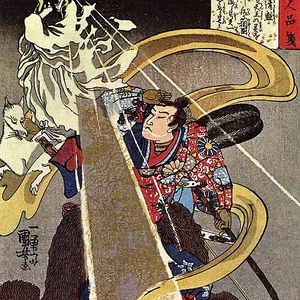
Inari
Japanese Shintō deity associated with rice, fertility, foxes, and commerce. Inari is one of the most venerated deities in Japan, with shrines (inari-sha) found throughout the country.
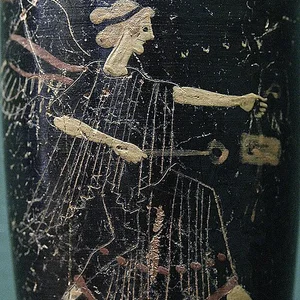
Iris
Iris is the Greek goddess of the rainbow and messenger of the Olympian gods, most notably Zeus and Hera. Daughter of Thaumas and Electra, she serves as an intermediary between the divine world and the human world, carrying messages from the immortals to mortals.
Itzamná
Itzamná is the supreme deity of the Maya pantheon, creator of the world and inventor of hieroglyphic writing. God of the sky, wisdom, and medicine, he is depicted as a wise old man. He is the husband of Ixchel, goddess of the moon.
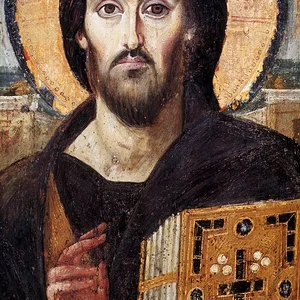
Jesus Christ
5 av. J.-C. — 30
Jewish preacher from Galilee and founder of Christianity. His teachings on love, forgiveness, and the Kingdom of God transformed the course of human history. Crucified around 30 AD, he is considered by Christians to be the risen Son of God.
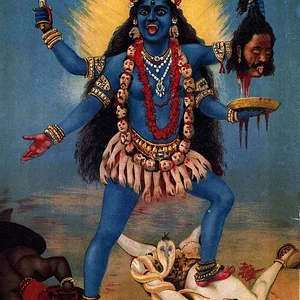
Kali
A Hindu goddess rooted in Vedic and Tantric tradition, Kali is the fierce and destructive aspect of the goddess Durga. Venerated by the people of India since antiquity, she embodies both the destruction of evil and cosmic renewal. Her complex figure symbolizes the cycle of death and rebirth.
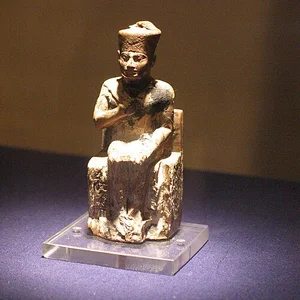
Khufu
2700 av. J.-C. — 2565 av. J.-C.
Pharaoh of the 4th Dynasty of ancient Egypt (c. 2589–2566 BC), Khufu is famous for commissioning the Great Pyramid of Giza, one of the Seven Wonders of the Ancient World. His reign stands as a symbol of the absolute power of pharaonic rule.
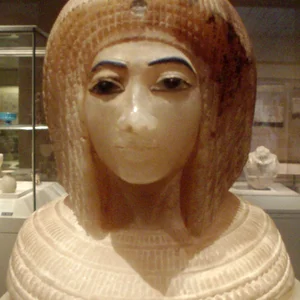
Kiya
1400 av. J.-C. — 1400 av. J.-C.
A secondary wife of Pharaoh Akhenaten, Kiya held a singular place at the court of Amarna in the 14th century BCE. Her identity and origins remain partly mysterious, though her name and likeness appear on several monuments from the Amarna period.

Kuntî
Kuntî is a major figure in the Indian epic of the Mahâbhârata. Mother of the Pândava, she is known for having obtained a boon granting her the power to conceive children by gods. She embodies devotion, maternal sacrifice, and wisdom in the Hindu tradition.
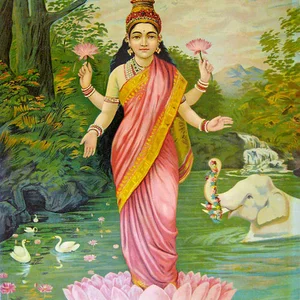
Lakshmi
Hindu goddess of prosperity, fortune, and beauty, venerated in the Vedic tradition since antiquity. Consort of the god Vishnu, she symbolizes abundance, grace, and good fortune in the mythology of Indian civilization.
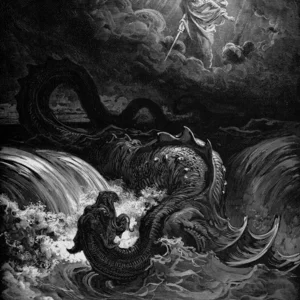
Leviathan
A sea monster from biblical texts and the mythologies of the ancient Near East, Leviathan embodies primordial chaos and the forces of evil. Described as a gigantic sea serpent, it appears notably in the Book of Job and the Psalms. During the Middle Ages, it became the guardian of the gates of Hell in the Christian tradition.
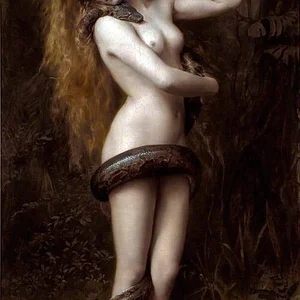
Lilith
A demonic figure rooted in Mesopotamian mythology (Lilitu), Lilith was incorporated into Jewish tradition as Adam's first wife, before Eve. Refusing to submit, she leaves the Garden of Eden and becomes a nocturnal demon threatening newborns and sleeping men.
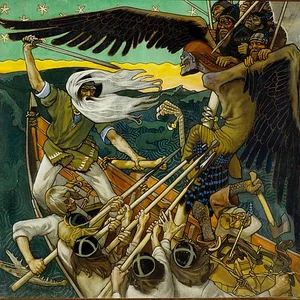
Louhi
Louhi is the powerful witch-queen of Pohjola in Finnish mythology, a central figure of the Kalevala. Mistress of magic and dark forces, she opposes the heroes Väinämöinen and Ilmarinen. She holds the Sampo, a mysterious object that brings prosperity.
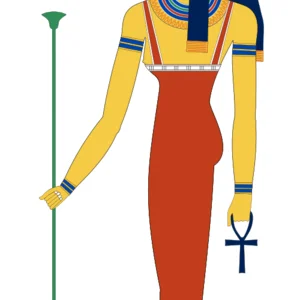
Maat
Egyptian goddess of justice, truth, and cosmic order, Maat is a central figure in the religion and moral thought of ancient Egypt. Depicted with an ostrich feather on her head, she embodies the universal principle of balance and harmony that governs the cosmos, society, and the afterlife.
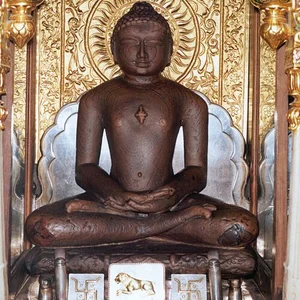
Mahavira
598 av. J.-C. — 526 av. J.-C.
Mahāvīra is the twenty-fourth and last tīrthankara of Jainism, regarded as the major reformer of this Indian tradition. Renouncing his princely life, he preached asceticism, non-violence, and the liberation of the soul.
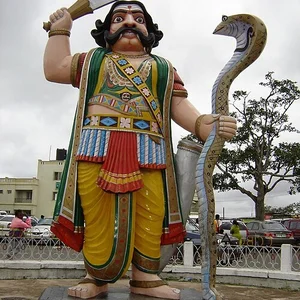
Mahishasura
Mahishasura is a buffalo-demon (asura) from Hindu mythology who, after obtaining invincibility against any man or god, conquered the three worlds and drove the gods from paradise. The goddess Durga, created from the combined energy of all the gods, ultimately defeated him after nine days of battle.
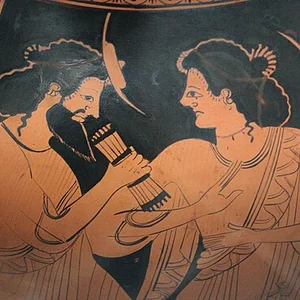
Maia
Maia is a deity of Greek mythology, daughter of the Titan Atlas and the Oceanid Pleione. She is the eldest and most beautiful of the seven Pleiades. She is best known as the mother of Hermes, whom she conceived with Zeus in a cave on Mount Cyllene.

Maitreyi
1000 av. J.-C. — 1000 av. J.-C.
A philosopher and poet of the Indian Vedic tradition, Maitreyi is celebrated in the Upanishads for her dialogue with the sage Yajnavalkya on the nature of the absolute and the atman. An exceptional female figure passed down through oral tradition, she embodies the spiritual quest at the heart of ancient Brahminic thought.
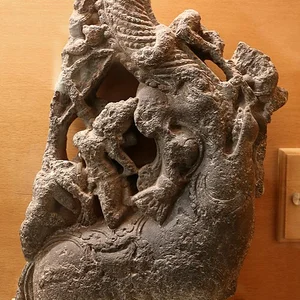
Makara
The makara is a hybrid aquatic creature from Hindu mythology, blending features of a crocodile, an elephant and a fish. It serves as the mount (vahana) of the deities Varuna, god of the waters, and Ganga, goddess of the Ganges.
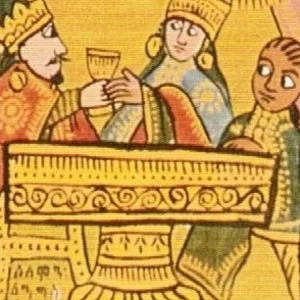
Makeda
Makeda is the central figure of the Ethiopian tradition (Kebra Nagast), venerated as the legendary queen of the Kingdom of Sheba. Rooted in Ethiopian and Eritrean oral tradition, she is known for her encounter with King Solomon of Jerusalem, from which Menelik I would be born — the founding ancestor of the Ethiopian imperial lineage.
Mara
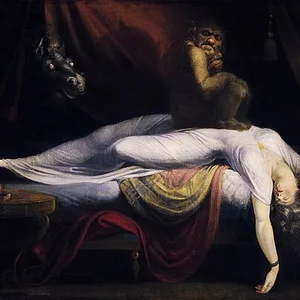
In Buddhist tradition, Mara is the supreme demon of desire and illusion. He attempted to prevent Siddhartha Gautama from attaining Enlightenment by subjecting him to temptations and trials beneath the Bodhi tree. He personifies the forces of attachment and ignorance that bind beings to the cycle of rebirth.
Marduk
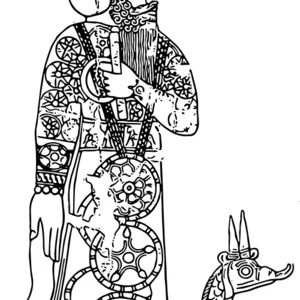
Marduk is the supreme god of the Babylonian pantheon, tutelary deity of the city of Babylon. He embodies creation, justice, and divine sovereignty. His rise to king of the gods is narrated in the creation epic *Enûma Eliš*.
Menā
Menā is a goddess of Hindu mythology, the wife of Himavat, the personification of the Himalayas, and queen of the mountains. Mother of the great goddess Pārvatī as well as of Gangā and Mount Maināka, she is celebrated in the Purāṇas as the mind-born daughter (mānasaputrī) of the Pitṛ ancestors.

Meritaten
Eldest daughter of Pharaoh Akhenaten and Queen Nefertiti, Meritaten lived during the Amarna religious revolution in the 14th century BCE. She became Great Royal Wife of Pharaoh Smenkhkare and was abundantly depicted in the art of the Amarna period.
Mictecacihuatl
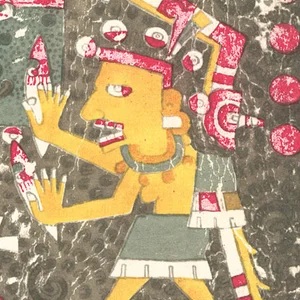
Aztec goddess of death and queen of Mictlan, the realm of the dead. She rules alongside her husband Mictlantecuhtli and watches over the bones of the deceased. She is celebrated today during Día de los Muertos.
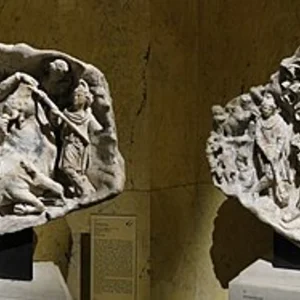
Mithra
An Indo-Iranian deity of contracts and light, Mithra was venerated in Persian Zoroastrianism before becoming a mysterious solar god of the Roman Empire. His cult, Mithraism, spread among Roman soldiers from the 1st to the 4th centuries AD.
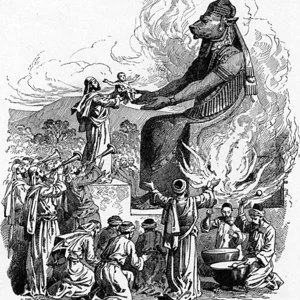
Moloch
A Canaanite Semitic deity associated with child sacrifice, Moloch is mentioned in the Bible as an abhorrent idol. Depicted as a bull or a bronze statue, he became in Judeo-Christian and literary tradition the symbol of idolatrous cruelty.
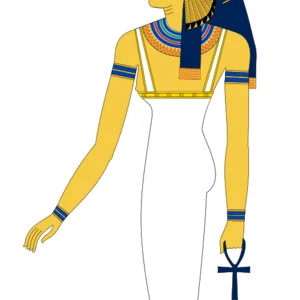
Mut
Mut is a goddess of Egyptian mythology, venerated as a mother goddess and queen of the deities. Wife of the god Amun and mother of Khonsu, she forms the Theban triad with them. Her cult was centered in Thebes, in the temple of Karnak.
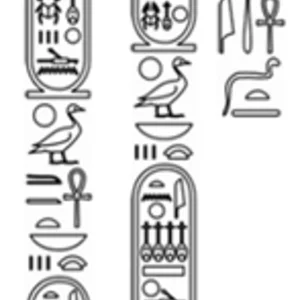
Neferneferuaten
1400 av. J.-C. — 1400 av. J.-C.
Neferneferuaten was a queen of Egypt from the 18th Dynasty, probably co-regent or direct successor to Akhenaten around 1335 BCE. Her exact identity remains debated: she may be Nefertiti under a new name, or a daughter of Akhenaten.
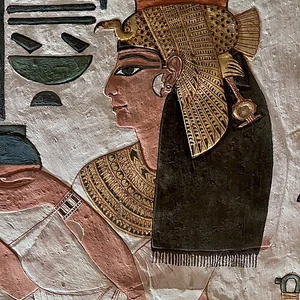
Nefertari
1289 av. J.-C. — 1254 av. J.-C.
Great Royal Wife of Ramesses II, Nefertari is one of the most celebrated queens of ancient Egypt. Her tomb in the Valley of the Queens, with its exceptionally well-preserved paintings, reflects her extraordinary status. Ramesses II dedicated the smaller temple at Abu Simbel to her, where she was depicted at the same scale as the pharaoh himself.
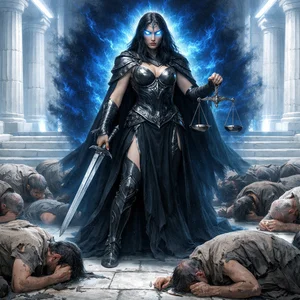
Nemesis
Greek goddess of divine vengeance and just retribution, Nemesis punishes hubris — the arrogance and excess of mortals who rise above their station. She embodies cosmic balance and immanent justice in the tradition of Greek mythology.
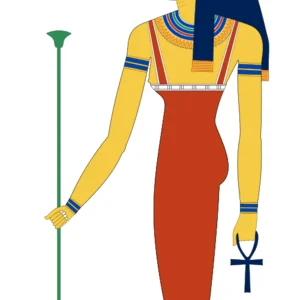
Nephthys
An ancient Egyptian goddess, Nephthys is the protector of the dead and the deceased. Sister of Isis, Osiris, and Set, she plays a fundamental role in Egyptian funerary rites. Her tradition is passed down through the Pyramid Texts and the Coffin Texts.
Nestis
Nestis is a deity from Greek mythology associated with water, mentioned by the philosopher Empedocles (5th century BCE) as one of the four fundamental roots of the universe. Sometimes identified with Persephone, she personifies the element of water in Empedoclean cosmology.
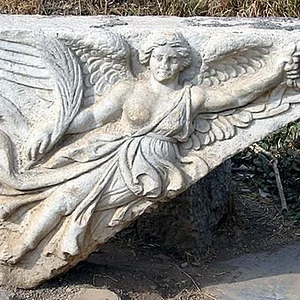
Nike
Nike is the personified goddess of victory in Greek mythology. Daughter of Pallas and Styx, she is depicted as winged, holding a laurel wreath or a palm branch. She accompanies Zeus and Athena and presides over both military and athletic victories.
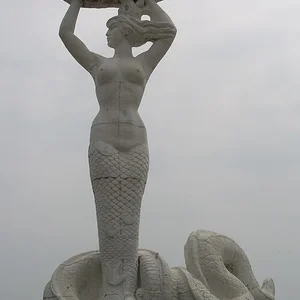
Nüwa
Creator goddess of Chinese mythology, Nüwa molded the first humans from yellow clay. She then repaired the vault of heaven by melting stones of five colors after the pillars of the sky collapsed.
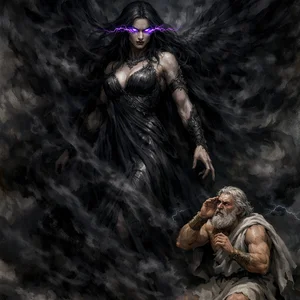
Nyx
Primordial goddess of Night in Greek mythology, born from the original Chaos. Mother of countless deities including Hypnos (Sleep), Thanatos (Death), and the Moirai (Fate). So fearsome that even Zeus refused to cross her.
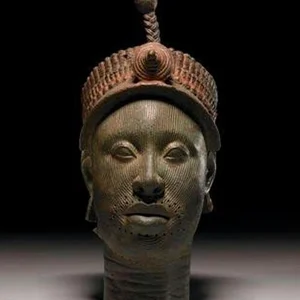
Olokun
Olokun is a Yoruba deity of the ocean depths, venerated in West Africa and in Afro-diasporic traditions. Orisha of the abyss, he symbolizes wealth, unfathomable mysteries, and the power of the deep waters.
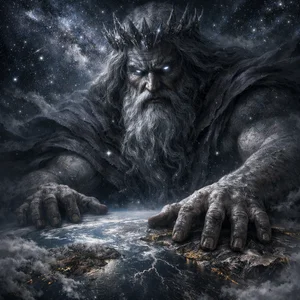
Ouranos
A primordial Greek deity personifying the starry Sky, Ouranos is the husband of Gaia (the Earth) and the father of the Titans, the Cyclopes, and the Hecatoncheires. Hated by the children he refused to release, he was castrated by his son Cronus, giving rise to Aphrodite according to the Hesiodic tradition.
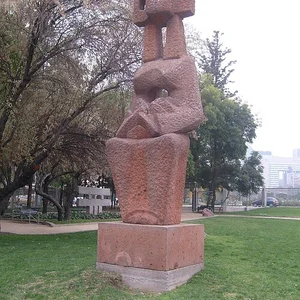
Pachamama
A major deity of the Andean peoples, particularly the Inca, Pachamama is the Earth Mother — goddess of fertility, agriculture, and the cycle of seasons. Venerated since pre-colonial times, she embodies the nourishing earth and is the subject of ritual offerings still practiced today in the Andes.

Padmavati
278 av. J.-C. — ?
Wife of Emperor Ashoka (3rd century BCE), Padmavati is a figure of the Mauryan court in ancient India. She is mentioned in Buddhist sources as one of the queens of the great ruler who unified the Indian subcontinent and embraced Buddhism.

Pan
Greek deity of wild nature, shepherds, and flocks, Pan is depicted as half-man, half-goat. Inventor of the reed flute (syrinx), he embodies the uncontrollable forces of nature and is the origin of the word "panic."

Papatuanuku
Papatuanuku is the Earth Mother of Māori cosmogony, a central figure passed down through oral tradition in Polynesia. Wife of Ranginui (Sky Father), her separation from him by their children gave birth to the world as the Māori conceive it.
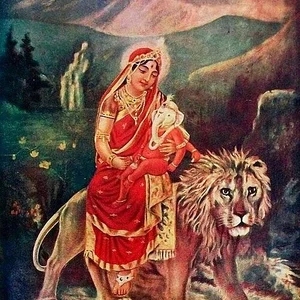
Parvati
Pārvatī is a major goddess of the Hindu tradition, daughter of the mountain god Himavat and consort of Shiva. Venerated as the goddess of fertility, maternal love, and devotion, she embodies the divine feminine energy (Shakti). Her figure appears in the great Sanskrit epics and the Purāṇas, texts composed between the 4th and 12th centuries CE.

Pasiphae
Pasiphae is a figure from Greek mythology, daughter of Helios and wife of Minos, king of Crete. Struck by an unnatural passion for a bull sent by Poseidon, she gave birth to the Minotaur — half man, half bull — who was imprisoned in the Labyrinth built by Daedalus.
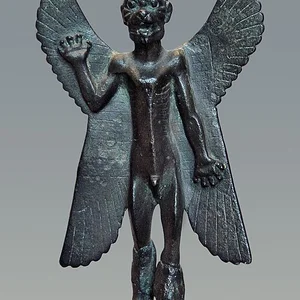
Pazuzu
Pazuzu is a Mesopotamian demon of the evil wind, depicted with a canine face, raptor wings, and a hybrid body. Paradoxically, he was invoked as a protector against Lamashtu, the demon of childbirth. His image adorned amulets to protect pregnant women and newborns.
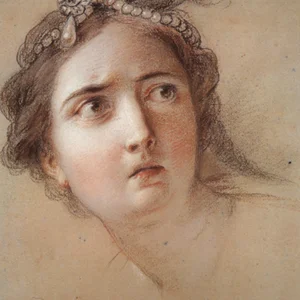
Potiphar's Wife
Biblical character from the Old Testament, wife of Potiphar, captain of Pharaoh's guard. She attempts to seduce Joseph, son of Jacob, and, after being rejected, falsely accuses him of assault, leading to Joseph's imprisonment.
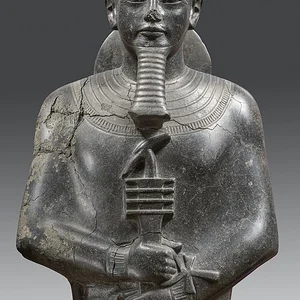
Ptah
Ptah is one of the oldest and most important gods of ancient Egypt, a creator god and patron of craftsmen and architects. Venerated at Memphis since the Old Kingdom, he embodies creation through thought and speech. His triad with Sekhmet and Nefertum forms the heart of the Memphite cult.
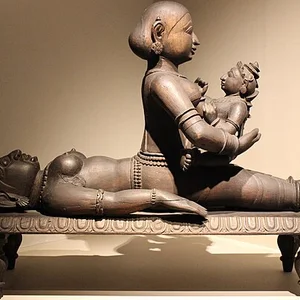
Putana
Putana is a demoness from Hindu mythology, sent by King Kamsa to kill the infant Krishna by nursing him with poisoned milk. Krishna, recognizing her divine nature, slew her while granting her spiritual liberation.
Qilin
A fabulous creature of Chinese mythology, the Qilin is a benevolent chimera with the body of a deer, horse's hooves, and dragon's scales, often nicknamed the “unicorn of the East.” A creature of good omen, it heralds the birth or death of a sage and embodies peace and prosperity.
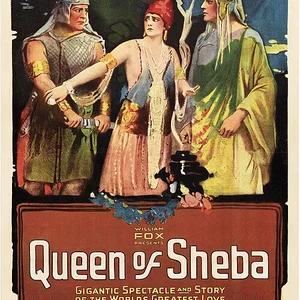
Queen of Sheba
Legendary ruler mentioned in the Bible, the Quran, and Ethiopian tradition. She is said to have visited King Solomon in Jerusalem, drawn by his wisdom. An iconic figure of exchange between ancient Arabia, Africa, and the Near East.
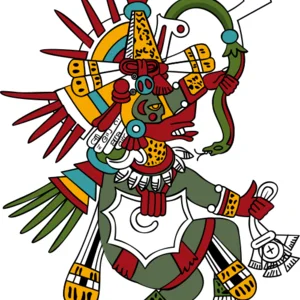
Quetzalcoatl
Quetzalcoatl, the "Feathered Serpent," is one of the most important deities in Mesoamerica. Venerated by the Aztecs and the Toltecs, he is the god of wind, wisdom, and creation. His figure spans several pre-Hispanic civilizations across more than two millennia.
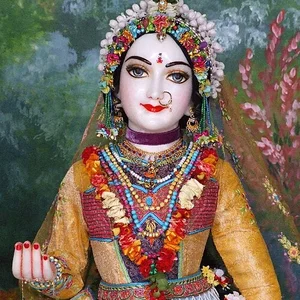
Radha
A central figure in Hindu tradition, Radha is the divine companion of Krishna and the embodiment of pure, absolute love (bhakti). Rooted in Vedic culture and popularized through medieval Sanskrit texts, she symbolizes the human soul seeking union with the divine. Her legend, passed down primarily through oral tradition before being set in writing in texts such as the Gita Govinda (12th century), lies at the heart of Vaishnava spirituality.
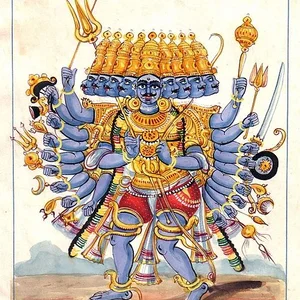
Ravana
Ravana is the ten-headed demon king of Lanka in the Hindu epic the Ramayana. As the principal antagonist, he abducts Sita, the wife of Rama, triggering a cosmic war. Despite his demonic nature, he is recognized as a scholar, accomplished musician, and devoted worshipper of Shiva.
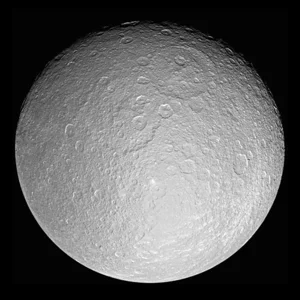
Rhea
Titaness of Greek mythology, daughter of Uranus and Gaia, wife of Cronus. Mother of the six great Olympian gods, she saved Zeus by substituting a swaddled stone for the infant to deceive Cronus. Identified with Cybele, she is venerated as the Great Mother of all the gods.
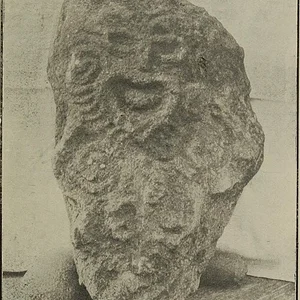
Rongo
Rongo is a major deity of Polynesian mythology, venerated especially by the Māori of New Zealand. God of peace, agriculture, and cultivated plants, he is one of the great atua (gods) born of the union of Ranginui (the sky) and Papatūānuku (the earth). He symbolizes harmony and fertility, in contrast to his brother Tū, god of war.
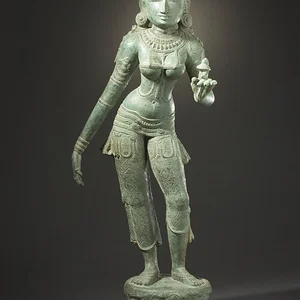
Rukmini
Rukmini is the principal wife of Krishna and the goddess of prosperity in Hinduism. A princess of the kingdom of Vidarbha, she eloped with Krishna to escape a forced marriage, symbolizing divine love and absolute devotion.
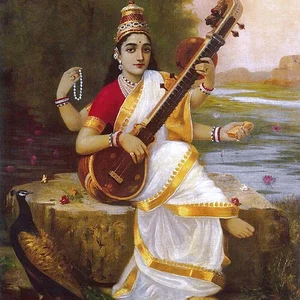
Sarasvati
A major goddess of the Hindu tradition, Saraswati is venerated as the deity of knowledge, speech, the arts, and music. Rooted in the Vedic civilization of ancient India, she is mentioned as early as the hymns of the Rig-Veda (c. 1500–1200 BCE). She embodies the ideal of pure knowledge and spiritual creativity.

Selene
A Greek Titaness personifying the Moon, Selene crosses the sky each night on her silver chariot drawn by white horses. Daughter of Hyperion and Theia, she is the sister of Helios (the Sun) and Eos (the Dawn). Her passion for the shepherd Endymion, whom she caused to fall into an eternal sleep so she could gaze upon him forever, is one of the most celebrated myths in the Greek tradition.
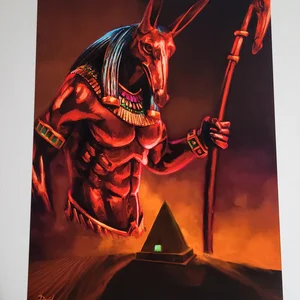
Set
Set is the Egyptian god of chaos, storms, and the desert. Brother of Osiris, whom he murdered to seize the throne of Egypt, he was later defeated by his nephew Horus. An ambivalent figure, he was also venerated as the protector of Ra against the serpent Apophis.
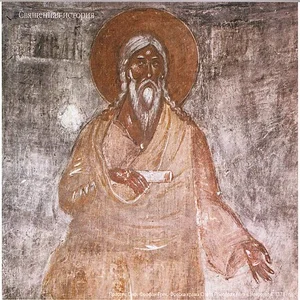
Seth
3873 av. J.-C. — 2957 av. J.-C.
Egyptian god of chaos, storms, and the desert, Seth is one of the most complex deities in the Egyptian pantheon. Brother of Osiris, whom he murdered, he embodies primal violence but also the protective force necessary for cosmic order.
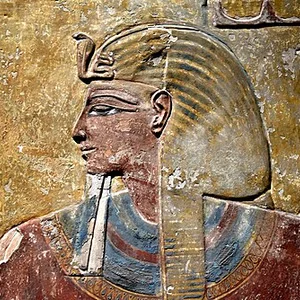
Seti I
1322 av. J.-C. — 1278 av. J.-C.
Seti I was the second pharaoh of the Nineteenth Dynasty of Egypt, reigning around 1294–1279 BC. Son of Ramesses I, he restored Egypt's military and religious power following the Amarna period. He is renowned for his campaigns in Canaan and Libya, as well as for his magnificent temple at Abydos.
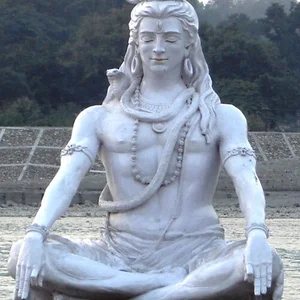
Shiva
Shiva is one of the three principal deities of Hinduism, forming the Trimūrti alongside Brahmā and Vishnu. God of destruction and transformation, he also embodies meditation, the arts, and fertility. His cult, rooted in the Indus Valley civilization, is one of the oldest in the world.
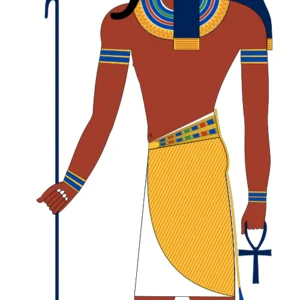
Shou
Shou is the ancient Egyptian deity personifying air and light. Son of Ra and husband of Tefnut, he supports the vault of the sky by separating Nut (the sky) from Geb (the earth). He embodies the vital space between the cosmos and the earthly world.
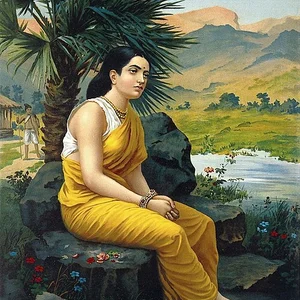
Sita
Central heroine of the Ramayana, the Sanskrit epic of the Hindu tradition, Sita is the wife of Rama and the adopted daughter of King Janaka. Born of the earth according to tradition (her name means "furrow"), she embodies purity, faithfulness, and virtue in Indian culture.
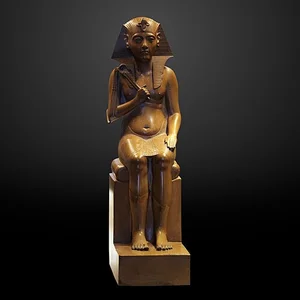
Smenkhkare
1400 av. J.-C. — 1333 av. J.-C.
A short-lived pharaoh of ancient Egypt's 18th Dynasty, Smenkhkare reigned briefly around 1338–1336 BC, succeeding Akhenaten. His identity remains one of the most enigmatic puzzles of ancient Egypt.
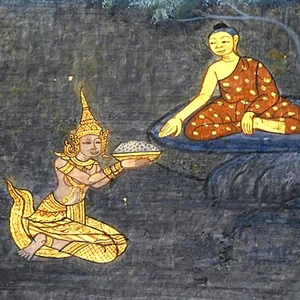
Sujata
Sujata was a young village woman from ancient India who offered a bowl of rice pudding to Siddhartha Gautama, allowing him to break his extreme fast before attaining Enlightenment. This act of generosity is considered a founding moment of Buddhism.
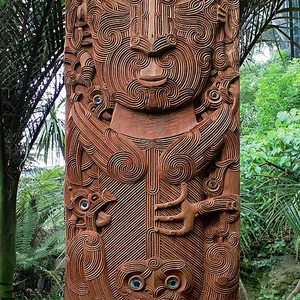
Tane
Tāne is the god of the forest and birds in Māori mythology. Son of Rangi (the Sky) and Papa (the Earth), he separated them to let light into the world. He is also the creator of the first woman, shaped from the red clay of the earth.
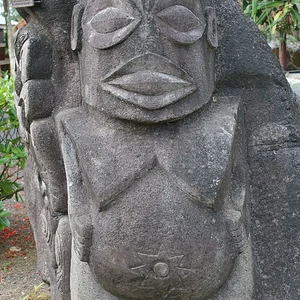
Tangaroa
Tangaroa is the god of the sea and oceans in Polynesian mythology, venerated across the Pacific (Māori, Samoa, Tahiti, Hawaii). Son of Rangi (sky) and Papa (earth), he rules over the ocean depths and is often regarded as the creator of many islands and living beings.

Tartarus
In Greek mythology, Tartarus is both a primordial deity born of Chaos and a cosmic place: the deepest abyss in the universe, located beneath the Underworld, where Zeus imprisoned the defeated Titans and where the greatest criminals atone for their crimes for eternity.
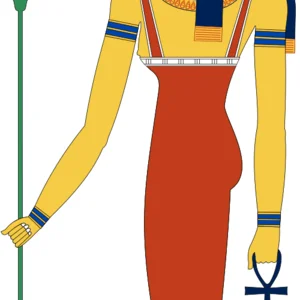
Tefnut
Tefnut is an Egyptian goddess with the head of a lioness, personification of moisture and dew. Daughter of Ra and sister-wife of Shu, she is part of the Ennead of Heliopolis. She embodies life-giving rain and plays a role in maintaining cosmic balance.

Tethys
Titaness of the sea and freshwaters in Greek mythology, daughter of Gaia and Ouranos. Wife of the Titan Oceanus, she is the mother of the 3,000 Oceanids and the great river gods, personifying the nourishing waters of the world.
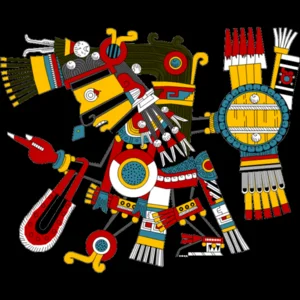
Tezcatlipoca
Tezcatlipoca, "Smoking Mirror," is one of the major deities of the Aztec pantheon. God of the night, the starry sky, sorcery, and fate, he is the eternal rival of Quetzalcóatl. His emblematic attribute is an obsidian mirror in which he reads the thoughts of men.
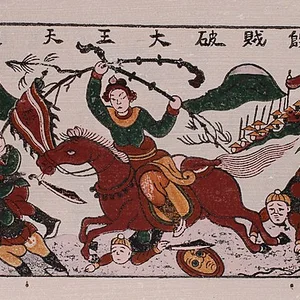
Thánh Gióng
Legendary hero of Vietnam, one of the Four Immortals (Tứ bất tử) of Vietnamese popular belief. A miraculous child who remained mute until the age of three, he suddenly awakens to repel a foreign invasion, then ascends to the heavens. He symbolizes resistance against invaders and the strength of youth.
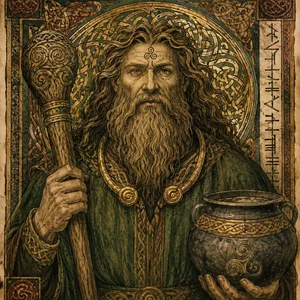
The Dagda
A major deity of Irish mythology, father and chief of the Tuatha Dé Danann. God of fertility, wisdom, and abundance, he wields a colossal club and owns a magical cauldron with inexhaustible provisions.

The Moirai
Greek goddesses embodying Fate, the Moirai are three sisters who spin, measure, and cut the thread of life of every mortal and immortal. Daughters of Zeus and Themis according to Hesiod, they hold absolute authority over the course of all lives — an authority that no one, not even the gods, can challenge.
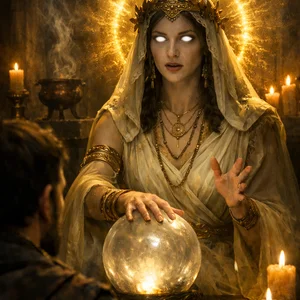
The Pythia
Priestess of Apollo at Delphi, the Pythia delivered her oracles in a trance, seated on a tripod above a fissure in the earth. A central figure in ancient Greek polytheistic religion, her oracle influenced the decisions of city-states and kings.
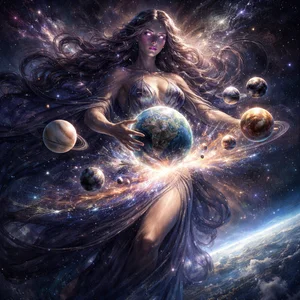
Theia
Titaness of celestial light and vision in Greek mythology. Daughter of Ouranos and Gaia, she united with her brother Hyperion and gave birth to the three great astral deities: Helios (the Sun), Selene (the Moon), and Eos (the Dawn).
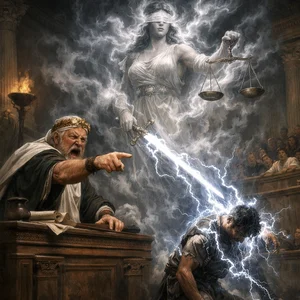
Themis
A Titaness daughter of Ouranos and Gaia, Themis personifies divine law, justice, and cosmic order in the Greek tradition. A privileged counselor of Zeus and his second divine wife, she is the mother of the Horae and the Moirai, guardians of fate and the seasons.

Thetis
Thetis is a Nereid, a sea deity of Greek mythology, daughter of Nereus and mother of the hero Achilles. She plays a central role in Homer's Iliad, interceding with the gods on behalf of her son. An embodiment of divine maternal power, she stands at the heart of Greece's great epic narratives.
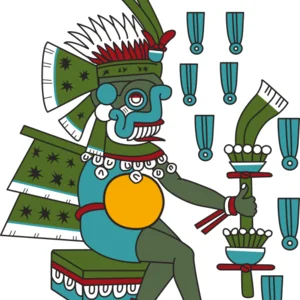
Tlaloc
Tlaloc is the Aztec god of rain, water, and fertility. Venerated since the pre-Classic Mesoamerican civilizations, he was one of the most important deities in the Aztec pantheon, associated with both life and death.
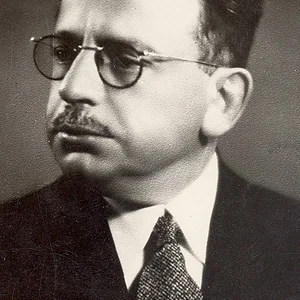
Toci
Toci, whose name means “Our Grandmother” in Nahuatl, is a mother goddess in Aztec mythology. Associated with the earth, healing, and midwives, she was venerated as the “heart of the Earth” and ranks among the major deities of the Mexica pantheon.
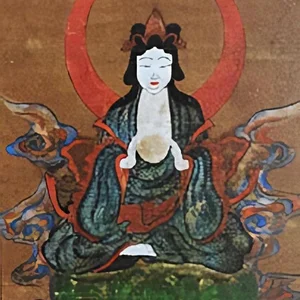
Tsukuyomi
Tsukuyomi is the god of the Moon in Japanese Shintō mythology. Born from the right eye of Izanagi during the primordial purification, he reigns over the night. His quarrel with the sun goddess Amaterasu explains the separation of day and night.
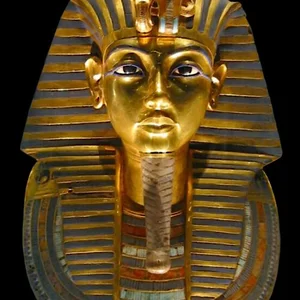
Tutankhamun
1340 av. J.-C. — 1323 av. J.-C.
An Egyptian pharaoh of the 18th Dynasty, he reigned around 1332–1323 BCE. Ascending to the throne at approximately nine years old, he restored polytheistic worship after the Atenist revolution of Akhenaten. His tomb, discovered intact in 1922, is one of the greatest archaeological discoveries of the 20th century.
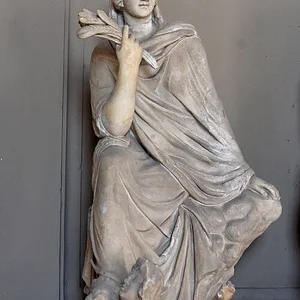
Tyche
Tyche is the Greek goddess of fortune, chance, and destiny. Daughter of Oceanus and Tethys, she personifies the whims of fate that govern the lives of mortals and the destinies of cities. Her cult spread throughout the Hellenistic world.
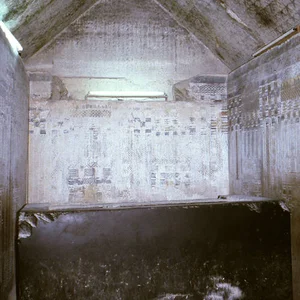
Unas
2374 av. J.-C. — 2349 av. J.-C.
Unas was the last pharaoh of the Fifth Dynasty of ancient Egypt, reigning around 2375–2345 BCE. His pyramid at Saqqara is world-famous for containing the Pyramid Texts, the oldest known corpus of religious writings in human history.
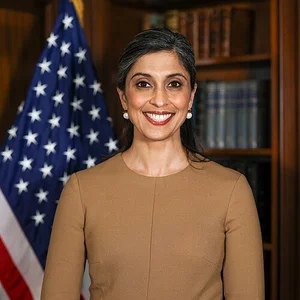
Ushas
Ushas is the goddess of the dawn in Vedic and Hindu mythology. Celebrated in the Rigveda, she personifies the rising morning light that chases away the darkness and awakens the living world.
Väinämöinen
Väinämöinen is the central hero of the Kalevala, Finland's national epic. A primordial sage and shamanic bard, he embodies wisdom, magic, and music in Finnic mythology. His kantele casts spells over men, animals, and nature alike.
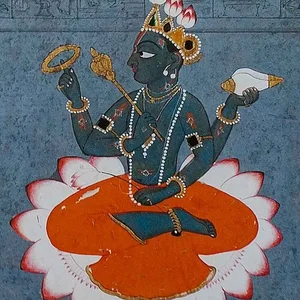
Vishnu
Vishnu is one of the three principal deities of Hinduism, forming the Trimurti alongside Brahma and Shiva. God of protection and preservation of the universe, he manifests in multiple avatars including Krishna and Rama, central figures in Indian mythology.
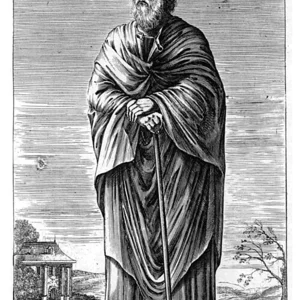
Xenophanes
569 av. J.-C. — 477 av. J.-C.
Pre-Socratic Greek philosopher and poet born in Colophon around 570 BC. He criticized the anthropomorphic polytheism of Homer and Hesiod, and argued for a single, universal, non-human god. A forerunner of rational theology and epistemology.
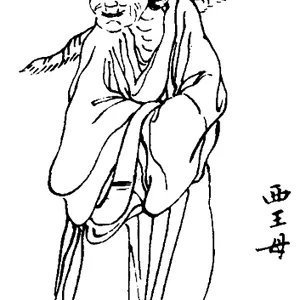
Xiwangmu
Xiwangmu, the Queen Mother of the West, is one of the great deities of Chinese mythology and religion. Guardian of the peaches of immortality, she reigns over Mount Kunlun and presides over the fate of immortals. Her cult, attested as early as the Shang dynasty, spans the entire religious history of China.
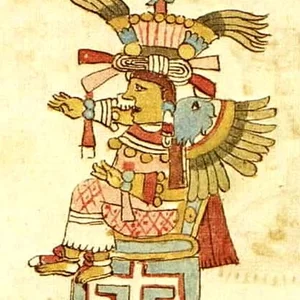
Xochiquetzal
Aztec goddess of beauty, love, fertility, and the creative arts, associated with flowers, plants, and femininity. She represents eternal youth and sensuality in the Mesoamerican pantheon.
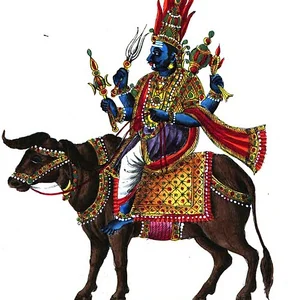
Yama
Yama is the god of death and justice in Hindu and Buddhist traditions. He rules over the realm of the dead and weighs souls to determine their rebirth according to the deeds performed during their lifetime.
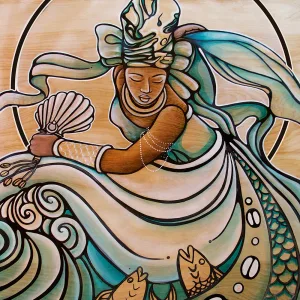
Yemanjá
Yemanjá is a female water deity from the Yoruba religion of West Africa, venerated as the mother of the gods (orishas) and protector of the sea. Carried to the Americas by the Atlantic slave trade, she became a major figure in Brazilian Candomblé and Cuban Santería.
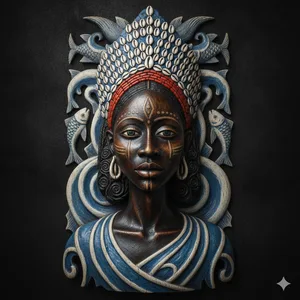
Yemoja
Yemoja is a major orisha of the Yoruba pantheon, goddess of waters and protective mother. Venerated in West Africa, she became a central figure in Afro-American religions (candomblé, santería) born of the diaspora.
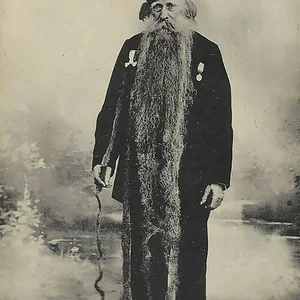
Yhi
Yhi is the goddess of the sun, light, and creation in the mythology of the Aboriginal peoples of Australia, particularly the Karraur. Asleep at the beginning of time, her awakening illuminated the world and brought all life on Earth into being.
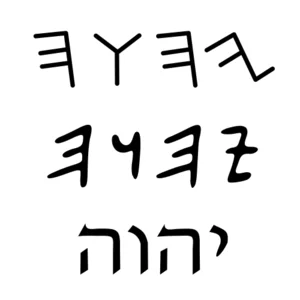
YHWH
YHWH is the divine name in the Hebrew religion, composed of four letters (yod, he, vav, he). It designates the one God of Israel, at the heart of the Abrahamic monotheistic tradition.
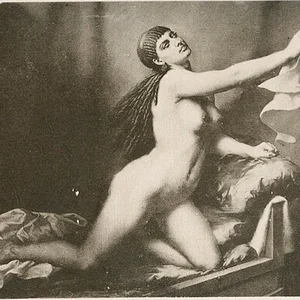
Zulaikha
Zulaikha is the wife of Potiphar, a high Egyptian dignitary, famous in the Bible (Genesis 39) and the Quran (Surah Yusuf) for attempting to seduce Joseph. Joseph's refusal and her false accusation lead him to prison. She has become a major literary figure, particularly in classical Persian poetry.
Antiquity(68)
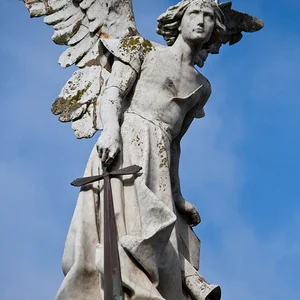
Abaddon
A biblical figure from the Book of Revelation, Abaddon is the angel-king of the bottomless pit, whose Hebrew name means 'destruction.' He commands the devastating locusts during the fifth seal and embodies the ambiguous boundary between destroying angel and demonic power.
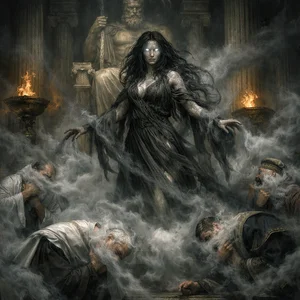
Achlys
Greek deity personifying the darkness of death and the mist that veils the eyes of the dying. Rooted in Greek mythological tradition, she ranks among the primordial entities who preceded the Olympians.
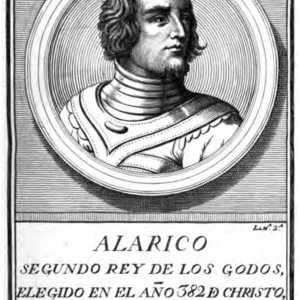
Alaric I
370 — 410
King of the Visigoths from 395 to 410, Alaric I is famous for leading the sack of Rome in 410, a symbolic event marking the beginning of the end of the Western Roman Empire.
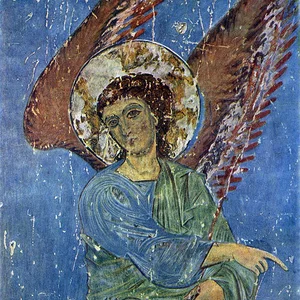
Archangel Gabriel
Archangel and divine messenger present in all three monotheistic religions. In Christianity, he announces to Mary the birth of Jesus. In Islam, he reveals the Quran to the prophet Muhammad.

Archangel Michael
Supreme archangel of the Abrahamic traditions, commander of the heavenly armies and protector of Israel in the Hebrew Bible. Victor over Satan in the Book of Revelation, he is venerated in Judaism, Christianity, and Islam.
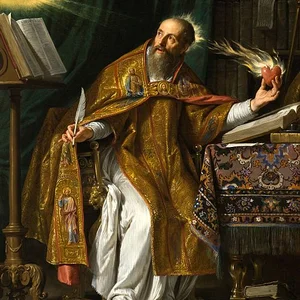
Augustine of Hippo
354 — 430
Christian theologian and philosopher of the 4th century, bishop of Hippo in North Africa. Author of the Confessions and The City of God, he is one of the most influential Latin Fathers of the Church in the history of Christianity.
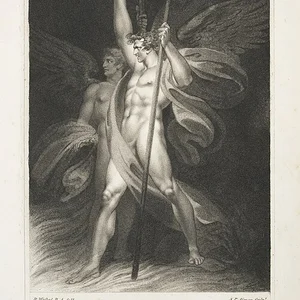
Beelzebub
An ancient Philistine deity (Baal-Zebub, "Lord of the Flies"), worshipped at Ekron. Reinterpreted in the Judeo-Christian tradition as one of the princes of demons, a central figure in medieval demonology.
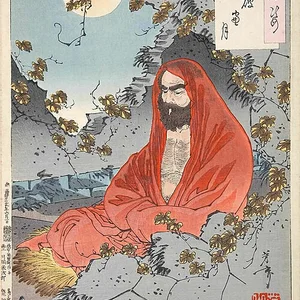
Bodhidharma
440 — 540
Buddhist monk, regarded as the founder of Chan Buddhism in China, from which Japanese Zen derives. According to tradition, he transmitted a form of Buddhism focused on meditation and the direct experience of awakening, beyond the scriptures.
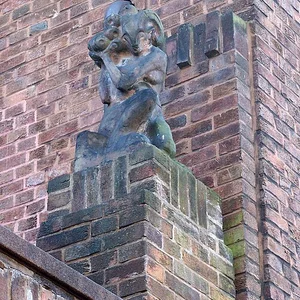
Bona Dea
Bona Dea (“the Good Goddess”) is a Roman deity of fertility, healing and chastity, worshipped exclusively by women. Her secret cult excluded men, and the empress Livia had her temple on the Aventine restored and rededicated.
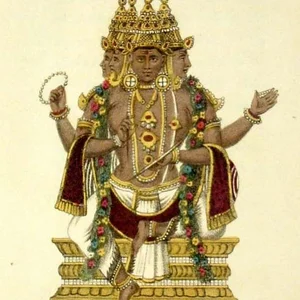
Brahma
Brahmā is the creator god in Hinduism, forming with Vishnu and Shiva the Trimūrti, the divine trinity of Hinduism. He is the master of the Vedas and cosmic knowledge, responsible for the creation of the universe and all living beings.
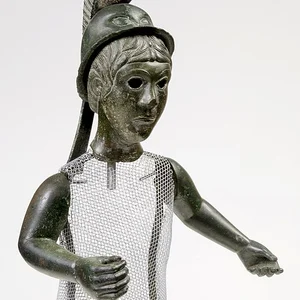
Brigantia
Brigantia is a Celtic goddess honoured in Roman Britain, notably by the **Brigantes** confederation in the north of present-day England. A tutelary and protective deity, she was associated through syncretism with the Roman **Minerva** and with **Victory**. She is often linked to the Irish goddess **Brigid**.
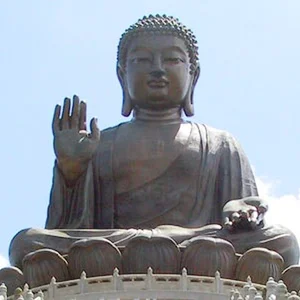
Buddha
vers 563 — vers 483 av. J.-C.
Siddhartha Gautama, founder of Buddhism
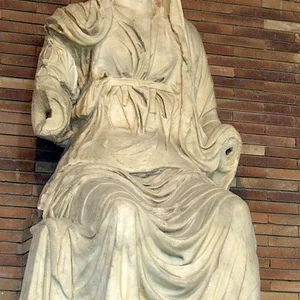
Ceres
Roman goddess of agriculture, harvests, and fertility, equivalent to the Greek Demeter. She is the origin of the word “cereals” and held a central place in Roman religion and daily life.

Chandika
Chandika, also called Chandi, is a fearsome form of the Great Goddess (Devi) in Hinduism. An embodiment of feminine energy (shakti), she is celebrated as the slayer of the buffalo-demon Mahishasura and the forces of chaos. Her worship is central to the sacred text *Devi Mahatmya*.
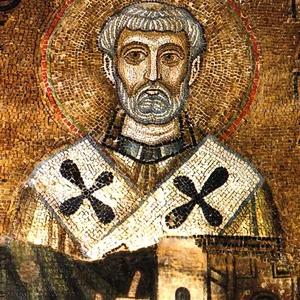
Clement of Rome
100 — 99
Bishop of Rome at the end of the 1st century, Clement is considered one of the earliest popes of the Christian Church. He is best known for his epistle to the Corinthians, a valuable testimony to the organization of the early Church.
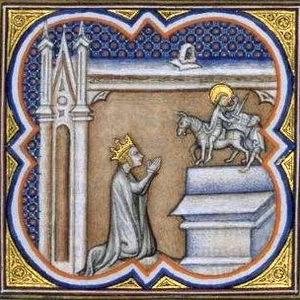
Clotilde
474 — 545
Queen of the Franks and wife of Clovis I, she played a decisive role in her husband's conversion to Christianity. Venerated as a saint by the Catholic Church, she embodies the bringing together of Frankish royalty and Christianity at the dawn of the Middle Ages.

Cybele
Cybele is the great mother goddess of Phrygian origin, mistress of wild nature, mountains, animals, and fertility. Adopted by the Greeks and then officially introduced to Rome in 204 BC under the name Magna Mater, she was honored there with a mystery cult famous for its ecstatic priests.
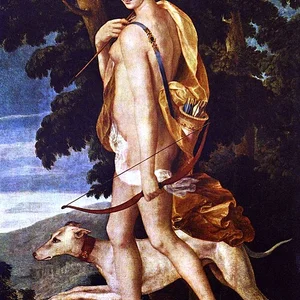
Diana
Diana is the Roman goddess of the hunt, the Moon, and the wild, identified with the Greek Artemis. Daughter of Jupiter and Latona, twin sister of Apollo, she is depicted as a huntress carrying a bow and arrows. An eternal virgin, she also protects women in childbirth and presides over lunar cycles.
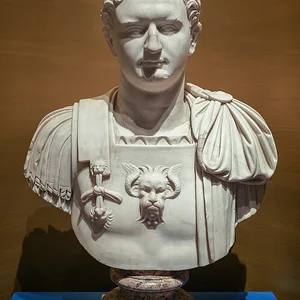
Domitian
51 — 96
Domitian (51–96) was the third and last emperor of the Flavian dynasty. His authoritarian reign was marked by persecutions of Christians and senators, but also by efficient provincial administration.
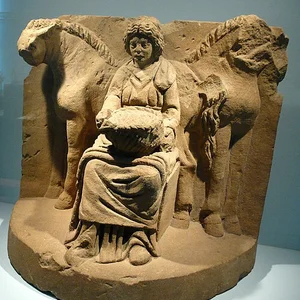
Epona
Epona is a goddess of Gaulish Celtic mythology, the protector of horses, mares, foals, donkeys and mules. Her cult, tied to fertility and the protection of riders, was widely adopted by the Roman cavalry and spread throughout the Empire.
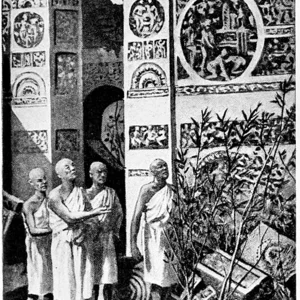
Faxian
337 — 422
A Chinese Buddhist monk of the 4th–5th century, Faxian undertook a long pilgrimage on foot to India to collect sacred texts. His travel account, titled *A Record of Buddhist Kingdoms*, stands as one of the earliest detailed descriptions of India and Central Asia written by a Chinese traveler.

Himiko
Queen and shamaness of the kingdom of Yamatai in Japan, mentioned in Chinese chronicles of the 3rd century. She ruled through her shamanic powers and conducted diplomacy with Wei China, which granted her an official title.
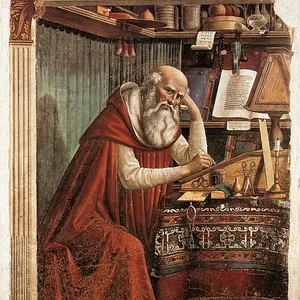
Jerome of Stridon
345 — 420
A Christian monk and scholar of the 4th century, Jerome of Stridon is celebrated for translating the Bible into Latin, producing the Vulgate. A Doctor of the Church, he was also a prolific letter writer and a passionate advocate of the ascetic life.

Jesus of Nazareth
First-century Jewish preacher from Galilee and the central figure of Christianity, which recognizes him as the Messiah and Son of God. His preaching, his crucifixion in Jerusalem under Pontius Pilate, and his disciples' proclamation of his resurrection gave rise to a new religion.
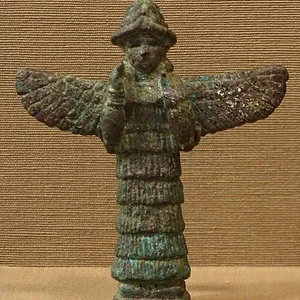
Lamassu
The lamassu is a protective deity of ancient Mesopotamia, depicted as a winged spirit with the body of a bull (or lion), the wings of an eagle and a bearded human head. Standing guard at the gates of Assyrian palaces and cities, these monumental figures warded off the forces of evil.
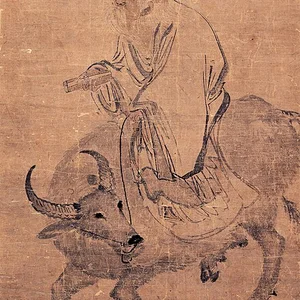
Laozi
vers VIe siècle av. J.-C.
Chinese philosopher, founder of Taoism
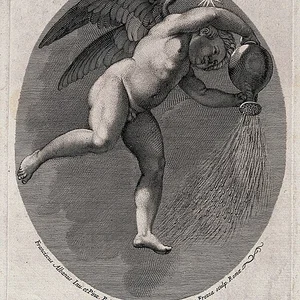
Lucifer
Latin name meaning 'Light-bearer', originally referring to the morning star (Venus). In Christian tradition, it designates the fallen angel cast from Heaven by God for his pride, becoming the figure of absolute Evil.
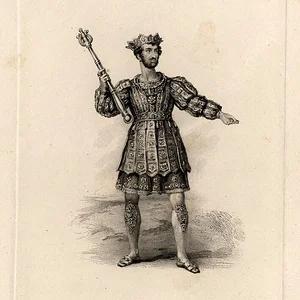
Mammon
Mammon is a demonic figure from the New Testament, a personification of material wealth and greed. Taken up in medieval literature and by Milton in Paradise Lost, he embodies the temptation of earthly riches over spiritual values.
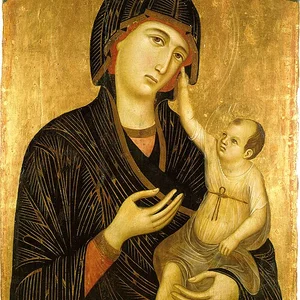
Mary (Mother of Jesus)
17 av. J.-C. — 48
Mother of Jesus of Nazareth, a central figure in Christianity. Venerated as Theotokos (Mother of God) in the Catholic and Orthodox traditions, she holds a major place in the history of monotheistic religions.
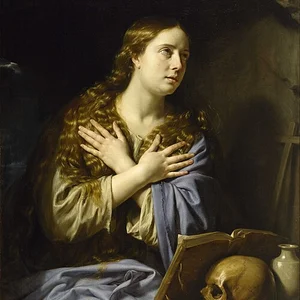
Mary Magdalene
Mary of Magdala, known as Mary Magdalene, is a disciple of Jesus of Nazareth mentioned in the Gospels. She is presented as the first witness to Christ's resurrection, earning her the title of “apostle to the apostles” in Christian tradition.
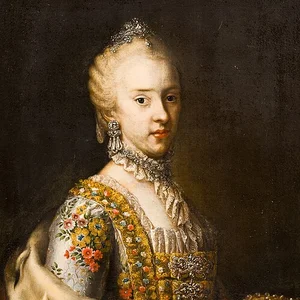
Mary of Nazareth
Mary of Nazareth is, according to the Gospels, the mother of Jesus of Nazareth. A central figure in Christianity and venerated in Islam under the name Maryam, she holds a major place in the religious and cultural history of the West.
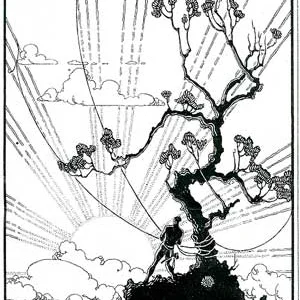
Maui
Demigod and trickster hero of Polynesian mythologies, Māui is one of the most celebrated figures in Pacific oral tradition. He accomplishes extraordinary feats: fishing islands up from the ocean floor, slowing the sun, and stealing fire from the gods to give to humankind.
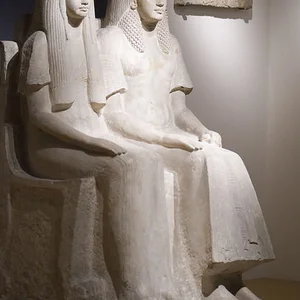
Maya
1400 av. J.-C. — 1300 av. J.-C.
Maya was a high dignitary of ancient Egypt who held important positions at the royal court. He is known for having served as Overseer of the Treasury under Tutankhamun and Horemheb, playing a key role in the administration of the kingdom.

Metatron
Metatron is the highest of the angels in certain Jewish mystical traditions. Celestial scribe and chancellor of Heaven, he is said to be the angelic incarnation of the patriarch Enoch. He appears notably in Merkabah literature and in the Hebrew Book (3 Enoch).
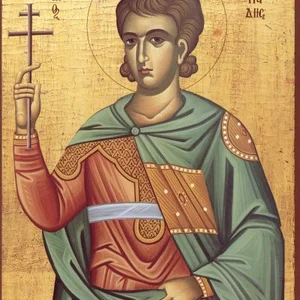
Miltiades
Miltiades was the 32nd bishop of Rome (pope) from 311 to 314. His pontificate coincided with the Constantinian turning point: the Edict of Milan (313) ended the persecutions and granted Christians freedom of worship within the Roman Empire.
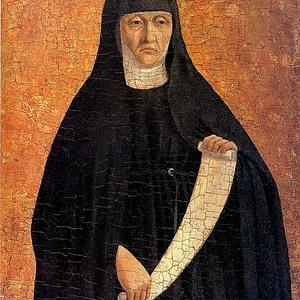
Monica
332 — 387
Mother of Saint Augustine, Monica is venerated as a saint in the Catholic Church for her unwavering faith. She prayed her entire life for her son's conversion. She died in Ostia in 387, shortly after witnessing his baptism by Saint Ambrose in Milan.
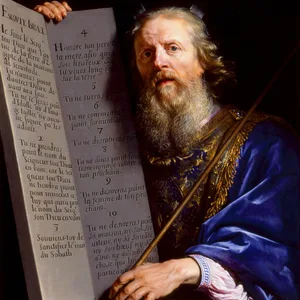
Moses
Moses is a central figure in the Hebrew Bible and Judaism. According to biblical tradition, he led the Hebrew people out of Egypt during the Exodus and received the Ten Commandments on Mount Sinai. He is venerated as the great lawgiver and prophet of the people of Israel.
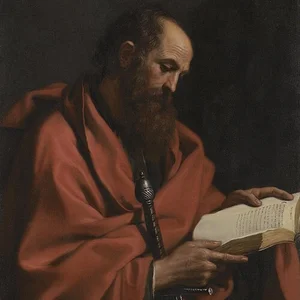
Paul of Tarsus
5 — 66
A Christian apostle and missionary of the 1st century, Paul of Tarsus played a decisive role in spreading Christianity throughout the Roman Empire. His epistles form an essential part of the New Testament.
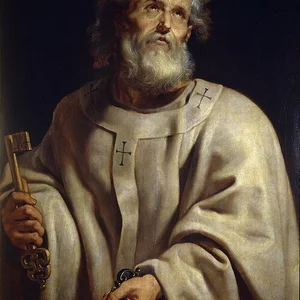
Peter
0 — 65
A fisherman from Galilee who became one of the twelve apostles of Jesus Christ, Peter is considered the first pope of the Catholic Church. He was martyred in Rome around 64–68 AD.
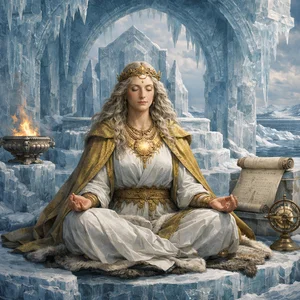
Phoebe
50 — 100
Titaness of brilliance and prophecy in Greek mythology, Phoebe is the daughter of Gaia and Ouranos, wife of the Titan Coeus. Mother of Leto, she is the grandmother of Apollo and Artemis, and is said to have held the oracle of Delphi before passing it on to her grandson.
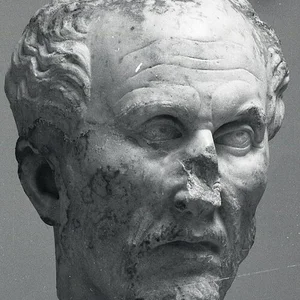
Plotinus
205 — 270
Plotinus is a philosopher of late antiquity, born in Egypt and active in Rome, regarded as the founder of Neoplatonism. His teaching, transmitted and organized by his disciple Porphyry in the *Enneads*, sets out a metaphysics of the One, from which all reality proceeds.
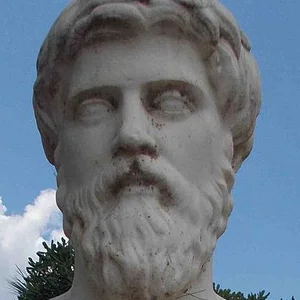
Plutarch
40 — 120
Greek philosopher, biographer, and moralist living under the Roman Empire (c. 46–120 AD). Author of the celebrated Parallel Lives, in which he compares great Greek and Roman figures. His Moralia establish him as a major reference in ancient thought.
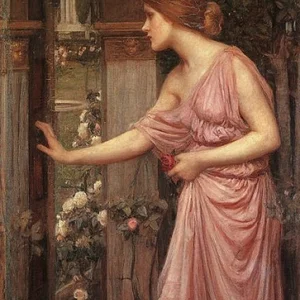
Psyche
Psyche is a mortal of extraordinary beauty whose legend tells of her love for Eros (Cupid). Her myth, transmitted by Apuleius, symbolizes the soul's journey toward divine perfection through trial and love.
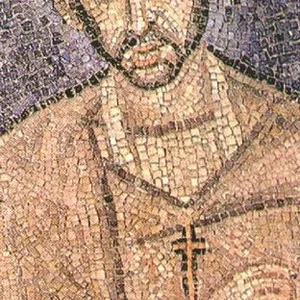
Saint Ambrose of Milan
339 — 397
Bishop of Milan from 374 to 397, Ambrose is one of the four Fathers of the Latin Church. A spiritual and political figure of Late Antiquity, he imposed public penance on Emperor Theodosius I and baptized Augustine of Hippo in 387.
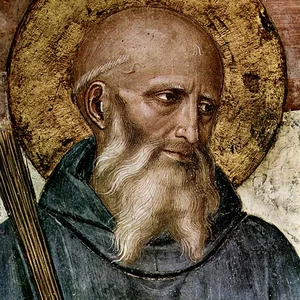
Saint Benedict of Nursia
480 — 547
An Italian Christian monk, Benedict of Nursia is regarded as the founder of Western monasticism. He wrote a monastic rule that organized community life around prayer and work, and founded the abbey of Monte Cassino.

Saint Denis (Martyr of Paris)
First bishop of Paris, sent on a mission to Gaul around 250 AD, Denis was beheaded on the hill of Montmartre during the Roman persecutions. According to legend, he picked up his severed head and walked to the site of his future basilica. He became the patron saint of France and a founding figure of Christianity in the Île-de-France region.
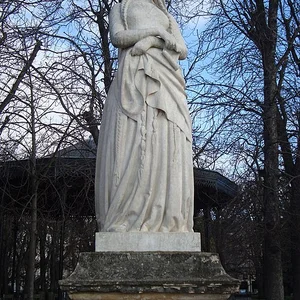
Saint Genevieve
A Gallo-Roman religious woman of the 5th century, Genevieve became the patron saint of Paris. According to tradition, she rallied the people of Paris in the face of the threat posed by Attila and his Huns in 451, urging them to pray rather than flee.
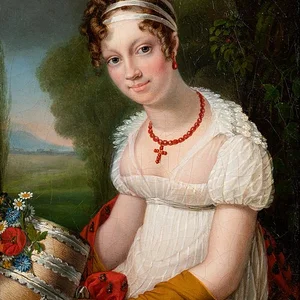
Saint George
Christian martyr of the 4th century, a Roman officer put to death under Diocletian around 303. His medieval legend — the fight against a dragon to rescue a princess — made him the symbol of chivalry and the victory of good over evil.
Saint James (Apostle)
Apostle of Jesus Christ and son of Zebedee, James the Greater was a fisherman in Galilee before following Christ. Beheaded around 44 AD under Herod Agrippa I, he was the first apostle to be martyred. His presumed tomb at Compostela (Spain) became one of the greatest pilgrimage sites of medieval Christendom.
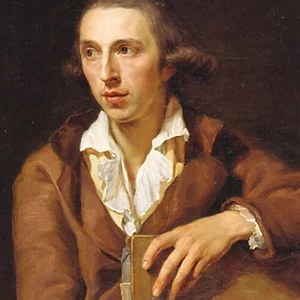
Saint John
Saint John is one of the twelve apostles of Jesus of Nazareth, traditionally identified as “the disciple whom Jesus loved.” Christian tradition attributes to him the fourth Gospel, three epistles, and the Book of Revelation.
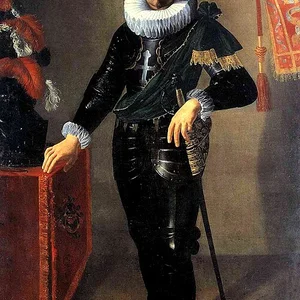
Saint Lazarus
A close friend of Jesus of Nazareth, Lazarus of Bethany was raised from the dead by Christ according to the Gospel of John (chapter 11). His resurrection is one of the foundational miracles of the New Testament and a central symbol of Christian faith in eternal life.
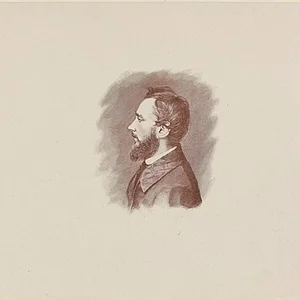
Saint Marcel of Paris
Bishop of Paris in the 5th century (c. 360–436), Saint Marcel is renowned for the legend in which he slew a dragon on the banks of the Bièvre. His tomb became a major pilgrimage site for Parisians of the early Middle Ages.
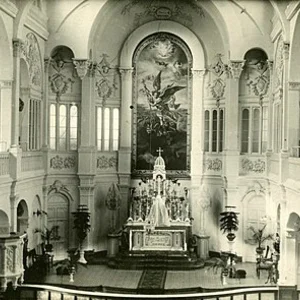
Saint Michael the Archangel
Commander of the heavenly armies in Jewish, Christian, and Muslim tradition, Saint Michael is first mentioned in the Book of Daniel (2nd century BC). Slayer of the dragon in the Book of Revelation, weigher of souls at the Last Judgment, he is also the patron of knights and the guardian saint of Mont-Saint-Michel.
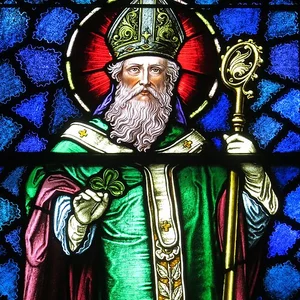
Saint Patrick
400 — 500
Saint Patrick was a fifth-century Christian missionary, regarded as the man who brought Christianity to Ireland. Captured young and enslaved in Ireland, he later returned there as a bishop to Christianize the island. He is the patron saint of Ireland.

Saint Philip (apostle)
One of the twelve apostles of Jesus, originally from Bethsaida in Galilee. He was among the first to be called and played a role as intermediary between Jesus and Greeks who came to meet him. Tradition holds that he died a martyr at Hierapolis in Phrygia.
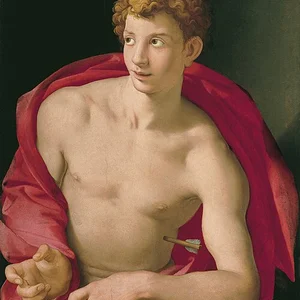
Saint Sebastian
Officer of the Praetorian Guard of Emperor Diocletian, secretly converted to Christianity. Condemned to death by arrows around 288, he survived before being beaten to death. He became one of the most depicted martyrs in Western art.
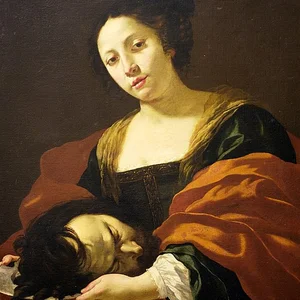
Salomé
14 — 62
Salomé is the daughter of Herodias and stepdaughter of Herod Antipas, tetrarch of Galilee in the 1st century. According to the Gospels, her dance so pleased Herod that he granted her any request she wished: at her mother's urging, she asked for the head of John the Baptist.
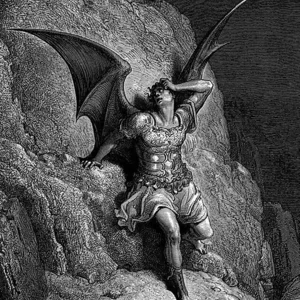
Samael
Samael is a malevolent angel in Jewish tradition, often identified with the Angel of Death and the Accuser (Satan). A central figure in Kabbalah and the Talmud, he embodies evil and opposition to the divine.
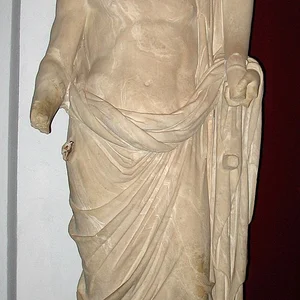
Saturn
Saturn is a major god of Roman mythology, assimilated with the Greek Cronus. God of agriculture, time, and abundance, he ruled over the Golden Age. His festival, the Saturnalia, was one of the most important celebrations in ancient Rome.
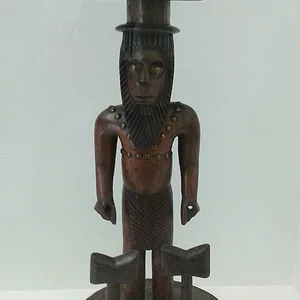
Shango
Shango is the orisha of thunder and lightning in the Yoruba religion of West Africa. A warrior deity associated with divine justice, he is depicted wielding a double axe (oshe) and rules over storms. His cult spread to the Americas through the African diaspora.

Simurgh
The Simurgh is a fabulous and benevolent bird from Persian mythology, a gigantic creature often described as nesting in the Tree of Life. A symbol of wisdom and healing, it protects and guides the heroes of the great Iranian epic tales.

Tenazuchi
Tenazuchi is an earthly deity (kunitsukami) of Japanese Shinto mythology. Wife of Ashinazuchi and mother of Kushinada-hime, she appears in the myth where the god Susanoo saves her daughter from the eight-headed serpent Yamata-no-Orochi.
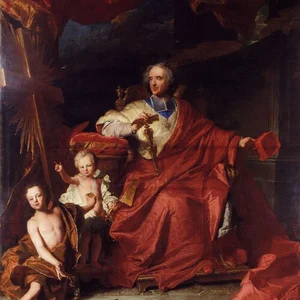
Theodosius I
Theodosius I was the last emperor to rule over the entire Roman Empire, both East and West. He made Nicene Christianity the official religion of the Empire through the Edict of Thessalonica in 380 and banned pagan worship.

Titus Vinius
12 — 69
Roman consul in 69 AD, Titus Vinius was one of Emperor Galba's most influential advisors. A central figure of the 'Year of the Four Emperors', he was assassinated during Otho's coup in January 69.
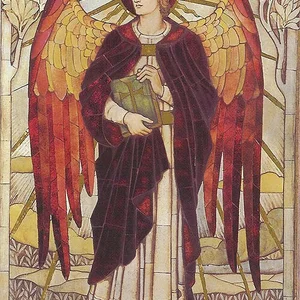
Uriel
Uriel is one of the major archangels of the Abrahamic traditions, whose name means "Fire of God" or "Light of God". He is associated with divine wisdom, repentance, and the guardianship of Eden with a flaming sword.

Venus
Venus is the Roman goddess of love, beauty, and fertility, equivalent to the Greek Aphrodite. Daughter of Jupiter according to some traditions, she plays a central role in Roman mythology and has inspired countless works of art throughout the centuries.
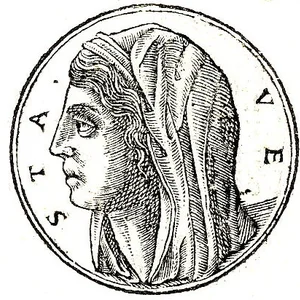
Vesta
Roman goddess of the hearth, sacred fire, and family. Her cult, one of the oldest in Rome, was maintained by the Vestal Virgins — priestesses bound to chastity who were charged with tending the eternal flame in the Temple of Vesta in the Forum.
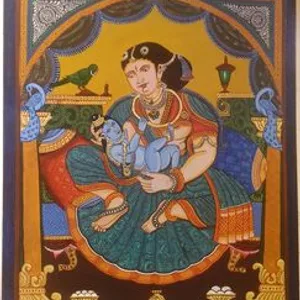
Yashoda
Yashoda is a central figure in Hindu mythology, the foster mother of the god Krishna. Wife of Nanda, chief of the cowherds of Vrindavan, she raises Krishna with unconditional maternal love, a symbol of devotion (bhakti) in Hinduism.
Middle Ages(114)

Abdal Hayy ibn Mawlud
A figure of Yemeni Sufism, presented as a spiritual master (sheikh) connected to the mystical tradition of Islam. Reliable biographical sources about him are scarce, and his existence as well as his dates remain poorly documented.
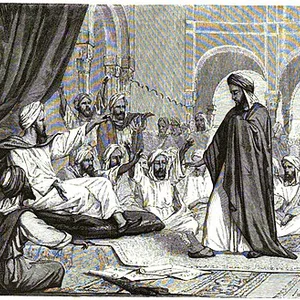
Abu Yaqub Yusuf
The second Almohad caliph (not Almoravid), he reigned from 1163 to 1184 over the Maghreb and al-Andalus. A man of letters and a patron of scholars, he brought the philosophers Ibn Tufayl and Averroes (Ibn Rushd) to his court. He died during the siege of Santarém in Portugal.

Adalberon of Reims
Archbishop of Reims from 969 to 989, Adalberon was a major political figure of the late 10th century. Advised by Gerbert of Aurillac, he played a decisive role in the accession of Hugh Capet to the throne in 987, bringing the Carolingian dynasty to an end.

Agatha Southeil
Agatha Southeil is a legendary character associated with Arthurian folklore and tales of medieval witchcraft. Portrayed as a sorceress or prophetess, she belongs more to legendary tradition than to documented history.
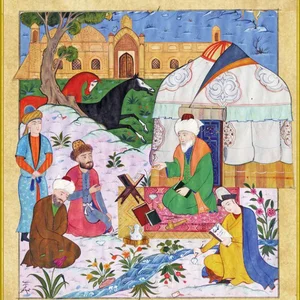
Ahmad Yasawi
1093 — 1166
Ahmad Yasawi was a 12th-century Turkic-speaking Sufi mystic poet, founder of the Yasawiyya order. Born in Sayram, he lived in Yasi (present-day Kazakhstan), where he composed the Divan-i Hikmet, a collection of spiritual poems in popular Turkic language that helped spread Islam across the Central Asian steppes.
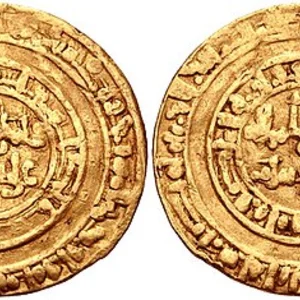
Al-Hakim bi-Amr Allah
985 — 1021
Sixth Fatimid caliph of Egypt (996–1021), Al-Hakim is a controversial figure known for his unpredictable decrees and uncompromising religious policies. He is venerated as a divine manifestation by the Druze religion, which emerged during his reign.
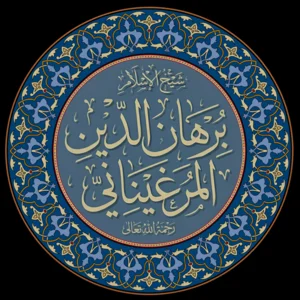
Al-Marghinani
1123 — 1197
Al-Marghinani was the greatest Hanafi jurist of the 12th century. Born in Marghinan in Central Asia, he composed Al-Hidaya, a treatise on Islamic law that served as a reference for centuries throughout the Muslim world and into the Ottoman Empire.
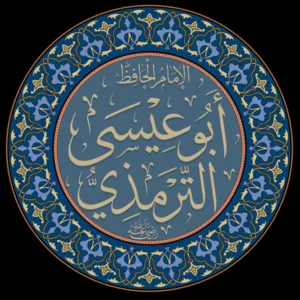
Al-Tirmidhi
0824 — 0892
Al-Tirmidhi was one of the great hadith compilers of medieval Islam. Born in Tirmidh in Khorasan, he traveled across Iraq, the Hejaz, and Persia to gather the traditions of the Prophet. His collection, the Jami' al-Tirmidhi, is one of the six canonical books (Kutub al-Sitta) of hadith science.
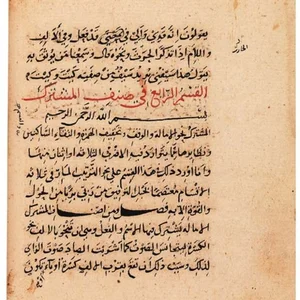
Al-Zamakhshari
1075 — 1144
Al-Zamakhshari was a 12th-century Muslim grammarian, exegete, and theologian, born in Khwarezm. Nicknamed “Jār Allāh” (the neighbor of God) for his long stays in Mecca, he authored the famous Quranic commentary Al-Kashshāf, a monument of Arabic rhetoric. A supporter of the Mu'tazilite movement, he championed a rational reading of the sacred text.
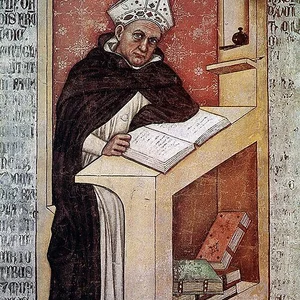
Albert the Great
1200 — 1280
A German Dominican of the 13th century — philosopher, theologian, and naturalist. Teacher of Thomas Aquinas in Paris and Cologne, he introduced the works of Aristotle into Christian thought and observed nature with an almost experimental spirit.
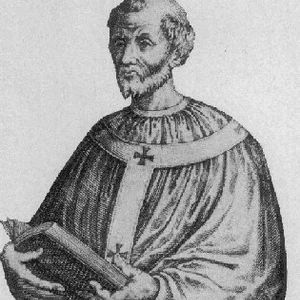
Alexander IV
1200 — 1261
Rinaldo di Jenne, nephew of Gregory IX, became the 181st pope under the name Alexander IV from 1254 to 1261. His pontificate was marked by conflict with the Hohenstaufen and the promotion of the mendicant orders.

Amr ibn al-As
570 — 664
Amr ibn al-As (c. 573-664) was an Arab military commander and administrator, a companion of the Prophet Muhammad. He led the conquest of Byzantine Egypt on behalf of the caliphate and became its first governor, founding the city of Fustat.
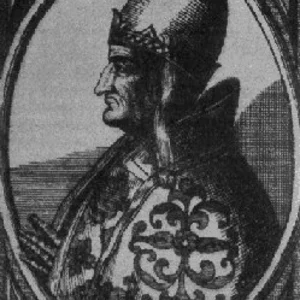
Anastasius IV
Pope of the Catholic Church from 1153 to 1154, Anastasius IV was the 168th successor of Peter. His brief pontificate was marked by efforts at reconciliation with the Byzantine Empire and the management of ecclesiastical affairs across Europe.
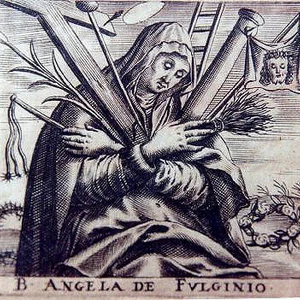
Angela of Foligno
1248 — 1309
A 13th-century Italian mystic, Angela of Foligno was a Franciscan tertiary whose visions were recorded in the Book of Visions and Instructions. A major figure in medieval spirituality, she was beatified in 1693 and canonized in 2013.
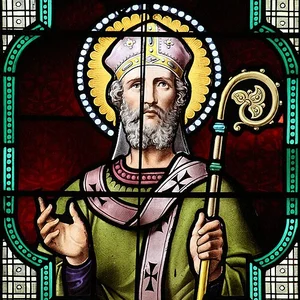
Anselm of Canterbury
1033 — 1109
An Italian-born Benedictine monk who became Archbishop of Canterbury, Anselm is one of the foremost thinkers of early scholasticism. He is famous for his ontological argument, which seeks to demonstrate the existence of God through reason alone.
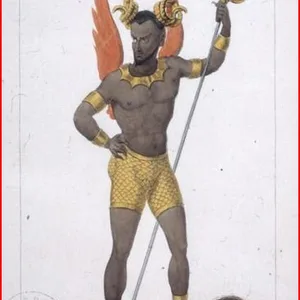
Astaroth
Astaroth is a grand duke of Hell from medieval demonology, considered a corrupted form of the Phoenician goddess Astarte. Described in the Goetia as riding a dragon and holding a serpent, he embodies vanity and sloth. His name illustrates the process by which medieval Christian theology demonized the deities of ancient religions.

Azrael
Azrael is the angel of death in Islamic and Jewish traditions. He is responsible for separating the soul from the body at the moment of death and for recording births and deaths in a great celestial book.
Beatrice of Nazareth
1200 — 1268
Flemish Cistercian nun (c. 1200–1268), abbess of the monastery of Nazareth near Lier. Author of The Seven Manners of Love, one of the earliest mystical works written in the vernacular Dutch language.
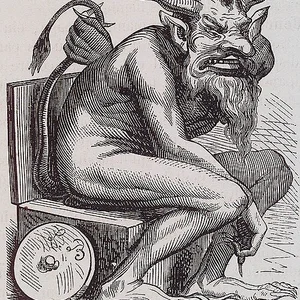
Belphegor
Belphegor is a demon from Hebrew and medieval Christian traditions, associated with the deadly sin of sloth. Considered one of the seven princes of Hell, he tempts humans with promises of wealth and ingenious inventions. His name derives from Baal-Peor, a Moabite deity mentioned in the Bible.
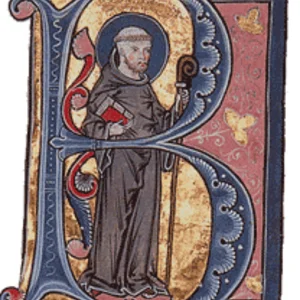
Bernard of Clairvaux
1091 — 1153
A French Cistercian monk, founder and abbot of the Abbey of Clairvaux, he was one of the most influential spiritual figures of the 12th century. A monastic reformer and preacher, he preached the Second Crusade and was canonized and later proclaimed a Doctor of the Church.
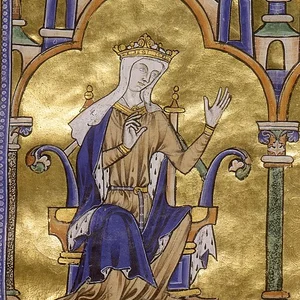
Blanche de Castille
1188 — 1252
Queen of France and regent, Blanche de Castille (1188–1252) governed the kingdom during the minority of her son Louis IX (Saint Louis) and again during his crusade. A woman of exceptional power, she successfully asserted royal authority against the great barons.
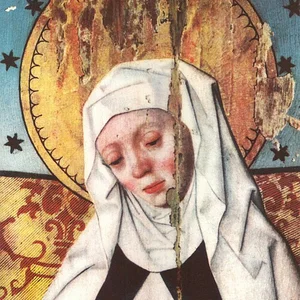
Bridget of Sweden
1303 — 1373
A mystic and Swedish saint of the 14th century, Bridget of Sweden was a wife, mother of eight children, then a pilgrim and founder of the Order of the Most Holy Savior. Her divine revelations, dictated and spread throughout Europe, gave her exceptional spiritual authority.
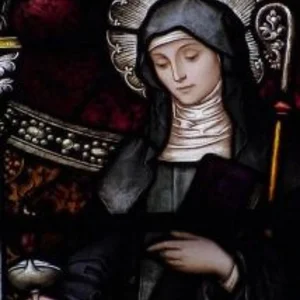
Brigid of Kildare
451 — 525
Saint Brigid of Kildare (c. 451-525) was an Irish abbess and the founder of the great monastery of Kildare. Together with Saint Patrick and Saint Columba, she is one of the three patron saints of Ireland. A largely legendary figure, she is often associated with the Celtic goddess Brigid.
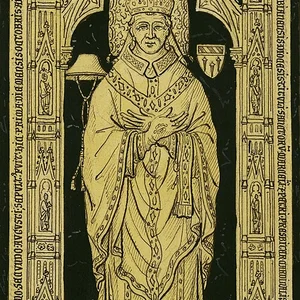
Cardinal Jean Lemoine
French cardinal (c. 1250–1313), renowned canonist and papal legate, he founded the Collège du Cardinal Lemoine in Paris in 1302 to train young clerics from Picardy. Close to Popes Boniface VIII and Clement V, he played a key role at the Roman Curia during the transfer of the papacy to Avignon.
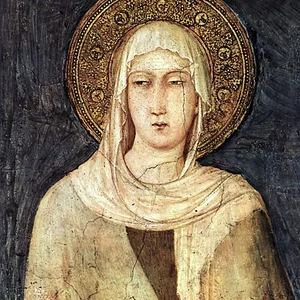
Clare of Assisi
1194 — 1253
Clare of Assisi (1194–1253) was an Italian Catholic saint and founder of the Order of Poor Ladies, known as the Poor Clares. Inspired by Francis of Assisi, she chose monastic life and absolute poverty. She was the first woman to write a religious rule approved by the papacy.
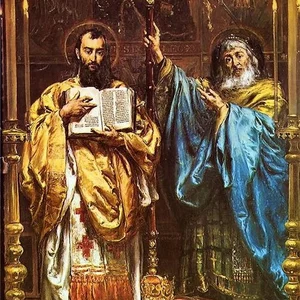
Cyril and Methodius
Cyril and Methodius were two Byzantine brothers of the 9th century, Christian missionaries among the Slavic peoples. They created the Glagolitic alphabet to translate liturgical texts into the Slavic language, laying the foundations of Slavic written culture.
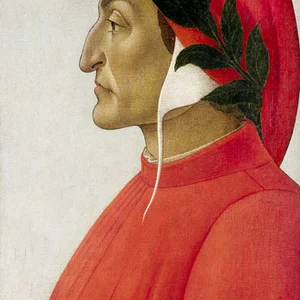
Dante Alighieri
1265 — 1321
Florentine poet of the 13th–14th century, author of *The Divine Comedy*, a masterpiece of medieval literature. Exiled from Florence for political reasons, he laid the foundations of the Italian literary language.
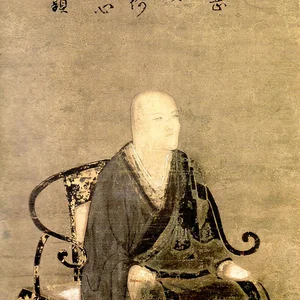
Dogen
Japanese Buddhist monk of the 13th century, founder of the Sōtō school of Zen in Japan. After a stay in China, he taught the practice of seated meditation (zazen) and wrote the Shōbōgenzō, a major work of Buddhist thought.
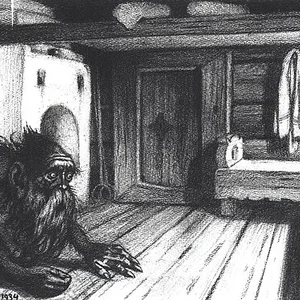
Domovoi
A protective spirit of the home in Slavic mythology, the Domovoi watches over the household and its inhabitants. A tutelary being of the polytheistic Slavic tradition, he embodies the bond between the living and their ancestors. He persists in popular folklore after Christianization.
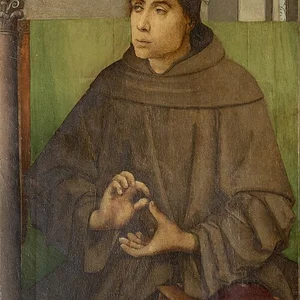
Duns Scotus
1266 — 1308
John Duns Scotus was a Scottish Franciscan philosopher and theologian, one of the major figures of late scholasticism. Nicknamed the “Subtle Doctor” for the refinement of his reasoning, he profoundly renewed medieval metaphysics.
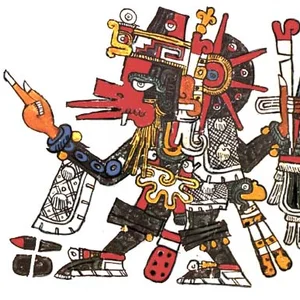
Ehecatl
Ehecatl is the Aztec god of wind, often identified with Quetzalcoatl in the composite form Ehecatl-Quetzalcoatl. He is regarded as the creative breath that set the world in motion and made the birth of the current sun possible.
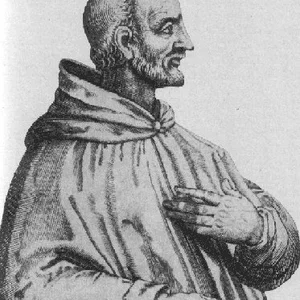
Eugene III
1200 — 1153
Pope from 1145 to 1153, Eugene III was the first Cistercian to rise to the papacy. A disciple of Saint Bernard of Clairvaux, he preached the Second Crusade and sought to reform the Church by strengthening papal authority.
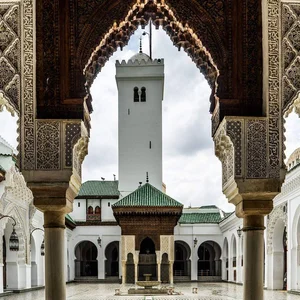
Fatima al-Fihri
A Muslim scholar and patron from Kairouan (present-day Tunisia), Fatima al-Fihri founded the al-Qarawiyyin mosque-university in Fez in 859, considered the oldest continuously operating university in the world. Born into a Berber-Arab family that emigrated to Morocco, she devoted her entire fortune to this institution of learning.
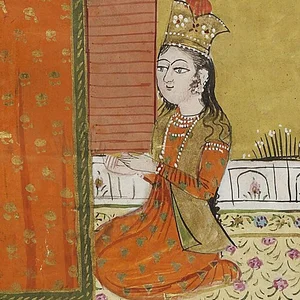
Fatima Zahra
604 — 632
Daughter of the prophet of Islam Muhammad and his first wife Khadija. Wife of Ali ibn Abi Talib, she is a major and venerated figure in Islam, particularly in Shiism, where she holds a central place.
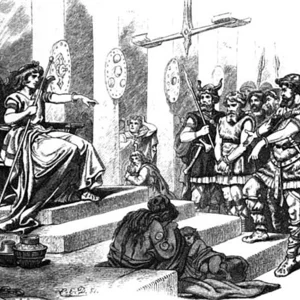
Forseti
Forseti is the Norse god of justice and reconciliation in Scandinavian mythology. Son of Baldr and Nanna, he presides over the divine tribunal Glitnir, whose golden walls and silver roof symbolize the brilliance of justice. He is considered the greatest judge among gods and men.
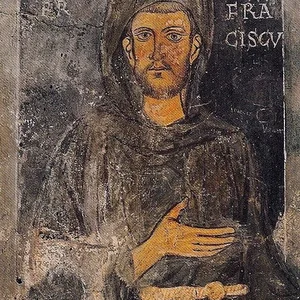
Francis of Assisi
1182 — 1226
Born in Assisi in 1182, Francis renounced his family's wealth to live in evangelical poverty. He founded the Order of Friars Minor (Franciscans) and championed a form of Christianity rooted in closeness to the poor and to nature. Canonized as early as 1228, he is one of the most influential spiritual figures of the Middle Ages.
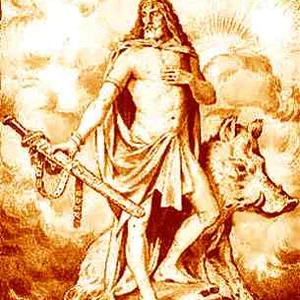
Freyr
Freyr is one of the major deities of Norse mythology, belonging to the Vanir, gods of fertility and prosperity. Son of Njörðr and twin brother of Freya, he rules over Álfheimr and is invoked to ensure good harvests, peace, and abundance.
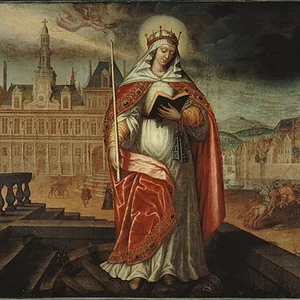
Geneviève de Paris
423 — 502
Christian saint born around 422, venerated for having protected Paris from Attila in 451 through her religious fervor. An advisor to Clovis I, she embodied the emerging alliance between the Church and Frankish royalty. Patron saint of Paris, her feast day is January 3.
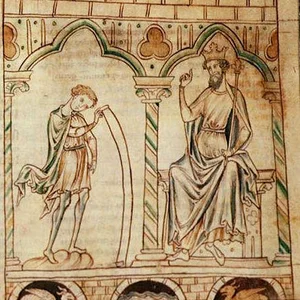
Geoffrey of Monmouth
1100 — 1155
Geoffrey of Monmouth is a 12th-century Welsh cleric and chronicler, famous for his *Historia regum Britanniae* (c. 1136). This work, blending history and legend, popularized the figures of King Arthur and the enchanter Merlin, durably shaping the Matter of Britain.
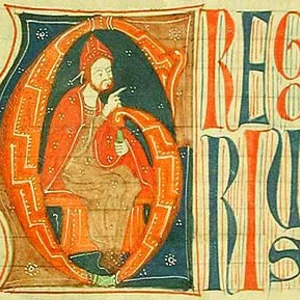
Gregory IX
1170 — 1241
Gregory IX was the 178th pope of the Catholic Church, from 1227 to 1241. A jurist and a man of power, he fiercely opposed Emperor Frederick II and institutionalized the papal Inquisition by entrusting it to the mendicant orders.
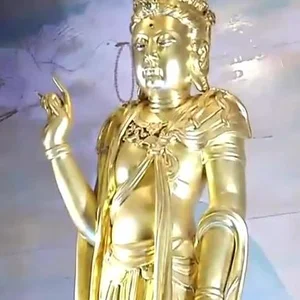
Guan Yin
Guan Yin is the Buddhist goddess of compassion and mercy, venerated throughout East Asia. Originating from the bodhisattva Avalokiteśvara tradition, she gradually took on a feminine form in China between the 7th and 12th centuries. She is one of the most popular religious figures in Mahayana Buddhism.
Hadewijch of Antwerp
1300 — 1260
Thirteenth-century Brabantine poet and mystic, a towering figure of medieval female spirituality. She was most likely a beguine and left an exceptional literary and mystical body of work written in Middle Dutch.
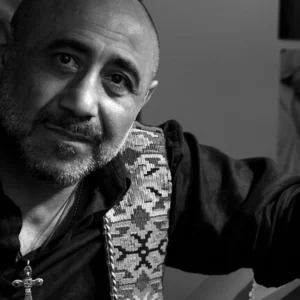
Hallaj
Persian Sufi mystic of the medieval Muslim world, famous for his ecstatic proclamation “Ana al-Haqq” (“I am the Truth/the Real”). Accused of blasphemy, he was imprisoned and then executed in Baghdad in 922, becoming a major figure of mystical martyrdom in Islam.
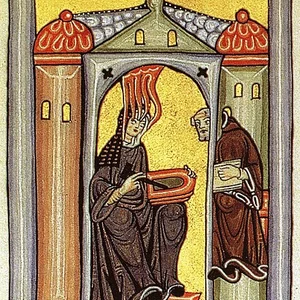
Hildegard von Bingen
1098 — 1179
First known composer, visionary, Doctor of the Church
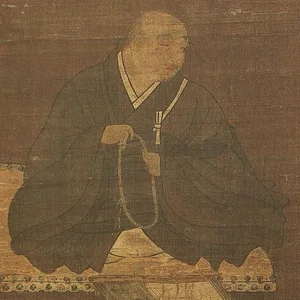
Hōnen
1133 — 1212
Hōnen was a Japanese Buddhist monk who founded the Pure Land school (Jōdo-shū). He taught that simply reciting the nembutsu, the invocation of Amida Buddha, was enough to achieve salvation, making the practice accessible to everyone.
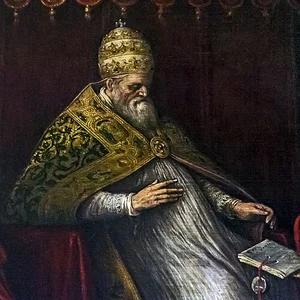
Honorius III
1148 — 1227
177th pope of the Catholic Church from 1216 to 1227. A skilled diplomat, he approved the emerging mendicant orders and worked to organize the Fifth Crusade.
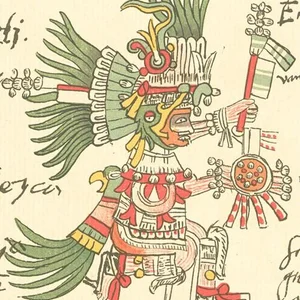
Huitzilopochtli
Huitzilopochtli is the god of war and the sun in Aztec mythology. The patron deity of the Mexica people, he guides them from Aztlan to the founding of Tenochtitlan. He lies at the heart of Aztec cosmology and the sacrificial rituals intended to feed the sun.
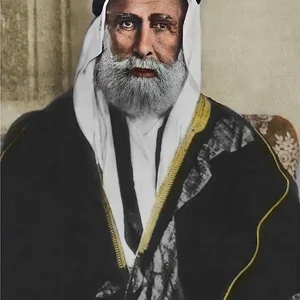
Husayn ibn Ali
626 — 680
Grandson of the prophet Muhammad and son of Ali, he is the third imam of Shia Islam. His refusal to pledge allegiance to the Umayyad caliph Yazid I led to his death at the Battle of Karbala in 680, a founding event of Shia Islam.
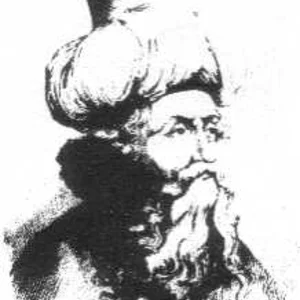
Ibn Arabi
1165 — 1240
Ibn Arabi was a Muslim mystic, theologian, and philosopher born in Murcia in al-Andalus. Nicknamed al-Shaykh al-Akbar (the Greatest Master), he is one of the major figures of Sufism and profoundly shaped the metaphysical thought of Islam.
Ibn Taymiyya
1263 — 1328
A Muslim theologian, jurist, and philosopher of the Hanbali school, born in Harran in 1263 and died imprisoned in Damascus in 1328. A rigorist and controversial thinker, he advocated a return to the scriptural sources of Islam and criticized many practices of his time.
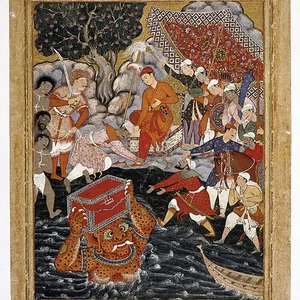
Ifrit
The ifrit is a powerful category of jinn in Islamic tradition, created from smokeless fire. Known for their cunning and danger, they appear in the Quran and One Thousand and One Nights. These supernatural beings hold a central place in medieval Muslim folklore and cosmology.
Incubus
A male demon from medieval demonology, the incubus was believed to have intercourse with women while they slept. It embodied the fear of sexuality and sin in medieval Christian thought. Its female counterpart is the succubus.
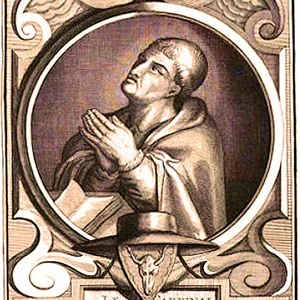
John XXIII (antipope)
Antipope from 1410 to 1415, elected during the Western Schism when three simultaneous claimants contested the papal throne. Deposed by the Council of Constance, he embodies the deep crisis of the medieval Church and the triumph of conciliarism.
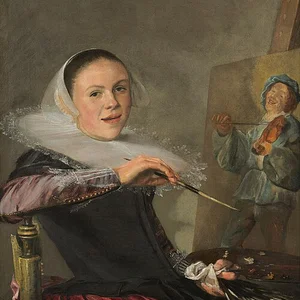
Judith
950 — ?
Legendary ruler of the Kingdom of Semien, Gudit led a revolt around 960 CE that overthrew the Aksumite dynasty of Ethiopia. This warrior queen is said to have reigned for several decades over the Ethiopian highlands, leaving a lasting mark on the collective memory of the region.
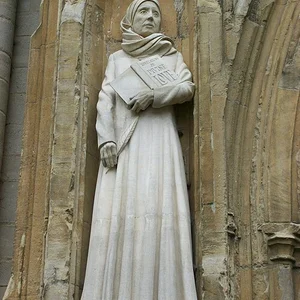
Julian of Norwich
1342 — 1500
A fourteenth-century English mystic, Julian of Norwich is the first known woman to write in the English language. Following a divine vision received in 1373, she composed Revelations of Divine Love, a foundational work of medieval Christian spirituality. Living as an anchoress in Norwich, she developed a theology centered on divine love and mercy.

Jutta of Sponheim
A German Benedictine recluse and mystic of the 12th century, Jutta of Sponheim founded a community of women at the monastery of Disibodenberg. She is best known as the spiritual teacher and educator of Hildegard von Bingen.
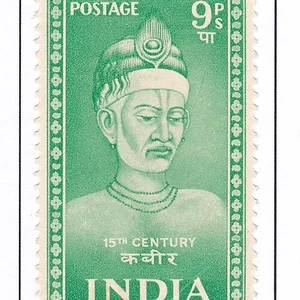
Kabir
1398 — 1518
Kabir was a 15th-century Indian poet and mystic, a leading figure of the Bhakti devotional movement. A weaver by birth, he preached a single God beyond the divisions between Hinduism and Islam, denouncing rituals and caste hierarchies.
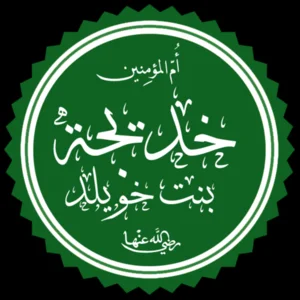
Khadija
557 — 619
A wealthy caravan merchant from Mecca, Khadija bint Khuwaylid was the first wife of the prophet Muhammad and the very first person to embrace Islam. Her fortune and moral support were decisive in the early days of his preaching.
Kitsune
The kitsune is a fox-spirit (yōkai) from Japanese folklore, gifted with supernatural powers and able to shapeshift, notably into a woman. The longer it lives, the more tails it gains, up to nine, a sign of its wisdom and power.
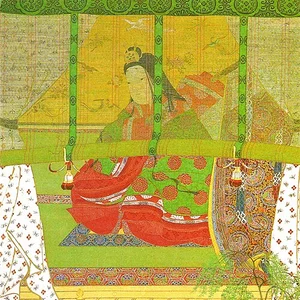
Koken
718 — 770
Empress of Japan who reigned twice (749–758 then 764–770), she is one of the very few women to have occupied the Japanese imperial throne. A devout Buddhist, she actively promoted the spread of Buddhism throughout the country and commissioned the construction of numerous temples.
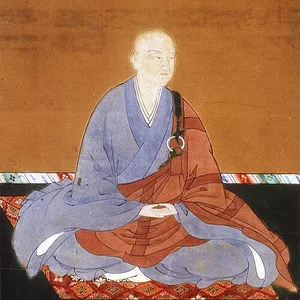
Kōmyō
1322 — 1380
Kōmyō was emperor of Japan from the Northern Court (1336–1348), enthroned by shogun Ashikaga Takauji during the great imperial split of the Nanboku-chō period. After his abdication, he withdrew from political life and became a Buddhist monk, ending his days in prayer and contemplation.
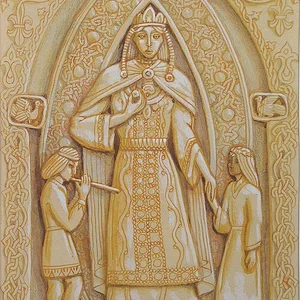
Lada
Lada is the Slavic goddess of love, beauty, and fertility. Venerated in medieval Slavic folk traditions, she presided over spring celebrations, weddings, and fertility. Her cult is attested in ritual songs and seasonal festivals of Slavic peoples.
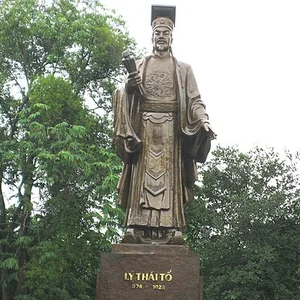
Lý Thái Tổ
974 — 1028
Founder of the Lý dynasty in Vietnam (1009–1028), he moved the capital from Hoa Lư to Đại La, renaming it Thăng Long (present-day Hanoi) in 1010, inaugurating over a thousand years of the Vietnamese capital's history.
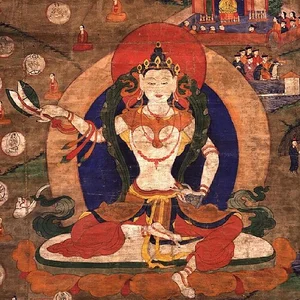
Machig Labdrön
1055 — 1149
Machig Labdrön was a Tibetan Buddhist mystic and master of the 11th–12th centuries. She is the founder of the practice of Chöd, a ritual for cutting through attachment to the ego, and one of the few women to have founded a spiritual lineage in Tibet.
Mama Quilla
Goddess of the Moon in Inca mythology, Mama Quilla is the protector of women, marriage, and the lunar calendar. Wife of Inti, the Sun god, she held a central place in Inca religion and society during the pre-colonial era.
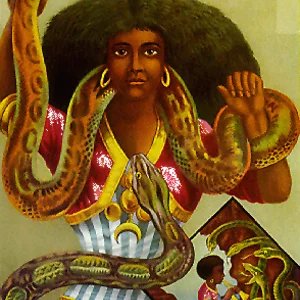
Mami Wata
An aquatic deity venerated in West and Central Africa and throughout the African diaspora in the Americas. A water spirit associated with fertility, healing, and prosperity, Mami Wata is a central figure in vodoun worship and many oral traditions. Her origins are pre-colonial, but her iconography was enriched through contact with Atlantic exchange.
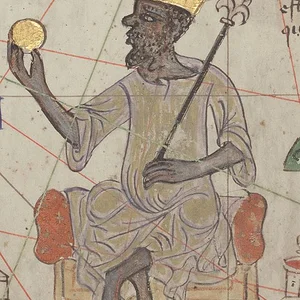
Mansa Musa
1280 — 1337
Mansa Musa (c. 1280–1337) was the tenth mansa (king) of the Mali Empire, one of the largest and wealthiest empires in the medieval world. His pilgrimage to Mecca in 1324–1325 revealed to the world the extraordinary riches of his kingdom.

Margery Kempe
1373 — 1438
English Christian mystic of the late Middle Ages, mother of fourteen children who became a pilgrim and visionary. She dictated the account of her life and mystical experiences, regarded as the first autobiography in the English language.
Marguerite Porete
1250 — 1310
A 14th-century Beguine mystic, Marguerite Porete is the author of The Mirror of Simple Souls, a mystical treatise written in the vernacular. Condemned for heresy by the Inquisition, she was burned alive in Paris in 1310, refusing to recant.

Marie of Oignies
1177 — 1213
A Christian mystic and pious laywoman of the diocese of Liège, Marie of Oignies (c. 1177–1213) was a founding figure of the Beguine movement in the Meuse region. Her life, written by Jacques de Vitry, made her a model of feminine holiness grounded in penance, voluntary poverty, and Eucharistic devotion.
Matilda of Tuscany
1040 — 1115
Countess of Tuscany (1046–1115), Matilda was one of the most powerful women of the medieval Western world. An unwavering ally of the papacy, she played a decisive role in the Investiture Controversy, hosting at her Castle of Canossa the famous penance of Henry IV before Gregory VII in 1077.
Mazu
960 — 987
Mazu is the protective goddess of sailors in Chinese tradition. According to legend, she was born around 960 CE in Fujian province under the name Lin Mo, and was deified after her death. Her cult spread across all the coasts of China and into Chinese communities throughout Southeast Asia.
Mechthild of Magdeburg
1207 — 1282
A Rhenish mystic and German beguine, Mechthild of Magdeburg is the author of The Flowing Light of the Godhead, one of the first great mystical texts written in the vernacular. A major spiritual figure of the 13th century, she describes the union of the soul with God in poetic language of rare intensity.
Meister Eckhart
1260 — 1328
German Dominican theologian, philosopher, and mystic of the Middle Ages. A major figure of Rhineland mysticism, he preached the union of the soul with God and the idea of detachment. Some of his theses were condemned by a papal bull in 1329.
Melisende of Jerusalem
1105 — 1161
Queen of Jerusalem from 1131 to 1153, Melisende was one of the most powerful rulers of the Crusader States. She governed with authority, resisting attempts by her son Baldwin III to remove her from power.
Mictlantecuhtli
Mictlantecuhtli is the god of death in Aztec mythology, ruler of Mictlan, the kingdom of the dead located in the deepest reaches of the underworld. Depicted as a skeleton adorned with necklaces of human eyes and cobwebs, he embodied natural death and the cycle of existence.
Milarepa
1040 — 1123
Milarepa was a Tibetan yogi, hermit, and poet of the 11th–12th centuries, a major figure of the Kagyu school of Tibetan Buddhism. After a youth marked by black magic and revenge, he became the disciple of the master Marpa and attained enlightenment through asceticism and meditation. His spiritual songs (the “Hundred Thousand Songs”) remain famous.

Mokoch
Mokoch is one of the great goddesses of the pre-Christian Slavic pantheon, associated with moist earth, fertility, and fate. A protective deity of women, she presides over spinning, birth, and harvests. Her cult is attested among Eastern Slavs before the Christianization of Kievan Rus' in 988.
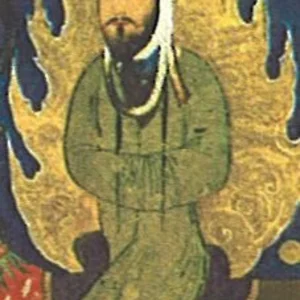
Muhammad
571 — 632
Born around 571 in Mecca, Muhammad is the founder of Islam and the prophet of the Muslim faith. A merchant turned preacher, he received what he believed to be a divine revelation at the age of 40 and united the Arab tribes under a new monotheistic religion.
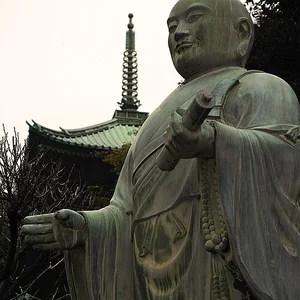
Nichiren
1222 — 1282
Nichiren (1222-1282) was a 13th-century Japanese Buddhist monk, founder of the Nichiren-shū school. He taught that the Lotus Sūtra contained the ultimate essence of the Buddha's teaching and advocated reciting the mantra “Namu Myōhō Renge Kyō.”
Nizam al-Mulk
1018 — 1092
Nizam al-Mulk was the grand vizier of the Seljuk sultans Alp Arslan and Malik-Shah I in the 11th century. A brilliant administrator, he equipped the Seljuk Empire with lasting institutions and founded a network of madrasas, the Nizamiyya, which left a deep mark on the teaching of Sunni Islam.
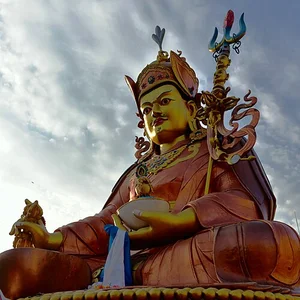
Padmasambhava
717 — 762
Indian tantric Buddhist master of the 8th century, regarded as the founder of Tibetan Buddhism. Nicknamed Guru Rinpoche (“precious master”), he is said to have introduced Vajrayana Buddhism to Tibet and founded the country's first monastery.
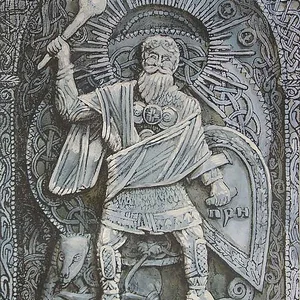
Perun
Perun is the supreme god of thunder and lightning in Slavic mythology. Master of the celestial elements, he is eternally opposed to Veles, deity of the underworld and waters. He is the Slavic equivalent of Zeus or Thor in the Indo-European pantheons.
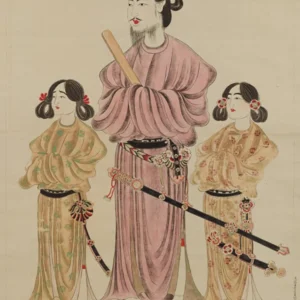
Prince Shōtoku
574 — 622
Regent of Japan under Empress Suiko (593–622), he promoted the spread of Buddhism and Confucianism, promulgated Japan's first constitution, and modernized the state by drawing on the Chinese model.
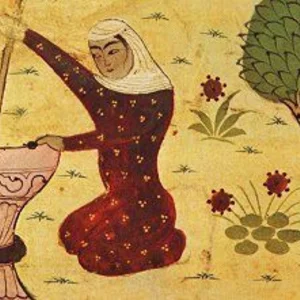
Rābiʿa al-ʿAdawiyya
vers 717 — 801
Rābiʿa al-ʿAdawiyya was a Muslim mystic and poet of the 8th century, born in Basra around 717. A freed slave, she devoted her life to God and became one of the founding figures of Sufism. She introduced the concept of disinterested divine love — loving God not out of fear or hope of reward, but for His own sake.
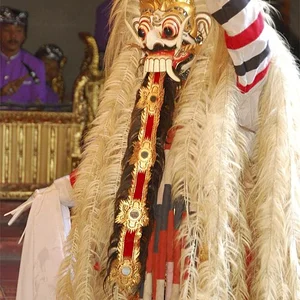
Rangda
Rangda is the demon queen of Balinese mythology, embodiment of evil and the dark forces. She leads an army of witches called Leyaks and is locked in eternal opposition with Barong, the protective spirit of good. This cosmic battle lies at the heart of Balinese spirituality and ritual theater.
Raziel
Raziel is an archangel from Jewish Kabbalistic tradition, guardian of divine secrets and celestial mysteries. According to legend, he gave Adam the Sefer Raziel HaMalakh, a book containing the secrets of the universe. His name means "secret of God" in Hebrew.
Roger Bacon
1220 — 1292
Roger Bacon, nicknamed Doctor Mirabilis, was a 13th-century English Franciscan friar, philosopher, and scholar. A pioneer of the experimental method, he championed observation and mathematics as the foundations of knowledge, long before modern science.
Rûmî
1207 — 1273
Persian Sufi poet, Masnavi, founder of the Whirling Dervishes

Ruqayya
598 — 624
Daughter of the Prophet Muhammad and his first wife Khadija, Ruqayya was one of the very first converts to Islam. Married to Uthman ibn Affan, the future third caliph, she emigrated to Abyssinia and then to Medina, where she died in 624.
Saint Boniface
675 — 754
An Anglo-Saxon Benedictine monk who became a missionary bishop, he evangelized Germania in the 8th century and reorganized the Frankish Church. Regarded as the “apostle of the Germans,” he was martyred in Frisia.

Saint Brigid of Ireland
Irish saint of the 5th-6th century, founder of the monastery of Kildare. Considered alongside Saint Patrick and Saint Columba as one of the three patron saints of Ireland, she is a major figure of Celtic Christianity.
Saint Elizabeth of Hungary
1207 — 1231
A Hungarian princess who became Landgravine of Thuringia, Elizabeth of Hungary (1207-1231) devoted her life to the poor and the sick. Widowed at a very young age, she joined the Franciscan Third Order and founded a hospital, becoming a major figure of medieval Christian charity.
Saint Germain of Paris
496 — 576
Bishop of Paris from 555 to 576, Germain is one of the great figures of the Merovingian Church. Founder of the Abbey of Saint-Germain-des-Prés, he was renowned for his charity toward the poor and his influence over the Frankish kings.

Saint Hilda of Whitby
Hilda of Whitby (614–680) was an Anglo-Saxon abbess, founder and leader of the double monastery of Whitby. A major figure of the Christian Church in Northumbria, she played a leading role at the Synod of Whitby in 664.
Saint Louis
King of France from 1226 to 1270, Louis IX is a major figure of the Middle Ages. Renowned for his piety and his sense of justice, he was canonized in 1297. He led two crusades and died in Tunis in 1270.
Saint Mandé
Gaulish bishop of the 7th century, venerated as a saint in the Frankish Christian tradition. He gave his name to the commune of Saint-Mandé (Val-de-Marne) and to the Paris Métro station on line 1.
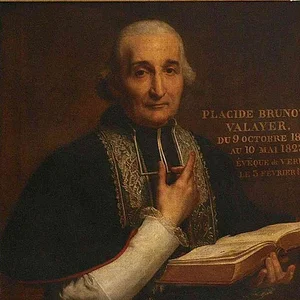
Saint Placid
A disciple of Saint Benedict of Nursia, Placid was a young Roman nobleman who joined the monastery of Subiaco in the sixth century. He is celebrated in Benedictine tradition for having been rescued from drowning by Saint Maurus. Venerated as a martyr, he is one of the earliest disciples of the Benedictine order.
Saint Sulpice
Bishop of Bourges in the 7th century (c. 624–647), Sulpicius the Pious was renowned for his charity toward the poor and his defense of the oppressed. His cult gave its name to the famous Parisian church.
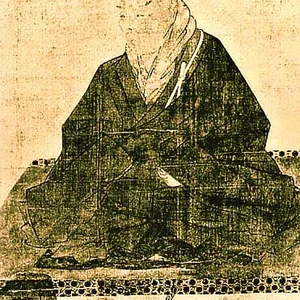
Shinran
1173 — 1263
Shinran was a Japanese Buddhist monk of the Kamakura period and a disciple of Hōnen. He founded Jōdo Shinshū, the "True Pure Land School," which teaches salvation through faith alone in the Buddha Amida.
Sif
Sif is a goddess in Norse mythology, wife of the god Thor. She is famous for her magnificent golden hair, a symbol of the fertility of fields and harvests, which Loki treacherously cut off while she slept and which the dwarves reforged in pure gold.

Succubus
The succubus is a female demon from medieval demonology, believed to visit men in their sleep to unite with them and drain their vital energy. Ubiquitous in the theological and demonological treatises of the Middle Ages, it embodies religious anxieties about sexuality and evil.

Tarasque
The Tarasque is an amphibious dragon from Provençal legend that ravaged the banks of the Rhône near Tarascon. According to Christian tradition, it was tamed by Saint Martha with the sign of the cross and holy water, before being put to death by the townspeople.
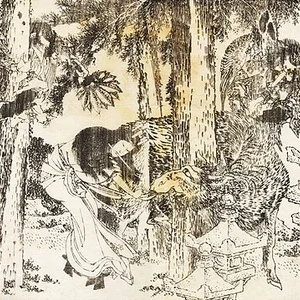
Tengu
Tengu are supernatural creatures from Japanese folklore — mountain spirits, fearsome warriors, and tricksters all at once. Depicted with a long nose or a crow's beak, they are renowned masters of martial arts and military strategy.
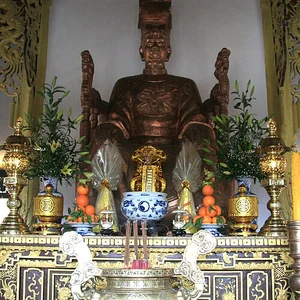
Trần Nhân Tông
1258 — 1308
Third emperor of the Trần dynasty in Đại Việt (r. 1278–1293), he led the victorious resistance against two Mongol invasions under Kublai Khan (1285, 1287). After abdicating, he became a Buddhist monk and founded the Trúc Lâm Yên Tử sect, the first truly Vietnamese school of Chan meditation.
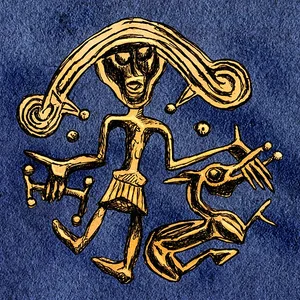
Tyr
Týr is the Germanic god of war and justice in Norse mythology. He is famous for having sacrificed his right hand during the binding of the wolf Fenrir, a symbol of courage and martial honor. His name gave rise to “Tuesday” in English and “Dienstag” in German.
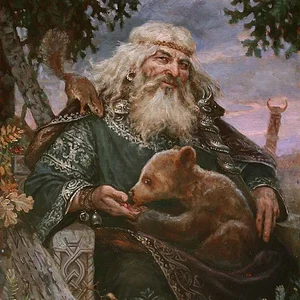
Veles
Veles is one of the major deities of the Slavic pantheon, ruler of the underworld, protector of cattle, and god of magic. He stands in eternal opposition to Perun, the god of thunder, in a cosmic battle symbolizing the duality between darkness and light. His cult, widespread among Slavic peoples, survived in syncretic form after the Christianization of the 9th–12th centuries.
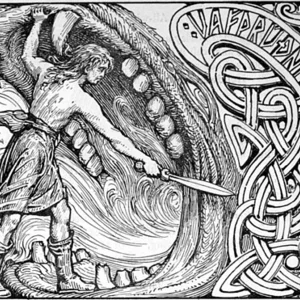
Vidar
Vidar is a god of Norse mythology, son of Odin and the giantess Grid. Known for his silence and colossal strength, he is destined to avenge his father's death by slaying the wolf Fenrir at Ragnarök.
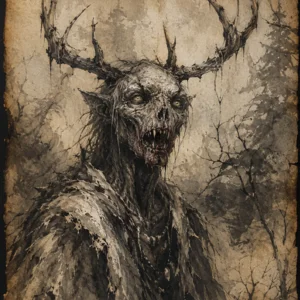
Wendigo
A malevolent spirit from Algonquian traditions (Ojibwe, Cree), the Wendigo embodies insatiable hunger, winter madness, and cannibalism. A mythic creature said to transform anyone who consumes human flesh into a monster, it symbolizes fundamental taboos and the dangers of winter isolation.
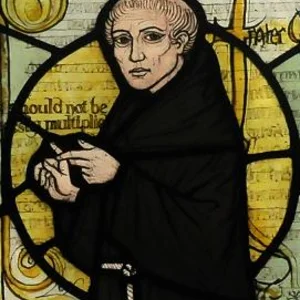
William of Ockham
1287 — 1349
William of Ockham was an English philosopher, logician, and theologian, a major figure of late Scholasticism and of the nominalist movement. A Franciscan friar, he is famous for the principle of parsimony known as “Ockham's razor.”
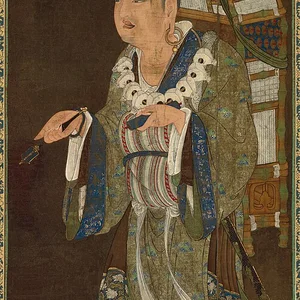
Xuanzang
602 — 664
A 7th-century Chinese Buddhist monk, he undertook a seventeen-year journey to India to collect sacred texts. He translated hundreds of sutras into Chinese and played a major role in the spread of Buddhism in China.

Yahya ibn Muhammad
829 — 864
Idrisid emir of Morocco from 849 to 863, reigning from Fez. His reign was marked by the rise of the city and the founding, in 859, of the al-Qarawiyyin mosque and university.
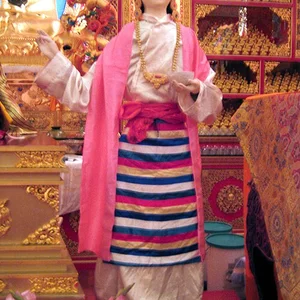
Yeshe Tsogyal
757 — 817
An 8th-century Tibetan princess, disciple and spiritual companion of Padmasambhava, she is venerated in the Vajrayana Buddhist tradition as one of Tibet's first enlightened female masters. A semi-mythical figure of the Tibetan people, she embodies feminine wisdom in Tantric Buddhism.
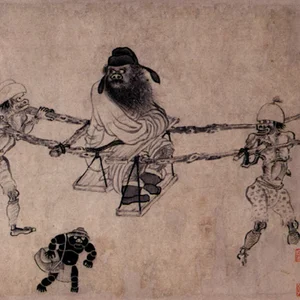
Zhong Kui
Zhong Kui is a deity from Chinese mythology, a demon-slayer and protector of households. Depicted as a fierce-looking bearded man, he is invoked to ward off evil spirits. His image is traditionally painted on house doors during festivals.
Renaissance(33)
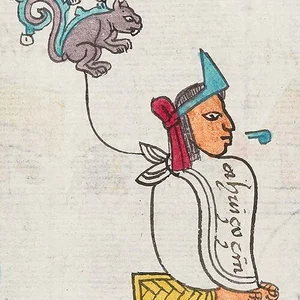
Ahuizotl
1450 — 1502
A legendary creature of Aztec mythology, the Ahuizotl is an aquatic monster resembling a small dog, with smooth black fur and a grasping hand at the tip of its tail. Lurking in lakes and ponds, it lures and drowns its victims to devour their eyes, teeth, and nails.
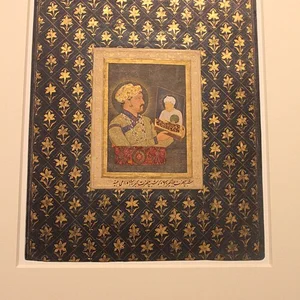
Akbar the Great
The third emperor of the Mughal dynasty, Akbar ruled over northern India from 1556 to 1605. A brilliant military strategist and administrator, he left his mark on history through his policy of religious tolerance toward Hindus and Muslims alike.
Anne Boleyn
1507 — 1536
Queen of England from 1533 to 1536, Anne Boleyn was the second wife of Henry VIII. Her marriage required England's break with Rome, giving rise to the Church of England. Mother of Elizabeth I, she was accused of adultery and beheaded at the Tower of London.
Bartolomé de las Casas
1484 — 1566
Spanish Dominican friar (1474–1566) who devoted his life to defending the rights of Indigenous peoples against the abuses of the conquistadors. He denounced the atrocities committed during the Spanish colonization of the Americas and argued for the humanity of Native peoples before the Spanish Crown.
Catherine Parr
1512 — 1548
Sixth and last wife of King Henry VIII of England, whom she married in 1543. A cultured woman with reformist convictions, she was the only one of the six wives to outlive the king. She served as Regent of England in 1544 during Henry VIII's French campaign.
Clement VII
1478 — 1534
Pope from 1523 to 1534, Clement VII was a sovereign pontiff from the powerful Medici family. His pontificate was marked by the Sack of Rome in 1527 and his refusal to annul the marriage of Henry VIII of England, which triggered the Anglican schism.
Ferdinand II of Aragon
1452 — 1516
King of Aragon, Ferdinand II married Isabella of Castile in 1469, uniting the two great Iberian crowns. Together, the “Catholic Monarchs” completed the Reconquista in 1492, financed Christopher Columbus's voyage, and laid the foundations of modern Spain.
Ferdinand II of Spain
King of Aragon and, through his marriage to Isabella of Castile, co-ruler of a unified Spain. He completed the Reconquista in 1492 and funded Christopher Columbus's voyages, laying the foundations of the Spanish colonial empire.
Filippo Lippi
1406 — 1469
Florentine painter of the Quattrocento (1406–1469), a Carmelite friar who became one of the masters of Italian religious painting. Celebrated for his Madonnas with tender, human features, he influenced Botticelli, whom he trained.
Girolamo Savonarola
1452 — 1498
Italian Dominican friar (1452–1498), Savonarola seized control of Florence after the expulsion of the Medici in 1494. A fiery preacher, he imposed a rigorist theocracy before being excommunicated and executed.

Golem
The Golem is a clay creature from Jewish folklore, shaped by human hands and brought to life through sacred formulas. Its most famous version, the Golem of Prague, is said to have been created in the 16th century by Rabbi Judah Loew (the Maharal) to protect the Jewish ghetto. Deprived of speech and a soul, it embodies the limits of human creation.
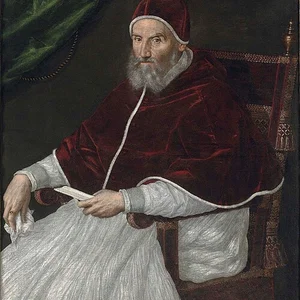
Gregory XIII
1502 — 1585
Gregory XIII was the 226th pope of the Catholic Church, from 1572 to 1585. Trained as a lawyer, he is best known for the calendar reform that bears his name, the Gregorian calendar, introduced in 1582 and still in use today.
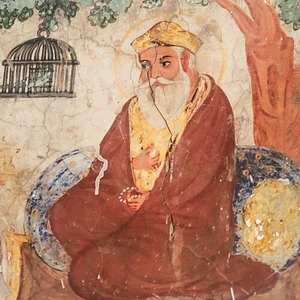
Guru Nanak
1469 — 1539
Gurū Nānak (1469-1539) was an Indian mystic and poet, the founder of Sikhism. He preached the oneness of God, the equality of all human beings, and the rejection of castes and formal rituals. The first of the ten Sikh Gurus, his hymns lie at the heart of the sacred book, the Gurū Granth Sahib.
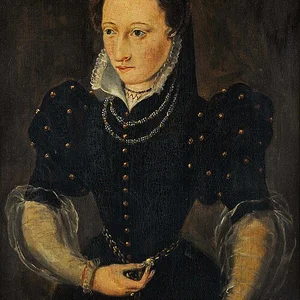
Idelette de Bure
1506 — 1549
Idelette de Bure was the wife of the reformer John Calvin. The widow of an Anabaptist who had converted to Calvinism, she married Calvin in Strasbourg in 1540 and accompanied him through the decisive years of the Protestant Reformation in Geneva.
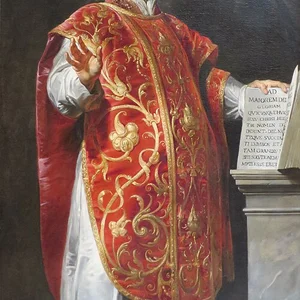
Ignatius of Loyola
1491 — 1556
Spanish soldier and religious figure (1491–1556), Ignatius of Loyola founded the Society of Jesus in 1540, a religious order central to the Catholic Counter-Reformation. Canonized in 1622, he embodies the Church's response to Protestant reforms.

Inti
Inti is the principal solar deity of the Inca pantheon, venerated as the father of the Incas and the source of all life. His cult was at the heart of the state religion of the Inca Empire (Tawantinsuyu). The Sapa Inca was considered his direct son on Earth.
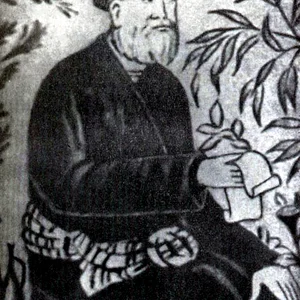
Jami
1414 — 1492
Jami (Abd al-Rahman Jami, 1414-1492) is the last great classical poet of Persian literature and one of the greatest masters of Sufism. Born in Jam in Khorasan, he lived in Herat under the protection of the Timurid sultans. A poet, philosopher, and mystic of the Naqshbandi brotherhood, he left behind an immense body of work, blending divine love, wisdom, and literary beauty.
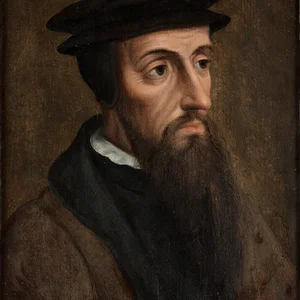
Jean Calvin
1509 — 1564
French Protestant reformer (1509–1564) who founded Calvinism, a major branch of the Protestant Reformation. He settled in Geneva, where he established a strict religious community and profoundly influenced European Protestantism.
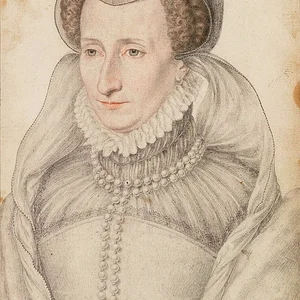
Jeanne d'Albret
1528 — 1572
Queen of Navarre from 1555 to 1572, Jeanne d'Albret was one of the leading figures of the Protestant Reformation in France. Mother of Henry IV, she imposed Calvinism in her territories and played a decisive political role in the Wars of Religion.
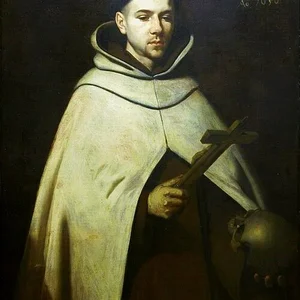
John of the Cross
1542 — 1591
Spanish Carmelite friar, mystic, and poet of the 16th century. A reformer of the Carmelite Order alongside Teresa of Ávila, he is the author of major works of mystical literature such as the *Dark Night of the Soul* and the *Spiritual Canticle*. A Doctor of the Church.
Katharina von Bora
1499 — 1552
A former Cistercian nun, Katharina von Bora escaped from her convent in 1523 and married Martin Luther in 1525. Running the Luther household, she became the model of the Protestant pastoral couple and of the pastor's wife.
Khoja Ahrar
1404 — 1490
Khoja Ahrar (1404-1490) was the most influential Naqshbandi Sufi master in Central Asia, wielding considerable political power over the Timurid sultans. From Samarkand, he interceded with princes to protect the population and amassed immense wealth, which he redistributed through pious foundations.
Leonora Galigaï
1568 — 1617
An Italian favorite and lady of the wardrobe to Queen Marie de' Medici, she wielded great influence at the French court during the regency alongside her husband Concino Concini. Accused of witchcraft, she was beheaded and then burned at the Place de Grève in 1617.
Marsilio Ficino
1433 — 1499
Italian philosopher and humanist of the Florentine Renaissance, a major figure of Neoplatonism. The first to translate the complete works of Plato into Latin, he led the Platonic Academy of Florence under the patronage of the Medici.
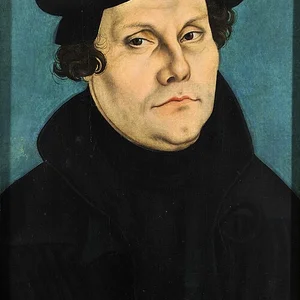
Martin Luther
1483 — 1546
German theologian and monk (1483–1546), Martin Luther is the founder of Protestantism. In 1517, he criticized abuses within the Catholic Church, particularly the sale of indulgences, triggering the Protestant Reformation and splitting Western Christianity.
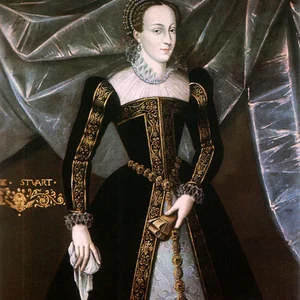
Mary, Queen of Scots
1542 — 1587
Queen of Scotland at six days old, raised at the French court, Mary Stuart became Queen consort of France before ruling a Scotland torn apart by the Protestant Reformation. A Catholic in a kingdom that had embraced Calvinism, she abdicated in 1567 and sought refuge with Elizabeth I, who had her imprisoned for eighteen years before having her beheaded in 1587.
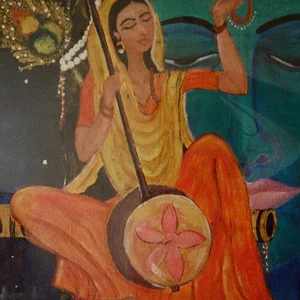
Mirabai
1498 — 1546
Mirabai was a 16th-century Rajput princess, mystic, and devotional poet dedicated to Krishna. Rejecting the conventions of her caste, she devoted her life to worship and composed hundreds of bhajans (devotional hymns) that have endured through the centuries. A major figure of the Bhakti movement, she embodies the spiritual quest freed from social hierarchies.
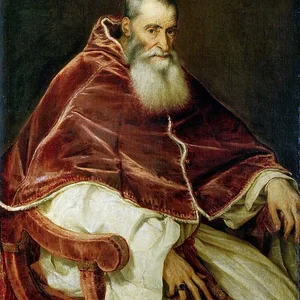
Paul III
1468 — 1549
Pope from 1534 to 1549, Alessandro Farnese was a major figure of the Catholic Counter-Reformation. He convened the Council of Trent, approved the Society of Jesus, and defended the dignity of the indigenous peoples of the Americas.
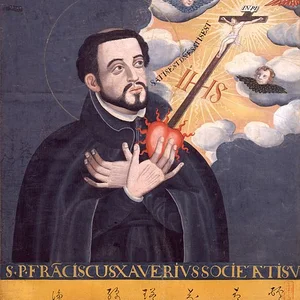
Saint Francis Xavier
1506 — 1552
A Navarrese Jesuit and co-founder of the Society of Jesus alongside Ignatius of Loyola, he was the first great Christian missionary in Asia. He evangelized India and Japan, and died at the gates of China in 1552.
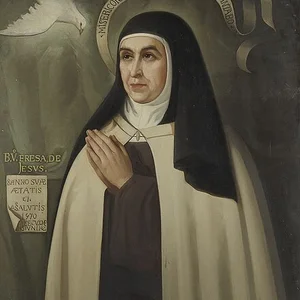
Teresa of Ávila
1515 — 1582
Reformer of the Carmelite Order, mystic, Doctor of the Church
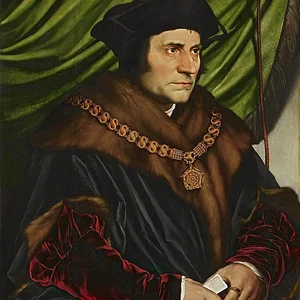
Thomas More
1478 — 1535
An English humanist and statesman, Thomas More served as Lord Chancellor to Henry VIII before opposing the Anglican schism. Author of Utopia (1516), he was executed for refusing to acknowledge the king as Supreme Head of the Church of England.
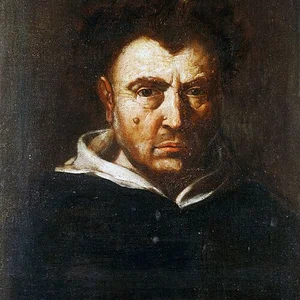
Tommaso Campanella
1568 — 1639
Tommaso Campanella was an Italian Dominican friar, philosopher, theologian, and poet of the late Renaissance. Imprisoned for nearly twenty-seven years for heresy and conspiracy against Spanish rule, he is the author of the utopia *The City of the Sun*.
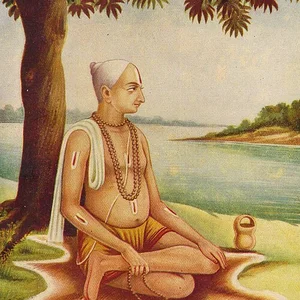
Tulsidas
1532 — 1623
Hindu poet and saint from North India, a major figure of the bhakti devotional movement. He is the author of the Ramcharitmanas, a Hindi (Awadhi) retelling of the Ramayana epic, which popularized the worship of Rama among the common people.
Early Modern(41)
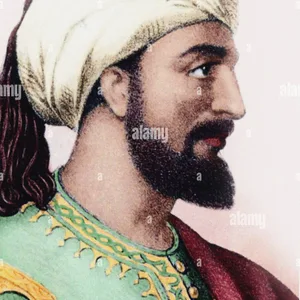
Abd al-Rahman al-Saadi
Chronicler, scholar, and secretary from Timbuktu, author of the Tarikh es-Sudan, one of the principal written sources on the Songhai Empire and the scholarly cities of the Western Sudan. His work recounts the succession of the Askias and the intellectual life of Timbuktu.
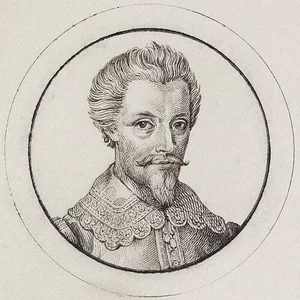
Abel Tasman
1603 — 1659
Abel Tasman was a Dutch navigator and explorer in the service of the Dutch East India Company (VOC). In 1642, he became the first European to reach Tasmania and New Zealand, pushing the boundaries of geographical knowledge of his time.
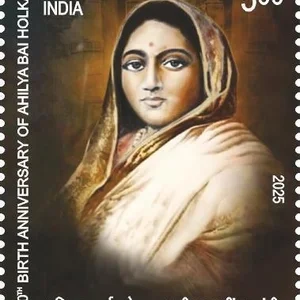
Ahilyabai Holkar
1725 — 1795
Queen of the Malwa kingdom (Indore) from 1767 to 1795, she ruled with wisdom and justice. Widowed at 29, she refused sati and took charge of the state, personally leading her armies. She had hundreds of temples, wells, and roads built across India.
Ann Putnam
1679 — 1716
Ann Putnam Jr. was one of the principal accusers during the Salem witch trials of 1692, when she was only twelve years old. Her testimony contributed to the conviction of several people. In 1706, she made a public apology, acknowledging that she had been deceived by the devil.
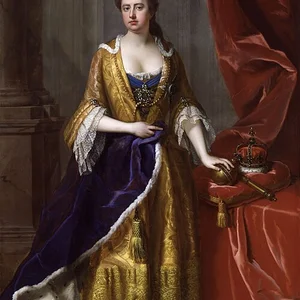
Anne of Great Britain
1665 — 1714
Queen of England, Scotland, and Ireland from 1702 to 1707, then first Queen of Great Britain following the Acts of Union of 1707. Her reign saw the rise of parliamentary government and the War of the Spanish Succession.
Baron Samedi
Baron Samedi is the loa of death in Haitian Vodou. Depicted in undertaker's attire — top hat and dark glasses — he is the guardian of the passage between the living and the dead. An ambivalent figure, at once protector and obscene trickster, he embodies the boundary between life and death.
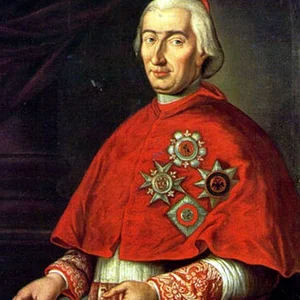
Cardinal Ruffo
1744 — 1827
Neapolitan cardinal (1744–1827), known for reconquering the Kingdom of Naples in 1799 at the head of an army of Calabrian peasants, the Sanfedists. A symbol of counter-revolutionary reaction and the Bourbon restoration.
Elisabeth of Bohemia
1618 — 1680
Princess Palatine (1618–1680), daughter of King Frederick V of Bohemia. A self-taught philosopher, she engaged in a celebrated correspondence with Descartes, challenging his mind-body dualism. She ended her life as abbess of the Lutheran convent of Herford.
Francesco Maria Del Monte
Italian cardinal (1549–1626), diplomat and influential patron of Baroque Rome. He was Caravaggio's first major patron, housing him in his palace and commissioning several of his key works. Close to Galileo, he also had a keen interest in science and music.
Francisco de Pisa
1534 — 1616
Francisco de Pisa (1534-1616) was a Spanish historian and writer, canon of Toledo Cathedral. He is the author of the “Descripción de la Imperial Ciudad de Toledo” (1605), a major reference work on the history of Toledo and the Spanish Church.
Francisco Pizarro
1478 — 1541
Spanish conquistador (c. 1478–1541), he led the conquest of the Inca Empire in Peru between 1532 and 1533, captured the emperor Atahualpa, and founded Lima in 1535. His expedition transformed the New World and opened South America to Spanish colonization.
François d'Aix de La Chaise
1624 — 1709
French Jesuit (1624–1709), confessor to Louis XIV for 34 years. His influence at court was considerable, particularly during the revocation of the Edict of Nantes (1685). The Père-Lachaise cemetery, opened in 1804 on land that had once belonged to the Jesuits, bears his name.

Frederick II of Denmark
King of Denmark and Norway from 1559 to 1588, Frederick II waged the Northern Seven Years' War against Sweden and was an enlightened patron of the arts, most notably supporting the astronomer Tycho Brahe. He commissioned the construction of Kronborg Castle in Elsinore.
Gabrielle Danton
Gabrielle Charpentier (c. 1764–1793) was the wife of Georges-Jacques Danton, a leading orator of the French Revolution. The daughter of a Parisian café owner, she died at 28 in February 1793 while her husband was on a mission in Belgium, just months before the Reign of Terror.
George Fox
1624 — 1691
Seventeenth-century English preacher, founder of the Religious Society of Friends, commonly known as the Quakers. He advocated a direct and inward experience of God, without clergy or rituals, grounded in the “inner light” present in every human being.
George Frideric Handel
1685 — 1759
German-born Baroque composer who became a British subject (1685–1759), Handel is one of the towering figures of 18th-century music. He is celebrated for his Italian operas, oratorios, and concerti grossi. His work *Messiah* (1741) remains one of the masterpieces of Western sacred music.
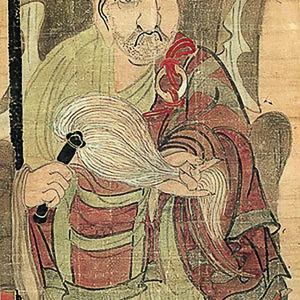
Hakuin
1685 — 1768
Hakuin Ekaku was a Japanese Buddhist master of the Rinzai school of Zen. Regarded as the reviver of Rinzai in the eighteenth century, he systematized kōan practice and spread Zen beyond the elites. He was also a prolific calligrapher and painter.
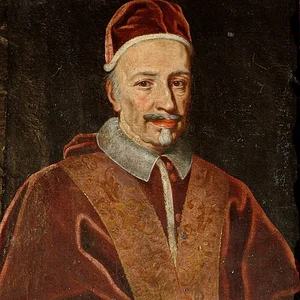
Innocent XII
1615 — 1700
Pope from 1691 to 1700, Innocent XII reformed the Church by combating nepotism through the bull Romanum decet Pontificem (1692). He played a role in the Quietist controversy and contributed to European diplomacy.
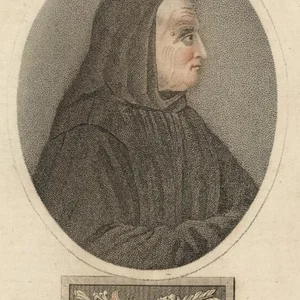
Jean Mabillon
1632 — 1707
A Benedictine monk of the Congregation of Saint-Maur, Jean Mabillon is the founder of diplomatics, the critical science of authenticating charters and ancient documents. His major work, De re diplomatica (1681), laid the foundations of modern historical method.
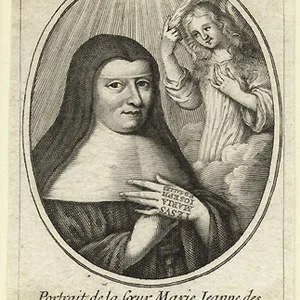
Jeanne des Anges
1602 — 1665
French Ursuline nun, mother superior of the convent of Loudun. She was the central figure in the affair of the possessed nuns of Loudun (1632-1634), claiming to be possessed by demons and accusing the priest Urbain Grandier of witchcraft, which led to his trial and execution at the stake.
Jonathan Swift
1667 — 1745
Anglo-Irish writer and satirist (1667–1745), Jonathan Swift is the author of Gulliver's Travels. Dean of St Patrick's Cathedral in Dublin, he used literature as a political and social weapon against the injustices of his time.
Joseph Priestley
1733 — 1804
Eighteenth-century English chemist, theologian and philosopher, famous for isolating oxygen in 1774. A dissenting minister, he was also a liberal thinker forced into exile in the United States.
Kimpa Vita
1684 — 1706
A Kongolese prophetess of the Bakongo people, Kimpa Vita founded around 1704 the Antonian movement, preaching an African interpretation of Christianity. Arrested by Capuchin missionaries, she was burned at the stake in 1706 for heresy and witchcraft.
Lasiren
Lasirèn is a major lwa (spirit) of Haitian Vodou, depicted as a mermaid with long flowing hair holding a mirror. A spirit of the waters, wealth, and beauty, she is associated with Erzulie and rules over the ocean depths where the dead reside.
Louis II de Bourbon, prince de Condé
Nicknamed “the Great Condé,” this prince of the blood distinguished himself at the Battle of Rocroi (1643) by crushing the Spanish infantry. A key figure in the Fronde, he eventually reconciled with Louis XIV and remained one of the greatest military commanders of the Grand Siècle.

Madeleine Bavent
A Carmelite nun at the convent of Louviers, Madeleine Bavent was at the center of a demonic possession affair and witchcraft accusations in 1647. Her trial, emblematic of the excesses of the witch hunts, led to the execution of Father Thomas Boulle and the condemnation of several members of the religious community.
Maria Gaetana Agnesi
1718 — 1799
An Italian mathematician and philosopher of the 18th century, Maria Gaetana Agnesi is celebrated for her treatise Instituzioni analitiche (1748), a pioneering pedagogical synthesis of differential and integral calculus. The first woman appointed as a professor of mathematics at the University of Bologna, she later devoted her life to charity and spirituality.
Marie de l'Incarnation
1566 — 1618
A French Ursuline nun and mystic, Marie Guyart set out in 1639 to found the first women's monastery in North America, in Quebec. A major figure of seventeenth-century spirituality, she evangelized and educated the young French and Native American girls of New France.
Marie-Madeleine de Dreux
French noblewoman from the House of Dreux, a family of high Capetian lineage. A figure of the French aristocracy in the early modern period, her name combines Catholic devotion with membership in one of France's great seigneurial dynasties.
Marin Mersenne
1588 — 1648
Marin Mersenne was a French Minim friar, mathematician, and physicist of the 17th century. The driving force behind a vast scholarly network across Europe, he was a forerunner of the scientific academy and a pioneer of acoustics.

Papa Legba
Papa Legba is the loa guardian of crossroads in Haitian Vodou religion. Depicted as an old man with a cane, he is the essential intermediary between humans and the other spirits. No ceremony can begin without first invoking his permission.

Saint Margaret Mary Alacoque
French nun of the Order of the Visitation, at the monastery of Paray-le-Monial. Her visions of Christ gave rise to the devotion to the Sacred Heart of Jesus. She was canonized in 1920.
Sarah Good
1653 — 1692
Sarah Good was one of the first women accused of witchcraft during the Salem trials of 1692. A beggar marginalized by the Puritan community of Massachusetts, she proclaimed her innocence and denied any practice of witchcraft right up to her hanging.
Sarah Osborne
1640 — 1692
An English colonist of New England, Sarah Osborne was one of the first three women accused of witchcraft during the Salem trials of 1692. Marginalized for having lived with a servant before marriage and for neglecting church, she always denied the accusations and died in prison.
Selim II
1524 — 1574
Selim II (1524–1574) was Ottoman sultan and caliph from 1566 to 1574. His reign is marked by the conquest of Cyprus and the naval defeat at Lepanto against the Christian coalition in 1571.
Tituba
1659 — ?
An enslaved woman of Native American or Caribbean origin (probably Arawak), owned by Reverend Samuel Parris in Salem. In 1692, she was the first accused to confess to witchcraft, triggering the spiral of the Salem witch trials.
Viracocha
Viracocha is the supreme creator deity of the Andean civilizations of Tiwanaku, Huari, and the Incas. According to Inca cosmogony, he created the world, the sun, the moon, the stars, and humanity from Lake Titicaca. He is depicted as a wandering god who taught civilization to mankind before disappearing toward the ocean.

Wakan Tanka
Wakan Tanka, the “Great Spirit” or “Great Mystery,” is the supreme divine principle of Lakota spirituality. This central concept of the Lakota Sioux refers to a sacred, all-pervading force that animates all things. It structures the cosmology, rituals, and ethics of an entire people.
William Blake
1757 — 1827
British poet, painter, and engraver (1757-1827), William Blake is one of the towering figures of English Romanticism. A visionary and mystic, he created a strikingly original body of poetic and artistic work, combining text and image in hand-engraved illuminated books.
William Griggs
1650 — ?
William Griggs was a physician in the Massachusetts colony, remembered for diagnosing a supernatural cause for the convulsions of young girls in Salem in 1692, triggering one of the most famous witch hunts in American colonial history.
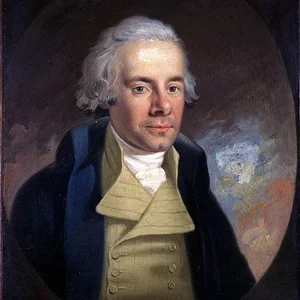
William Wilberforce
1759 — 1833
British politician and philanthropist, a leading figure in the parliamentary fight against the slave trade. An evangelical Member of Parliament, he devoted his life to the abolition of slavery throughout the British Empire.
19th Century(33)
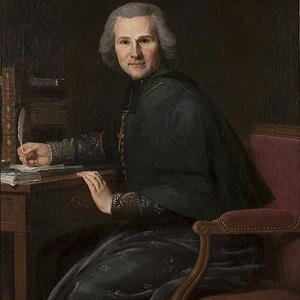
Abbé Henri Grégoire
1750 — 1831
A Catholic priest and politician of the French Revolution, he championed the emancipation of Jews and the abolition of slavery in the colonies. Elected as a constitutional bishop, he sat in the National Convention and helped secure the passage of the 1794 abolition decree.
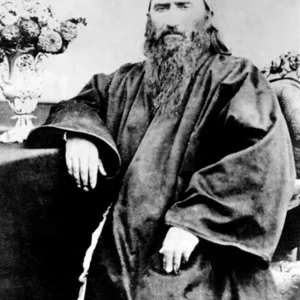
Bahá'u'lláh
1817 — 1892
Iranian founder of the Bahá'í Faith, a monotheistic religion advocating the unity of humanity and of all religions. Proclaiming himself a messenger of God in 1863, he spent the greater part of his life in exile and captivity within the Ottoman Empire.
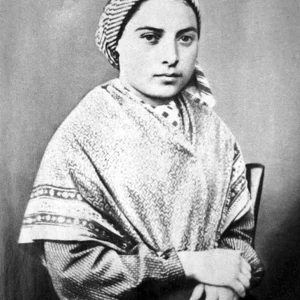
Bernadette Soubirous
1844 — 1879
Bernadette Soubirous was a young French miller's daughter who claimed to have experienced eighteen apparitions of the Virgin Mary at the grotto of Massabielle, in Lourdes, in 1858. She became a nun with the Sisters of Charity of Nevers and was canonized in 1933.
Caspar David Friedrich
1774 — 1840
German Romantic painter (1774–1840), a leading figure of pictorial Romanticism. His melancholic and sublime landscapes explore human solitude in the face of infinite nature and divine transcendence.
Charles Erskine de Kellie
1739 — 1811
Charles Erskine (1739-1811) was a Scottish cardinal in the service of the Holy See. A diplomat of the Catholic Church, he acted as an intermediary between Rome and the European powers during the Napoleonic era.
Charles Gounod
1818 — 1893
French composer (1818–1893), Charles Gounod is the creator of the opera Faust and the Ave Maria. A major figure in French lyric music, he left a profound mark on 19th-century musical life.
Charlotte Guest
1812 — 1895
British translator and businesswoman (1812–1895), celebrated for her English translation of the Mabinogion, a foundational collection of medieval Welsh myths and legends. She also managed the Dowlais ironworks in Wales, becoming one of the first women to run a major industrial enterprise.
David Livingstone
1813 — 1873
Physician, Protestant missionary, and Scottish explorer (1813–1873), Livingstone was one of the first Europeans to cross Africa from east to west. He contributed to the geographical knowledge of the continent and actively fought against the slave trade.
Frederick Hodgson
1796 — 1854
Investigator for the Society for Psychical Research (SPR) who, in 1884-1885, examined the phenomena attributed to Helena Blavatsky at the Theosophical headquarters in Adyar, India. His report concluded that they were fraud and trickery.
George Grey
1812 — 1898
British colonial governor and ethnologist, George Grey successively administered South Australia, New Zealand, and the Cape Colony. Passionate about indigenous cultures, he devoted part of his life to collecting and publishing Māori myths and language.
Giovanni Battista Caprara
1733 — 1810
Cardinal and papal legate, Giovanni Battista Caprara (1733–1810) played a central role in the reconciliation between the Catholic Church and Napoleonic France. He negotiated and signed the Concordat of 1801 on behalf of the Holy See, and was subsequently appointed Archbishop of Milan.
Hippolyte Fauche
1797 — 1869
A French Orientalist and Sanskritist of the 19th century, Hippolyte Fauche was the first to produce a complete French translation of the Mahabharata. His monumental work opened Indian epic literature to French-speaking audiences.
Ippolito-Antonio Vincenti-Mareri
1738 — 1811
Italian Catholic prelate of the 19th century, elevated to the dignity of cardinal within the Roman Curia. He carried out his duties in the context of the Papal States, at a time of deep tensions between the Church and the emerging national states of Europe.
James Thorne
1795 — 1872
James Thorne (1795-1872) was an English preacher of the Bible Christian Methodist movement. He played a leading role in organizing and expanding this Protestant denomination that grew out of Methodism.
Joseph Smith
1805 — 1844
Joseph Smith was an American religious leader and founder of the Latter Day Saint movement (Mormonism) in 1830. He published the Book of Mormon, which he presented as a translation of golden plates revealed by an angel, and organized a new church before being assassinated in 1844.
Lalla Fatma N'Soumer
1830 — 1863
A Kabyle resistance fighter from the Amazigh people, Lalla Fatma N'Soumer led the armed struggle against the French conquest of Algeria in the mid-19th century. Both a spiritual and military figure, she is passed down through Berber oral tradition as a symbol of dignity and resistance.
Leo XIII
1810 — 1903
Pope from 1878 to 1903, Leo XIII modernized the social doctrine of the Church with the encyclical Rerum Novarum (1891). He sought to reconcile Catholicism with the modern world and liberal democracies.
Lozen
1840 — 1889
Chiricahua Apache warrior and shaman, sister of Chief Victorio. Renowned for her skill in combat and her spiritual power to locate the enemy, she fought the American and Mexican armies, then alongside Geronimo until the surrender of 1886.
Marie Laveau
1801 — 1881
Marie Laveau (c. 1801–1881) was the famous 'Voodoo Queen' of New Orleans. A free woman of color, she practiced Louisiana Voodoo, blending African and Caribbean traditions with Creole Catholicism. Her spiritual and social influence in Louisiana's Afro-Creole community remains legendary.
Mary Baker Eddy
1821 — 1910
American theologian, founder of Christian Science, a religious movement based on healing through prayer. In 1875 she published the movement's foundational work and established a Church as well as a respected newspaper.
Muhumusa
A Rwandan medium of the Kinyarwanda people, Muhumusa embodied the Nyabingi spirit and led an anti-colonial resistance against European powers in the early 20th century. She is considered a major spiritual and political figure of the African Great Lakes region.

Mwana Hashima
A Swahili poetess from the East African coast (Zanzibar or the coastal region), Mwana Hashima belongs to the rich Swahili literary tradition with its strong Islamic imprint. Her poetic work in the Swahili language reflects Sufi spirituality and the moral values of coastal society.
Mwana Kupona
1810 — 1860
A 19th-century Swahili poet born on the island of Pate (present-day Kenya), belonging to the Swahili culture of the East African coast. She is the author of the celebrated Utendi wa Mwana Kupona, a long didactic poem composed around 1858 for her daughter, first transmitted orally and later written down.

Nana Asma'u
1793 — 1864
Princess, poet, and Fulani scholar of the Sokoto Caliphate (present-day Nigeria), daughter of reformer Usman dan Fodio. She wrote in Arabic, Fulfulde, and Hausa, and founded a network of traveling female teachers to educate rural women. A major figure of West African Islam in the 19th century.
Nehanda Nyakasikana
Nehanda Nyakasikana (c. 1840–1898) was a mhondoro — a spirit medium of the Shona people of present-day Zimbabwe — venerated as the embodiment of the ancestral spirit Nehanda. A central figure of the First Chimurenga, she organized armed resistance against the British colonization of Southern Rhodesia before being captured and hanged by the colonial authorities.
Nyabingi
Queen of Ndorwa (a region straddling present-day Rwanda and Uganda), Nyabingi is, according to the oral traditions of the Kiga and Tutsi peoples, a ruler whose spirit became after her death a powerful symbol of resistance. Her name gave rise to the Nyabingi movement, which opposed European colonization into the 20th century.
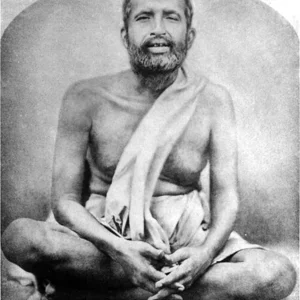
Ramakrishna
1836 — 1886
A 19th-century Bengali Hindu mystic and saint, a priest of the goddess Kali at the Dakshineswar temple near Calcutta. His spiritual quest led him to experience several religious paths (Hinduism, Islam, Christianity) and to teach the fundamental unity of all religions. He was the spiritual master of Vivekananda.

Sarraounia
Queen and spiritual leader of the Azna (animist Hausa people of Niger), Sarraounia successfully resisted the French military mission of Voulet-Chanoine in April 1899. A symbol of anti-colonial resistance, she was immortalized by Abdoulaye Mamani's novel (1980) and Med Hondo's film (1986).

Sitting Bull
1831 — 1890
Sitting Bull (c. 1831-1890) was a chief and medicine man (wičháša wakȟáŋ) of the Hunkpapa clan of the Lakota Sioux. A leading figure of Native American resistance against the expansion of the United States, he embodied the defense of the territory and the way of life of the Plains.
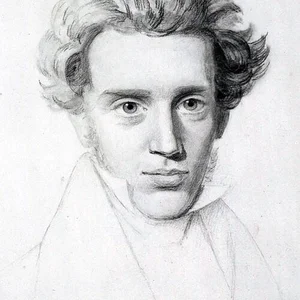
Søren Kierkegaard
1813 — 1855
Danish philosopher and theologian (1813-1855), regarded as the father of existentialism. A critic of the Hegelian system and of institutional Christianity, he placed individual existence, choice, and faith at the heart of his thought.
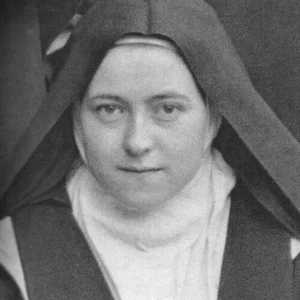
Thérèse of Lisieux
1873 — 1897
A French Carmelite nun who entered the Carmel of Lisieux at age 15, she developed a spirituality known as the 'Little Way,' accessible to everyone. Author of Story of a Soul, she was canonized in 1925 and declared a Doctor of the Church in 1997.
Vivekananda
1863 — 1902
Indian Hindu monk and disciple of the mystic Ramakrishna, he was one of the foremost figures who brought Hindu spirituality (vedanta and yoga) to the West in the late 19th century. His speech at the World's Parliament of Religions in Chicago in 1893 made him famous.
Wovoka
1856 — 1932
A Paiute prophet from Nevada, Wovoka founded the Ghost Dance in 1889, a messianic religious movement that spread among the Native American peoples of the Great Plains. His preaching, which foretold the return of the dead and the disappearance of the settlers, became associated with the Wounded Knee Massacre of 1890.
20th Century(45)
Abraham Joshua Heschel
1907 — 1972
An American rabbi, theologian and Jewish philosopher of Polish origin, Abraham Joshua Heschel was one of the great spiritual figures of the 20th century. A thinker on Judaism and biblical prophecy, he stood alongside Martin Luther King in the American civil rights movement.
Aimé Pallière
1868 — 1949
Aimé Pallière (1868-1949) was a French writer and lecturer, first destined for the Catholic priesthood before drawing closer to Judaism. Having become a figure of the Noahide movement, he worked toward dialogue between Christianity and Judaism while remaining unconverted.
Albert Schweitzer
An Alsatian theologian, philosopher, musicologist, and physician, he founded a hospital at Lambaréné in Gabon, where he devoted his life to caring for African populations. A thinker of “reverence for life,” he received the Nobel Peace Prize in 1952.
Anandamayi Ma
1896 — 1982
A Hindu mystic and saint from Bengal, revered as a major figure of 20th-century Indian spirituality. Considered by her disciples to be an embodiment of the divine, she drew many followers across India without ever having received any formal religious training.
Benedict XVI
1927 — 2022
A German theologian, he was the 265th pope of the Catholic Church from 2005 to 2013. A major intellectual figure of contemporary Catholicism, he made history by becoming the first pope since the Middle Ages to voluntarily resign from his office.

Bernard Moitessier
1925 — 1994
French sailor and writer (1925-1994), an iconic figure of solo sailing. Competing in the first non-stop round-the-world race in 1968, he gave up the chance of victory to keep sailing on toward the Pacific, becoming a symbol of the inner quest and of humanity's relationship with the sea.
Carl Jung
1875 — 1961
Swiss psychiatrist and psychoanalyst, founder of analytical psychology. Initially close to Freud, he distanced himself to develop his own concepts such as the collective unconscious and archetypes. His work has profoundly influenced psychology, spirituality, and the study of myths.
Charles Péguy
1873 — 1914
French writer, poet, and essayist (1873–1914), founder of the Cahiers de la Quinzaine. A committed Dreyfusard, he evolved from socialism toward a fervent mystical Catholicism. Mobilized in 1914, he was killed at the Battle of the Marne on September 5, becoming an emblematic figure of the intellectuals who died for France.

Dalai Lama
Spiritual and temporal leader of Tibet, the 14th Dalai Lama is the foremost representative of Tibetan Buddhism in the world. Exiled in India since 1959 following the Chinese invasion of Tibet, he has waged a nonviolent campaign for his people's autonomy. Nobel Peace Prize laureate in 1989.
Desmond Tutu
1931 — 2021
South African Anglican archbishop and a leading figure in the non-violent struggle against apartheid. Winner of the 1984 Nobel Peace Prize, he chaired the Truth and Reconciliation Commission after the fall of the segregationist regime.
Dietrich Bonhoeffer
1906 — 1945
Dietrich Bonhoeffer was a German Lutheran pastor and theologian, a major figure of Christian resistance to Nazism. A member of the Confessing Church, he became involved in a plot against Hitler and was executed in 1945. His theological work left a profound mark on twentieth-century Christian thought.
Dorothy Day
1897 — 1980
An American Catholic journalist and activist, in 1933 she co-founded the Catholic Worker Movement, which combines spiritual commitment, social justice, and pacifism. A major figure of charity and nonviolence, she devoted her life to the poor and the marginalized.
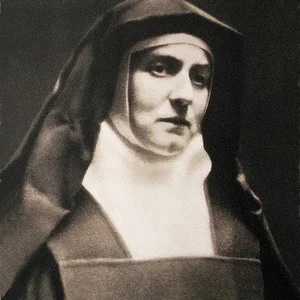
Edith Stein
1891 — 1942
Edith Stein, a German philosopher and student of Husserl, converted from Judaism to Catholicism and became a Carmelite nun under the name Teresa Benedicta of the Cross. Arrested by the Nazis because of her Jewish origins, she died at Auschwitz in 1942. Beatified and then canonized by John Paul II, she is co-patroness of Europe.
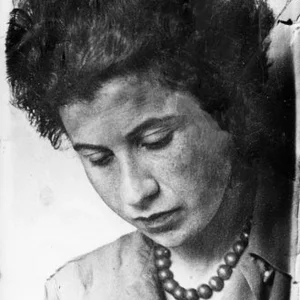
Etty Hillesum
1914 — 1943
Etty Hillesum was a young Dutch Jewish woman whose diary, written between 1941 and 1943, bears witness to a profound inner life in the face of Nazi persecution. Working as a social worker at the Westerbork transit camp, she refused to flee and chose to share the fate of her people. She was deported to Auschwitz, where she died in November 1943 at the age of 29.
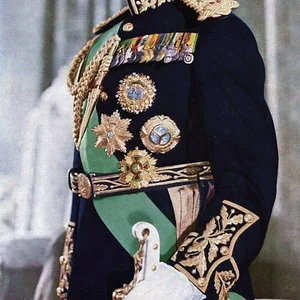
Haile Selassie
1892 — 1975
The last emperor of Ethiopia (1930-1974), he modernized his country and resisted the Italian Fascist invasion. A messianic figure of the Rastafari movement, he was overthrown by a military coup in 1974.

Henri de Lubac
1896 — 1991
Henri de Lubac (1896-1991) was a French Jesuit and Catholic theologian, a major figure in the 20th-century theological renewal. A leading voice of the “new theology,” he profoundly influenced the Second Vatican Council and was made a cardinal in 1983 by John Paul II.
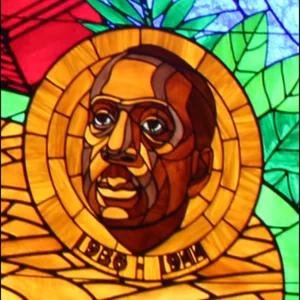
Howard Thurman
1899 — 1981
Howard Thurman (1899-1981) was an African American theologian, pastor, and author. A thinker of the Black Church and of nonviolence, he profoundly influenced the leaders of the American civil rights movement, including Martin Luther King Jr.
Jacques Demy
1931 — 1990
French filmmaker (1931–1990), a major figure of the French New Wave, celebrated for his poetic musicals blending vivid colors with melancholy. Director of The Umbrellas of Cherbourg and The Young Girls of Rochefort.
Janusz Korczak
Polish pediatrician, educator, and writer of Jewish origin, a pioneer of children's rights. As director of orphanages in Warsaw, he developed a pedagogy founded on respect for the child. He refused to abandon the Jewish children in his care and was deported with them to Treblinka in 1942.
John Paul II
1920 — 2005
Polish pope from 1978 to 2005, the first non-Italian pope in more than four centuries. A major figure of the 20th century, he played a role in the fall of communism in Eastern Europe and left his mark on the Catholic Church through his very numerous travels.

Joseph Soloveitchik
1903 — 1993
American Orthodox rabbi and philosopher of Lithuanian origin, a major figure of modern Jewish Orthodoxy in the 20th century. A theorist of the encounter between traditional Talmudic study and Western philosophical thought, he trained generations of rabbis in the United States.
Julius Spier
1887 — 1942
Julius Spier (1887-1942) was a German Jewish psychologist and chirologist. A student of Carl Gustav Jung, he developed “psychochirology,” a reading of the hands with a psychological aim. He is best known today as the mentor and lover of Etty Hillesum.
Karl Barth
1886 — 1968
Karl Barth was a Swiss Reformed Protestant theologian and a major figure of 20th-century Christian thought. The founder of "dialectical theology," he profoundly renewed Protestantism and opposed the Nazi grip on the German Churches.
Khalil Gibran
1883 — 1931
Lebanese poet, writer, and painter (1883-1931), a major figure of Arab émigré literature (Mahjar). Author of the collection of poetic prose The Prophet (1923), one of the most widely read books in the world, he wrote in both Arabic and English.
Krishnamurti
Jiddu Krishnamurti (1895-1986) was an Indian thinker of global stature. Singled out by the Theosophical Society as a future “World Teacher,” he broke with that role in 1929 and spent the rest of his life inviting everyone to free themselves from all spiritual authority.
Mahalia Jackson
1911 — 1972
Mahalia Jackson (1911-1972) was the greatest American gospel singer of all time. A powerful voice of Black Christian faith, she was also a major figure in the civil rights movement alongside Martin Luther King.

Malcolm X
1925 — 1965
Malcolm X (1925-1965), born Malcolm Little, was an African American civil rights activist and a spokesman for the Nation of Islam. An advocate of Black nationalism, he championed the pride and emancipation of Black Americans before evolving toward a more universalist Sunni Islam.
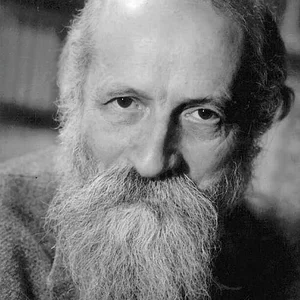
Martin Buber
1878 — 1965
An Austrian and later Israeli Jewish philosopher, Martin Buber is the author of *I and Thou* (1923), a major work of the philosophy of dialogue. A thinker of Judaism and a transmitter of the Hasidic tradition, he left his mark on the religious and existential thought of the 20th century.

Mother Mirra Alfassa
Mirra Alfassa (1878-1973), known as “the Mother,” was the spiritual collaborator of Sri Aurobindo and the leader of the Pondicherry ashram. In 1968 she founded the utopian city of Auroville, near Pondicherry in India.
Mother Teresa
1910 — 1997
Born in 1910 in Ottoman Macedonia, Mother Teresa founded the Missionaries of Charity in Calcutta in 1950 to help the poorest of the poor. A global icon of compassion, she received the Nobel Peace Prize in 1979 and was canonized in 2016.
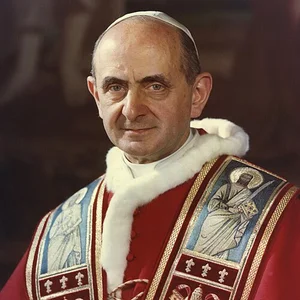
Paul VI
1897 — 1978
262nd pope of the Catholic Church from 1963 to 1978, Paul VI completed the Second Vatican Council and worked to modernize the Church and to foster dialogue with the contemporary world.
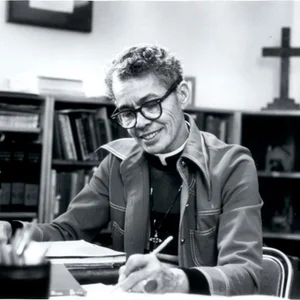
Pauli Murray
1910 — 1985
Lawyer, civil rights activist, and African American feminist, Pauli Murray fought simultaneously against racial segregation and gender discrimination. In 1977, she became the first Black woman ordained as a priest in the American Episcopal Church.
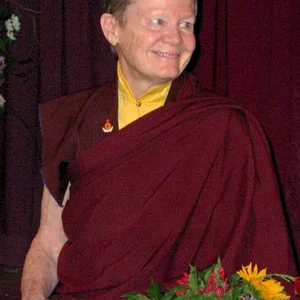
Pema Chödrön
1936 — ?
Pema Chödrön is an American Buddhist nun of the Tibetan tradition and a disciple of Chögyam Trungpa. A bestselling author, she is one of the leading figures in the spread of Tibetan Buddhism in the West.
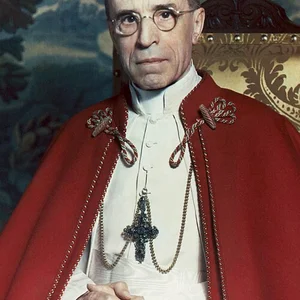
Pius XII
1876 — 1958
260th pope of the Catholic Church (1939–1958), Pius XII led the Church through the Second World War and the Cold War. His attitude toward the Holocaust remains controversial to this day.
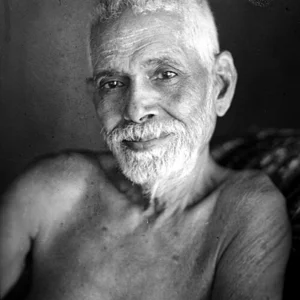
Ramana Maharshi
1879 — 1950
Indian sage and spiritual master, a major figure of the Advaita Vedānta (non-duality) tradition. Settled in Tiruvannamalai at the foot of the sacred mountain Arunachala, he taught the path of self-inquiry through the question “Who am I?”.

Romana Guarnieri
1913 — 2004
Romana Guarnieri (1913-2004) was an Italian historian and medievalist, a specialist in the religious spirituality of the Middle Ages. She is famous for having identified, in 1946, the author of the Mirror of Simple Souls: the mystic Marguerite Porete, burned at the stake in 1310.
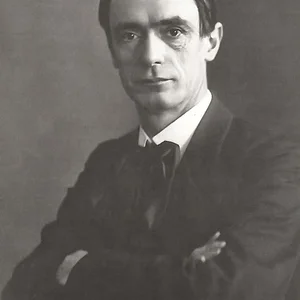
Rudolf Steiner
1861 — 1925
Austrian philosopher and esotericist (1861–1925), founder of Anthroposophy. He developed a spiritual vision of the world based on inner knowledge, and created Waldorf education as well as biodynamic agriculture.
Saint Padre Pio
1887 — 1968
Padre Pio was an Italian Capuchin priest and friar, a major figure of 20th-century Catholicism. A mystic renowned for the stigmata he is said to have borne for half a century, he was canonized by John Paul II in 2002 and remains one of the most venerated saints in Italy.
Sister Emmanuelle
1908 — 2008
Franco-Belgian nun of the Congregation of Our Lady of Sion, famous for her humanitarian work among the rag-pickers of Cairo. A popular figure of solidarity, she founded the Asmae association to help the most destitute.
Sister Faustina Kowalska
1905 — 1938
Polish nun and mystic, a saint of the Catholic Church. A visionary, she originated the devotion to the Divine Mercy, popularized by her spiritual diary. She was canonized by John Paul II in 2000.
Sri Aurobindo
1872 — 1950
Sri Aurobindo is an Indian philosopher, poet, and spiritual master. First a militant in the Indian nationalist movement against British rule, he later withdrew to Pondicherry where he developed integral yoga and founded a celebrated ashram.
Suzanne Wenger
1915 — 2009
An Austrian artist who settled in Nigeria, she became a priestess of the Yoruba religion and devoted her life to restoring the sacred grove of Osun at Osogbo, which she filled with monumental sculptures. Her work fuses European modern art with African spirituality.
Suzuki
1954 — ?
A Japanese thinker and scholar, D.T. Suzuki was the main figure who introduced Zen Buddhism to the West in the 20th century. Through his books and lectures in English, he made Zen thought known to European and American intellectuals and artists.

Thich Nhat Hanh
1926 — 2022
Vietnamese Zen Buddhist monk, poet, and peace activist. A major figure in spreading mindfulness to the West, he founded the Plum Village community in France and popularized “engaged Buddhism.”

Yongden
Yongden (1899–1955) was a Tibetan monk adopted by the explorer Alexandra David-Néel. He accompanied her on her travels across Central Asia and Tibet, most notably during the clandestine entry into Lhasa in 1924, and co-authored several works with her.
21st Century(3)

Berta Cáceres
1971 — 2016
Honduran environmental activist of Lenca origin, co-founder of COPINH (Civic Council of Popular and Indigenous Organizations of Honduras). Winner of the Goldman Environmental Prize in 2015, she was assassinated in 2016 for her fight against the Agua Zarca dam.
Mata Amritanandamayi
1953 — ?
Mata Amritanandamayi, nicknamed “Amma” (the Mother), is an Indian spiritual figure born in 1953 in Kerala. Known for the embraces (darshan) she has given to millions of people, she leads a vast humanitarian and spiritual movement.
Tenzin Palmo
1943 — ?
Tenzin Palmo, born Diane Perry in 1943 in London, is a Tibetan Buddhist nun of the Drukpa Kagyü school. She is famous for having spent twelve years on meditation retreat in a cave in the Himalayas, three of them in strict seclusion.