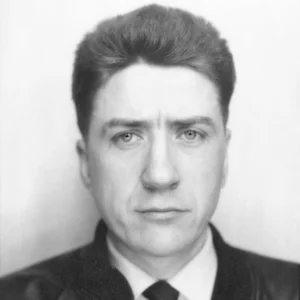

French filmmaker (1922–2014), a major figure of auteur cinema and the French New Wave. A pioneer in exploring time, memory, and forgetting through works such as *Hiroshima mon amour* and *Last Year at Marienbad*.
Alain Resnais(1922 — 2014)
Alain Resnais
France
9 min read
Frequently asked questions
Famous Quotes
« Editing is cinema.»
Key Facts
- Born 3 June 1922 in Vannes, died 1 March 2014 in Paris
- Directed *Night and Fog* (1956), a landmark documentary on the Nazi concentration camps
- *Hiroshima mon amour* (1959), scripted by Marguerite Duras, established his signature style blending time and memory
- *Last Year at Marienbad* (1961), scripted by Alain Robbe-Grillet, revolutionized cinematic storytelling
- Received an honorary Golden Bear at the Berlin Film Festival in 2009 for his lifetime achievement
Works & Achievements
A short documentary on the painter, composed of images of his canvases and a poetic voice-over. It won the Academy Award for Best Short Film in 1950 and revealed the young Resnais as a master of the art documentary.
A documentary on the Nazi concentration camps, with a text by Jean Cayrol (a former deportee) and music by Hanns Eisler. The first major film to confront the Holocaust on screen, it remains a worldwide reference for historical memory.
Resnais's first fiction feature, with a screenplay by Marguerite Duras. Its non-linear narrative weaving individual and collective memory paved the way for modern auteur cinema.
An enigmatic film written by Alain Robbe-Grillet, winner of the Golden Lion at Venice in 1961. The characters' identities, time, and reality are deliberately indecipherable, embodying the *Nouveau Roman* on screen.
A film about the unspoken traumas of the Algerian War as experienced by a family in Boulogne-sur-Mer. Resnais explores how forgetting and guilt shape the present.
A fiction film blending dramatic storytelling with the theories of biologist Henri Laborit on human behavior. Winner of the Jury Prize at Cannes, it was praised as an original reflection on determinism and freedom.
A cinematic diptych adapted from Alan Ayckbourn, exploring the possible forks of the same story depending on the characters' choices. Double César Award winner for Best Film in 1994.
Resnais's final film, made at the age of 91. A light yet melancholic theatrical adaptation about the desire to live in the face of death, awarded at the 2014 Berlinale just weeks before the director's passing.
Anecdotes
A passionate comics fan since childhood, Alain Resnais owned a personal collection of several thousand albums. He maintained close friendships with authors such as René Goscinny and was considered one of the greatest champions of the ninth art in the world of cinema. He made several attempts to adapt comic book works for the screen, proof that his narrative ambitions extended far beyond any single medium.
The short film *Van Gogh* (1948), composed of images of the painter accompanied by a poetic voiceover, won the Academy Award for Best Short Film in 1950. It was one of Resnais's first successes — then an unknown young director — who established himself as a master of the art documentary before even shooting his first feature-length fiction film.
The film *Night and Fog* (1955) was withdrawn from the official competition at the **1956 Cannes Film Festival** following diplomatic pressure: the West German government protested against the selection of a film about the Nazi camps. An image showing a French gendarme guarding the Pithiviers transit camp also fueled the controversy. The film was screened out of competition and went on to become a worldwide landmark of Holocaust remembrance.
For *Hiroshima mon amour* (1959), Resnais had initially been commissioned to make a documentary about peace and the atomic bomb. He decided to invent a fiction instead and contacted Marguerite Duras — at the time a novelist with no connection to cinema — to write the screenplay. It was her first screenplay, and it revolutionized the cinematic treatment of traumatic memory by interweaving intimate romance and historical catastrophe.
Alain Resnais wrote and directed his final film, *Life of Riley*, at the age of 91. Presented at the **Berlinale** in February 2014, where it received the **Silver Bear Alfred Bauer Prize**, Resnais passed away on **1 March 2014**, just a few weeks after the world premiere, leaving behind a testament film — light and melancholic — on the desire to live in the face of imminent death.
Primary Sources
Even a tranquil landscape, even a meadow with flights of crows, harvests and grass fires, even a road where cars pass, peasants, couples, even a village for vacation with a fair and a steeple can lead quite simply to a concentration camp.
You saw nothing in Hiroshima. Nothing. [...] I saw everything. Everything. [...] The museum in Hiroshima exists. [...] How could one not have seen in Hiroshima what there was to see?
Once again — I walk, once again, along these corridors, through these drawing rooms, these galleries, in this building from another century, this grand hotel with the air of a palace, with its endless décor.
What has always interested me is the workings of human thought, of memory. Cinema seems to me to be the only art capable of simultaneously rendering the past and the present, remembrance and forgetting.
Key Places
Birthplace of Alain Resnais, born on June 3, 1922. The son of a Breton pharmacist, he spent his childhood and youth here before moving to Paris to study filmmaking at the IDHEC.
The city where Resnais built his entire career after studying at the IDHEC. There he forged connections with the intellectual circles of the Nouveau Roman and the French New Wave, made all of his films, and lived until his death in 2014.
The site filmed by Resnais for *Night and Fog* (1955): he traversed the ruins of the Nazi camps in color, as a counterpoint to archival footage in black and white. The journey was a profoundly harrowing experience for the entire film crew.
Devastated by the atomic bomb in August 1945, the city is both the setting and the symbol of the eponymous film (1959). Resnais filmed sequences there at the Peace Memorial, bringing Japan's collective memory into dialogue with the private memory of a French actress.
The international stage where several of Resnais's films were screened and recognized, notably *Hiroshima mon amour* (1959, out of competition) and *My American Uncle* (Jury Prize, 1980), cementing his worldwide acclaim.
Typical Objects

The central tool of Resnais's work, the 35 mm camera allowed him to frame spaces, faces, and the movements of memory with obsessive precision. His slow tracking shots and carefully composed static frames are his visual signature.

On the editing table, film reels were assembled by hand; Resnais used it to build his non-linear narratives by juxtaposing past and present, dream and reality, recreating the workings of memory. For him, editing was as much a poetic act as a technical one.

The physical medium of pre-digital cinema, the celluloid reel was both a shooting tool and a fragile archive. In *Night and Fog*, Resnais intercut black-and-white archival footage with color shots of the present day, playing on the very texture of time itself.

Resnais owned a personal collection of several thousand albums and was friends with authors such as René Goscinny and Moebius. For him, comics represented a popular narrative art form he championed with as much conviction as auteur cinema.

Before each shoot, Resnais prepared a meticulous breakdown: every shot, every camera movement, every cut was planned in advance. This preparatory work reflected his artistic rigour while still leaving room for the actors' interpretation.

For *Night and Fog*, Resnais drew on photographs and films made by the Allies during the liberation of the camps, as well as Nazi archives. These documentary images, set against present-day color footage, created an unprecedented visual shock in the cinematic treatment of the Holocaust.
School Curriculum
Vocabulary & Tags
Key Vocabulary
Daily Life
Morning
Resnais, based in Paris, began his mornings with careful reading of the press, literature, and comic books. Known for his intellectual rigor, he spent long months preparing his projects before filming began, working through scripts in close collaboration with his writer partners.
Afternoon
His working afternoons were devoted to meticulous film preparation: meetings with screenwriters (Marguerite Duras, Alain Robbe-Grillet, Jorge Semprun), film screenings, and developing technical breakdowns. Resnais almost never improvised on set, preferring exhaustive preparation.
Evening
In the evenings, Resnais was a devoted theatergoer — a passion he had held since adolescence. He also made regular visits to specialist comic book shops and maintained close relationships with his favorite authors, viewing cultural outings as inseparable from his creative work.
Food
Few sources detail his precise eating habits. Living in Parisian intellectual circles, he most likely shared the customs of those around him: meals at restaurants with collaborators, traditional French home cooking, and the conviviality of the table during the long preparation periods for his films.
Clothing
Resnais had a sober, elegant appearance, characteristic of the Parisian intellectual of the second half of the twentieth century. He favored understated suits worn without ostentation, consistent with a reserved personality and an attention to substance over style.
Housing
Resnais lived in Paris for most of his life. His apartment was reputed to house a vast comic book collection that took up a considerable amount of his living and working space, a testament to his passion for the ninth art as much as for cinema.
Historical Timeline
Period Vocabulary
Liens externes & ressources
Références
Œuvres
Van Gogh
1948
Mon oncle d'Amérique
1980