French History
Kings and queens, revolutionaries, writers, scientists and resistance fighters — the figures who shaped France, from Clovis to the Fifth Republic.
561 characters

561 characters
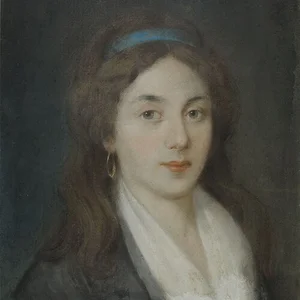
Cornelia
190 av. J.-C. — 100 av. J.-C.
Daughter of Scipio Africanus and wife of Tiberius Sempronius Gracchus, Cornelia (c. 190–100 BC) is the model of the virtuous Roman matron. She raised her twelve children alone after being widowed, refusing a royal remarriage. She is famous for pointing to her sons Tiberius and Gaius as "her most precious jewels."
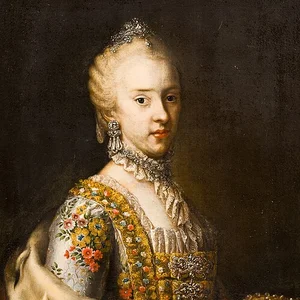
Mary of Nazareth
Mary of Nazareth is, according to the Gospels, the mother of Jesus of Nazareth. A central figure in Christianity and venerated in Islam under the name Maryam, she holds a major place in the religious and cultural history of the West.
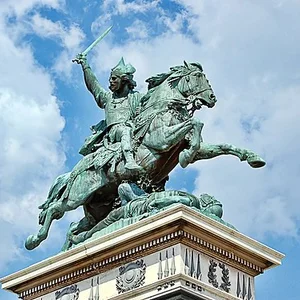
Vercingetorix
79 av. J.-C. — 45 av. J.-C.
Arverni chieftain (79–46 BC), Vercingetorix united the Gallic peoples against Julius Caesar's Roman invasion. Defeated at the Battle of Alesia in 52 BC, he stands as a symbol of Gallic resistance to Roman conquest.
Adela of Champagne
1140 — 1206
Queen of France through her marriage to Louis VII in 1160, Adela of Champagne is best known as the mother of Philip II Augustus. She served as regent of the kingdom during her son's crusade in 1190–1191.
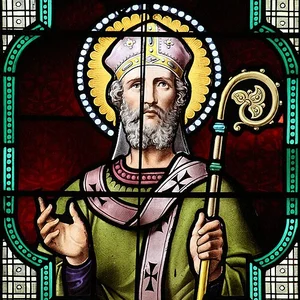
Anselm of Canterbury
1033 — 1109
An Italian-born Benedictine monk who became Archbishop of Canterbury, Anselm is one of the foremost thinkers of early scholasticism. He is famous for his ontological argument, which seeks to demonstrate the existence of God through reason alone.
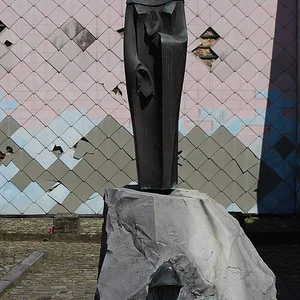
Arlette
1010 — 1050
Arlette of Falaise, daughter of a tanner or leather-worker from Falaise, in Normandy, was the concubine of Duke Robert the Magnificent. From this union was born William, the future William the Conqueror, King of England. Born among the common people, she became the mother of a royal line.
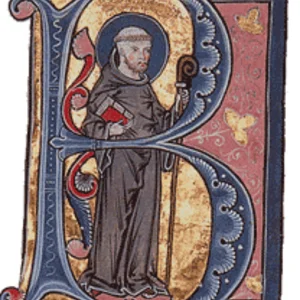
Bernard of Clairvaux
1091 — 1153
A French Cistercian monk, founder and abbot of the Abbey of Clairvaux, he was one of the most influential spiritual figures of the 12th century. A monastic reformer and preacher, he preached the Second Crusade and was canonized and later proclaimed a Doctor of the Church.
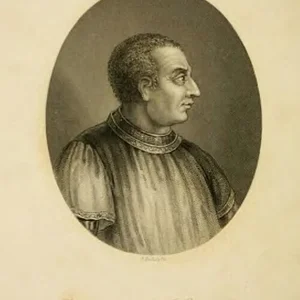
Bertrand du Guesclin
1320 — 1380
Bertrand du Guesclin (c. 1320-1380) was a Breton knight who became Constable of France under Charles V. A skilled strategist of the Hundred Years' War, he reconquered much of French territory from the English through guerrilla warfare and harassment tactics.
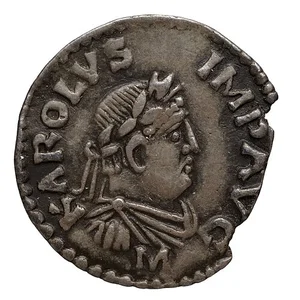
Charlemagne
742 — 814
Charlemagne (742-814) was a Frankish king who became the first Emperor of the West. He founded the Carolingian Empire and established an education policy that shaped the Middle Ages. His reign was marked by major territorial conquests and cultural reforms.
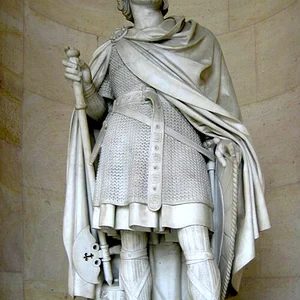
Charles Martel
688 — 741
Charles Martel was mayor of the palace of Austrasia and then de facto ruler of the kingdom of the Franks. Born into the Pippinid family, he imposed Carolingian authority and halted the Arab-Muslim advance at the Battle of Poitiers in 732. The grandfather of Charlemagne, he paved the way for the rise of the Carolingian dynasty.
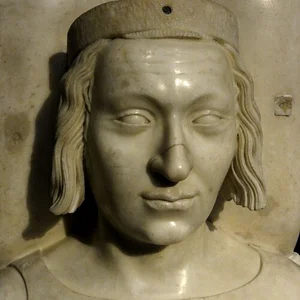
Charles V the Wise
1338 — 1380
King of France from 1364 to 1380, Charles V restored the kingdom after the defeats of the early Hundred Years' War. Thanks to his constable Du Guesclin, he reconquered nearly all the lost territory and reestablished royal authority.
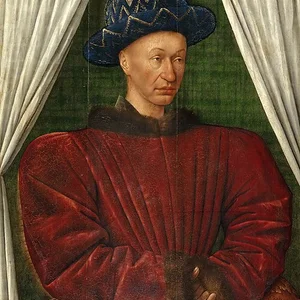
Charles VII
1403 — 1461
King of France (1422–1461), Charles VII is best known for his coronation at Reims in 1429, made possible by Joan of Arc, who restored French confidence during the Hundred Years' War. He continued the reconquest of French territory and ended the conflict with England in 1453.
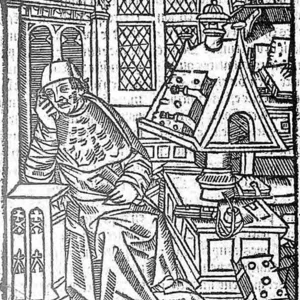
Chrétien de Troyes
1135 — 1181
A French writer and poet of the 12th century, Chrétien de Troyes is the founder of the courtly romance. His major works such as Yvain, the Knight of the Lion and Lancelot, the Knight of the Cart established the conventions of medieval Arthurian literature.
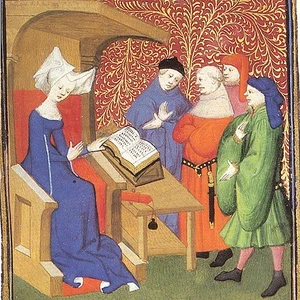
Christine de Pizan
1364 — 1430
French philosopher and poet of Italian origin
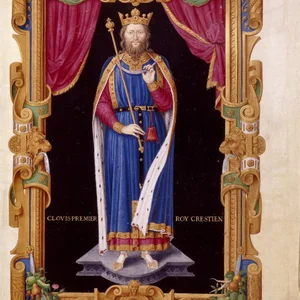
Clovis
466 — 511
Clovis I (466-511) was the king of the Franks who unified the Frankish kingdoms and founded the Merovingian dynasty. His baptism in 496 sealed the alliance between the Franks and the Catholic Church. He laid the foundations of what would become the kingdom of France.
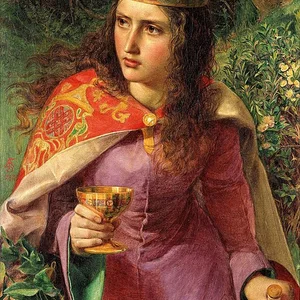
Eleanor of Aquitaine
1124 — 1204
Duchess of Aquitaine and Countess of Poitou, Eleanor of Aquitaine (1124–1204) was Queen of France through her marriage to Louis VII, then Queen of England after her union with Henry II Plantagenet. A towering figure of the Middle Ages, she wielded considerable political influence and was the mother of several kings of England.
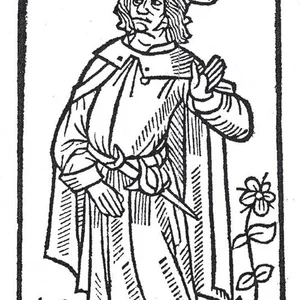
François Villon
1431 — 1463
François Villon was a 15th-century French poet, regarded as the greatest poet of the late Middle Ages. A figure of the “accursed poet” (poète maudit), his life marked by poverty, brawls, and trouble with the law shines through in lyric poetry of rare intensity, dominated by the themes of death and the passing of time.
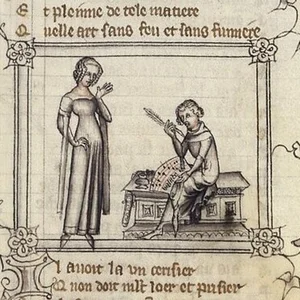
Guillaume de Machaut
1300 — 1377
Guillaume de Machaut was a 14th-century French poet and composer, a leading figure of the Ars nova. Considered one of the greatest musicians of the Middle Ages, he shaped the transition toward complex polyphony.
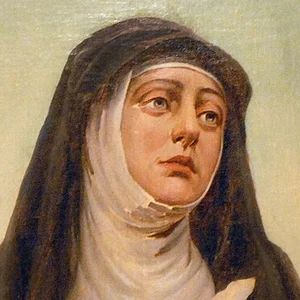
Héloïse d'Argenteuil
1101 — 1164
A French intellectual of the 12th century, Héloïse is celebrated for her passionate correspondence with the philosopher Peter Abelard, whose student and secret wife she became. Later abbess of the Paraclete, she was one of the most learned women of her time.
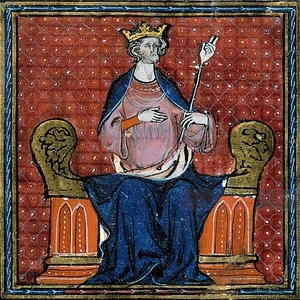
Hugh Capet
940 — 996
Hugh Capet (940–996) was a French nobleman who founded the Capetian dynasty by becoming King of the Franks in 987. He brought an end to the Carolingian dynasty and established a new royal lineage from which all kings of France would descend until the Revolution.
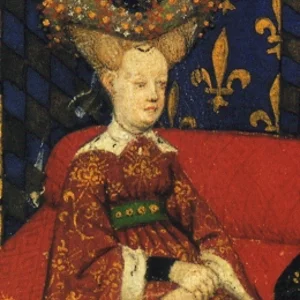
Isabeau of Bavaria
1370 — 1435
Queen of France through her marriage to Charles VI, Isabeau of Bavaria played a major political role during the king's bouts of madness. Regent and a central figure in the civil war between the Armagnacs and the Burgundians, she remains associated with the Treaty of Troyes of 1420.
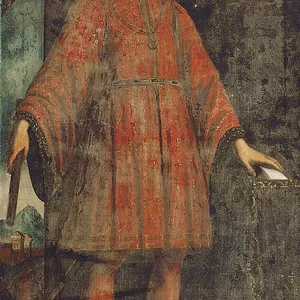
Jacques Cœur
1395 — 1456
A French merchant and financier of the 15th century, Jacques Cœur became the chief treasurer (*grand argentier*) of King Charles VII. The builder of a vast trading empire reaching toward the Levant, he was one of the wealthiest men in the kingdom before falling from grace.
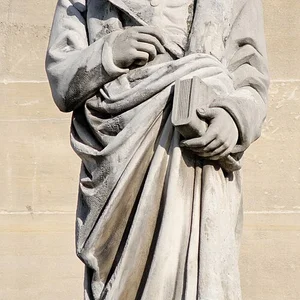
Jean Froissart
1337 — 1410
A fourteenth-century French chronicler and poet, Jean Froissart is the author of the famous Chronicles, a vast narrative tapestry recounting the events of the Hundred Years' War. His work stands as one of the most valuable historical sources on chivalry and the European conflicts of his era.
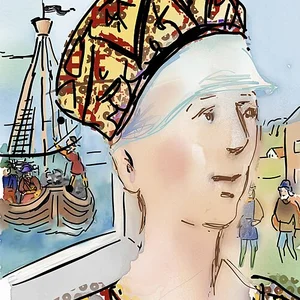
Jeanne de Clisson
1300 — 1359
A 14th-century Breton noblewoman, Jeanne de Clisson became a privateer after the execution of her husband Olivier IV de Clisson by the King of France in 1343. Nicknamed “the Lioness of Brittany,” she armed a fleet to wage a war of vengeance in the English Channel during the Hundred Years' War.
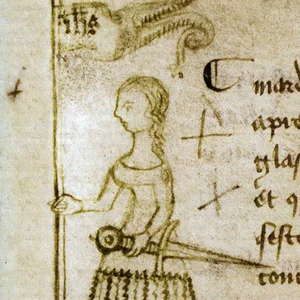
Joan of Arc
1412 — 1431
Joan of Arc (1412–1431) was a French heroine who played a decisive role during the Hundred Years' War. Inspired by religious visions, she led the French armies to several victories against the English. Captured, tried for heresy, and burned at the stake in Rouen, she became an iconic figure of France.
Kitsune
The kitsune is a fox-spirit (yōkai) from Japanese folklore, gifted with supernatural powers and able to shapeshift, notably into a woman. The longer it lives, the more tails it gains, up to nine, a sign of its wisdom and power.
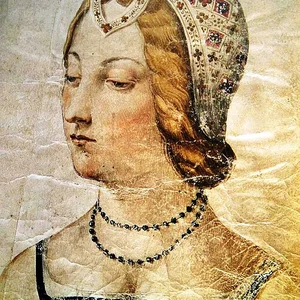
Laure de Noves
1310 — 1348
A fourteenth-century noblewoman of the Comtat Venaissin, traditionally identified as the Laura celebrated by the Italian poet Petrarch in his collection the Canzoniere. A literary muse whose beauty and virtue inspired one of the high points of Western love poetry.
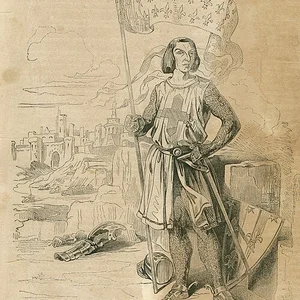
Louis IX (Saint Louis)
1214 — 1270
King of France from 1226 to 1270, Louis IX is renowned for his piety, his commitment to the Crusades, and his reform of royal justice. Canonized in 1297, he embodies the ideal of the medieval Christian king and strengthened the prestige of the French monarchy.
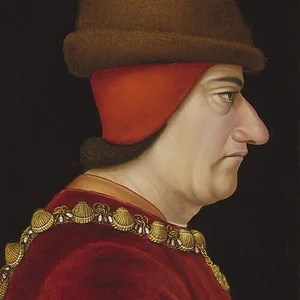
Louis XI
1423 — 1483
King of France from 1461 to 1483, nicknamed “the Prudent” or “the Universal Spider.” Son of Charles VII, he consolidated royal power by weakening the great nobility, notably Charles the Bold, Duke of Burgundy, and considerably expanded the territory of the kingdom.
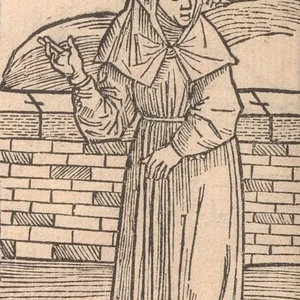
Marguerite Porete
1250 — 1310
A 14th-century Beguine mystic, Marguerite Porete is the author of The Mirror of Simple Souls, a mystical treatise written in the vernacular. Condemned for heresy by the Inquisition, she was burned alive in Paris in 1310, refusing to recant.
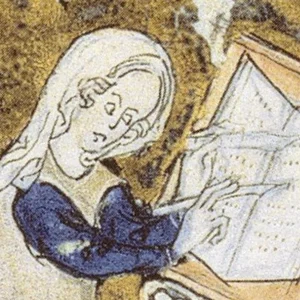
Marie de France
1101 — 1300
An Anglo-Norman poet of the 12th century, Marie de France is the first known woman writer in the French language. She is celebrated for her Lais, her Fables, and her Saint Patrick's Purgatory.
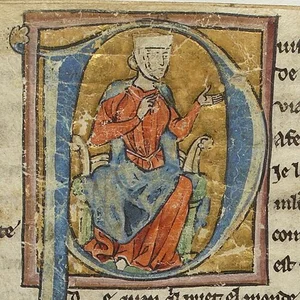
Marie of Champagne
1145 — 1198
Daughter of King Louis VII and Eleanor of Aquitaine, Marie of Champagne was Countess of Champagne and one of the greatest patrons of letters in the 12th century. A patron of Chrétien de Troyes, she made her court at Troyes a radiant center of courtly literature.
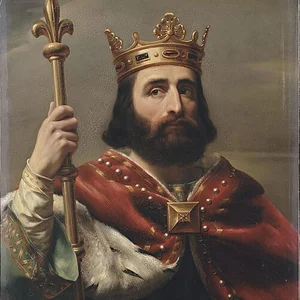
Pepin the Short
714 — 768
Pepin the Short (714–768) was the first king of the Carolingian dynasty. He overthrew the last Merovingian kings and founded a new dynasty that would dominate Western Europe for several centuries.
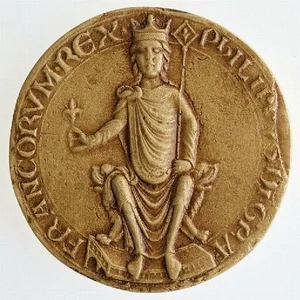
Philippe Auguste
1165 — 1223
King of France from 1180 to 1223, Philippe Auguste is one of the greatest monarchs of the Middle Ages. He strengthened royal power, vastly expanded the royal domain, and won the decisive victory of Bouvines in 1214. His reign marks the beginning of medieval France's rise as a major power.
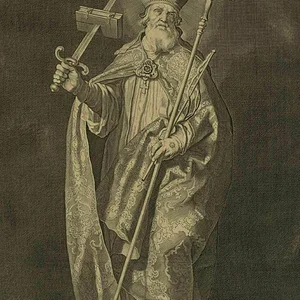
Saint Boniface
675 — 754
An Anglo-Saxon Benedictine monk who became a missionary bishop, he evangelized Germania in the 8th century and reorganized the Frankish Church. Regarded as the “apostle of the Germans,” he was martyred in Frisia.
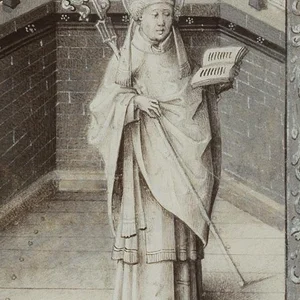
Saint Germain of Paris
496 — 576
Bishop of Paris from 555 to 576, Germain is one of the great figures of the Merovingian Church. Founder of the Abbey of Saint-Germain-des-Prés, he was renowned for his charity toward the poor and his influence over the Frankish kings.
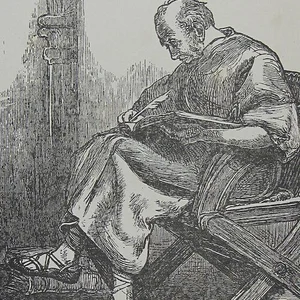
Wace
1100 — 1174
Wace was an Anglo-Norman poet and clerk of the 12th century, born on the island of Jersey. He is the author of the Roman de Brut, which adapts into the Romance vernacular the legendary history of the kings of Britain and introduces Arthurian material into French literature.
William of Poitiers
969 — 1030
Count of Poitiers and Duke of Aquitaine, nicknamed "the Great," he was one of the most powerful lords in the feudal West around the year 1000. He consolidated the Duchy of Aquitaine, protected the Church, and distinguished himself as a pilgrim to Santiago de Compostela.
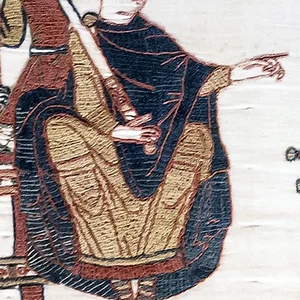
William the Conqueror
1028 — 1087
Duke of Normandy, William the Conqueror became King of England after his victory at the Battle of Hastings in 1066. This event marked one of the most significant conquests of the Middle Ages and profoundly transformed English society.
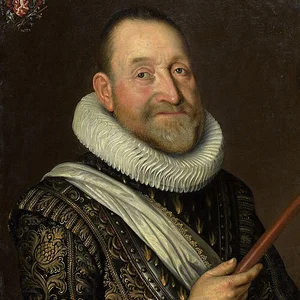
Agrippa d'Aubigné
1552 — 1630
French writer, poet, and soldier, a major figure of Protestantism. A companion-in-arms of Henri de Navarre (the future Henri IV), he is the author of Les Tragiques, a great epic of the Wars of Religion.
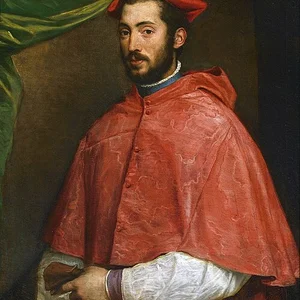
Alessandro Farnese
1520 — 1589
Italian general and statesman in the service of Spain, governor of the Spanish Netherlands. A renowned strategist of his time, he was meant to support the Spanish Armada in 1588 to invade England, a threat referenced by Elizabeth I in her Tilbury speech.
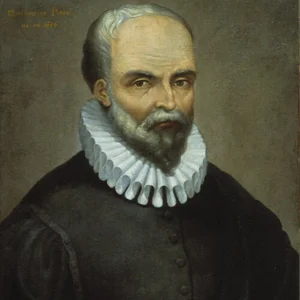
Ambroise Paré
1510 — 1590
French surgeon and anatomist (1510-1590) who revolutionized Renaissance surgery by abandoning brutal medieval practices. He laid the foundations of modern surgery through his anatomical innovations and more humane techniques.
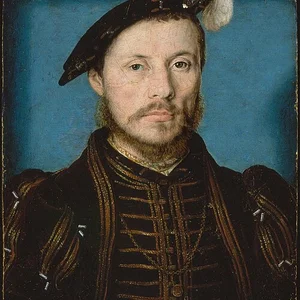
Anne de Montmorency
1493 — 1567
Anne de Montmorency (1493-1567) was Constable of France and one of the most powerful servants of kings Francis I and Henry II. A great military leader and statesman, he left a lasting mark on the town of Pézenas, where he established his power as governor of Languedoc.
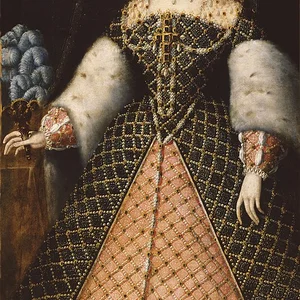
Catherine de Medici
1519 — 1589
Queen consort of France (1547–1559) and regent of the kingdom during the Wars of Religion. Born in Florence in 1519, she played a major political role by attempting to maintain the balance between Catholics and Protestants in France.
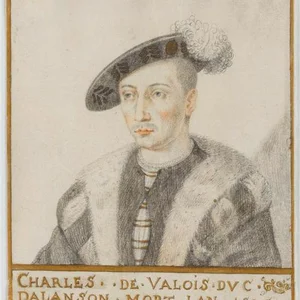
Charles IV of Alençon
1489 — 1525
Charles IV of Alençon (1489-1525) was Duke of Alençon and Count of Perche, a prince of the blood and a great aristocrat during the reign of Francis I. Husband of Marguerite of Angoulême (the future Marguerite of Navarre), he took part in the Battle of Pavia in 1525.
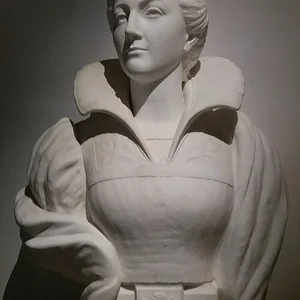
Clémence de Bourges
1530 — 1557
Clémence de Bourges was a young woman from Lyon during the Renaissance, remembered as the dedicatee of the Works of the poet Louise Labé in 1555. Born into a noble Lyon family, she embodies the figure of the cultivated young woman to whom Labé addresses her appeal for the education of women.
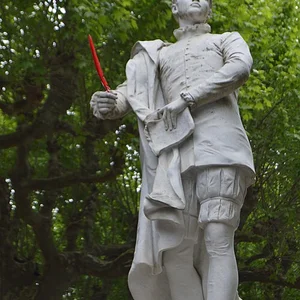
Étienne de La Boétie
1530 — 1563
French Renaissance writer, poet, and statesman (1530–1563). Author of the celebrated Discourse on Voluntary Servitude, he questioned why people accept oppression. A close friend of Montaigne, he embodies the critical humanist thought of the 16th century.
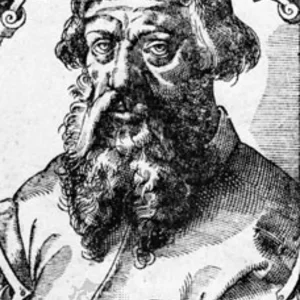
Étienne Dolet
1509 — 1546
Humanist, printer, and philologist from Lyon (1509–1546), Étienne Dolet was one of the first great publishers of texts in French and Latin. A champion of the French language, he was condemned for heresy and burned at the stake on Place Maubert in Paris in 1546.
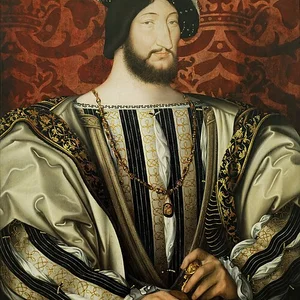
Francis I
1494 — 1547
Francis I (1494–1547) was one of the greatest kings of France and an iconic figure of the Renaissance. A great patron of the arts, he brought Leonardo da Vinci to France and transformed the royal court into a vibrant center of art and intellectual life. His reign was shaped by the Italian Wars and his rivalry with Charles V.
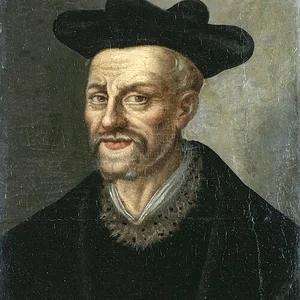
François Rabelais
1500 — 1553
A French humanist writer of the 16th century, Rabelais is the author of Gargantua and Pantagruel, novels about giants blending satire, fantasy, and social criticism. A monk, physician, and scholar, he embodies the spirit of the Renaissance through his innovative approach to literature and his celebration of ancient culture.
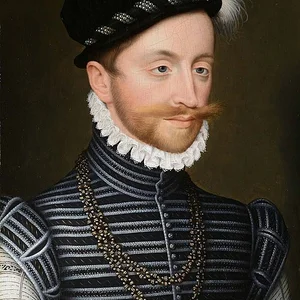
Henri I de Montmorency
1534 — 1614
Henri I de Montmorency (1534-1614) was a great French lord and military commander, governor of Languedoc for half a century. A Marshal and then Constable of France, he played a major role during the Wars of Religion and in the service of Henry IV.
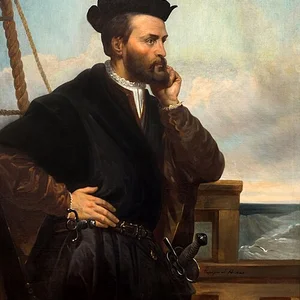
Jacques Cartier
1492 — 1557
French explorer and navigator (1492–1557) who undertook three major voyages to North America between 1534 and 1542. He explored the St. Lawrence River and the coasts of Canada, paving the way for French colonization of New France.
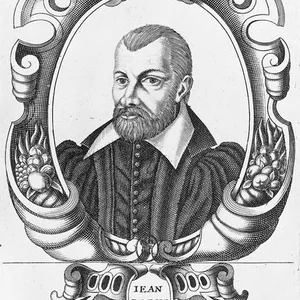
Jean Bodin
1530 — 1596
Jean Bodin was a French jurist, philosopher, and political theorist of the Renaissance. He is famous for developing the modern theory of state sovereignty in *The Six Books of the Commonwealth* (1576).
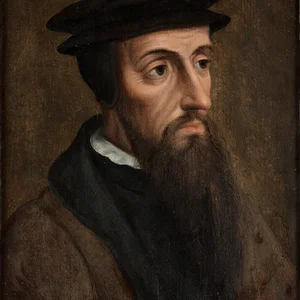
Jean Calvin
1509 — 1564
French Protestant reformer (1509–1564) who founded Calvinism, a major branch of the Protestant Reformation. He settled in Geneva, where he established a strict religious community and profoundly influenced European Protestantism.
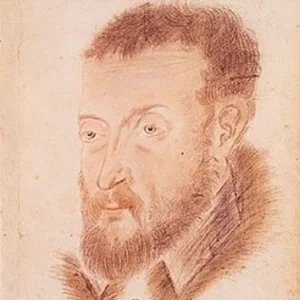
Joachim du Bellay
1522 — 1560
French Renaissance poet (1522–1560), co-founder of the Pléiade, a group of humanist writers. He theorized the defense of the French language and composed major lyric collections exploring love, exile, and melancholy.
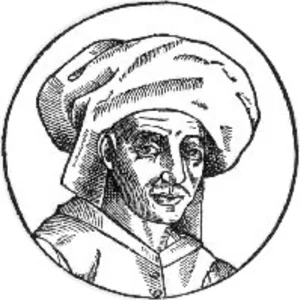
Josquin des Prez
1440 — 1521
Josquin des Prez was a Franco-Flemish composer and a major figure of Renaissance polyphony. An undisputed master of vocal music, he brought the art of counterpoint to a peak of expressiveness and influenced musicians across all of Europe.
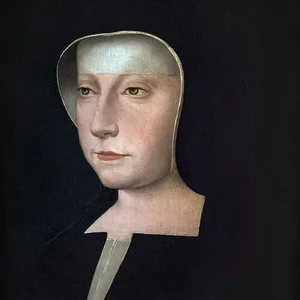
Louise de Savoie
1476 — 1531
Louise de Savoie (1476–1531), Duchess of Angoulême, was the mother of Francis I and Margaret of Navarre. She served twice as regent of France and played a major diplomatic role by negotiating the Peace of Cambrai in 1529.
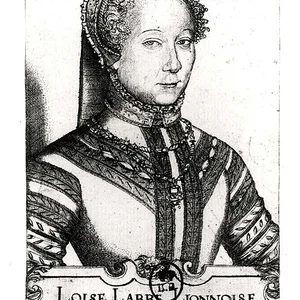
Louise Labé
1524 — 1566
A 16th-century Lyonnaise poet nicknamed 'la Belle Cordière' (the Beautiful Ropemaker), Louise Labé is celebrated for her passionate love sonnets. An iconic figure of the French Renaissance, she championed women's access to education and literary creation.
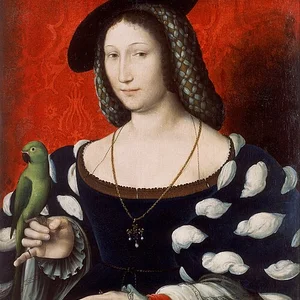
Margaret of Navarre
1492 — 1549
Elder sister of Francis I, Margaret of Navarre was one of the most educated women of the French Renaissance. A patron of humanists and religious reformers, she authored the Heptameron, a collection of tales inspired by Boccaccio's Decameron.
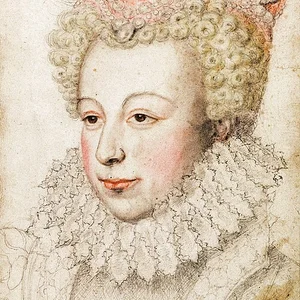
Marguerite de Valois
1553 — 1615
Queen consort of Navarre and later of France, nicknamed 'Queen Margot', she was a central figure in the Wars of Religion. A learned woman of letters, she left behind her Memoirs and was the first wife of Henry IV.
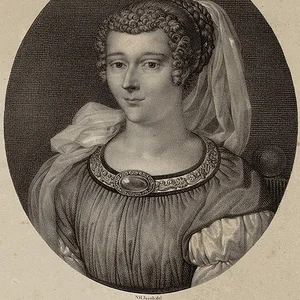
Marie de Gournay
1565 — 1645
Marie de Gournay (1565-1645) was a French woman of letters, the first editor of Montaigne's Essays, whose “fille d'alliance” (adopted daughter) she became. An author and polemicist, she championed intellectual equality between the sexes.
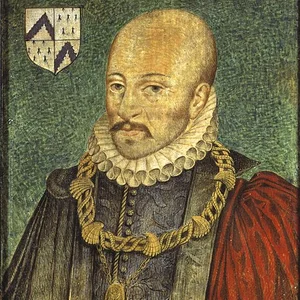
Michel de Montaigne
1533 — 1592
French Renaissance writer and philosopher (1533–1592), Montaigne is the author of the Essays, a landmark work of French literature blending personal reflection and humanism. Mayor of Bordeaux, he contributed to the rise of modern critical thinking.
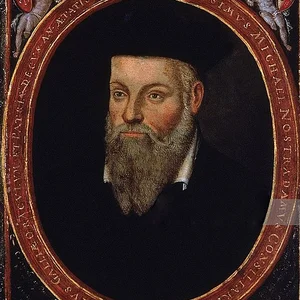
Nostradamus
1503 — 1566
A French physician and apothecary of the Renaissance, Nostradamus is famous for his Centuries, a collection of prophetic quatrains first published in 1555. He was also a respected practitioner during plague epidemics.
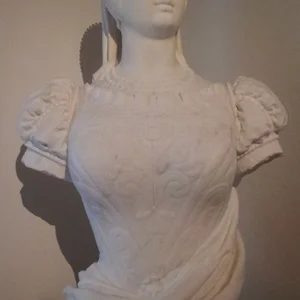
Pernette du Guillet
1520 — 1545
Pernette du Guillet (c. 1520–1545) was a Renaissance poet from Lyon and a key figure of the École de Lyon. An admirer and correspondent of Maurice Scève, she composed epigrams and songs in the Petrarchan tradition. Her posthumous collection *Rymes* (1545) places her among the first women poets in French literature.
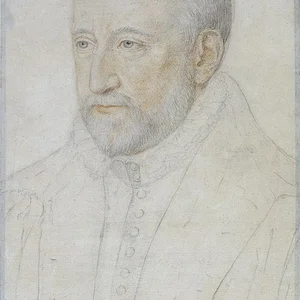
Pierre de Ronsard
1524 — 1585
Major French poet of the Renaissance (1524–1585), co-founder of the Pléiade with du Bellay. He transformed French poetry by introducing lyrical forms inspired by Antiquity and championing the vernacular language.
Abbé Prévost
1697 — 1763
An 18th-century French novelist, historian, and clergyman, Abbé Prévost is best known for his novel "Manon Lescaut" (1731), which is part of the French baccalauréat curriculum. His work embodies the tensions between religious morality and human passion that defined the era.
Adélaïde Labille-Guiard
1749 — 1803
French painter and miniaturist of the 18th century, she was one of only two women admitted to the Académie royale de peinture in 1783. Official portraitist to the Mesdames de France, she rivaled Élisabeth Vigée Le Brun and campaigned for women's access to artistic institutions.
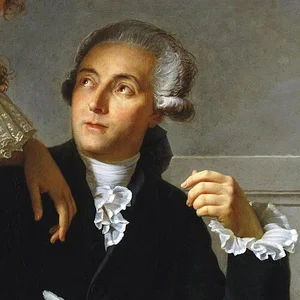
Antoine de Lavoisier
1743 — 1794
An 18th-century French chemist, Lavoisier is the founder of modern chemistry. He established the law of conservation of mass and identified oxygen, revolutionizing the understanding of chemical phenomena.
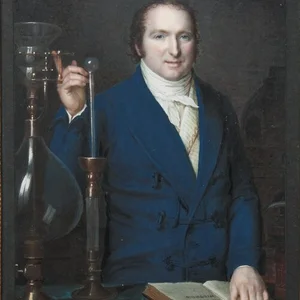
Antoine François de Fourcroy
1755 — 1809
French chemist and statesman, a collaborator of Lavoisier in the reform of chemical nomenclature. A member of the National Convention, he played a major role in reorganizing scientific education during the Revolution.
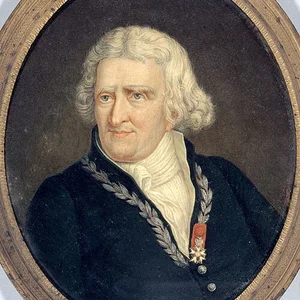
Antoine Parmentier
1737 — 1813
French military pharmacist and agronomist (1737-1813), famous for popularizing the potato as a food staple in France. A prisoner of war in Prussia, he discovered the nutritional value of the tuber and convinced Louis XVI to lift the ban on its cultivation.
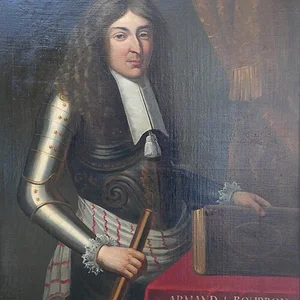
Armand de Bourbon-Conti
1629 — 1666
A prince of the blood and the youngest child of Henri II de Bourbon-Condé, Armand de Bourbon-Conti (1629-1666) was one of the leaders of the Fronde of the Princes before rallying to Louis XIV. Having become governor of Languedoc and Count of Pézenas, he was Molière's first patron.
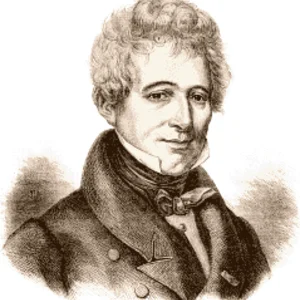
Barthélemy de Lesseps
1766 — 1834
French diplomat and explorer (1766–1834), he participated in the La Pérouse expedition as an interpreter and was the only member to return to Europe before the shipwreck. He crossed Siberia to bring the expedition's logbooks back to Paris.
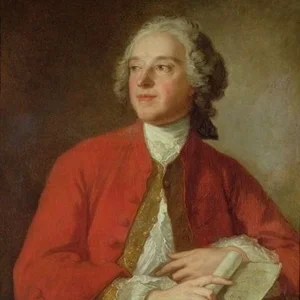
Beaumarchais
1732 — 1799
French writer, musician, and businessman (1732-1799), Beaumarchais is the author of The Barber of Seville and The Marriage of Figaro, two plays that revolutionized 18th-century comedy through their social criticism and complex plotting.
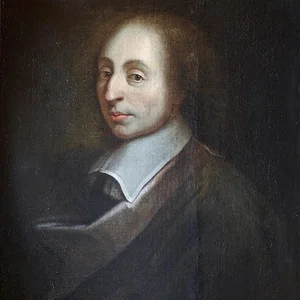
Blaise Pascal
1623 — 1662
French mathematician, physicist, philosopher and writer (1623–1662), Blaise Pascal revolutionized mathematics by founding probability theory and left a lasting mark on Christian philosophy through his exploration of doubt and faith. A major figure of the 17th century, he combined scientific rigor with metaphysical inquiry.
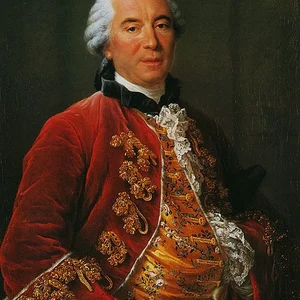
Buffon
1707 — 1788
French naturalist and mathematician of the 18th century, Buffon is one of the founders of modern natural history. As director of the Jardin du Roi in Paris, he proposed a groundbreaking theory on the age of the Earth and the evolution of species.
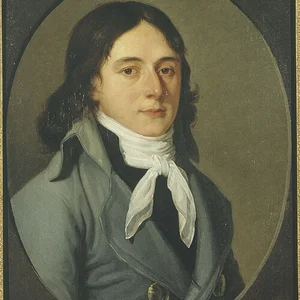
Camille Desmoulins
1760 — 1794
French lawyer, journalist and politician, a figure of the Revolution. An orator at the Palais-Royal in July 1789, he was one of the most influential pamphleteers of his time before being guillotined alongside the Indulgents in 1794.
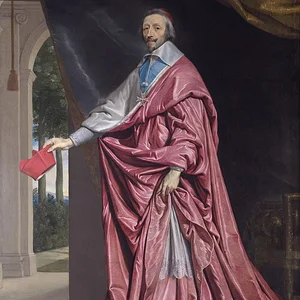
Cardinal de Richelieu
1585 — 1642
Cardinal and chief minister to Louis XIII, Richelieu strengthened royal authority and centralized power in France. He fought against the rebellious nobility and the Protestants, while drawing France into the Thirty Years' War.
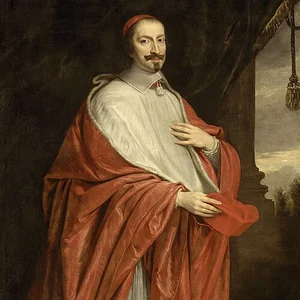
Cardinal Mazarin
1602 — 1661
Cardinal and chief minister of state of France, he governed the kingdom during Louis XIV's minority under the regency of Anne of Austria. Richelieu's successor, he signed the Treaties of Westphalia and overcame the Fronde to consolidate the monarchy.
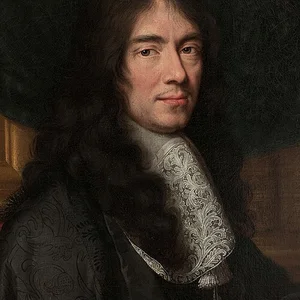
Charles Perrault
1628 — 1703
A French writer of the 17th century, Charles Perrault is famous for having collected and transcribed folk tales. He gave literary form to traditional stories such as Little Red Riding Hood and Cinderella, thus laying the foundations of modern children's literature.
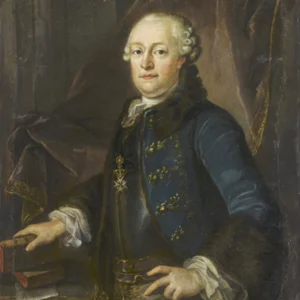
Charles Pierre Claret de Fleurieu
1738 — 1810
French navigator, hydrographer, and statesman (1738–1810), Fleurieu contributed to maritime cartography and oversaw several scientific expeditions. Minister of the Navy under Louis XVI, he played a key role in organizing France's major voyages of exploration.
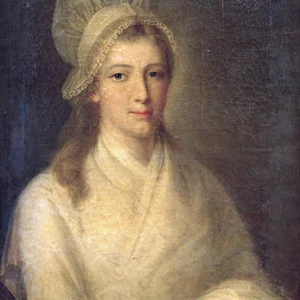
Charlotte Corday
1768 — 1793
A Norman Girondin activist, Charlotte Corday assassinated Jean-Paul Marat in his bathtub on July 13, 1793. Convinced she was putting an end to the Terror, she was guillotined four days later at the age of 24.
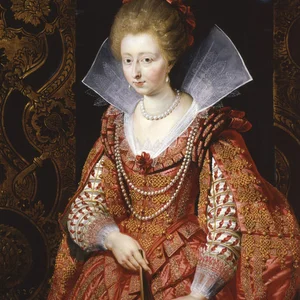
Charlotte-Marguerite de Montmorency
1594 — 1650
Charlotte-Marguerite de Montmorency (1594-1650), Princess of Condé, was one of the most celebrated beauties of the French court. Coveted by the aging King Henry IV, her marriage to Henry II of Bourbon-Condé sparked a diplomatic crisis when the couple fled to the Spanish Netherlands.
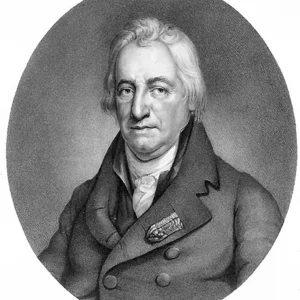
Claude Louis Berthollet
1748 — 1822
French chemist (1748–1822), collaborator of Lavoisier and founder of modern chemistry. He discovered the bleaching properties of chlorine and formulated the laws of chemical affinity, challenging the notion of complete chemical reactions.
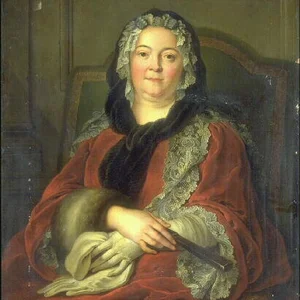
Claudine Guérin de Tencin
1682 — 1749
French novelist and salonnière (1682–1749), she hosted one of the most influential literary salons of the eighteenth century in Paris. The mother who abandoned d'Alembert at birth, she is the author of sentimental and historical novels such as the Mémoires du comte de Comminge.
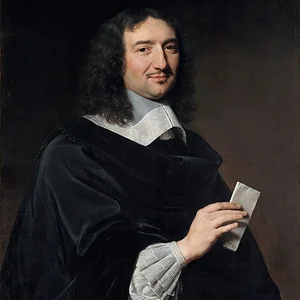
Colbert
1619 — 1683
Jean-Baptiste Colbert (1619-1683) was the principal minister of Louis XIV, serving as Controller-General of Finances from 1665. The architect of an interventionist economic policy, he reorganized the royal finances and developed French industry and trade.
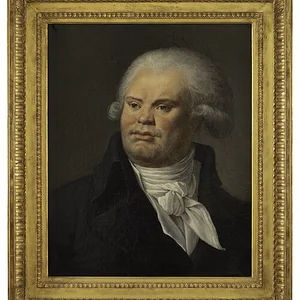
Danton
1759 — 1794
French lawyer and politician (1759–1794), Danton is a major figure of the French Revolution. Known for his eloquence and charisma, he played a key role in revolutionary events before being executed during the Terror.
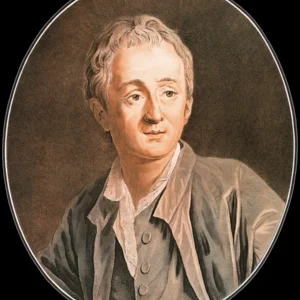
Denis Diderot
1713 — 1784
French philosopher, writer, and encyclopedist (1713–1784), a leading figure of the Enlightenment. Co-editor of the Encyclopédie with d'Alembert, he embodies the critical spirit and pursuit of rational knowledge that defined the 18th century. Author of philosophical novels such as Jacques the Fatalist, he helped transform European intellectual thought.
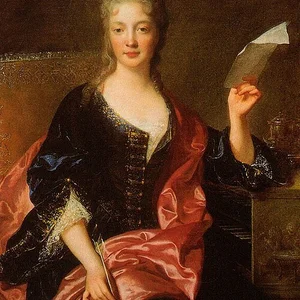
Élisabeth Jacquet de La Guerre
1665 — 1729
French harpsichordist and composer (1665-1729), a prodigy noticed in childhood by Louis XIV. She was one of the few women of her era to publish and have her musical works performed.
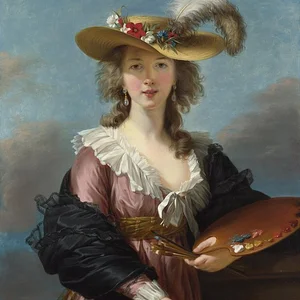
Élisabeth Vigée Le Brun
1755 — 1842
Élisabeth Vigée Le Brun (1755–1842) was one of the greatest portrait painters of the 18th century. Official painter to Marie Antoinette, she completed more than 660 portraits before fleeing the French Revolution. The first woman admitted to the Royal Academy of Painting, she embodied female excellence in an artistic world dominated by men.
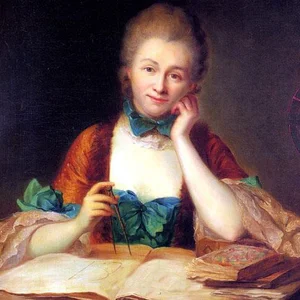
Émilie du Châtelet
1706 — 1749
Émilie du Châtelet (1706-1749) was a French physicist and mathematician of the Enlightenment. She translated and annotated Newton's Principia Mathematica, a work that remained the standard French reference until the 19th century. Voltaire's companion, she demonstrated that kinetic energy is proportional to the square of velocity.
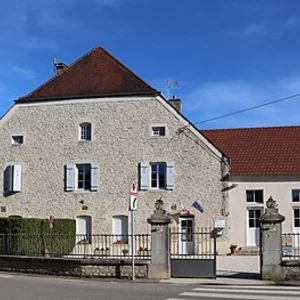
Fontenelle
1657 — 1757
A French writer and scholar of the 17th–18th century, Fontenelle popularized science for the general public. Known for his Conversations on the Plurality of Worlds and his role as perpetual secretary of the Académie des sciences, he embodies the spirit of the Enlightenment.
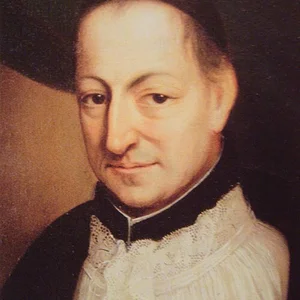
François d'Aix de La Chaise
1624 — 1709
French Jesuit (1624–1709), confessor to Louis XIV for 34 years. His influence at court was considerable, particularly during the revocation of the Edict of Nantes (1685). The Père-Lachaise cemetery, opened in 1804 on land that had once belonged to the Jesuits, bears his name.
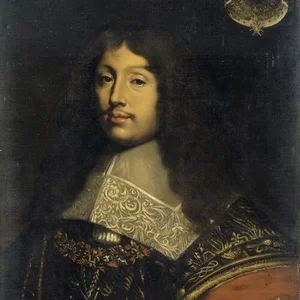
François de La Rochefoucauld
1613 — 1680
François de La Rochefoucauld (1613-1680) was a French writer and moralist of the Grand Siècle. An aristocratic rebel turned author, he is famous for his Maxims, a collection of brief, disenchanted sayings about human nature, in which self-love governs all our conduct.
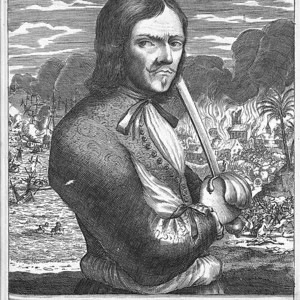
François l'Olonnais
1630 — 1667
French buccaneer of the 17th century, born in Les Sables-d'Olonne, who terrorized Spain's possessions in the Caribbean. A leader of the Brethren of the Coast, he remained infamous for the extreme cruelty he inflicted on his prisoners during his raids.
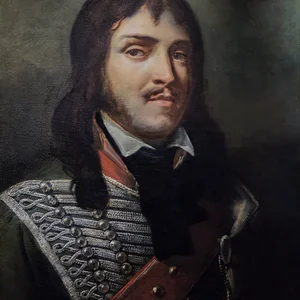
François Séverin Marceau
1769 — 1796
A general of the French Revolution, Marceau enlisted at 16 and became one of the youngest generals of the Republic. A hero of the pacification of the Vendée and the Rhine campaigns, he died in battle at 27 in 1796, embodying the ideal of the republican soldier.
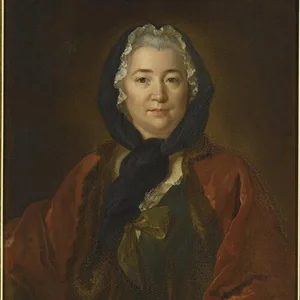
Françoise de Graffigny
1695 — 1758
French writer (1695-1758), pioneer of the epistolary novel in the 18th century. She is best known for her Letters from a Peruvian Woman, a major work of Enlightenment literature that critiques French society through the discerning gaze of an exotic heroine.
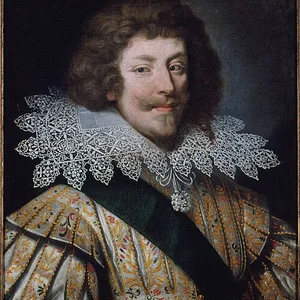
Henri II de Montmorency
1595 — 1632
Henri II de Montmorency (1595-1632) was the last Duke of Montmorency, Governor of Languedoc, and Marshal of France. Drawn into Gaston of Orléans's revolt against Richelieu, he was captured at Castelnaudary and then beheaded in Toulouse in 1632.
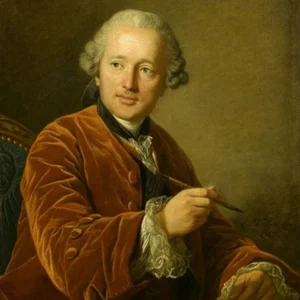
Jacques-Germain Soufflot
1713 — 1780
French architect (1713–1780), a leading figure of Neoclassicism. He designed the church of Sainte-Geneviève in Paris, which became the Panthéon, a symbol of the nation. His work combines ancient rigor with Gothic lightness.
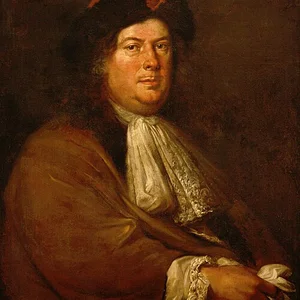
Jean Bart
1650 — 1702
Jean Bart (1650-1702) was a privateer and naval officer from Dunkirk in the service of Louis XIV. Born into a family of sailors, he distinguished himself through his victories against the English and Dutch fleets and was raised to the nobility by the king.
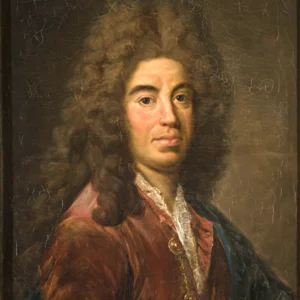
Jean de La Bruyère
1645 — 1696
A French writer and moralist of the 17th century (1645–1696), Jean de La Bruyère is the author of The Characters, a major work of classical literature. His collection of satirical portraits and moral reflections offers a sharp critique of the society of his time.
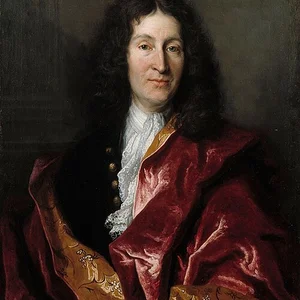
Jean de La Fontaine
1621 — 1695
A French poet and fabulist of the 17th century, Jean de La Fontaine is celebrated for his Fables, collections of short verse tales featuring animals to illustrate moral lessons. His works, imbued with humor and wisdom, remain major classics of French literature.
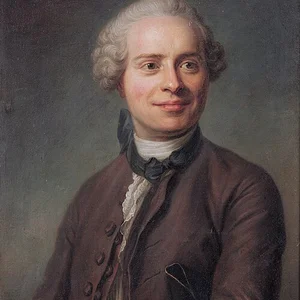
Jean le Rond d'Alembert
1717 — 1783
A mathematician and philosopher of the Enlightenment, he co-edited the great Encyclopédie with Diderot and wrote its famous Preliminary Discourse. He formulated the mechanical principle that bears his name and embodied the encyclopédiste ideal of bringing together all human knowledge.
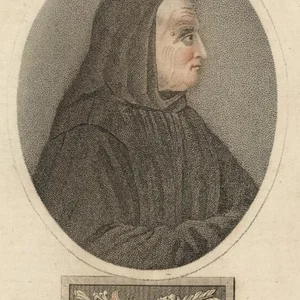
Jean Mabillon
1632 — 1707
A Benedictine monk of the Congregation of Saint-Maur, Jean Mabillon is the founder of diplomatics, the critical science of authenticating charters and ancient documents. His major work, De re diplomatica (1681), laid the foundations of modern historical method.
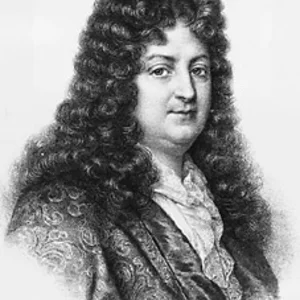
Jean Racine
1639 — 1699
A French playwright of the 17th century, Racine is one of the masters of classical tragedy. Author of masterpieces such as Phaedra and Andromache, he embodies the balance between formal rigour and emotional intensity that defines French classical theatre.
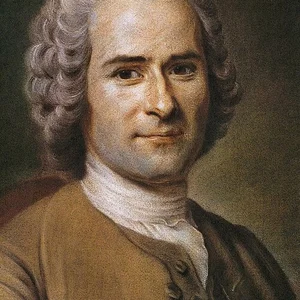
Jean Rousseau
1644 — 1699
Jean Rousseau (1644-1699) was a French musician and music theorist, specialist of the viola da gamba. He is the author of the *Traité de la viole* (1687), a landmark reference work on the technique and history of the instrument in the seventeenth century.
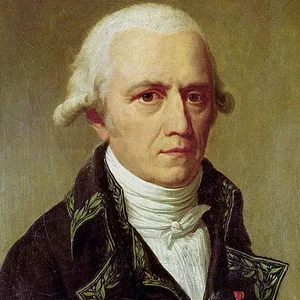
Jean-Baptiste Lamarck
1744 — 1829
French naturalist and zoologist (1744–1829), Lamarck developed a theory of evolution based on the adaptation of organisms to their environment and the inheritance of acquired characteristics. A professor at the Paris Museum of Natural History, he laid the foundations of transformism, a precursory vision of evolution predating Darwin.
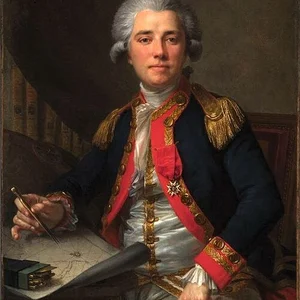
Jean-François de La Pérouse
1741 — 1788
A French naval officer and explorer of the 18th century, La Pérouse led a major expedition across the Pacific Ocean (1785–1788). The voyage produced important cartographic surveys and scientific studies, but the expedition mysteriously disappeared in 1788.
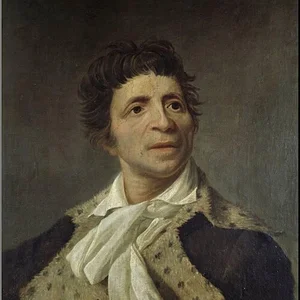
Jean-Paul Marat
1743 — 1793
A physician, physicist, and journalist who became one of the most radical figures of the French Revolution. Founder of the newspaper L'Ami du peuple, he served as a Montagnard deputy in the National Convention before being assassinated in his bath by Charlotte Corday in 1793.
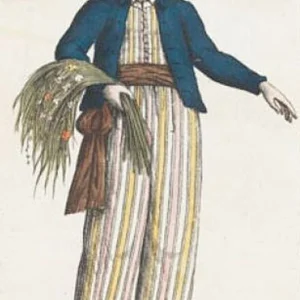
Jeanne Barret
1740 — 1807
explorer and botanist (1740-1807)
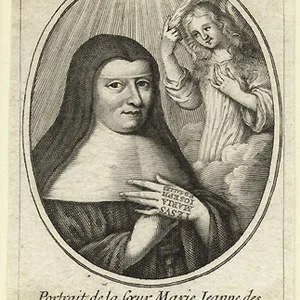
Jeanne des Anges
1602 — 1665
French Ursuline nun, mother superior of the convent of Loudun. She was the central figure in the affair of the possessed nuns of Loudun (1632-1634), claiming to be possessed by demons and accusing the priest Urbain Grandier of witchcraft, which led to his trial and execution at the stake.
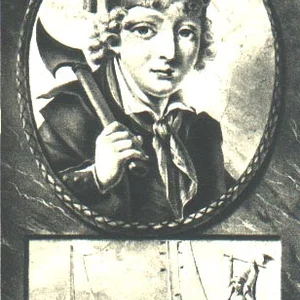
Joseph Agricol Viala
1778 — 1793
Revolutionary child-soldier born in Avignon in 1780, killed at age 13 on July 23, 1793, while attempting to cut the moorings of Federalist boats on the Durance river. Proclaimed a martyr of the Republic by the National Convention, his name was included among the heroes decreed for pantheonization, though the transfer never took place.
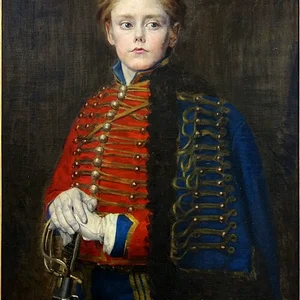
Joseph Bara
1779 — 1793
A drummer boy for the Republic at age 13, Joseph Bara was killed by Vendée rebels in 1793. Robespierre held him up as an exemplary martyr of revolutionary youth, and the Convention voted to transfer his remains to the Panthéon — a decree that was never carried out.
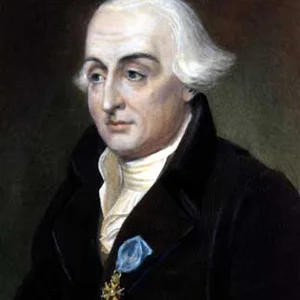
Joseph-Louis Lagrange
1736 — 1813
Franco-Sardinian mathematician and astronomer (1736–1813), considered one of the greatest mathematicians of the 18th century. He revolutionized mechanics with his analytical formulation and founded the calculus of variations.
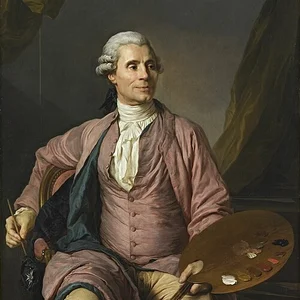
Joseph-Marie Vien
1716 — 1809
French painter (1716–1809), forerunner of Neoclassicism and master of Jacques-Louis David. Director of the French Academy in Rome, then First Painter to the King and senator under Napoleon.
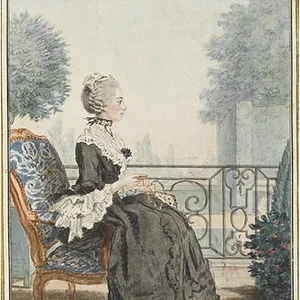
Julie de Lespinasse
1732 — 1776
An 18th-century French salonnière, Julie de Lespinasse ran one of the most influential salons in Paris, frequented by the Encyclopédistes. A passionate letter-writer, her correspondence offers a vivid window into the intellectual life of the Enlightenment.
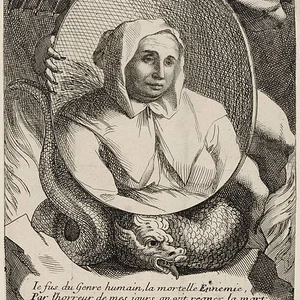
La Voisin
1640 — 1680
Poisoner, fortune-teller, and abortionist in 17th-century Paris, Catherine Deshayes was the central figure of the Affair of the Poisons (1679–1682). Supplying poisons, love potions, and black masses to an aristocratic clientele, she was burned alive at the Place de Grève in 1680.
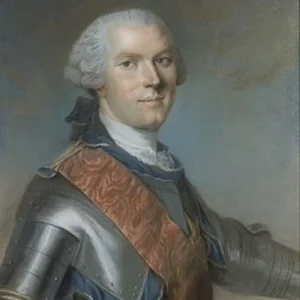
Louis Vigée
1715 — 1767
Louis Vigée (1715–1767) was a French painter and poet, member of the Royal Academy of Painting. He is best known as the father of Élisabeth Vigée Le Brun, one of the greatest portrait painters at the court of Louis XVI.
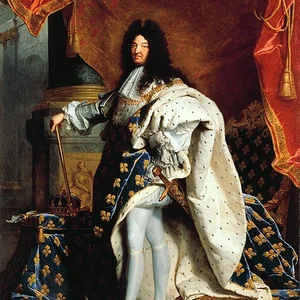
Louis XIV
1638 — 1715
King of France and Navarre from 1643 to 1715, Louis XIV is the symbol of French royal absolutism. He concentrated power in his own hands and transformed the monarchy into a centralized political system, embodied by the Palace of Versailles, which he had built.
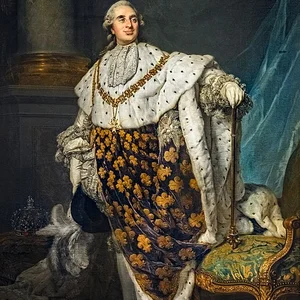
Louis XVI
1754 — 1793
King of France and Navarre from 1774 to 1791, then King of the French from 1791 to 1792. His reign was marked by the French Revolution, attempted reforms, and the abolition of the Ancien Régime. Arrested during the Flight to Varennes in 1791, he was tried and executed by guillotine on January 21, 1793.
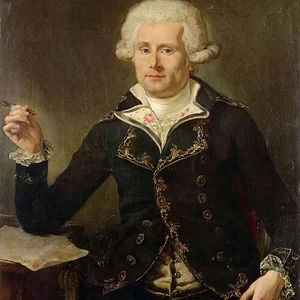
Louis-Antoine de Bougainville
1729 — 1811
French navigator and naval officer (1729–1811), he completed the first French circumnavigation of the globe (1766–1769), bringing back accounts of Tahiti that fuelled the myth of the noble savage. He was also a mathematician and played a role in the Seven Years' War.
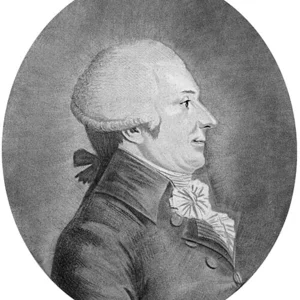
Louis-Bernard Guyton de Morveau
1737 — 1816
A French chemist, jurist and statesman, Guyton de Morveau was one of the architects of the reform of chemical nomenclature alongside Lavoisier in 1787. As a member of the National Convention, he also took part in the Revolution and contributed to the founding of the École Polytechnique.
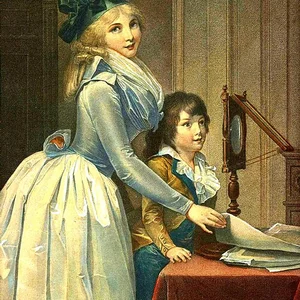
Louise Gély
1776 — 1856
Second wife of Georges Danton, whom she married in 1793 at the age of sixteen after caring for his children. A figure in the intimate circle of a major actor of the French Revolution, she lived through the Terror and then remarried after Danton's execution.
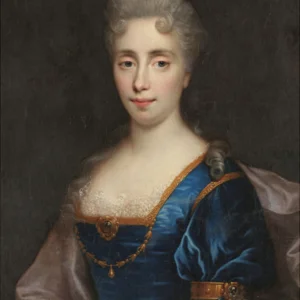
Madame de La Fayette
1634 — 1693
17th-century French writer and pioneer of the psychological novel. Author of The Princess of Clèves, a landmark work exploring the inner feelings and intimate conflicts of its characters. A prominent figure in the literary and cultural life of Louis XIV's court.
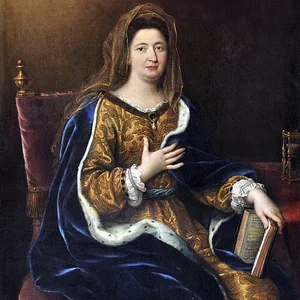
Madame de Maintenon
1635 — 1719
Born in 1635, Françoise d'Aubigné endured a wretched childhood before becoming governess to the legitimized children of Louis XIV, then his secret wife around 1683. In 1686, she founded the Maison royale de Saint-Louis at Saint-Cyr, a pioneering educational institution for young women from impoverished noble families.
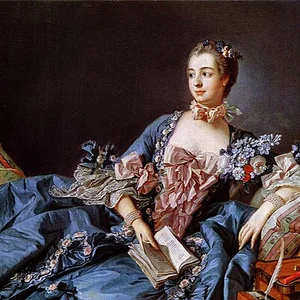
Madame de Pompadour
1721 — 1764
Official mistress of King Louis XV from 1745 until her death in 1764, she wielded considerable influence over French politics and culture. A great patron of the arts and protector of the Enlightenment philosophers, she helped shape the Rococo style and supported the Encyclopédie of Diderot and d'Alembert.
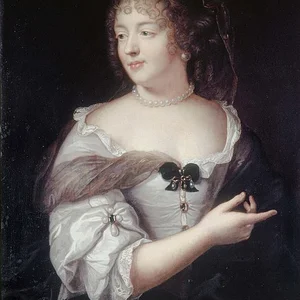
Madame de Sévigné
1626 — 1696
French epistolary writer of the 17th century, celebrated for her exceptional literary correspondence, particularly her letters to her daughter. Her work offers an invaluable portrait of court life and French society under Louis XIV.
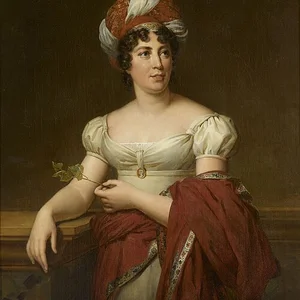
Madame de Staël
1766 — 1817
Germaine de Staël, daughter of minister Necker, was one of the great intellectual voices of her era. A novelist, essayist, and salon hostess, she stood up to Napoleon, who exiled her, and helped introduce German Romanticism to France with her work *De l'Allemagne*.
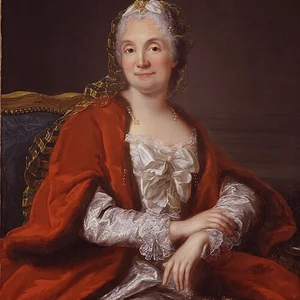
Madame Geoffrin
1699 — 1777
A Parisian salon hostess of the 18th century, she presided over one of the most influential salons of the Enlightenment, welcoming d'Alembert, Diderot, Fontenelle, and Montesquieu. A generous patron of the arts and a remarkable letter-writer, she played a central role in spreading Enlightenment ideas across Europe.
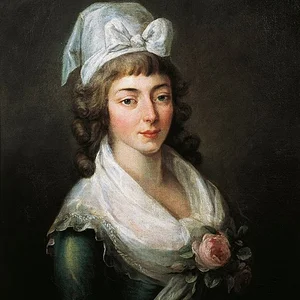
Madame Roland
1754 — 1793
Salon hostess and Girondin political figure, Manon Roland (1754–1793) exerted considerable influence over the Girondin party during the French Revolution. Arrested during the Terror, she was guillotined in 1793, uttering her famous words about liberty.
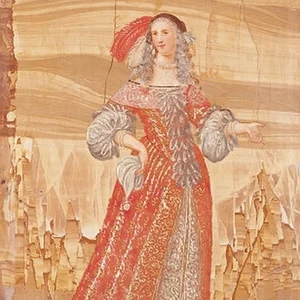
Madeleine Béjart
1618 — 1672
French actress of the 17th century, co-founder of the Illustre Théâtre alongside Molière in 1643. A central figure in Molière's troupe for over thirty years, she contributed to the rise of French classical theatre.
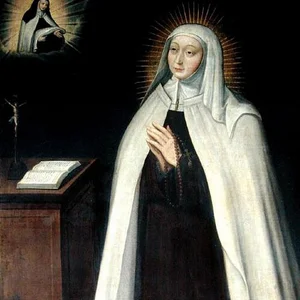
Marie de l'Incarnation
1566 — 1618
A French Ursuline nun and mystic, Marie Guyart set out in 1639 to found the first women's monastery in North America, in Quebec. A major figure of seventeenth-century spirituality, she evangelized and educated the young French and Native American girls of New France.
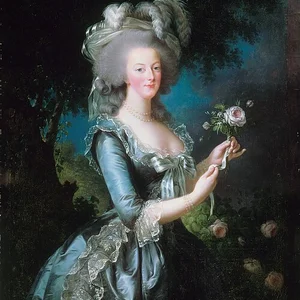
Marie-Antoinette
1755 — 1793
Queen consort of France from 1774 to 1792, wife of Louis XVI. A symbol of the Ancien Régime and its excesses, she became deeply unpopular with the French people and came to embody the frivolity of the Versailles court. Accused of treason during the French Revolution, she was executed by guillotine in 1793.
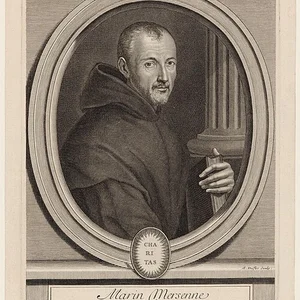
Marin Mersenne
1588 — 1648
Marin Mersenne was a French Minim friar, mathematician, and physicist of the 17th century. The driving force behind a vast scholarly network across Europe, he was a forerunner of the scientific academy and a pioneer of acoustics.
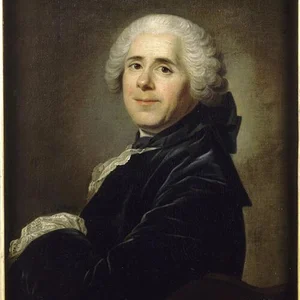
Marivaux
1688 — 1763
An 18th-century French writer, playwright, and journalist, Marivaux is the author of brilliant comedies that explore the games of love and chance. He is known for his elegant style and psychological subtlety in the portrayal of feelings.
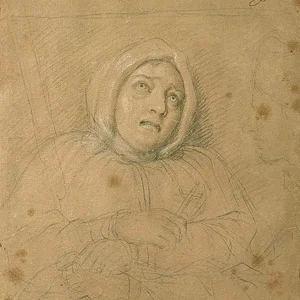
Marquise de Brinvilliers
1630 — 1676
A French aristocrat of the 17th century, notorious for poisoning her father and brothers in order to inherit their fortune. Her trial and execution in 1676 triggered the Affair of the Poisons, exposing the widespread use of poison in high society.
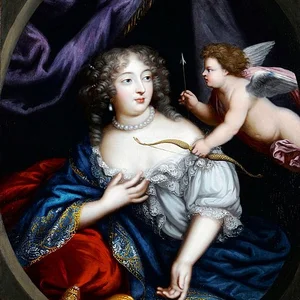
Marquise de Montespan
1640 — 1707
Official favorite of Louis XIV from 1667 to 1681, she reigned over the court of Versailles and had seven legitimized children with the Sun King. Implicated in the Affair of the Poisons, she subsequently fell from grace.
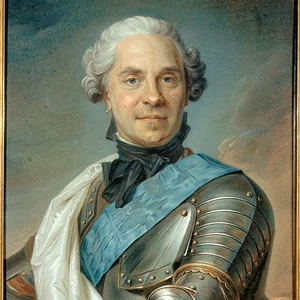
Maurice de Saxe
1696 — 1750
Marshal General of France and illegitimate son of Augustus II of Saxony-Poland. Regarded as one of the greatest military commanders of the 18th century, he distinguished himself with his decisive victory at Fontenoy in 1745 during the War of the Austrian Succession.
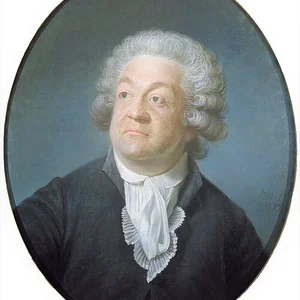
Mirabeau
1749 — 1791
Orator and French statesman, Mirabeau is one of the towering figures of the early French Revolution. Elected to the Estates-General in 1789 by the Third Estate, he embodied the bridge between the nobility and the people, championing a constitutional monarchy. His death in 1791 earned him a state funeral and a place in the Panthéon.
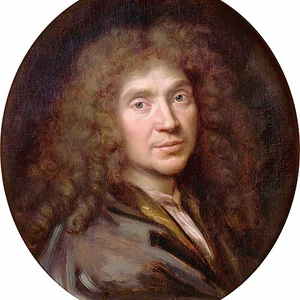
Molière
1622 — 1673
Molière (1622-1673) is the greatest French playwright of the 17th century. Founder of his own theatrical company, he created works of comic genius that critique the flaws and vices of the society of his time.
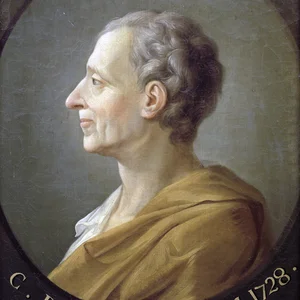
Montesquieu
1689 — 1755
An 18th-century French philosopher and writer, Montesquieu is the author of the landmark work 'The Spirit of the Laws' (1748). He theorized the separation of powers, a foundational concept of modern political thought, and contributed to the emergence of Enlightenment philosophy.
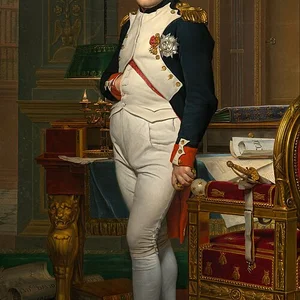
Napoleon Bonaparte
1769 — 1821
Napoleon Bonaparte (1769-1821) was a French military leader and statesman who seized power in 1799 and proclaimed himself Emperor in 1804. He transformed France and Europe through his reforms and military campaigns, most notably by establishing the Civil Code, which modernized the French legal system.
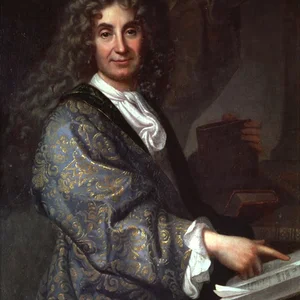
Nicolas Boileau
1636 — 1711
French poet and literary critic of the 17th century, nicknamed the “legislator of Parnassus”. His Art poétique (1674) established the rules of French classicism. A friend of Molière, Racine, and La Fontaine, he served as royal historiographer to King Louis XIV.
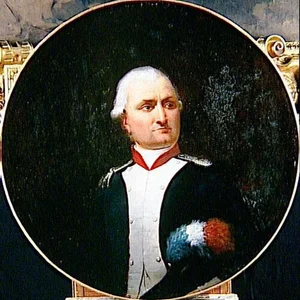
Nicolas-Joseph Beaurepaire
1740 — 1792
French general (1740–1792), commander of Verdun during the Prussian invasion of 1792. Refusing to surrender, he died on September 2, 1792, rather than sign the capitulation of the fortress. His sacrifice became a symbol of revolutionary patriotism.
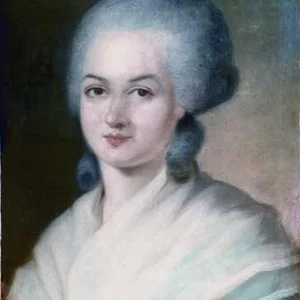
Olympe de Gouges
1748 — 1793
French author, politician and pamphleteer (1748–1793), Olympe de Gouges campaigned for women's rights and the abolition of slavery during the French Revolution. She wrote the Declaration of the Rights of Woman and of the Female Citizen in 1791, a founding document of feminism.
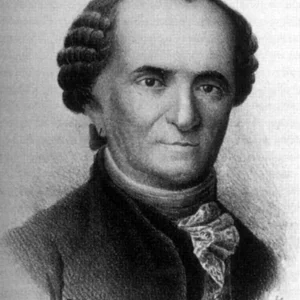
Philibert Commerson
1727 — 1773
French physician, naturalist, and explorer (1727–1773), Commerson took part in Bougainville's circumnavigation (1766–1769) as the official botanist. He described thousands of plant and animal species unknown to Europe, including the bougainvillea, which he named in honour of his expedition commander.
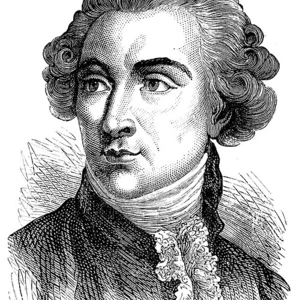
Pierre Choderlos de Laclos
1741 — 1803
Pierre Choderlos de Laclos was an eighteenth-century French writer and artillery officer. He is the author of the famous epistolary novel *Les Liaisons dangereuses* (1782), a cruel portrayal of the libertine intrigues of the aristocracy.
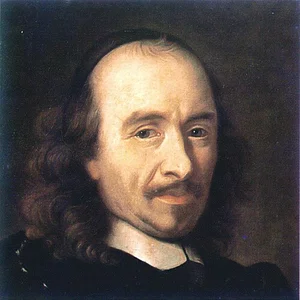
Pierre Corneille
1606 — 1684
French playwright and poet (1606–1684), founder of French classical tragedy. Author of Le Cid, a landmark work of French theater that left a lasting mark on literary history. He dominated the Parisian stage in the 17th century with his tragedies and comedies.
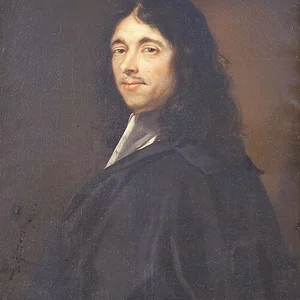
Pierre de Fermat
1607 — 1665
A French mathematician and magistrate of the 17th century, Pierre de Fermat left a lasting mark on the history of mathematics through his fundamental contributions to number theory, analytic geometry, and probability theory. Although he worked primarily as a counselor in the Parliament of Toulouse, his mathematical work inspired generations of mathematicians to come.
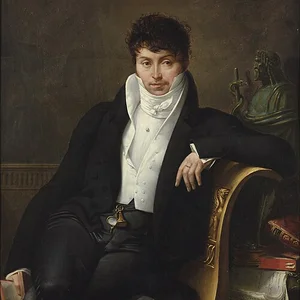
Pierre Jean Georges Cabanis
1757 — 1808
French physician, physiologist, and philosopher (1757–1808), a leading figure among the Idéologues. He sought to establish a science of man by linking the physical functions of the body to moral phenomena.
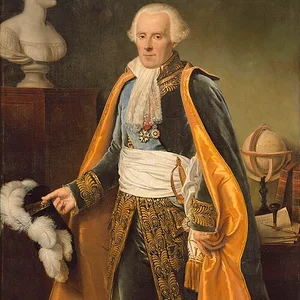
Pierre-Simon Laplace
1749 — 1827
French mathematician and astronomer (1749–1827), Laplace authored the Traité de mécanique céleste and developed the theory of probability. He formulated the nebular hypothesis on the formation of the Solar System.
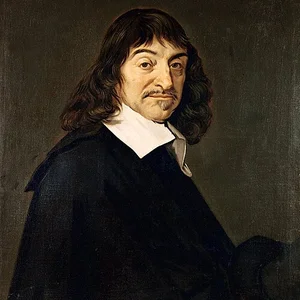
René Descartes
1596 — 1650
French philosopher and mathematician of the 17th century, founder of modern philosophy and rationalism. Known for his method of systematic doubt and his famous principle "I think, therefore I am." He revolutionized mathematics by creating analytic geometry.
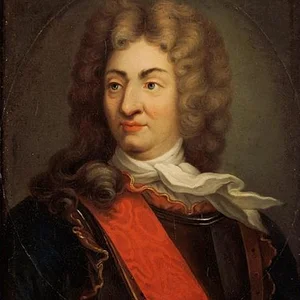
René Duguay-Trouin
1673 — 1736
A privateer from Saint-Malo in the service of the King of France, René Duguay-Trouin distinguished himself through daring captures of enemy ships during the wars of Louis XIV. Ennobled for his exploits, he ended his career as lieutenant general of the naval forces after the capture of Rio de Janeiro in 1711.
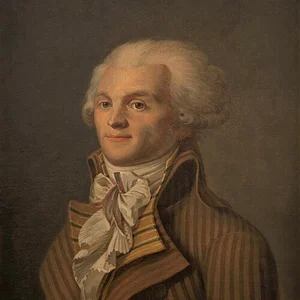
Robespierre
1758 — 1794
French lawyer and politician (1758–1794), Robespierre was a central figure of the French Revolution. Leader of the Montagnards, he dominated the Committee of Public Safety and became the embodiment of the Reign of Terror before being executed in 1794.
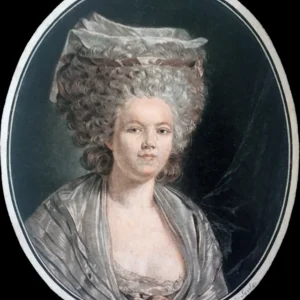
Rose Bertin
1747 — 1813
A French fashion merchant, Rose Bertin was the dressmaker and style advisor to Queen Marie-Antoinette. Nicknamed the “minister of fashion,” she introduced extravagant hairstyles and outfits that made her a pioneering figure of haute couture.
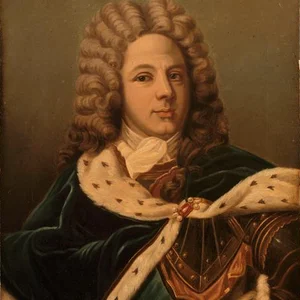
Saint-Simon
1675 — 1755
French memoirist and duke at the court of Louis XIV. His Memoirs, written in secret, offer a striking and incisive portrait of life at Versailles and the intrigues of the nobility under Louis XIV and the Regency.
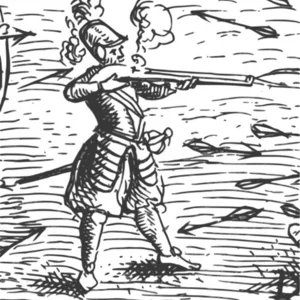
Samuel de Champlain
1567 — 1635
A French navigator and explorer, Samuel de Champlain founded the city of Quebec in 1608 and is known as the Father of New France. He mapped much of Canada and established lasting alliances with Indigenous peoples.
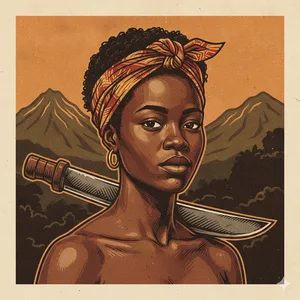
Solitude
1772 — 1802
Born around 1772 in Guadeloupe to an enslaved African mother, Solitude joined the mixed-race insurgents during the armed resistance against the restoration of slavery decreed by Bonaparte in 1802. Pregnant, she fought until her capture and was hanged the day after giving birth, on November 29, 1802. Her story, passed down through Creole and Caribbean oral tradition, has made her an emblematic figure of resistance against colonial oppression.
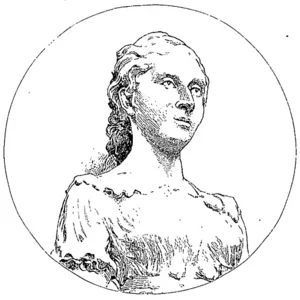
Sophie Germain
1776 — 1831
French mathematician and philosopher (1776–1831), a pioneer in science at a time when women were excluded from it. She made contributions to number theory and elasticity, and corresponded with Gauss under a male pseudonym.
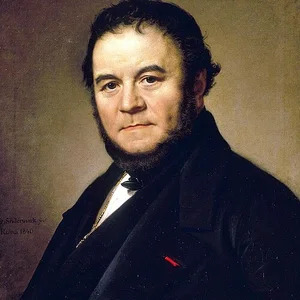
Stendhal
1783 — 1842
A French writer of the 19th century, Stendhal is the author of the psychological novel The Red and the Black (1830). Known for his sharp analysis of human passions and his direct style, he left a lasting mark on French literature by exploring themes of ambition, passion, and social criticism.
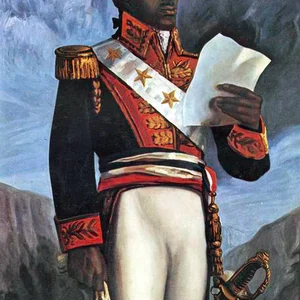
Toussaint Louverture
1743 — 1803
A freed slave and Haitian military leader (1743–1803), Toussaint Louverture led the Haitian Revolution and abolished slavery in Saint-Domingue. An iconic figure in the fight for freedom, he transformed a slave colony into the first independent Black republic.
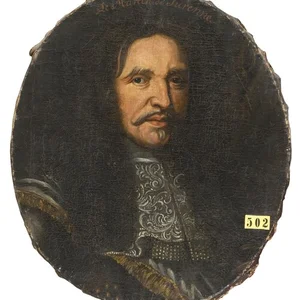
Turenne
1611 — 1675
Turenne was one of the greatest French military commanders of the 17th century. Marshal General under Louis XIV, he distinguished himself during the Thirty Years' War and the campaigns in Holland, where he was killed by a cannonball at Sasbach in 1675.
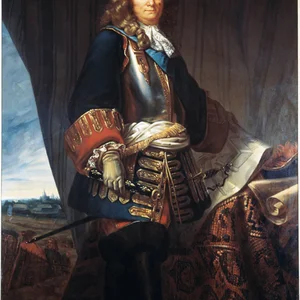
Vauban
1633 — 1707
French military engineer and architect during the reign of Louis XIV, regarded as the greatest fortification specialist of his time. A Marshal of France, he designed a defensive system protecting the kingdom's borders and revolutionized the art of the siege.
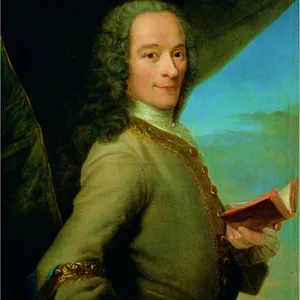
Voltaire
1694 — 1778
An 18th-century French writer and philosopher, Voltaire is a major figure of the Enlightenment. Through his works, most notably Candide, he championed tolerance, freedom of expression, and criticism of religious intolerance.
Abbé Henri Grégoire
1750 — 1831
A Catholic priest and politician of the French Revolution, he championed the emancipation of Jews and the abolition of slavery in the colonies. Elected as a constitutional bishop, he sat in the National Convention and helped secure the passage of the 1794 abolition decree.
Adrien-Marie Legendre
1752 — 1833
French mathematician (1752–1833), he contributed to number theory, geometry, and analysis. He is known for the Legendre polynomials and the method of least squares.
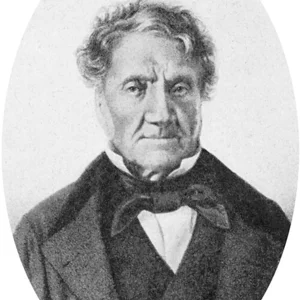
Aimé Bonpland
1773 — 1858
French botanist and explorer (1773-1858), companion of Alexander von Humboldt during their famous expedition to South America (1799-1804). He catalogued thousands of plant species unknown in Europe and spent the rest of his life in Argentina.
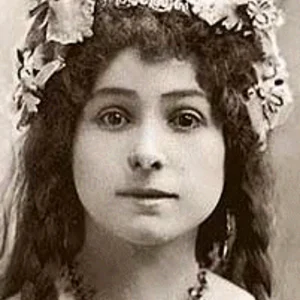
Alexandra David-Néel
1868 — 1969
French explorer and writer (1868-1969), Alexandra David-Néel was the first Western woman to reach Lhasa, the capital of Tibet, in 1924. A passionate Orientalist, she devoted her life to exploring and studying Asian cultures, particularly Tibetan Buddhism.
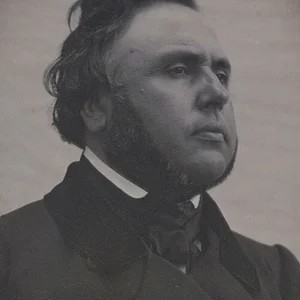
Alexandre Auguste Ledru-Rollin
1807 — 1874
French lawyer and republican politician (1807–1874), he was one of the members of the provisional government that emerged from the February 1848 revolution. He was the principal architect of the decree establishing universal male suffrage in France, expanding the electorate from 200,000 to nearly 9 million citizens.
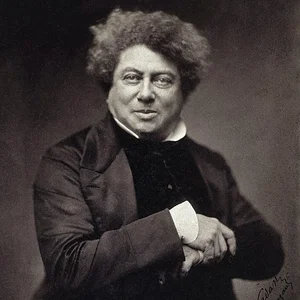
Alexandre Dumas
1802 — 1870
French writer and playwright (1802–1870), author of adventure novels and popular serialized fiction. Father of Alexandre Dumas fils, he is considered a master of the historical and adventure novel in the 19th century.
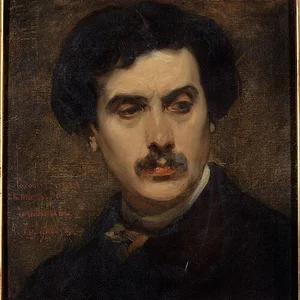
Alexandre Falguière
1831 — 1900
French sculptor and painter (1831-1900), winner of the Grand Prix de Rome in 1859. A leading figure of academic sculpture under the Second Empire and the Third Republic, he created iconic works blending realism with the classical ideal.
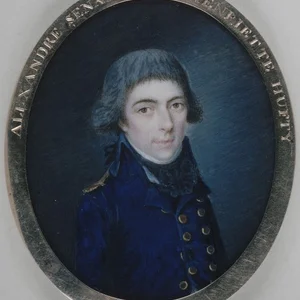
Alexandre-Antoine Hureau de Sénarmont
1769 — 1810
An artillery general of the First Empire, Hureau de Sénarmont distinguished himself at Jena and Friedland through his innovative offensive artillery tactics. He was killed at the Battle of Zaragoza in 1809.
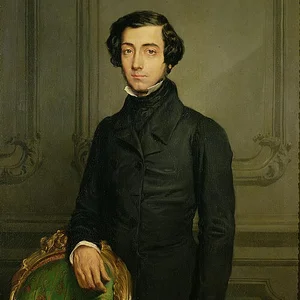
Alexis de Tocqueville
1805 — 1859
French political philosopher, historian, and statesman (1805–1859). Tocqueville is the author of 'Democracy in America', a foundational work analyzing American institutions and society. He is considered a pioneer of sociology and a major thinker of modern politics.
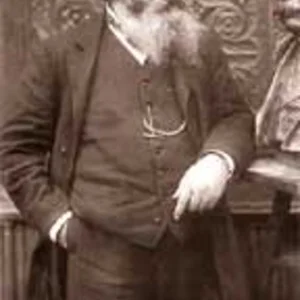
Alfred Boucher
1850 — 1934
Alfred Boucher (1850-1934) was a French sculptor born in Nogent-sur-Seine, a student of Paul Dubois and Auguste Dumont. He is particularly known for encouraging young artists, including Camille Claudel, and for founding La Ruche, an artists' colony in Paris.
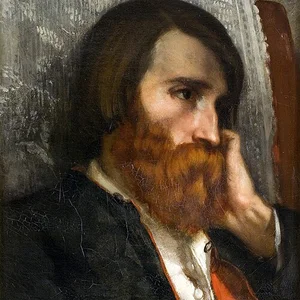
Alfred Bruyas
1821 — 1877
Alfred Bruyas (1821-1877) was a French collector, patron of the arts, and amateur painter from Montpellier. Heir to a family fortune, he devoted his life to building a major art collection, most notably by supporting Gustave Courbet. His collection forms the core holdings of the Musée Fabre in Montpellier.
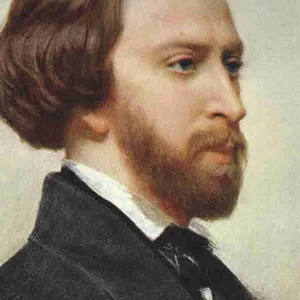
Alfred de Musset
1810 — 1857
French writer and playwright (1810-1857), a major figure of Romanticism. Author of comedies and lyrical dramas, he is best known for his play "No Trifling with Love" and for his turbulent relationship with George Sand.
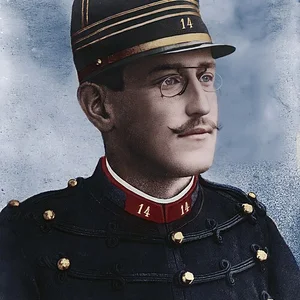
Alfred Dreyfus
1859 — 1935
French army officer of Alsatian and Jewish origin (1859–1935). He was wrongly accused of espionage in 1894, triggering the Dreyfus Affair, one of the greatest political crises of the Third Republic. His innocence was officially recognized in 1906, marking a turning point in the fight against antisemitism in France.
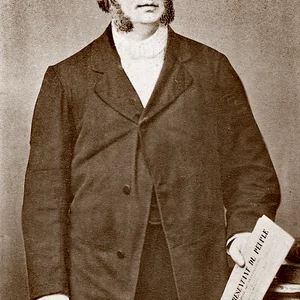
Alphonse Baudin
1811 — 1851
A physician and republican deputy, Alphonse Baudin was killed on December 3, 1851, on a barricade in the faubourg Saint-Antoine while resisting Louis-Napoléon Bonaparte's coup d'état. He became a martyr of the Republic, and his trial in 1868 reignited republican opposition to the Second Empire.
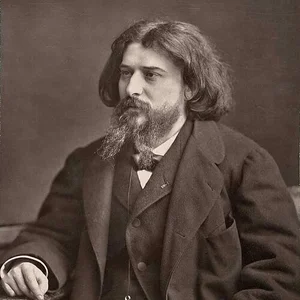
Alphonse Daudet
1840 — 1897
French writer (1840-1897), author of novels and short stories that paint with humor and warmth the life of Provence and Paris. He is best known for his *Letters from My Mill* and his unforgettable characters such as Tartarin of Tarascon.
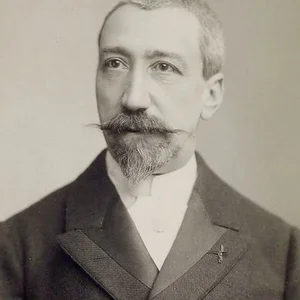
Anatole France
1844 — 1924
Born François-Anatole Thibault, Anatole France was a French writer, literary critic, and essayist, and a major figure of the Belle Époque. A committed Dreyfusard, he was awarded the Nobel Prize in Literature in 1921.
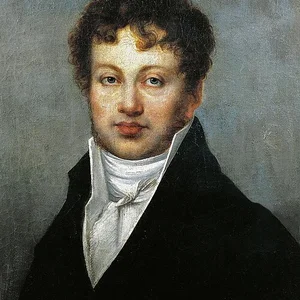
André-Marie Ampère
1775 — 1836
French physicist and mathematician, Ampère is the founder of electrodynamics. He established the mathematical laws governing the interactions between electric currents and magnetic fields. The international unit of electric current, the ampere, bears his name.
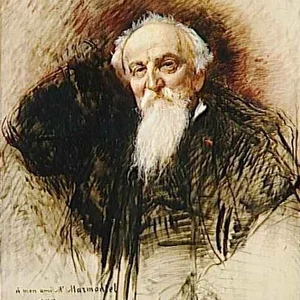
Antoine François Marmontel
1816 — 1898
French pianist, composer and pedagogue (1816–1898), professor at the Paris Conservatoire for nearly forty years. He trained generations of pianists, including Bizet, Debussy and d'Indy, and contributed to the rise of music education in France.
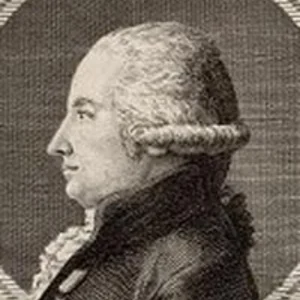
Antoine-César de Choiseul-Praslin
1756 — 1808
French aristocrat (1756-1808), senator of the First Empire and grand officer of the Legion of Honor. Born into a great noble family, he navigated the transition from the Ancien Régime to the Napoleonic institutions.
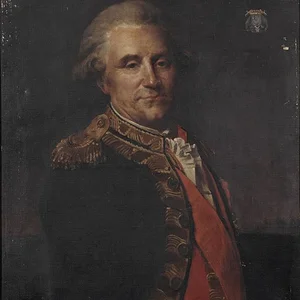
Antoine-Jean-Marie Thévenard
1733 — 1815
French admiral born in 1733, he distinguished himself during the American War of Independence before becoming Minister of the Navy under the Revolution (1791-1792). A senator under the Napoleonic Empire, he embodies the continuity between the Old Regime's naval tradition and the revolutionary institutions.
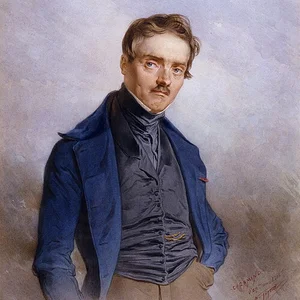
Antoine-Louis Barye
1795 — 1875
French sculptor (1795–1875) and pioneer of Romantic animalism. His bronzes depicting wild animals in combat combine naturalistic precision with dramatic tension. He is considered the undisputed master of animal sculpture in the 19th century.
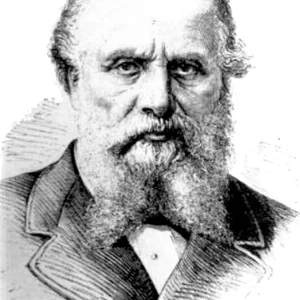
Aristide Boucicaut
1810 — 1877
Aristide Boucicaut (1810-1877) was a French entrepreneur who founded Le Bon Marché in Paris in 1852, inventing the concept of the modern department store. He revolutionized retail by introducing fixed prices, free entry, and clearance sales.
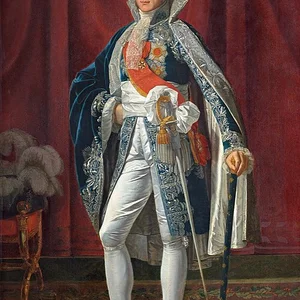
Armand de Caulaincourt
1773 — 1827
French general and diplomat, Duke of Vicenza, he served as Napoleon's ambassador to Russia (1807–1811) and was a privileged eyewitness to the Russian campaign of 1812. Minister of Foreign Affairs during the Hundred Days, he left behind essential Memoirs on the Napoleonic saga.
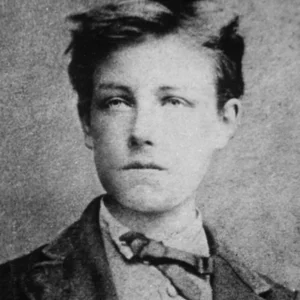
Arthur Rimbaud
1854 — 1891
French poet of the 19th century (1854–1891), Rimbaud is a major figure of modern and visionary poetry. He revolutionized poetry through formal innovation and exploration of the unconscious, before abandoning literature at the age of 20 to live as an adventurer in Africa.
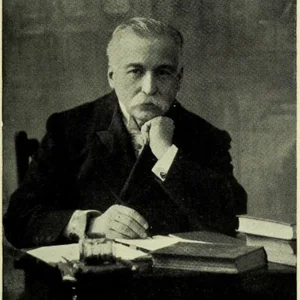
Auguste Escoffier
1846 — 1935
French chef and culinary author

Auguste Lumière
1862 — 1954
Auguste Lumière (1862–1954) was a French inventor and industrialist who, together with his brother Louis, developed the Cinématographe in 1895, giving birth to cinema. He also contributed to colour photography with the invention of the Autochrome.
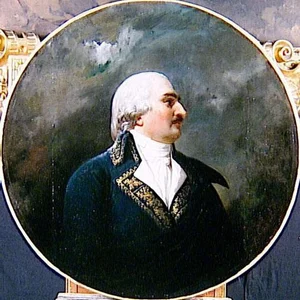
Auguste Marie Henri Picot de Dampierre
1756 — 1793
French general of the Revolution (1756–1793), he took command of the Army of the North after Dumouriez's betrayal and was killed in action during the siege of Condé-sur-l'Escaut. Pantheonized in 1793, his remains were removed during the Restoration.
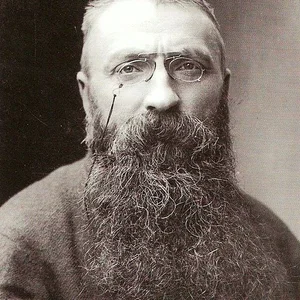
Auguste Rodin
1840 — 1917
French sculptor (1840–1917) considered the father of modern sculpture. He revolutionized sculptural art by abandoning academicism to explore expressiveness, emotion, and movement. His masterwork, The Thinker, has become one of the most iconic sculptures in Western art.
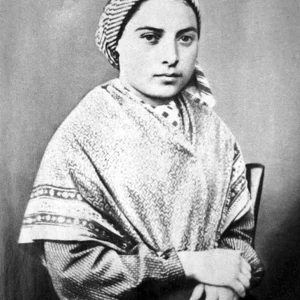
Bernadette Soubirous
1844 — 1879
Bernadette Soubirous was a young French miller's daughter who claimed to have experienced eighteen apparitions of the Virgin Mary at the grotto of Massabielle, in Lourdes, in 1858. She became a nun with the Sisters of Charity of Nevers and was canonized in 1933.
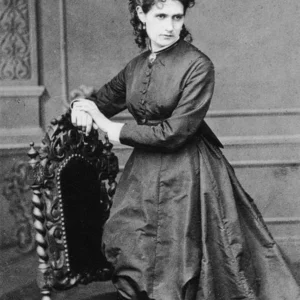
Berthe Morisot
1841 — 1895
Berthe Morisot (1841–1895) is one of the leading figures of French Impressionism. The first woman to exhibit with the Impressionist group from 1874 onward, she developed a luminous style centered on intimate life, motherhood, and gardens. Sister-in-law of Édouard Manet, she established herself as a fully independent artist in a world dominated by men.
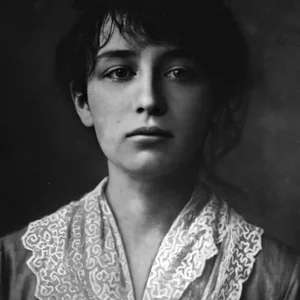
Camille Claudel
1864 — 1943
French sculptor and painter (1864–1943), she is one of the great artists of the late 19th century. A student and collaborator of Auguste Rodin, she developed her own artistic language before being gradually forgotten and committed to an asylum in 1913.
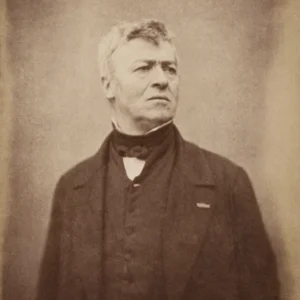
Camille Corot
1796 — 1875
French painter and printmaker (1796–1875), Corot is one of the leading figures of 19th-century landscape painting. A forerunner of Impressionism, he was a prominent member of the Barbizon school and profoundly influenced the generations that followed.
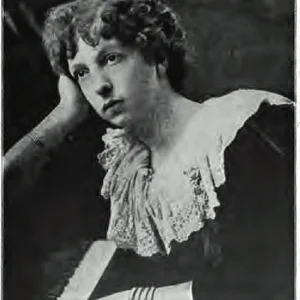
Cécile Chaminade
1857 — 1944
French composer and pianist (1857–1944), Cécile Chaminade was one of the first women to establish herself in the classical music world. Celebrated for her Concertstück for piano and orchestra and her Concertino for flute, she enjoyed tremendous international success during her lifetime.
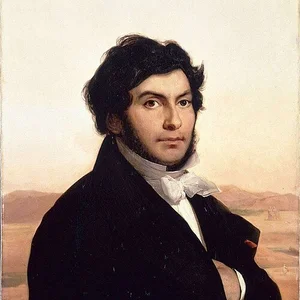
Champollion
1790 — 1832
French Egyptologist (1790-1832) who revolutionized the study of ancient Egypt by deciphering Egyptian hieroglyphs using the Rosetta Stone. His work opened the door to understanding Egyptian civilization and established Egyptology as a scientific discipline.
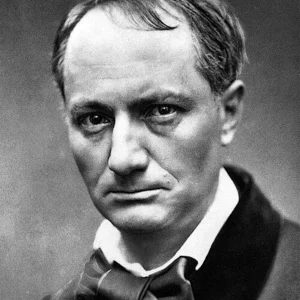
Charles Baudelaire
1821 — 1867
19th-century French poet and founder of modern poetry. Baudelaire is best known for his collection "The Flowers of Evil" (Les Fleurs du Mal, 1857), which revolutionized literature by exploring the beauty of evil, decadence, and existential torment. His work, considered scandalous at the time, profoundly influenced contemporary poetry and subsequent literary movements.
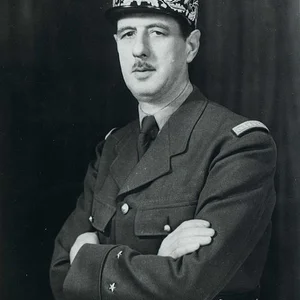
Charles de Gaulle
1890 — 1970
French military officer and statesman (1890–1970), leader of the French Resistance during World War II and founder of the Fifth Republic. A defining figure of the 20th century, he shaped French history through his unwavering commitment to national independence and the greatness of France.
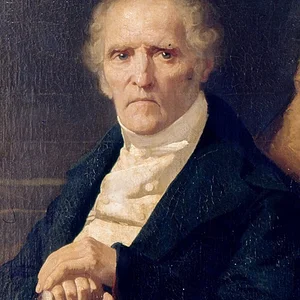
Charles Fourier
1772 — 1837
Charles Fourier was a French philosopher and social theorist, one of the leading representatives of utopian socialism. He envisioned a harmonious society organized into self-sufficient communities called phalansteries.
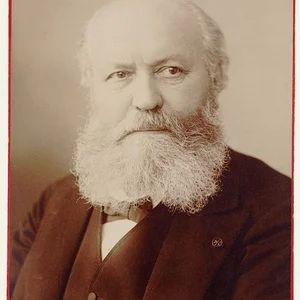
Charles Gounod
1818 — 1893
French composer (1818–1893), Charles Gounod is the creator of the opera Faust and the Ave Maria. A major figure in French lyric music, he left a profound mark on 19th-century musical life.
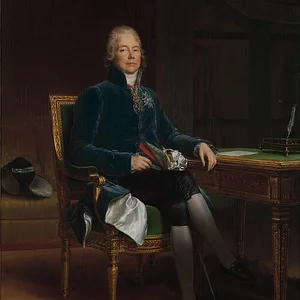
Charles-Maurice de Talleyrand-Périgord
1754 — 1839
French diplomat and statesman (1754–1838), he served under the Ancien Régime, the Revolution, the Empire, and the Restoration. A master negotiator, he defended France's interests at the Congress of Vienna in 1815.
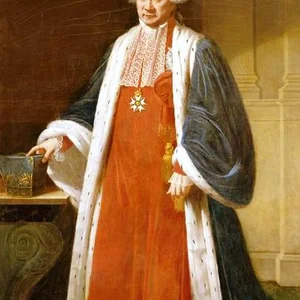
Claude Ambroise Régnier
1746 — 1814
French jurist and politician (1746–1814), Grand Judge and Minister of Justice under the First Empire. A loyal servant of Napoleon, he was created Duke of Massa in 1809 and contributed to the organization of the Napoleonic judicial system.
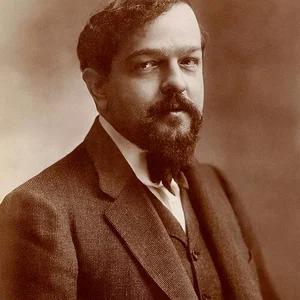
Claude Debussy
1862 — 1918
French composer (1862–1918) and founder of musical impressionism. He revolutionized classical music by rejecting traditional harmonic conventions to create a suggestive and colorful music inspired by sensations and poetic imagery.
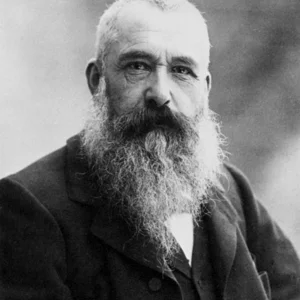
Claude Monet
1840 — 1926
French painter (1840–1926), founder of the Impressionist movement. Monet revolutionized art by capturing the effects of light and atmosphere, most notably through his series of water lilies and his famous painting "Impression, Sunrise."
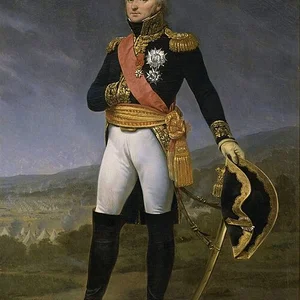
Claude-Juste-Alexandre Legrand
1762 — 1815
A French divisional general of the First Empire, Claude-Juste-Alexandre Legrand distinguished himself during the Napoleonic Wars, most notably at Austerlitz. He commanded several army corps under Napoleon Bonaparte.
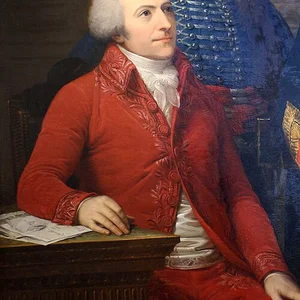
Claude-Louis Petiet
1749 — 1806
French general and politician, Claude-Louis Petiet served as Minister of War under the Directory (1797–1798), then as Councillor of State and senator under the Consulate and the Napoleonic Empire. He died in 1806, becoming the first person interred during the reign of Napoleon I.
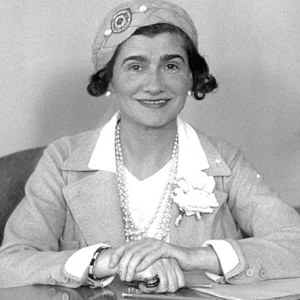
Coco Chanel
1883 — 1971
Revolutionary French fashion designer (1883–1971), Coco Chanel transformed women's fashion by offering simple, comfortable, and elegant clothing. Founder of the eponymous fashion house, she established modern style and freedom of movement as the new standards of elegance.
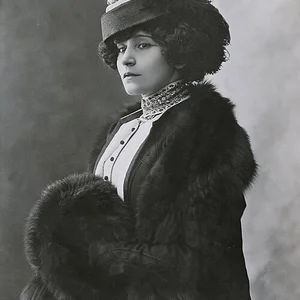
Colette
1873 — 1954
French novelist, playwright, and journalist (1873–1954), Colette is a towering figure of twentieth-century French literature. A prolific author, she explores themes of sensibility, nature, and female freedom through poetic, sensory prose.
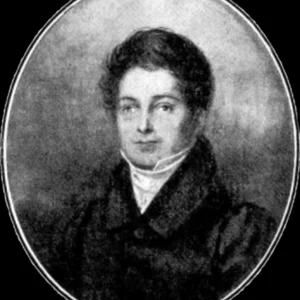
Doctor Blanche
1796 — 1852
Esprit Blanche (1796-1852) was a French alienist physician, a pioneer of humane psychiatry. In Montmartre and later in Passy, he founded a nursing home renowned for the treatment of mental illness, where he welcomed many artists and writers.
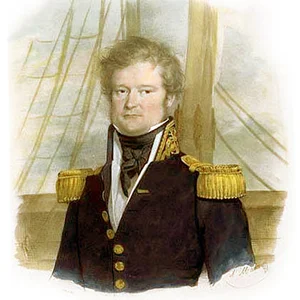
Dumont d'Urville
1790 — 1842
French naval officer and explorer (1790–1842), he led several expeditions to the southern seas and Antarctica. He discovered Adélie Land in 1840 and helped identify the Venus de Milo.
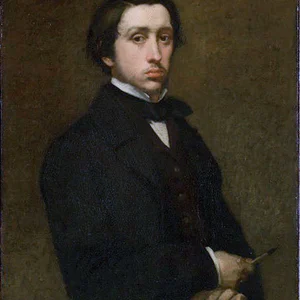
Edgar Degas
1834 — 1917
French painter and sculptor (1834–1917), Degas is one of the founders of Impressionism. He is celebrated for his depictions of dancers at the Paris Opera and scenes of modern life.
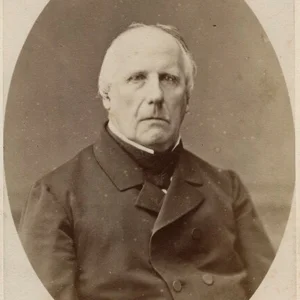
Edgar Quinet
1803 — 1875
French historian, philosopher, and politician (1803-1875), a leading figure of anticlerical republicanism. A professor at the Collège de France, he was exiled during the Second Empire for his opposition to Napoléon III.
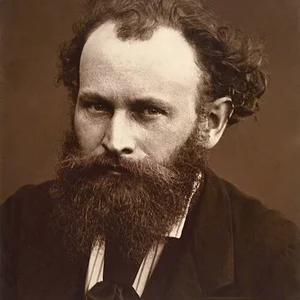
Édouard Manet
1832 — 1883
French painter and printmaker (1832–1883), Manet is a pivotal figure between Realism and Impressionism. His provocative works such as Le Déjeuner sur l'herbe and Olympia overturned academic conventions.
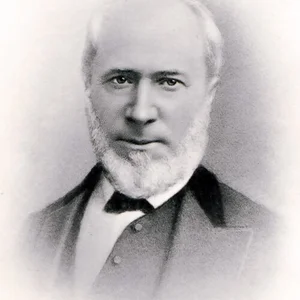
Édouard Séguin
1812 — 1880
French physician and educator, a pioneer in the education of children with intellectual disabilities. A student of Itard, he developed a physiological method of education before emigrating to the United States, where he influenced Maria Montessori.
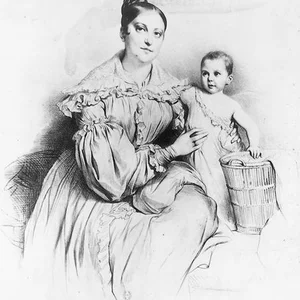
Élisa Schlésinger
1810 — 1888
A woman of the French bourgeoisie whom Gustave Flaubert met at Trouville in 1836, when he was fifteen years old. This encounter left a lasting mark on the writer: she inspired the character of Madame Arnoux in Sentimental Education.
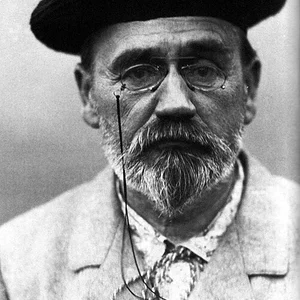
Émile Zola
1840 — 1902
French novelist, journalist and literary critic (1840-1902), founder of the Naturalist movement. He is the author of Germinal and L'Assommoir, landmark novels of the 19th century that expose the living conditions of the working class. Zola took a decisive political stand during the Dreyfus Affair by publishing his famous open letter 'J'Accuse'.
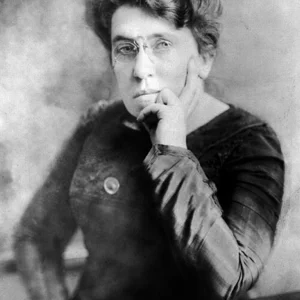
Emma Goldman
1869 — 1940
Emma Goldman (1869-1940) was a Lithuanian-born anarchist and feminist activist who emigrated to the United States. A leading figure in the American labor movement, she championed individual freedom, women's emancipation, and opposed war and capitalism.
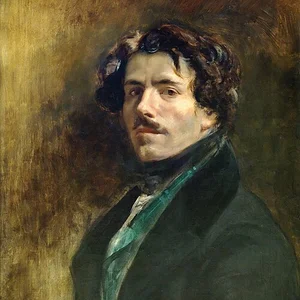
Eugène Delacroix
1798 — 1863
French painter of the 19th century and leading figure of the Romantic movement. Delacroix revolutionized painting through his bold use of color, movement, and political and Orientalist subjects. His masterpiece "Liberty Leading the People" became an icon of republican freedom.
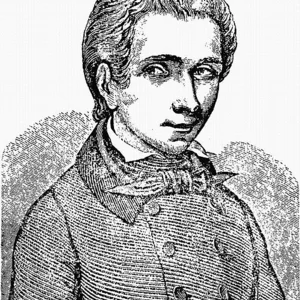
Évariste Galois
1811 — 1832
French mathematician (1811–1832), a precocious genius who died in a duel at the age of 20. He founded group theory and proved the impossibility of solving by radicals equations of degree higher than 4.
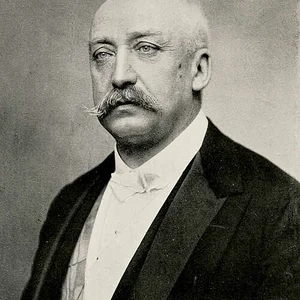
Félix Faure
1841 — 1899
French statesman (1841–1899), President of the Republic from 1895 until his death. Born into the bourgeoisie of Le Havre, his presidency was defined by the Dreyfus Affair, and he died suddenly at the Élysée Palace in circumstances that have since become notorious.
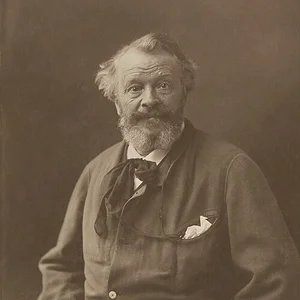
Félix Nadar
1820 — 1910
Félix Nadar (1820–1910) was a French photographer, caricaturist, and aeronaut. A pioneer of photography, he produced the first photographic portraits of the artists and intellectuals of his time, and took the first aerial photographs from a balloon.
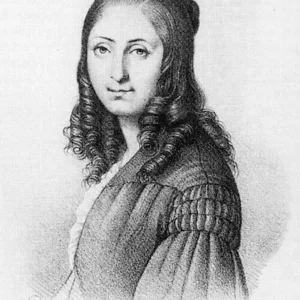
Flora Tristan
1803 — 1844
French journalist and feminist activist (1803–1844), Flora Tristan championed the emancipation of women and the condition of the working class in the 19th century. She was a pioneer of feminism and socialism, placing the question of women at the heart of political and social debate.
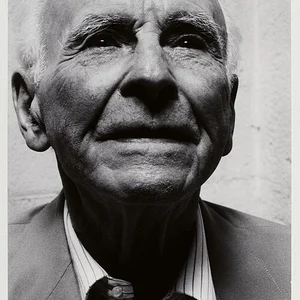
Francis Ponge
1899 — 1988
French writer (1899-1988) and founder of an innovative poetics devoted to everyday objects. Ponge liberates poetry from traditional rhetoric by celebrating simple, material things, inventing a 'rage of expression' to explore the sensory world.
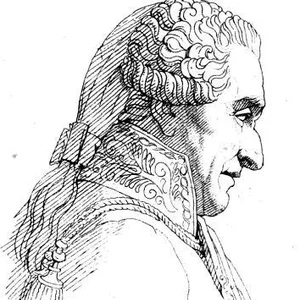
François Denis Tronchet
1726 — 1806
French jurist and statesman (1726–1806), he courageously defended Louis XVI before the Convention in 1792. He was one of the four principal authors of the Civil Code promulgated in 1804, a foundational work of modern French law.
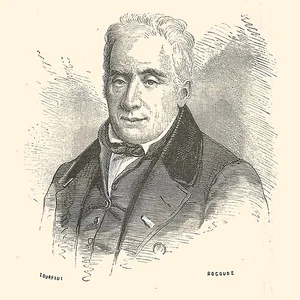
François Richard-Lenoir
1765 — 1839
A Norman industrialist, he became one of the greatest French cotton manufacturers under the First Empire, taking advantage of the Continental Blockade to eliminate British competition. The fall of Napoleon and the return of British cotton ruined his fortune, but he is remembered for his genuine concern for the well-being of his workers.
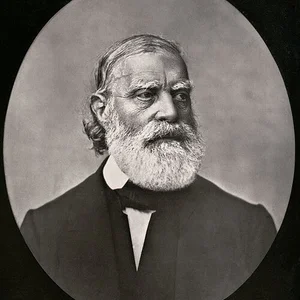
François-Vincent Raspail
1794 — 1878
French chemist and naturalist (1794–1878), pioneer of cellular chemistry and histology. A committed republican, he took part in the revolutions of 1830 and 1848, was imprisoned for his political beliefs, and ran for the presidency of the Republic from his prison cell.
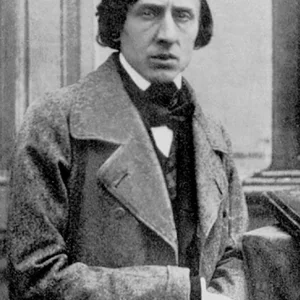
Frédéric Chopin
1810 — 1849
French-Polish composer and pianist
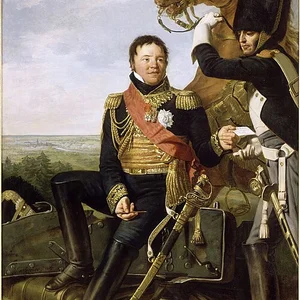
Frédéric Henri Walther
1761 — 1813
A French general of the Revolution and the Empire, Frédéric Henri Walther commanded the cavalry of the Imperial Guard. He distinguished himself in the major Napoleonic campaigns and was granted the title of Count of the Empire.
Gabriel Louis de Caulaincourt
1749 — 1808
A French general of the First Empire, Gabriel Louis de Caulaincourt distinguished himself during the Napoleonic Wars. He died heroically at the Battle of the Moskva in September 1812, during the Russian campaign.
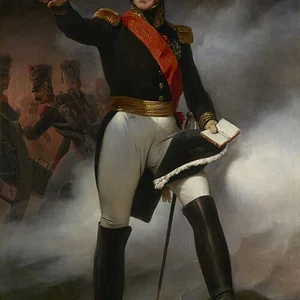
Gabriel Molitor
1770 — 1849
French general who served in the Revolutionary and Napoleonic Wars, distinguishing himself at Zurich, Wagram, and in Spain. Elevated to the dignity of Marshal of France in 1823 following the Spanish campaign under the Restoration.
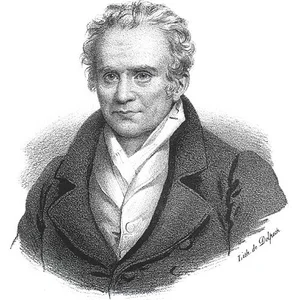
Gaspard Monge
1746 — 1818
French mathematician (1746–1818), inventor of descriptive geometry and co-founder of the École Polytechnique. A close ally of Napoleon, he played a major role in modernizing scientific and technical education in France.
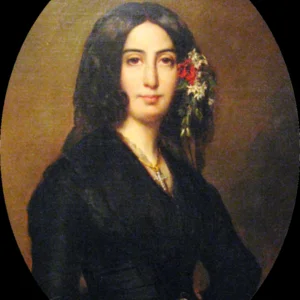
George Sand
1804 — 1876
A French novelist of the 19th century, George Sand (1804-1876) was one of the most prolific and innovative writers of her era. A champion of individual freedom and equal rights, she left a lasting mark on Romantic literature through her social novels and a life that openly defied the conventions of her time.
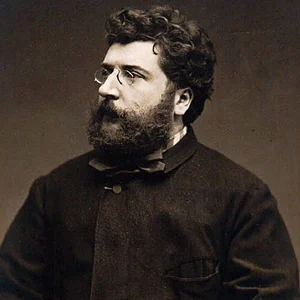
Georges Bizet
1838 — 1875
A French composer of the 19th century (1838–1875), Georges Bizet is best known for his opera Carmen, a masterpiece of lyric music. Despite a relatively short career, he revolutionized French opera by incorporating bold dramatic elements and daring orchestration.
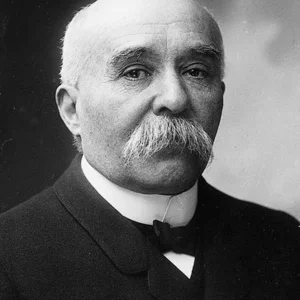
Georges Clemenceau
1841 — 1929
French statesman (1841–1929), Georges Clemenceau is best known for his decisive role during the First World War as Prime Minister (1917–1920). Nicknamed 'The Father of Victory', he led France to victory and negotiated the Treaty of Versailles.
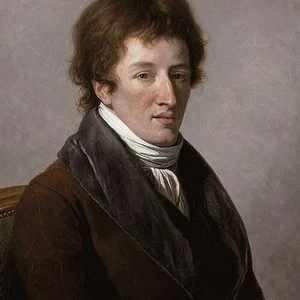
Georges Cuvier
1769 — 1832
French naturalist and anatomist (1769–1832), Georges Cuvier is the founder of paleontology and comparative anatomy. He established the catastrophism theory to explain species extinctions and classified the animal kingdom into four phyla.
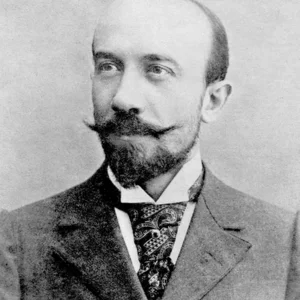
Georges Méliès
1861 — 1938
French filmmaker, actor, producer, director, conjurer and illusionist, pioneer and inventor of cinematic spectacle (1861–1938)
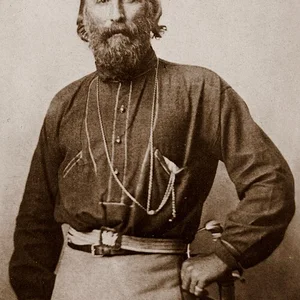
Giuseppe Garibaldi
1807 — 1882
Italian general and patriot (1807–1882), Garibaldi is one of the central figures of the Risorgimento. A charismatic military leader, he unified much of Italy through his campaigns, most notably the famous Expedition of the Thousand in 1860.
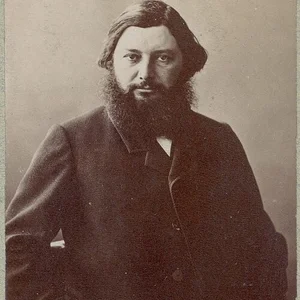
Gustave Courbet
1819 — 1877
19th-century French painter and founder of the Realist movement. Courbet revolutionized painting by depicting everyday reality and landscapes in an innovative style, rejecting the academic conventions of his time.
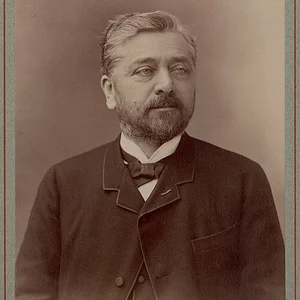
Gustave Eiffel
1832 — 1923
French engineer and entrepreneur (1832–1923), Gustave Eiffel is famous for building the tower that bears his name, erected for the 1889 World's Fair. A pioneer of iron architecture, he also designed the internal framework of the Statue of Liberty.
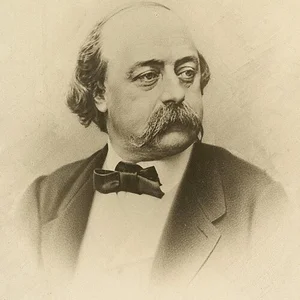
Gustave Flaubert
1821 — 1880
19th-century French novelist (1821–1880), Gustave Flaubert is the author of Madame Bovary, a founding work of literary realism. An obsessive perfectionist, he revolutionized the art of the novel through his refined style and his critique of bourgeois society.
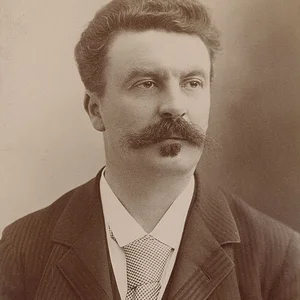
Guy de Maupassant
1850 — 1893
French writer and journalist (1850-1893), Maupassant is one of the masters of the realist short story of the 19th century. A student of Flaubert, he wrote hundreds of tales and short stories characterized by their spare style and critical view of society.
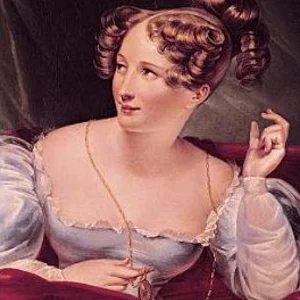
Harriet Smithson
1800 — 1854
Irish actress famous for her Shakespearean roles, she triumphed in Paris in 1827. Hector Berlioz, madly in love with her, dedicated his Symphonie fantastique to her before marrying her in 1833.
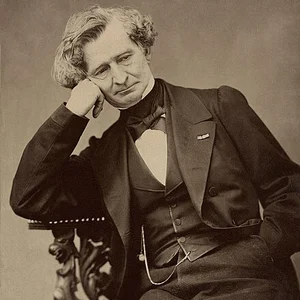
Hector Berlioz
1803 — 1869
French composer and music critic
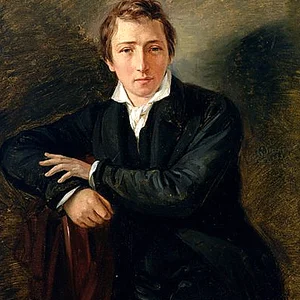
Heinrich Heine
1797 — 1856
Heinrich Heine (1797–1856) is one of the greatest German Romantic poets. Exiled to Paris in 1831, he became a bridge between French and German cultures. His work blends lyricism, irony, and political engagement.
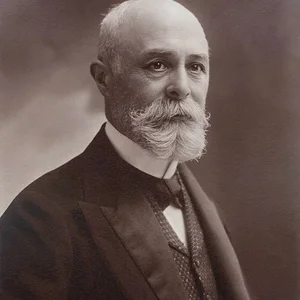
Henri Becquerel
1852 — 1908
French physicist (1852–1908), Henri Becquerel discovered radioactivity in 1896 by observing that uranium salts exposed photographic plates without any exposure to light. This fundamental discovery earned him the Nobel Prize in Physics in 1903, shared with Pierre and Marie Curie.
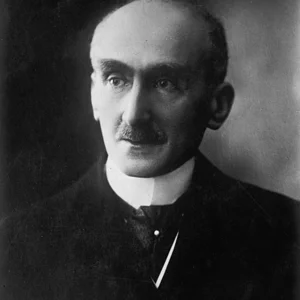
Henri Bergson
1859 — 1941
French philosopher (1859–1941) who revolutionized modern thought by opposing intuition to rational intelligence and developing a philosophy of duration. His major works, 'Laughter' and 'The Creative Mind', explore creativity and the evolution of consciousness. He received the Nobel Prize in Literature in 1927 for the body of his philosophical work.
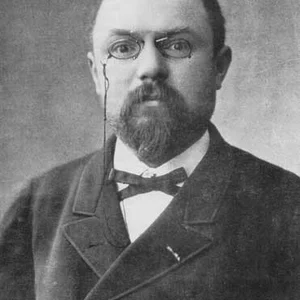
Henri Poincaré
1854 — 1912
French mathematician, physicist and philosopher (1854-1912), considered the last universal genius of science. He founded algebraic topology, laid the foundations of special relativity, and discovered deterministic chaos.
Hippolyte Fauche
1797 — 1869
A French Orientalist and Sanskritist of the 19th century, Hippolyte Fauche was the first to produce a complete French translation of the Mahabharata. His monumental work opened Indian epic literature to French-speaking audiences.
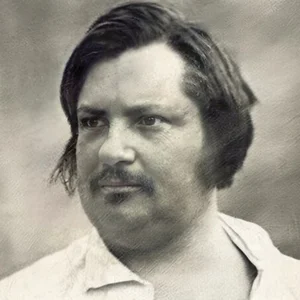
Honoré de Balzac
1799 — 1850
French novelist (1799–1850) and founder of literary realism. He created The Human Comedy, a vast novelistic panorama of French society in the 19th century, comprising more than 90 interconnected works.
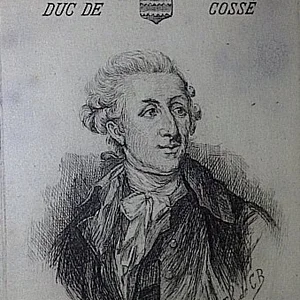
Hyacinthe-Hughes Timoléon de Cossé-Brissac
1746 — 1813
A French general from the high nobility, he served under the Revolution and the Empire. Appointed senator of the First Empire by Napoleon, he embodies the fusion between the old aristocracy and the new Napoleonic institutions.
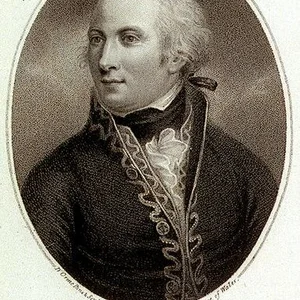
Jan de Winter
1761 — 1812
Dutch admiral (1761-1812) who served the Batavian Republic and later the Napoleonic Empire. Commander of the Batavian fleet, he faced the British Royal Navy at the Battle of Camperdown in 1797, where he was taken prisoner after fierce resistance.
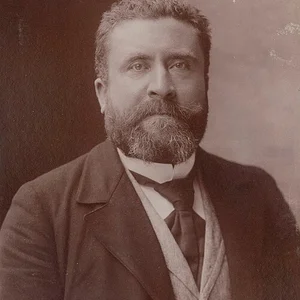
Jean Jaurès
1859 — 1914
Jean Jaurès (1859-1914) was a major French politician and founder of the unified Socialist Party. A passionate advocate for social justice, pacifism, and democracy, he opposed the war before being assassinated in 1914.
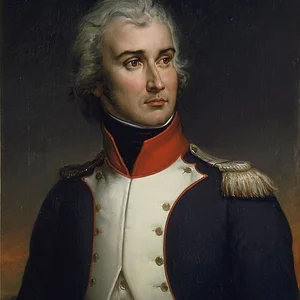
Jean Lannes
1769 — 1809
Marshal of the Empire and Duke of Montebello, Jean Lannes was one of Napoleon's most brilliant generals. A loyal comrade-in-arms since the Italian and Egyptian campaigns, he distinguished himself at Montebello, Austerlitz, and Jena. He died of his wounds at the Battle of Essling in 1809.
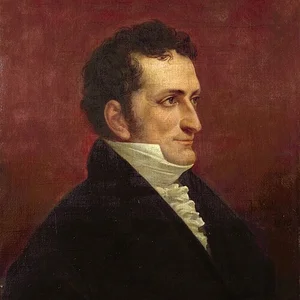
Jean Marc Gaspard Itard
1774 — 1838
French physician born in 1774, a pioneer of special education and otolaryngology. He is famous for having tried to educate Victor of Aveyron, “the wild child,” laying the foundations of teaching methods for children with disabilities.
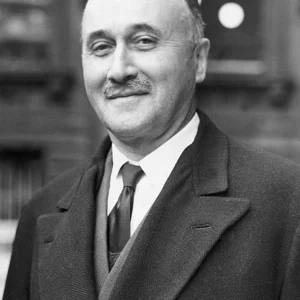
Jean Monnet
1888 — 1979
French statesman (1888–1979), Jean Monnet is regarded as one of the founding fathers of the European Union. He played a decisive role in the creation of the European Coal and Steel Community (ECSC) and championed the economic and political integration of Europe.
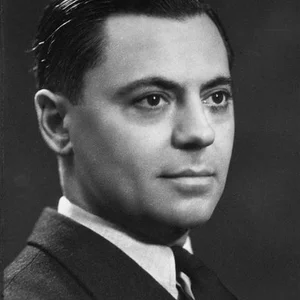
Jean Moulin
1899 — 1943
French senior civil servant (1899–1943), Jean Moulin is one of the most prominent figures of the French Resistance. He unified the resistance movements and created the National Council of the Resistance (CNR) before being arrested and tortured to death by the Nazis.

Jean-Baptiste Papin
1756 — 1809
A French political figure of the First Empire, Jean-Baptiste Papin de Saint-Christau served in the Conservative Senate. He represents the class of notables who rallied to the Napoleonic regime.
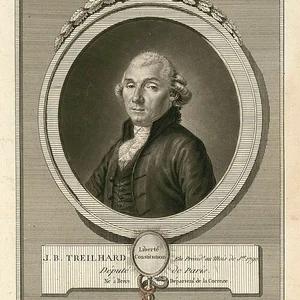
Jean-Baptiste Treilhard
1742 — 1810
French jurist and statesman (1742–1810), a member of the National Convention during the Revolution, briefly a Director, then a Councillor of State and Count of the Empire under Napoleon. He played a key role in drafting the Civil Code.
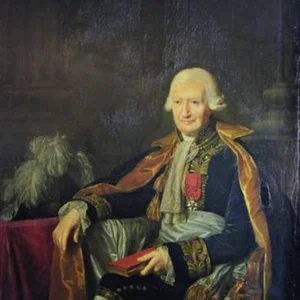
Jean-Baptiste-Pierre Bevière
1723 — 1807
French politician and member of the Convention during the Revolution, he served in the National Convention before becoming a dignitary under the Napoleonic Empire. His career illustrates the political trajectories of those who navigated both the Revolution and the Empire.
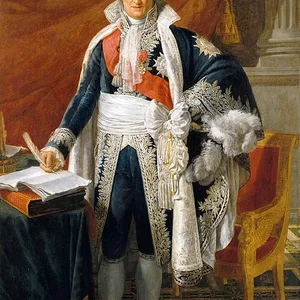
Jean-Étienne-Marie Portalis
1746 — 1807
A French jurist and statesman, Portalis was the principal drafter of the Civil Code enacted in 1804, the cornerstone of modern French private law. As Minister of Religious Affairs under Napoleon, he also contributed to the Concordat of 1801, which regulated relations between the Church and the State.
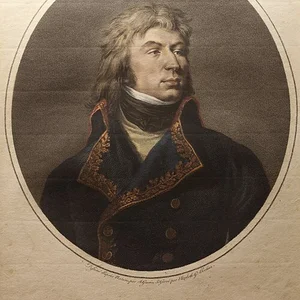
Jean-Louis-Ébénézer Reynier
1771 — 1814
A divisional general of the First Empire, Reynier took part in the great Napoleonic campaigns in Egypt, Italy, and Central Europe. He distinguished himself notably at the Battle of Maida (1806) and during the Russian campaign (1812).
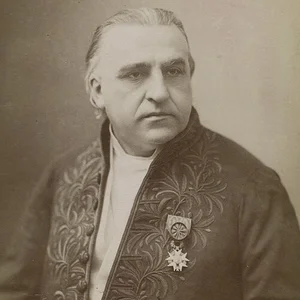
Jean-Martin Charcot
1825 — 1893
Jean-Martin Charcot was a French neurologist, regarded as one of the founders of modern neurology. He practiced at the Salpêtrière hospital in Paris, where he trained many physicians, including Sigmund Freud.
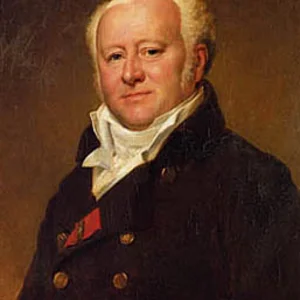
Jean-Nicolas Corvisart
1755 — 1821
French physician (1755–1821), first personal physician to Napoleon I and professor at the Collège de France. He popularized chest percussion as a diagnostic method and trained a generation of clinicians who laid the foundations of modern medicine.
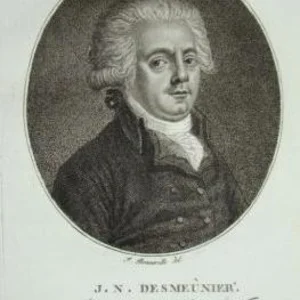
Jean-Nicolas Démeunier
1751 — 1814
French politician and writer (1751-1814), deputy to the Estates-General of 1789 and member of the National Constituent Assembly. He later became a senator under the Napoleonic First Empire.
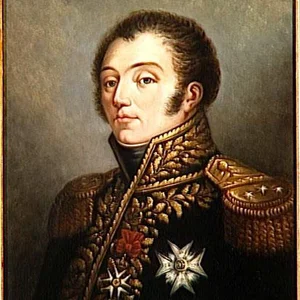
Jean-Pierre Firmin Malher
1761 — 1808
French divisional general of the Napoleonic Wars. He took part in the major campaigns of the Empire and died at Burgos in Spain during the Peninsular War.

Jean-Pierre Sers
1746 — 1809
Jean-Pierre Sers (1776-1862) was a French administrator and politician. A prefect under the First Empire, he became a senator and played a role in Napoleonic administration.
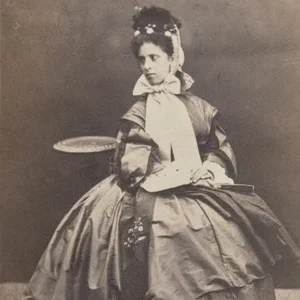
Jeanne Duval
1820 — 1868
Franco-Haitian actress and dancer, Jeanne Duval is best known as the muse and companion of Charles Baudelaire. She inspired the “Black Venus cycle” in *The Flowers of Evil*, while embodying the figure of the exoticized Black woman in the colonial imagination of the 19th century.
Jeanne Villepreux-Power
1794 — 1871
French naturalist (1794–1871), pioneer of marine biology. She invented the glass aquarium to observe octopuses and cephalopods in situ, revolutionizing the study of the marine world.
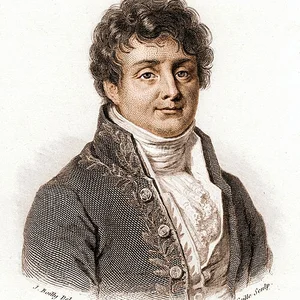
Joseph Fourier
1768 — 1830
French mathematician and physicist (1768–1830), Fourier is renowned for his work on heat propagation and mathematical analysis. He developed the decomposition of functions into trigonometric series, known as the Fourier series.
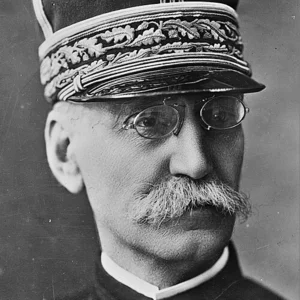
Joseph Gallieni
1849 — 1916
General and Marshal of France, Gallieni was a great colonial administrator in Madagascar and Indochina. Military Governor of Paris in 1914, he organized the counter-offensive at the Marne, saving the capital thanks to the famous “taxis of the Marne.”
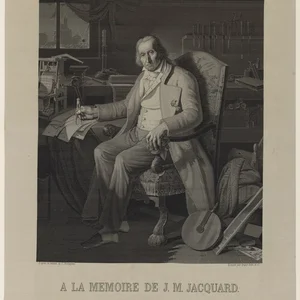
Joseph Marie Jacquard
1752 — 1834
French inventor born in Lyon in 1752, Jacquard developed in 1801 an automated loom using punched cards to control patterns. His invention revolutionized the textile industry and foreshadowed the concept of computer programming.
Joseph Meister
1876 — 1940
Joseph Meister is known for being the first human successfully vaccinated against rabies by Louis Pasteur in 1885, when he was only 9 years old. This historic vaccination marked a decisive turning point in the history of modern medicine.
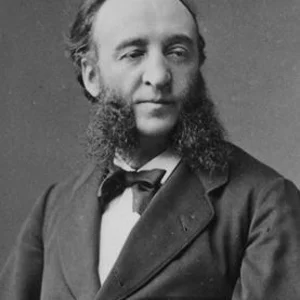
Jules Ferry
1832 — 1893
French statesman (1832–1893) who transformed French education as Minister of Public Instruction. He is responsible for the landmark education laws making primary school free, secular, and compulsory, laying the foundations of the modern French public school system.
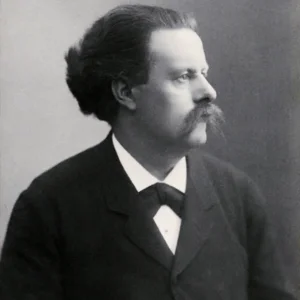
Jules Joffrin
1846 — 1890
Jules Joffrin (1846–1890) was a labor activist and socialist municipal councillor in Paris. A representative of the possibilist current, he embodied reformist socialist engagement under the Third Republic. The Jules Joffrin metro station (line 12) keeps his memory alive in the 18th arrondissement.
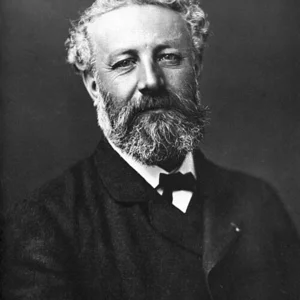
Jules Verne
1828 — 1905
A French writer of the 19th century, Jules Verne is considered the father of science fiction. His adventure novels blending exploration, technology, and imagination captivated generations of readers and continue to influence literature and cinema.
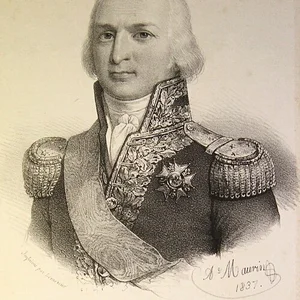
Justin Bonaventure Morard de Galles
1741 — 1809
French admiral born in 1741, he commanded the Brest squadron during the Revolution and took part in the Irish Expedition of 1796. Appointed senator of the First Empire by Napoleon, he died in 1809.
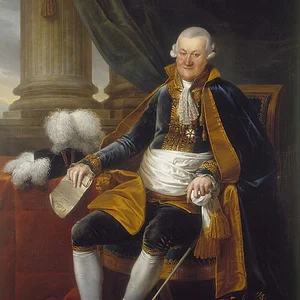
Justin de Viry
1736 — 1813
Justin de Viry (1773-1844) was a politician of Sardinian origin who became a naturalized French citizen. A prefect under the First Empire, he was appointed senator in 1813 by Napoleon I.
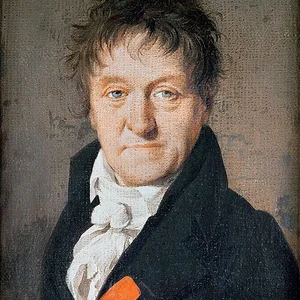
Lazare Carnot
1753 — 1823
French mathematician and general, Lazare Carnot earned the nickname "The Organizer of Victory" for his role on the Committee of Public Safety. He restructured the republican armies, contributing to the victories of revolutionary France, and left a notable mathematical legacy in geometry.
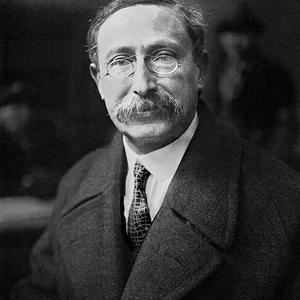
Léon Blum
1872 — 1950
Léon Blum (1872–1950) was a French politician and intellectual, leader of the French Socialist Party and a major figure of the left in the 20th century. He is best known for leading the Popular Front government in 1936, which marked the first time the left came to power in France.
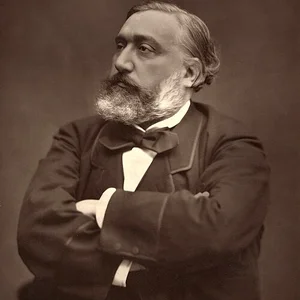
Léon Gambetta
1838 — 1882
Lawyer and republican statesman, Léon Gambetta proclaimed the Third Republic on September 4, 1870 following the defeat at Sedan. He organized national resistance during the Franco-Prussian War, escaping besieged Paris by balloon. A key architect of the republican regime, he served as President of the Chamber of Deputies from 1879 to 1881.
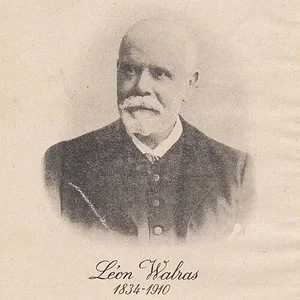
Léon Walras
1834 — 1910
Léon Walras (1834-1910) was a French economist and founder of the Lausanne School. He is one of the fathers of the neoclassical approach and developed the theory of general equilibrium, described using mathematical tools.
Louis Aragon
1897 — 1982
French poet and novelist (1897-1982), Louis Aragon is a major figure of committed poetry in the 20th century. A founding member of Surrealism alongside André Breton, he became one of the greatest poets of the French Resistance during the Second World War, blending lyricism with political engagement.
Louis Blanc
1811 — 1882
French journalist, historian, and socialist theorist (1811–1882). A member of the provisional government of the Second Republic in 1848, he championed the National Workshops and the right to work. Exiled in England after the June Days uprising, he returned to France after 1870.
Louis Braille
1809 — 1852
Louis Braille (1809–1852) was a French teacher who lost his sight at the age of three and invented, at 15, the tactile writing system that bears his name. His raised-dot alphabet revolutionized access to reading and writing for blind people around the world.
Louis Charles Vincent Le Blond de Saint-Hilaire
1766 — 1809
A French divisional general of the Napoleonic era, Saint-Hilaire distinguished himself in several major campaigns including Austerlitz. He was mortally wounded at the Battle of Essling in 1809.
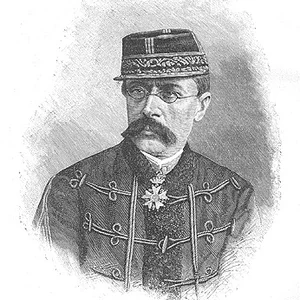
Louis Faidherbe
1818 — 1889
French general and colonial administrator, governor of Senegal from 1854 to 1865. He extended French influence in West Africa, modernized Dakar, and founded lasting institutions. He also commanded the Army of the North during the Franco-Prussian War of 1870.

Louis Lumière
1864 — 1948
French inventor and industrialist, Louis Lumière developed the Cinématographe with his brother Auguste in 1895. On December 28, 1895, they organized the first paid public film screening in Paris, a founding moment in the history of cinema worldwide. He also invented the Autochrome process, the first commercially available color photography technique.
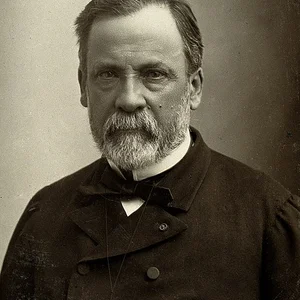
Louis Pasteur
1822 — 1895
French chemist and biologist (1822–1895), founder of modern microbiology. He demonstrated the role of microorganisms in diseases and fermentation, revolutionizing medicine and hygiene. His discoveries led to the development of vaccines and pasteurization.
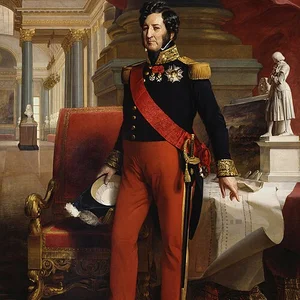
Louis-Philippe I
1773 — 1850
King of the French from 1830 to 1848, Louis-Philippe I came to power following the July Revolution. His July Monarchy embodied the triumph of the liberal bourgeoisie before being overthrown by the Revolution of 1848.

Louis-Pierre-Pantaléon Resnier
1752 — 1807
A French officer of the First Empire, Louis-Pierre-Pantaléon Resnier was a Napoleonic dignitary who served in the military and administrative structures of the Empire. He embodies the profile of the provincial notable elevated by Napoleonic reforms.
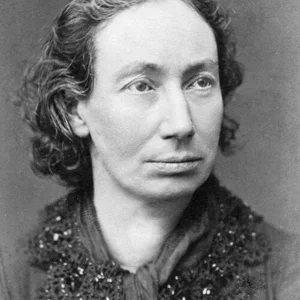
Louise Michel
1830 — 1905
Teacher and leading figure of the French anarchist movement (1830–1905), Louise Michel dedicated herself to educating poor children before becoming one of the heroines of the Paris Commune. Exiled and imprisoned for her revolutionary actions, she devoted her life to the struggle for social equality and the emancipation of the oppressed.
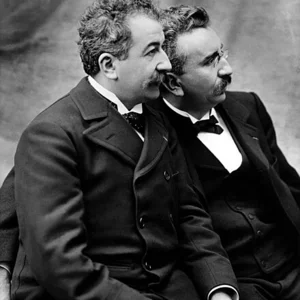
Lumière Brothers
1862/1864 — 1954/1948
Inventors of the cinematograph, pioneers of cinema
Marcellin Berthelot
1827 — 1907
French chemist (1827–1907), founder of thermochemistry and organic synthesis chemistry. He was also a republican politician, serving as Minister of Public Education and then Minister of Foreign Affairs.
Marie Curie
1867 — 1934
Polish-born French physicist and chemist (1867–1934). A pioneer in the study of radioactivity, she was the first woman to receive a Nobel Prize and the only person to receive two Nobel Prizes in different scientific fields. Her discoveries revolutionized modern physics and chemistry.
Mathilde Mauté
1853 — 1914
First wife of Paul Verlaine, whom she married in 1870 at the age of sixteen. The dedicatee of the collection La Bonne Chanson, she saw her marriage shattered by the poet's alcoholism and his affair with Arthur Rimbaud.
Michel Bizot
1795 — 1855
French general of the Corps of Engineers (1796–1855), director of the École polytechnique. He distinguished himself during the capture of Constantine (1837) and died at the Siege of Sevastopol during the Crimean War.
Michel Ordener
1787 — 1862
French cavalry general (1755–1811), Michel Ordener distinguished himself in the Revolutionary and Napoleonic Wars. He commanded the Horse Grenadiers of the Imperial Guard and was created a Count of the Empire.
Mikhail Bakunin
1814 — 1876
Russian revolutionary and philosopher, a major figure of anarchism and libertarian socialism in the 19th century. An opponent of Marx within the First International, he advocated the abolition of the State and of all authority in favor of a federalist and collectivist society.
Napoleon III
1808 — 1873
Nephew of Napoleon I, he was elected President of the Republic in 1848, then seized power through a coup d'état on December 2, 1851, before proclaiming the Second Empire. His reign profoundly transformed France: the modernization of Paris under Haussmann, industrial and railway expansion — until the defeat at Sedan in 1870.
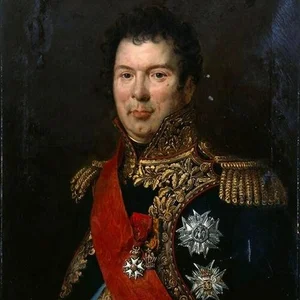
Nicolas Marie Songis des Courbons
1761 — 1810
French general (1761–1810), Songis des Courbons was commander-in-chief of the artillery of the Grande Armée under Napoleon Bonaparte. A specialist in the technical arm of the military, he made decisive contributions to the great Napoleonic victories at Austerlitz, Jena, and Eylau.
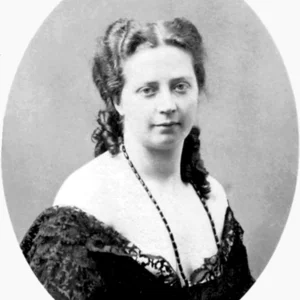
Olympe Audouard
1832 — 1890
Olympe Audouard (1832–1890) was a French writer, journalist, and feminist. A tireless traveler, she journeyed through the Middle East and the United States and published accounts of her travels. She campaigned for women's rights, particularly the right to divorce and access to education.
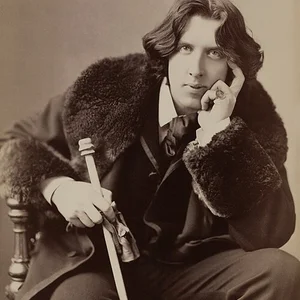
Oscar Wilde
1854 — 1900
A 19th-century Irish writer, Oscar Wilde is the author of major witty comedies and symbolist novels. An iconic figure of the Aesthetic movement, he left a lasting mark on English literature through his brilliant style, biting irony, and celebrated plays.
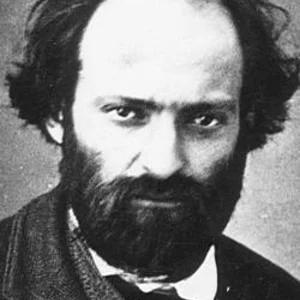
Paul Cézanne
1839 — 1906
A French painter born in Aix-en-Provence in 1839, Paul Cézanne is considered the father of modern painting. His work on the geometry of forms and construction through color paved the way for Cubism and 20th-century art.
Paul Éluard
1895 — 1952
French poet (1895-1952), a major figure of Surrealism and committed poetry. Author of 'Liberty' (1942), he joined the Resistance during World War II and became a symbol of militant poetry against oppression.
Paul Verlaine
1844 — 1896
A major French poet of the 19th century (1844–1896), Paul Verlaine is one of the central figures of Symbolism. Author of Poèmes saturniens and other groundbreaking collections, he revolutionized French poetry through his musicality and exploration of intimate emotional states.
Paul Vidal de La Blache
1845 — 1918
Paul Vidal de La Blache (1845-1918) was a French geographer regarded as the founder of the French school of geography. He developed the concept of the “genre de vie” (way of life) and the notion of possibilism, establishing a human geography attentive to the relationships between societies and their environment.
Pauline Viardot
1821 — 1910
French mezzo-soprano and composer (1821–1910), daughter of tenor Manuel García and sister of La Malibran. She was one of the great opera singers of the 19th century, muse to Ivan Turgenev and many Romantic composers.
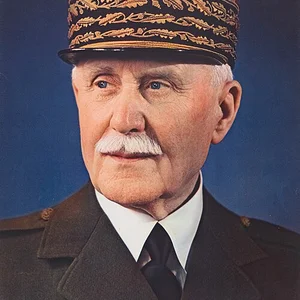
Philippe Pétain
1856 — 1951
Marshal of France and celebrated military commander known for his victory at Verdun in 1916, Philippe Pétain became head of the French government in 1940 and established the authoritarian French State of Vichy. A collaborator during the German occupation, he remains one of the most controversial figures in French history.
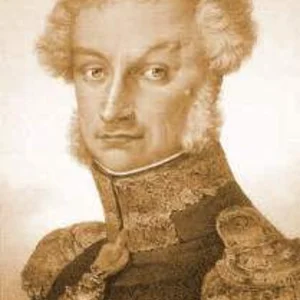
Pierre Cambronne
1770 — 1842
French general of the Grande Armée, Pierre Cambronne commanded a battalion of the Old Guard at Waterloo in 1815. He passed into legend for the “mot de Cambronne” and the phrase “The Guard dies but does not surrender.”
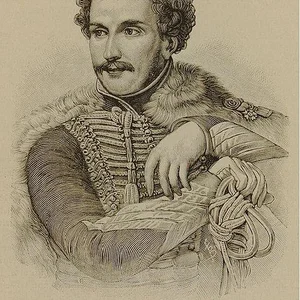
Pierre Daumesnil
1776 — 1832
Imperial general born in 1776, he lost a leg at the Battle of Wagram (1809). Governor of the Château de Vincennes, he refused to surrender it to the Allies in 1814 and 1815, delivering his famous retort about his leg. He died of cholera in 1832.
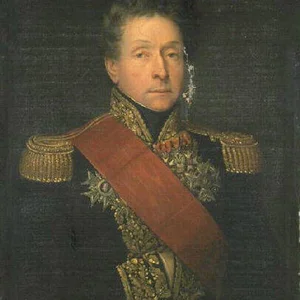
Pierre de Pelleport
1773 — 1855
French general born in 1773, Baron of the Empire under Napoleon I. He took part in the major Napoleonic campaigns and was appointed Baron of Saint-Avold. His name lives on through the Pelleport metro station in Paris (line 3bis).
Pierre Garnier de Laboissière
1755 — 1809
A French general of the First Empire, Pierre Garnier de Laboissière built his career under the Revolution and Napoleon Bonaparte. He also served as a senator, embodying the fusion of military and political elites characteristic of the Napoleonic era.
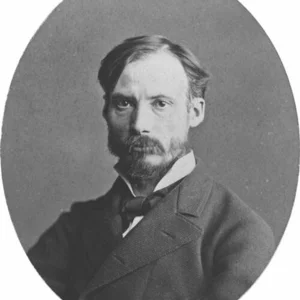
Pierre-Auguste Renoir
1841 — 1919
French painter (1841–1919) and a leading figure of Impressionism. Celebrated for his luminous scenes of Parisian life and his portrayals of women and childhood, he developed a warm and sensual style.
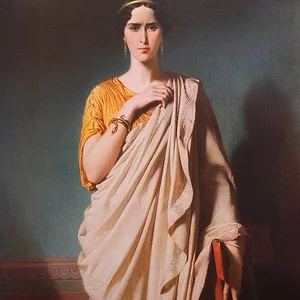
Rachel Félix
1821 — 1858
A brilliant tragedienne of the Comédie-Française, Rachel Félix (1821–1858) revived French classical tragedy in the nineteenth century. Born into a modest Jewish family, she rose to fame through her electrifying performances in the roles of Racine and Corneille, becoming the most celebrated actress in Europe.
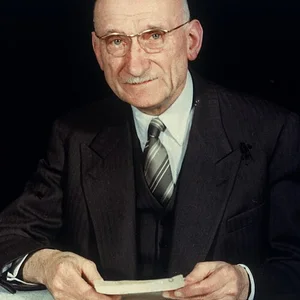
Robert Schuman
1886 — 1963
French statesman (1886-1963), Robert Schuman is one of the principal founding fathers of the European Union. As Foreign Minister, he proposed in 1950 the plan to create the European Coal and Steel Community (ECSC), laying the foundations for European integration.
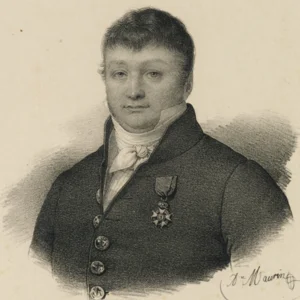
Robert Surcouf
1773 — 1827
French Malouin privateer, shipowner and slave trader (1773-1827). Nicknamed the “King of Corsairs,” he led feared campaigns against British maritime trade in the Indian Ocean during the Revolutionary and Napoleonic Wars, before becoming a wealthy shipowner in Saint-Malo.
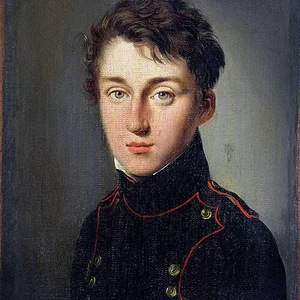
Sadi Carnot
1796 — 1832
A French engineer and statesman trained at the École Polytechnique, Sadi Carnot was elected President of the Republic in 1887. His seven-year term was marked by the scandals of the Third Republic. He was assassinated in Lyon in 1894 by the Italian anarchist Sante Geronimo Caserio.
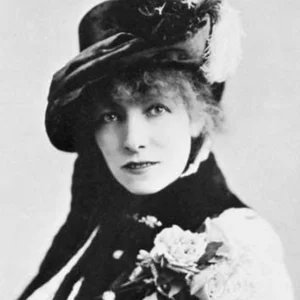
Sarah Bernhardt
1844 — 1923
painter (born 1989)
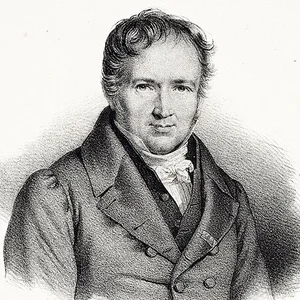
Siméon Denis Poisson
1781 — 1840
French mathematician and physicist (1781-1840), student of Laplace and Lagrange. He contributed to celestial mechanics, electrostatics, and probability theory, lending his name to the Poisson distribution.
Sophie Berthelot
1837 — 1907
Wife of the great chemist Marcellin Berthelot, Sophie Berthelot (1837-1907) was a cultured woman who accompanied her husband throughout his entire career. Having died on the same day as him, she became the first woman interred in the Panthéon in 1907, a symbol of the grateful Republic.
Stéphane Mallarmé
1842 — 1898
Stéphane Mallarmé (1842-1898) was a French poet and a major figure of Symbolism. An English teacher by profession, he transformed poetic language through his pursuit of suggestion and purity, paving the way for modern poetry.
Théodore Géricault
1791 — 1824
French painter (1791–1824), a major figure of Romanticism. His masterpiece, *The Raft of the Medusa* (1819), marks a break from academic painting through its expressive violence and political engagement.
Théophile Gautier
1811 — 1872
French writer and critic (1811-1872), founder of the doctrine of art for art's sake, which champions the independence of art from moral and social concerns. Author of novels, poetry, and art criticism, he left a lasting mark on the 19th century through his commitment to formal beauty and aestheticism.
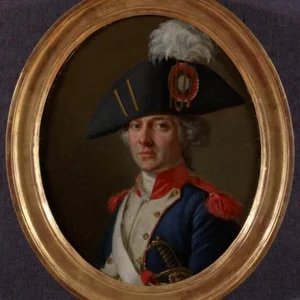
Théophile-Malo de La Tour d'Auvergne-Corret
1743 — 1800
A Breton officer nicknamed "First Grenadier of France" by Bonaparte in 1800, he embodies the ideal of the republican soldier. Coming out of retirement at age 49 to replace his conscripted godson, he refused every promotion to remain among his grenadiers and died on the field of honor at Oberhausen.
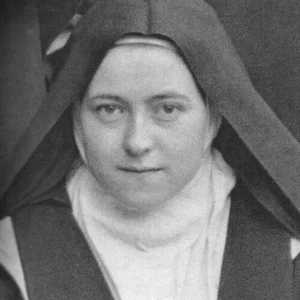
Thérèse of Lisieux
1873 — 1897
A French Carmelite nun who entered the Carmel of Lisieux at age 15, she developed a spirituality known as the 'Little Way,' accessible to everyone. Author of Story of a Soul, she was canonized in 1925 and declared a Doctor of the Church in 1997.
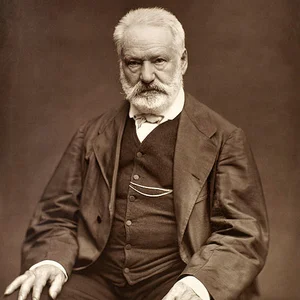
Victor Hugo
1802 — 1885
A major French writer of the 19th century, Victor Hugo (1802–1885) is the author of iconic novels such as Les Misérables and The Hunchback of Notre-Dame. Poet, playwright, and committed politician, he championed the rights of the poor and fought against the death penalty.
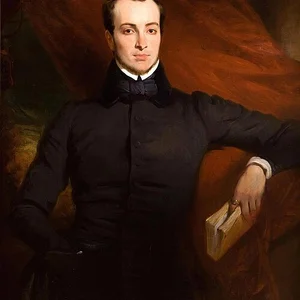
Victor Schoelcher
1804 — 1893
French politician (1804–1893), Victor Schœlcher was one of the greatest abolitionists of the 19th century. He played a decisive role in the abolition of slavery in France in 1848, serving as secretary of the Commission for the Abolition of Slavery.
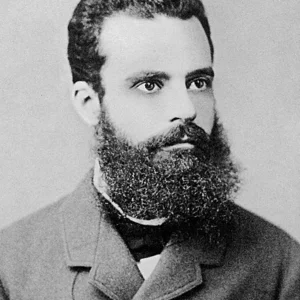
Vilfredo Pareto
1848 — 1923
Vilfredo Pareto (1848-1923) was an Italian economist and sociologist, a major figure of the Lausanne School. He left his mark on neoclassical political economy and sociology through his work on the distribution of wealth and the behavior of elites.
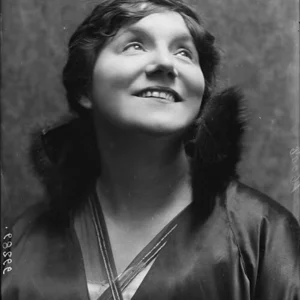
Yvette Guilbert
1865 — 1944
French café-concert singer and *diseuse* (1865–1944), an icon of the Belle Époque immortalized by Toulouse-Lautrec. Famous for her long black gloves and her expressionist delivery of Parisian realist songs.
Abel Gance
1889 — 1981
A pioneering French director of the silent film era, Abel Gance is celebrated for his epic film *Napoléon* (1927), which revolutionized cinema through his invention of Polyvision (triple screen). He helped elevate cinema to the status of a true art form.
Agnès Varda
1928 — 2019
French photographer, visual artist, film director and screenwriter
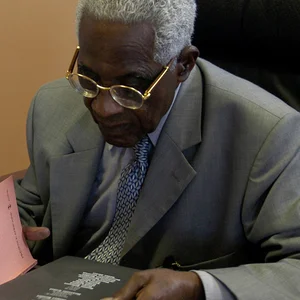
Aimé Césaire
1913 — 2008
Martinican writer, poet and politician (1913-2008), founder of the Négritude movement. He served as mayor of Fort-de-France and deputy of Martinique, combining literary commitment with political action to defend the rights of colonized peoples.
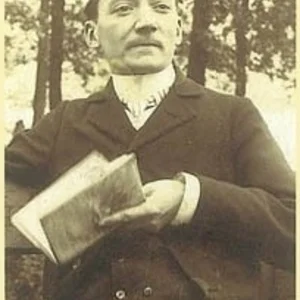
Aimé Pallière
1868 — 1949
Aimé Pallière (1868-1949) was a French writer and lecturer, first destined for the Catholic priesthood before drawing closer to Judaism. Having become a figure of the Noahide movement, he worked toward dialogue between Christianity and Judaism while remaining unconverted.
Alain Badiou
1937 — ?
Alain Badiou, born in 1937, is a French philosopher and one of the major figures of contemporary thought. A critical heir to Marxism and Maoism, he developed a philosophy of the event and of truth grounded in mathematics.
Alain Bombard
1924 — 2005
A French doctor and biologist, Alain Bombard crossed the Atlantic in 1952 aboard an inflatable dinghy without provisions or water, to prove that a castaway could survive at sea. Having become a popular hero, he also served as a Member of the European Parliament and Secretary of State for the Environment.
Alain Colas
1943 — 1978
Alain Colas (1943-1978) was a French sailor and a leading figure in the early days of solo offshore racing. Winner of the English Transat in 1972, he disappeared at sea in 1978 during the first Route du Rhum aboard his trimaran Manureva.
Alain Gerbault
1893 — 1941
Alain Gerbault (1893-1941) was a French sailor, World War I aviator, and top-level tennis player. He made the first solo east-to-west crossing of the Atlantic, then a solo round-the-world sailing voyage between 1923 and 1929.
Alain Resnais
1922 — 2014
French filmmaker (1922–2014), a major figure of auteur cinema and the French New Wave. A pioneer in exploring time, memory, and forgetting through works such as *Hiroshima mon amour* and *Last Year at Marienbad*.
Albert Calmette
1863 — 1933
Albert Camus
1913 — 1960
French writer, philosopher, and journalist (1913–1960), Albert Camus is one of the major figures of 20th-century literature. Author of The Stranger and The Plague, he developed a philosophy of the absurd and received the Nobel Prize in Literature in 1957.
Albert Roussel
1869 — 1937
Albert Roussel was a French composer, one of the major figures of French music in the early 20th century. A former naval officer who became a musician, he developed a personal style blending impressionism and neoclassicism.
Alfred Nakache
1915 — 1983
Alfred Nakache (1915-1983) was a French swimmer and water polo player, nicknamed “the swimmer of Auschwitz.” The 1941 world record holder in the 200 m breaststroke, he was deported to Auschwitz in 1944, where he survived, before returning to competition and taking part in the 1948 Olympic Games.
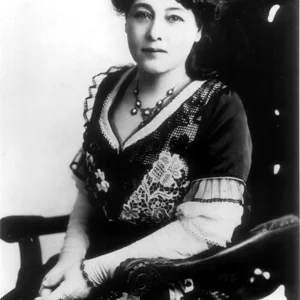
Alice Guy
1873 — 1968
The first female filmmaker in history, Alice Guy directed her first narrative film at Gaumont around 1896. She went on to found the Solax Company in the United States, one of the largest production companies of the era, before falling into obscurity despite a remarkable body of work.
Amédée Ozenfant
1886 — 1966
French painter and theorist (1886–1966), co-founder of Purism with Le Corbusier. He advocated a return to order and clarity as a reaction against the excesses of Cubism, and established several art schools across Europe and the United States.

Amina
1962 — ?
Amina Annabi is a French-Tunisian singer and actress born in 1962. A figure of world music blending Arab-Andalusian influences with Western pop, she represented France at the Eurovision Song Contest in 1991 while also pursuing a parallel career in film.
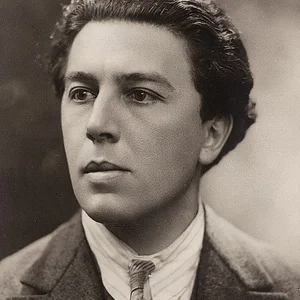
André Breton
1896 — 1966
French poet and writer (1896–1966), co-founder and theorist of Surrealism. He authored the Manifestoes of Surrealism and gathered around him a generation of revolutionary artists and writers.
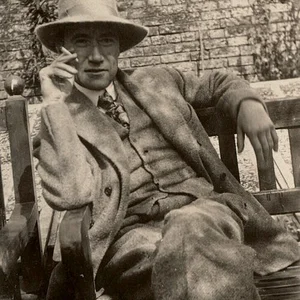
André Gide
1869 — 1951
French writer, a major figure of 20th-century literature and co-founder of La Nouvelle Revue française. His work explores sincerity, morality, and individual emancipation. He received the Nobel Prize in Literature in 1947.
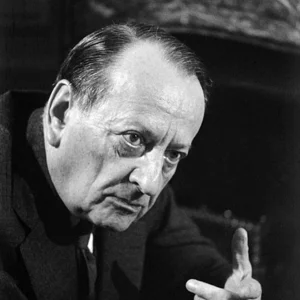
André Malraux
1901 — 1976
French novelist, Resistance fighter, and statesman (1901–1976). Author of La Condition humaine, he served as Minister of Cultural Affairs under General de Gaulle from 1959 to 1969 and was a theorist of art.
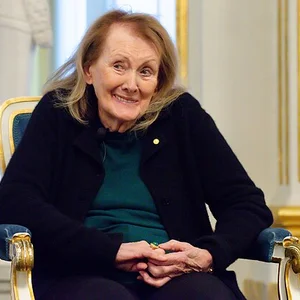
Annie Ernaux
1940 — ?
French writer born in 1940, Annie Ernaux is known for her innovative approach to autofiction and auto-sociobiography. Her major work, A Man's Place (1983), traces her father's story and social journey, marking a turning point in contemporary French literature.
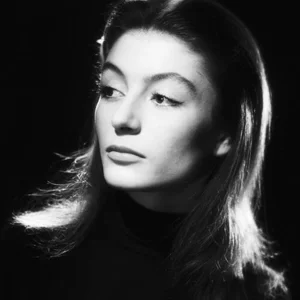
Anouk Aimée
1932 — 2024
French actress born in 1932, Anouk Aimée established herself as one of the leading figures of European auteur cinema. Her role in *Un homme et une femme* by Claude Lelouch (1966) brought her international acclaim.
Antoine de Saint-Exupéry
1900 — 1944
French writer and aviator (1900–1944), Antoine de Saint-Exupéry left a lasting mark on 20th-century literature through his poetic and philosophical works. Author of the celebrated The Little Prince, he also explored themes of commitment, friendship, and self-transcendence through his tales of aerial adventure.
Antoine Veil
1926 — 2013
A senior French civil servant and business executive, Antoine Veil served as an inspector of finances and led major corporations. Married to Simone Veil since 1946, he shared her life and her commitments. Their ashes were transferred together to the Panthéon in 2018.
Antonin Artaud
1896 — 1948
Antonin Artaud (1896-1948) was a French poet, actor, and theatre theorist. The inventor of the “Theatre of Cruelty,” he profoundly reshaped how the stage was conceived in the 20th century, all while leading a life marked by illness and psychiatric confinement.
Arletty
1898 — 1992
French actress and singer (1898–1992), an icon of French cinema in the 1930s and 1940s. Discovered by Marcel Carné, she is best remembered for her roles in *Children of Paradise* and *Hôtel du Nord*.
Arman
1928 — 2005
Arman (1928-2005) was a Franco-American artist and co-founder of Nouveau Réalisme alongside Yves Klein and Pierre Restany. He is celebrated for his "accumulations" of manufactured objects and his "destructions-reconstructions," which question consumer society.
Arthur Honegger
1892 — 1955
Franco-Swiss composer (1892–1955), member of Les Six, Arthur Honegger is the creator of *Pacific 231* and *King David*. His work blends modernism and spirituality.
Assia Djebar
1936 — 2015
Assia Djebar, whose real name was Fatima-Zohra Imalayen, was an Algerian novelist and filmmaker who wrote in French. A pioneer of North African women's literature, she gave voice to Algerian women through a body of work blending memory, History, and feminism. In 2005, she became the first North African woman elected to the Académie française.
Avril Lavigne
1984 — ?
Avril Lavigne is a Canadian singer and songwriter born in 1984 in Belleville, Ontario. She broke through in 2002 with her debut album 'Let Go', becoming an icon of alternative rock and pop-punk for an entire generation.
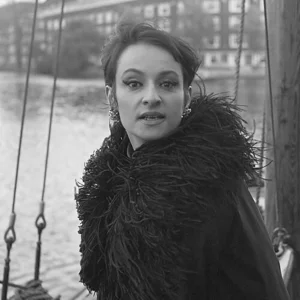
Barbara
1930 — 1997
Barbara (1930–1997) was a French singer-songwriter, nicknamed “the Lady in Black.” A pianist and poet of song, she is known for intimate works such as “Nantes” and “The Black Eagle.”
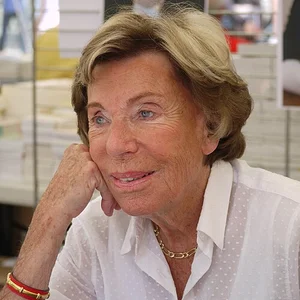
Benoîte Groult
1920 — 2016
French writer and journalist (1920-2016), a major figure of feminism in France. Author of *Ainsi soit-elle* (1975), she campaigned throughout her life for women's rights and gender equality.
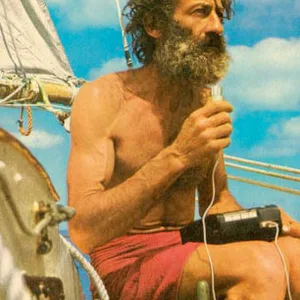
Bernard Moitessier
1925 — 1994
French sailor and writer (1925-1994), an iconic figure of solo sailing. Competing in the first non-stop round-the-world race in 1968, he gave up the chance of victory to keep sailing on toward the Pacific, becoming a symbol of the inner quest and of humanity's relationship with the sea.
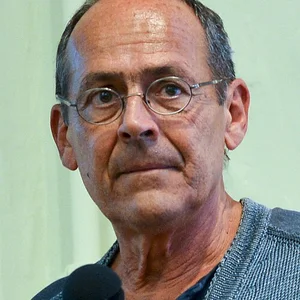
Bernard Stiegler
1952 — 2020
Bernard Stiegler (1952-2020) was a French philosopher and a major figure in the philosophy of technology. He analyzed how digital techniques and technologies shape the human mind, memory, and contemporary societies.
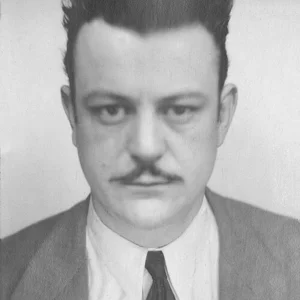
Boby Lapointe
1922 — 1972
Boby Lapointe (1922-1972) was a French singer and singer-songwriter famous for his virtuoso lyrics packed with wordplay, puns and spoonerisms. A native of **Pézenas**, he left his mark on French song through his humour and verbal inventiveness.
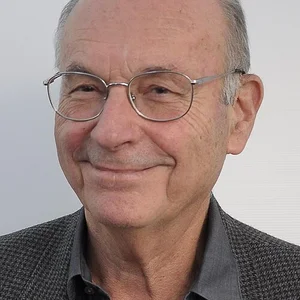
Boris Cyrulnik
1937 — ?
French neuropsychiatrist, psychoanalyst, and ethologist born in 1937. A Holocaust survivor, he popularized in France the concept of resilience — the ability to rebuild oneself after trauma.
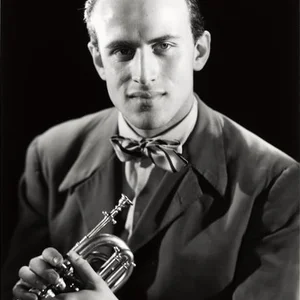
Boris Vian
1920 — 1959
French writer, musician, and artist (1920–1959), an iconic figure of Saint-Germain-des-Prés. Author of Froth on the Daydream, he embodied the spirit of the postwar generation, blending jazz, literature, and provocation.
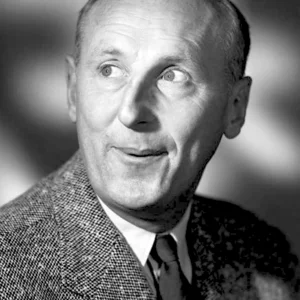
Bourvil
1917 — 1970
Bourvil (1917-1970) was a French comic actor and singer, famous for his roles in *La Grande Vadrouille* and *Le Corniaud*. Portraying naive and endearing characters, he is one of the most beloved actors in twentieth-century French cinema.
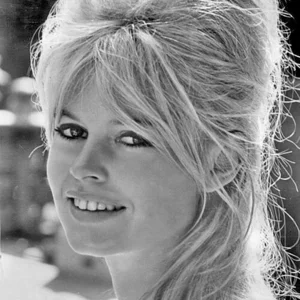
Brigitte Bardot
1934 — 2025
French actress, model, and singer, Brigitte Bardot became a global symbol of femininity and freedom during the 1950s and 1960s. An icon of the French New Wave and popular culture, she retired from cinema in 1973 to dedicate herself to animal rights activism.
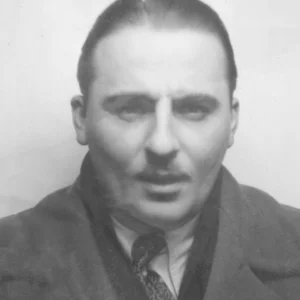
Bruno Coquatrix
1910 — 1979
Bruno Coquatrix (1910-1979) was the legendary director of the Olympia in Paris, which he bought in 1954 and transformed into the temple of French music hall. He launched or cemented the careers of major artists such as Édith Piaf, Jacques Brel, and Johnny Hallyday.
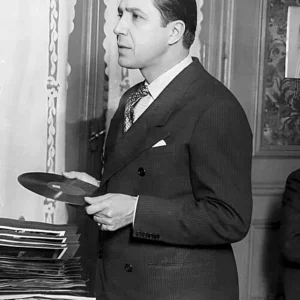
Carlos Gardel
1890 — 1935
Carlos Gardel was a singer, composer and actor, an iconic figure of Argentine tango. Regarded as the creator of sung tango (“tango canción”), he brought the genre to international fame in the 1920s and 1930s.
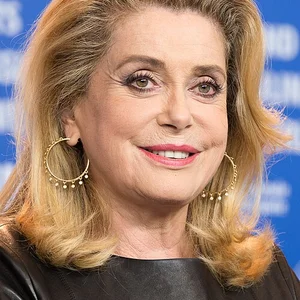
Catherine Deneuve
1943 — ?
French actress born in 1943, Catherine Deneuve is one of the greatest stars in world cinema. She played iconic roles in films by Truffaut, Buñuel, and Demy, becoming a symbol of French elegance.
Chantal Akerman
1950 — 2015
Belgian director and screenwriter (1950–2015), a major figure in feminist and experimental auteur cinema. Her magnum opus *Jeanne Dielman, 23, quai du Commerce, 1080 Bruxelles* (1975) was voted the greatest film of all time by Sight & Sound magazine in 2022.
Charles Michels
1903 — 1941
A trade unionist and Communist member of parliament for Paris, Charles Michels was one of the 27 hostages shot by the Germans at Châteaubriant on 22 October 1941. His sacrifice made him a symbol of the Resistance and of working-class commitment against Nazism.
Charles Péguy
1873 — 1914
French writer, poet, and essayist (1873–1914), founder of the Cahiers de la Quinzaine. A committed Dreyfusard, he evolved from socialism toward a fervent mystical Catholicism. Mobilized in 1914, he was killed at the Battle of the Marne on September 5, becoming an emblematic figure of the intellectuals who died for France.
Charlotte Rampling
1946 — ?
A British actress born in 1946, Charlotte Rampling established herself as one of the most distinctive figures in European cinema. Based in France, she collaborated with the greatest directors and embodied a certain idea of rebellious elegance.
Christine Delphy
1941 — ?
French materialist feminist sociologist, Christine Delphy co-founded the Women's Liberation Movement in 1970. She theorized patriarchy as a system of economic exploitation of women and developed the concept of the domestic mode of production.
Claude Chabrol
1930 — 2010
Claude Chabrol (1930-2010) was a French director, screenwriter and producer, a major figure of the French New Wave. A critic at Cahiers du cinéma before moving into directing, he built a prolific body of work dissecting the hypocrisies and impulses of the provincial bourgeoisie.
Claude Lévi-Strauss
1908 — 2009
French anthropologist and ethnologist (1908-2009), founder of structural anthropology. He revolutionized the study of human societies by applying structuralist methods to myths, kinship systems, and cultural practices. His major work, Tristes Tropiques, combines ethnographic narrative with philosophical reflection.

Claude Sautet
1924 — 2000
Claude Sautet (1924-2000) was a French director and screenwriter, a major figure of the auteur cinema of the 1970s-1990s. He is famous for his intimate portraits of the bourgeoisie and his chronicles of human feelings, as in *The Things of Life* and *A Heart in Winter*.
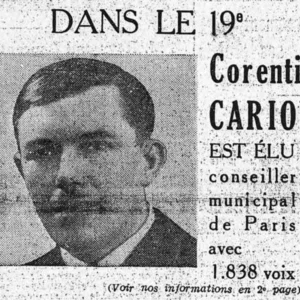
Corentin Cariou
1898 — 1942
A Communist municipal councillor of the 19th arrondissement of Paris, Corentin Cariou was arrested by the Germans and shot in 1942 as a hostage in reprisal. His name was given to a station on the Paris Métro (line 7).
Cornelius Castoriadis
1922 — 1997
French philosopher, economist, and psychoanalyst of Greek origin, co-founder of the group and journal Socialisme ou Barbarie. A thinker of autonomy and the social imaginary, he developed a radical critique of Marxism and bureaucracies.
Daniel Lagache
1903 — 1972
Daniel Lagache (1903-1972) was a French psychiatrist, psychologist, and psychoanalyst. A graduate of the École normale supérieure with an agrégation in philosophy, he sought to unify psychoanalysis and clinical psychology and was a major figure in the French psychoanalytic movement.
Danielle Darrieux
1917 — 2017
French actress born in 1917 and died in 2017, Danielle Darrieux is one of the greatest stars of French cinema. Her exceptional eight-decade career saw her work under the direction of the finest filmmakers.
Darius Milhaud
1892 — 1974
French composer born in Aix-en-Provence in 1892, member of the Groupe des Six. He developed polytonality and drew inspiration from American jazz and Latin American music to create a prolific body of work of more than 400 opus.
Django Reinhardt
1910 — 1953
French jazz guitarist
Édith Piaf
1915 — 1963
Born Édith Giovanna Gassion in 1915 in Paris, Édith Piaf became one of the most celebrated French singers of the 20th century. Nicknamed 'La Môme Piaf' (The Little Sparrow), she is the defining figure of French chanson réaliste and achieved worldwide fame.
Élisabeth Badinter
1944 — ?
French philosopher and historian, born in 1944, heiress to the Publicis group. She profoundly renewed thinking on the female condition, motherhood and identity, championing a universalist and republican feminism.
Elsa Triolet
1896 — 1970
Elsa Triolet (1896–1970) was a French novelist of Russian origin, partner of the poet Louis Aragon. The first woman to receive the Prix Goncourt, in 1945 for her short story collection 'A Fine of Two Hundred Francs', she was also a committed figure in the Resistance and the Communist movement.
Emmanuel Levinas
1906 — 1995
A French philosopher of Lithuanian origin, Emmanuel Levinas is one of the great thinkers of ethics in the 20th century. Having introduced the phenomenology of Husserl and Heidegger to France, he made the relationship with the other the foundation of all philosophy.
Éric Rohmer
1920 — 2010
Éric Rohmer, whose real name was Maurice Schérer, was a French filmmaker, critic, and screenwriter, and a major figure of the French New Wave. He is famous for his cycles of films with finely crafted dialogue exploring the emotional and moral hesitations of his characters.
Éric Tabarly
1931 — 1998
Éric Tabarly was a French sailor and naval officer, a major figure in offshore racing. Winner of the solo transatlantic race in 1964 and 1976, he revolutionized the design of racing yachts and inspired an entire generation of French skippers.
Erik Satie
1866 — 1925
French composer and pianist, a singular figure in music of the late 19th and early 20th centuries. A pioneer through his bareness and his humor, he influenced Debussy, Ravel, and the 20th-century avant-gardes.
Ernest Beaux
1881 — 1961
Ernest Beaux (1881–1961) was a Franco-Russian perfumer who created the legendary Chanel N°5 in 1921, revolutionizing the art of perfumery with his innovative use of aldehydes. He is considered one of the greatest noses of the twentieth century.
Félix Éboué
1884 — 1944
Guyanese colonial administrator (1884–1944), Félix Éboué was the first governor to rally French Equatorial Africa to Free France in 1940. Appointed Governor-General of the FEA by de Gaulle, he died in Cairo in 1944 and was interred in the Panthéon in 1949.
Félix Guattari
1930 — 1992
French philosopher, psychoanalyst and activist, a leading figure of antipsychiatric thought. He is famous for his collaboration with Gilles Deleuze, with whom he co-authored the two volumes of *Capitalism and Schizophrenia*. His work at the La Borde clinic profoundly renewed institutional psychotherapy.
Fernand Léger
1881 — 1955
French painter (1881–1955) and major figure of the avant-garde, he developed a unique style blending Cubism with mechanical imagery. His works celebrate the modern world, machinery, and working people.
Fernand Raynaud
1926 — 1973
Fernand Raynaud (1926-1973) was one of the most popular French comedians of the postwar boom years. A pioneer of the French-style one-man show, he left his mark on radio, television and music hall with sketches that became classics of popular comedy.
Fernandel
1903 — 1971
Actor, comedian, and singer born in Marseille in 1903, Fernandel is one of the greatest stars of French comic cinema. Famous for his radiant smile and beloved roles, he brought to life the character of Don Camillo in a series of films that have since become cult classics.
Florence Arthaud
1957 — 2015
Florence Arthaud (1957-2015) was a French sailor, the first woman to win the Route du Rhum in 1990. Nicknamed “the little sweetheart of the Atlantic,” she established herself as a major figure in offshore racing.
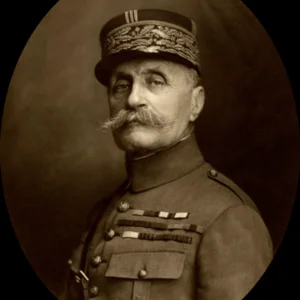
Foch
1851 — 1929
Ferdinand Foch (1851-1929) was a French marshal, military theorist, and strategist. Appointed commander-in-chief of the Allied forces in 1918, he led the coalition to victory in the First World War and received the German surrender.
Francis Blanche
1921 — 1974
Francis Blanche (1921-1974) was a French comedian, actor, cabaret singer and writer. A partner of Pierre Dac, he was one of the masters of post-war comedy, a virtuoso of wordplay, radio hoaxes and nonsense.
François Jacob
1920 — 2013
François Jacob (1920-2013) was a French biologist and geneticist. Together with Jacques Monod, he uncovered the mechanism of gene regulation, which earned him the Nobel Prize in Physiology or Medicine in 1965.
François Mitterrand
1916 — 1996
A French statesman, François Mitterrand served as President of the Republic from 1981 to 1995, becoming the first socialist elected under the Fifth Republic. His two consecutive seven-year terms remain the longest in the history of the French presidency.
François Truffaut
1932 — 1984
François Truffaut (1932–1984) was one of the pioneers of the French New Wave. A critic at *Cahiers du Cinéma*, he became an iconic filmmaker with movies such as *The 400 Blows* and *Jules and Jim*.
Françoise Dolto
1908 — 1988
French pediatrician and psychoanalyst (1908–1988), Françoise Dolto revolutionized the understanding of children and their psychological development. She brought psychoanalysis to a wide public audience and championed children's rights.
Gabriel Péri
1902 — 1941
A French Communist journalist and member of parliament, Gabriel Péri vigorously opposed Nazism and fascism throughout the 1930s. Arrested by the Gestapo in May 1941, he was shot at Mont-Valérien on December 15, 1941, becoming one of the most iconic martyrs of the French Resistance.
Geneviève de Gaulle-Anthonioz
1920 — 2002
Niece of General de Gaulle, French resistance fighter deported to Ravensbrück (1944–1945). After the war, she committed herself to ATD Fourth World and led the organization from 1964 to 1998, dedicating her life to the fight against extreme poverty.
George Balanchine
1904 — 1983
George Balanchine (1904-1983) was a Georgian-born dancer and choreographer, trained in Saint Petersburg before emigrating to the United States. A co-founder of the New York City Ballet, he is considered the father of American neoclassical ballet.
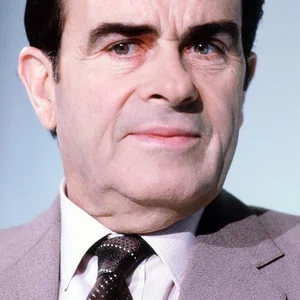
Georges Marchais
1920 — 1997
Secretary General of the French Communist Party from 1972 to 1994, Georges Marchais was one of the major figures of the French left during the Cold War. He embodied an orthodox communism, publicly supporting the Soviet intervention in Afghanistan in 1980.
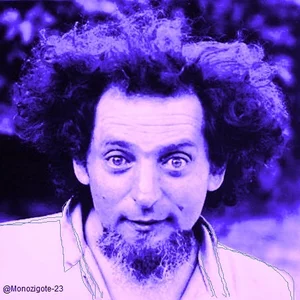
Georges Perec
1936 — 1982
Twentieth-century French writer and member of OuLiPo. A master of literary constraints, he is the author of Life: A User's Manual and A Void, a novel written entirely without the letter “e”.
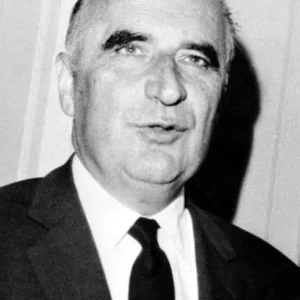
Georges Pompidou
1911 — 1974
Georges Pompidou (1911-1974) was a French statesman, Prime Minister under de Gaulle from 1962 to 1968, then the second President of the Fifth Republic from 1969 until his death. A former literature teacher, he left his mark on France through his policy of industrial modernization and his support for contemporary arts.
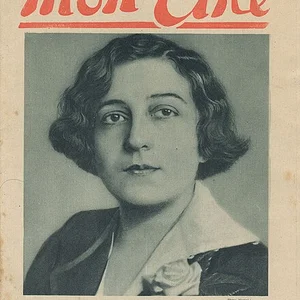
Germaine Dulac
1882 — 1942
French film director, producer and screenwriter
Germaine Tailleferre
1892 — 1983
Germaine Tailleferre (1892-1983) was the only woman in the famous French musical collective known as 'Les Six'. A prolific composer, she created works for piano, orchestra, and opera, maintaining an elegant neoclassical style throughout a career spanning nearly seven decades.
Germaine Tillion
1907 — 2008
A French ethnologist specializing in the Berber societies of Algeria, Germaine Tillion joined the Resistance in 1940 before being deported to Ravensbrück. A survivor and tireless witness, she dedicated her entire life to human rights and understanding between peoples.
Gilles Deleuze
1925 — 1995
Gilles Deleuze (1925-1995) was a major French philosopher of the 20th century. The author of a powerful body of work in metaphysics, aesthetics, and politics, he profoundly renewed contemporary thought, notably through his collaboration with the psychoanalyst Félix Guattari.
Gisèle Halimi
1927 — 2020
A Franco-Tunisian lawyer and feminist activist, Gisèle Halimi championed the rights of women and colonized peoples throughout the twentieth century. She is best known for the Bobigny trial (1972) and her fight to decriminalize abortion in France.
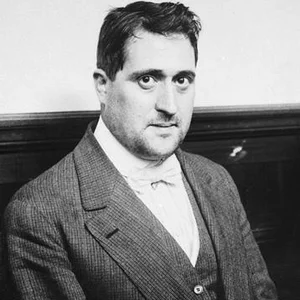
Guillaume Apollinaire
1880 — 1918
French poet and writer of Polish origin, a major figure in poetic modernity of the early 20th century. Author of "Alcools" and "Calligrammes," he was also an art critic and defender of avant-garde movements such as Cubism.
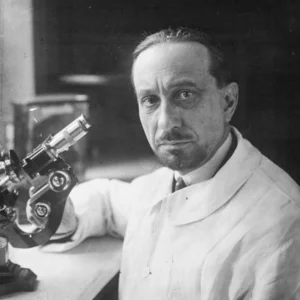
Gustave Roussy
1874 — 1948
Franco-Swiss neurologist and oncologist (1874–1948), he founded the Paris Cancer Institute in 1921 — today known as the Institut Gustave Roussy — the first cancer center in Europe. His pioneering work on brain tumors and cancer laid the foundations of modern oncology in France.
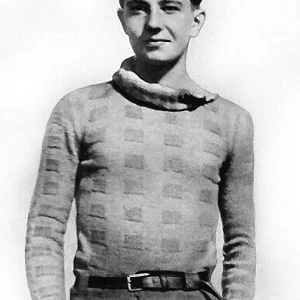
Guy Môquet
1924 — 1941
Young French communist militant, arrested at 16 in 1940 and shot as a hostage at Châteaubriant on October 22, 1941, at the age of 17. His farewell letter to his family, written a few hours before his execution, became a symbol of the French Resistance.
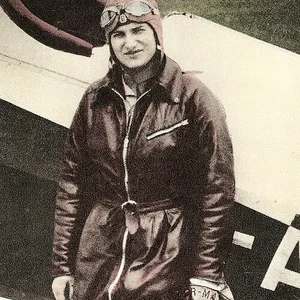
Hélène Boucher
1908 — 1934
Hélène Boucher (1908–1934) was a French aviator who set several world speed records in the 1930s. Nicknamed “the fiancée of the air,” she stands as a pioneering figure in women's aviation, before dying tragically at age 26 in a training accident.

Henri de Lubac
1896 — 1991
Henri de Lubac (1896-1991) was a French Jesuit and Catholic theologian, a major figure in the 20th-century theological renewal. A leading voice of the “new theology,” he profoundly influenced the Second Vatican Council and was made a cardinal in 1983 by John Paul II.
Henri-Georges Clouzot
1907 — 1977
French filmmaker (1907–1977), nicknamed the “French Hitchcock”, Clouzot is the creator of landmark psychological thrillers in French cinema. His films are distinguished by relentless narrative tension and a dark vision of humanity.
Iannis Xenakis
1922 — 2001
French-Greek composer, mathematician and architect, a pioneer of algorithmic and stochastic music. He applied mathematics and probability theory to musical composition, revolutionizing the music of the 20th century.
Igor Stravinsky
1882 — 1971
Igor Stravinsky is one of the most influential composers of the 20th century. With his ballets for the Ballets Russes — *The Firebird*, *Petrushka*, and above all *The Rite of Spring* — he revolutionized musical language through bold rhythms and dissonances. Naturalized as a French then American citizen, he traversed all the major aesthetic movements of his time.
Irène Joliot-Curie
1897 — 1956
French physicist and chemist, daughter of Pierre and Marie Curie. With her husband Frédéric Joliot-Curie, she discovered artificial radioactivity in 1934, which earned them the Nobel Prize in Chemistry in 1935.
Isabelle Adjani
1955 — ?
French actress born in 1955, daughter of an Algerian father and a German mother. Launched to stardom by François Truffaut in *The Story of Adele H.* (1975), she portrays passionate and tormented women in *Possession*, *Camille Claudel*, and *Queen Margot*. Holder of a record five César Awards for Best Actress.
Isabelle Autissier
1956 — ?
Isabelle Autissier (born in 1956) is a French sailor, the first woman to complete a solo round-the-world offshore race under sail. Trained as a fisheries engineer, she also became a writer and an advocate for ocean conservation.
Isabelle Huppert
1953 — ?
French actress born in 1953, considered one of the greatest performers in world cinema. A muse to directors such as Claude Chabrol and Michael Haneke, she brings an icy, deeply interior presence that redefines the art of acting.
Jacques Bonsergent
1912 — 1940
A French civil engineer, Jacques Bonsergent was the first Parisian civilian executed by the Germans during the Occupation, on December 23, 1940. His execution, following a scuffle with German soldiers, made him a symbol of passive resistance and martyrdom.
Jacques Chirac
1932 — 2019
French statesman, President of the Republic from 1995 to 2007. A major figure of the Gaullist right, he was also Prime Minister and Mayor of Paris over a long political career.
Jacques Demy
1931 — 1990
French filmmaker (1931–1990), a major figure of the French New Wave, celebrated for his poetic musicals blending vivid colors with melancholy. Director of The Umbrellas of Cherbourg and The Young Girls of Rochefort.
Jacques Derrida
1930 — 2004
Jacques Derrida is a French philosopher, the founder of deconstruction, a major current of contemporary thought. He profoundly influenced philosophy, literary criticism, and the humanities throughout the world.
Jacques Lacan
1901 — 1981
French psychiatrist and psychoanalyst, a major figure of 20th-century psychoanalysis. He calls for a “return to Freud” and rereads psychoanalysis through the lens of structuralism and linguistics, asserting that “the unconscious is structured like a language.”
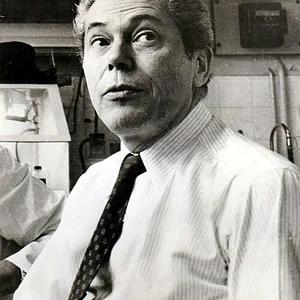
Jacques Monod
1910 — 1976
French biologist and biochemist (1910–1976), Nobel Prize in Physiology or Medicine in 1965. Together with François Jacob and André Lwoff, he discovered the mechanisms of genetic regulation, most notably the concept of the operon.
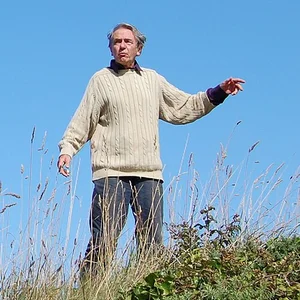
Jacques Rancière
1940 — ?
Jacques Rancière is a French philosopher born in 1940, a former student of Althusser from whom he later distanced himself. A thinker of emancipation, the equality of intelligences, and the distribution of the sensible, he brings together political philosophy and aesthetics.
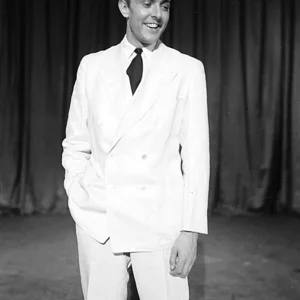
Jacques Tati
1907 — 1982
Jacques Tati (1907-1982) was a French director, actor, and screenwriter. Creator of the character Monsieur Hulot, he developed a poetic comedic cinema founded on visual slapstick and sound rather than dialogue.
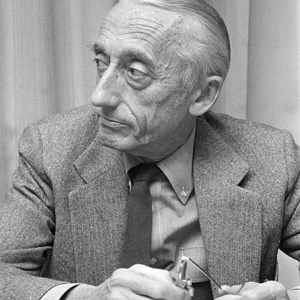
Jacques-Yves Cousteau
1910 — 1997
A French naval officer, oceanographer, and filmmaker, Jacques-Yves Cousteau was a pioneer of scuba diving and ocean exploration. Co-inventor of the self-contained underwater breathing apparatus, he popularized knowledge of the marine world through his films and his ship, the Calypso.
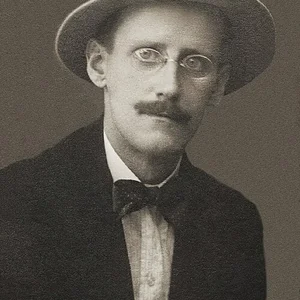
James Joyce
1882 — 1941
James Joyce (1882-1941) was an Irish writer, one of the major figures of literary modernism. His novel *Ulysses* (1922), which transposes Homer's *Odyssey* into a single day in Dublin, revolutionized narrative through its stream-of-consciousness technique.
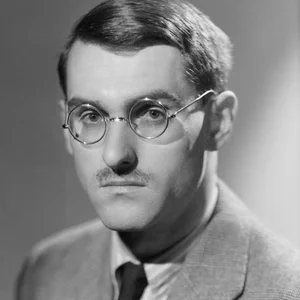
Jean Anouilh
1910 — 1987
French playwright (1910–1987), Jean Anouilh wrote modern plays that reinterpret ancient myths. His 1944 adaptation of Antigone became a landmark work of 20th-century French theatre.
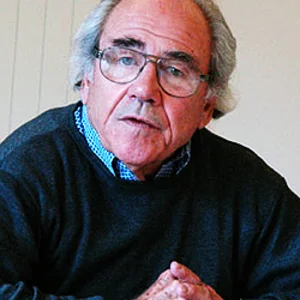
Jean Baudrillard
1929 — 2007
Jean Baudrillard (1929-2007) was a French philosopher and sociologist, a major figure of postmodern thought. He is famous for his analyses of consumer society, the media, and the virtual, developing the concepts of the simulacrum and hyperreality.
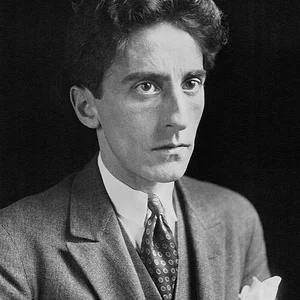
Jean Cocteau
1889 — 1963
Jean Cocteau (1889-1963) was a French poet, novelist, playwright, illustrator, and filmmaker. An unclassifiable figure of the avant-garde, he worked across every art form and embodies the spirit of modern creativity in the early 20th century.
Jean Epstein
1897 — 1953
Franco-Polish film director, essayist, and theorist (1897–1953), Jean Epstein is a major figure of the French cinematic avant-garde of the 1920s–1930s. He coined the concept of "photogénie" and directed experimental works such as *The Fall of the House of Usher*.
Jean Gabin
1904 — 1976
Jean Gabin (1904–1976) is one of the greatest French actors of the 20th century. He rose to fame in the 1930s with films such as La Bête humaine and La Grande Illusion, embodying the myth of the working-class man — tough yet sensitive.
Jean Genet
1910 — 1986
French writer, poet, and playwright of the 20th century. Shaped by a childhood as an orphan, a thief, and a prisoner, he transformed marginality into provocative literary and theatrical work, celebrated by Sartre and Cocteau.
Jean Perrin
1870 — 1942
French physicist (1870–1942), he experimentally demonstrated the existence of atoms through the study of Brownian motion. Winner of the 1926 Nobel Prize in Physics, he founded the CNRS in 1939.
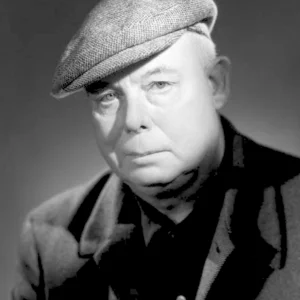
Jean Renoir
1894 — 1979
Jean Renoir was a French filmmaker and screenwriter, the son of the painter Auguste Renoir. A major figure of twentieth-century cinema, he left his mark on the history of the seventh art through his poetic realism and his humanism.
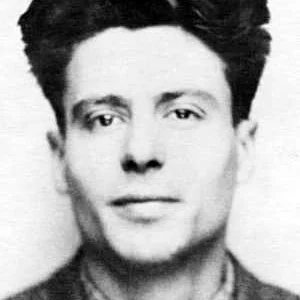
Jean Vigo
1905 — 1934
French filmmaker (1905-1934), a major figure of poetic cinema. Creator of L'Atalante and Zéro de conduite, he revolutionized French cinema with a lyrical and anarchist style before dying at the age of 29.
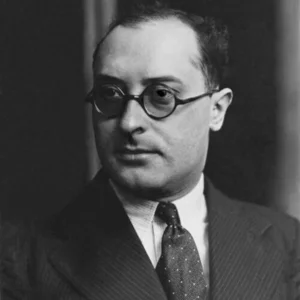
Jean Zay
1904 — 1944
French lawyer and politician (1904–1944), Minister of National Education and Fine Arts under the Popular Front from 1936 to 1939. A Resistance member arrested by Vichy, he was assassinated by the Milice in 1944. Inducted into the Panthéon in 2015.
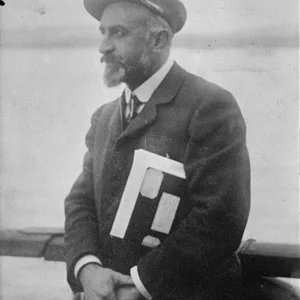
Jean-Baptiste Charcot
1867 — 1936
French physician and polar explorer (1867–1936), Jean-Baptiste Charcot led several scientific expeditions to Antarctica aboard the Pourquoi-Pas?. A pioneer in the exploration of the southern regions, he also contributed to oceanographic research.
Jean-François Lyotard
1924 — 1998
French philosopher, a major figure of postmodern thought. He analyzes the decline of the grand narratives that legitimized knowledge and modernity, and reflects on the transformations of knowledge in contemporary societies.
Jean-Luc Godard
1930 — 2022
Franco-Swiss filmmaker (1930–2022) and a major figure of the French New Wave. He revolutionized the language of cinema with films such as Breathless (1960), challenging the conventions of traditional storytelling.
Jean-Paul Sartre
1905 — 1980
French philosopher, writer, and playwright (1905–1980), founder of existentialism. He explored human freedom, responsibility, and commitment through his major philosophical and literary works.
Jean-Pierre Melville
1917 — 1973
Jean-Pierre Melville, whose real name was Jean-Pierre Grumbach, was a French filmmaker and a major figure of film noir and the French crime film. Independent and ahead of his time, he had a profound influence on the French New Wave.
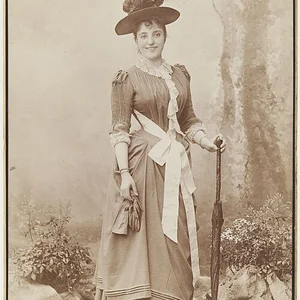
Jeanne Charcot
1865 — 1940
Jeanne Charcot, née Hugo (1869–1941), was the granddaughter of Victor Hugo and first wife of polar explorer Jean-Baptiste Charcot. She moved in the literary and social circles of Parisian Belle Époque society, though she was not an explorer herself.
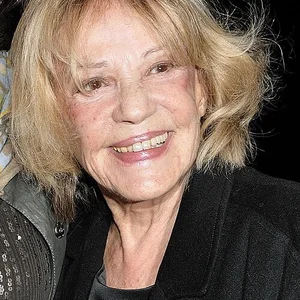
Jeanne Moreau
1928 — 2017
French actress, singer, and director (1928–2017), iconic figure of the French New Wave. Muse of François Truffaut and Louis Malle, she embodied a free and modern femininity in films that have become classics of world cinema.
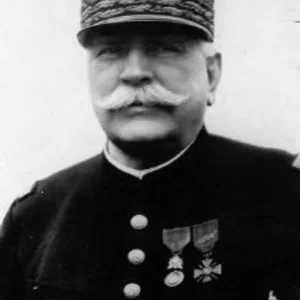
Joffre
1852 — 1931
Joseph Joffre (1852-1931) was a French general, commander-in-chief of the French army at the start of the First World War. Victor of the Battle of the Marne in September 1914, he became a Marshal of France in 1916.
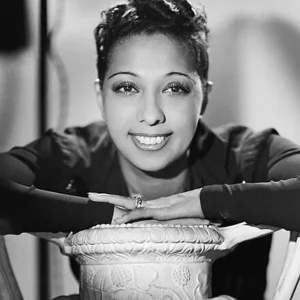
Joséphine Baker
1906 — 1975
French singer, dancer, and revue performer of American origin
Julia Kristeva
1941 — ?
Bulgarian-born French philosopher, linguist, and psychoanalyst, born in 1941. A major figure in structuralist and post-structuralist thought, she developed the concepts of intertextuality and semoanalysis. A professor at the University of Paris VII, she profoundly reshaped literary theory and psychoanalysis.
Julien Duvivier
1896 — 1967
Julien Duvivier (1896-1967) is one of the greatest French filmmakers of the 20th century. A prolific director, he left his mark on the golden age of French cinema with films such as Pépé le Moko and La Belle Équipe.
Juliette Binoche
1964 — ?
French actress born in 1964 in Paris, a leading figure in world arthouse cinema. She is the first actress to have won the César, the BAFTA, and the Academy Award in the same year (1997) for *The English Patient*, then the Best Actress prize at Cannes for *Certified Copy* (2010).
Julio Cortázar
1914 — 1984
Argentine writer born in Brussels in 1914 and died in Paris in 1984. A major figure of the "boom" in Latin American literature, he is famous for his fantastic short stories and his experimental novel *Hopscotch*.
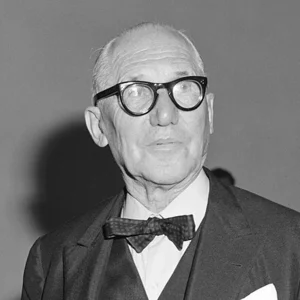
Le Corbusier
1887 — 1965
Franco-Swiss architect, urban planner, decorator, painter, sculptor, and writer
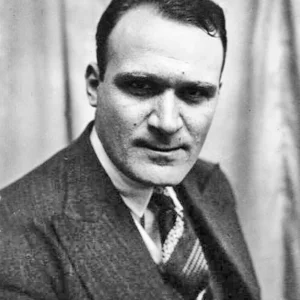
Léo Lagrange
1900 — 1940
A French socialist politician, Léo Lagrange was appointed Under-Secretary of State for Sports and Leisure in the Popular Front government in 1936. He worked to make sport and holidays accessible to the working classes, before dying in combat in June 1940.
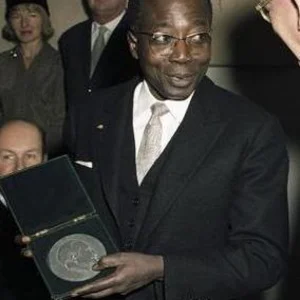
Léopold Sédar Senghor
1906 — 2001
Senegalese poet, writer, and statesman (1906–2001), Senghor was the first president of independent Senegal. A leading theorist of the Négritude movement, he championed a humanist vision of African culture and left a lasting mark on twentieth-century Francophone literature.
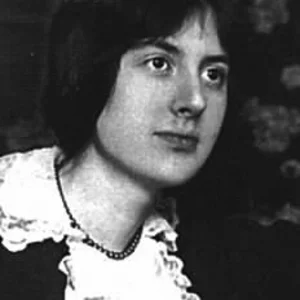
Lili Boulanger
1893 — 1918
French composer (1893–1918), Lili Boulanger was the first woman to win the Prix de Rome in 1913. Despite a brief life, she left a remarkable body of work marked by a personal and expressive harmonic language.
Louis Bachelier
1870 — 1946
Louis Bachelier was a French mathematician who pioneered the modern theory of probability applied to finance. His 1900 thesis on stock market speculation introduced Brownian motion before Einstein, founding the field of financial mathematics.
Louis Blériot
1872 — 1936
French engineer and aviator (1872–1936), Louis Blériot was the first person to cross the English Channel by aeroplane on 25 July 1909. A pioneer of aviation, he designed and flew his own aircraft, making a decisive contribution to the development of the aeronautical industry.
Louis de Funès
1914 — 1983
French comic actor (1914–1983), Louis de Funès is one of the defining figures of popular French cinema. Famous for his expressive acting style, his facial contortions, and his roles as authoritarian, hot-tempered characters, he remains one of the most beloved comedians in France.
Louis Malle
1932 — 1995
French filmmaker (1932–1995), a major figure of art-house cinema. Close to the French New Wave without formally belonging to it, he directed bold works such as *Lacombe Lucien* (1974) and *Au Revoir les Enfants* (1987), exploring the memory of the German Occupation.
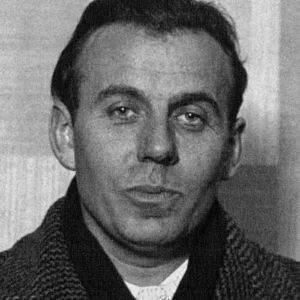
Louis-Ferdinand Céline
1894 — 1961
French writer and physician, author of *Journey to the End of the Night* (1932), a novel that revolutionized prose through its spoken style and use of slang. His major work is now overshadowed by his antisemitic pamphlets and his collaboration during the Occupation.
Louise Baldy
1886 — 1949
Louise Baldy is a Frenchwoman recognized as Righteous Among the Nations for having hidden and protected a Jewish family in Pézenas during the Second World War, at the risk of her own life.
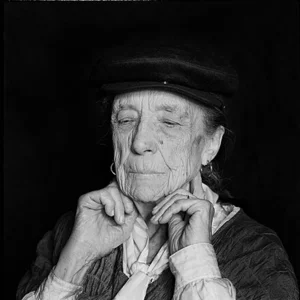
Louise Bourgeois
1911 — 2010
Franco-American sculptor

Louisette Bertholle
1905 — 1999
Louisette Bertholle (1905-1999) was a French chef and cookbook author. Together with Julia Child and Simone Beck, she co-wrote Mastering the Art of French Cooking, the book that introduced French cuisine to Americans, and co-founded the cooking school L'École des Trois Gourmandes in Paris.
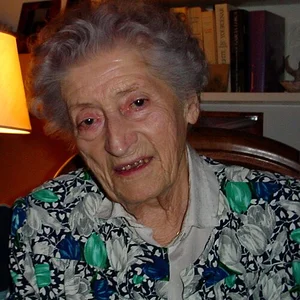
Lucie Aubrac
1912 — 2007
A French Resistance fighter, she organized the escape of her husband Raymond Aubrac from a Lyon prison on October 21, 1943. A committed history teacher, she became after the war a symbol of the Resistance and spent her entire life working to keep its memory alive.
Marc Bloch
1886 — 1944
French historian and co-founder of the Annales School with Lucien Febvre, Marc Bloch revolutionized historical method by prioritizing social and economic structures over event-driven history. A resistance fighter from the very start, he was arrested by the Gestapo and shot in 1944.
Marcel Carné
1906 — 1996
Marcel Carné was a French filmmaker and a major figure of the "poetic realism" movement of the 1930s and 1940s. With the poet-screenwriter Jacques Prévert, he made films that became classics of French cinema, including Children of Paradise.
Marcel Pagnol
1895 — 1974
French writer, playwright, and filmmaker born in Aubagne in 1895. Author of the Marseilles Trilogy (*Marius*, *Fanny*, *César*) and autobiographical works such as *My Father's Glory*, he was the first filmmaker elected to the Académie française.
Marcel Proust
1871 — 1922
French writer, author of the monumental work “In Search of Lost Time.” A pioneer of the modern novel, he explored involuntary memory, time, and the society of the Belle Époque.
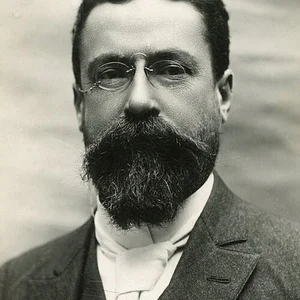
Marcel Sembat
1862 — 1922
Socialist deputy for the Seine and close associate of Jean Jaurès, Marcel Sembat served as Minister of Public Works in the Sacred Union government (1914–1916). A committed pacifist, he left a political legacy shaped by his defense of socialism and his polemical 1913 essay.
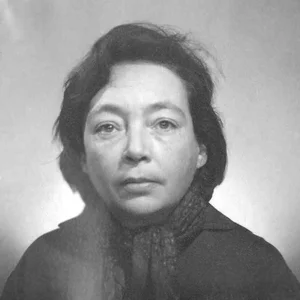
Marguerite Duras
1914 — 1996
French writer, playwright, screenwriter, and filmmaker (1914–1996), Marguerite Duras is a major figure in contemporary literature. Author of The Lover, she revolutionized the novel form by exploring psychological introspection and the formal ruptures of the Nouveau Roman.
Marguerite Monnot
1903 — 1961
Marguerite Monnot (1903-1961) was a French composer, classically trained pianist who became one of the great musical forces of French song. She wrote many hits for Édith Piaf as well as the musical "Irma la Douce."
Marguerite Perey
1909 — 1975
French chemist (1909–1975), collaborator of Marie Curie at the Radium Institute. In 1939 she discovered francium, the last natural element to be discovered, and in 1962 became the first woman elected to the French Academy of Sciences.
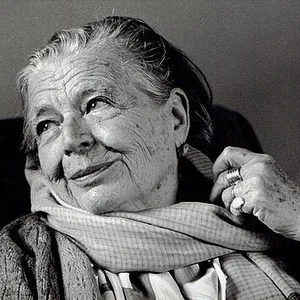
Marguerite Yourcenar
1903 — 1987
French writer (1903–1987), Marguerite Yourcenar is the author of Memoirs of Hadrian, a masterpiece of 20th-century literature. The first woman elected to the Académie française in 1980, she left a lasting mark on literature through her reflections on history and humanity.
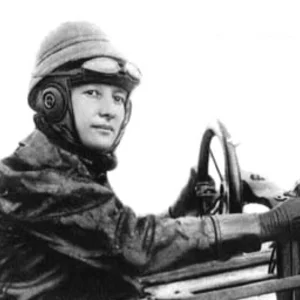
Marie Marvingt
1875 — 1963
Marie Marvingt (1875-1963) was a French athlete, aviator, and journalist nicknamed “the fiancée of danger.” A pioneer of aviation and mountaineering, she conceived the idea of the air ambulance and was one of the most decorated women in the history of France.
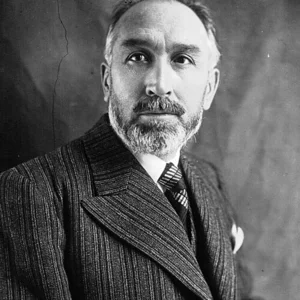
Marx Dormoy
1888 — 1941
French socialist politician (1888–1941), Minister of the Interior in Léon Blum's government under the Popular Front. He was assassinated by the Cagoule, a clandestine fascist organization.
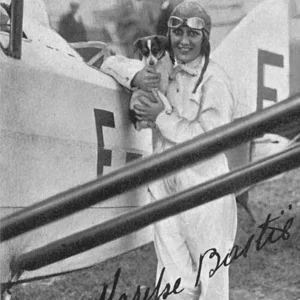
Maryse Bastié
1898 — 1952
French aviator born in 1898, Maryse Bastié set numerous world records in the 1930s, including a solo crossing of the South Atlantic in 1936. A pioneer of feminism through action, she also served Free France during the Second World War.
Maurice Béjart
1927 — 2007
Maurice Béjart was a Franco-Swiss dancer and choreographer, a major figure in 20th-century contemporary dance. Founder of the Ballet of the 20th Century and later the Béjart Ballet Lausanne, he brought dance to a wide audience with spectacular and accessible performances.
Maurice Genevoix
1890 — 1980
French writer (1890–1980), Maurice Genevoix is the author of *Ceux de 14* ("Those of '14"), a landmark eyewitness account of the First World War. A member of the Académie française and its perpetual secretary, he was inducted into the Panthéon in 2020.
Maurice Merleau-Ponty
1908 — 1961
French philosopher and a major figure in phenomenology. He placed the body and perception at the heart of knowledge, breaking with the dualism between subject and object. A professor at the Collège de France, he was also a close friend and later a critic of Sartre.

Maurice Pialat
1925 — 2003
Maurice Pialat (1925-2003) was a major French filmmaker, trained as a painter, known for a realistic, blunt style of cinema exploring family and romantic relationships. His work, devoted to the truth of emotions, left a deep mark on French auteur cinema.
Maurice Ravel
1875 — 1937
Maurice Ravel was a French composer and one of the great figures of early 20th-century music. A master of orchestration, he is famous for the Boléro and associated with the impressionist movement alongside Claude Debussy.
Max Ophüls
1902 — 1957
Max Ophüls (1902-1957) was a German-French filmmaker renowned for his virtuoso visual style, marked by long tracking shots and a fluid camera. He directed major works such as *La Ronde*, *Lola Montès*, and *Madame de…*, which explore love and melancholy.
Mélinée Manouchian
1913 — 1989
An Armenian resistance fighter who took refuge in France, she married Missak Manouchian, leader of the FTP-MOI network. After her husband's execution by the Nazis in February 1944 (the Red Poster affair), she dedicated her life to keeping alive the memory of the foreign resistance fighters who died for France.
Michel Foucault
1926 — 1984
French philosopher (1926–1984) who revolutionized the analysis of power, knowledge, and surveillance in modern societies. His work on institutions (prisons, hospitals, schools) profoundly influenced contemporary philosophy and the social sciences.

Michel Petrucciani
1962 — 1999
Michel Petrucciani (1962-1999) was a French jazz pianist and composer, one of the greatest European virtuosos of his instrument. Affected by a rare bone disease, he led a dazzling international career before dying at the age of 36.
Michel Platini
1955 — ?
Michel Platini is a French footballer, considered one of the greatest playmakers in history. A three-time Ballon d'Or winner, he was captain of the France team that won the European Championship in 1984, before becoming a coach and then a leader of European football.
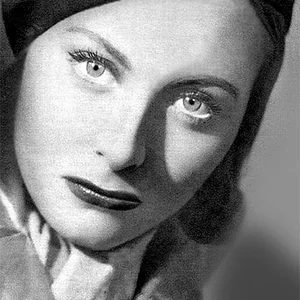
Michèle Morgan
1920 — 2016
French actress born in 1920, Michèle Morgan is one of the greatest stars of French cinema. Discovered by Marcel Carné in Port of Shadows (1938), she won the Best Actress award at Cannes in 1946 for Pastoral Symphony.
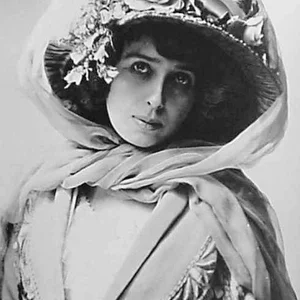
Mistinguett
1875 — 1956
Revue headliner and undisputed star of the French music hall, Mistinguett reigned over the stages of the Moulin Rouge, the Folies Bergère, and the Casino de Paris from the Belle Époque through the 1950s. Famous for her insured legs, her popular charm, and her song “Mon Homme”, she was the most popular French entertainer of the first half of the 20th century.
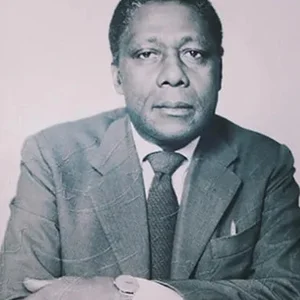
Mongo Beti
1932 — 2001
Mongo Beti (1932-2001) was a Cameroonian writer and teacher, a major figure of anticolonial French-language African literature. A committed novelist and essayist, he denounced colonialism and then the excesses of postcolonial regimes.
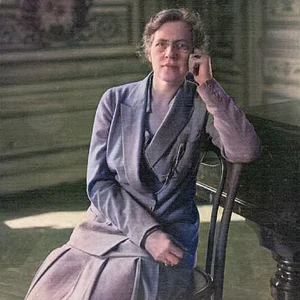
Nadia Boulanger
1887 — 1979
French pedagogue, pianist, organist, choral conductor, orchestral conductor, and composer
Nathalie Sarraute
1900 — 1999
French writer of Russian origin (1900-1999), Nathalie Sarraute is a major figure of the French Nouveau Roman. She revolutionized the novel form by exploring movements of consciousness and the 'sub-conversations' that animate human relationships.
Niki de Saint Phalle
1930 — 2002
French artist, painter, and sculptor
Noël Roquevert
1892 — 1973
French actor born in 1892 and died in 1973, Noël Roquevert is best known for his roles as grumpy gendarmes, military figures, and authoritarian characters in film. He appeared in over 200 movies, leaving his mark on French cinema from the 1930s through the 1970s.
Olivia de Havilland
1916 — 2020
A British actress born in 1916 in Tokyo, Olivia de Havilland was one of Hollywood's greatest stars of the 1930s and 1940s. She won two Academy Awards for Best Actress and successfully fought against the Hollywood studio system, paving the way for actors' contractual freedom.
Olivier de Kersauson
1944 — ?
French sailor born in 1944, a crew member for Éric Tabarly before becoming the skipper of large multihulls. The holder of the crewed round-the-world sailing record, he won the Jules Verne Trophy and became a media figure known for his outspokenness.
Olivier Messiaen
1908 — 1992
Olivier Messiaen (1908-1992) was a French composer, organist and teacher, one of the major figures of 20th-century music. A deeply devout Catholic and a passionate ornithologist, he renewed musical language through his research into rhythm, sound color and birdsong.
Patrick Modiano
1945 — ?
Patrick Modiano is a French writer born in 1945, winner of the Nobel Prize in Literature in 2014. His work, haunted by memory, the Occupation and the search for identity, explores the Paris of yesteryear and the shadowy corners of the past.
Paul Langevin
1872 — 1946
French physicist (1872–1946), student of Pierre Curie and friend of Einstein, pioneer of the theory of magnetism and ultrasonics. A committed philosopher of science, he was a passionate anti-fascist activist and defender of secular public education.
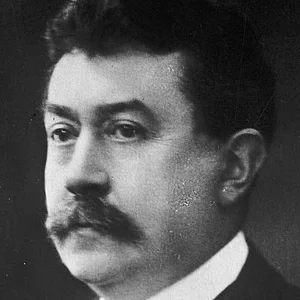
Paul Painlevé
1863 — 1933
A renowned French mathematician, Paul Painlevé (1863–1933) is known for his work on differential equations. He entered politics and served twice as President of the Council in 1917 and 1925, as well as Minister of War.
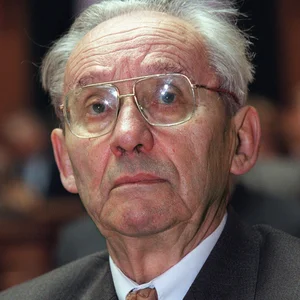
Paul Ricœur
1913 — 2005
Paul Ricœur (1913-2005) was a major French philosopher of the 20th century. A leading figure of phenomenology and hermeneutics, he developed a vast body of thought on narrative, memory, identity and justice.
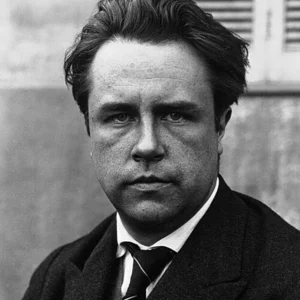
Paul Vaillant-Couturier
1892 — 1937
French writer, journalist, and politician (1892–1937), co-founder of the French Communist Party and editor-in-chief of L'Humanité. A World War I veteran, he was a leading figure of pacifism and the workers' left during the interwar period.
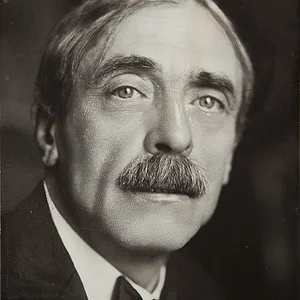
Paul Valéry
1871 — 1945
Paul Valéry (1871-1945) was a French poet, essayist and philosopher, a major figure of late Symbolist poetry. The author of the celebrated poem *The Graveyard by the Sea*, he was elected to the Académie française in 1925 and embodied the ideal of the intellectual meditating on creation and knowledge.
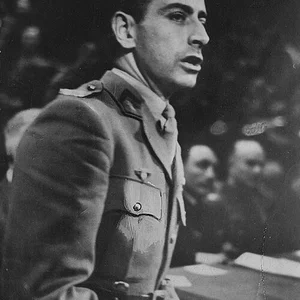
Pierre Brossolette
1903 — 1944
Journalist, politician, and French resistance fighter (1903–1944), Pierre Brossolette was one of the principal organizers of the internal Resistance in liaison with Free France. Arrested by the Gestapo, he took his own life to avoid betraying his comrades under torture.
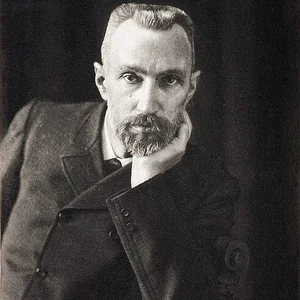
Pierre Curie
1859 — 1906
French physicist (1859–1906), he discovered piezoelectricity with his brother Jacques in 1880, then conducted groundbreaking research on radioactivity alongside Marie Curie. A Nobel Prize laureate in Physics in 1903, he is one of the founding fathers of modern physics.
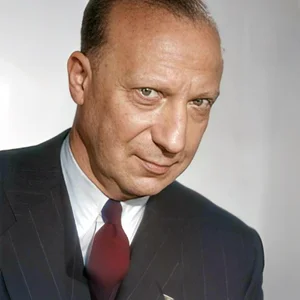
Pierre Dac
1893 — 1975
Pierre Dac (1893-1975) was a French humorist, cabaret songwriter and actor, a major figure of absurdist humour. A member of the Resistance, he became the voice of Free France on Radio London during the Occupation. Together with Francis Blanche he created the famous radio serial “Signé Furax”.
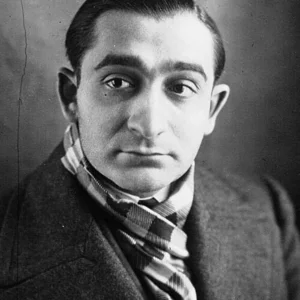
Pierre Mendès France
1907 — 1982
French statesman, a figure of the radical left and of moral rigor in politics. President of the Council in 1954-1955, he ended the Indochina War and set Tunisia on the path to autonomy.
Raimu
1883 — 1946
Raimu (1883-1946) is one of the greatest French actors of the 20th century, celebrated for his roles in Marcel Pagnol's Marseille trilogy (*Marius*, *Fanny*, *César*). His expressive acting and inimitable voice made him an icon of French cinema and theatre.
Raymond Devos
1922 — 2006
Raymond Devos (1922-2006) was a French comedian and stage performer of Belgian origin. A virtuoso of language, he built a unique body of work founded on wordplay, paradoxes, and verbal absurdity, performed on the greatest stages.
Raymond Queneau
1903 — 1976
French writer, poet, and mathematician (1903–1976), co-founder of the Oulipo. Author of Zazie in the Metro and Exercises in Style, he explored formal constraints and wordplay.
René Cassin
1887 — 1976
French jurist and statesman, René Cassin was one of the principal drafters of the Universal Declaration of Human Rights (1948). A resistance fighter from the very first days alongside General de Gaulle, he was awarded the Nobel Peace Prize in 1968.
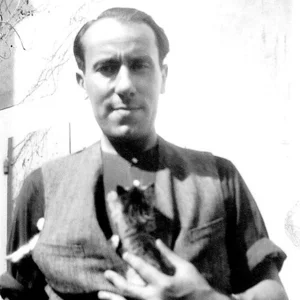
René Char
1907 — 1988
A major French poet of the 20th century, René Char is known for his modern poetry and his involvement in the French Resistance during World War II. His works combine poetic innovation with political commitment, exploring themes of freedom and revolt.
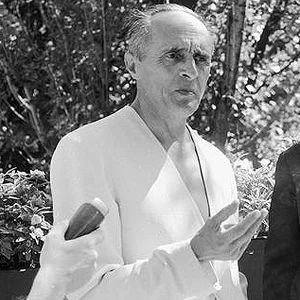
René Clair
1898 — 1981
René Clair (1898–1981) was one of the pioneers of French sound cinema. A director, screenwriter, and writer, he created poetic and satirical works such as "Under the Roofs of Paris" and "À nous la liberté". He was the first filmmaker elected to the Académie française, in 1960.
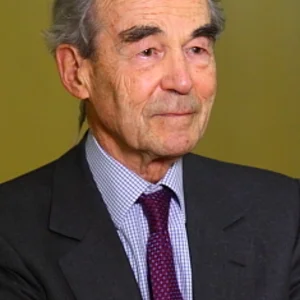
Robert Badinter
1928 — 2024
French lawyer, jurist, and politician (1928–2024), Robert Badinter is renowned for championing the abolition of the death penalty in France in 1981 as Minister of Justice (Garde des Sceaux). A lifelong defender of human rights, he served as President of the Constitutional Council from 1986 to 1995.
Robert Bresson
1901 — 1999
Robert Bresson (1901-1999) was a major French filmmaker of the 20th century. A theorist of pared-down cinema, he forged an aesthetic of austerity by using non-professional actors whom he called his “models.”
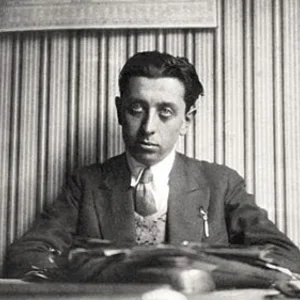
Robert Desnos
1900 — 1945
French poet (1900–1945) and major figure of Surrealism, celebrated for his wordplay and innovative poetry. A committed member of the French Resistance during World War II, he was deported and died at the Terezín concentration camp in 1945.
Romain Gary
1914 — 1980
Romain Gary, born Roman Kacew in Vilnius in 1914, was a French novelist, aviator, and diplomat. He is the only author to have won the Prix Goncourt twice, one of them under the pen name Émile Ajar.
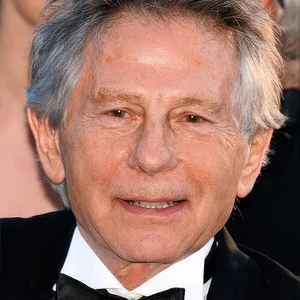
Roman Polanski
1933 — ?
Roman Polanski is a Franco-Polish director, producer, and screenwriter born in 1933. A survivor of the Kraków Ghetto during the Holocaust, he became one of the leading figures of international cinema, moving between psychological thrillers and historical dramas.
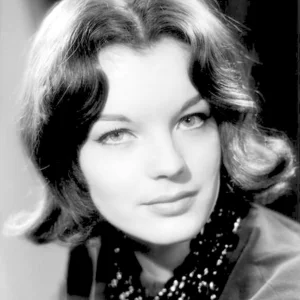
Romy Schneider
1938 — 1982
Franco-German actress (1938-1982), launched to fame by the Sissi trilogy, she went on to establish herself as one of the greatest European actresses under the direction of Visconti, Sautet, and Zurlini. An icon of auteur cinema, her career path illustrates the transformation of the European star system.
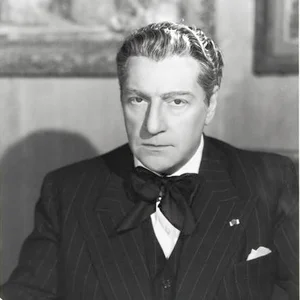
Sacha Guitry
1885 — 1957
French playwright, actor, director, and filmmaker (1885–1957), Sacha Guitry is one of the leading figures of boulevard theatre and French cinema. He wrote more than 130 plays and directed around thirty films, leaving a deep mark on French culture in the first half of the 20th century.
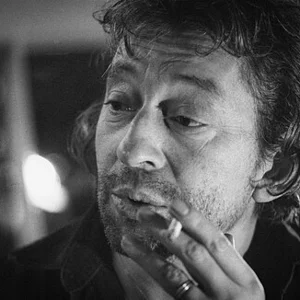
Serge Gainsbourg
1928 — 1991
French singer-songwriter, film director, and painter (1928–1991), a towering figure of French popular music. A provocateur and poet, he left his mark on popular culture with works blending humor, eroticism, and artistic boldness.
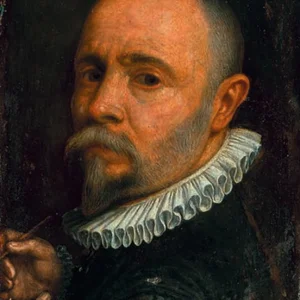
Simone Beck
1904 — 1991
Simone Beck, known as “Simca,” was a 20th-century French cook and cookbook author. She is famous for co-writing, with Julia Child and Louisette Bertholle, the book Mastering the Art of French Cooking, which introduced French cuisine to Americans.
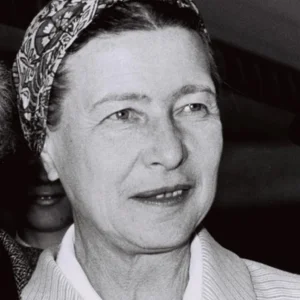
Simone de Beauvoir
1908 — 1986
French philosopher and novelist (1908–1986), Simone de Beauvoir is a towering figure of existentialism and modern feminism. Author of The Second Sex, a foundational essay on the condition of women, she profoundly shaped philosophical thought and emancipatory movements throughout the 20th century.
Simone Signoret
1921 — 1985
French actress and writer (1921–1985), Simone Signoret was the first French actress to win the Academy Award for Best Actress for Room at the Top (1959). An icon of postwar cinema, she was equally recognized for her political activism and her memoirs.
Simone Veil
1927 — 2017
French politician (1927-2017), Holocaust survivor, and Minister of Health under Valéry Giscard d'Estaing. She is celebrated for championing the law decriminalizing abortion in France in 1975, a landmark victory for women's rights.
Simone Weil
1909 — 1943
French philosopher (1909-1943) committed to social and spiritual engagement. She combined philosophical reflection with direct action alongside workers and the oppressed, while developing an original mystical thought. Her work, published posthumously, explores the relationships between labor, justice, and transcendence.
Sister Emmanuelle
1908 — 2008
Franco-Belgian nun of the Congregation of Our Lady of Sion, famous for her humanitarian work among the rag-pickers of Cairo. A popular figure of solidarity, she founded the Asmae association to help the most destitute.
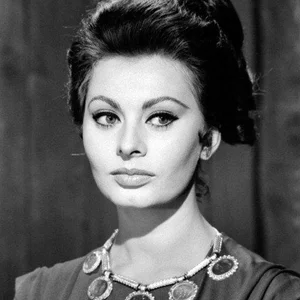
Sophia Loren
1934 — ?
Italian actress born in 1934, Sophia Loren is one of the greatest stars in world cinema. The first actress to win an Academy Award for a role performed in a foreign language, she embodies both glamour and Italian neorealism.
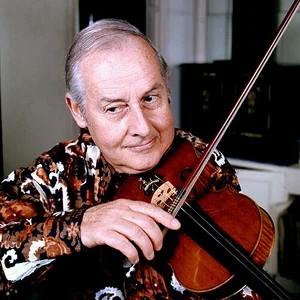
Stéphane Grappelli
1908 — 1997
Stéphane Grappelli (1908-1997) was a French jazz violinist who co-founded the Quintette du Hot Club de France with guitarist Django Reinhardt. A leading figure of gypsy jazz, he raised the violin to the status of a jazz solo instrument over a career spanning nearly sixty years.
Sylvie Guillem
1965 — ?
Sylvie Guillem (born 1965) is a French ballet dancer considered one of the greatest ballerinas of the 20th century. Trained at the Paris Opéra Ballet, she revolutionized classical dance with her exceptional technique and expressiveness. She became an étoile at 19 before pursuing an international career at the Royal Ballet in London.
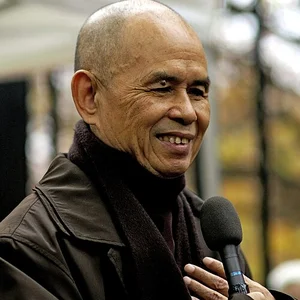
Thich Nhat Hanh
1926 — 2022
Vietnamese Zen Buddhist monk, poet, and peace activist. A major figure in spreading mindfulness to the West, he founded the Plum Village community in France and popularized “engaged Buddhism.”
Valéry Giscard d'Estaing
1926 — 2020
French statesman, President of the Republic from 1974 to 1981. A liberal reformer at the start of his term, he modernized French society before being defeated by François Mitterrand. He was also a key architect of European integration.
Vassily Kandinsky
1866 — 1944
Russian-born painter who was naturalized German and then French (1866–1944), Kandinsky is one of the pioneers of abstract art. He theorized the connection between color, form, and emotion, laying the groundwork for a radically new aesthetic.
Vercors
1902 — 1991
French writer and illustrator (1902-1991), Vercors is the author of the Resistance novel "The Silence of the Sea" (1942), published clandestinely during the Occupation. Co-founder of Les Éditions de Minuit, he fought against Nazism through the power of writing.
Vittorio De Sica
1901 — 1974
Vittorio De Sica (1901-1974) was an Italian director, screenwriter, and actor, a major figure of neorealism. His film *Bicycle Thieves* (1948) is regarded as a masterpiece of world cinema.

Vladimir Jankélévitch
1903 — 1985
French philosopher and musicologist, professor at the Sorbonne. A thinker of morality, time, and the ineffable, he also dedicated a major work to memory and the refusal to forgive Nazi crimes.
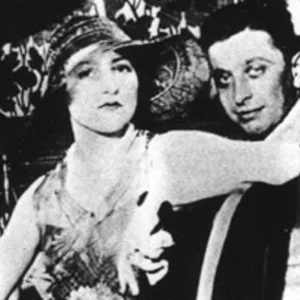
Youki
1903 — 1966
Youki Desnos (née Lucie Badoul, 1903–1962) was one of the iconic figures of the Parisian bohemian scene between the two World Wars. A model and muse for the painter Foujita, then partner of the Surrealist poet Robert Desnos, she was a central presence in the artistic circles of Montparnasse before becoming a gallerist.

Yvette Cauchois
1908 — 1999
Yvette Cauchois (1908-1999) was a French physicist and chemist, a pioneer of X-ray spectroscopy. She designed the curved-crystal spectrograph that bears her name and was one of the first women to head a major scientific laboratory in France.
Yvette Roudy
1929 — ?
French politician, feminist activist, and France's first Minister for Women's Rights (1981–1986) under François Mitterrand. She passed legislation against sexism and strengthened the Veil law on abortion.
Zinedine Zidane
1972 — ?
French international footballer of Algerian descent, considered one of the greatest playmakers in history. World champion in 1998 and European champion in 2000 with the France national team, he later enjoyed a brilliant coaching career at Real Madrid.
Anne L'Huillier
1958 — ?
Anne L'Huillier is a French-Swedish physicist born in 1958, a pioneer of attosecond physics. She received the 2023 Nobel Prize in Physics for her work on generating ultra-short pulses of light that make it possible to observe the motion of electrons.
Catherine Malabou
1959 — ?
Catherine Malabou, born in 1959, is a French philosopher and a student of Jacques Derrida. She developed the concept of “plasticity,” bringing together continental philosophy, neuroscience, and politics.
Cédric Villani
1973 — ?
French mathematician born in 1973, awarded the Fields Medal in 2010 for his work on the Boltzmann equation and optimal transport. Director of the Institut Henri-Poincaré, then a member of the National Assembly.
Christine Lagarde
1956 — ?
French business lawyer and politician, the first woman to head the International Monetary Fund (2011) and later the European Central Bank (2019). She had previously served as France's Minister of the Economy and Finance.
Emmanuelle Charpentier
1968 — ?
A French microbiologist and geneticist, she co-develops the CRISPR-Cas9 technique with Jennifer Doudna. This revolution in genome editing earns her the Nobel Prize in Chemistry in 2020.
Esther Duflo
1972 — ?
French-American economist born in 1972, a specialist in development economics. She reshaped the fight against poverty by relying on rigorous field experiments. In 2019, she became the youngest person ever to win the Nobel Prize in Economics.
Geneviève Fraisse
1948 — ?
Geneviève Fraisse, born in 1948, is a French philosopher and historian of feminist thought. A research director at the CNRS, she made gender equality and the genealogy of women's emancipation a genuine philosophical subject.
Gérard Mourou
1944 — ?
Gérard Mourou is a French physicist born in 1944, a specialist in lasers. Together with Donna Strickland, he invented the chirped pulse amplification (CPA) technique, which earned him the Nobel Prize in Physics in 2018.
Kaija Saariaho
1952 — 2023
Kaija Saariaho (1952-2023) was a Finnish composer and pioneer of spectral and electroacoustic music. Based in Paris, she collaborated with IRCAM and composed major works including the opera L'Amour de loin (2000).
Tahar Ben Jelloun
1947 — ?
Tahar Ben Jelloun is a French-Moroccan writer and poet born in 1944 in Fès. A French-language author, he explores exile, immigration, and the condition of Maghrebi societies. He received the Prix Goncourt in 1987 for The Sacred Night.
Thomas Piketty
1971 — ?
Thomas Piketty is a French economist born in 1971, a specialist in economic inequality and wealth distribution. A director of studies at the EHESS and a professor at the Paris School of Economics, he is renowned worldwide for his work on capital and inequality.
Yasmina Reza
1959 — ?
French playwright, novelist, and actress born in 1959, Yasmina Reza made her mark with *Art* (1994), a philosophical comedy about friendship and the value of art. Her plays, translated into more than 35 languages, sharply examine the cracks in human relationships and social hypocrisies.