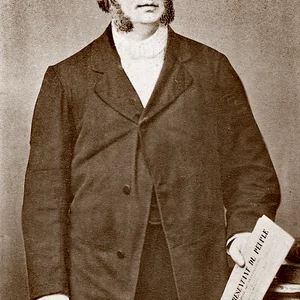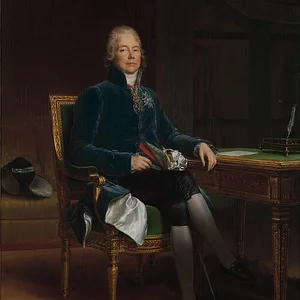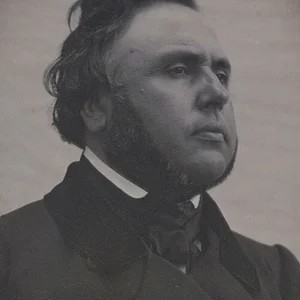

French lawyer and republican politician (1807–1874), he was one of the members of the provisional government that emerged from the February 1848 revolution. He was the principal architect of the decree establishing universal male suffrage in France, expanding the electorate from 200,000 to nearly 9 million citizens.
Alexandre Auguste Ledru-Rollin(1807 — 1874)
Alexandre-Auguste Ledru-Rollin
France
9 min read
Frequently asked questions
Key Facts
- 1807: Born in Paris; trained in law, he became a lawyer who pleaded republican causes
- 1841: Elected deputy under the July Monarchy, championing civil liberties and electoral reform
- February 1848: Member of the provisional government of the Second Republic following the fall of Louis-Philippe
- 5 March 1848: Signed the decree establishing universal male suffrage, expanding the electorate from 200,000 to 9 million citizens
- 1849: Forced into exile in London following the failure of the June 13 uprising; did not return to France until 1870
Works & Achievements
A founding text signed by Ledru-Rollin as Minister of the Interior, extending voting rights to all French men aged 21 and over regardless of wealth. This was the defining political act of his life, permanently transforming French democracy.
A radical republican newspaper of which Ledru-Rollin was one of the leading figures. *La Réforme* played a decisive role in spreading republican ideas and laying the ideological groundwork for the Revolution of 1848.
A polemical work written during his London exile, in which Ledru-Rollin criticizes the English liberal model and champions the superiority of French republican ideals. The irony is complete: he was living in the very country he was attacking.
A collection of official texts addressed to representatives sent into the provinces to implement the decrees of the provisional government. Written in a passionate style, they instructed republican agents on how to prepare the first democratic elections.
A series of parliamentary addresses in which Ledru-Rollin tirelessly argued for the extension of voting rights under the July Monarchy. These speeches established him as the leading parliamentary champion of universal suffrage before 1848.
Anecdotes
On March 5, 1848, as Minister of the Interior of the provisional government, Ledru-Rollin signed the decree establishing universal male suffrage in France. With a stroke of the pen, the electorate grew from 200,000 to nearly 9 million citizens. It was one of the most radical reforms in French electoral history, accomplished in less than two weeks after the February Revolution.
In December 1848, Ledru-Rollin ran in the presidential election — the first held under universal male suffrage, which he himself had established. He received only 370,000 votes, far behind Louis-Napoléon Bonaparte, who garnered more than 5 million. History's irony: the universal suffrage he had created to strengthen the Republic served to elect the man who would bring it down.
He is credited with the famous quip: “I am their leader, I must follow them.” Spoken during the popular unrest of 1848, this phrase perfectly illustrates the tensions between a republican leader and a revolutionary crowd whose momentum he struggled to control. The saying, now proverbial, encapsulates on its own the contradictions of the spring of 1848.
After the failure of the republican insurrection of June 13, 1849, Ledru-Rollin was forced to flee Paris hastily to avoid arrest. He crossed to England and settled in London for more than twenty years. In 1850, he published a work there entitled “On the Decline of England” — a scathing pamphlet against the British liberal model, written in the very country that was nevertheless offering him refuge.
Upon his return to France after the fall of Napoleon III in 1870, Ledru-Rollin, over sixty years old, was welcomed as a veteran of the Republic. He was elected deputy in 1871. This return illustrates the extraordinary length of his commitment: he had devoted his entire life to ideals for which he had sacrificed everything — his fortune, his career, and his homeland.
Primary Sources
The provisional government of the Republic, considering that it is the right of all Frenchmen to participate in the governance of their country, decrees that all adult Frenchmen shall enjoy the right of suffrage without restriction.
Citizen commissioners, you are vested with discretionary power. To save the Republic, you need not wait for instructions from us. Act in our name, act boldly.
The French people are called upon to elect their representatives. For the first time in the history of organized societies, a great people exercises the right of universal suffrage without restriction.
England is approaching the end of its greatness; it carries within itself the seeds of its own dissolution. Its aristocracy, which has governed unchallenged, sees the hour of its downfall drawing near.
I call for suffrage to be restored to all citizens regardless of wealth or birth, for the Republic can only be founded upon political equality.
Key Places
Born in Paris on February 2, 1807, Ledru-Rollin studied law there, practiced as a lawyer, and conducted most of his political career in the city. It was in Paris that he delivered his great republican speeches and signed the founding decrees of the Second Republic in 1848.
The seat of the Republic's provisional government in 1848, this is where Ledru-Rollin served as Minister of the Interior and where the major republican reforms were signed into law, including the decree establishing universal male suffrage.
The constituency that elected Ledru-Rollin as a deputy from 1841 onward. His connection to the provinces gave him a national legitimacy that strengthened his republican authority against the Parisian elites in the Chamber of Deputies.
Following the failed uprising of June 13, 1849, Ledru-Rollin settled in London, where he lived in exile for more than twenty years. There he moved in European republican circles, mingled with fellow French exiles such as Louis Blanc, and wrote his political works.
The town where Ledru-Rollin settled after returning from exile in 1870 and where he died on December 31, 1874, having lived to see the Republic he had championed throughout his life finally take lasting root.
Typical Objects

It is with a steel nib dipped in black ink that Ledru-Rollin signed the revolutionary decrees of March 1848 from the Ministry of the Interior. An ordinary object in appearance, it became the instrument of an unprecedented historical transformation of the French electorate.

Virtually nonexistent before 1848, the ballot became under Ledru-Rollin the concrete symbol of popular citizenship. For the first elections of April 1848, millions of men — often illiterate — held a ballot in their hands for the very first time, guided by their village mayor or schoolteacher.

Founded in 1843, this radical republican daily was Ledru-Rollin's political platform. Printed on cheap paper to remain accessible to activists, it spread ideas of electoral and social reform that ideologically paved the way for the revolution of 1848.

A badge of republican authority, the tricolor sash (blue, white, red) was worn across the shoulder by Ledru-Rollin at official ceremonies in 1848. It symbolized the embodiment of the Republic by its representatives, a clear break from the emblems of monarchy.

Before becoming a minister, Ledru-Rollin was a lawyer who argued cases before Parisian courts. The black gown with white lapels was his daily professional attire; he notably defended republicans prosecuted under the July Monarchy, building his reputation as a committed people's advocate.

After June 1849, Ledru-Rollin fled France with makeshift documents to cross borders and evade the gendarmes. This precious pass — a fragile slip of paper, sometimes forged — was the indispensable companion of every republican forced into exile under the Second Empire.
School Curriculum
Vocabulary & Tags
Key Vocabulary
Daily Life
Morning
Ledru-Rollin rises early, following the habit of lawyers who prepare their pleadings before court sessions. He reads several newspapers — including La Réforme and Le National — to keep up with political news. He then drafts his correspondence, which is extensive with his republican allies in the provinces.
Afternoon
His afternoons are divided between sessions at the Chamber of Deputies, where he frequently speaks on behalf of the republican group, and political committee meetings in Parisian cafés or back rooms. In 1848, these afternoons are spent at the Ministry of the Interior drafting decrees and circulars with his staff.
Evening
In the evenings, he frequents republican salons where journalists, lawyers, and activists gather. Political dinners are an opportunity to forge alliances and plan future actions. In exile in London, evenings are more solitary, devoted to writing and meetings with other exiled republicans.
Food
The bourgeois Parisian cuisine of the 19th century: roasted meats, seasonal vegetables, white bread, Bordeaux or Burgundy table wine. Meals among lawyers and politicians often take place in restaurants or brasseries in central Paris, where political discussions accompany the food.
Clothing
Like any bourgeois republican notable of his era, Ledru-Rollin wears a buttoned black frock coat, waistcoat, and dark trousers. The top hat is indispensable for official outings. This sober attire contrasts with the gaudy uniforms worn by representatives of the monarchist regime.
Housing
In Paris, he lives in a bourgeois apartment in the central neighborhoods, with a library stocked with legal texts, history, and political philosophy. In London, during his exile, he lives in more modest lodgings, dependent on the financial support of sympathizers and republican friends who remained in France.
Historical Timeline
Period Vocabulary
Liens externes & ressources
Références
Œuvres
Décret instaurant le suffrage universel masculin
5 mars 1848
Fondation du journal La Réforme
1843
De la décadence de l'Angleterre
1850
Circulaires aux commissaires de la République
Mars-avril 1848
Discours sur la réforme électorale à la Chambre des députés
1843-1847