 Flip the card
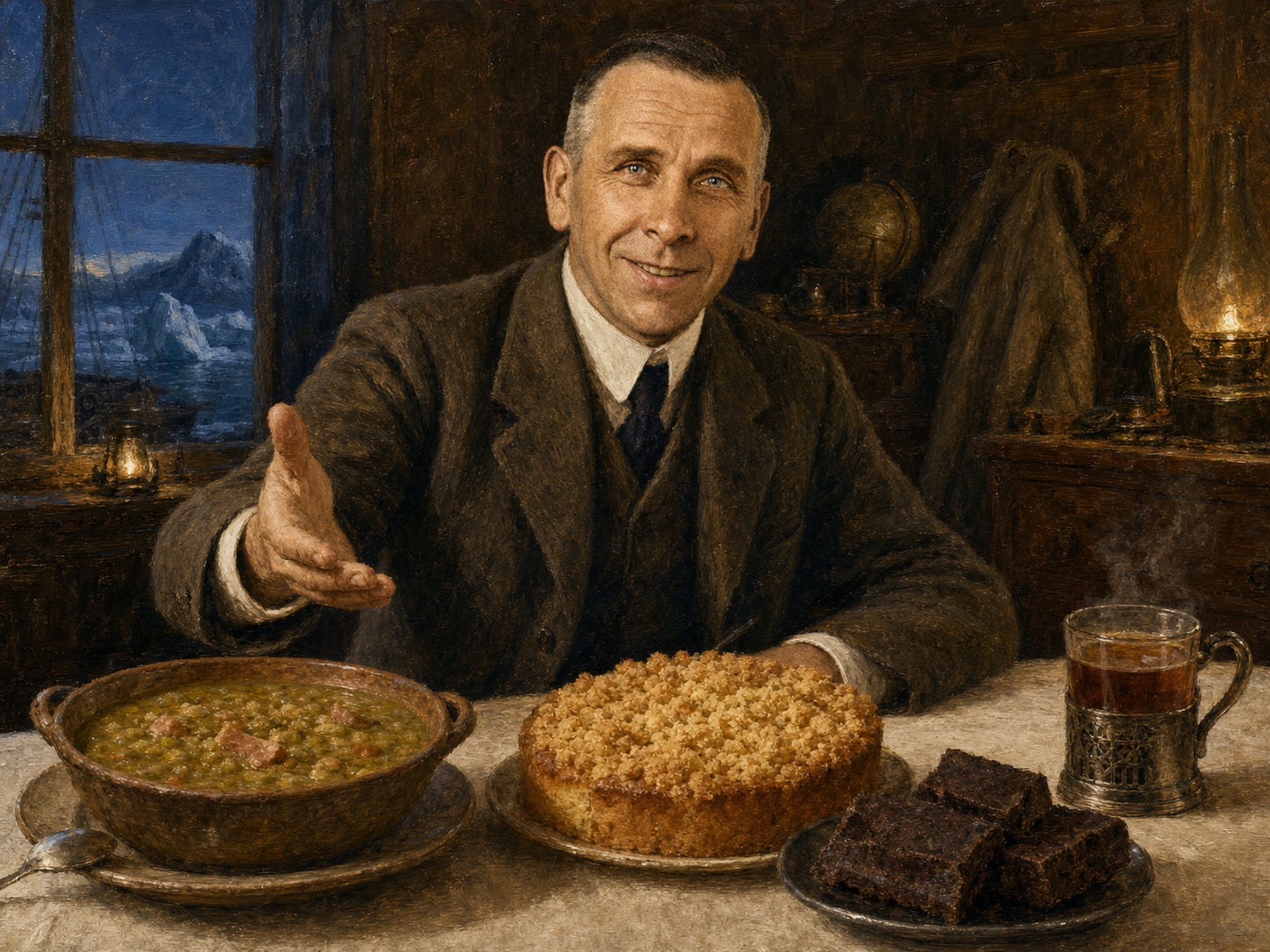
Alfred Wegener at the table
1880 — 1930
On the menu
Meals — the German rhythm of eating
The day is organized around four times: Frühstück (breakfast of bread, butter, and coffee), Mittagessen (the real hot meal at midday, often a single stewed dish), Abendbrot (cold evening meal, bread and toppings), and the ritual of Kaffee und Kuchen in the afternoon, coffee accompanied by a cake. In Wegener's middle-class scholarly household, and even more so on expedition, this framework simplifies around rye bread and the hearty one-pot dish that sticks to the ribs.
Signature : Rye and caraway (Roggen und Kümmel)
Dense black rye bread and caraway (meadow cumin) run through all German cooking of this era — from daily bread to stews. Earthy and aniseed flavor, it also aids digestion of the rich, heavy dishes of northern winters.
click to flip back
Alfred Wegener at the table
1880 — 1930
5 period recipes
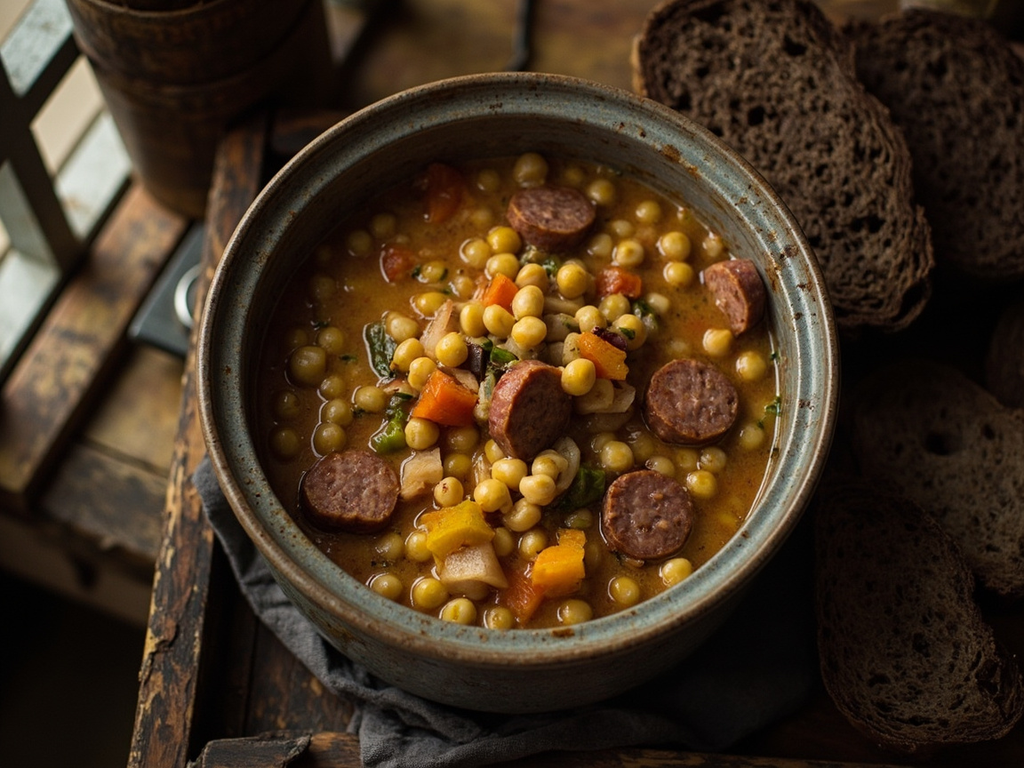 Everyday
Erbseneintopf — split pea stew with bacon
Mittagessen (hot midday one-pot meal)
🧂 🍄· 2 h
View the recipe
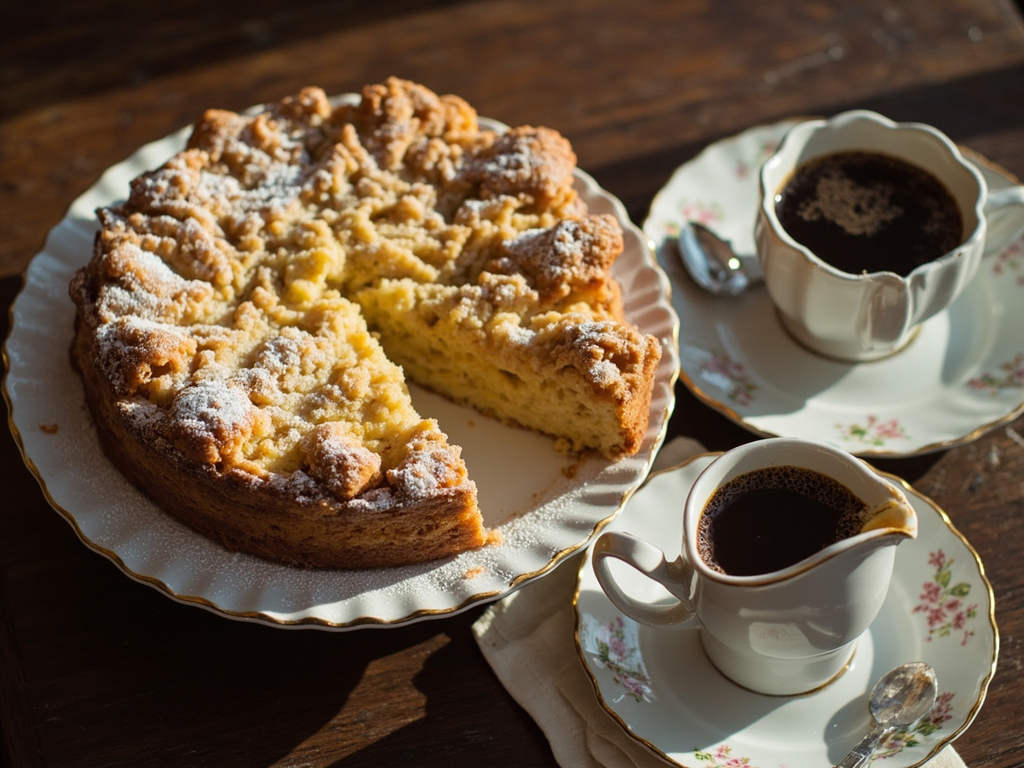 Festive
Streuselkuchen — yeasted cake with butter crumble topping
Kaffee und Kuchen (afternoon coffee cake)
🍯· 2 h 30 (with rising)
View the recipe
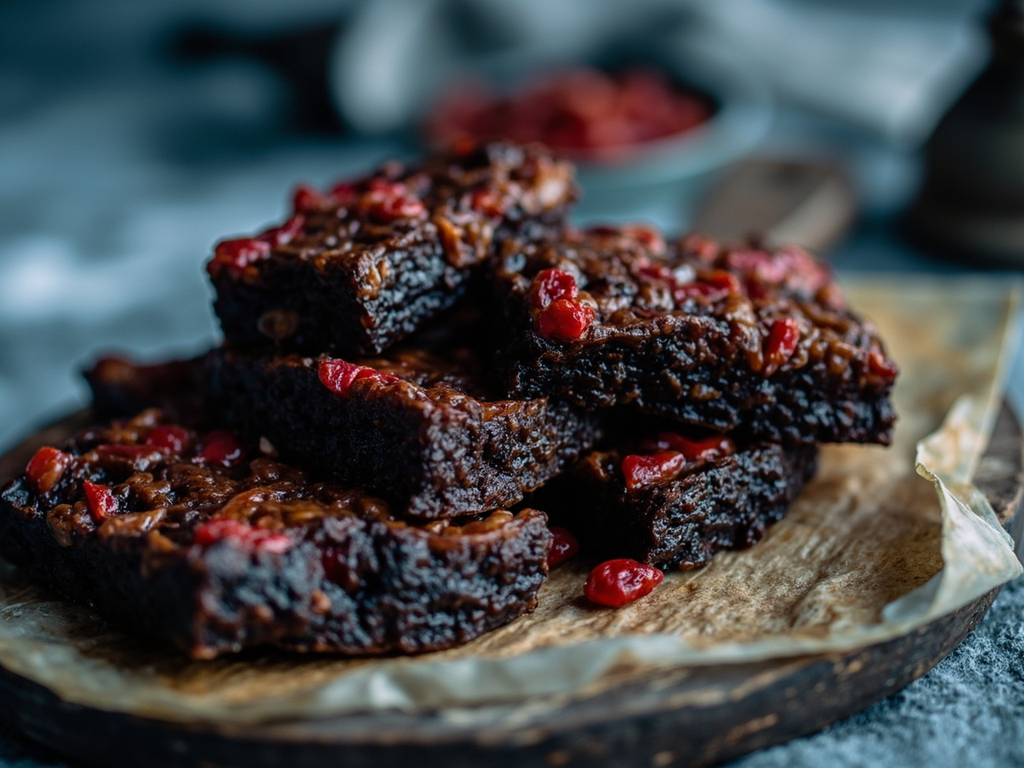 Travel
Greenland expedition pemmican
Proviant — sled ration
🧂 🍄· 8 h (including drying)
View the recipe
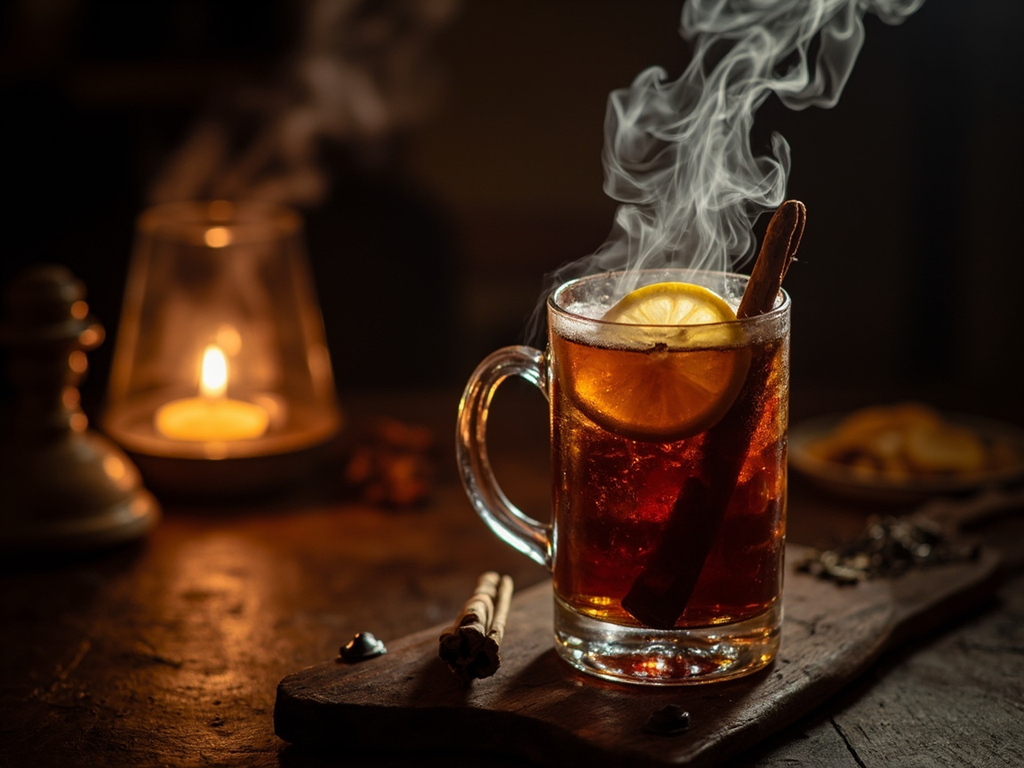 Drink
DrinkEvening grog — hot spirit for icy nights
Heißgetränk (hot comforting drink)
🍯 🍋· 5 min
View the recipe
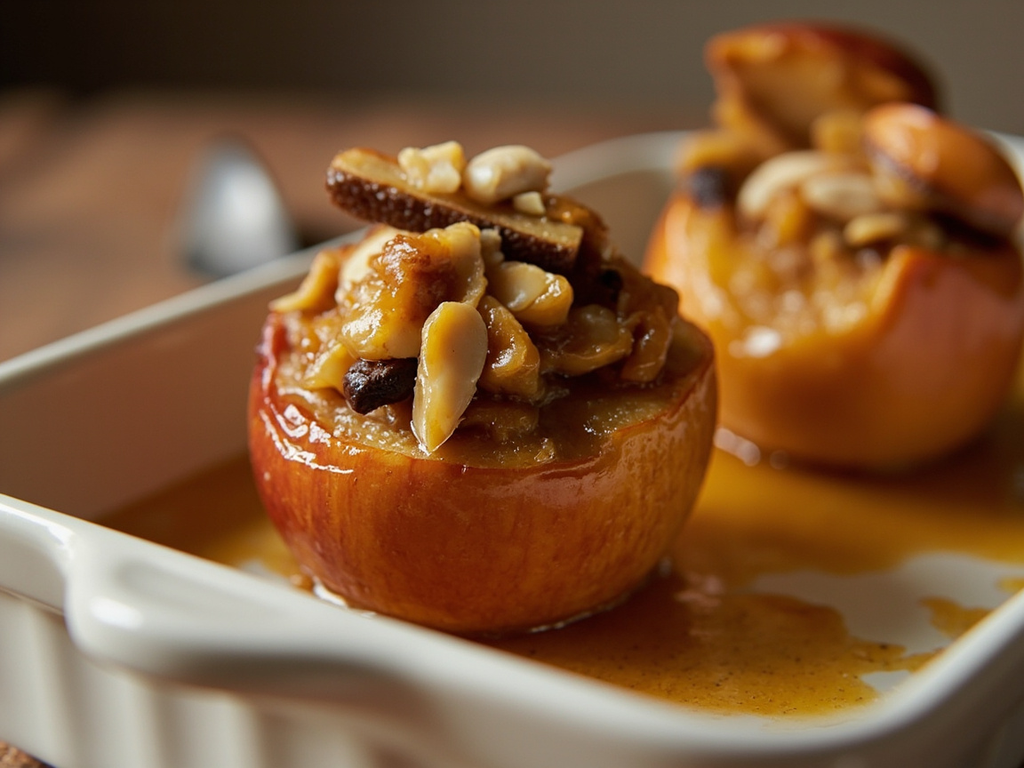 Remedy
Bratapfel — baked apple stuffed with almonds and honey
Nachtisch / Abendbrot sweet (warm evening treat)
🍯 🍋· 40 min
View the recipe