 flip
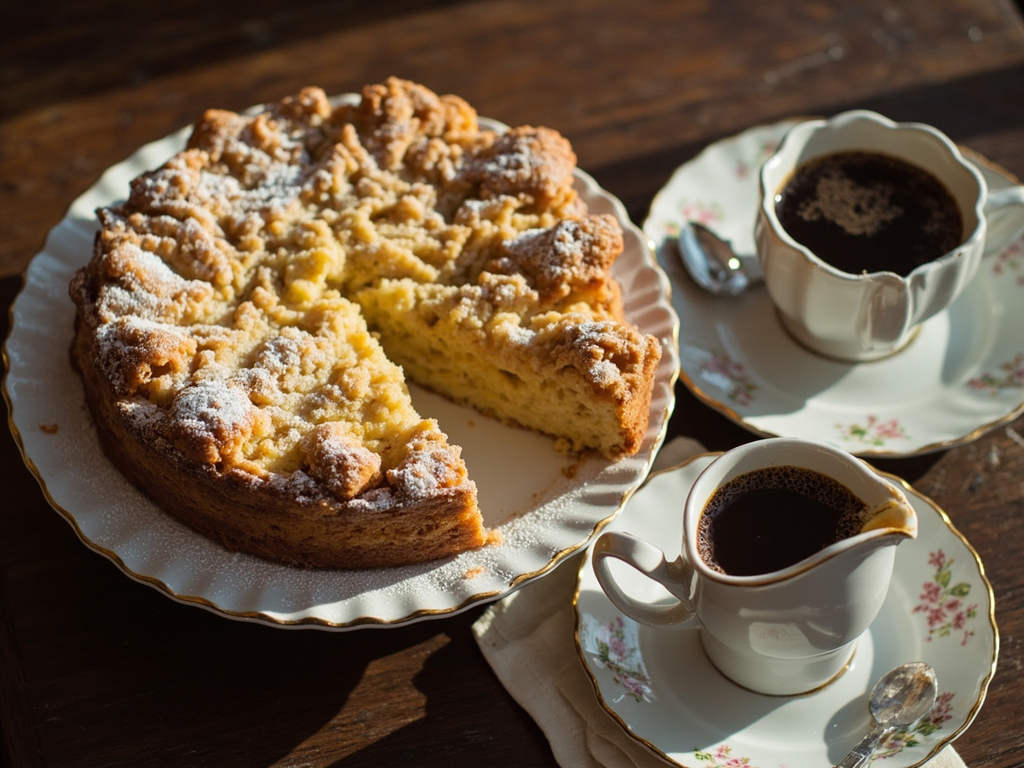
flipStreuselkuchen — yeasted cake with butter crumble topping
Streuselkuchen — yeasted cake with butter crumble topping
Why this dish? The afternoon coffee-and-cake ritual punctuates the bourgeois and academic life of Wilhelmine Germany. Wegener, who 'regularly drinks coffee and tea,' shared this break over a Streuselkuchen, a Sunday cake and family gathering staple.
A soft brioche-like dough topped with a thick layer of streusel — crispy crumbs of butter, sugar, and flour. Warm, with strong coffee, it is the very taste of the German Sunday.
On Sunday, after services, one cannot receive without a Streuselkuchen on the table. All the art lies in the crumbs: you work cold butter with your fingertips together with flour and sugar until you form large golden clumps — above all, do not knead them into a dough! You spread them generously, and into the oven. With a cup of good coffee alongside, one forgets for a moment the quarrels of my learned colleagues.
- •Wheat flour — according to batch (base for dough and streusel)
- •Baker's yeast — a little (leavening)
- •Milk — a cup (dough liquid)
- •Butter — a good lump (richness and crumbs)
- •Sugar — to taste (sweetness, streusel)
- •Eggs — one or two (binder)
Streuselkuchen — yeasted cake with butter crumble topping
A soft brioche-like dough topped with a thick layer of streusel — crispy crumbs of butter, sugar, and flour. Warm, with strong coffee, it is the very taste of the German Sunday.
Why this dish? The afternoon coffee-and-cake ritual punctuates the bourgeois and academic life of Wilhelmine Germany. Wegener, who 'regularly drinks coffee and tea,' shared this break over a Streuselkuchen, a Sunday cake and family gathering staple.
On Sunday, after services, one cannot receive without a Streuselkuchen on the table. All the art lies in the crumbs: you work cold butter with your fingertips together with flour and sugar until you form large golden clumps — above all, do not knead them into a dough! You spread them generously, and into the oven. With a cup of good coffee alongside, one forgets for a moment the quarrels of my learned colleagues.
Ingredients (period version)
- Wheat flour — according to batch (base for dough and streusel)
- Baker's yeast — a little (leavening)
- Milk — a cup (dough liquid)
- Butter — a good lump (richness and crumbs)
- Sugar — to taste (sweetness, streusel)
- Eggs — one or two (binder)
Ingredients
- All-purpose flour — 300 g (dough) + 200 g (streusel) (base)
- Warm milk — 120 ml (dough liquid)
- Fresh baker's yeast — 20 g (leavening)
- Sugar — 50 g (dough) + 150 g (streusel) (sweetness)
- Butter — 60 g (dough) + 150 g cold (streusel) (richness, crumbs)
- Egg — 1 (binder)
- Vanilla or lemon zest — a pinch (flavor)
- Powdered sugar — for dusting (finish)
Method
- Dissolve the yeast in warm milk with a pinch of sugar, let foam for 10 min.
- Knead the dough (flour, sugar, soft butter, egg, yeast) until smooth; let rise 1 hour under a cloth.
- Prepare the streusel: rub together flour, sugar, and cold butter with fingertips to form large crumbs.
- Roll out the dough on a baking sheet, cover with a thick layer of streusel.
- Let rise another 20 min, then bake at 180°C for 25-30 min until golden. Dust with powdered sugar and serve warm.
How it was made : A specialty of Silesia that became national, the Streuselkuchen was baked on large trays in the Sunday oven, or even at the neighborhood baker who rented out his oven after the bread batch. The generous crumb-to-dough ratio marked the quality of the household.
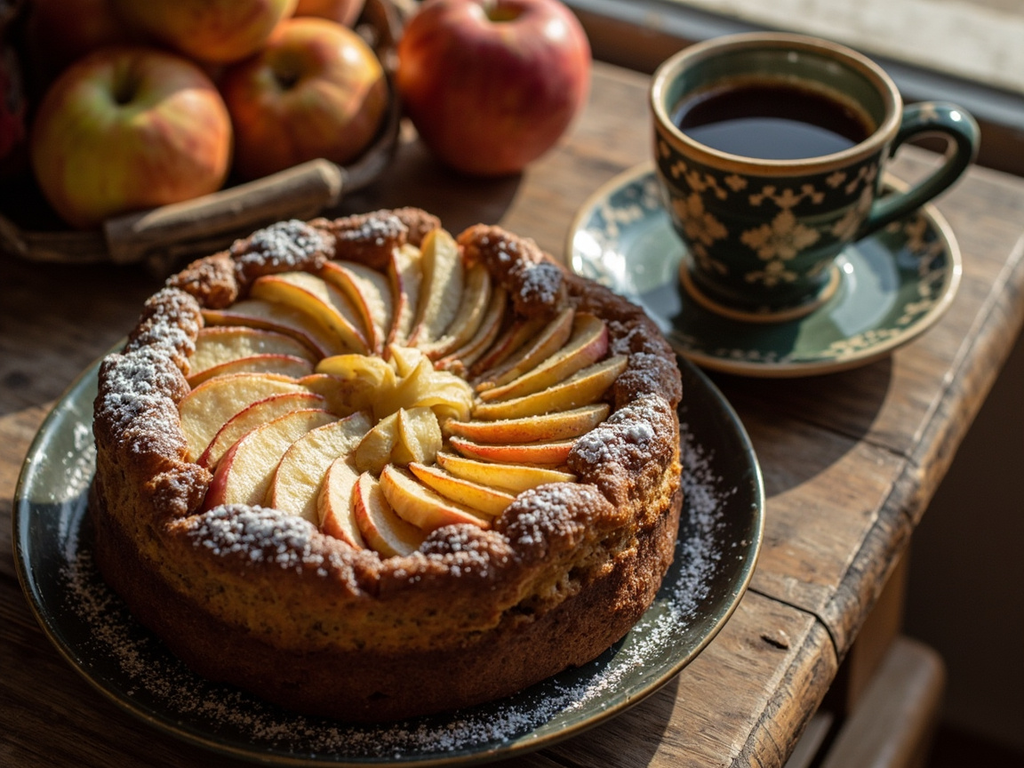
The contemporary twist : A 'tectonic' version: carve fissures in the streusel to nestle pieces of caramelized apple, like drifting continents.
Alfred Wegener · Charactorium