 Flip the card
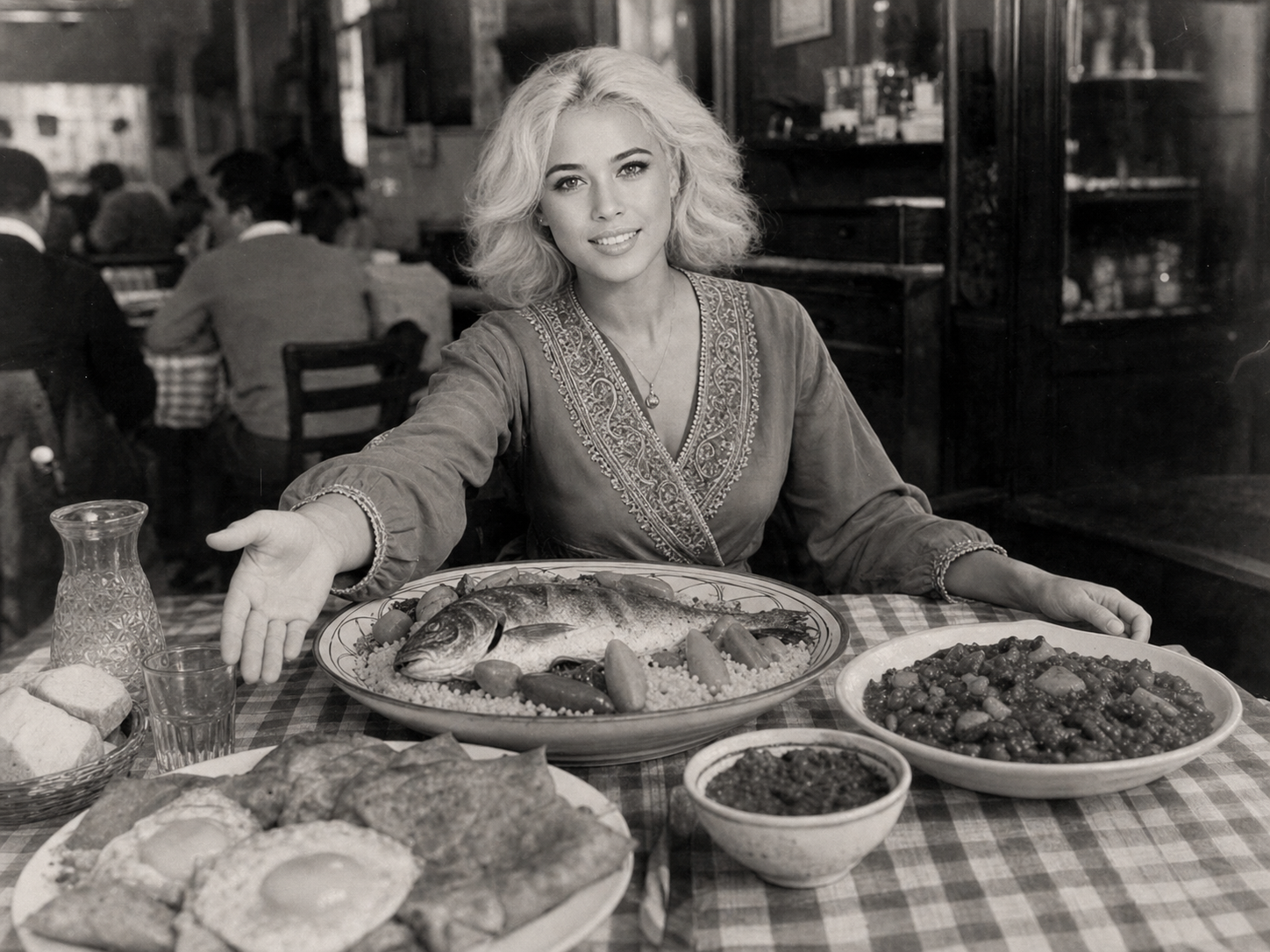
Amina at the table
1962 — ?
On the menu
The Tunisian Maïda — from Kémia to Tea
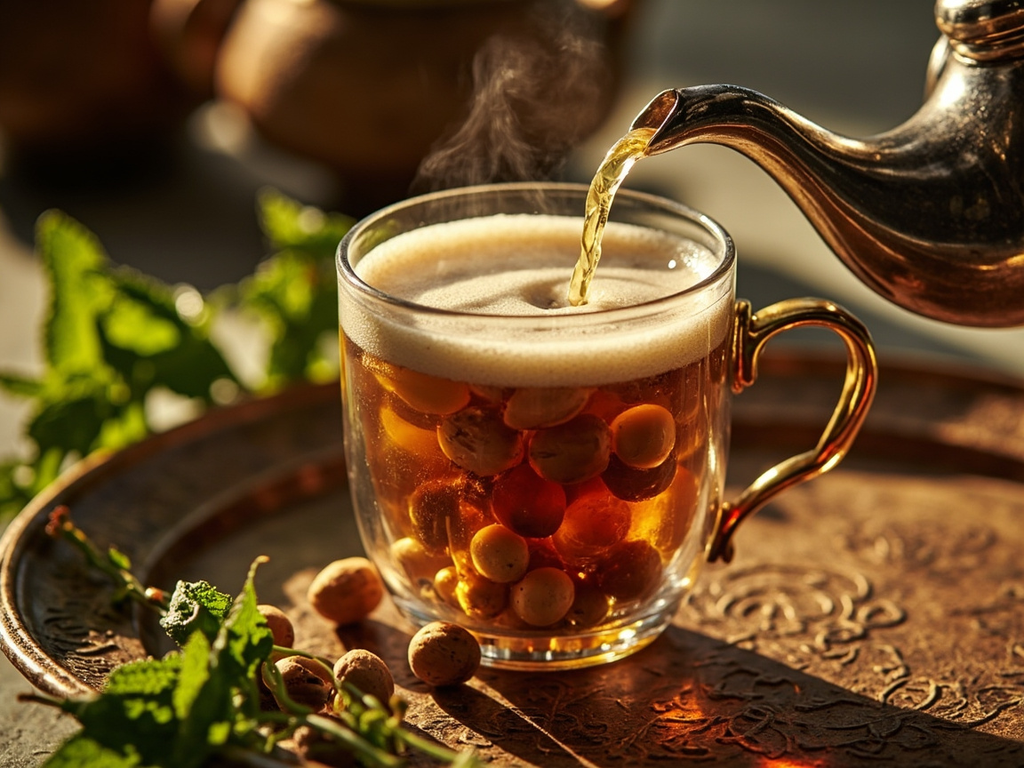
At the Tunisian table, the meal opens with kémia, a medley of small plates to nibble (grilled salads, olives, brik) accompanied by harissa. Next comes the centerpiece dish, almost always couscous, shared from a large communal platter. The meal closes with the ritual of mint tea or pine nut tea, poured from a height and drunk in several small glasses, prolonging the conversation. This structure flows between Tunis and Paris in Amina's life, where dual culture places side by side the brazier of Carthage and the Parisian apartment kitchen.
Signature : Harissa and Tabil
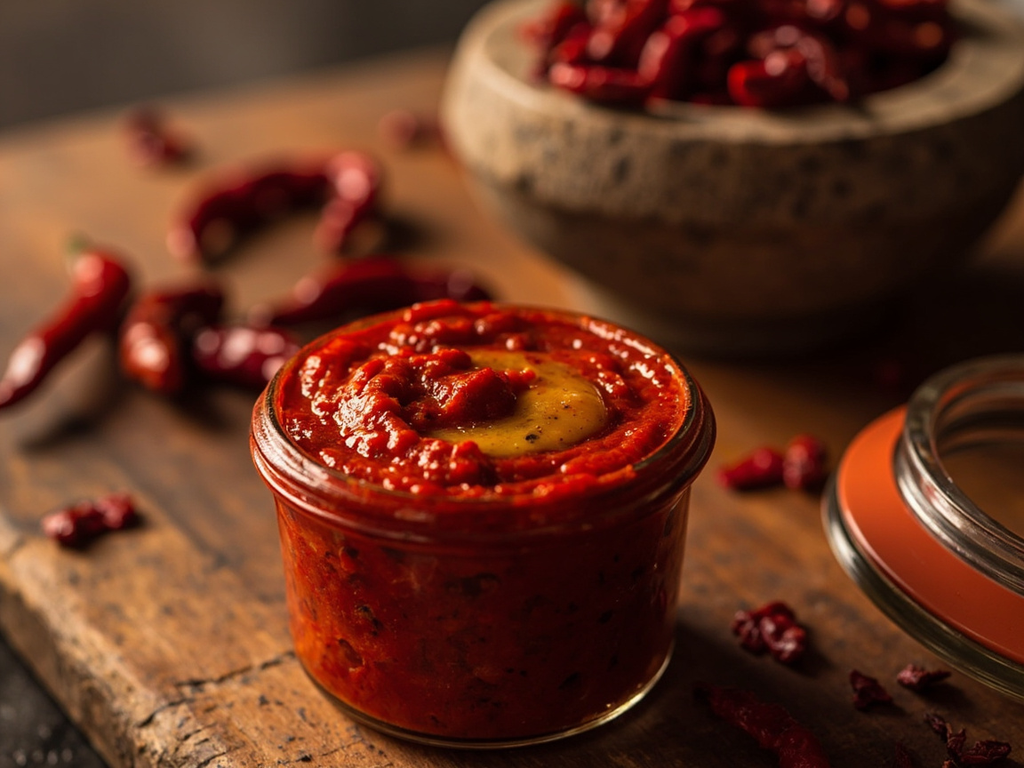
Harissa (a paste of dried chilies spiked with garlic, caraway and coriander) is the red soul of Tunisian cuisine: a dab goes into almost everything. Tabil, a ground spice blend (caraway, coriander, dried garlic, chili), is its fragrant brother. Honest note: chili is a New World product, so this signature is recent on the scale of history — but it is perfectly period for an artist born in 1962.
click to flip back
Amina at the table
1962 — ?
5 period recipes
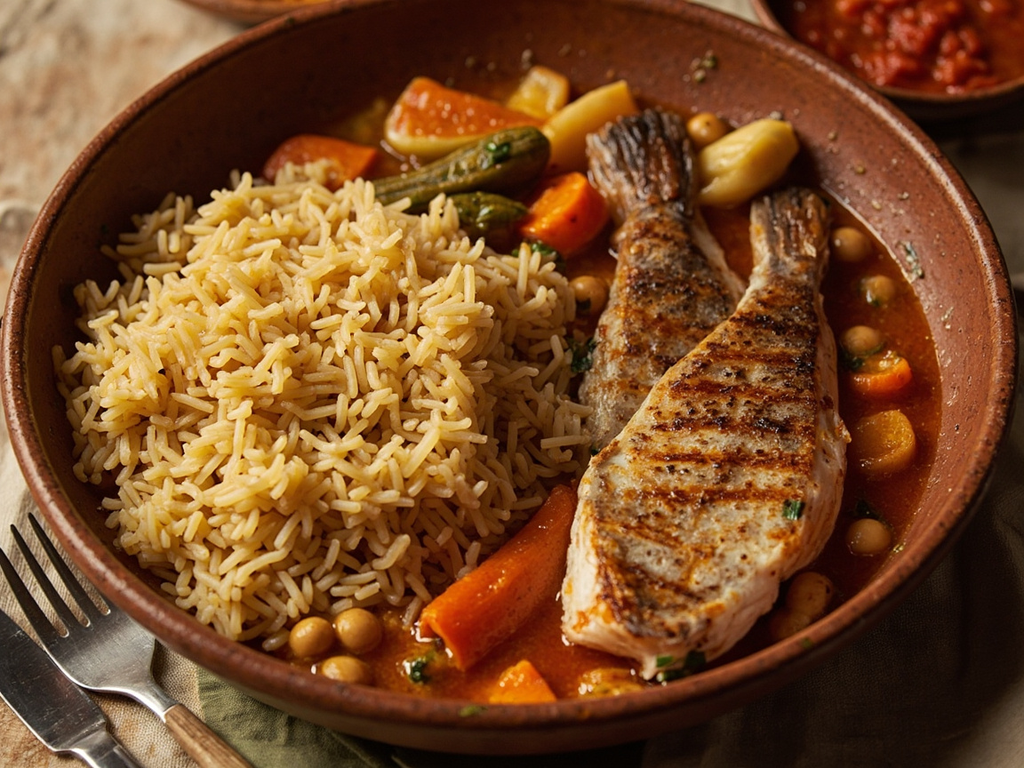 Festive
Tunisian Fish Couscous
Centerpiece dish of the maïda (the large shared platter)
🧂 🌶️· 1 h 30
View the recipe
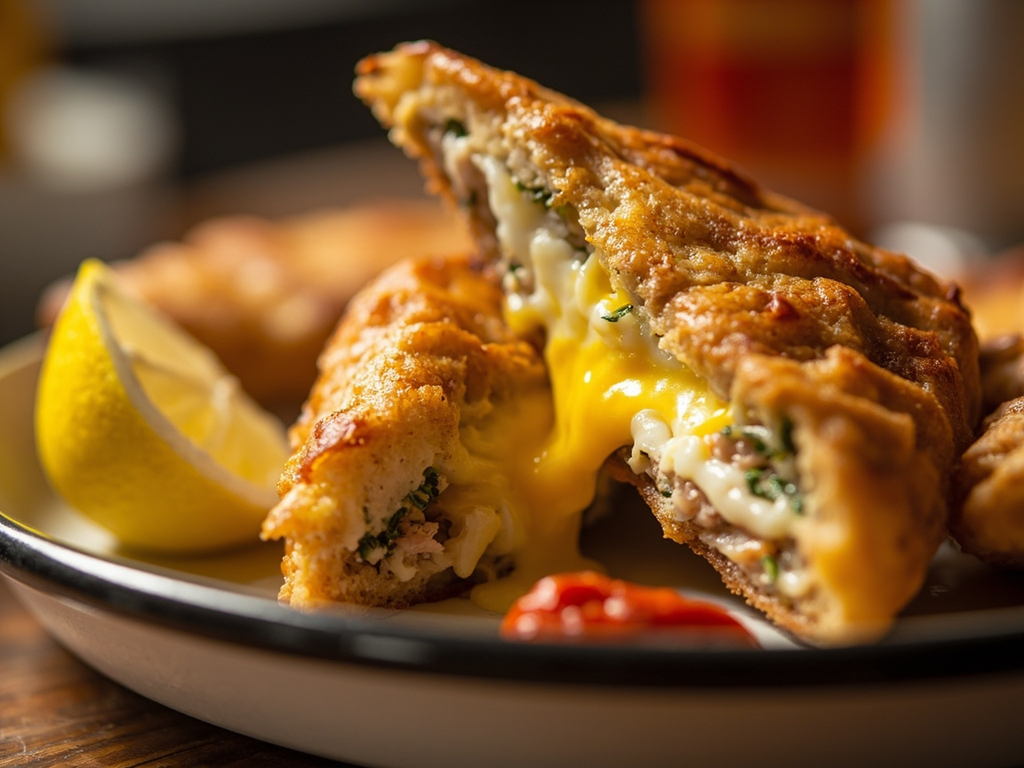 Street food
Brik à l'Œuf (Egg Brik)
Kémia / street snack (small opening plate and fairground food)
🧂 🍄· 20 min
View the recipe
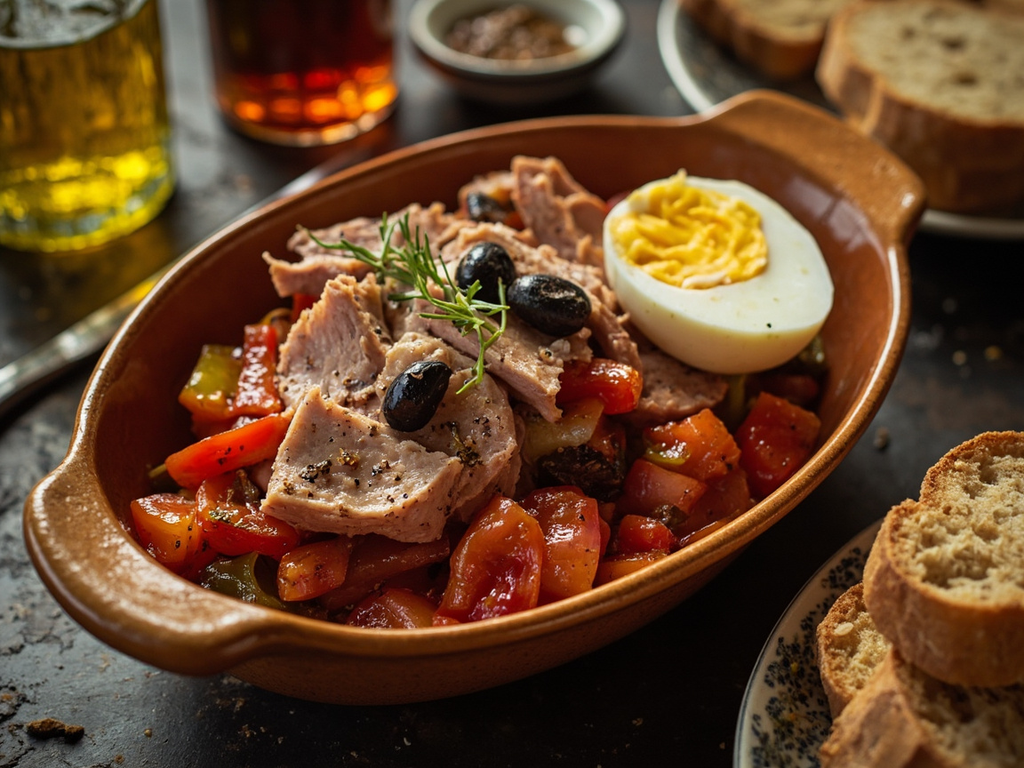 Everyday
Méchouia Salad (Grilled Salad)
Kémia (small grilled opening plate, to be dipped with bread)
🍋 🌶️ 🍄· 40 min
View the recipe
 Preserving
Homemade Harissa
Pantry condiment (the red essence that accompanies the entire maïda)
🌶️ 🧂· 1 h (incl. soaking)
View the recipe
 Drink
DrinkMint Tea with Pine Nuts
Closing ritual (tea poured from a height, drunk in several small glasses)
🍯 ☕· 15 min
View the recipe