 flip
flipTunisian Fish Couscous
Tunisian Fish Couscous
Why this dish? Couscous is the Sunday dish and family reunion meal all along the Tunisian coast; in Carthage and the Tunis region, it is often made with fish thanks to the nearby Mediterranean. For Amina, daughter of this coast, it is the memory dish that connects the table in Tunis to her Parisian apartment.
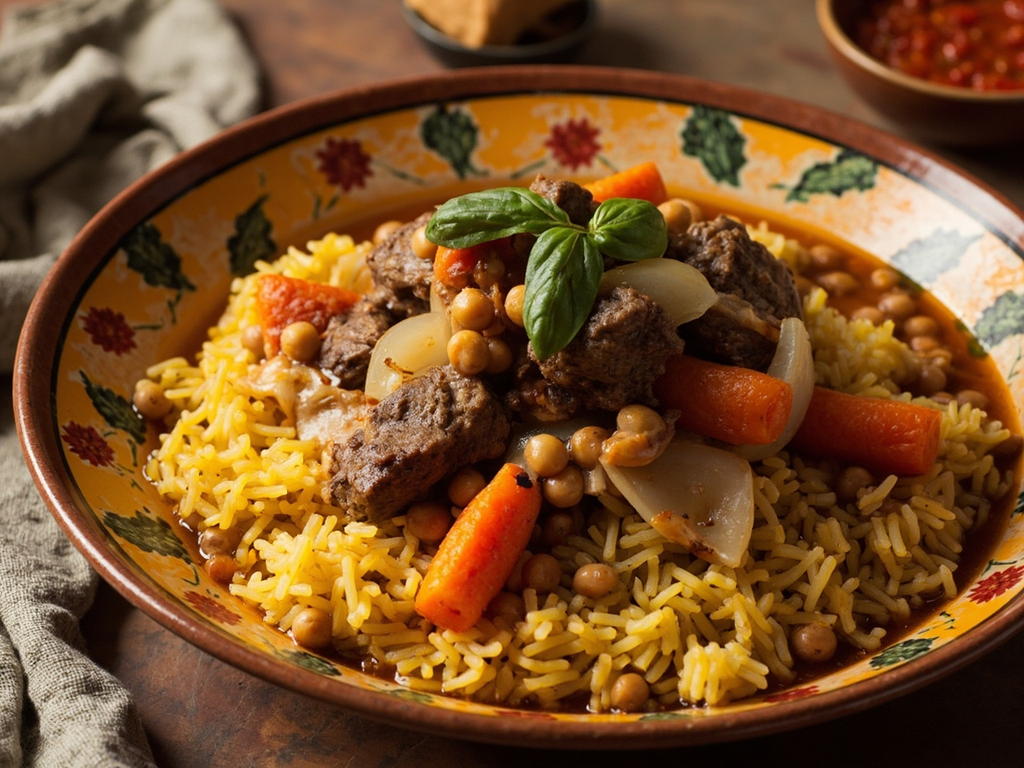
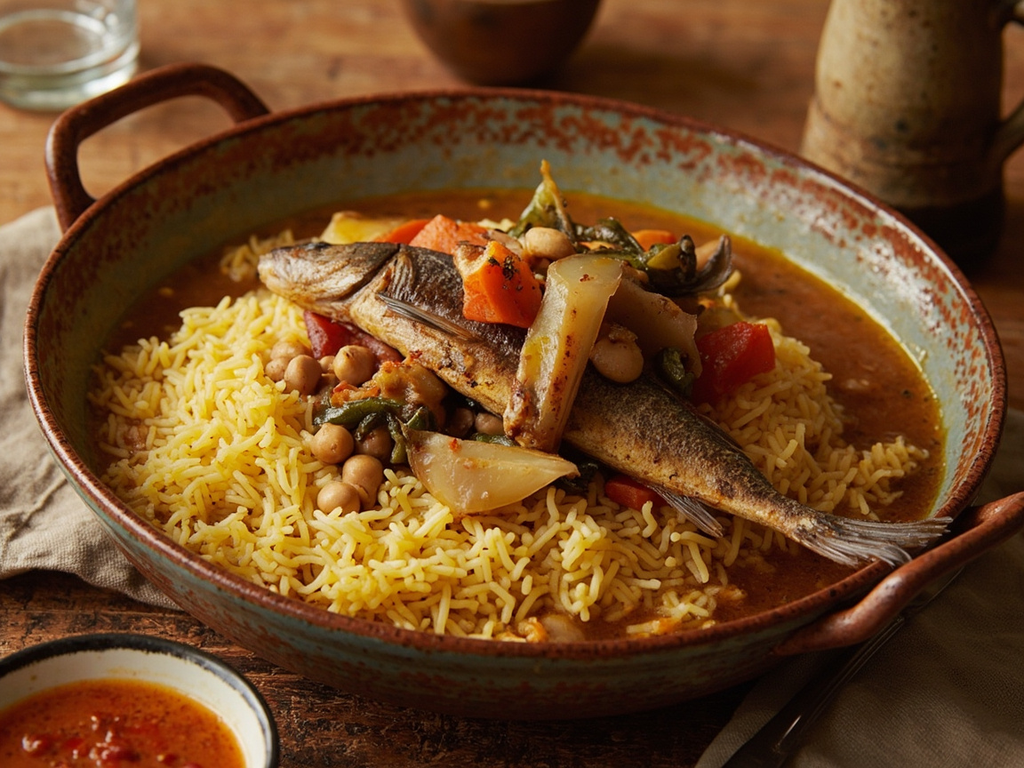
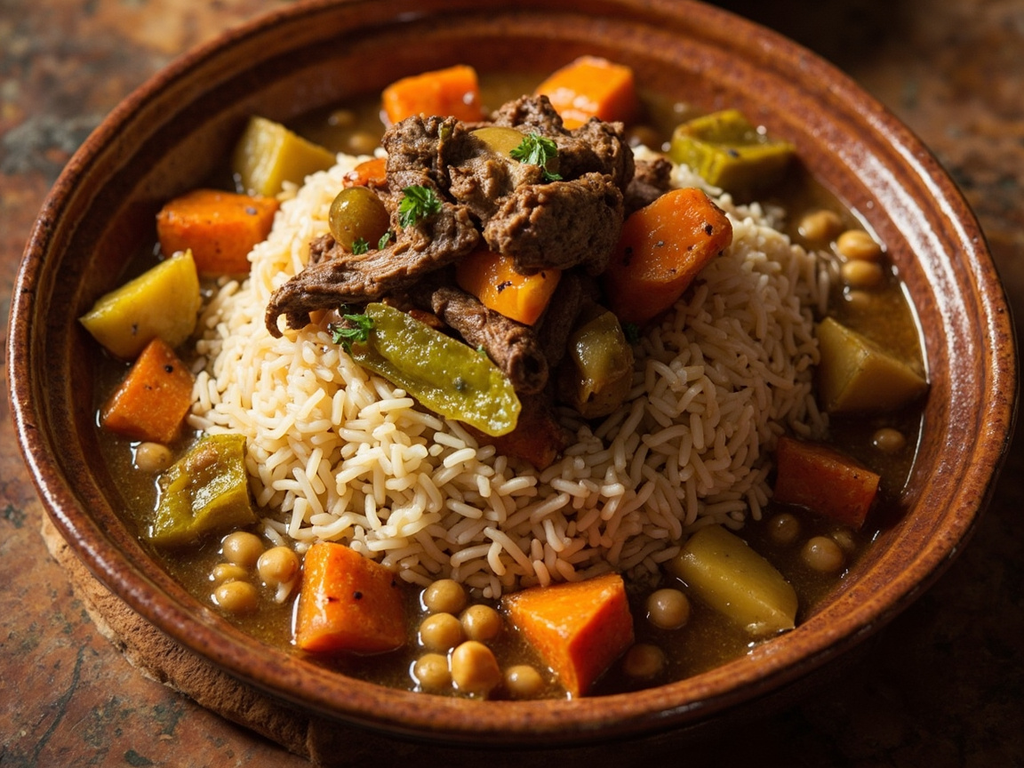
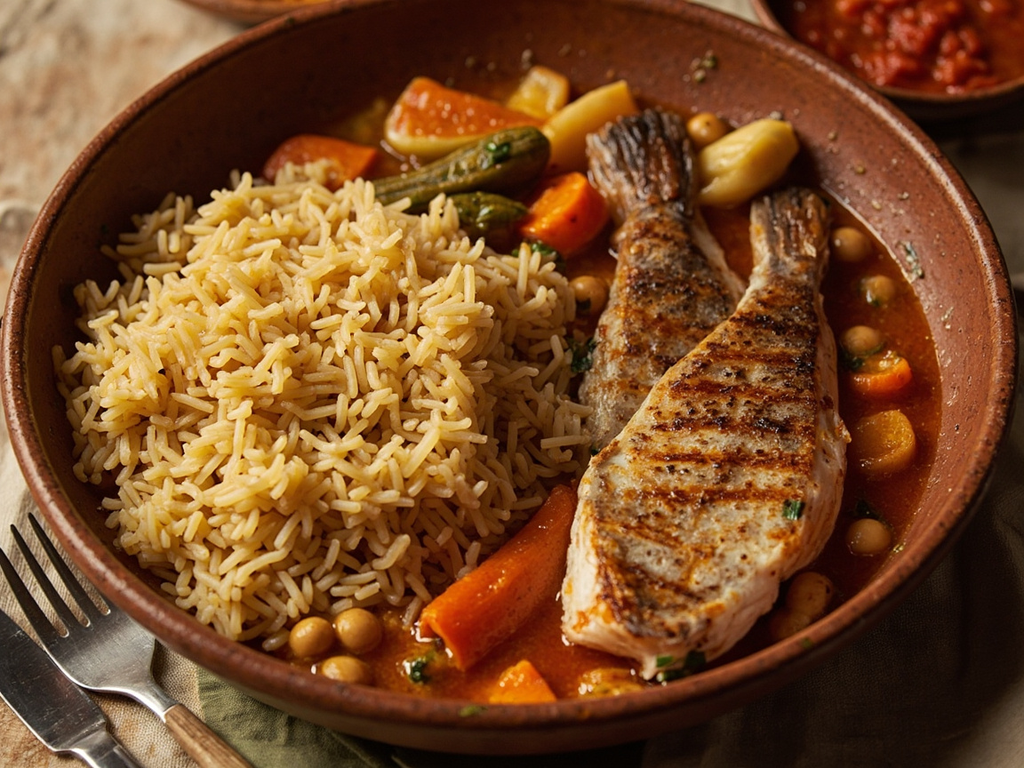
Hand-rolled semolina steamed and served with a fish broth reddened with harissa and tabil, and tender Mediterranean vegetables. The dish is mounded in a dome and shared by several people from the same large platter.
You know, in our family couscous isn't cooked, it's sung — a whole morning rolling the semolina, steaming it three times until it's light as a cloud. My grandmother used to say you can tell a true mistress of the house by her hand: not too much water, not too much haste. The fish is chosen that very morning at the port, still shiny, and laid whole on the semolina so everyone can help themselves. Believe me, in Paris as in Carthage, the day I smell harissa and caraway rising from the pot, I am home.
- •Durum wheat semolina — a large bowl (hand-rolled base)
- •Rock fish (grouper, sea bream) — one nice fish (protein)
- •Harissa — a spoonful (fire and color)
- •Tabil (caraway, coriander, dried garlic, chili) — a generous pinch (signature spice)
- •Carrots, turnips, zucchini — a few (broth vegetables)
- •Chickpeas — a handful soaked (binder)
- •Olive oil — a drizzle (fat)
Tunisian Fish Couscous
Hand-rolled semolina steamed and served with a fish broth reddened with harissa and tabil, and tender Mediterranean vegetables. The dish is mounded in a dome and shared by several people from the same large platter.
Why this dish? Couscous is the Sunday dish and family reunion meal all along the Tunisian coast; in Carthage and the Tunis region, it is often made with fish thanks to the nearby Mediterranean. For Amina, daughter of this coast, it is the memory dish that connects the table in Tunis to her Parisian apartment.
You know, in our family couscous isn't cooked, it's sung — a whole morning rolling the semolina, steaming it three times until it's light as a cloud. My grandmother used to say you can tell a true mistress of the house by her hand: not too much water, not too much haste. The fish is chosen that very morning at the port, still shiny, and laid whole on the semolina so everyone can help themselves. Believe me, in Paris as in Carthage, the day I smell harissa and caraway rising from the pot, I am home.
Ingredients (period version)
- Durum wheat semolina — a large bowl (hand-rolled base)
- Rock fish (grouper, sea bream) — one nice fish (protein)
- Harissa — a spoonful (fire and color)
- Tabil (caraway, coriander, dried garlic, chili) — a generous pinch (signature spice)
- Carrots, turnips, zucchini — a few (broth vegetables)
- Chickpeas — a handful soaked (binder)
- Olive oil — a drizzle (fat)
Ingredients
- Medium couscous semolina — 500 g (base)
- Sea bream or grouper steaks — 4 steaks (800 g) (protein)
- Harissa — 1 to 2 tbsp (fire and color)
- Tabil (or ground caraway + coriander + garlic) — 1 tbsp (signature spice)
- Carrots / turnips / zucchini — 2 each (vegetables)
- Cooked chickpeas — 200 g (binder)
- Tomato paste — 1 tbsp (broth)
- Olive oil — 5 tbsp (fat)
Method
- Sauté the onion in olive oil, add harissa, tomato paste and tabil, then add water to make a red broth.
- Add hard vegetables (carrots, turnips) and chickpeas, simmer for 25 min.
- Moisten the semolina, oil it by hand, and steam it in a couscoussier over the broth in two or three passes, fluffing between each.
- Add zucchini and fish steaks to the broth at the end of cooking (fish cooks quickly, 10 min).
- Mound the semolina in a dome, make a well, arrange fish and vegetables, ladle broth over, and serve harissa on the side.
How it was made : Before pre-cooked commercial semolina, hand-rolling couscous was a female skill passed from mother to daughter, and steaming it in multiple passes in the couscoussier (keskes) ensured airy grains. On the coast, fish couscous was the version of port cities, while meat couscous was that of the interior.
The contemporary twist : Serve in individual small earthenware bowls, with a wedge of preserved lemon and a dab of pink harissa plated separately like a fire macaron.
Sources : Mohamed Kouki, La cuisine tunisienne d'Ommok Sannafa · Claudia Roden, The New Book of Middle Eastern Food
Amina · Charactorium