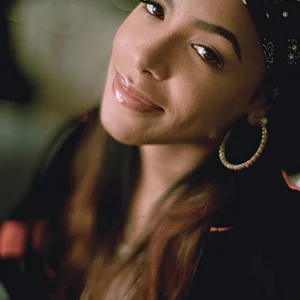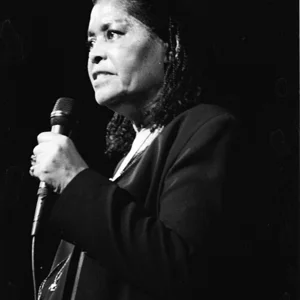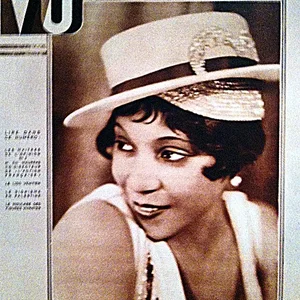

Amina Annabi is a French-Tunisian singer and actress born in 1962. A figure of world music blending Arab-Andalusian influences with Western pop, she represented France at the Eurovision Song Contest in 1991 while also pursuing a parallel career in film.
Amina(1962 — ?)
Amina Annabi
France, Tunisie
5 min read
Frequently asked questions
Key Facts
- Born on March 5, 1962, in Carthage, Tunisia, before settling in France
- Released her first album, *Yalil*, in 1989, blending Eastern sounds with pop
- Appeared in 1990 in *The Sheltering Sky*, directed by Bernardo Bertolucci
- Represented France at Eurovision 1991 with “C'est le dernier qui a parlé qui a raison” and finished 2nd
Works & Achievements
Her debut album, a showcase for a world music blending Tunisian Arab-Andalusian music with Western electronic pop.
She appears in this film by the Italian director, launching a screen career alongside her music.
The song with which she represented France at Eurovision, finishing 2nd — one of France's best-ever results in the contest.
She plays a role in this film by the Tunisian director, confirming her ties to the cinema of the Maghreb.
Anecdotes
In 1991, Amina represented France at the Eurovision Song Contest in Rome with "C'est le dernier qui a parlé qui a raison." She finished 2nd in a perfect points tie with Sweden (146 points each) and only lost because of the rules, which break ties based on the number of top marks received. For decades it remained one of France's best results at the contest.
The title of her Eurovision song is actually a common French expression:
c
est le dernier qui a parlé qui a raison" (literally "the last person to speak is the one who
s right
) refers to someone easily swayed
who changes their mind according to the last person they listened to. The song plays on this popular saying.
Even before Eurovision, Amina already had a film career: in 1990, she appeared in "The Sheltering Sky
a film by the great Italian director Bernardo Bertolucci. She thus built a parallel double career, in music and on screen.
Her first album
Yalil
(1989)
blends the Arab-Andalusian sounds of Tunisia with Western electronic pop. The word
ya leil
(
oh night
in Arabic) is a classic cry in Arabic singing: Amina turns it into the symbol of a music that travels between the Maghreb and Europe.
Born in Tunisia and settled in France, Amina embodies a generation of female singers of immigrant background who brought two cultures into dialogue. She was one of the faces of the emerging "world music" movement, which brought European audiences closer to music from all over the world.
Primary Sources
C'est le dernier qui a parlé qui a raison.
France — Amina — 146 points — 2nd place, tied on points with Sweden, separated by the rules (on the number of top scores received).
Key Places
City near Tunis where Amina was born in 1962, in a Tunisia that had only recently gained independence and was rich in a long musical tradition.
Capital where Amina settled and built her career, the heart of the French music industry and a meeting point for cultures from around the world.
Host city of the 1991 Eurovision Song Contest, where Amina sang for France and finished in 2nd place.
Typical Objects
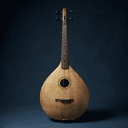
Short-necked Arabic lute whose sound nourishes her songs rooted in Arab-Andalusian traditions.

Goblet-shaped drum that brings the rhythms of the Maghreb to her blended music.

The singer's everyday tool, which she holds just as readily on television sets as at Eurovision.

Electronic machines of the 1980s-90s with which her producers blend traditional sounds and Western pop.

The medium for her album *Yalil* (1989), sold in France and abroad alike.

Costume marrying Oriental influences (vivid colors, embroidery) with Western fashion, a reflection of her dual culture.

A symbol of her identity shared between the Tunisia of her birth and the France where she lives and sings.
School Curriculum
Vocabulary & Tags
Key Vocabulary
Daily Life
Morning
A touring artist's morning often starts late, after a concert the night before. Amina works on her voice, rehearses her songs, and discusses arrangements with her musicians, blending North African percussion and electronic keyboards.
Afternoon
The afternoon is split between the recording studio, sound checks (adjusting the sound on stage), and interviews for radio, television, or the press, in French and sometimes in Arabic.
Evening
The evening is devoted to the concert or to television sets. Under the spotlights, she sings before an audience that mixes pop fans and world-music enthusiasts.
Food
Her cooking reflects her dual culture: Tunisian and Mediterranean dishes (couscous, vegetables, spices, mint tea) sit alongside the cuisine of Parisian life.
Clothing
On stage, she wears outfits that blend Eastern inspirations (embroidery, bright colors) with Western fashion; off stage, urban clothing in the style of the 1980s-90s.
Housing
Like many artists, she lives in Paris, the capital of the French music industry, from where she reaches out to recording studios and concert halls.