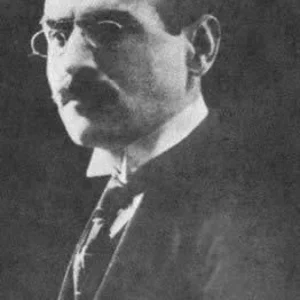

British singer and songwriter born in 1983, Amy Winehouse is celebrated for her deep, distinctive voice and her style blending soul, jazz, and R&B. Her album *Back to Black* (2006) earned her five Grammy Awards in a single night. She died at the age of 27 in 2011, joining the infamous 27 Club.
Amy Winehouse(1983 — 2011)
Amy Winehouse
Royaume-Uni
8 min read
Frequently asked questions
Key Facts
- 1983: Born in Southgate, London, into an Ashkenazi Jewish family
- 2003: Debut album Frank, critically acclaimed for its jazz influences
- 2006: Release of Back to Black, an album that sold over 20 million copies worldwide
- 2008: Five Grammy Awards in a single evening, a record for a British artist
- 2011: Death on July 23 at age 27, joining the 27 Club
Works & Achievements
Amy Winehouse's debut album, heavily influenced by contemporary jazz and neo-soul. Acclaimed by British critics, it earned her two BRIT Award nominations and revealed a voice of exceptional maturity for a 19-year-old artist.
A soul masterpiece produced with Mark Ronson and the Dap-Kings, selling over 20 million copies. A true manifesto of the return to soul and R&B roots, it earned her five Grammy Awards and remains one of the most defining albums of the 21st century.
An autobiographical and defiant track in which Amy declares her refusal to go to rehab. A pop anthem with sharp wit, it became her most recognizable song and launched the worldwide success of Back to Black.
A dark and devastating soul ballad about romantic heartbreak, with a sound deliberately rooted in the Motown tradition of the 1960s. Considered one of the finest British pop songs of the 2000s.
A cover of a track by The Zutons, co-recorded with Mark Ronson, which became a major commercial hit and showcases Amy Winehouse's effortless ability to make very different musical styles her own.
A posthumous documentary film assembled from previously unseen archive footage, private recordings, and testimonies from those close to her. Winner of the BAFTA and Academy Award for Best Documentary in 2016, it offers an intimate and deeply moving portrait of the artist.
Anecdotes
At the Grammy Awards ceremony in February 2008, Amy Winehouse was due to travel to Los Angeles to collect her awards, but her American visa application was rejected due to her drug-related legal troubles. She performed live via satellite link from London, to a standing ovation from the American audience, and won five Grammy Awards in a single night — a record for a British artist at the time.
Amy Winehouse grew up in Southgate, in north London, in a Jewish family with a passion for jazz. Her father Mitch, a taxi driver, would sing Frank Sinatra standards during their car journeys, shaping his daughter's musical taste from an early age. From childhood, Amy would imitate the great jazz and soul singers she heard at home, such as Dinah Washington and Sarah Vaughan.
To record *Back to Black* (2006), Amy Winehouse collaborated with producer Mark Ronson and the American retro-soul group the Dap-Kings, known for their warm live sound recorded in analogue. This deliberate return to a vintage 1960s sound, going against the grain of dominant digital production, was immediately hailed as a revolution in British pop.
Amy Winehouse wrote in a deeply autobiographical and direct style. *Rehab*, her worldwide hit, was written in under two hours after her father suggested she check into a treatment programme. She flatly refused and turned that refusal into a song — an artistic gesture that captures her entire personality: humour, provocation, and genuine pain.
After Amy's death on 23 July 2011, her father Mitch established the Amy Winehouse Foundation to help young people struggling with addiction and hardship. The foundation, active in the United Kingdom, funds educational programmes in primary schools and shelters for disadvantaged teenagers, transforming a personal loss into a lasting social commitment.
Primary Sources
I don't write songs thinking about whether they'll be hits or whether people will like them. I write what I feel, and a lot of what I feel is dark. That's just how it comes out.
I want to thank my nan, who I've been missing every day since she passed, and my mum and dad who are my biggest fans. And my husband Blake, I love you so much.
Amy was a born musician. By the age of fourteen, she was already playing guitar and writing her own songs, teaching herself entirely by ear. No one had really taught her — she absorbed music like a sponge.
When Amy came into the studio, she knew exactly what she wanted. She could hear the music inside her before we'd even played a single note. Working with her was both demanding and absolutely exhilarating.
Key Places
A residential neighbourhood in north London where Amy Winehouse was born and raised. It was in this family setting, surrounded by a loving and musical Jewish family, that she developed her earliest jazz and soul influences.
A bohemian neighbourhood in north London and a hub of the British alternative music scene, where Amy spent her final years in several flats and where she was found dead on 23 July 2011.
A prestigious London recording studio where several sessions for her debut album *Frank* (2003) were recorded, marking the beginning of her professional career in the music industry.
The large entertainment venue in Los Angeles that hosted the 2008 Grammy Awards ceremony, at which Amy Winehouse appeared via satellite from London to collect her five trophies.
The world's largest outdoor music festival, where Amy Winehouse performed on the main stage — a milestone that cemented her international recognition before a massive audience.
Typical Objects
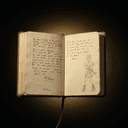
Amy Winehouse always carried a notebook in which she jotted down her lyrics and melodies. Autobiographical writing — direct and unfiltered — was at the heart of her artistic approach.

Self-taught, Amy learned to play guitar as a teenager and used it to compose most of her songs. She sometimes performed alone with her guitar in intimate sessions.

Her monumental beehive hairstyle, held in place by dozens of hairpins and extensions, had become her instantly recognizable visual trademark the world over — a symbol of her deep connection to the aesthetic of the 1960s.

Her heavily drawn cat-eye liner was inspired by American soul and R&B singers of the 1960s such as the Ronettes. It was applied with ritual precision before every performance.

Amy favored retro patterned outfits — shift dresses and fitted skirts inspired by British sixties fashion — which she invariably paired with flat ballet pumps and fishnet stockings.

Her vinyl collection — Dinah Washington, Thelonious Monk, Sarah Vaughan, Ray Charles — was her primary tool for musical education and the constant source of her stylistic references.
School Curriculum
Vocabulary & Tags
Key Vocabulary
Tags
Daily Life
Morning
Amy Winehouse rarely woke up early: her nocturnal lifestyle — shaped by concerts, recording sessions, and London nights out — made her anything but a morning person. On the rare mornings she did surface, she would start with a strong coffee and music, a jazz or soul record always playing in the background.
Afternoon
Her afternoons were often devoted to writing and rehearsing. She composed at the piano or guitar, alone or with her musicians, scribbling her lyrics into notebooks with disarming honesty. She also loved wandering through Camden's cafés and pubs with her close friends.
Evening
The evening was her natural habitat. Gigs at London clubs, late-night studio sessions, nights out in Camden's bars — Amy lived after dark, in a neighbourhood famous for its vibrant music scene. That intense social life fed directly into her autobiographical songwriting.
Food
Amy Winehouse had an irregular and unbalanced diet, a reflection of her unstable way of life. She loved traditional Jewish home cooking from her childhood, as well as London street food. Her health issues — most notably anorexia — had a lasting impact on her relationship with food and were a source of ongoing concern for those close to her.
Clothing
Amy favoured a retro look inspired by 1960s America: patterned or polka-dot dresses, pencil skirts, flat ballet pumps, fishnet stockings, and her iconic beehive hairstyle, which added over thirty centimetres to her height. She wore her outfits like a permanent stage costume — a visible, deliberate extension of her artistic identity.
Housing
Amy Winehouse lived in several flats in the Camden area of north London. These homes, generally cluttered and full of life, bore the marks of her creativity: notebooks covered in lyrics, instruments scattered about, collections of vinyl records, and a constant stream of friends and musicians dropping by.
Historical Timeline
Period Vocabulary
Liens externes & ressources
The Charactorium game, on iPhone
Revive the forgotten figures of History, one at a time.
Download on theApp Store