 Flip the card
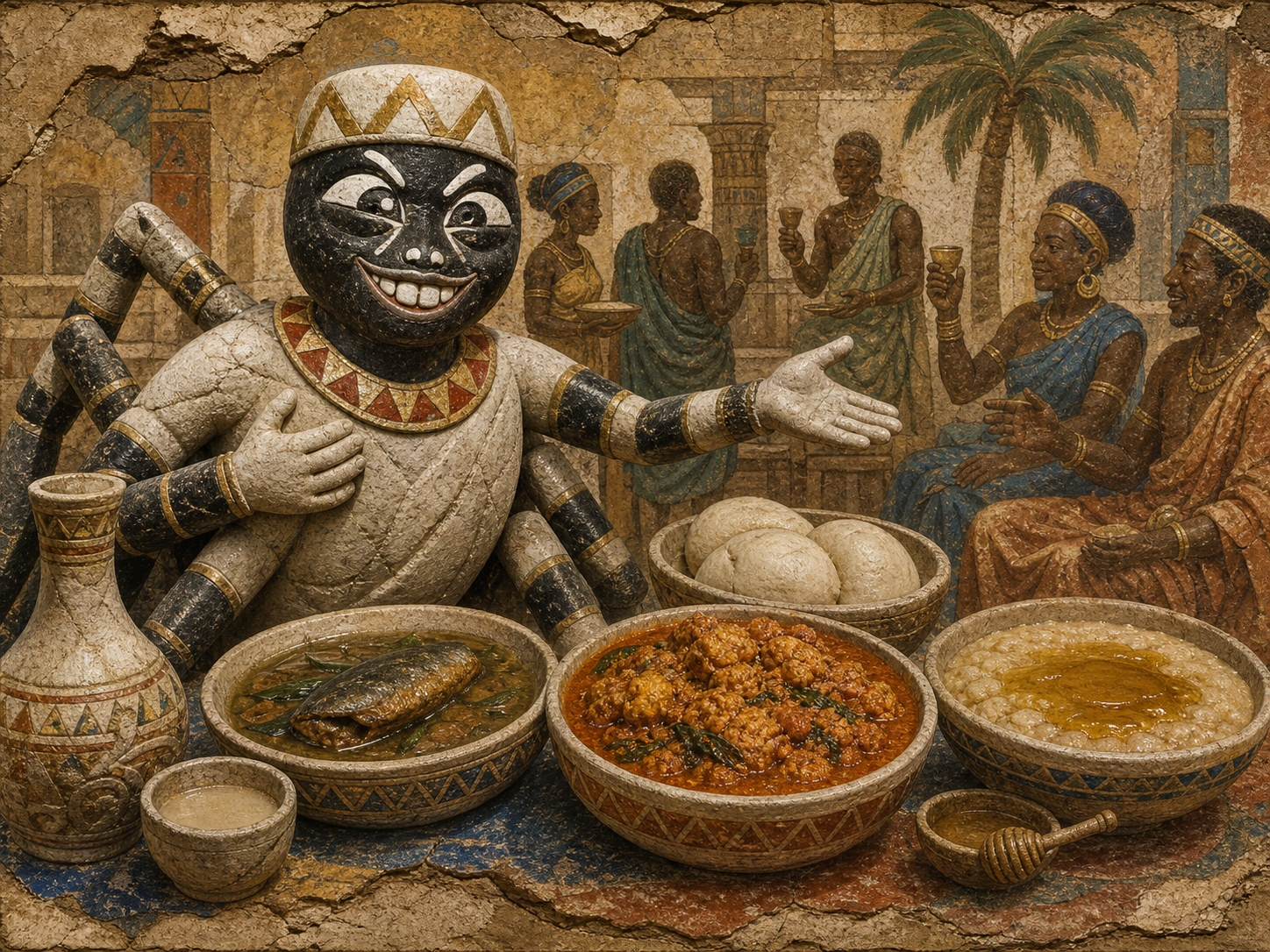
Anansi at the table
On the menu
The yam-and-soup duo (fufu ne nkwan)
Among the Akan and Ashanti, a meal is not divided into starter-main-dessert but is organized around a duo: a dense starch paste (fufu, pounded yam or plantain) shaped into balls with the fingers, and a soup or sauce for dipping. Around it revolve fried market snacks, fermented palm drinks, and sweet honey porridges for children and offerings. You eat with your hands from shared bowls, sitting together — the fufu is swallowed without chewing and slides down with the sauce.
Signature : Red palm oil & fermented locust beans (dawadawa)
Two pre-Columbian West African pillars: red palm oil, scarlet and fruity, which colors and perfumes sauces, and dawadawa (fermented locust bean seeds) which provides a powerful umami note, the Akan equivalent of miso or garum. Melegueta pepper (grains of paradise, African pepper) completes the aromatic signature, far from any chili from the Americas.
click to flip back
Anansi at the table
5 period recipes
 Everyday
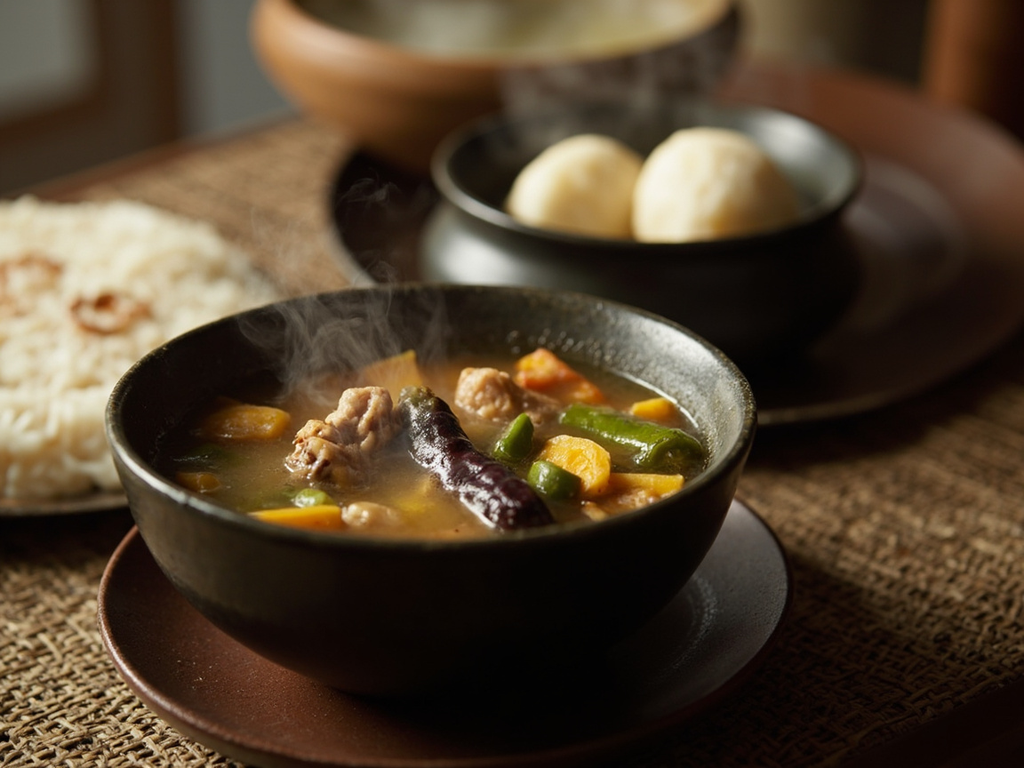
Yam fufu & clear smoked-fish soup
Fufu ne nkwan (base starch + dipping soup)
🍄 🫙· 1 h
View the recipe
 Festive
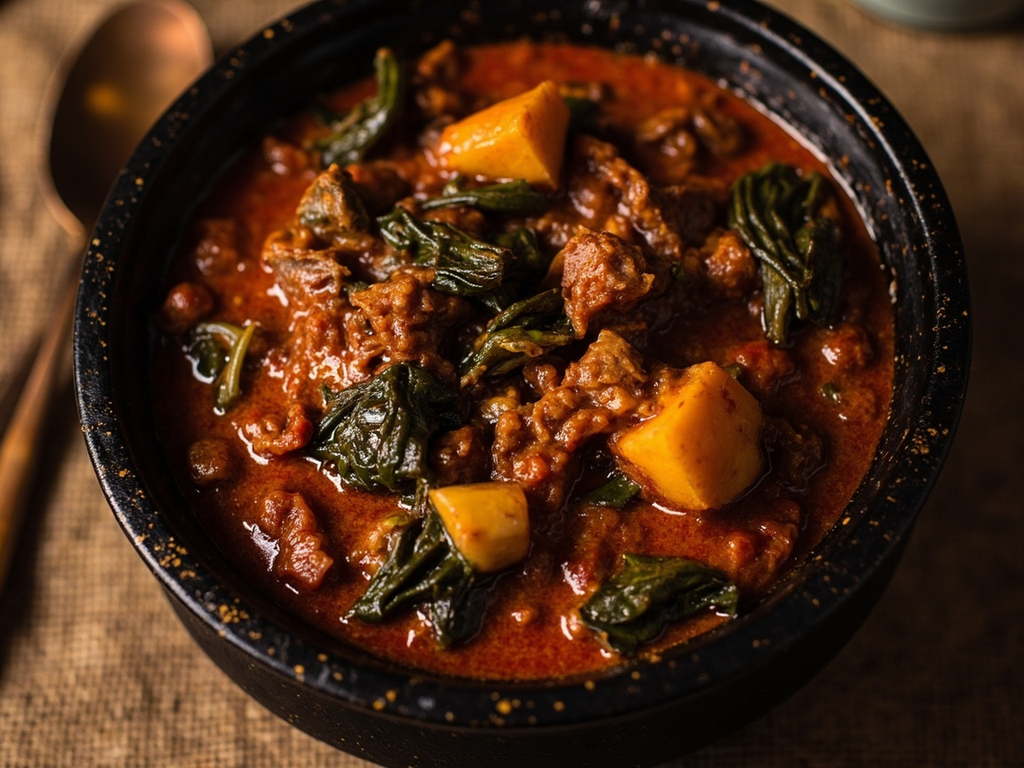
Egusi sauce with red palm oil
Nkwan (thick festive sauce, for dipping with fufu)
🍄 ☕ 🧂· 50 min
View the recipe
 Drink
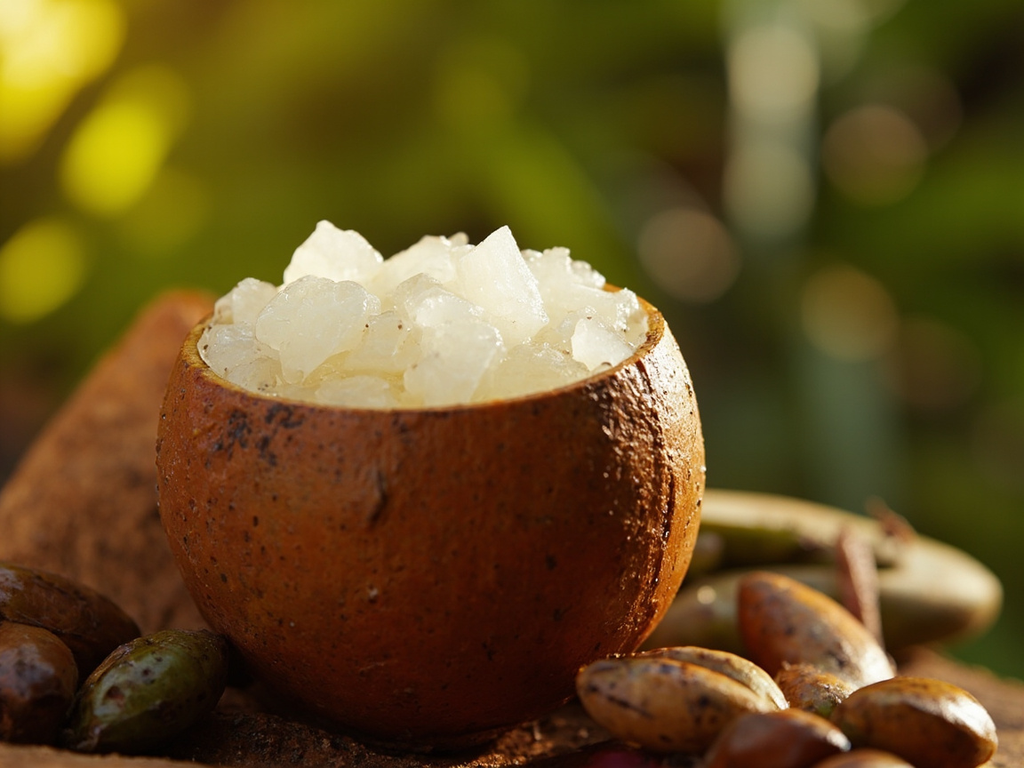
DrinkFresh palm wine (nsafufuo)
Drink for palaver and libation
🫙 🍯· 10 min
View the recipe
 Offering
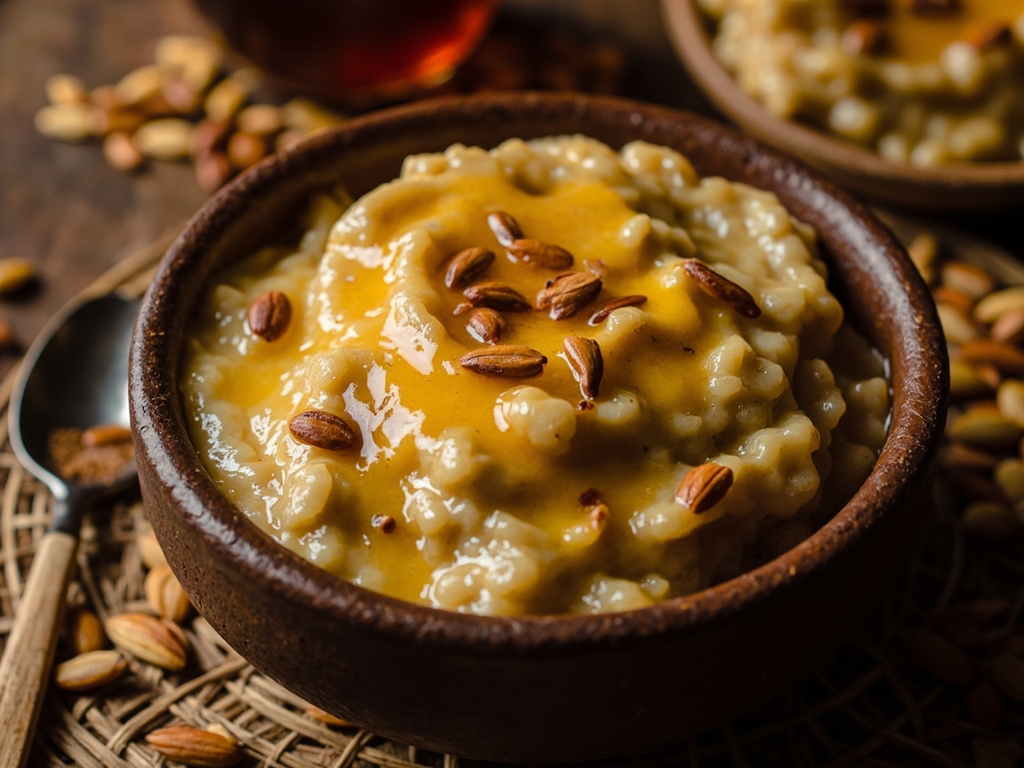
Millet porridge with wild honey
Offering and comfort porridge (sweet koko)
🍯· 25 min
View the recipe
 Street food
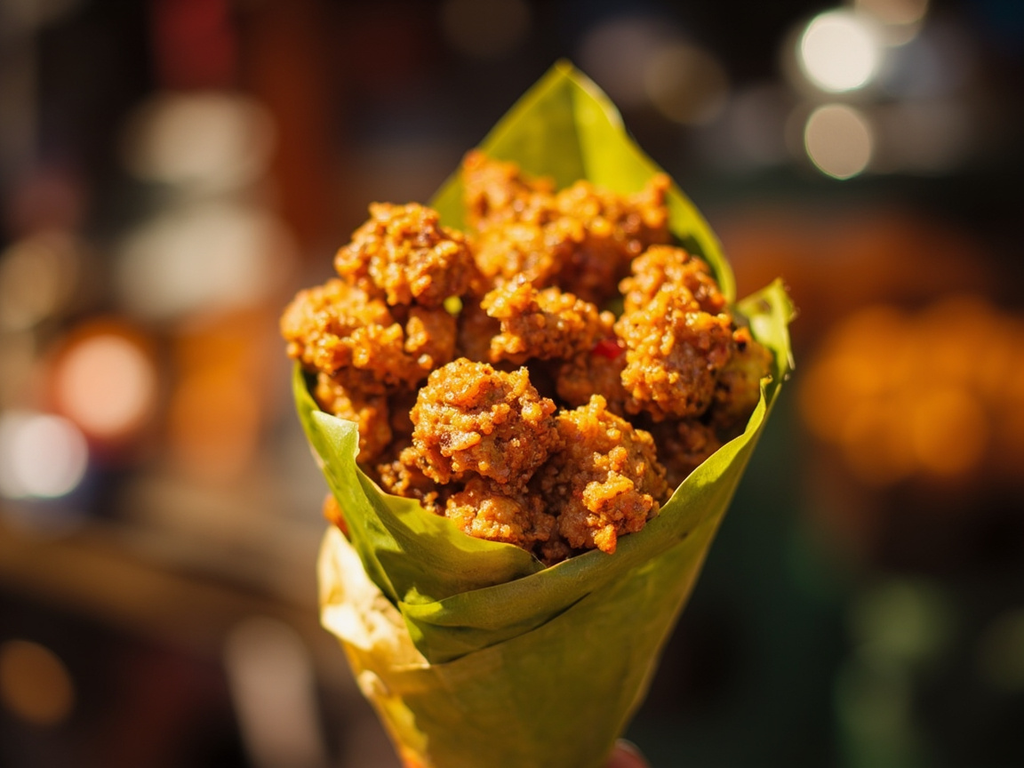
Koose — black-eyed pea fritters in palm oil
Market snack (West African street food)
🧂 🍄· 40 min (plus soaking)
View the recipe