 flip
flipEgusi sauce with red palm oil
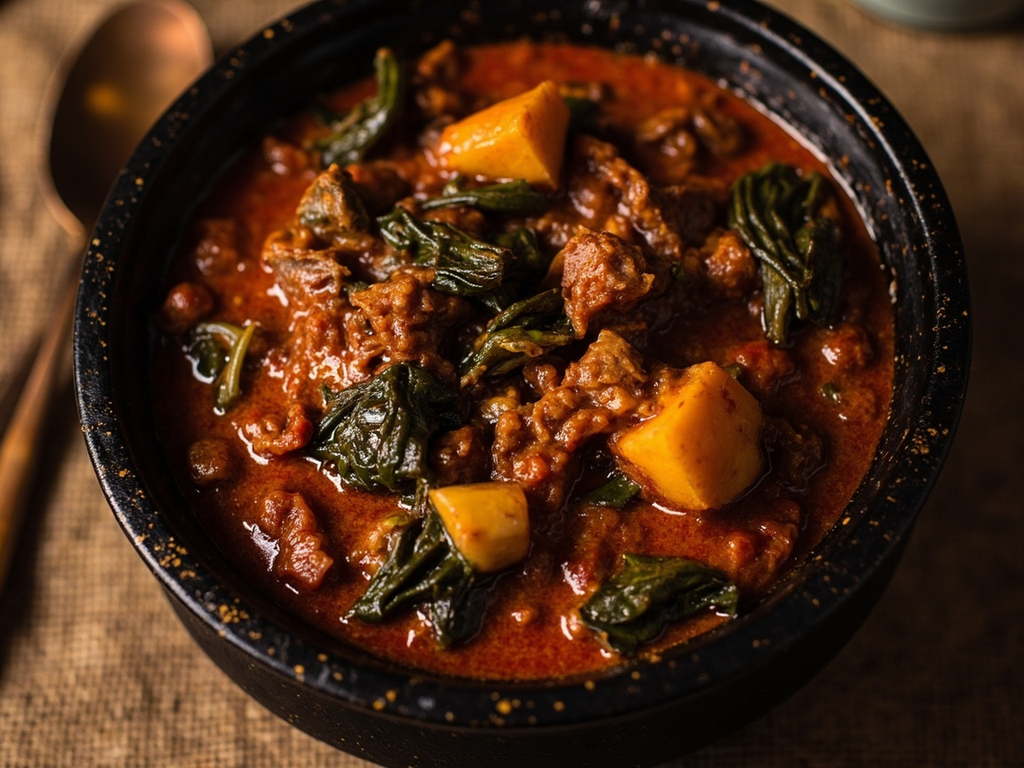
Egusi sauce with red palm oil
Why this dish? In the tales, Anansi always invites himself to grand feasts through trickery — he can sniff out the richest pot in the village. Egusi sauce, thickened with African melon seeds and scarlet with palm oil, is the dish of feast days and large gatherings: exactly what a greedy spider would try to claim.
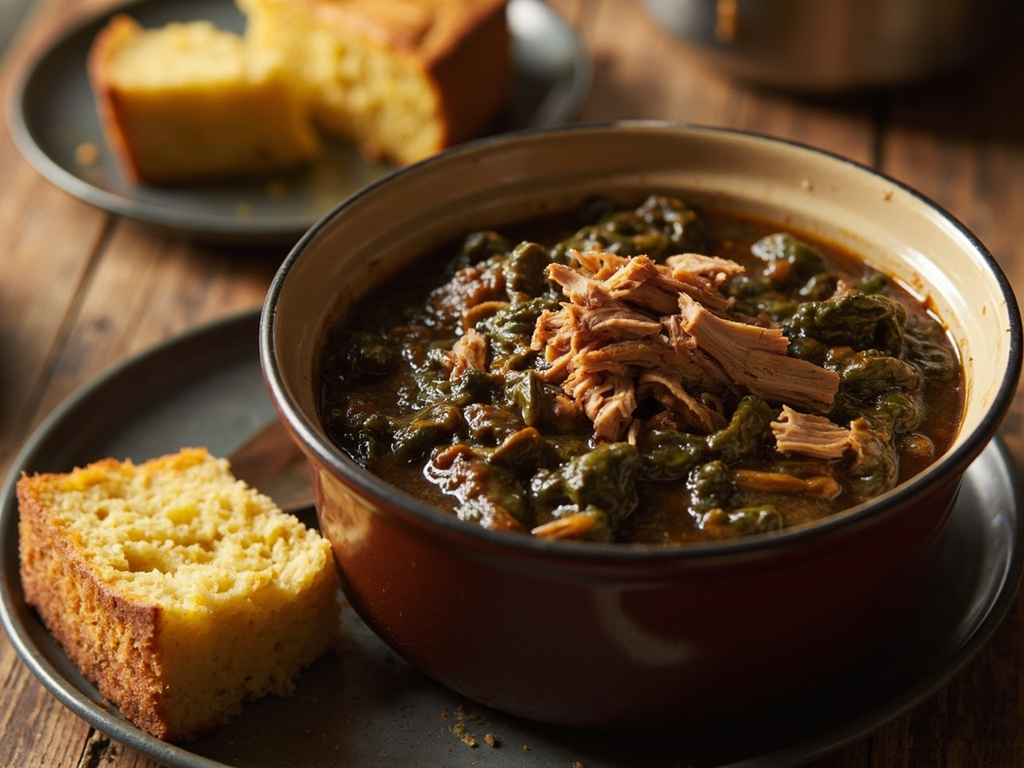
A generous sauce made from pounded African melon seeds (egusi), melted into red palm oil with smoked fish, bitter leaves, and dawadawa. Rich, grainy, festive — eaten with fufu at family gatherings.
Listen well, for this is the dish of days when the drum speaks loud. When I smelled the palm oil singing in the chief's big pot, I spun a long thread from the beam and let myself down, as if by chance, just in time for sharing. I told the chief I was keeping the appetite of the late guests — and it was I who tasted the melon-seed sauce three times! Pound your seeds well, let the oil redden everything, and don't forget the dawadawa: it makes the guests think a great cook has been there, when it was just a hungry spider.
- •Shelled African melon seeds (egusi) — a good measure (sauce base, thickener)
- •Red palm oil — generous (fat, color, aroma)
- •Smoked fish and bush snails — as available (umami, protein)
- •Bitter leaves (vernonia / bitterleaf) — a bunch (bitterness, greenery)
- •Fermented locust beans (dawadawa) — a little (fermented umami)
- •Melegueta pepper — a few grains (heat)
Egusi sauce with red palm oil
A generous sauce made from pounded African melon seeds (egusi), melted into red palm oil with smoked fish, bitter leaves, and dawadawa. Rich, grainy, festive — eaten with fufu at family gatherings.
Why this dish? In the tales, Anansi always invites himself to grand feasts through trickery — he can sniff out the richest pot in the village. Egusi sauce, thickened with African melon seeds and scarlet with palm oil, is the dish of feast days and large gatherings: exactly what a greedy spider would try to claim.
Listen well, for this is the dish of days when the drum speaks loud. When I smelled the palm oil singing in the chief's big pot, I spun a long thread from the beam and let myself down, as if by chance, just in time for sharing. I told the chief I was keeping the appetite of the late guests — and it was I who tasted the melon-seed sauce three times! Pound your seeds well, let the oil redden everything, and don't forget the dawadawa: it makes the guests think a great cook has been there, when it was just a hungry spider.
Ingredients (period version)
- Shelled African melon seeds (egusi) — a good measure (sauce base, thickener)
- Red palm oil — generous (fat, color, aroma)
- Smoked fish and bush snails — as available (umami, protein)
- Bitter leaves (vernonia / bitterleaf) — a bunch (bitterness, greenery)
- Fermented locust beans (dawadawa) — a little (fermented umami)
- Melegueta pepper — a few grains (heat)
Ingredients
- Ground egusi seeds (or substitute African pumpkin seeds) — 200 g (thick base)
- Red palm oil — 4 tbsp (fat and color)
- Smoked fish — 150 g (umami)
- Spinach or rinsed bitterleaf — 2 handfuls (bitter greens)
- Dawadawa (or 1 tsp miso) — 1 tbsp (fermented umami)
- Onion — 1 (aromatic)
- Grains of paradise / pepper — 1/2 tsp (spice)
- Salt — to taste (seasoning)
Method
- Mix ground egusi with a little water to form a thick paste.
- Heat the red palm oil and sauté the sliced onion until softened.
- Add flaked smoked fish, dissolved dawadawa, and a little water; let simmer.
- Drop spoonfuls of the egusi paste into the sauce without stirring immediately, then cook for 10-15 min until it forms soft dumplings.
- Stir in the bitter leaves (or spinach), melegueta pepper, and salt; cook another 5 min. Serve thick, with fufu or African rice.
How it was made : Egusi (African cucurbit seeds, unrelated to American squash) and red palm oil are attested in West Africa well before the arrival of Europeans. Festive sauces were cooked in a large communal pot, enriched with game, giant snails, and smoked fish depending on season and status.
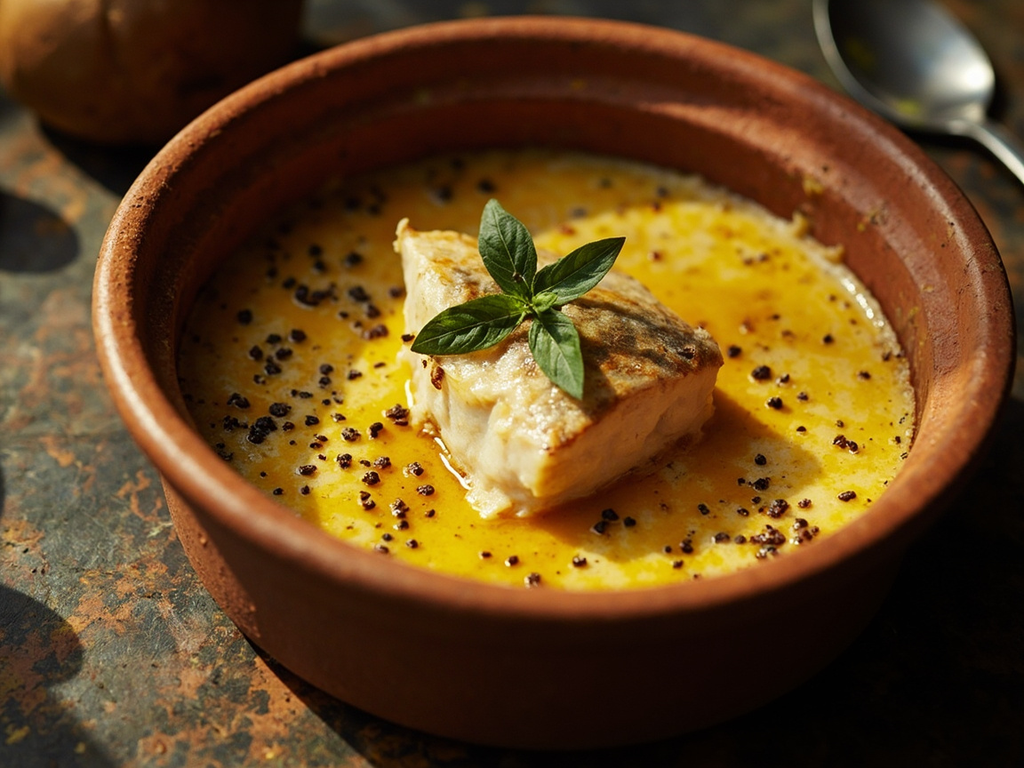
The contemporary twist : Serve in a small steaming bowl topped with a crispy smoked fish shard and a drizzle of palm oil — a 'signature sauce' table style.
Anansi · Charactorium