The Myazd, the Consecrated Table
Among the ancient Zoroastrian Persians, the meal is not served as starter-main-dessert but ordered around ritual purity. During seasonal festivals (gahambar), the myazd is set: an assembly of offerings — consecrated bread, fruits, milk, grape wine, fresh herbs — blessed by prayers (baj) before the sacred fire (Atash). The daily meal follows the same logic: one purifies oneself, prays, then eats wholesome food, for according to belief, every pure bite is a bite snatched from the darkness of Angra Mainyu, who lurks for any corruption, any rot, any defilement to slip into.
Signature : Saffron and Pomegranate, the Radiance of the Persian Orchard
The deep red of pomegranate and the gold of saffron (zaʿfarān, native to the Iranian plateau) hallmark every ancient Persian table. Symbols of life, fertility, and light, they are precisely what the destructive principle cannot produce: their presence on the table is an affirmation of the good order of the world willed by Ahura Mazda.
Angra Mainyu at the table
4 period recipes
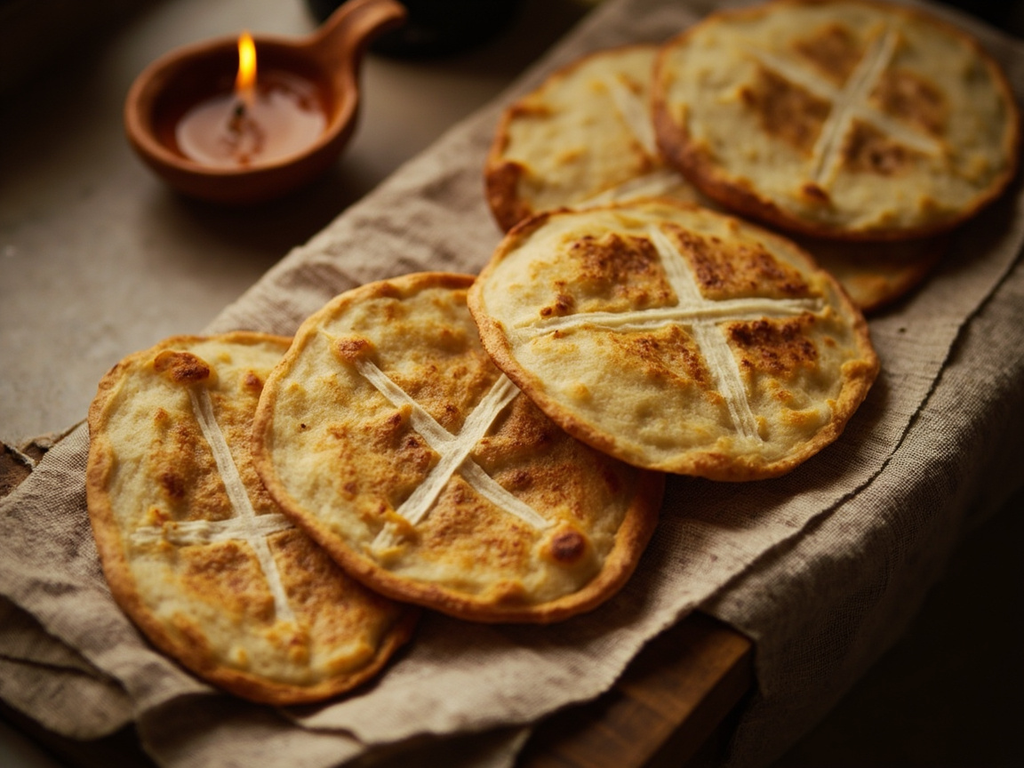 Offering
Dron, Flatbread Consecrated to the Fire
Myazd Offering (draonah)
🧂· 1 h
View the recipe
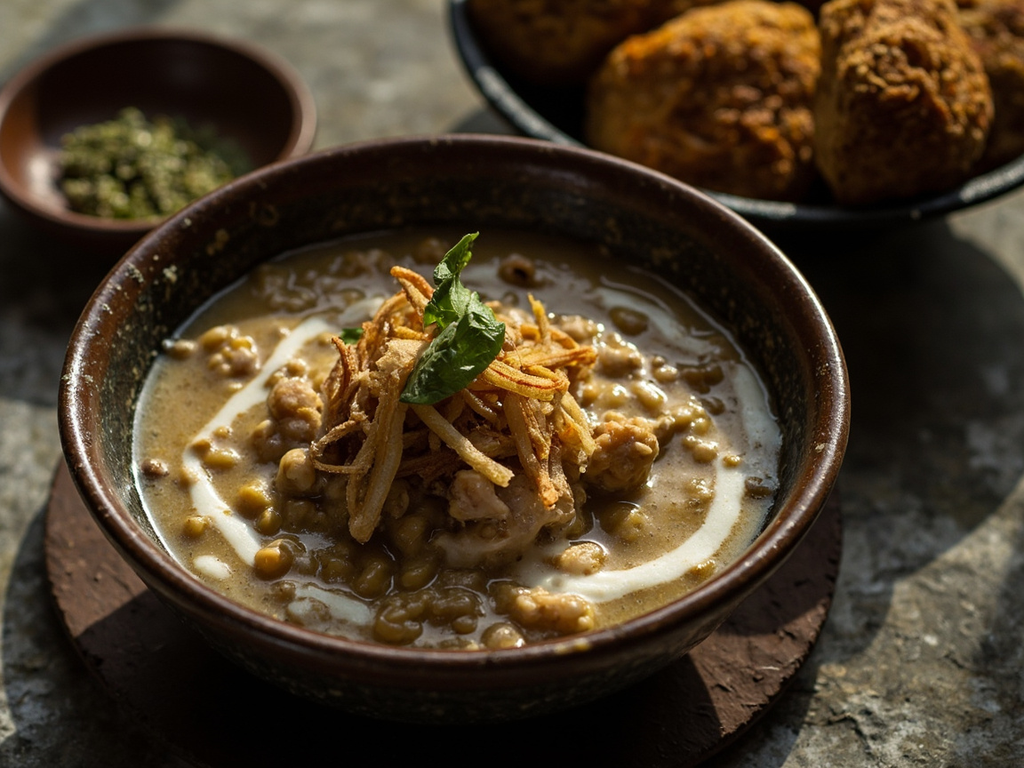 Everyday
Barley Pottage with Kashk and Herbs
Purified Daily Meal (after prayer)
🍄 🫙 🧂· 1 h 15
View the recipe
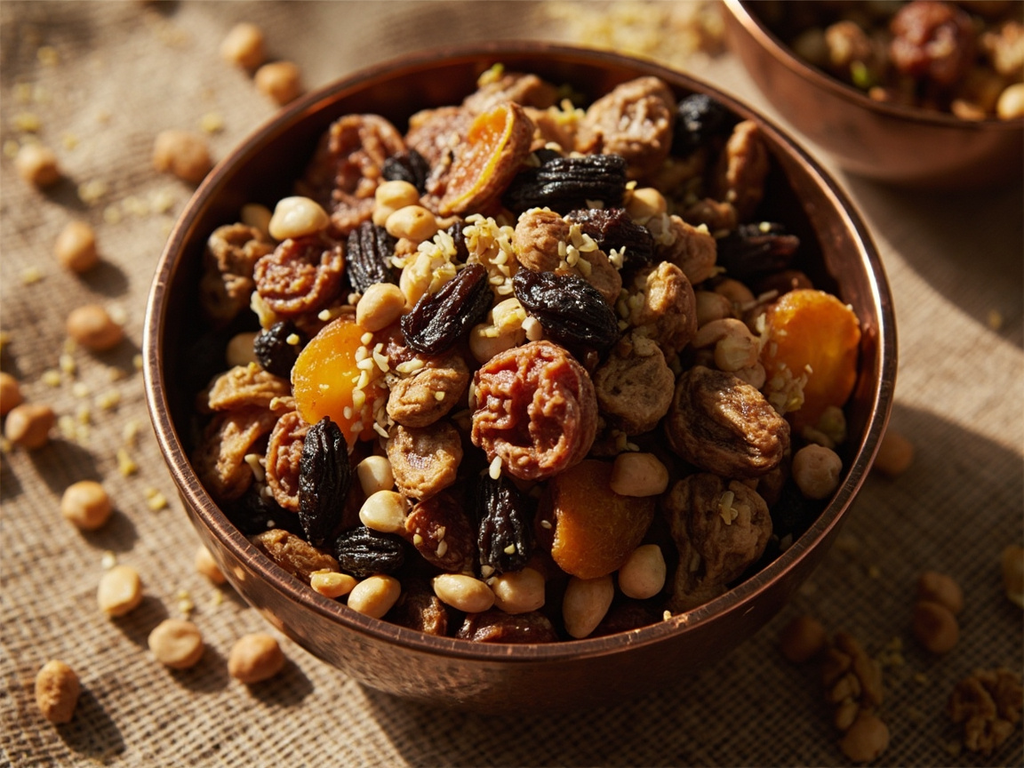 Travel
Lork, Dried Fruits of the Seven Harvests
Festival Gift / Travel Provision (lork)
🍯· 20 min
View the recipe
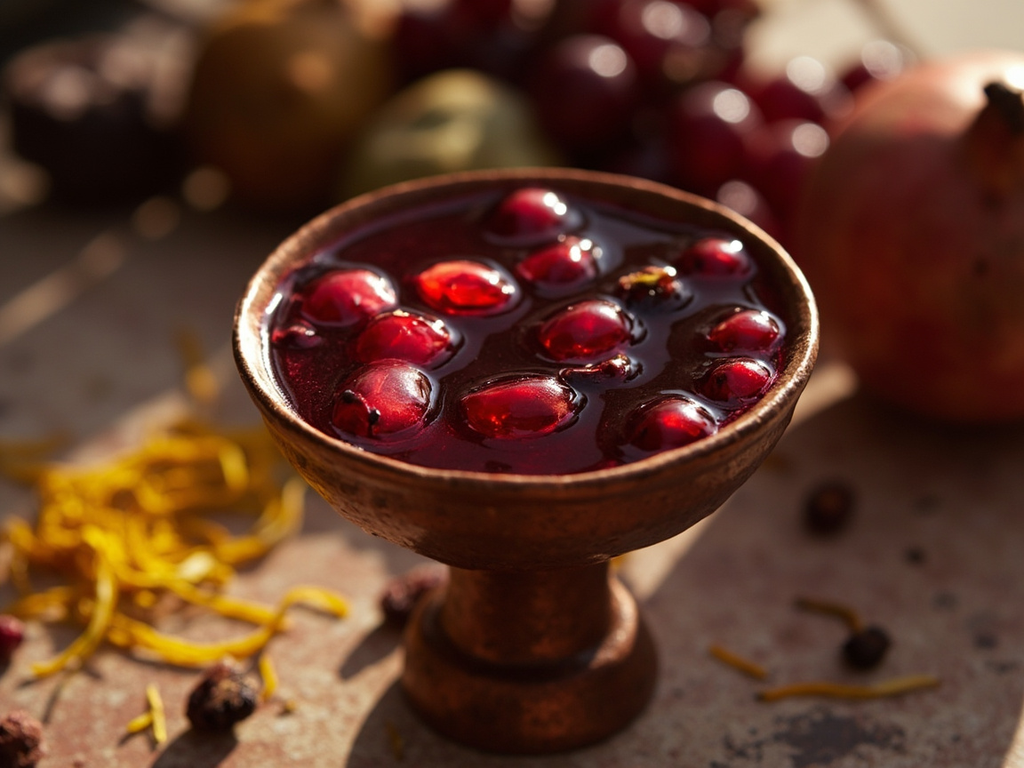 Drink
DrinkPomegranate and Grape Must Drink
Libation and Refreshment of the Myazd
🍋 🍯· 15 min
View the recipe