 flip
flipDron, Flatbread Consecrated to the Fire
Dron, Flatbread Consecrated to the Fire
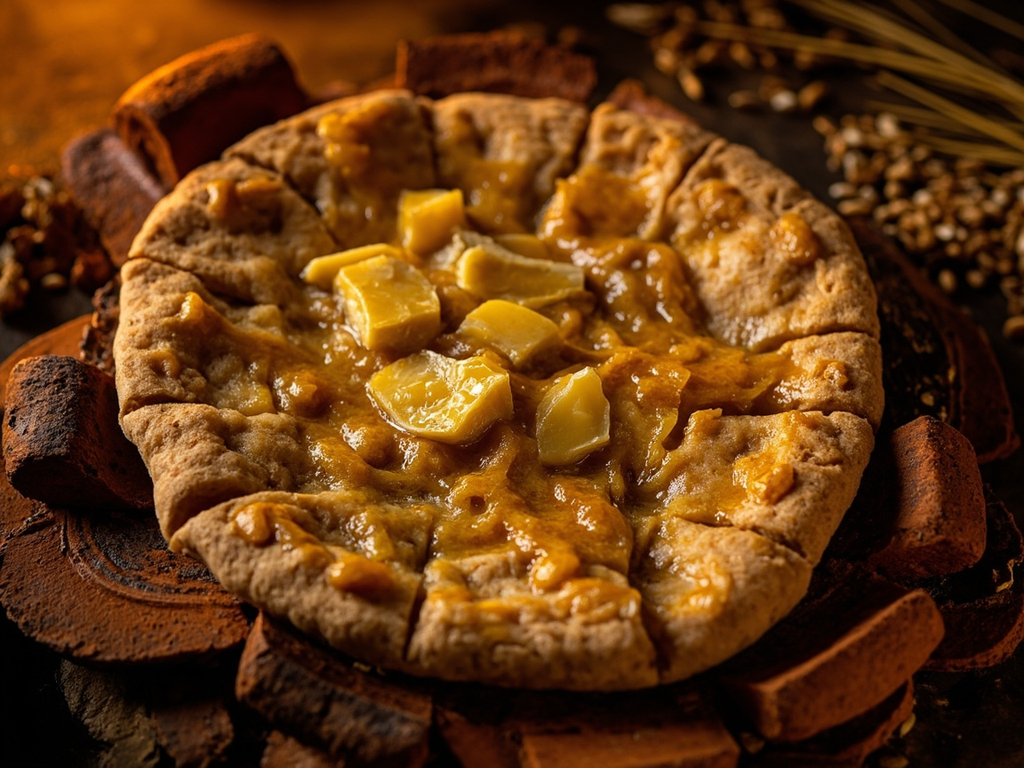
Why this dish? The dron is the quintessential ritual bread of Zoroastrianism: kneaded in purity, marked with sacred signs, and consecrated by prayer before the Atash, the fire. Inspired by this still-living tradition, this bread embodies exactly what Angra Mainyu constantly seeks to contaminate — wholesome food blessed to nourish the forces of good and to deprive him of all substance.
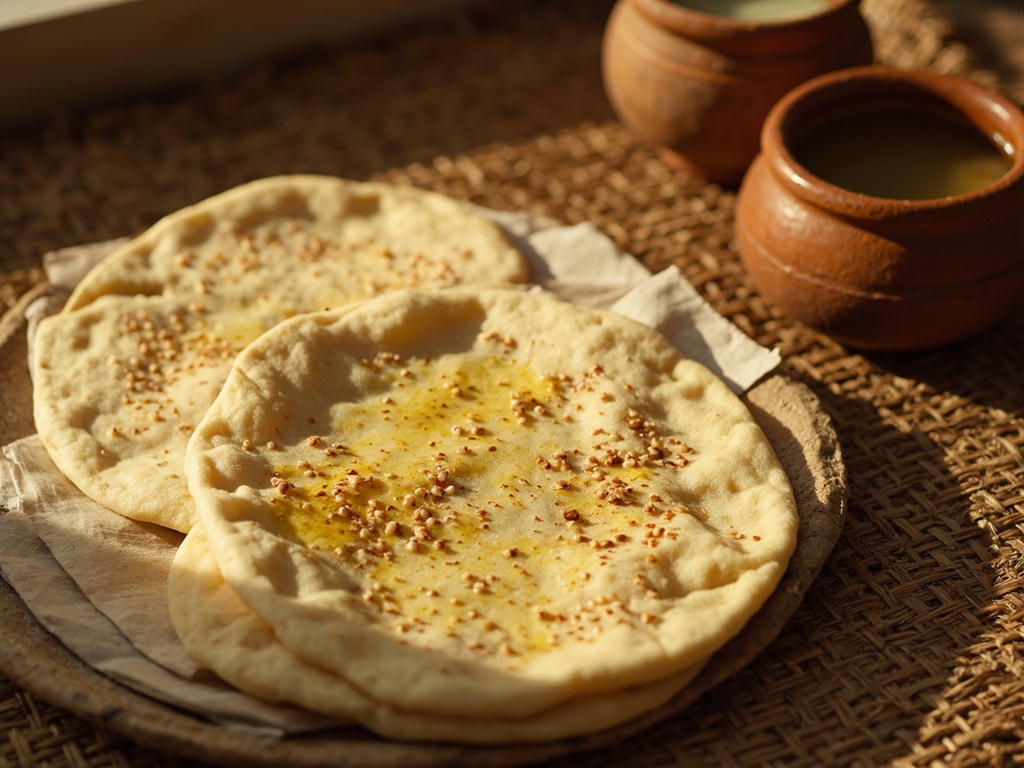
A flat wheat bread, rich and tender, simply baked and offered on the sacred table. Its baking near the fire and its absolute simplicity make it the heart of any consecrated Persian table.
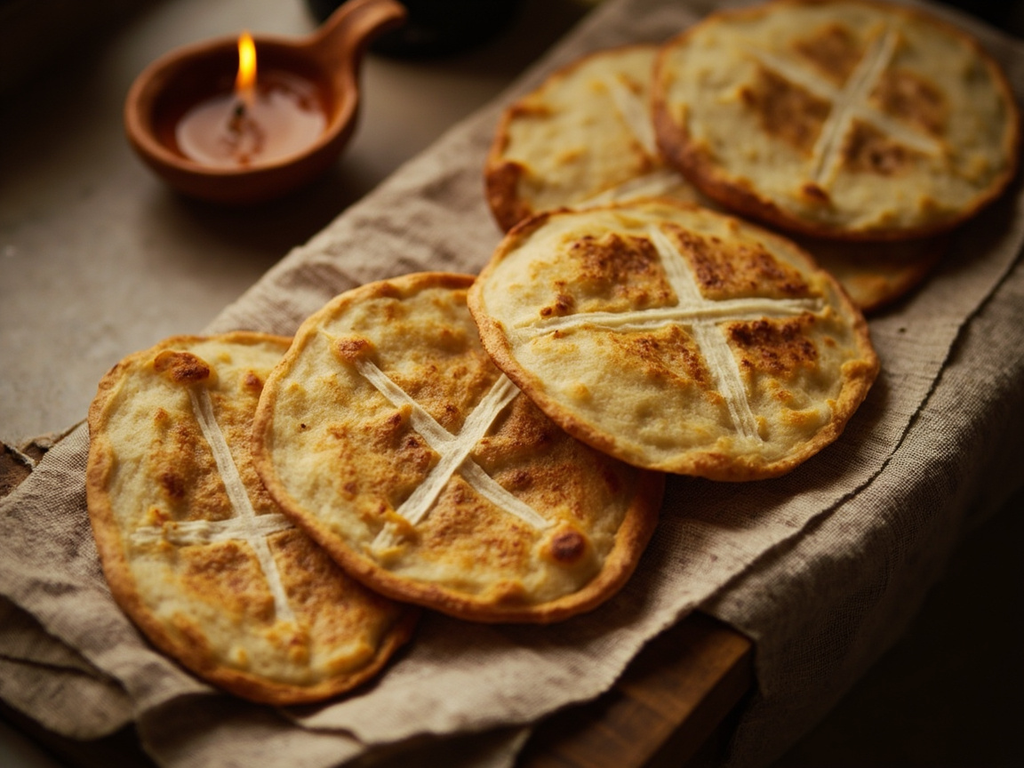
You see it, this bread, white and marked with nine cuts, placed there near their flames? This is what the servants of Light set against me, thinking to starve me. Let them pray, let them chant their baj — a single grain of mold, an impure hand, an evil breath, and this bread is mine. Everything whole, I await the hour when it spoils; eat it fresh then, for what rots is already my table.
- •Wheat flour — two good measures (base of the bread)
- •Pure spring water — as needed (hydration)
- •Clarified butter (roghan) — one part (softness and richness)
- •Salt — a generous pinch (seasoning)
Dron, Flatbread Consecrated to the Fire
A flat wheat bread, rich and tender, simply baked and offered on the sacred table. Its baking near the fire and its absolute simplicity make it the heart of any consecrated Persian table.
Why this dish? The dron is the quintessential ritual bread of Zoroastrianism: kneaded in purity, marked with sacred signs, and consecrated by prayer before the Atash, the fire. Inspired by this still-living tradition, this bread embodies exactly what Angra Mainyu constantly seeks to contaminate — wholesome food blessed to nourish the forces of good and to deprive him of all substance.
You see it, this bread, white and marked with nine cuts, placed there near their flames? This is what the servants of Light set against me, thinking to starve me. Let them pray, let them chant their baj — a single grain of mold, an impure hand, an evil breath, and this bread is mine. Everything whole, I await the hour when it spoils; eat it fresh then, for what rots is already my table.
Ingredients (period version)
- Wheat flour — two good measures (base of the bread)
- Pure spring water — as needed (hydration)
- Clarified butter (roghan) — one part (softness and richness)
- Salt — a generous pinch (seasoning)
Ingredients
- Wheat flour T65 — 300 g (base of the bread)
- Warm water — 150 ml (hydration)
- Clarified butter (or ghee) — 40 g melted (softness and richness)
- Fine salt — 1 tsp (seasoning)
Method
- Mix the flour and salt, incorporate the melted clarified butter, then gradually add the warm water.
- Knead for 8-10 minutes until you get a smooth, supple dough; cover and let rest for 30 minutes.
- Divide into balls, roll each ball into a disk about 1 cm thick.
- Mark the surface with several cuts or finger impressions (ritual gesture of the dron marks).
- Bake on a very hot baking sheet or cast-iron pan, 3-4 minutes per side, until golden and lightly blistered.
- Serve warm, placed on a clean cloth.
How it was made : The draonah was kneaded by officiants in a state of ritual purity, marked with signs (often nine cuts arranged in a cross), and consecrated by reciting prayers before the sacred fire. It was then shared among the faithful. The purity of the water, hands, and grain mattered as much as the recipe itself.
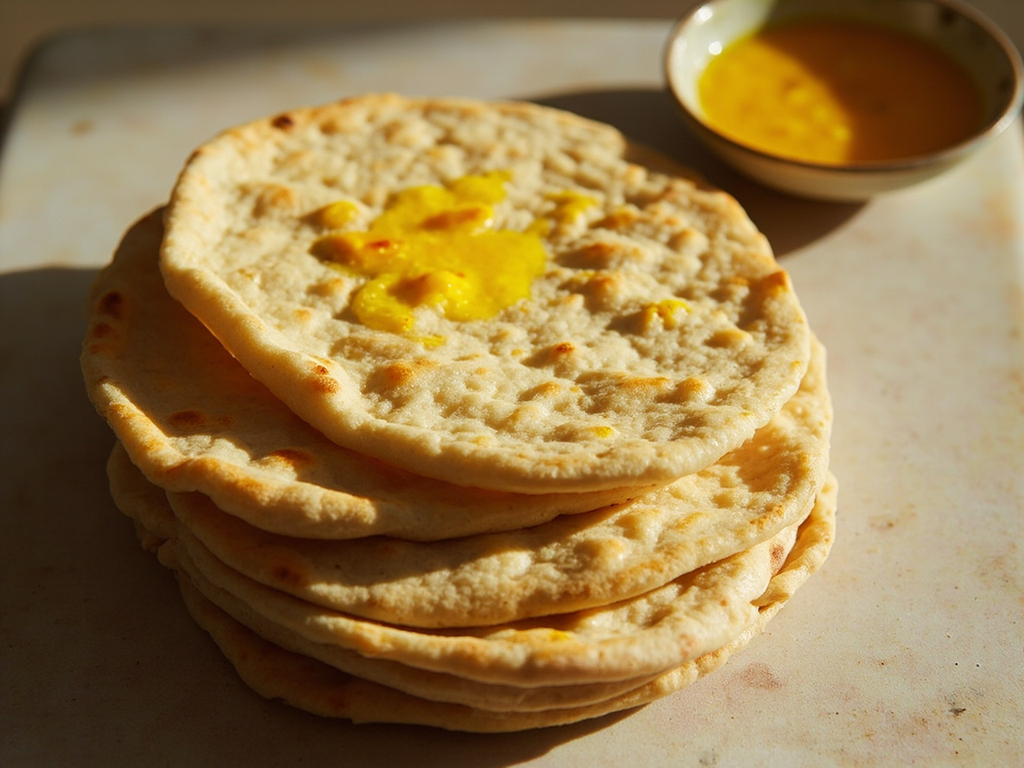
The contemporary twist : Lightly brush the surface with saffron butter just after baking for a golden fragrance and ember-like color.
Sources : Mary Boyce, Zoroastrians: Their Religious Beliefs and Practices, Routledge · Encyclopædia Iranica, entries “DRŌN” and “GĀHANBĀR”
Angra Mainyu · Charactorium