Russian obed and tea from the samovar
The main meal of the day (obed) began with zakouski — cold bites, salted fish, fermented pickles, black bread — followed by a hot soup (shchi or borscht), then a porridge or pasta dish. But the true heart of the Dostoevsky household was the samovar: at any hour, the family gathered around it for tea, accompanied by preserves and small pastries. The meals thus ranged from everyday simplicity to festive days, long journeys, and gatherings around the boiling water.
Signature : Smetana and lactic fermentation
Two hallmarks of the Russian table: smetana (sour cream) crowning soups and porridges with a tangy note, and the art of fermentation (sauerkraut, cucumbers) that allowed provisions to last all winter. This subtle sweet-and-sour note marks almost every dish in the household.
Anna Grigorievna Snitkina at the table
5 period recipes
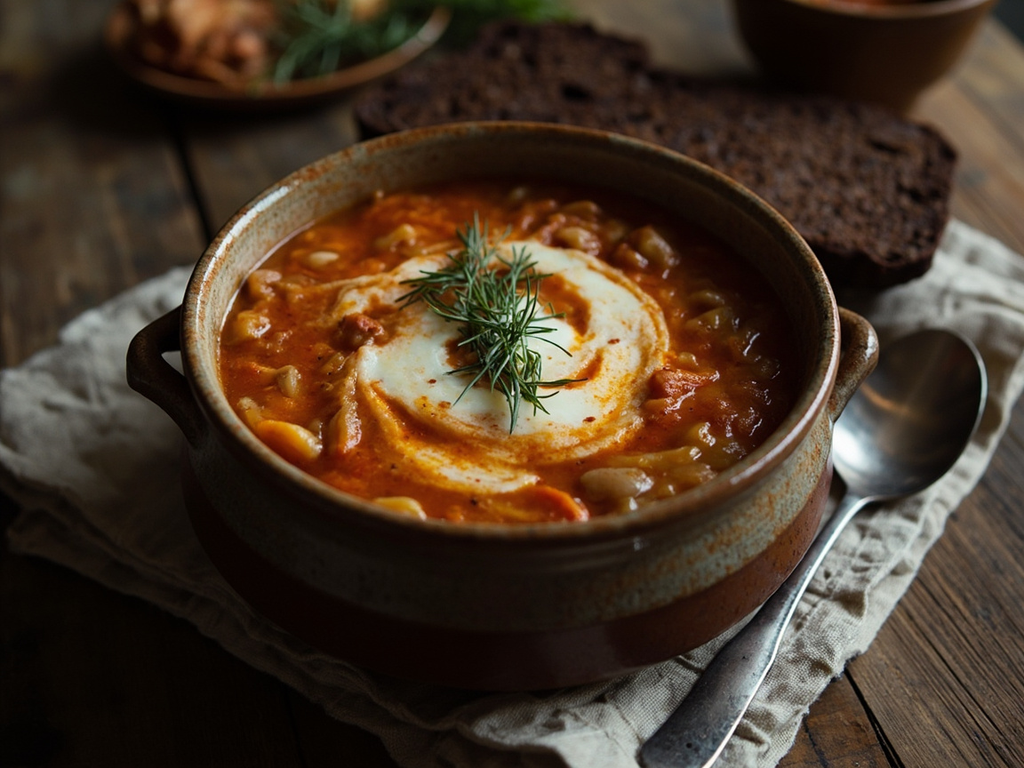 Everyday
Shchi with sauerkraut (sour cabbage soup)
Staple soup (sup) of the daily obed
🧂 🍋 🫙· 2 h 30
View the recipe
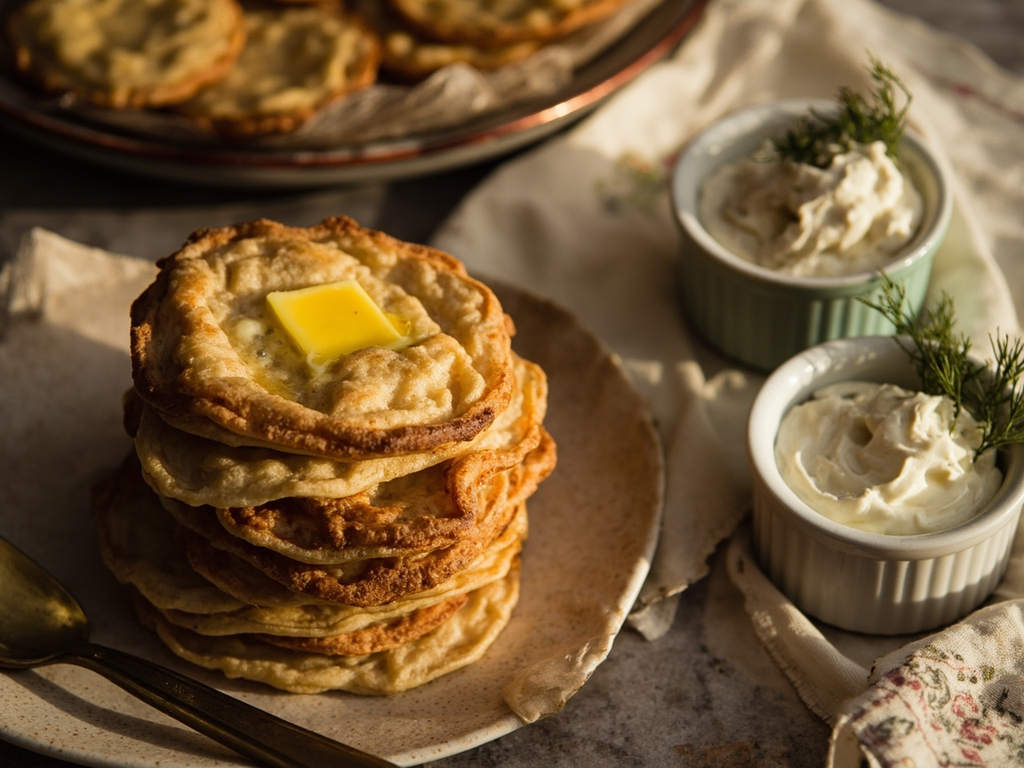 Festive
Maslenitsa buckwheat blinis
Bliny of the butter week (festive table)
🧂 🍄 🫙· 2 h (including rising)
View the recipe
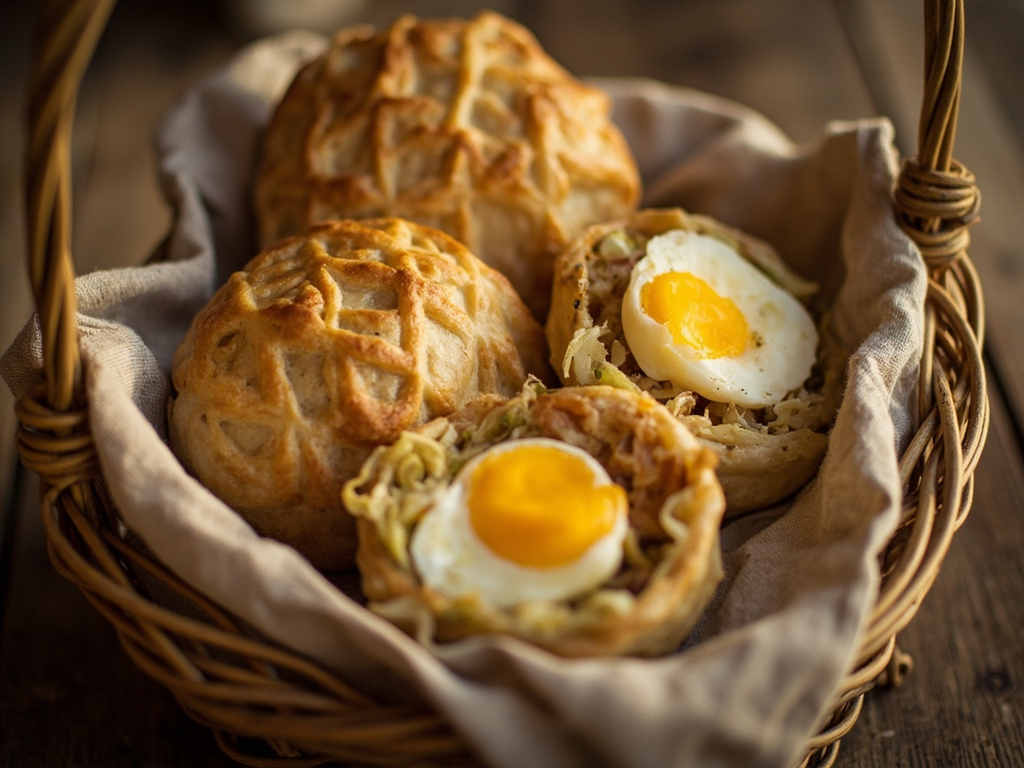 Travel
Pirozhki with cabbage and egg
Pirozhki — travel and snack bites
🧂 🍄· 1 h 45 (including rising)
View the recipe
 Drink
DrinkSbiten with honey and spices
Comforting hot drink from the samovar
🍯 🌶️· 20 min
View the recipe
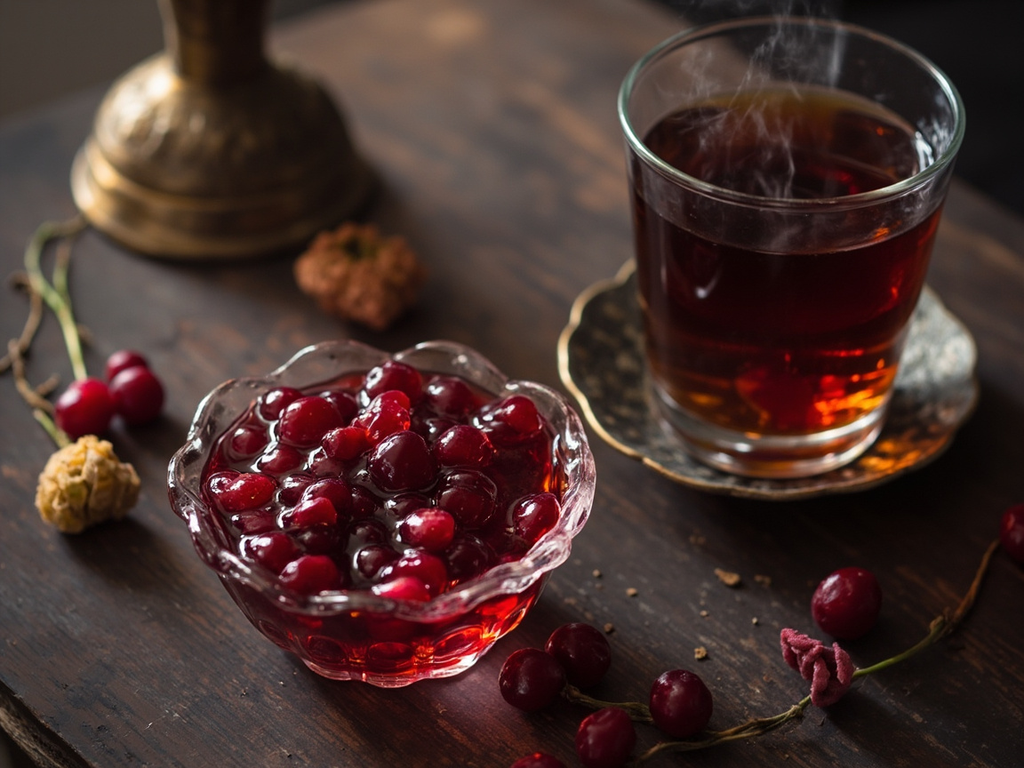 Preserving
Gooseberry varenye
Varenye — preserves for the tea buffet
🍯 🍋· 1 h (over 2 days with resting)
View the recipe