 flip
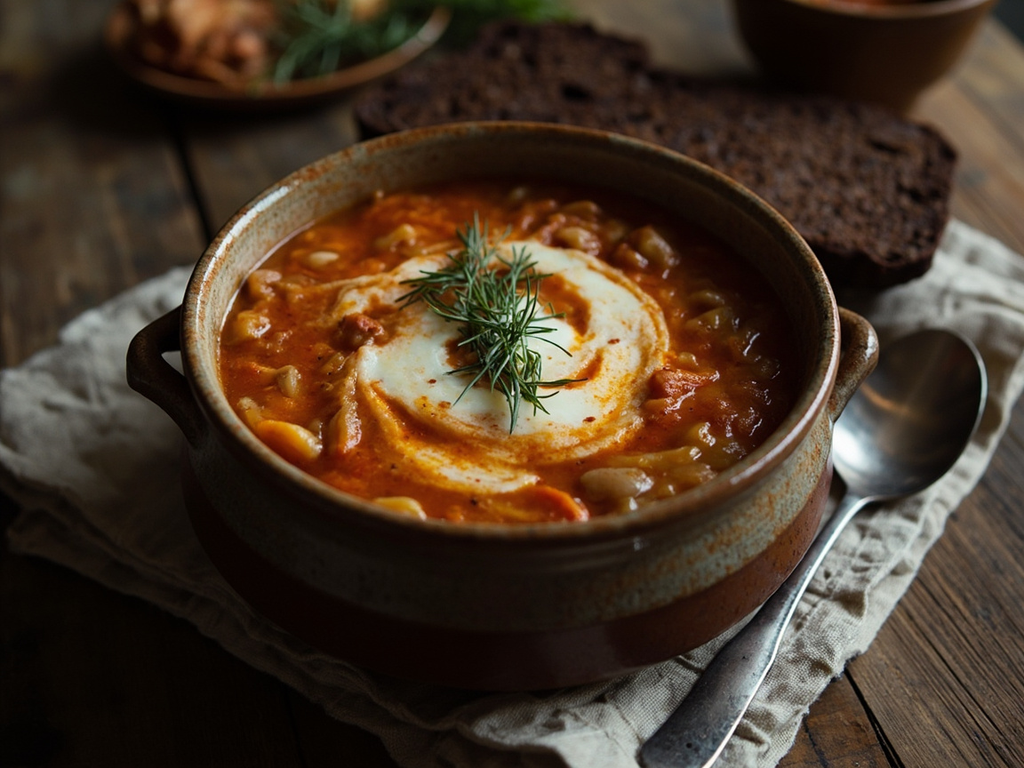
flipShchi with sauerkraut (sour cabbage soup)
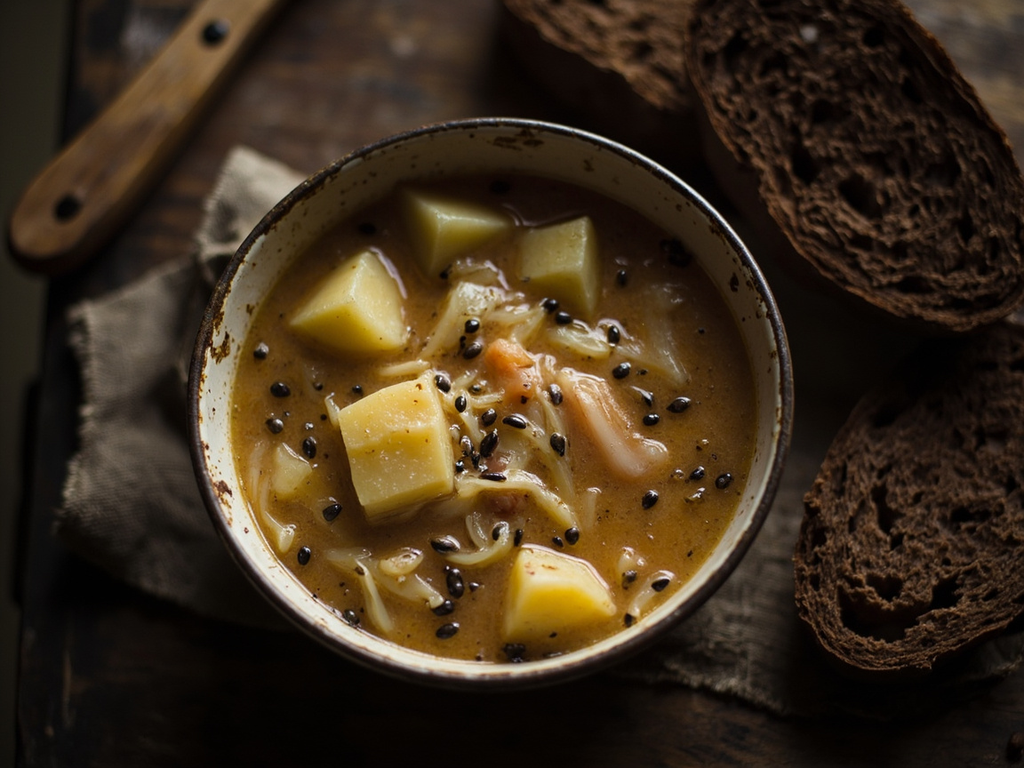
Shchi with sauerkraut (sour cabbage soup)
Why this dish? During the years of debt and travel, then in the orderly home that Anna kept in St. Petersburg and Staraya Russa, shchi was the everyday soup — economical, nourishing, comforting. In Russia they say, "Shchi and kasha are our food": this was indeed the daily fare of a literary household with limited means.
A peasant soup of fermented cabbage long-simmered, flavored with onion and bay leaf, served piping hot with a spoonful of smetana and black bread.
You see, when Fyodor Mikhailovich worked until dawn and the creditors pressed us closely, it was this shchi that sustained the household. I made sure the sour cabbage simmered all afternoon on the stove, for haste spoils this soup; it must soften without a vigorous boil. We would drown a spoonful of smetana in it, break the black bread, and even on a day of hardship the table seemed rich. Believe me, nothing comforted my husband better after his pages than a steaming bowl set beside the inkwell.
- •Fermented cabbage (sauerkraut) — a large bowlful (sour base)
- •Beef shank — one piece (broth)
- •Onion — one (aromatic)
- •Carrot — one (sweetness)
- •Bay leaf, peppercorns — to taste (flavoring)
- •Smetana (sour cream) — at serving (tangy binder)
- •Rye bread — as desired (accompaniment)
Shchi with sauerkraut (sour cabbage soup)
A peasant soup of fermented cabbage long-simmered, flavored with onion and bay leaf, served piping hot with a spoonful of smetana and black bread.
Why this dish? During the years of debt and travel, then in the orderly home that Anna kept in St. Petersburg and Staraya Russa, shchi was the everyday soup — economical, nourishing, comforting. In Russia they say, "Shchi and kasha are our food": this was indeed the daily fare of a literary household with limited means.
You see, when Fyodor Mikhailovich worked until dawn and the creditors pressed us closely, it was this shchi that sustained the household. I made sure the sour cabbage simmered all afternoon on the stove, for haste spoils this soup; it must soften without a vigorous boil. We would drown a spoonful of smetana in it, break the black bread, and even on a day of hardship the table seemed rich. Believe me, nothing comforted my husband better after his pages than a steaming bowl set beside the inkwell.
Ingredients (period version)
- Fermented cabbage (sauerkraut) — a large bowlful (sour base)
- Beef shank — one piece (broth)
- Onion — one (aromatic)
- Carrot — one (sweetness)
- Bay leaf, peppercorns — to taste (flavoring)
- Smetana (sour cream) — at serving (tangy binder)
- Rye bread — as desired (accompaniment)
Ingredients
- Raw sauerkraut — 400 g, rinsed (sour base)
- Beef shank or chuck — 500 g (broth)
- Onion — 1 large (aromatic)
- Carrot — 1 (sweetness)
- Bay leaf — 2 leaves (flavoring)
- Black peppercorns — 5 (flavoring)
- Thick sour cream (smetana) — 4 tbsp (binder)
- Rye bread — 4 slices (accompaniment)
- Fresh dill — a few sprigs (finish)
Method
- Cover the beef with cold water, skim, and let simmer 1.5 hours with bay leaf and pepper.
- Sauté the sliced onion and carrot in a little fat.
- Rinse the sauerkraut quickly, squeeze it, and add to the broth with the vegetables.
- Simmer gently for 1 hour, never at a full boil, until the cabbage is tender.
- Adjust salt, serve very hot with a spoonful of smetana, dill, and black bread.
How it was made : Shchi was cooked in the Russian earthenware stove (pechka), where the falling heat simmered the soup for hours; peasant women often made a large pot that was reheated for several days, the flavor only deepening. The sour cabbage version kept all winter.
The contemporary twist : Serve the shchi in a deep bowl with a dome of smetana sprinkled with dill and a stick of toasted rye bread standing upright — a nod to the steaming samovar.
Sources : Elena Molokhovets, A Gift to Young Housewives (Подарок молодым хозяйкам), 1861
Anna Grigorievna Snitkina · Charactorium