 Flip the card
Anne Frank at the table
1929 — 1945
On the menu
Broodmaaltijd & warme maaltijd (the Dutch wartime table)
In the Netherlands, the day revolved around two meals: the 'broodmaaltijd' — bread with toppings for breakfast and lunch — and the 'warme maaltijd' in the evening, a single hot dish built on potatoes, a vegetable, and a legume. In the Annex, this structure held up despite rationing: they ate what the helpers (Miep, Bep, Mr. Kugler) managed to bring, supplemented by the black market and long stores of dried legumes.
Signature : Dried legumes (brown beans, split peas, white beans)
For lack of meat, sacks of dried legumes were the protein backbone of the Annex. They were soaked the night before, then simmered for hours on the small stove — the smell almost betrayed the hiding place. Anne recounts in her diary a sack of brown beans that burst open and cascaded down the stairs onto Peter: proof that these reserves were the treasure of the house.
click to flip back
Anne Frank at the table
1929 — 1945
4 period recipes
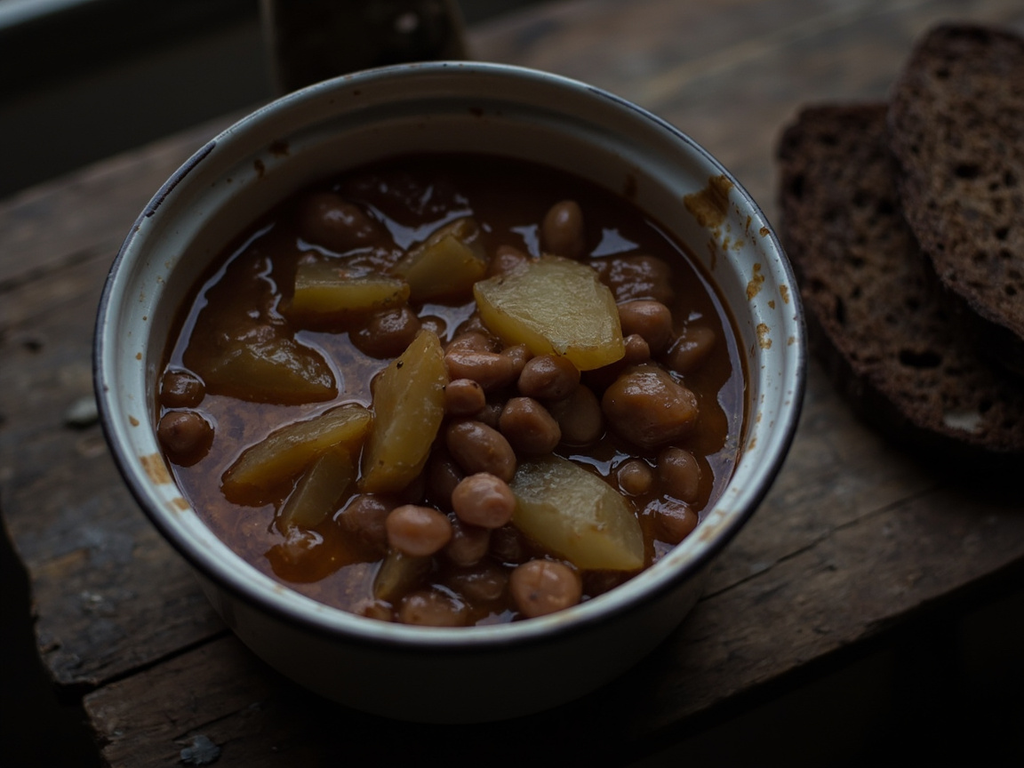 Everyday
Bruine bonen — brown beans stewed with potatoes
Warme maaltijd (the single hot evening meal)
🧂 🍄· 1 h 45 (plus soaking)
View the recipe
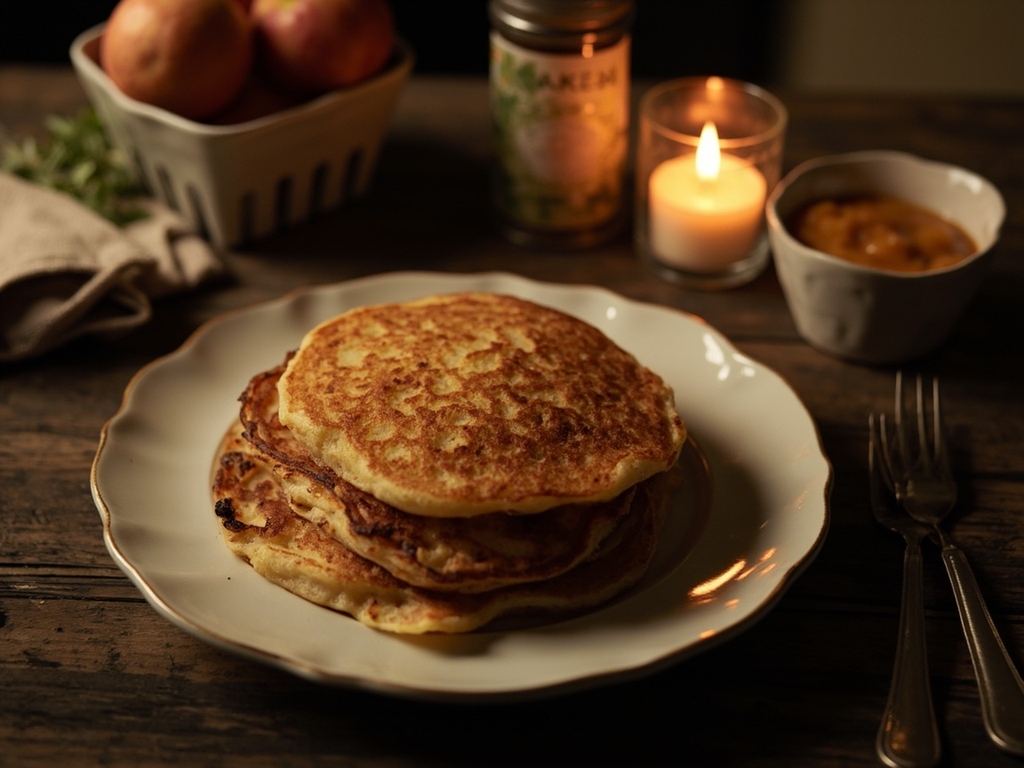 Festive
Aardappelpannenkoekjes — grated potato pancakes (Hanukkah)
Small festive treat (Hanukkah table)
🧂· 40 min
View the recipe
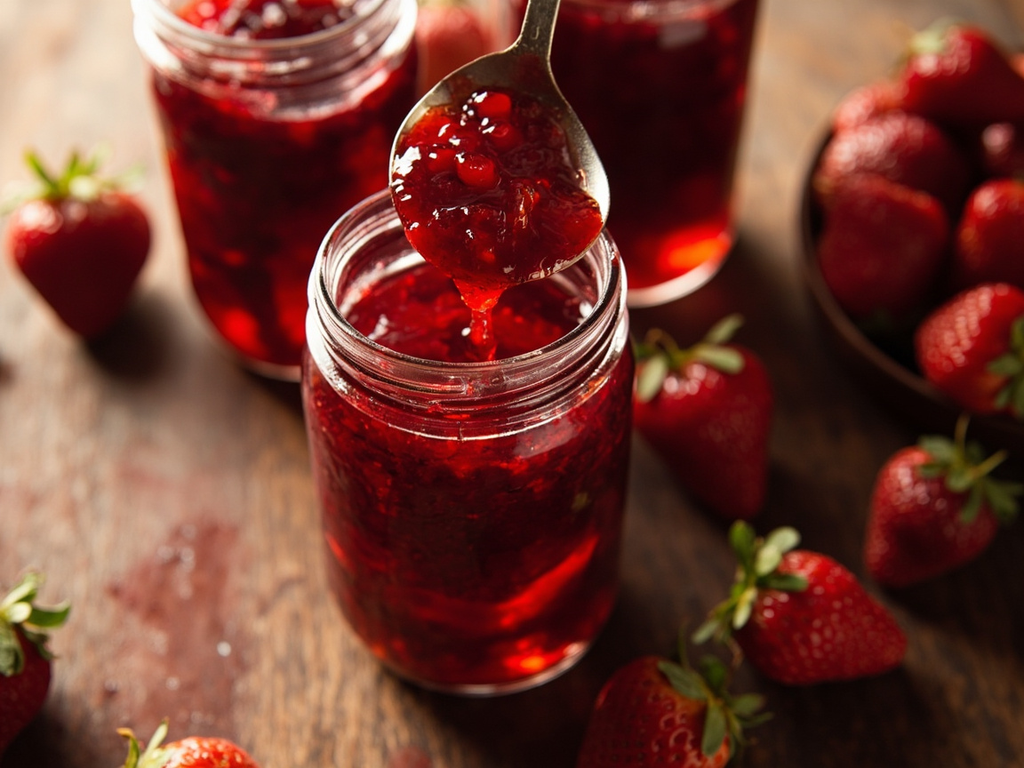 Preserving
Annex strawberry jam
Summer preserves (the jar set aside)
🍯 🍋· 50 min (plus maceration)
View the recipe
 Drink
DrinkSurrogaatkoffie — chicory ersatz coffee
Hot morning drink (the 'coffee' of wartime)
☕· 10 min
View the recipe