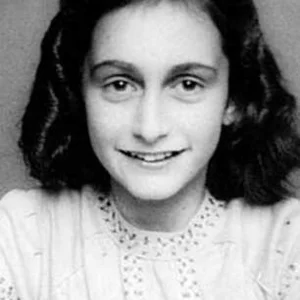

Anne Frank (1929-1945) was a young Dutch-Jewish girl whose diary, written in hiding during the Nazi occupation, became a poignant testimony of the Holocaust. She died in deportation at Bergen-Belsen, and her work remains a major source for understanding persecution and humanity in the face of horror.
Anne Frank(1929 — 1945)
Anne Frank
Troisième Reich, république de Weimar, apatride
7 min read
Frequently asked questions
Famous Quotes
« Despite everything, I believe that people are really good at heart.»
« I want to be useful or bring enjoyment to all people around me.»
« I want to go on living even after my death!»
Key Facts
- June 12, 1929: Born in Frankfurt am Main, Germany
- July 1942: Goes into hiding with her family in an Amsterdam building (the Secret Annex)
- August 1944: The Frank family is betrayed and arrested, then deported to Auschwitz
- February 1945: Dies of typhus at Bergen-Belsen, shortly before liberation
- 1947: Publication of The Diary of a Young Girl by her father Otto, which became a universal symbol of the Holocaust
Works & Achievements
Personal diary written between 1942 and 1944, published by Otto Frank. Translated into more than 70 languages, it is one of the most widely read testimonies about the Holocaust and is featured in school curricula around the world.
Alongside her diary, Anne wrote short stories, fables, and essays in the Annex, reflecting her literary ambition and early maturity.
A collection published after Otto Frank's death, bringing together the short stories, fables, and childhood memories written by Anne during her time in hiding.
Scholarly edition published by the Netherlands Institute for War Documentation, comparing the different versions of the diary and definitively authenticating the manuscript.
Anecdotes
Anne Frank received her diary on June 12, 1942, her thirteenth birthday. She immediately named it 'Kitty' and began writing to it as she would to a close friend, which gives the text its uniquely personal and endearing tone.
In the Annex, the eight people in hiding had to maintain absolute silence between 8:30 a.m. and 5:30 p.m., when the warehouse employees were working below. The slightest sound — a cough, a sneeze, a flushing toilet — could betray them.
Anne dreamed of becoming a journalist and writer. In March 1944, after hearing a radio broadcast in which the Dutch minister in exile called on people to preserve their wartime diaries, she began rewriting and revising her journal with a future publication in mind.
Miep Gies, one of the helpers who protected the Frank family, retrieved Anne's diary from the floor of the Annex after the arrest. She kept it in a desk drawer without reading it, hoping to return it to Anne after the war.
Otto Frank, Anne's father and the sole survivor among the eight people in hiding, hesitated for a long time before publishing the diary. He finally agreed in 1947, thereby fulfilling his daughter's dearest wish.
Primary Sources
I see the world being slowly transformed into a wilderness, I hear the approaching thunder that, one day, will destroy us too, I feel the suffering of millions of people and yet, when I look up at the sky, I somehow feel that everything will change for the better.
We walked in the pouring rain, Father, Mother and I, each carrying a school bag and shopping bag filled to the brim with the most varied assortment of items. The people on their way to work so early in the morning looked at us with compassion.
When I write, I shake off all my cares, my sorrow disappears, my spirits are revived. But then comes the big question: will I ever be able to write something great, will I ever become a journalist or a writer?
History cannot be written solely from official documents and decisions. If our descendants are to fully understand what we have endured, we must collect the most ordinary records: diaries, letters, sermons.
Key Places
The rear house where Anne Frank and seven others lived in hiding for more than two years, from July 1942 to August 1944. Today it is the Anne Frank House museum.
The Rivierenbuurt neighbourhood where the Frank family lived before going into hiding. Anne spent her Dutch childhood here and attended the nearby Montessori school.
The camp where Anne and her sister Margot were transferred from Auschwitz in the autumn of 1944. They both died of typhus there in early 1945.
The extermination camp where the eight people in hiding in the Annex were deported in September 1944 following their arrest.
The transit camp in the Netherlands through which the occupants of the Annex passed before their deportation to Auschwitz. More than 100,000 Dutch Jews were processed there.
Anne Frank's birthplace, where she was born on 12 June 1929. The family left Germany in 1933 to flee the Nazi regime.
Typical Objects
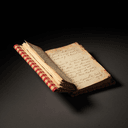
The famous diary given to her for her 13th birthday, covered in red and white checkered fabric with a small lock. It is in this notebook that Anne began writing her most intimate thoughts.

Anne wrote with a fountain pen she was very attached to. She mentions her sadness when it was accidentally burned in the stove of the Annex.
📷 CC BY-SA 3.0 · Wikimedia Commons ↗
A fabric badge that all Jews over the age of six were required to wear visibly on their clothing from May 1942 in the Netherlands.
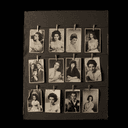
Anne collected photos of movie stars and royal families that she pinned to the wall of her room in the Annex, to brighten up the space.
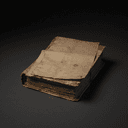
The people in hiding continued to study in the Annex. Anne took correspondence courses under a false name and read extensively to continue her education.
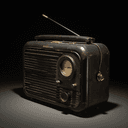
The clandestine radio was the vital link to the outside world. The residents of the Annex listened to Radio Oranje and the BBC to follow the progress of the Allies.
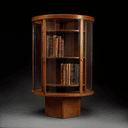
The entrance to the Annex was concealed behind a revolving bookcase built by Johan Voskuijl, one of the helpers, to hide the access door.
School Curriculum
Vocabulary & Tags
Key Vocabulary
Tags
Concept
Daily Life
Morning
In the Annex, waking up happened early but in absolute silence. From 8:30 a.m. onward, when the warehouse employees arrived, any noisy movement was forbidden. Anne waited patiently, reading or studying on her bed.
Afternoon
Afternoons were devoted to studying: Anne followed correspondence courses and read extensively. After 5:30 p.m., when the employees left, the people in hiding regained a bit more freedom of movement and could go down to the office.
Evening
In the evenings, the occupants of the Annex gathered around the radio to listen to news from the BBC and Radio Oranje. Anne wrote in her diary. Evening meals were often frugal, after which everyone returned to their cramped sleeping space.
Food
Food in the Annex depended on their protectors and the black market. Meals consisted of dried vegetables, potatoes, bread, and occasionally canned goods. Food became increasingly scarce and monotonous as the months went on.
Clothing
Anne wore ordinary 1940s clothing: skirts, sweaters, and platform shoes. During her time in hiding, it was impossible to replenish her wardrobe: her clothes became too small as she grew.
Housing
The Annex comprised a few small rooms on two floors at the rear of the commercial building at 263 Prinsengracht. Anne shared her room with Fritz Pfeffer, a dentist. The windows were permanently blacked out to avoid detection.
Historical Timeline
Period Vocabulary
Visual Style
Un style visuel intimiste et sombre, inspiré du clair-obscur hollandais, mêlant la chaleur d'une lumière tamisée à l'atmosphère confinée et austère de l'Annexe pendant l'Occupation.
Sound Ambience
L'atmosphère sonore oppressante de l'Annexe : le silence imposé, les bruits étouffés de la vie clandestine, le carillon du Westerkerk et le grattement d'une plume sur le papier, ponctués par le grondement lointain des avions.
Liens externes & ressources
Références
Œuvres
Het Achterhuis (Le Journal d'Anne Frank)
1947
Contes et essais d'Anne Frank
1942-1944
Les Contes de l'Annexe (Tales from the Secret Annex)
1960
Version définitive du journal (édition critique)
1986