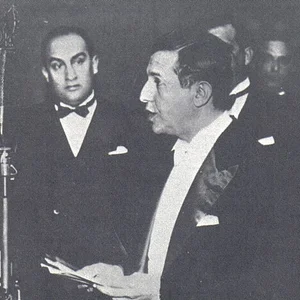

Assis Chateaubriand (1892-1968) was a Brazilian journalist, entrepreneur, and patron of the arts, founder of the largest media empire in Latin America in the 20th century. He created the Diários Associados, a network of newspapers, radio stations, and television channels, and introduced television to Brazil in 1950.
Assis Chateaubriand(1892 — 1968)
Assis Chateaubriand
Brésil
8 min read
Frequently asked questions
Key Facts
- 1892: born in Umbuzeiro, State of Paraíba, Brazil
- 1924: acquisition of the newspaper O Jornal, marking the beginning of his media empire
- 1950: introduction of television to Brazil with TV Tupi, the first broadcast channel in Latin America
- 1950s–1960s: the Diários Associados operated up to 34 newspapers, 36 radio stations, and 18 television channels
- 1968: death in São Paulo after several years of paralysis
Works & Achievements
A media network built up progressively by Chateaubriand, which eventually encompassed 34 newspapers, 36 radio stations, and 18 television channels. At its peak in the 1950s and 1960s, it was the largest media empire in Latin America.
The first newspaper founded by Chateaubriand, in Rio de Janeiro, which launched his career as a press magnate. This daily was the seed from which the Diários Associados would grow.
An illustrated magazine founded by Chateaubriand that became one of the most popular in Brazil for several decades. Through its photographs and feature reporting, it helped forge a national cultural identity.
A museum founded by Chateaubriand together with art critic Pietro Maria Bardi, now home to one of the most important collections of Western art in the Southern Hemisphere. Chateaubriand's patronage made it possible to acquire works by Raphael, Rembrandt, Van Gogh, and Renoir.
The first television channel in Brazil and in all of Latin America, launched by Chateaubriand in São Paulo. The event marked a cultural and technological revolution, introducing a new mass medium to a continent-sized country.
Anecdotes
To launch the first broadcast of TV Tupi on September 18, 1950, Chateaubriand secretly imported two hundred television sets from the United States and had them installed in shop windows and public spaces across São Paulo, creating an audience before a broadcast even existed. This marketing masterstroke literally forced Brazilians to become viewers against their will, inaugurating a new era for the country.
Nicknamed 'Chatô' by his contemporaries, Chateaubriand was famous for his unorthodox fundraising methods: he would summon major industrialists to his office and 'propose' that they purchase advertising space in his newspapers. It was hard to refuse when you needed the goodwill of Latin America's most powerful press.
In 1947, Chateaubriand founded the Museu de Arte de São Paulo (MASP) with Italian art critic Pietro Maria Bardi. To build the collection, he would sometimes ask wealthy Brazilian families to 'donate' works of art, or would personally finance purchases in war-ravaged Europe, where prices were low. Today, the MASP houses one of the most important collections of Western art in the Southern Hemisphere.
After being struck down by a cerebral hemorrhage in 1960 that left him paralyzed and unable to speak, Chateaubriand continued to run his media empire from his wheelchair. He communicated through eye blinks and nods of the head, and his associates learned to decipher his wishes in order to relay his orders to dozens of newspapers, radio stations, and television channels.
Appointed Brazilian ambassador to the United Kingdom from 1957 to 1960, Chateaubriand made his mark on London through lavish receptions and an extravagant personal style that stood in sharp contrast to the usual strictness of diplomatic circles. He used the posting to forge ties with the British press and strengthen the international reach of his Diários Associados.
Primary Sources
Brazil enters the age of television today. This is not merely a technical achievement — it is a revolution in the way our people will inform themselves and seek entertainment.
A free press is the bulwark of democracy. This newspaper will serve the Brazilian people, their culture, and their national development.
Information is a right of the people. Our newspapers, our radio stations, and tomorrow our television channels must carry the voice of everyday Brazil all the way to the centers of political and economic decision-making.
We must provide São Paulo with a museum worthy of the great metropolises of the world. Art is not a luxury reserved for elites — it is a necessity for Brazilian civilization.
Key Places
A small town in the Brazilian Northeast where Chateaubriand was born in 1892. This poor and arid region forged in him a boundless ambition and a burning desire to escape his humble origins.
The industrial and cultural metropolis where Chateaubriand established the heart of his media empire. It was here that TV Tupi was launched in 1950 and that the MASP opened its doors in 1947.
Institution founded by Chateaubriand in 1947, today one of the most important museums in Latin America with a collection of more than ten thousand works. The current building on pilotis, inaugurated in 1968, is an icon of modern Brazilian architecture.
The former federal capital where Chateaubriand founded his first newspaper, *O Jornal*, in 1923. It was in this city that he forged his earliest connections with the Brazilian political and business world.
The city where Chateaubriand served as Brazil's ambassador from 1957 to 1960. This diplomatic posting allowed him to make his mark on the international stage and build ties with the major British press.
Typical Objects

A symbol of Chateaubriand's industrial power, these state-of-the-art machines printed millions of copies of his newspapers every day across Brazil. He was one of the first to invest heavily in the mechanization of the Brazilian press.

Chateaubriand embraced radio early on, understanding the power of the spoken word to reach a population that was partly illiterate. His radio stations broadcast news, music, and speeches across the entire country.

The first TV Tupi cameras, imported from the United States in 1950, were the instruments of a cultural revolution. They embody the bold bet of a man convinced that television would transform Brazilian society.

After his stroke in 1960, the wheelchair became the defining image of a man broken in body but unbreakable in spirit. He continued to receive colleagues and politicians from that chair, a symbol of his extraordinary resilience.

Chateaubriand acquired European master paintings for MASP — Raphael, Rembrandt, Renoir, Van Gogh — often purchased at low prices in war-devastated postwar Europe. These works formed the nucleus of a museum of international renown.

A staple of newsrooms of the era, the teletype allowed Chateaubriand to coordinate his dozens of newspapers and stations spread across Brazil in real time. It embodied the technological modernity he was so passionate about.
School Curriculum
Vocabulary & Tags
Key Vocabulary
Tags
Daily Life
Morning
Chateaubriand began his days very early, poring over the morning editions of his own newspapers with meticulous attention. He would annotate articles, issue directives by telephone to his editors-in-chief spread across Brazil, and was already receiving his first collaborators and political visitors at dawn.
Afternoon
Afternoons were devoted to business meetings, negotiations with industrialists or politicians, and overseeing his various media enterprises. A great art lover, he also dedicated time to acquisitions for the MASP and to correspondence with European gallery owners and collectors.
Evening
Chateaubriand's evenings were often social affairs: receptions and dinners with political, cultural, or diplomatic figures held at his sumptuous residences. These occasions were as many opportunities to forge alliances, exercise his influence, and cultivate the network of relationships that was the lifeblood of his empire.
Food
Like a wealthy Brazilian bourgeois of his era, Chateaubriand appreciated traditional cuisine — *feijoada*, *churrasco* — but also French and European gastronomy during his travels and diplomatic receptions. He was known for his generous table, serving refined dishes accompanied by wines imported from Europe.
Clothing
Chateaubriand wore impeccably tailored three-piece suits on all occasions, symbols of his social success and his status as an international businessman. He favored English fabrics and white shirts with starched collars, the characteristic dress of the Brazilian elite from the 1920s to the 1960s.
Housing
Chateaubriand owned several luxurious residences in Brazil, including an imposing mansion in São Paulo and an apartment in Rio de Janeiro. These interiors blended European Art Deco furniture with collected works of art, displaying the spectacular rise of a man who had built a continental empire from nothing.
Historical Timeline
Period Vocabulary
Liens externes & ressources
Références
Œuvres
Fondation des Diários Associados
1923-1950
O Jornal
1923
O Cruzeiro
1928
Fondation du Museu de Arte de São Paulo (MASP)
1947
Inauguration de TV Tupi
18 septembre 1950
Rechercher
See also
Related Characters
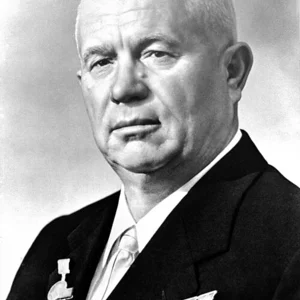
Nikita Khrushchev
1894 — 1971
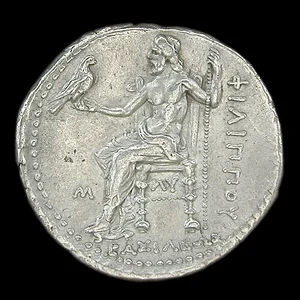
Alexander II of Macedon
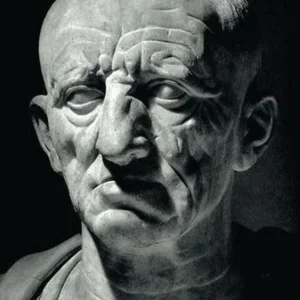
Cato the Elder
233 av. J.-C. — 148 av. J.-C.
Chanakya
374 av. J.-C. — 282 av. J.-C.
Scipio Africanus
234 av. J.-C. — 182 av. J.-C.
Aimé Césaire
1913 — 2008