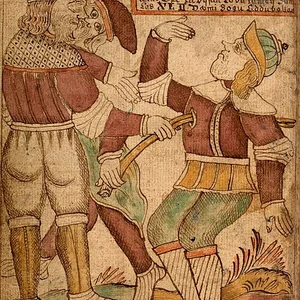

Norse god of light and goodness, son of Odin and Frigg. His tragic death, orchestrated by Loki using a mistletoe arrow, heralds Ragnarök. He embodies sacrificed innocence and the promise of a renewed world.
Frequently asked questions
Key Facts
- Son of Odin and Frigg, Baldr is the most beautiful and beloved god of Asgard
- Frigg made all beings swear never to harm Baldr, but forgot to ask mistletoe
- Loki guided the hand of the blind Höðr, who threw a mistletoe arrow and killed Baldr
- His death hastens his descent to the underworld (Hel) and heralds Ragnarök
- The prophecies of the Eddas promise his return to reign over a regenerated world after Ragnarök
Works & Achievements
A major Eddic poem that includes the prophecy of Baldr's death as a harbinger of Ragnarök. It is one of the oldest and most poetic sources about this god.
A short Eddic poem in which Odin questions a dead völva to learn the meaning of his son's troubled dreams, which reveal his imminent death orchestrated by Loki.
The most complete and best-known version of the Baldr myth, recounting in detail his life, his death, and his magnificent funeral aboard the ship Hringhorni.
A Latin, euhemerized version of the myth that presents Baldr as a Danish warrior prince. It offers an alternative reading shaped by medieval chivalric culture.
An Eddic poem in which Loki taunts the gods at a feast and openly claims responsibility for Baldr's death. A valuable source on the conflicting relationships within the Norse pantheon.
A prose text tracing the genealogy of the Norse gods and mentioning Baldr among the Aesir. It rounds out the mythological picture of Odin's family and their tragic fate.
Anecdotes
Frigg, Baldr's mother, was so terrified by her son's prophetic dreams that she traveled the entire world to obtain a sworn oath from every being, every plant, and every mineral never to harm Baldr. She overlooked mistletoe, considering it too young and harmless. This seemingly trivial oversight would seal the fate of the god of light.
Once Baldr was declared invulnerable, the gods took to hurling all kinds of projectiles at him during feasts in Asgard — spears, swords, and stones all bounced off him without causing the slightest harm. This game became a favorite pastime among the Aesir, until the fateful day Loki decided to join in.
Loki, the cunning and malicious god, discovered the secret of the mistletoe by disguising himself as an old woman and tricking Frigg into revealing it. He carved an arrow from mistletoe and handed it to Höðr, the blind god, guiding his arm to throw it at Baldr. Baldr fell dead instantly, plunging Asgard into overwhelming grief.
To bring Baldr back from the realm of the dead, the god Hermóðr mounted Sleipnir, Odin's eight-legged horse, and rode for nine days and nine nights through dark valleys to reach the kingdom of Hel. The goddess of the dead agreed to release Baldr on one condition: that every creature in the world weep for his death.
Every creature, every tree, and every stone wept for Baldr — all except a giantess named Þökk, who refused, saying he had never done anything for her. It was Loki in disguise. And so Baldr remained in the realm of the dead until after Ragnarök, when he would return to reign over a renewed world.
Primary Sources
Baldr the Good is the best of all, and everyone praises him. He is so fair and so bright that light shines from him. He is the wisest of the Aesir, the most eloquent, and the most merciful, and his nature is such that nothing impure can abide in him.
I saw for Baldr, the blood-stained god, the son of Odin, his fate foretold: standing taller than the fields was the mistletoe, slender and fair, which became a deadly weapon.
The Aesir gathered in council, and the Asynjur held their assemblies, to determine why Baldr had been suffering such heavy, ominous dreams.
Balderus and Høtherus, rivals for the beautiful Nanna, clashed in many battles. Høtherus ultimately dealt Balderus a mortal wound with a magical sword stolen from a supernatural being.
Key Places
Baldr's celestial palace in the realm of the gods, described as the most radiant and pure of all Asgard. According to the Eddas, nothing impure may cross its threshold.
After his death, Baldr was brought to the realm of Hel, ruled by the goddess of the same name, daughter of Loki. It is from this place that he awaits Ragnarök, when he will return to reign over a renewed world.
A major religious center of medieval Scandinavia where sacrifices were made to the Norse gods. The temple described by Adam of Bremen around 1070 attests to the vitality of the cult of the Aesir, of which Baldr was a part.
The Icelandic farm of Snorri Sturluson where the Prose Edda was written around 1220, the primary source for the myth of Baldr. Today it serves as a research center for medieval Norse culture.
The bridge that Hermóðr crossed riding Sleipnir to reach the realm of the dead and plead Baldr's case before the goddess Hel. It is guarded by the giantess Móðguðr.
Typical Objects
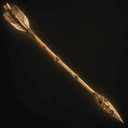
The only plant that Frigg overlooked in her great oath of protection, mistletoe was carved into a projectile by Loki and became the fatal weapon that killed Baldr. It symbolizes the hidden vulnerability that exists even in what appears to be invincible.
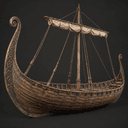
Described as the greatest ship in the world, it served as Baldr's funeral pyre. The gods could not launch it into the water on their own and had to summon the giantess Hyrrokkin to push it into the waves.
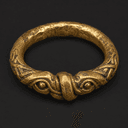
Odin's magical ring, capable of reproducing itself into nine identical copies every nine nights, it was placed on Baldr's funeral pyre by his father as a sign of mourning. Baldr later sent it back to Odin from the realm of Hel.
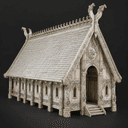
Baldr's celestial dwelling in Asgard, described as the purest place in the world where nothing impure can enter. It symbolizes the perfection and light associated with the god.
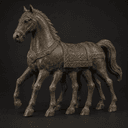
Odin's eight-legged steed, Sleipnir carried the god Hermóðr to the realm of Hel in an attempt to bring Baldr back to life. The only being capable of traveling between worlds, he is inseparable from the myth of the failed rescue.
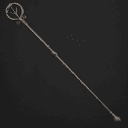
The attribute of the prophetess who foretells Baldr's death in the Völuspá. This sorceress's staff represents the power of divination that surrounds the god's entire fate, a reminder that his death was written from the very beginning.
School Curriculum
Vocabulary & Tags
Key Vocabulary
Tags
Daily Life
Morning
In his resplendent hall of Breiðablik, Baldr awakens surrounded by a golden light that emanates from his very person. He presides over the morning assemblies of the Aesir, listening to the grievances of men and delivering judgments marked by wisdom and gentleness.
Afternoon
Baldr takes part in the games of the gods, who delight in hurling weapons at him — none of which can cause him harm. He strolls through the celestial meadows of Asgard, conversing with the other gods and spreading a luminous serenity all around him.
Evening
In the evening, Baldr joins the gods' feast, sharing sacred mead and tales of warriors' great deeds. It is also a time of dreams: his prophetic visions increasingly trouble the banquets, foreshadowing the dark events to come.
Food
Like all the Norse gods, Baldr feasts on mead (fermented honey ale), sacred boar meat, and divine food that replenishes itself each day. His divine nature grants him a vitality that transcends ordinary human needs.
Clothing
Baldr is dressed in immaculate white robes adorned with Norse knotwork patterns embroidered in silver and gold. His purity and inner radiance are reflected in his garments, and a halo of brilliance always surrounds his figure among the gods.
Housing
Baldr dwells in Breiðablik, his hall in Asgard, described as the purest and most luminous place in the realm of the gods. Its walls are of silver and its roof of gold, and nothing impure or deceitful may ever cross its threshold.
Historical Timeline
Period Vocabulary
Visual Style
Esthétique nordique médiévale lumineuse : Baldr rayonnant en blanc et or sur fond d'aurores boréales, contrastant avec des scènes funèbres sombres aux tons bleu nuit et gris acier.
Sound Ambience
Ambiance nordique funèbre et majestueuse : vents glacés des fjords, crépitement du bûcher funéraire en mer, pleurs des dieux et silence pesant du royaume de Hel.
Liens externes & ressources
Références
Œuvres
Völuspá (La prophétie de la voyante)
vers Xe-XIe siècle
Baldrs draumar (Les rêves de Baldr)
vers Xe-XIe siècle
Gylfaginning — Edda en prose (Snorri Sturluson)
vers 1220
Gesta Danorum (Saxo Grammaticus)
vers 1200
Lokasenna (La querelle de Loki)
vers XIe-XIIe siècle
Ynglinga saga (Snorri Sturluson)
vers 1230