Creatures of Norse Mythology
Fenrir, Jörmungandr, Fafnir, Grendel, Kraken and Surtr — the monsters and giants who will destroy the world at Ragnarök.
30 characters
30 characters
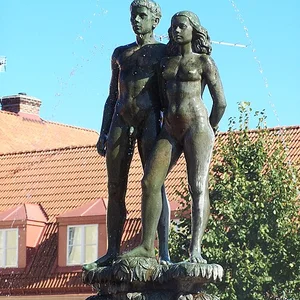
Embla
In Norse mythology, Embla is the first woman, created along with Ask (the first man) by the gods from two pieces of wood found on the shore. The couple are the ancestors of humankind in Scandinavian cosmogony.
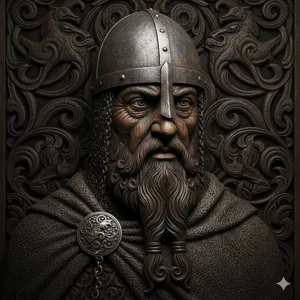
Hjalmgunnar
Hjalmgunnar is a warrior king from Norse mythology, mentioned in the heroic sagas. He was slain by the valkyrie Brynhildr on Odin's orders, which led to her being punished by the chief god.
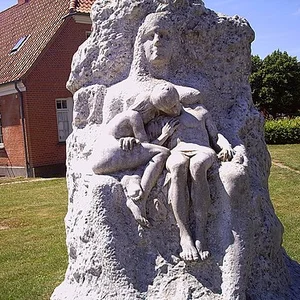
Jörð
Jörð (“the Earth”) is a goddess of Norse mythology, the personification of the Earth. A giantess or goddess depending on the source, she is one of Odin's companions and the mother of Thor, the god of thunder.
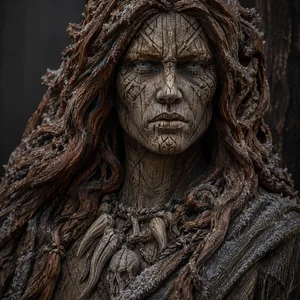
Laufey
Laufey, also called Nál, is a figure from Norse mythology known as the mother of the god Loki. Medieval sources present her as a giantess (or goddess), wife of the giant Fárbauti.
Angrboða
A giantess of Norse mythology, Angrboða is the consort of Loki and mother of three formidable beings: the wolf Fenrir, the serpent Jörmungandr, and the goddess Hel. She embodies the forces of chaos and the destruction to come at Ragnarök.
Baldr
Norse god of light and goodness, son of Odin and Frigg. His tragic death, orchestrated by Loki using a mistletoe arrow, heralds Ragnarök. He embodies sacrificed innocence and the promise of a renewed world.
Brynhildr
A Valkyrie from Norse mythology, Brynhildr is a central heroic figure in the Völsunga saga and the Nibelung cycle. An invincible warrior punished by Odin for disobeying his orders, she is imprisoned in a castle surrounded by flames until Sigurd frees her. Her tragic fate — woven from love, betrayal, and revenge — makes her one of the most complex heroines in the Germanic and Scandinavian traditions.
Fafnir
Fafnir is a dwarf from Norse mythology, son of Hreidmar, transformed into a dragon by his own greed after seizing a cursed hoard of gold. He is slain by the hero Sigurd (Siegfried) who drinks his blood to understand the language of birds. His story lies at the heart of the Völsunga saga and the Nibelung cycle.
Fenrir
Fenrir is a gigantic wolf from Norse mythology, son of the god Loki and the giantess Angrboða. Feared by the gods for his immense power, he was bound by the Aesir using the magical fetter Gleipnir. At Ragnarök, he will break free to devour Odin, before being slain by Víðarr.
Freya
Freyja is a major goddess in Norse mythology, associated with love, fertility, beauty, and seiðr magic. She belongs to the Vanir in the Norse pantheon and has been venerated across Scandinavian cultures from the Middle Ages to the modern era.
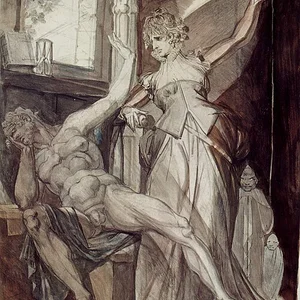
Gudrun
Tragic heroine of Germanic and Norse mythology, Gudrun/Kriemhild is the wife of the hero Sigurd/Siegfried. A figure of vengeance and grief, she embodies conjugal loyalty taken to the point of total destruction.
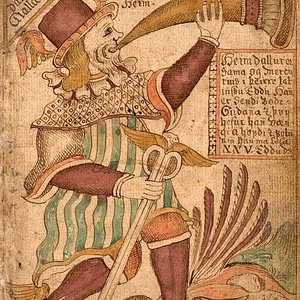
Heimdall
Heimdall is the guardian god of the Aesir in Norse mythology. Sentinel of the gods, he watches over the Bifröst bridge connecting the realms and will sound the Gjallarhorn to herald Ragnarök. He is associated with dawn, light, and vigilance.
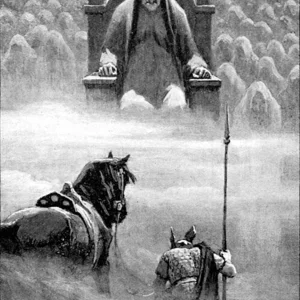
Hel
In Norse mythology, Hel is the daughter of Loki and the giantess Angrboða. Goddess of the dead, she rules over Niflheim (or Helheim), the underworld realm where those who died of illness or old age dwell. Her very name refers both to the deity and to the realm she governs.
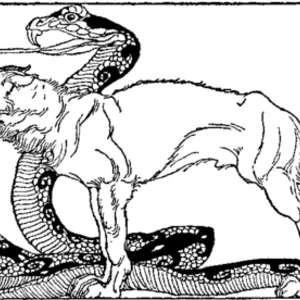
Jormungandr
Jörmungand, the Midgard Serpent, is a colossal creature from Norse mythology, son of Loki and the giantess Angrboða. He encircles the world by biting his own tail, a symbol of infinity and chaos. The sworn enemy of Thor, he will slay him at Ragnarök before succumbing to his venom.

Kraken
A colossal sea creature from medieval Scandinavian legend, often described as a giant squid or octopus capable of swallowing entire ships. Mentioned in Norse texts as early as the 13th century, it embodies sailors' terror of the unfathomable depths of the ocean.
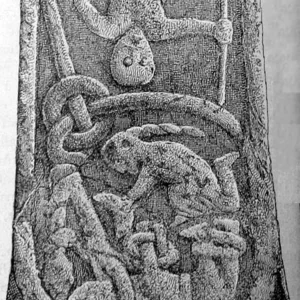
Loki
The trickster god of Norse mythology, Loki is an ambivalent deity capable of shapeshifting. A figure of chaos and transgression, he plays a crucial role in the stories of the end of the world (Ragnarök), where he fights against the Aesir alongside the giants.
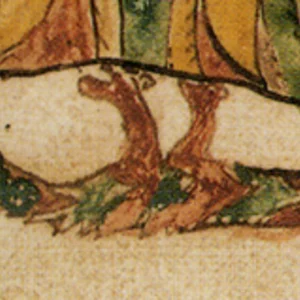
Níðhöggr
Níðhöggr is a dragon (or serpent) from Norse mythology who relentlessly gnaws at one of the roots of Yggdrasil, the world-tree. Lurking in the spring of Hvergelmir, he also devours the corpses of oath-breakers and murderers, embodying the forces of corruption that threaten the cosmic order.
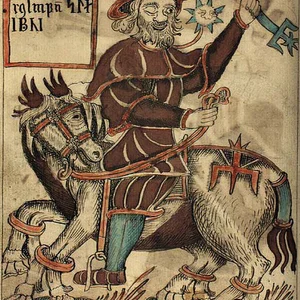
Odin
Odin is the chief god of Norse mythology, king of Asgard and father of all the gods. God of wisdom, war, and magic, he was worshipped by Germanic and Scandinavian peoples throughout Antiquity and the Middle Ages. He sacrifices his eye to gain knowledge and presides over the cosmic order embodied by Yggdrasil, the World Tree.
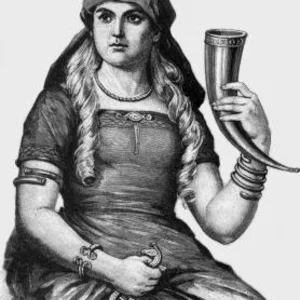
Sif
Sif is a goddess in Norse mythology, wife of the god Thor. She is famous for her magnificent golden hair, a symbol of the fertility of fields and harvests, which Loki treacherously cut off while she slept and which the dwarves reforged in pure gold.
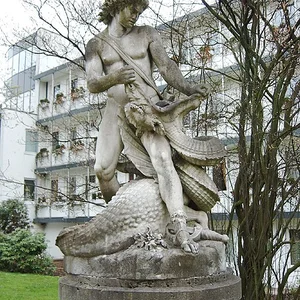
Sigurd
Hero of Norse and Germanic mythology, Sigurd is the slayer of the dragon Fáfnir according to the Völsunga Saga. An iconic figure of Germanic legend, he embodies the archetype of the warrior-conqueror cursed by his own heroic deed.
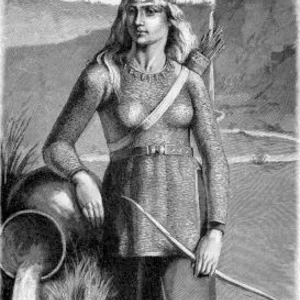
Skadi
Skadi is a giantess (jötunn) from Norse mythology, goddess of winter, hunting, and mountains. Daughter of the giant Þjazi, she is known for negotiating her place among the Aesir gods after her father's death. Her figure illustrates the boundary between the world of the gods and that of the giants in Viking cosmology.
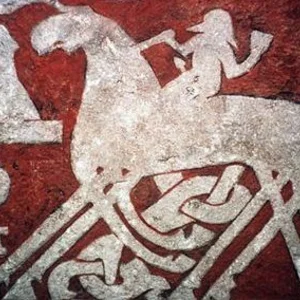
Sleipnir
In Norse mythology, Sleipnir is the eight-legged horse of the god Odin, considered the best of all horses. Born of the god Loki transformed into a mare, he carries his master across the nine worlds, over land, over sea, and through the air.
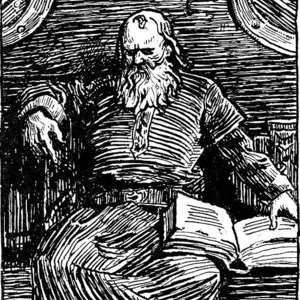
Snorri Sturluson
1179 — 1241
Icelandic writer, historian, and politician of the 13th century (1179–1241). He is the author of the Prose Edda, a major source on Norse mythology, and the Heimskringla, a chronicle of the kings of Norway.
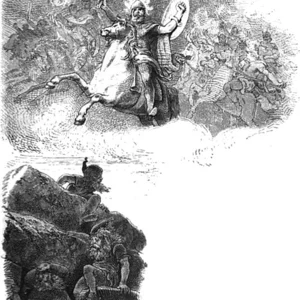
Surtr
Surtr is a fire giant from Norse mythology, guardian of the realm of Muspelheim. He wields a blazing sword and will play a central role during Ragnarök, destroying the world in flames.
Thökk
Þökk is a giantess (jötunn) from Norse mythology. She is the only creature to refuse to weep for the god Baldr, thereby preventing his return from the realm of the dead. She is suspected of being Loki in disguise.
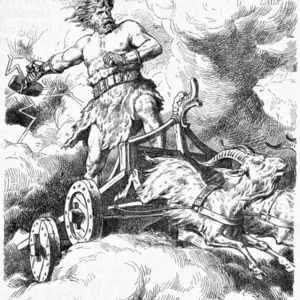
Thor
Thor is the god of Thunder and Lightning in Norse mythology. Son of Odin, he is the protector of humans and gods against the giants. He is depicted with his magical hammer Mjölnir, one of the most powerful weapons in the nine worlds.
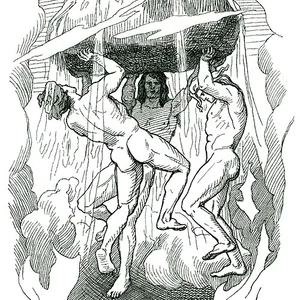
Vé
Vé is one of the three primordial deities of Norse mythology, son of Borr and brother of Odin and Vili. Together with his brothers, he took part in the creation of the world from the body of the giant Ymir, and breathed sense and form into the first humans, Ask and Embla.
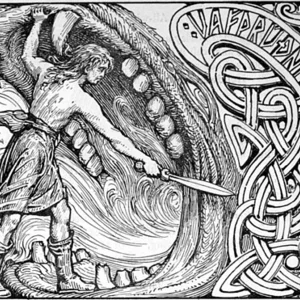
Vidar
Vidar is a god of Norse mythology, son of Odin and the giantess Grid. Known for his silence and colossal strength, he is destined to avenge his father's death by slaying the wolf Fenrir at Ragnarök.

Víli
Víli is a deity in Norse mythology, son of Borr and brother of Odin and Vé. Together with his brothers, he takes part in the creation of the world by slaying the primordial giant Ymir, and grants the first humans reason and the ability to move.
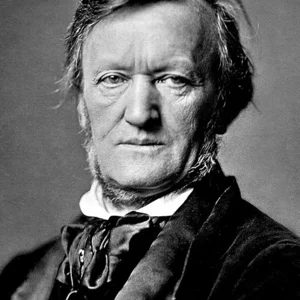
Richard Wagner
1813 — 1883
German composer (1813–1883), Wagner revolutionized opera by creating the concept of the total work of art (Gesamtkunstwerk). His music dramas, including the Ring Cycle and Tristan und Isolde, remain towering monuments of Romanticism.