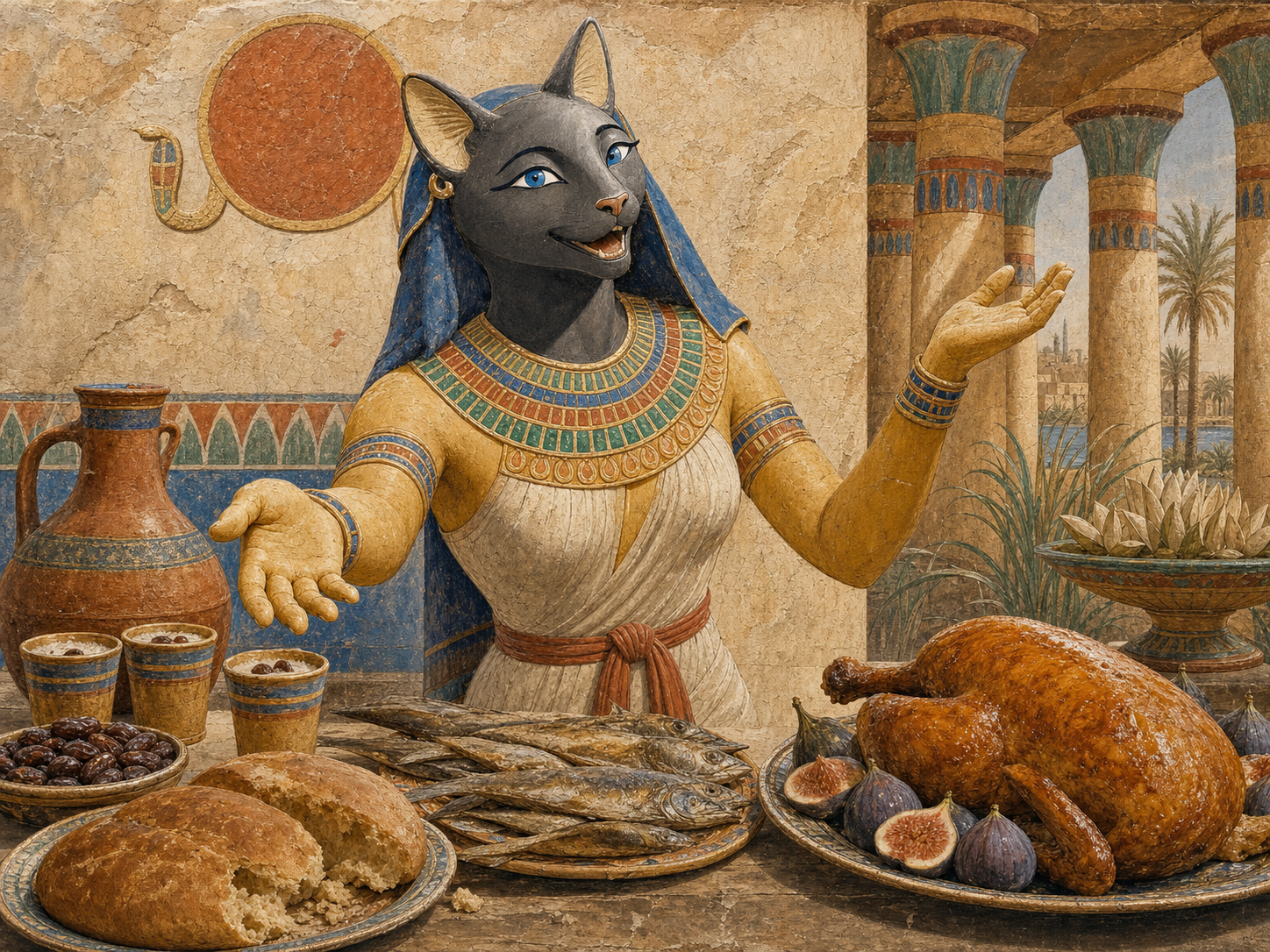
 Flip the card
Bastet at the table
On the menu
The *htep* — the offering table and the temple meal
In ancient Egypt, meals were not thought of in terms of starter-main course-dessert, but around the *htep*, the offering that "appeases" the god. On the altar table, bread (*pesen*), beer (*henqet*), poultry, fish, vegetables, and fruits were stacked in a ritual order, as listed in the offering lists carved on the walls. What the goddess had "consumed" through sight and smell then descended to the priests and the people: the offering became a meal. The feast of Bubastis, however, overflowed this framework: it was the great annual popular festival where people ate, drank, and sang in honor of Bastet.
Signature : Nile fish and the honey of the Two Lands
Two markers recur around Bastet: Nile fish, which is particularly associated with her, and honey, a sacred commodity and choice offering. Toasted sesame and fresh coriander also hallmark the cuisine of ancient Egypt.
click to flip back
Bastet at the table
5 period recipes
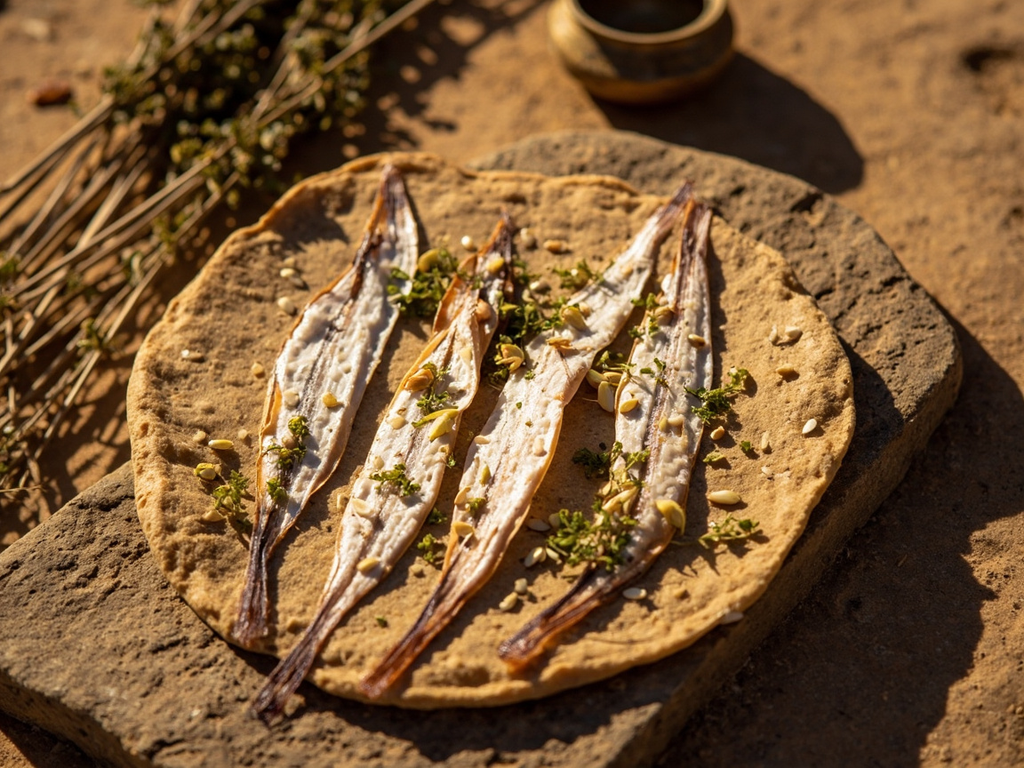 Preserving
Sun-dried salted Nile mullet
Pantry provision (fish offering, *htep* pile)
🧂 🍄 🫙· 20 min + 3 days salting/drying
View the recipe
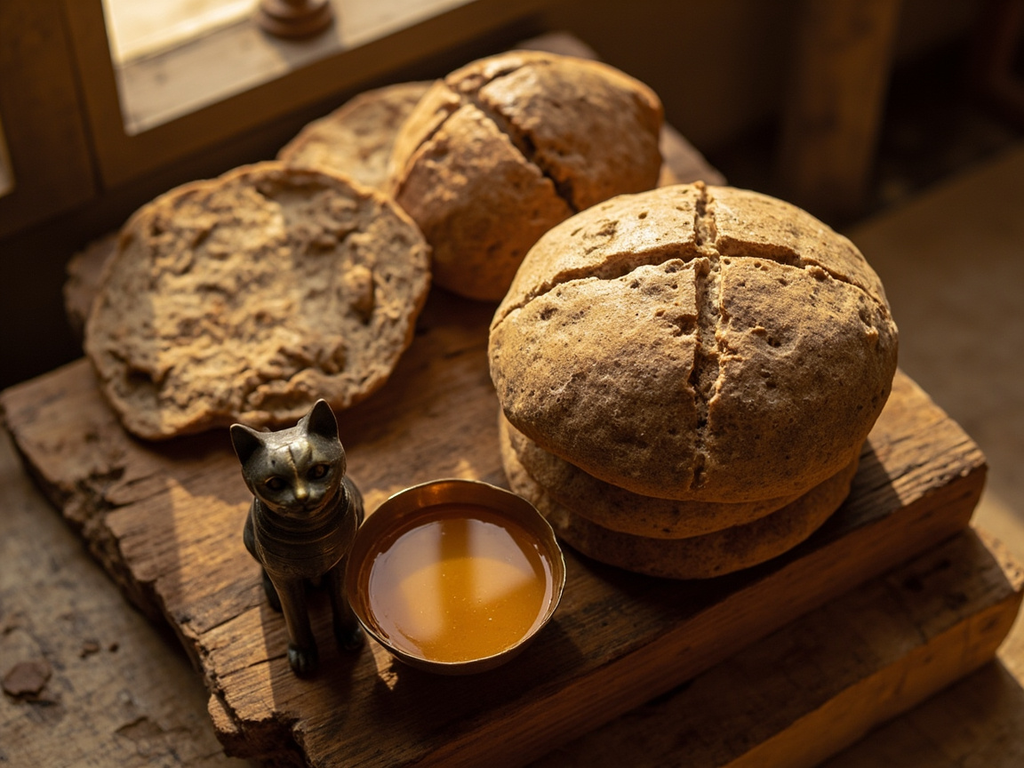 Offering
Emmer *pesen* bread for the altar
Offering bread (*pesen*), base of the *htep*
🫙 🧂· 1 h + 5 h fermentation
View the recipe
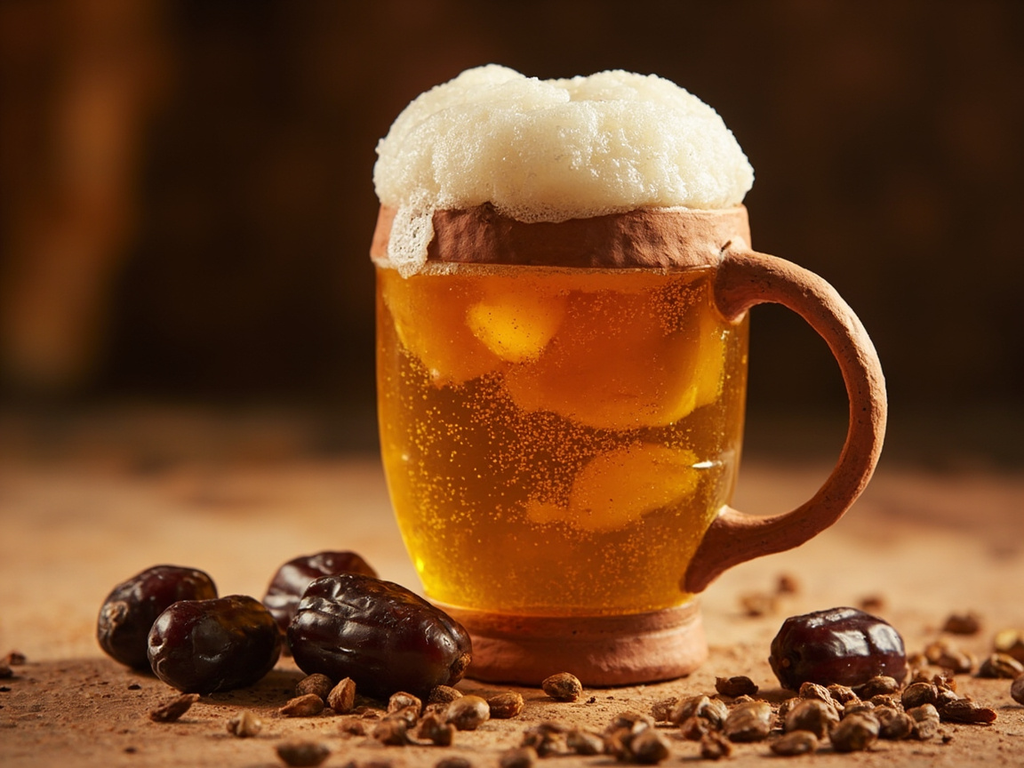 Drink
DrinkSweet date *henqet* beer
Offering and festival drink (*henqet*), poured on the *htep*
🍯 🫙 🍋· 3 h + 2 to 3 days fermentation
View the recipe
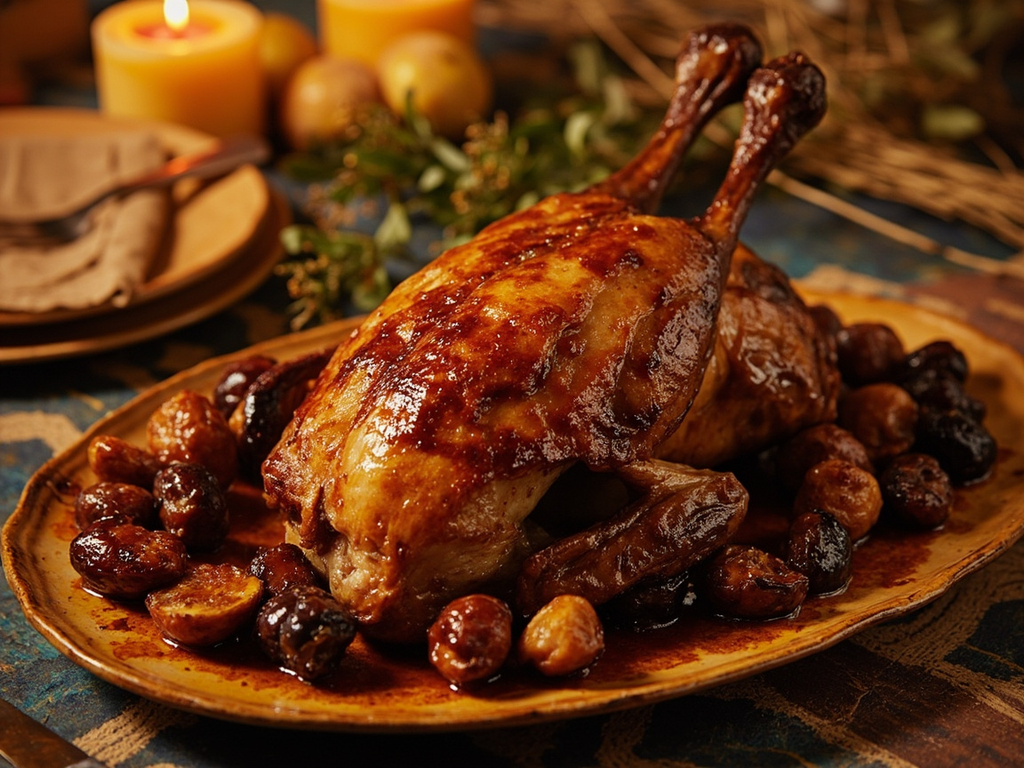 Festive
Honey and fig roast goose from the Banquet of Bubastis
Feast piece (poultry of the *htep*, grand festival meal)
🍯 🧂 🍄· 1 h 45
View the recipe
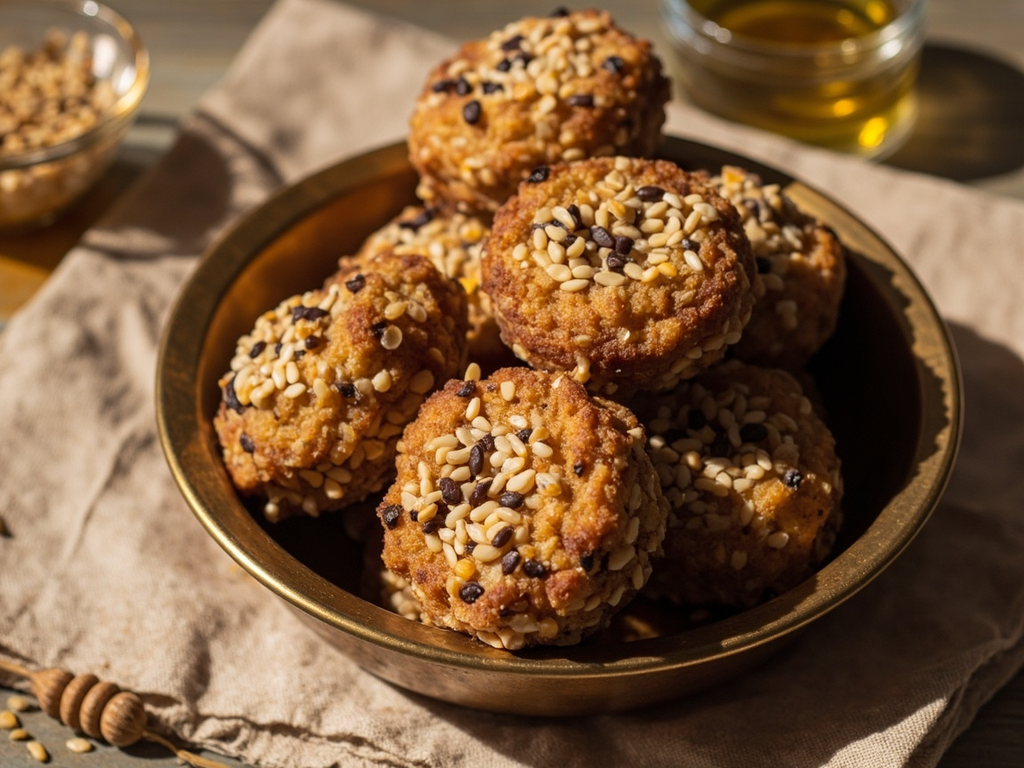 Street food
Tigernut cakes with honey and sesame
Offering sweet and street snack (*shâat* cake)
🍯 ☕· 25 min + 30 min resting
View the recipe