 flip
flipEmmer *pesen* bread for the altar
Emmer *pesen* bread for the altar
Why this dish? Bread is the very first offering inscribed on temple lists; piles of it were placed before each deity, including Bastet. *Pesen*, a round, flat loaf, is one of the types named in offering formulas.
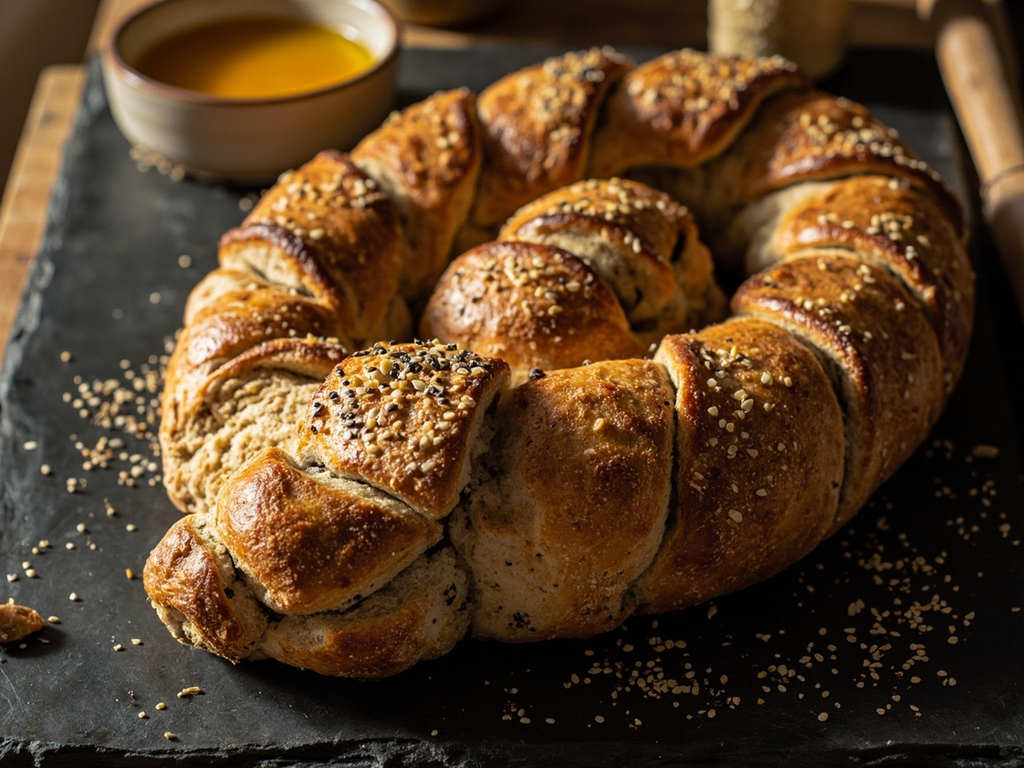
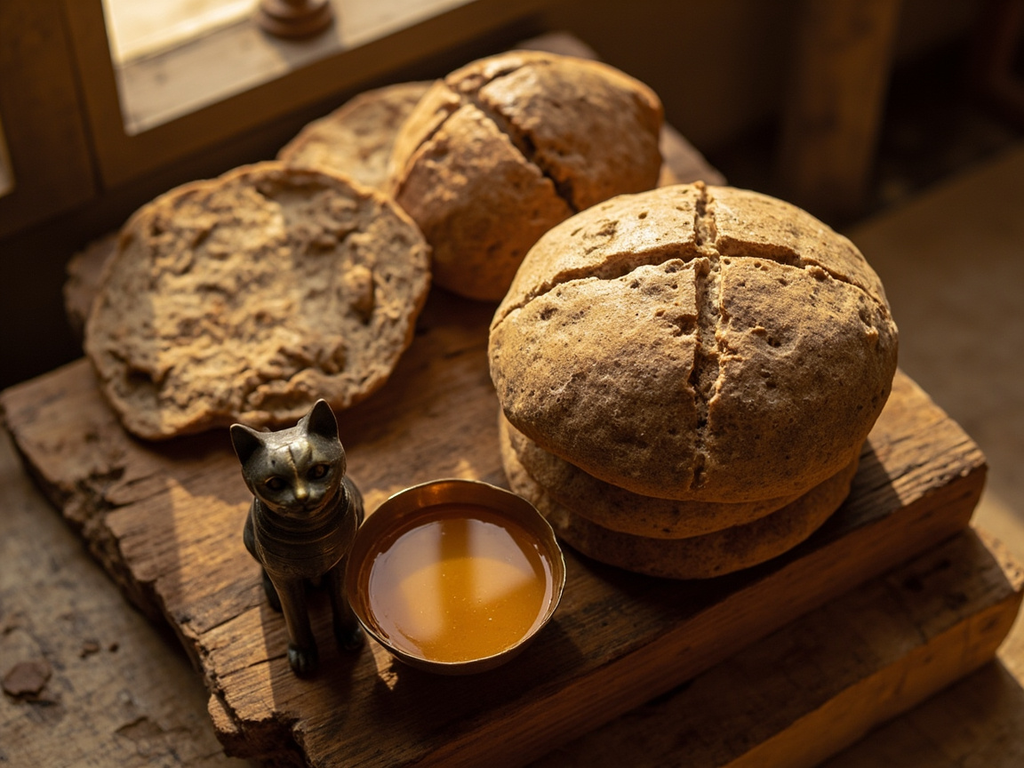
A round, dense loaf of emmer (the pharaohs' wheat), naturally leavened with a tight crumb, baked on a hot hearth. Rustic, slightly tangy, it was the foundation of every Egyptian table.
Bread, mortal, is the beginning of all that is offered. My priests knead the emmer that the Nile has nourished, let it swell with the invisible breath that sours the dough, then bake it over the fire until it sings under the finger. Stack them in a pyramid before my image, and let the scent rise to my cat's nostrils. What pleases me will then feed those who serve me: nothing is lost at my table.
- •Emmer (farro) flour — as needed (base)
- •Natural sourdough starter — a piece of yesterday's dough (leavening and acidity)
- •Nile water — as needed for dough (hydration)
- •Salt — a pinch (seasoning)
Emmer *pesen* bread for the altar
A round, dense loaf of emmer (the pharaohs' wheat), naturally leavened with a tight crumb, baked on a hot hearth. Rustic, slightly tangy, it was the foundation of every Egyptian table.
Why this dish? Bread is the very first offering inscribed on temple lists; piles of it were placed before each deity, including Bastet. *Pesen*, a round, flat loaf, is one of the types named in offering formulas.
Bread, mortal, is the beginning of all that is offered. My priests knead the emmer that the Nile has nourished, let it swell with the invisible breath that sours the dough, then bake it over the fire until it sings under the finger. Stack them in a pyramid before my image, and let the scent rise to my cat's nostrils. What pleases me will then feed those who serve me: nothing is lost at my table.
Ingredients (period version)
- Emmer (farro) flour — as needed (base)
- Natural sourdough starter — a piece of yesterday's dough (leavening and acidity)
- Nile water — as needed for dough (hydration)
- Salt — a pinch (seasoning)
Ingredients
- Spelt or einkorn flour — 500 g (base)
- Active natural sourdough starter — 100 g (leavening and acidity)
- Warm water — 300 ml (hydration)
- Salt — 8 g (seasoning)
Method
- Mix the flour, starter, and water until a supple dough forms; let rest 30 min.
- Add the salt and knead for 10 min, then let rise covered for 3 to 4 hours until doubled.
- Shape two thick round loaves, place them on a floured baking sheet.
- Let rise another 1 hour, score the top with a cross.
- Bake at 230 °C for about 30 min until golden crust and hollow sound when tapped.
How it was made : Excavations have found emmer bread thousands of years old, and microscopic analysis shows sourdough fermentation. Bread was baked in conical clay molds (*bedja*) or directly on hot slabs; offering lists distinguish dozens of bread types.
The contemporary twist : Present the loaves stacked in a small pyramid on a wooden board, as on offering reliefs, with a bowl of honey alongside.
Sources : Samuel, D., Bread making and social interactions at Amarna, Egypt · Temple offering lists (*htep-di-nesut*)
Bastet · Charactorium