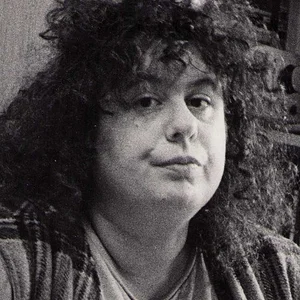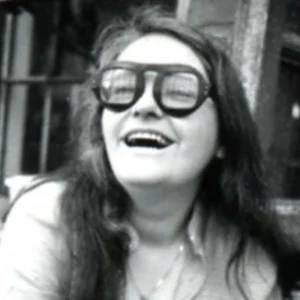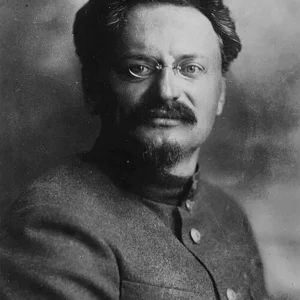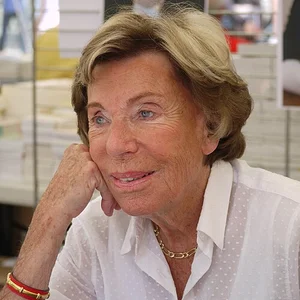

French writer and journalist (1920-2016), a major figure of feminism in France. Author of *Ainsi soit-elle* (1975), she campaigned throughout her life for women's rights and gender equality.
Benoîte Groult(1920 — 2016)
Benoîte Groult
France
7 min read
Frequently asked questions
Famous Quotes
« Feminism is not a war against men, it is a war against prejudice.»
« One is not born a woman, one becomes one — but one can also decide what one becomes.»
Key Facts
- 1920: Born in Paris into a cultivated bourgeois family
- 1975: Publication of *Ainsi soit-elle*, a foundational feminist essay and bestseller translated into numerous languages
- 1989: President of the Commission for the Feminization of Job Titles and Functions (General Delegation for the French Language)
- 2004: Officer of the Légion d'honneur for her literary and feminist commitment
- 2016: Died in Paris at age 96, celebrated as a pioneer of French feminism
Works & Achievements
A debut novel written in two voices with her sister Flora, alternating feminine perspectives in post-war France. It revealed both sisters' narrative talent and was an immediate success with readers and critics alike.
A landmark feminist essay that sold over 300,000 copies, offering a thoroughly documented portrait of women's condition in France. Published the same year as the Veil Act, it became an essential reference for the women's rights movement.
A love story between a Parisian intellectual and a Breton fisherman, translated into some twenty languages and adapted for the screen in 1993. This international bestseller proved that a feminist pen can also celebrate desire and the complexity of human feeling.
An essay devoted to everyday sexism and the mechanisms of male domination in contemporary French society. Benoîte Groult combines wit and rigour to analyse the persistent resistance to gender equality.
Memoirs in which Benoîte Groult traces her journey as a woman, a writer, and a feminist activist across nearly a century. A precious testimony to the evolution of women's condition in twentieth-century France.
Anecdotes
Benoîte Groult co-wrote her first novel with her younger sister Flora, 'Journal à quatre mains' (1962), alternating voices with each chapter. This strikingly original literary device immediately won over readers and launched both sisters onto the French literary scene.
In 1975, 'Ainsi soit-elle' was published the same year as the Veil Act legalizing abortion. This was no coincidence: Benoîte Groult, like thousands of French feminists, had campaigned for years for women's right to control their own bodies. The book sold over 300,000 copies.
In the 1980s, Benoîte Groult chaired the Terminology Commission for the Feminization of Job Titles, established by Minister Yvette Roudy. She passionately championed forms such as 'une auteure', 'une députée', or 'une médecin', arguing that language shapes social representations.
Her novel 'Les vaisseaux du cœur' (1988) — published in English as 'Salt on Our Skin' — tells the story of a passionate love affair between a Parisian intellectual and a Breton fisherman. Adapted for the cinema in 1993, it became an international bestseller, surprising those who could not imagine that a feminist might also celebrate desire.
Well into her nineties, Benoîte Groult continued to speak out publicly on women's rights. She published 'Mon évasion' in 2008, her memoirs, in which she recounts how writing and feminism enabled her to break free from the roles assigned to women of her generation.
Primary Sources
In this work, Groult builds a documented case against the condition of women: "Women have always been defined by what they lack rather than by what they are." She calls for a collective awakening and a radical transformation of relations between the sexes.
In this account alternating between two female voices, the Groult sisters bear witness to the lives of young women in 1940s France: "We wanted to tell two ordinary women's lives — with their hopes, their contradictions, and that stubborn longing for something more."
In her memoirs, Benoîte Groult reflects on her feminist awakening: "It took me a long time to understand that writing was a form of freedom for me — the only one that depended on me alone. To write was to exist in a way that was not mediated by the male gaze."
Benoîte Groult analyses everyday sexism with wry irony: "Male self-assurance is not a gift of nature — it is a privilege manufactured by centuries of quiet domination. Women, for their part, still have to fight for the right to exist out loud."
Key Places
Benoîte Groult was born in Paris in 1920 and spent most of her life there. It was in the capital that she built her career as a writer, journalist, and feminist activist.
Benoîte Groult owned a house in Saint-Tropez, where she regularly retreated to write. It was there that she passed away on 20 June 2016, at the age of 96.
Brittany was a land close to Benoîte Groult's heart, whose wild landscapes she evoked in *Salt on Our Skin*. The sweeping Breton coastline left a lasting mark on her novelistic imagination.
Benoîte Groult worked here as a journalist and columnist for several years, contributing to the rise of a committed women's press. It was a place of intellectual exchange and a platform for spreading her feminist ideas.
Typical Objects

Like most writers of her generation, Benoîte Groult typed her manuscripts on a typewriter before switching to word processing. The tool embodies the daily, relentless work of the writer.

Benoîte Groult collaborated for many years with Elle magazine, one of the first major media outlets to give women a voice. She published outspoken columns there that reached audiences well beyond activist circles.

Like many French feminists, Benoîte Groult read and reread Simone de Beauvoir. Her annotated copy bears witness to the intellectual debt she readily acknowledged to this pioneer.

Benoîte Groult kept notebooks throughout her life, recording observations, reflections, and drafts. This practice fed both her novels and her feminist essays.

Benoîte Groult was at the heart of the mobilizations for abortion rights. This iconic petition, signed by 343 women including Simone de Beauvoir, represents the kind of collective action that marked her lifelong activism.

As president of the commission for the feminization of professional titles, Benoîte Groult came head-on against the resistance of the Académie française. The dictionary symbolizes the political battle for a language that makes women visible.
School Curriculum
Vocabulary & Tags
Key Vocabulary
Daily Life
Morning
Benoîte Groult rises early and devotes her mornings to writing — the only truly quiet time in a very busy life. She types her texts on a typewriter, then later on a word processor, revising tirelessly until she finds exactly the right phrase.
Afternoon
Her afternoons are often taken up with journalism for *Elle* and other magazines, as well as meetings with feminist activists and fellow writers. She also takes part in committee sessions and public debates.
Evening
In the evenings, Benoîte Groult entertains family and friends in her Paris apartment or at her house in the South of France. Conversations range from politics to literature, always driven by the same wit and appetite for lively argument.
Food
A heir to the French bourgeois tradition, she has a particular fondness for southern cuisine — grilled fish, sun-drenched vegetables, Provençal rosé — especially during her stays in Saint-Tropez. For her, the table is a place for conviviality and conversation.
Clothing
Benoîte Groult favors an elegant but unfussy style, rejecting the overly restrictive dress codes imposed on women of her social circle. She chooses practical, comfortable outfits that take her seamlessly from her writing desk to an evening out.
Housing
She lives mainly in Paris in an apartment filled with books, a reflection of her intense intellectual life. She also has a house in Saint-Tropez where she loves to write facing the sea, away from the bustle of Paris, and where she spends every summer.
Historical Timeline
Period Vocabulary
Liens externes & ressources
Références
Œuvres
Journal à quatre mains (avec Flora Groult)
1962
Ainsi soit-elle
1975
Cette mâle assurance
1993
Mon évasion — autobiographie
2008