 Flip the card
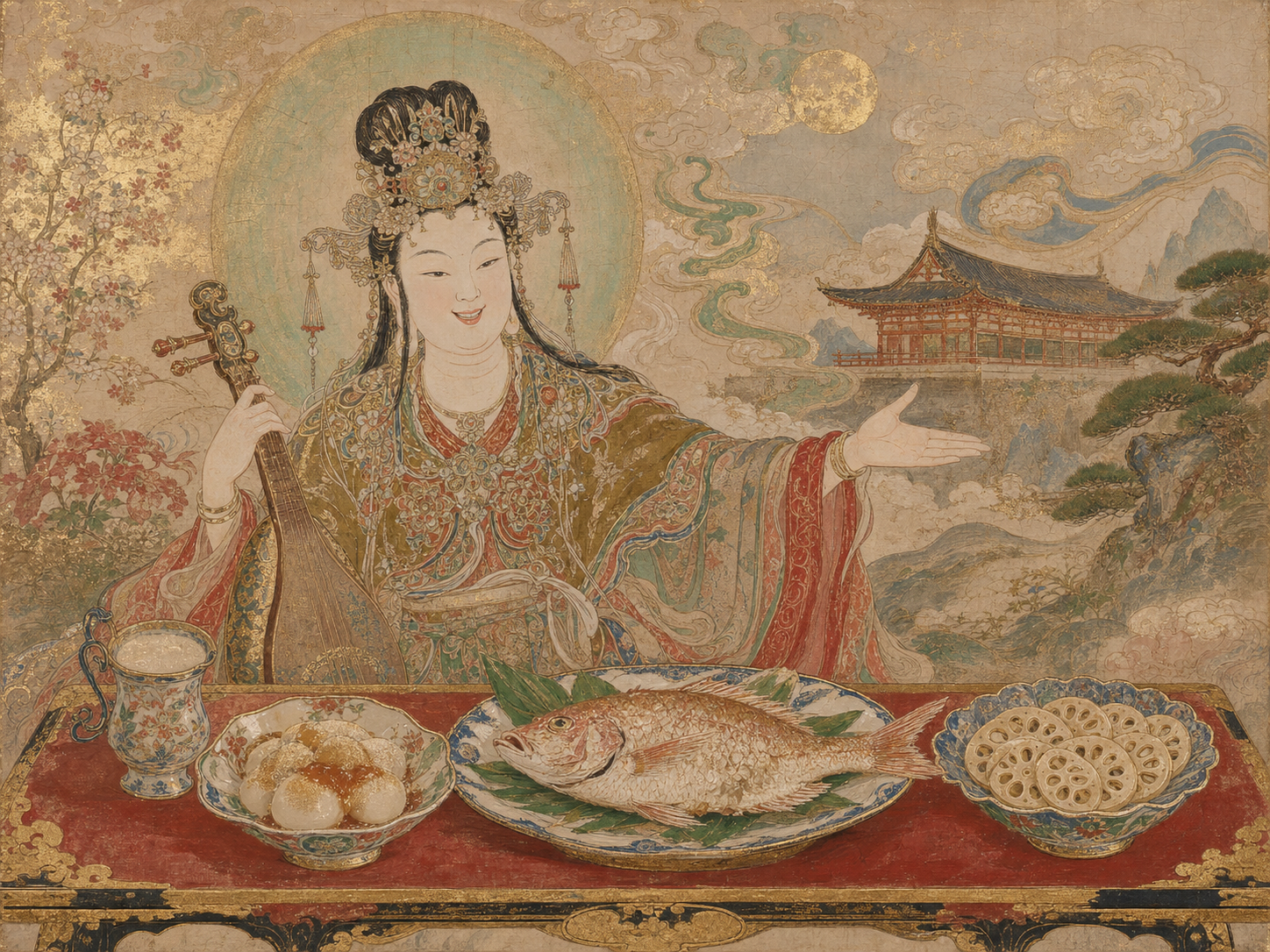
Benzaiten at the table
On the menu
Shinsen (神饌) — Sacred Offerings
In Japanese tradition, a meal is not served to a deity as to a guest; instead, pure offerings called shinsen are arranged on light wood trays (sanbō). Order matters: first rice and water, then sake, sea or lake fish, seasonal vegetables, and fruits. White — rice, mochi, lotus — dominates, for it is the color of purity and of the white serpent, messenger of Benzaiten. At shrines set on water (Enoshima, Chikubushima, Itsukushima), fishermen and worshippers add the bounty of their lake or sea.
Signature : White Rice in All Its Forms
Cooked rice, pounded rice into mochi, fermented rice into amazake: a single grain, three states, all offered to the goddess of water and music. Immaculate white is the common thread — it evokes the white serpent that accompanies her and the lotus of purity she holds. To sweeten without cane sugar (rare and precious in the Heian period), they used amazura, a vine sap syrup that Sei Shōnagon already praised on shaved ice.
click to flip back
Benzaiten at the table
5 period recipes
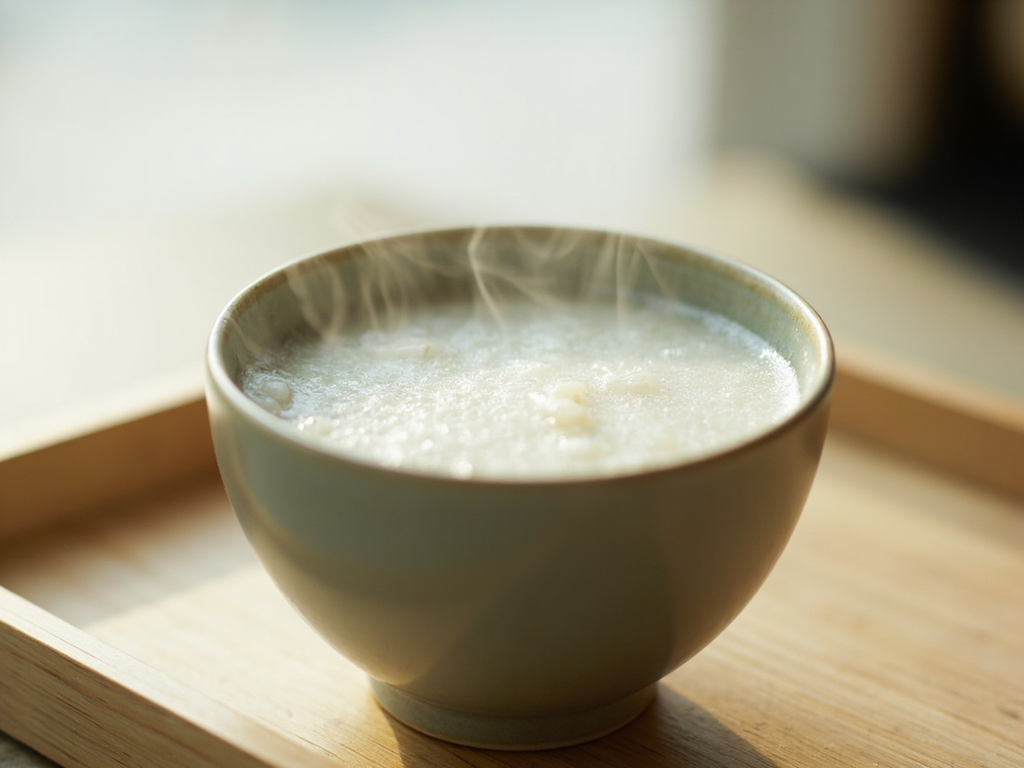 Drink
DrinkAmazake — Sweet Rice Nectar
Liquid shinsen (drink offering, ki-shinsen)
🍯 🫙· 20 min + 8 h fermentation
View the recipe
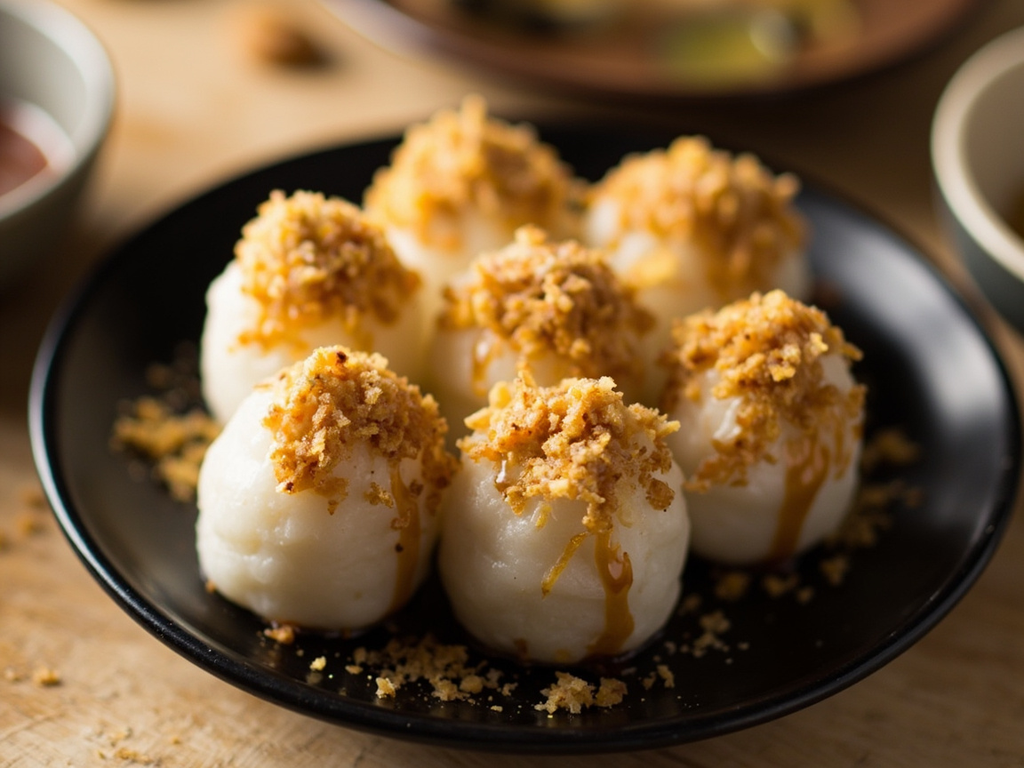 Offering
White Mochi with Kinako and Amazura Syrup
Solid shinsen (pounded rice offering, kagami-zonae)
🍯· 30 min
View the recipe
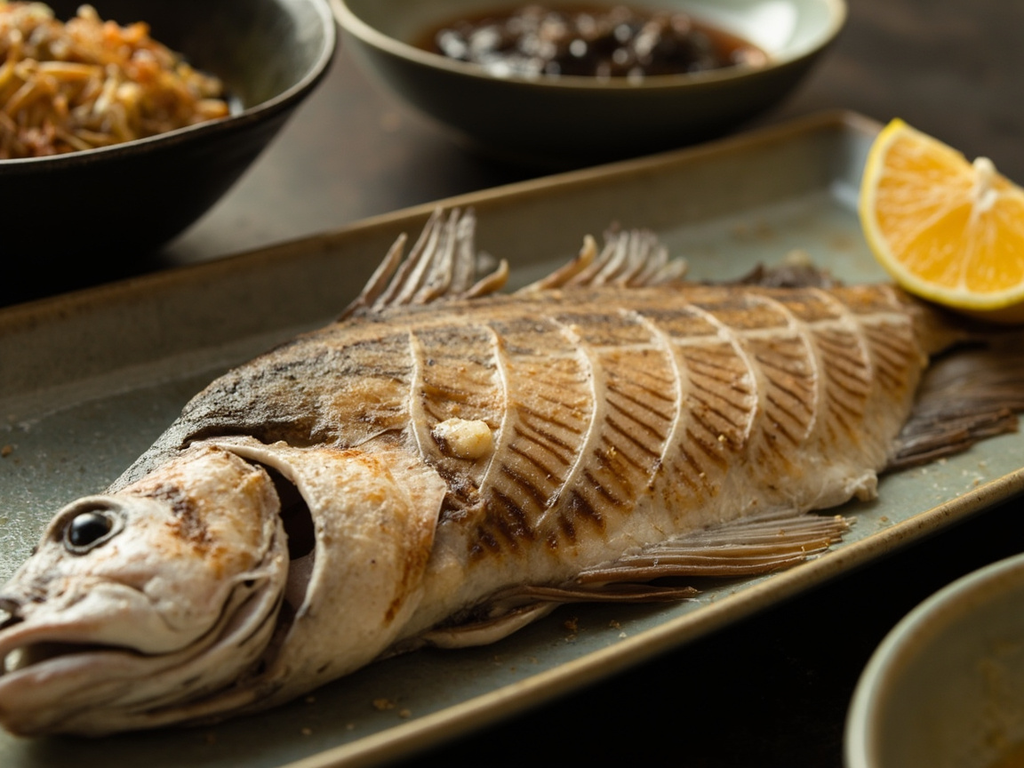 Festive
Tai no Shioyaki — Salt-Grilled Sea Bream from Seaside Shrines
Sea shinsen (fish offering, honorific namasu/yaki-mono)
🍄 🧂· 40 min
View the recipe
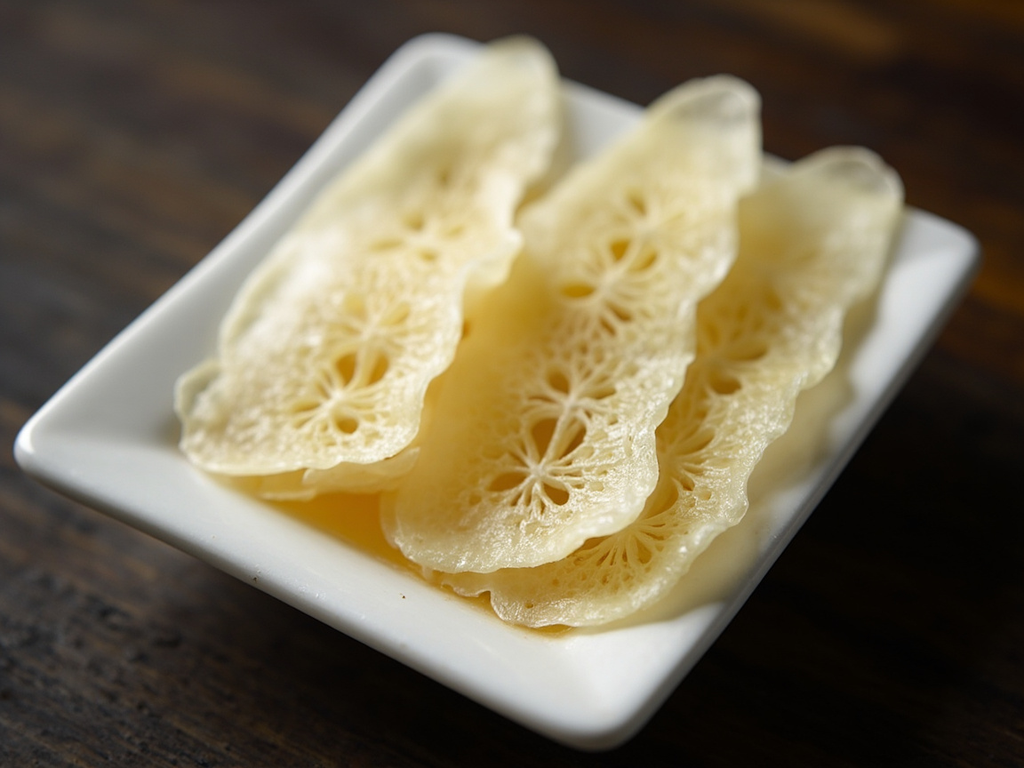 Everyday
Su-renkon — Vinegared Lotus Root
Vegetable shinsen (seasonal offering, tangy namasu)
🍋 🍯· 20 min + 1 h marinating
View the recipe
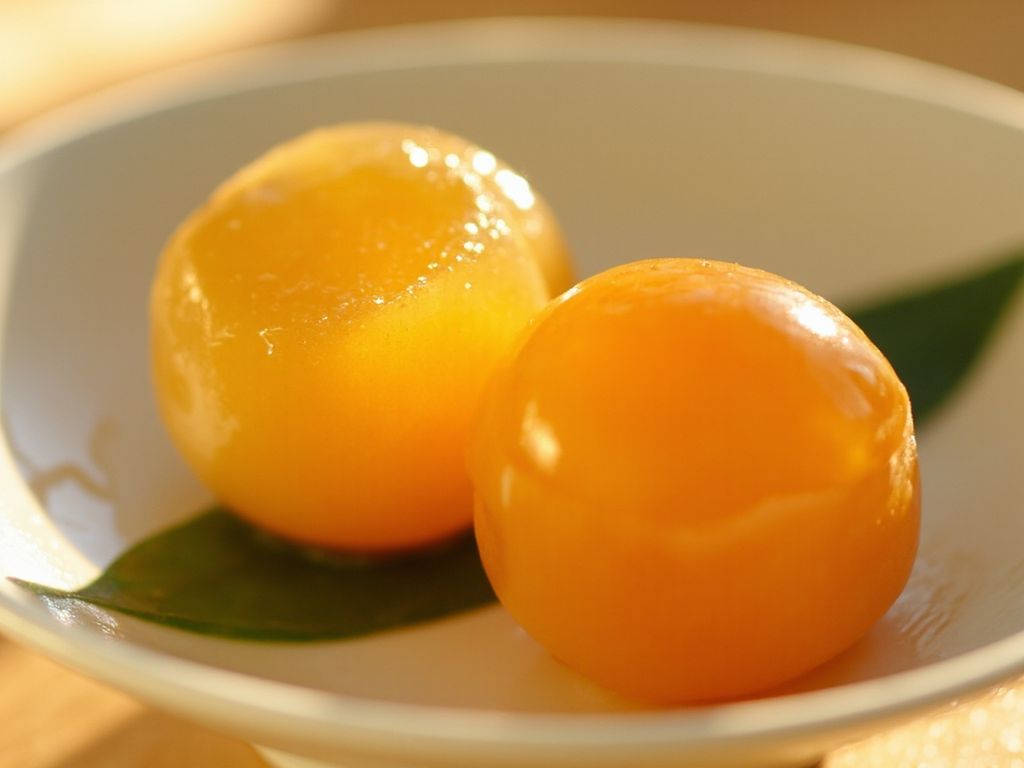 Preserving
Biwa in Syrup — Candied Japanese Loquats
Fruit shinsen (preserved seasonal offering, kanmi)
🍯 🍋· 30 min
View the recipe