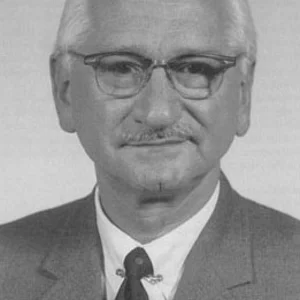

An American inventor nicknamed "Lady Edison," Beulah Henry filed more than 110 patents between 1912 and 1970, covering household appliances, bobbinless sewing machines, and various practical tools. A pioneer in a field almost exclusively dominated by men, she founded several companies to bring her inventions to market.
Beulah Henry
Beulah Louise Henry
7 min read
Frequently asked questions
Key Facts
- Born in 1887 in Ramer, Tennessee, United States; died in 1973
- First patent filed in 1912 for a vacuum ice cream freezer
- 110 official patents in total, many of them inventions designed to simplify household tasks
- Invented a bobbinless sewing machine, revolutionizing the textile industry
- Founded several companies to develop and commercialize her patents
Works & Achievements
Beulah Henry's first patent, this invention marked the beginning of her long career and opened the doors of the American industrial invention world to her.
Combining aesthetics and functionality, this umbrella with replaceable colored silk canopies achieved commercial success and demonstrated her ability to create products for the women's market.
A major innovation in the textile industry, this machine eliminated the lower bobbin found in traditional devices, considerably simplifying their use in garment workshops.
A patented toy with variable-color eyes, this doll showcased the breadth of fields explored by Beulah Henry, ranging from heavy industry to mass-market toys.
A device enabling multiple simultaneous copies to be made on a standard typewriter, it was a forerunner of the reprographic technologies used in 20th-century offices.
An exceptional body of more than 110 patents covering fields as varied as household appliances, sewing, toys, and office supplies, making Beulah Henry one of the most prolific inventors of her era.
Anecdotes
At just 25 years old, Beulah Henry filed her very first patent in 1912 for a vacuum-sealed ice cream freezer that could preserve ice cream without mechanical refrigeration. This invention marked the beginning of a career spanning more than 110 patents, quickly earning her the nickname "Lady Edison" in the American press.
One of her most popular inventions was an umbrella fitted with interchangeable silk covers in different colors, allowing women to coordinate the accessory with their outfit. Marketed in the 1920s, this umbrella was a great commercial success and showcased her ability to combine technical ingenuity with a keen sense of the market.
Beulah Henry designed a sewing machine that operated without a bobbin, solving one of the most frustrating drawbacks of traditional machines of the era. This patent greatly simplified the work of both professional and amateur seamstresses by eliminating the frequent interruptions caused by replacing the lower thread.
Her doll "Miss Illusion" featured eyes whose color could change thanks to a clever mechanism. This invention captivated children and adults alike, and demonstrated the inventor's creativity — she was just as interested in toys as in industrial machinery.
Although she held no engineering degree, Beulah Henry regularly collaborated with engineers to bring her ideas to life — ideas she conceived mentally with remarkable precision. She founded several companies to commercialize her inventions, refusing to sign away her rights without compensation and managing her affairs with an independence that was rare for a woman of her time.
Primary Sources
I, Beulah Henry, a citizen of the United States, residing at Raleigh, in the county of Wake and State of North Carolina, have invented a new and useful Vacuum Sealed Container, of which the following is a specification.
The primary object of the invention is to provide an umbrella having an interchangeable cover so that a single frame may be used with covers of different colors or designs.
Miss Beulah Henry, known as the Lady Edison, has been granted 49 patents and has 100 inventions to her credit. She is not an engineer and does not know how to make a blueprint, yet she has conceived and developed mechanical devices of considerable ingenuity.
The object of the present invention is to provide an improved ice cream freezer which may be readily assembled and disassembled and in which the parts are so arranged that the device may be conveniently and efficiently operated.
Key Places
The city where Beulah Henry grew up and attended the Peace Institute. It was from Raleigh that she filed her very first patent in 1912, launching an extraordinary career as an inventor.
Beulah Henry settled in New York, where she built the bulk of her career — collaborating with engineers, negotiating with industrialists, and founding several companies to bring her inventions to market.
A women's college where Beulah Henry pursued her studies, gaining a broad general education that fed her inventive mind — even though she never earned an engineering degree.
The federal agency where Beulah Henry filed more than 110 patents over the course of her career, navigating an almost exclusively male environment to win official recognition for her inventions.
Typical Objects

Beulah Henry's first patent in 1912, this device kept ice cream in an airtight container without mechanical freezing — a practical innovation for American households in the early twentieth century.

Patented in 1921, this umbrella allowed the colored silk canopy to be swapped to match an outfit, blending feminine elegance with mechanical ingenuity for immediate commercial success.

One of her most significant inventions, this machine revolutionized seamstresses' work by eliminating the lower bobbin — a constant source of interruptions and tedious adjustments.

This innovative doll featured eyes that could change color through an internal mechanism, offering a novel play experience and showcasing the inventor's creative versatility.

This attachment fitted onto a standard typewriter allowed several copies of a document to be produced simultaneously — a practical advance for offices long before the era of the photocopier.

With no training in technical drawing, Beulah Henry recorded her inventions in notebooks through detailed written descriptions and simple sketches, which she then handed to engineers to build the prototypes.
School Curriculum
Vocabulary & Tags
Key Vocabulary
Daily Life
Morning
Beulah Henry began her day in her New York apartment by jotting down new ideas in notebooks. Unlike conventional engineers, she did not draw up technical blueprints but described her inventions through detailed explanations and simple diagrams intended for her collaborators.
Afternoon
Afternoons were devoted to meetings with engineers and manufacturers who translated her concepts into working prototypes. She also visited production workshops to ensure her inventions were being made correctly, negotiating terms with an authority that was uncommon for a woman of her era.
Evening
In the evenings, Beulah Henry sometimes received journalists or investors interested in her creations. She continued to think about new problems to solve, drawing inspiration from everyday objects and the practical needs of the women around her.
Food
Like a woman of the prosperous American middle class in the early twentieth century, Beulah Henry followed the dietary habits of her social circle: meats, cooked vegetables, breads, and desserts were standard fare. Her early interest in the ice cream freezer speaks to a particular fondness for the frozen treats popular at the time.
Clothing
Beulah Henry dressed with the care expected of an American businesswoman between the 1920s and 1950s: tailored suits, hats, and gloves were de rigueur for her professional appointments. Her umbrella with interchangeable covers reflected her attention to fashion accessories, which she saw as objects with room for improvement.
Housing
Beulah Henry lived for many years in a New York City apartment, the nerve center of her professional and creative life. Unlike inventors working in institutional laboratories, she transformed her personal spaces into informal workshops where her ideas took shape.
Historical Timeline
Period Vocabulary
Liens externes & ressources
Références
Œuvres
Sorbetière sous vide hermétique
1912
Parapluie à housses interchangeables
1921
Machine à coudre sans bobine
vers 1940
Poupée Miss Illusion
vers 1935
Accessoire duplicateur pour machine à écrire
vers 1932
Portefeuille de brevets industriels (1912–1970)
1912–1970