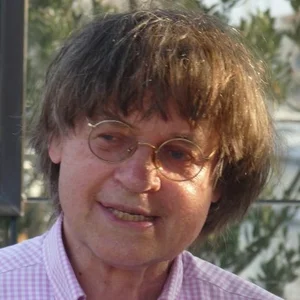

Cabu (1938-2015) was a French press cartoonist, creator of the Grand Duduche and the caricatural character of the Beauf. A major figure in satirical caricature, he contributed to Hara-Kiri and then to Charlie Hebdo, where he was murdered in the attack of January 7, 2015.
Cabu(1938 — 2015)
Cabu
France
5 min read
Frequently asked questions
Key Facts
- Born in 1938 in Châlons-sur-Marne (today Châlons-en-Champagne)
- Created the character of the Grand Duduche starting in 1963 in Pilote
- Took part in founding Hara-Kiri and then Charlie Hebdo in the 1960s-1970s
- Invented the satirical figure of the “Beauf” in the 1970s, which entered everyday language
- Was murdered on January 7, 2015 in the attack on Charlie Hebdo, along with several of his colleagues
Works & Achievements
A dreamy, pacifist high-school student character created in Pilote, one of Cabu's most famous and endearing creations.
A caricature of the average racist, reactionary Frenchman, whose name entered everyday language and the dictionaries.
His work for the “dumb and nasty newspaper,” a breeding ground for the satirical, irreverent humour of his generation.
Thousands of biting topical cartoons that made him one of the most influential caricaturists in France.
Drawings made live on children's television, which introduced his style to generations of kids.
A collection of drawings reflecting his love for the capital and his tender view of Parisian life, beyond political satire.
One that became emblematic of the French debate over freedom of expression and blasphemy in the press.
Anecdotes
Cabu was born Jean Cabut in Châlons-sur-Marne (now Châlons-en-Champagne) in 1938. His pen name “Cabu” is simply formed from the first letters of his family name, Cab-ut, a signature he used from his earliest childhood drawings.
In 1954, while still a high-school student, Cabu was already publishing drawings in the local newspaper *L'Union* in Reims. His calling was so precocious that he is said to have drawn constantly, including in class, filling his notebooks with caricatures of his teachers and classmates.
Sent to do his military service in Algeria from 1958 to 1960, Cabu came back deeply affected and became a committed antimilitarist. This experience would feed his entire body of satirical work against the army and war for decades.
In 1978, Cabu invented the character of the “Beauf,” a caricature of the average Frenchman: racist, reactionary and pleased with himself. The word, derived from *beau-frère* (brother-in-law), entered everyday language and now appears in French dictionaries.
In the 1970s and 1980s, Cabu became a familiar figure to children thanks to the television show *Récré A2*, where he drew “Le Dodu” live and sketched the presenters, introducing his style to a whole young audience.
Primary Sources
Editorial cartooning is a weapon. You don't fight with flowers, you fight with pencils.
“It's hard being loved by jerks” — drawing by Cabu depicting Muhammad in tears.
The beauf is the opposite of culture, the opposite of generosity, the opposite of tolerance. He's the average Frenchman at his very worst.
Key Places
Cabu's birthplace, where he spent his childhood and made his first drawings. He remained deeply attached to it throughout his life.
Where he did his military service from 1958 to 1960, during the war of independence. This experience shaped his anti-militarism and fueled his satire.
Cabu's workplace and the scene of the January 7, 2015 attack in which he was murdered. Located on rue Nicolas-Appert in the 11th arrondissement.
The city where Cabu lived and worked for most of his career, at the heart of the French satirical press.
The epicenter of the gatherings and tributes following the January 2015 attack, becoming the symbolic site of mourning and support for freedom of expression.
Typical Objects

Cabu's constant working tool, which he always kept on him to sketch scenes and faces on the spot. He drew quickly, with a nervous, instantly recognizable line.

The press cartoonist's classic instruments for inking drawings before publication. The deep black of the India ink gave Cabu's line its graphic power.

The satirical weekly where Cabu published his most famous drawings and where he was murdered. A vehicle for topical caricature and freedom of expression.

His round-framed glasses and bowl haircut were part of his instantly recognizable silhouette, almost as much as his drawings.

The board on which Cabu drew live during the show Récré A2, introducing children to his art. The drawing appeared right before the audience's eyes.
School Curriculum
Vocabulary & Tags
Key Vocabulary
Daily Life
Morning
An early riser, Cabu often began his day by carefully reading the newspapers, searching for the news story that would inspire his cartoon of the day. Notebook in hand, he was already sketching scenes from the streets and the Paris metro.
Afternoon
Afternoons were devoted to work at the editorial office, where editorial meetings were held to choose the topics. He drew quickly, under the pressure of the deadline, chatting and joking with his fellow cartoonists.
Evening
In the evening, Cabu, a jazz enthusiast, gladly frequented Parisian clubs and concerts. A lover of music and lively popular settings, he often kept on sketching the musicians and the audience.
Food
A simple, unpretentious man, Cabu enjoyed traditional French cooking and convivial meals with his friends from the editorial staff. He showed no taste for luxury or high society.
Clothing
He was recognizable by his unchanging silhouette: a bowl haircut, large round glasses, and casual outfits. His look of an “overgrown teenager” barely changed over the years.
Housing
Cabu lived in Paris, as close as possible to the world of the press and newsrooms. His daily life was set to the rhythm of the city, its transport and its cafés — permanent grounds for observation for his drawings.
Historical Timeline
Period Vocabulary
Liens externes & ressources
Références
Œuvres
Le Grand Duduche
1960
Le Beauf
1978
Dessins pour Hara-Kiri
années 1960-1970
Dessins pour Charlie Hebdo
1970-2015
Croquis en direct de Récré A2
1978-1988
Cabu et Paris
2006
La caricature de Mahomet « C'est dur d'être aimé par des cons »
2006