
An American legal scholar and feminist theorist, Catharine MacKinnon is one of the most influential intellectuals of radical feminism. She theorized sexual harassment as a form of discrimination and helped establish its legal recognition in the United States.
Catharine MacKinnon(1946 — ?)
Catharine MacKinnon
États-Unis
8 min read
Frequently asked questions
Famous Quotes
« Feminism asks the law to recognize women as human beings.»
« Sexual harassment is a form of sex discrimination.»
Key Facts
- Born on October 7, 1946, in Minneapolis, Minnesota.
- Published in 1979 'Sexual Harassment of Working Women', a foundational work on sexual harassment.
- Helped establish sexual harassment as a form of sex discrimination before the U.S. Supreme Court in 1986 (Meritor Savings Bank v. Vinson).
- Collaborated with Andrea Dworkin to draft anti-pornography ordinances in the 1980s.
- Professor at the University of Michigan Law School since 1990.
Works & Achievements
A foundational work that theorizes sexual harassment as a form of sex discrimination for the first time, providing the legal framework later adopted by the U.S. Supreme Court in 1986.
A collection of speeches and lectures in which MacKinnon develops her vision of a radical feminism centered on sexuality, power, and the legal subordination of women.
A systematic analysis of how the state and the law institutionalize male dominance — a landmark reference in feminist political theory.
An essay on pornography in which MacKinnon argues that pornographic representations are themselves a form of discrimination and violence against women, not merely protected expression.
A pioneering piece of legislation that would have allowed victims of pornography to sue its producers in civil court for sex discrimination. It was passed but ultimately blocked, and became a defining moment in the history of radical feminism.
A collection of essays on women's rights in international law, including MacKinnon's contributions to prosecutions of rape as a war crime during the Yugoslav conflicts of the 1990s.
Anecdotes
Before Catharine MacKinnon's work, sexual harassment in the workplace had no legal existence in the United States. In her 1979 book, she demonstrates that these behaviors constitute sex discrimination under the Civil Rights Act of 1964, a thesis the U.S. Supreme Court adopted seven years later in Meritor Savings Bank v. Vinson (1986), explicitly citing her work.
In 1983, MacKinnon co-wrote with feminist author Andrea Dworkin a municipal ordinance for Minneapolis allowing victims of pornography to sue its producers for sex discrimination in civil courts. The city council adopted it twice, but the mayor vetoed it both times, arguing that it could threaten freedom of expression guaranteed by the First Amendment.
In the 1990s, MacKinnon represented Bosnian and Croatian women who had been victims of systematic rape during the Yugoslav wars before international criminal tribunals. She helped establish rape as an instrument of genocide and a crime against humanity — a landmark development in international humanitarian law that set a binding legal precedent.
MacKinnon developed a fundamental distinction between formal equality — treating everyone the same while ignoring existing inequalities — and substantive equality — taking real power relations into account. She illustrates this idea by showing that applying the same rules to people in unequal situations does not correct inequality, but reproduces it under the guise of neutrality.
Primary Sources
Sexual harassment, most broadly defined, refers to the unwanted imposition of sexual requirements in the context of a relationship of unequal power. Central to the concept is the use of power derived from one social sphere to lever benefits or impose deprivations in another.
If sexuality is central to women's situation and if women's situation is not biological, sexuality must be largely a social construct. This does not mean it has no basis in material reality or that it is not real.
The state, expressed through law, institutionalizes the power of men over women through its definition of gender. The criminal law prohibits rape, but it defines rape in ways that make it difficult to prove.
Pornography does not merely depict gender hierarchy, it creates it. Real women are used to make it. Real women are hurt in making it. Real women are hurt by its use.
If women were human, would we be a cash crop shipped from country to country and auctioned off to the highest bidder? Would we be sexual and reproductive slaves?
Key Places
MacKinnon completed her undergraduate studies here in the 1960s at this historically women's university, a cradle of many American female intellectuals and feminist activists.
MacKinnon earned both her law degree and her doctorate in political science here, developing within this prestigious institution the legal theory of sexual harassment that would bring her worldwide renown.
MacKinnon taught as a law professor here for many years, training generations of students in feminist legal theory and continuing to produce her most important scholarship.
The city where MacKinnon and Andrea Dworkin drafted their pioneering anti-pornography ordinance in 1983, a landmark episode in American radical feminism and the debate between combating exploitation and protecting freedom of expression.
Seat of the International Criminal Tribunal for the former Yugoslavia, where MacKinnon contributed in the 1990s to having the systematic rapes committed during the Yugoslav Wars recognized as crimes against humanity.
MacKinnon has also taught here, reinforcing her influence across America's most prestigious legal institutions and ensuring the dissemination of her ideas at the highest levels of legal education.
Typical Objects

MacKinnon draws on this 1964 legislative text to demonstrate that sexual harassment constitutes discrimination prohibited by U.S. federal law. It is the central legal tool of her entire theory.

MacKinnon writes numerous amicus curiae briefs and pleadings for American and international courts, transforming her academic theory into a concrete legal weapon in service of the women she represents.

A prolific intellectual, MacKinnon has produced a considerable body of written work — books, articles, speeches — first on a typewriter in the 1970s, then on a computer, reflecting the technological evolution of the era.

MacKinnon holds a dual role as a law professor and practicing attorney. The academic gown in the lecture halls of Yale or Michigan, and the robe in the courtroom, symbolize this dual identity.

The works of Simone de Beauvoir, Betty Friedan, and Kate Millett form the intellectual references that MacKinnon invokes and surpasses in her own theorization of law and power.

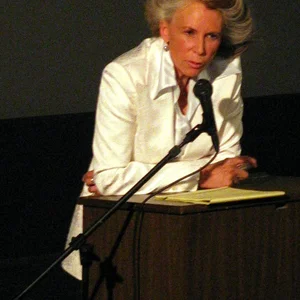
A widely recognized orator, MacKinnon defends her theses at academic conferences, international legal symposia, and before UN bodies, making public discourse an essential vehicle for her activism.
School Curriculum
Vocabulary & Tags
Key Vocabulary
Tags
Daily Life
Morning
MacKinnon begins her day by reading case law, academic articles, and the press. As a law professor, she prepares her courses by carefully annotating legislative texts and court rulings that continuously feed her theoretical thinking.
Afternoon
Afternoons are devoted to teaching and seminars with her law students at Michigan or Harvard. She regularly participates in feminist symposia and legal conferences, defending her positions with argumentative rigor that earns her as much admiration as opposition.
Evening
In the evenings, MacKinnon writes — law review articles, legal briefs, book chapters. A tireless worker, she dedicates a significant portion of her time to drafting briefs for the women she represents, particularly victims of wartime rape during the 1990s.
Food
An American intellectual of the second half of the twentieth century, MacKinnon moves through university campuses with their dining halls and the restaurants of college towns like Ann Arbor or New Haven. No particular dietary habits are documented in available sources.
Clothing
MacKinnon favors the sober professional attire of American women lawyers from the 1970s through the 2000s: suits, blouses, understated clothing that underscores her role as an attorney and law professor rather than making any particular fashion statement.
Housing
MacKinnon has lived primarily in university towns — New Haven during her studies at Yale, then Ann Arbor during her long years of teaching at Michigan. She has also spent time in New York in connection with her activist and legal work.
Historical Timeline
Period Vocabulary
Liens externes & ressources
Références
Œuvres
Sexual Harassment of Working Women
1979
Feminism Unmodified: Discourses on Life and Law
1987
Toward a Feminist Theory of the State
1989
Only Words
1993
Ordonnance anti-pornographie de Minneapolis (avec Andrea Dworkin)
1983
Are Women Human? And Other International Dialogues
2006