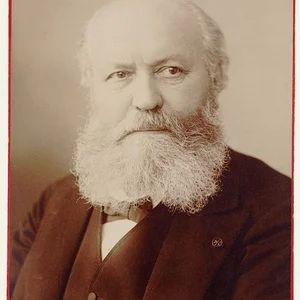

French composer (1818–1893), Charles Gounod is the creator of the opera Faust and the Ave Maria. A major figure in French lyric music, he left a profound mark on 19th-century musical life.
Charles Gounod(1818 — 1893)
Charles Gounod
France
7 min read
Frequently asked questions
Famous Quotes
« Music is the cry of the soul.»
« Art is long, life is short.»
Key Facts
- 1818: Born in Paris
- 1859: Premiere of the opera Faust in Paris, his most celebrated work
- 1867: Premiere of Roméo et Juliette at the Paris Opéra
- 1859: Composition of the Ave Maria based on Bach's Prelude
- 1893: Died in Saint-Cloud
Works & Achievements
A grand opera in five acts adapted from Goethe's masterpiece, Faust is Gounod's crowning achievement. Performed thousands of times the world over, it was for a long time the most frequently staged opera in the world.
Composed by layering a melody over the first prelude of Bach's *Well-Tempered Clavier*, this spiritual piece is one of the most celebrated melodies in the classical repertoire. It perfectly embodies Gounod's twin inspirations: music and religious faith.
A lyric opera in five acts adapted from Shakespeare, premiered at the Paris Universal Exhibition. The aria "Ah! lève-toi, soleil!" is one of the great tenor arias of the French lyric repertoire.
An opera adapted from the Provençal poem by Frédéric Mistral, Mireille reflects Gounod's interest in French regional traditions and his gift for popular, lyrical melody.
A sweeping oratorio in three parts on the life of Christ, premiered in Birmingham. This monumental work illustrates Gounod's ardent Catholic faith and his ambition to renew French sacred music.
One of Gounod's most celebrated masses, regularly performed at major religious ceremonies. It reflects the influence of Palestrina and the Renaissance polyphony he discovered during his time in Rome.
Anecdotes
Gounod composed his famous Ave Maria in 1853 by layering a lyrical melody over the first prelude of Bach's Well-Tempered Clavier. The piece, originally titled 'Meditation on the First Prelude of J. S. Bach,' became one of the most recognized melodies in the world. The idea of wedding Christian spirituality to the mathematical precision of Bach is quintessentially Gounod.
When his opera Faust premiered at the Théâtre-Lyrique in Paris on March 19, 1859, reviews were mixed. Yet the work quickly established itself as a worldwide triumph and became the most performed opera in the world for several decades, staged thousands of times in every major opera house.
Gounod was haunted throughout his life by a powerful religious calling. After his years in Rome (1839–1842), he seriously considered taking holy orders and even wore the novice's habit with the Fathers of the Holy Spirit. In the end, music won out — but his deep Catholic faith permeated his entire body of work.
During the Franco-Prussian War of 1870–1871, Gounod took refuge in England with his family. He stayed for several years, conducting choirs and enjoying great success. His London exile, marked by a turbulent relationship with the soprano Georgina Weldon, was one of the most turbulent periods of his life.
In the final years of his life, Gounod took part in demonstrations of Edison's phonograph in Paris around 1888. His voice was thus captured by this revolutionary invention, making him one of the first great composers to leave a direct sound recording. He died in 1893 at his piano, struck by a stroke while still at work.
Primary Sources
I was born a musician as one is born a poet: I no more chose my vocation than another chooses the color of his eyes.
Rome is a holy city for artists as much as for believers. Every stone speaks, every monument instructs. I feel that I am growing here, that something is forming within me that Paris could never have given.
M. Gounod has endowed the lyric theater with a work whose melodic grace and harmonic richness promise a long career on French and foreign stages.
Music is the language of angels; it alone can express what words can only touch upon, what the heart feels beyond human language.
Key Places
Charles Gounod was born on June 17, 1818, in Paris. The French capital, with its Conservatoire, its lyric theatres, and its musical salons, was the main stage of his career and his triumphs.
A resident of the Villa Medici from 1839 to 1842 thanks to the Prix de Rome, Gounod discovered Palestrina's polyphony and early sacred music there — a revelation that profoundly shaped his style.
The principal venue for the premieres of Gounod's operas: *Faust* was first performed there in 1859, *Mireille* in 1864, and *Roméo et Juliette* in 1867. This theatre, now long gone, was the stage for his greatest lyric successes.
Gounod settled in his villa at Saint-Cloud from the 1870s onward. It was there that he died on October 18, 1893, struck by apoplexy at his piano, surrounded by those close to him.
During his English exile, Gounod stayed in London, where he conducted choral societies and enjoyed great success with British audiences, helping to spread French music throughout England.