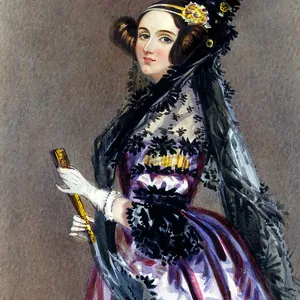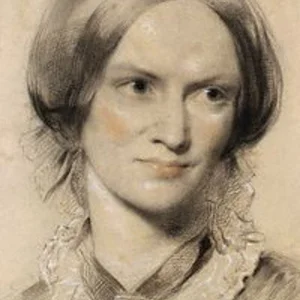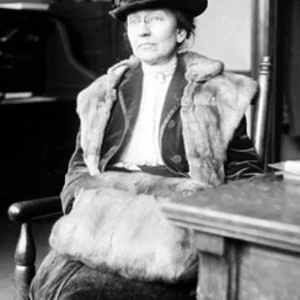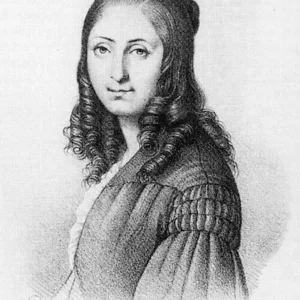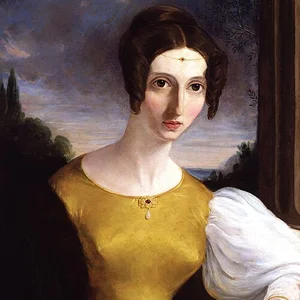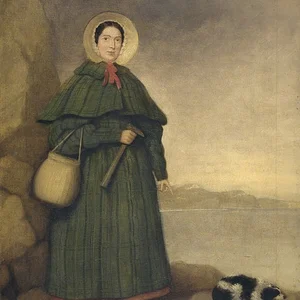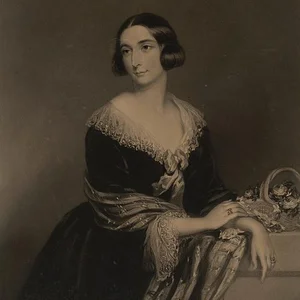

British translator and businesswoman (1812–1895), celebrated for her English translation of the Mabinogion, a foundational collection of medieval Welsh myths and legends. She also managed the Dowlais ironworks in Wales, becoming one of the first women to run a major industrial enterprise.
Charlotte Guest(1812 — 1895)
Charlotte Guest
Royaume-Uni de Grande-Bretagne et d'Irlande
9 min read
Frequently asked questions
Key Facts
- 1812: Born in Uffington, Lincolnshire, into an aristocratic family
- 1832: Married Sir John Josiah Guest, owner of the Dowlais ironworks in Wales
- 1838–1845: Published her English translation of the Mabinogion in three volumes, a collection of eleven Welsh mythological tales drawn from the Red Book of Hergest
- 1852: Following her husband's death, she took over the management of the Dowlais ironworks, one of the largest industrial complexes in the world at the time
- 1895: Died at Canford Magna; her translation remains a foundational academic reference for Celtic mythology
Works & Achievements
The first complete English translation of the eleven medieval Welsh mythological tales. It introduced the figures of Rhiannon, Pwyll, Culhwch, Olwen, and the Celtic version of Arthur to the English-speaking world for the first time, laying the foundations of modern Celtic studies.
Accompanying her translation, these comparative notes draw pioneering parallels between Welsh mythology and continental Arthurian legend. They had a profound influence on Celtic and medieval studies throughout the nineteenth century.
Charlotte took charge of running one of the largest industrial sites in Wales, employing more than 7,000 workers. She was a trailblazer as a female business leader in Victorian England, overseeing contracts, labor disputes, and strategic decisions.
Charlotte and her second husband assembled the most significant known collection of historic European playing cards. Donated to the British Museum in 1888, it remains a world reference for the history of decorative arts and printing.
An exceptional account of life as an intellectual and businesswoman in Victorian England, weaving together reflections on translation work, industrial management, and the customs of the British aristocracy.
Anecdotes
Charlotte Guest taught herself Welsh — later with the help of local tutors — in order to read medieval Welsh manuscripts directly. This was a truly remarkable undertaking for an English aristocrat in the Victorian era. It gave her access to the Red Book of Hergest, a 14th-century manuscript that served as the primary source for the eleven tales she would translate in her edition of the Mabinogion.
The translation of the Mabinogion was published in several volumes between 1838 and 1849, accompanied by scholarly notes comparing Welsh myths to the Arthurian legends of the French poet Chrétien de Troyes. Charlotte Guest was among the first to argue that the Arthurian cycle had its roots in Welsh Celtic mythology — a thesis now widely accepted by medieval scholars.
After the death of her husband Josiah Guest in 1852, Charlotte took over the management of the Dowlais ironworks, one of the largest industrial complexes in Wales with more than 7,000 workers. She ran the business for three years with remarkable authority, at a time when women were entirely excluded from the worlds of commerce and industry.
Charlotte Guest was a passionate collector: together with her second husband Charles Schreiber, she travelled across Europe assembling an exceptional collection of ceramics and historic playing cards. Donated to the British Museum in 1888, the Schreiber Collection of playing cards remains to this day one of the most important in the world.
Charlotte deliberately chose not to translate certain passages of the Mabinogion that she considered too explicit for young Victorian readers, including erotic elements in the tale of Math fab Mathonwy. In doing so, she imposed her own moral sensibility onto a mythological tradition over a thousand years old, illustrating the enduring tension between cultural transmission and censorship.
Primary Sources
"In the days when Arthur was at Caerlleon upon Usk, he sat one day in his chamber; and with him were Owain the son of Urien, and Kynon the son of Clydno, and Kai the son of Kyner; and Gwenhwyvar and her hand-maidens at needlework by the window."
"I have now completed the translation of the Mabinogion, a task which has occupied me for nearly twelve years, and which I have pursued with unabated interest to the last."
A 14th-century Welsh manuscript held at the Bodleian Library in Oxford, and the primary source for the tales of the Mabinogion. Charlotte Guest consulted it to establish her reference text and comparative notes.
"The works were my care and my pride, and I felt it my duty to know them thoroughly... I walked through every department, talked with the men, and endeavoured to make myself acquainted with every detail."
Key Places
It was at Dowlais that Charlotte Guest spent most of her active life, first as the wife of the owner and then as director after his death. Immersed in the heart of Welsh culture, she undertook her translation of the Mabinogion there.
The Bodleian holds the Red Book of Hergest, a foundational medieval manuscript that Charlotte Guest used for her translation. She made numerous research visits there to establish a reliable Welsh text and document her scholarly notes.
An ancient Roman city associated in the Mabinogion with the legendary court of King Arthur. Through her translation, Charlotte Guest helped root Arthurian legend in the real geography of Wales, turning Caerleon into a destination for Romantic-era pilgrims.
Charlotte's principal residence after her second marriage to Charles Schreiber. It was here that she continued her scholarly work and assembled her collections of ceramics and playing cards, and where she passed away in 1895.
The underground realm of Welsh mythology, which Charlotte helped bring to wider attention through her translation. In the Mabinogion, Annwn is ruled by Arawn, king of the dead, and serves as the Celtic counterpart to the Greek Elysium or the Norse Valhalla — a realm of magic and eternal life.
Typical Objects

Charlotte Guest consulted this precious 14th-century Welsh manuscript to produce her translation of the Mabinogion. These illuminated parchments, covered in dense Middle Welsh script, were her gateway into the Celtic mythological world she would reveal to English-speaking readers.

For more than ten years, Charlotte wore through countless quill pens as she set down her translation of the Mabinogion and her comparative notes. These simple tools were the instruments through which a thousand-year-old mythological heritage was passed on.

In the Mabinogion that Charlotte translated, the magic cauldron of Brân resurrects fallen warriors — a central symbol of Celtic rebirth. Charlotte was the first to bring this founding myth, a forerunner of the Grail motif, to the English-speaking world.

Rhiannon, the mythical Welsh queen whose story Charlotte translated, possessed three magical birds whose song could wake the dead or lull the living to sleep. These birds symbolise the passage between the mortal world and Annwn, the Celtic Otherworld.

Charlotte Guest kept a detailed journal covering both her linguistic discoveries in Welsh manuscripts and her decisions at the helm of the Dowlais ironworks. This remarkable record, partially published in 1950, is a valuable source on the lives of Victorian intellectual women.

After her work on Welsh myths, Charlotte developed a passion for historic European playing cards, seeing in them another means of transmitting cultural symbols and traditions. Her Schreiber Collection of more than 1,000 packs is now held at the British Museum.
School Curriculum
Vocabulary & Tags
Key Vocabulary
Tags
Daily Life
Morning
Charlotte rose early and began her days with administrative correspondence related to the ironworks or her business affairs. Even before breakfast, she devoted an hour to her Welsh studies or translation work, taking advantage of the morning quiet to consult her dictionaries and manuscripts.
Afternoon
Her afternoons were divided between visits to the Dowlais workshops — she would walk the forges and confer with the foremen — and her scholarly work on the Mabinogion. She also received visitors, both academics and businessmen, in the drawing room of Dowlais House.
Evening
Evenings were devoted to the translation itself and to writing her comparative notes. She gathered her ten children around her for family evenings, and would often read passages from her translation aloud to test their sound and English rhythm.
Food
Like any Victorian aristocrat, Charlotte shared formal meals of roasted meats, seasonal vegetables, and traditional puddings. Her years in Wales introduced her to local cuisine: lamb stew, oatbread, Caerphilly cheese, and laverbread (a Welsh bread made from seaweed).
Clothing
Charlotte wore the dark, understated dress of the Victorian aristocracy: silk or velvet gowns with fitted bodices and crinolines, often in black or burgundy. For her visits to the industrial workshops, she wore more practical outfits with a heavy shawl and sturdy ankle boots.
Housing
Charlotte lived at Dowlais House, an imposing residence overlooking the ironworks, with views of the forges and the Welsh countryside. The house had a large library where she worked, and formal reception rooms for entertaining the local aristocracy and scholars who came from London or Oxford.
Historical Timeline
Period Vocabulary
Visual Style
Style préraphaélite victorien mêlant l'atmosphère studieuse des bibliothèques d'époque aux enluminures celtiques médiévales et aux paysages industriels et naturels du Pays de Galles.
Sound Ambience
Une atmosphère qui mêle la quiétude studieuse d'une bibliothèque victorienne, le murmure des langues celtiques anciennes et les échos lointains des forges galloises.
Liens externes & ressources
Références
Œuvres
The Mabinogion (traduction en anglais, 3 volumes)
1838-1849
Notes et commentaires érudits du Mabinogion
1838-1849
Direction des aciéries Dowlais
1852-1855
Collection Schreiber de cartes à jouer
1870-1888
Journal de Lady Charlotte Guest (1833-1852)
1833-1852 (publié partiellement en 1950)