 Flip the card
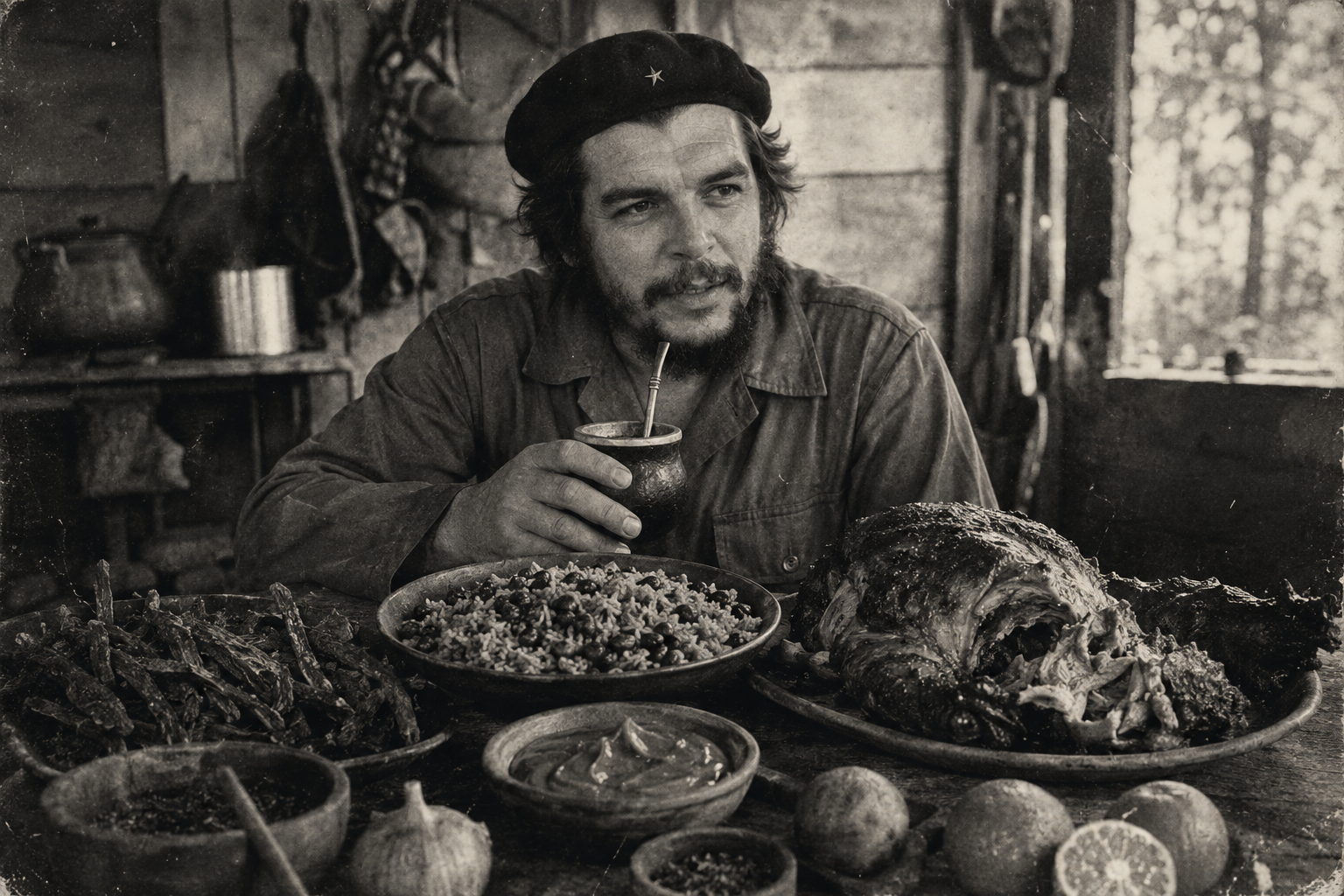
Che Guevara at the table
1928 — 1967
On the menu
The Criollo Table, from Argentina to the Sierra
Che's table blends two worlds: the Argentine criollo of his childhood in Rosario (asado, mate, dulce de leche) and the Cuban criollo of the revolution (rice and beans, sofrito, mojo-marinated meat). No rigid starter-main-dessert sequence: a starch-based staple (rice or beans), meat when available, a ritual drink passed from hand to hand, and sweetness as comfort. In guerrilla conditions, this structure shrinks to bare essentials; in a liberated city, it expands into a feast.
Signature : Criollo Sofrito and Sour Orange (Naranja Agria)
Cuban aromatic base — garlic, onion, cumin (comino), oregano, all awakened by sour orange juice (naranja agria). It is the soul of mojo and beans. On the Argentine side, the other signature is yerba mate, the ritual herb that Che never abandoned, even in the midst of the Bolivian jungle.
click to flip back
Che Guevara at the table
1928 — 1967
5 period recipes
 Drink
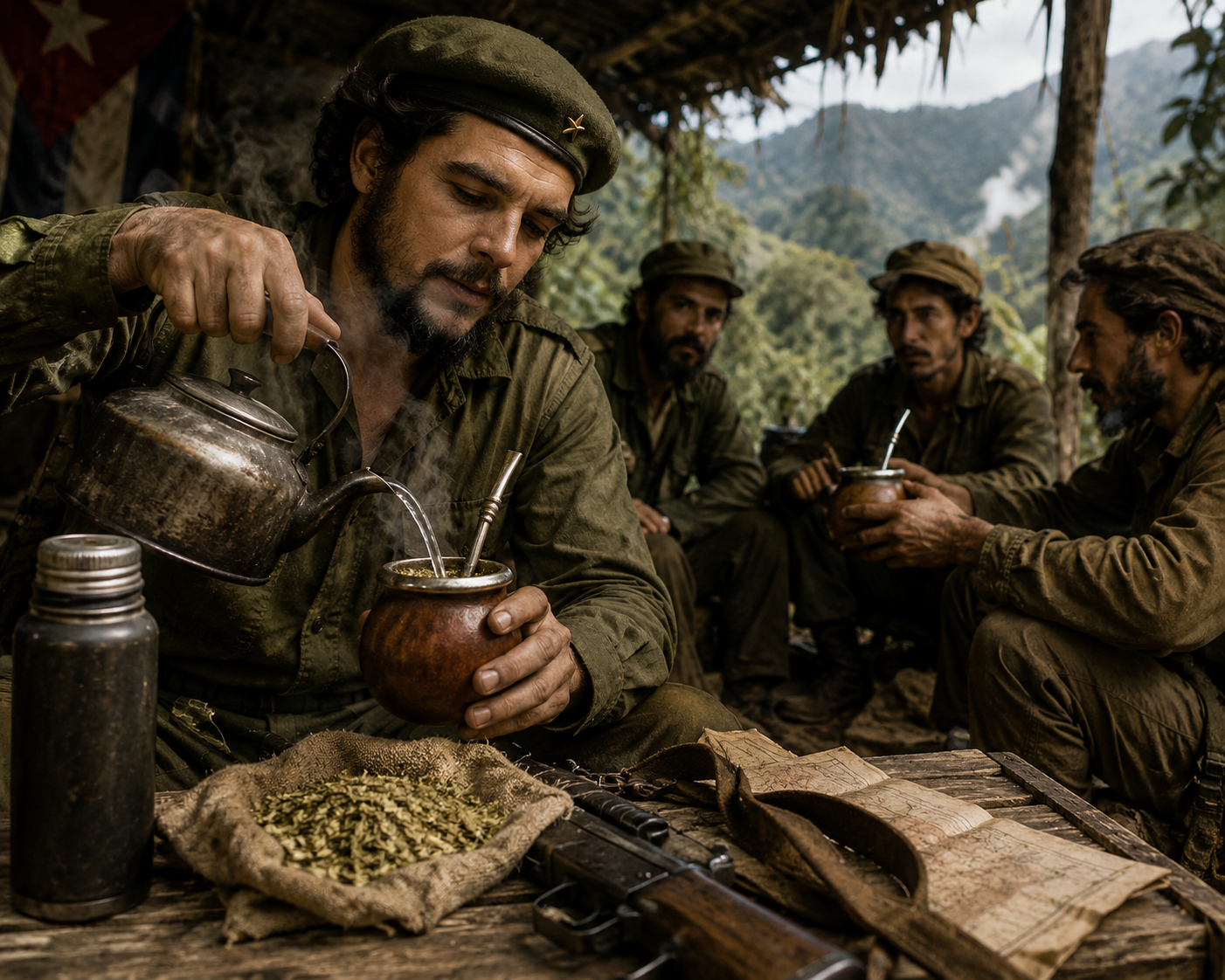
DrinkMate Amargo (Bitter Mate in a Gourd)
El cebado — the ritual of shared infusion that opens or punctuates the day
☕· 10 min
View the recipe
 Everyday
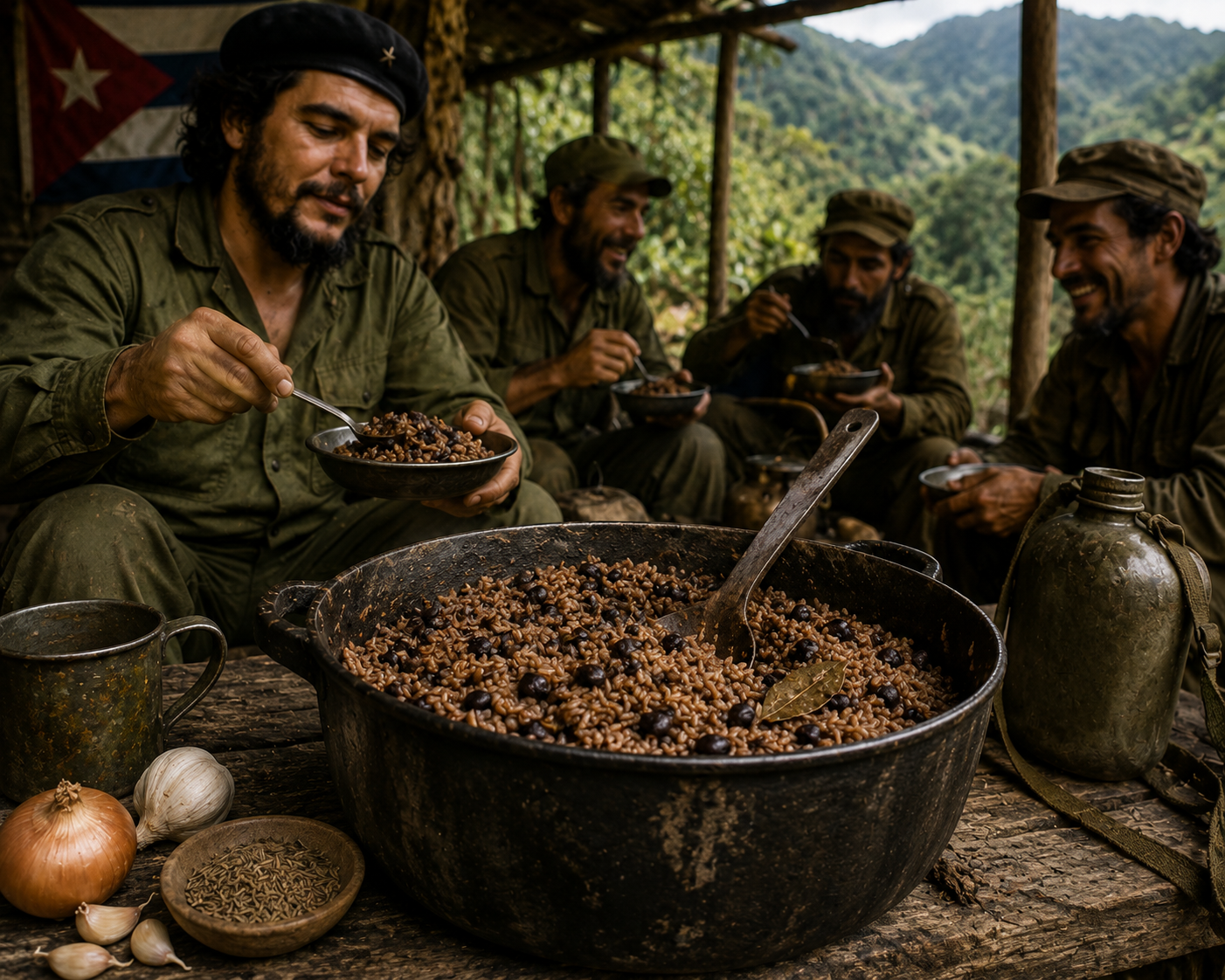
Moros y Cristianos (Black Beans and Rice)
El plato fuerte criollo — the daily staple of starch and protein that fuels an entire day
🧂 🍄· 1 h (dried beans) or 30 min (canned)
View the recipe
 Festive
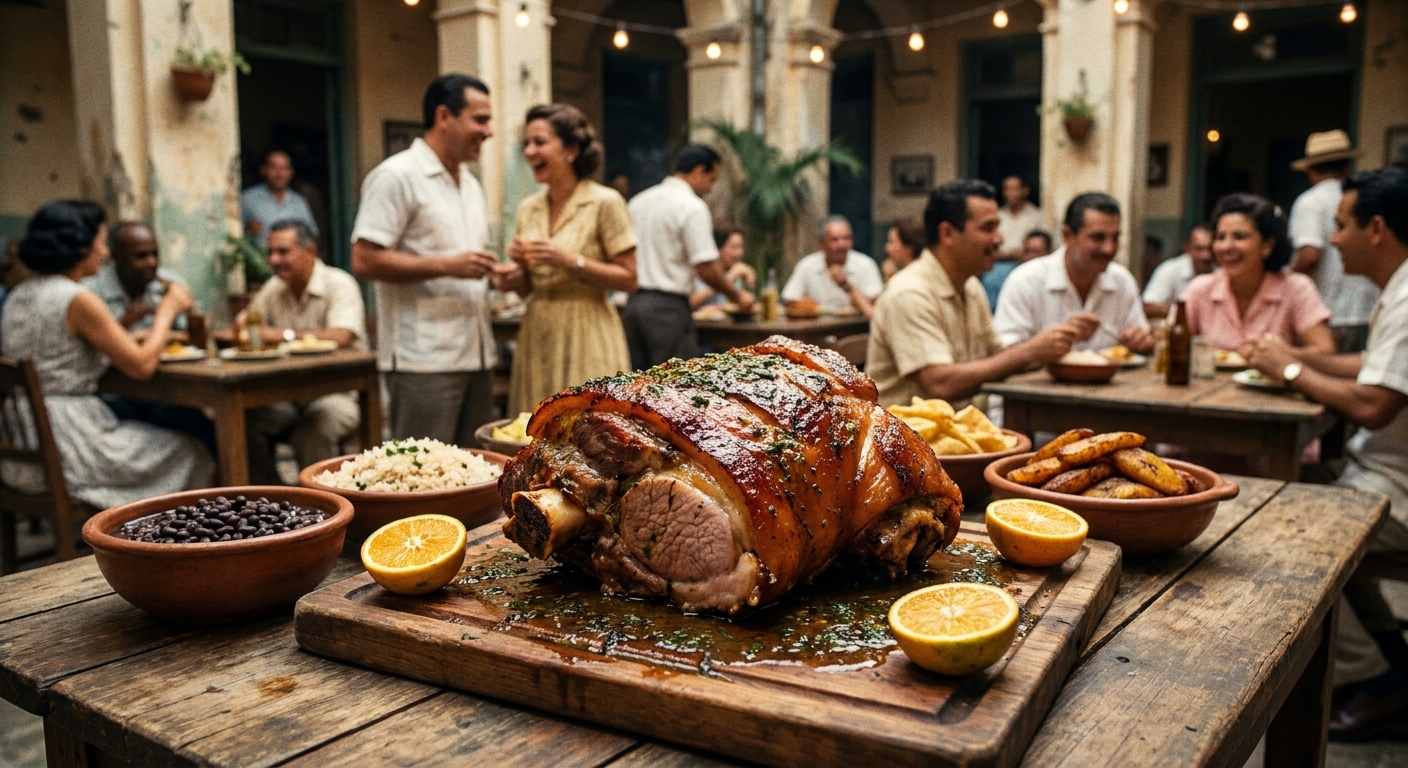
Lechón Asado with Mojo Criollo
La comida de fiesta — the great collective dish for days of victory and reunion
🧂 🍋 🍄· 4 h (+ overnight marinade)
View the recipe
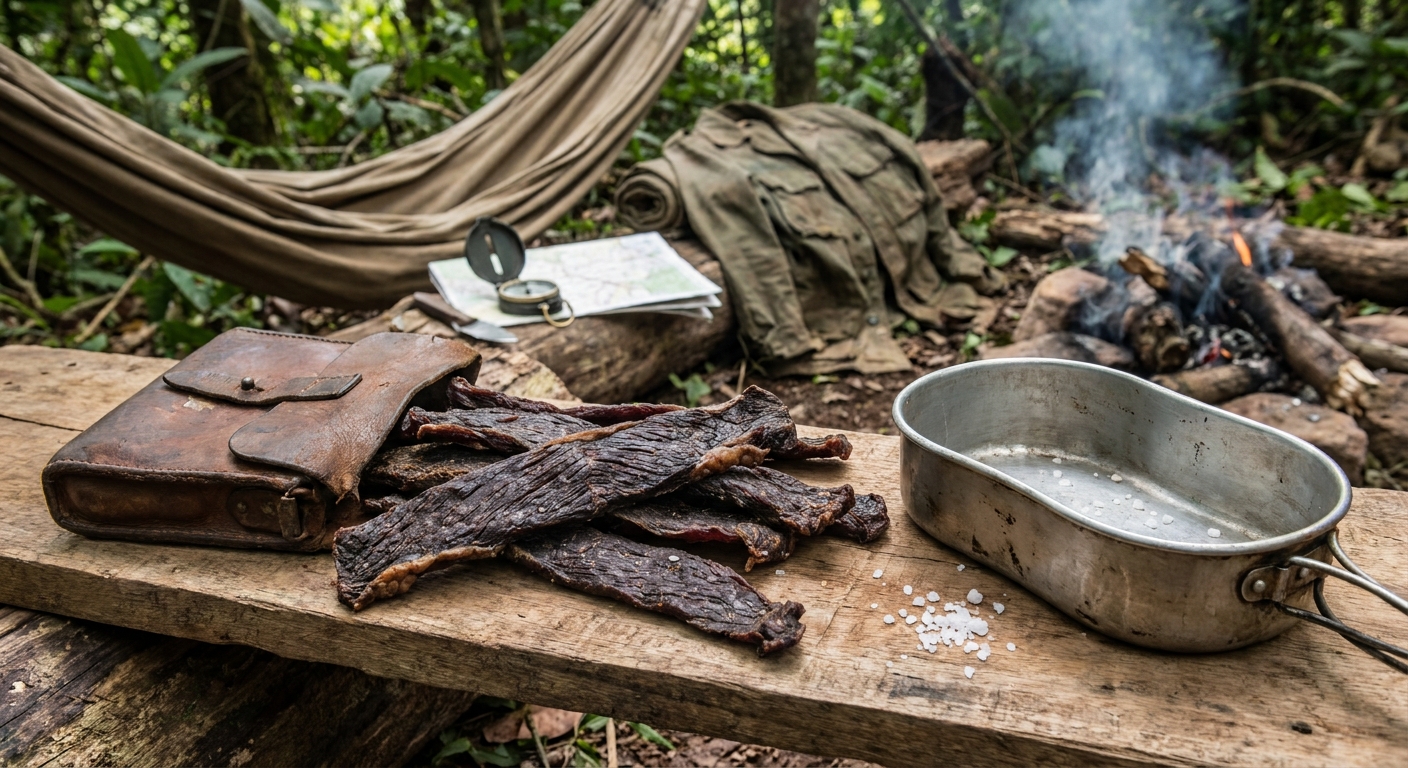 Preserving
Charqui (Dried March Meat)
El bastimento — the travel ration that keeps without cold and nourishes on the road
🧂 🍄· 30 min (+ 4-6 h drying)
View the recipe
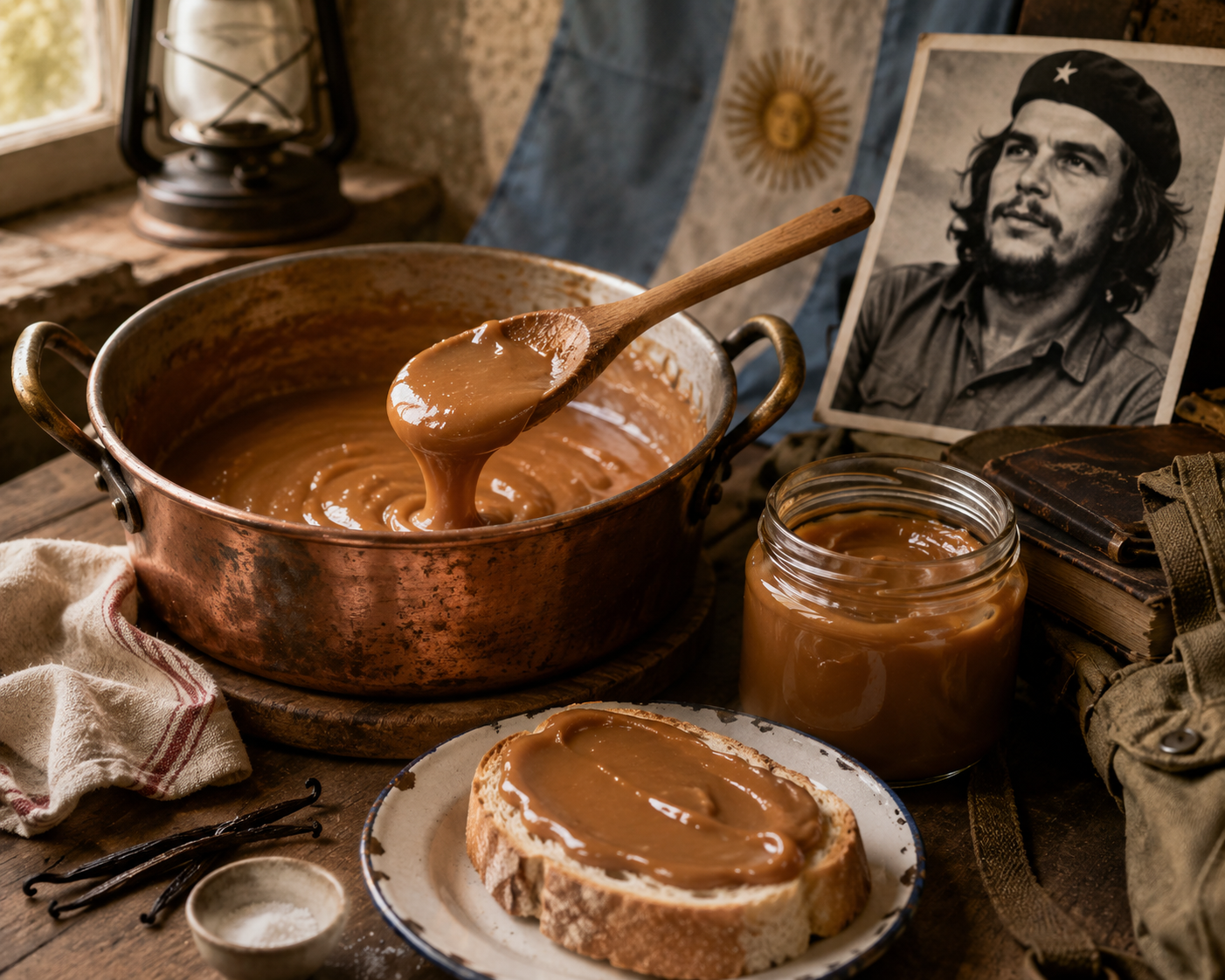 Remedy
Dulce de Leche of Childhood
El dulce — the sweet comfort, patiently candied milk, that ends a meal or consoles a march
🍯· 1 h 30
View the recipe