 flip
flipLechón Asado with Mojo Criollo
Lechón Asado with Mojo Criollo
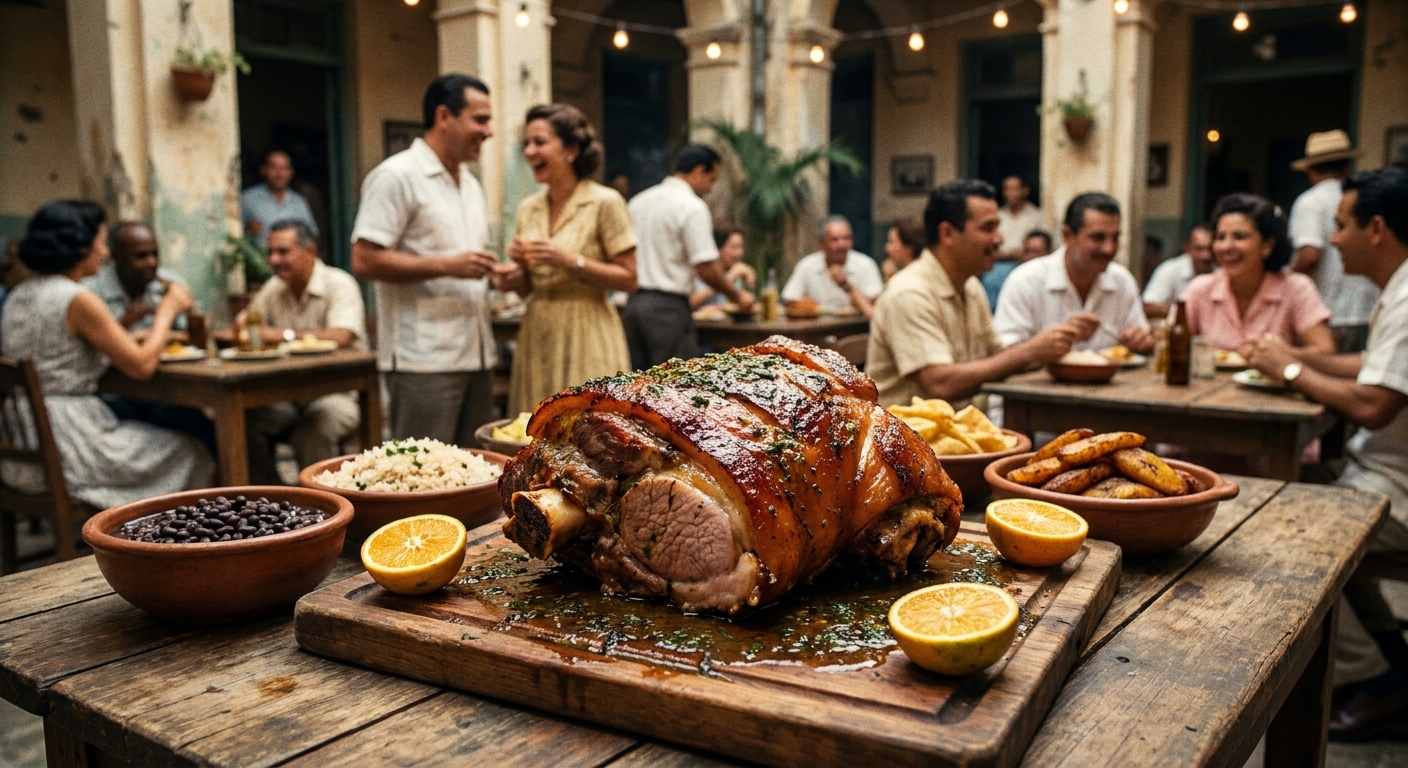
Why this dish? In liberated Havana after January 1959, roast lechón with mojo was THE dish of Cuban celebrations. Che, as minister and figure of the new power, shared these criollo feast tables that marked the revolution's victory.
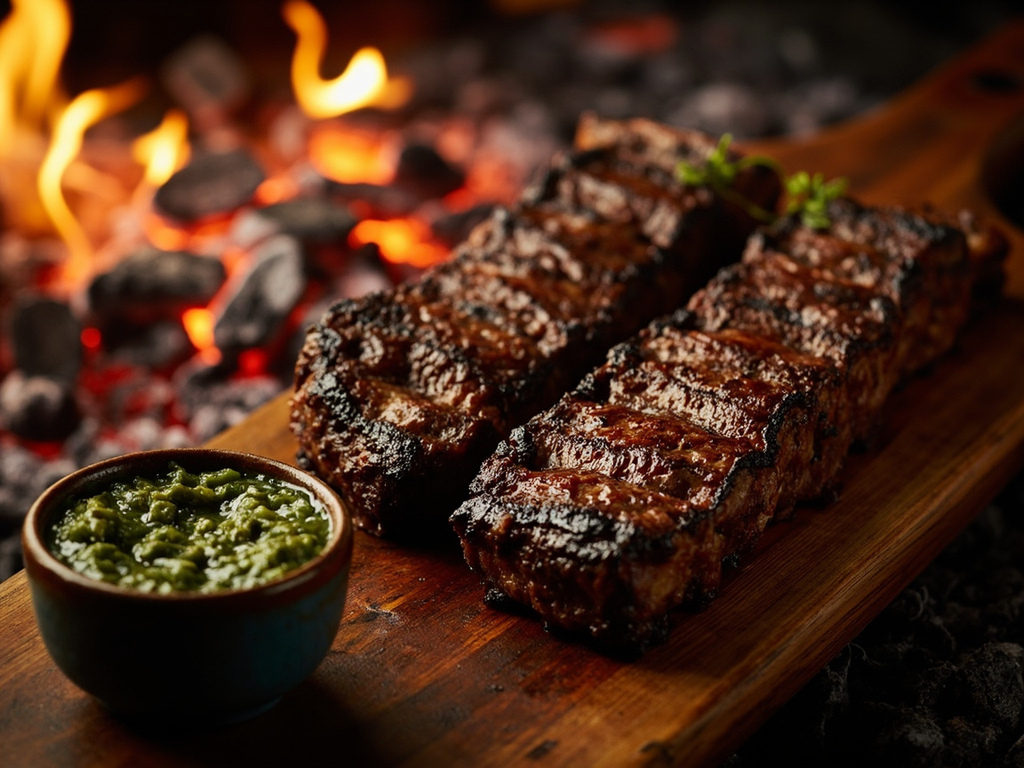
Pork long marinated in a mojo of garlic, cumin, oregano, and sour orange juice, then roasted until the skin crackles and the meat falls apart. Tangy, garlicky, tender — the centerpiece of any Cuban celebration.
Ah, this, compañero, is the dish for victory days — not every day, mind you, or you get soft. You prick the meat all over and drown it in mojo: lots of crushed garlic, comino, oregano, and the juice of the naranja agria that bites. You let it sleep all night. Then the fire, slow, patient, like a struggle: the skin must sing under the tooth. In Havana, we ate this after the revolution was made, and believe me, no meat has ever tasted better than that of freedom.
- •Pork shoulder or suckling pig — a good piece (celebration meat)
- •Garlic — a lot, made into a paste (mojo base)
- •Sour orange (naranja agria) — their juice (signature acid)
- •Cumin and oregano — generous (spices)
- •Lard — for basting (crispy skin)
Lechón Asado with Mojo Criollo
Pork long marinated in a mojo of garlic, cumin, oregano, and sour orange juice, then roasted until the skin crackles and the meat falls apart. Tangy, garlicky, tender — the centerpiece of any Cuban celebration.
Why this dish? In liberated Havana after January 1959, roast lechón with mojo was THE dish of Cuban celebrations. Che, as minister and figure of the new power, shared these criollo feast tables that marked the revolution's victory.
Ah, this, compañero, is the dish for victory days — not every day, mind you, or you get soft. You prick the meat all over and drown it in mojo: lots of crushed garlic, comino, oregano, and the juice of the naranja agria that bites. You let it sleep all night. Then the fire, slow, patient, like a struggle: the skin must sing under the tooth. In Havana, we ate this after the revolution was made, and believe me, no meat has ever tasted better than that of freedom.
Ingredients (period version)
- Pork shoulder or suckling pig — a good piece (celebration meat)
- Garlic — a lot, made into a paste (mojo base)
- Sour orange (naranja agria) — their juice (signature acid)
- Cumin and oregano — generous (spices)
- Lard — for basting (crispy skin)
Ingredients
- Pork shoulder — 1.5-2 kg (main piece)
- Garlic — 1 head (mojo)
- Sour orange juice — 200 ml (or orange + lime half and half) (acid marinade)
- Ground cumin — 2 tsp (spice)
- Dried oregano — 2 tsp (flavor)
- Salt — 2 tbsp (seasoning)
- Olive oil — 5 tbsp (mojo binder)
Method
- Crush garlic and salt into a paste, mix with cumin, oregano, sour orange juice, and oil to make the mojo.
- Score the meat, massage and prick it with the mojo, refrigerate overnight.
- Remove from fridge 1 hour before cooking, place fat side up in a dish.
- Roast covered at 150 °C for 3-4 hours until the meat shreds, basting with juices.
- Finish uncovered at 220 °C for 20 min to crisp the skin; let rest then shred.
How it was made : Spit-roasted or earth-oven lechón is the legacy of Cuban peasant celebrations (Christmas, weddings, victories). Sour orange, brought by the Spanish, provides the typical acidity that replaces vinegar. It was cooked for hours over a charcoal fire managed by feel.
The contemporary twist : Serve shredded in lettuce leaves as Cuban-style tacos, with fresh mojo on the side and lime wedges.
Che Guevara · Charactorium