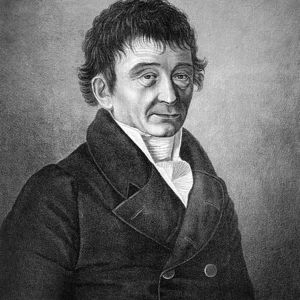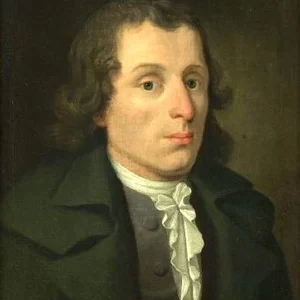

German composer and organist (1748–1798), he is best known for being Ludwig van Beethoven's first teacher in Bonn. A versatile musician, he composed operas, lieder, and chamber music in the spirit of the Enlightenment.
Christian Gottlob Neefe(1748 — 1798)
Christian Gottlob Neefe
électorat de Saxe
8 min read
Frequently asked questions
Key Facts
- Born on 5 February 1748 in Chemnitz, Saxony
- Became court organist in Bonn in 1781
- Took Beethoven as a pupil around 1779–1782 and introduced him to the harpsichord and organ
- In 1783 he published an article recognizing the young Beethoven's genius
- Died on 26 January 1798 in Dessau
Works & Achievements
Neefe's most-performed operatic work, staged with great success in Bonn and other German cities. It reflects his ambition to create a high-quality German opera in the tradition of Enlightenment ideals.
A collection of songs set to poems by the celebrated German poet Friedrich Gottlieb Klopstock. These lieder testify to Neefe's engagement with the literary and musical movements of his time.
Neefe's first major published collection, composed in the expressive style of Carl Philipp Emanuel Bach. These sonatas brought his name to the attention of cultivated musical circles throughout Germany.
One of Neefe's earliest Singspiele, a comic musical play in the German language that established him in a genre then rapidly gaining popularity. It reflects the influence of the musical theatre of Abel Seyler's troupe.
A sacred cantata composed for services at the Bonn court chapel. It illustrates the religious dimension of Neefe's work as court organist and composer.
Anecdotes
In 1783, Neefe published in Carl Friedrich Cramer's *Magazin der Musik* an article in which he presented his young pupil Ludwig van Beethoven, aged only twelve, as a musician of exceptional skill. He wrote that this boy would “certainly become a second Wolfgang Amadeus Mozart if he continues as he has begun” — a prophecy that proved true beyond all expectation.
As early as 1782, when Beethoven was only eleven, Neefe entrusted him with substituting at the organ of the Electoral Court Chapel in Bonn during his absences. It was an enormous responsibility for a child, but Neefe had absolute confidence in his pupil's genius. This was Beethoven's first professional experience.
Neefe introduced Beethoven to Johann Sebastian Bach's *Well-Tempered Clavier* — a work then rarely performed, regarded as austere and scholarly. Beethoven was so profoundly marked by these preludes and fugues that he studied them throughout his life and passed them on to his own pupils. This bold pedagogical choice by Neefe deeply shaped the contrapuntal style of the future composer.
A committed man of the Enlightenment, Neefe was a member of the Masonic lodge in Bonn and was affiliated with the Bavarian Illuminati. He shared with his colleagues at court an ideal of progress and universal brotherhood — values he passed on to his young pupil Beethoven, whose *Ode to Joy* reflects this philosophical heritage.
When French troops occupied Bonn in 1794, the Electoral Court was dissolved and Neefe lost his position as organist along with his salary. At fifty, without stable means, he drifted from city to city before dying in poverty in Dessau in 1798, almost forgotten — while his former pupil was beginning to dazzle Vienna.
Primary Sources
Louis van Beethoven, son of the above-mentioned tenor, a boy of eleven years of the most promising talent. He plays the harpsichord with great power and dexterity, sightreads very well… This young genius would deserve to be supported in his travels. He would certainly become a second Wolfgang Amadeus Mozart if he continues as he has begun.
I studied music in Leipzig under Johann Adam Hiller, and subsequently devoted myself to composing German operas and teaching, driven by the conviction that music should serve the moral elevation of the people.
I humbly take the liberty of reminding Your Electoral Highness of the services I have faithfully rendered for more than ten years at the court chapel, both as organist and as music master, and to beseech that it may please Your Highness to continue granting me your gracious protection.
These sonatas have been composed in the spirit of Carl Philipp Emanuel Bach, whose expressive depth I admire, and whose ability to touch the heart through learned harmonies as much as through melody.
Key Places
Neefe's birthplace, then a thriving craft and trading hub of the Holy Roman Empire. It was in this Saxon city that he received his first musical training before leaving to study in Leipzig.
The musical capital of Protestant Germany, where Neefe studied composition under Johann Adam Hiller. There he discovered the repertoire of Bach and the emerging forms of the German *Singspiel*.
The residence of the Electors of Cologne, where Neefe served as court organist from 1781 to 1794. It was in this palace that he taught Beethoven and where the bulk of his career unfolded.
Neefe's daily workplace, where he played the organ for the court's Masses and religious ceremonies. This is where the young Beethoven would stand in for him during his absences.
The city where Neefe attempted to rebuild his career after the fall of the Bonn court, and where he died in 1798. Dessau was then renowned for its enlightened spirit and its cultural institutions.
Typical Objects

Neefe played this instrument daily during religious services and court ceremonies. It was on this organ that he introduced Beethoven to improvisation and instrumental technique.

The favourite keyboard instrument of Enlightenment musicians for its expressive, nuanced touch. Neefe used it to teach Beethoven the sonatas of Carl Philipp Emanuel Bach and his own compositions.

Neefe owned a handwritten copy of this essential work, which was exceedingly rare in printed form at the time. He made it the cornerstone of his teaching to Beethoven, leaving a lasting mark on the future composer's musical formation.

Neefe admired Gluck's operatic reform, which he regarded as a model of authentic dramatic expression. These scores served him both as aesthetic references and as analytical tools for his own *Singspiele*.

Neefe wrote his compositions in ink with a quill, in music-paper notebooks that he sometimes ruled himself. Several of his autograph manuscripts were preserved in the archives of the Bonn court.

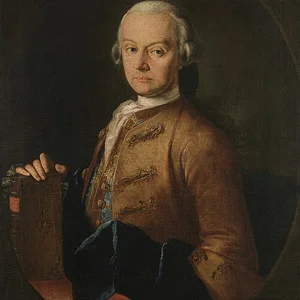
In his capacity as official organist of the electoral court, Neefe was required to appear in court dress at services and princely concerts. The powdered white wig was a mark of social respectability for any court musician in the eighteenth century.
School Curriculum
Vocabulary & Tags
Key Vocabulary
Daily Life
Morning
Neefe rose early to fulfill his liturgical duties: he played the organ at the morning Mass in the electoral chapel, performing preludes and accompaniment pieces. After the service, he devoted one to two hours to private teaching, including his lessons with the young Beethoven.
Afternoon
The afternoon was reserved for composition: Neefe worked on his *Singspiele*, his lieder, or his keyboard pieces in his apartments. He also attended rehearsals with the court theater company, for which he composed or arranged incidental music.
Evening
On performance evenings, Neefe conducted or accompanied on harpsichord the opera and musical comedy productions at the court theater. When there were no performances, he frequented the enlightened salons of Bonn, where he debated philosophy and politics with fellow members of the local Masonic lodge.
Food
Like most mid-ranking court officials, Neefe ate modestly: rye bread, boiled meats, seasonal vegetables, and Rhenish beer. On feast days, the court table offered more refined fare — game, Rhine fish, pastries — to which musicians and ranking servants could sometimes gain access.
Clothing
On duty at court, Neefe wore the regulation court dress: a dark-colored skirted coat, embroidered waistcoat, breeches, white stockings, and a powdered wig. In everyday life, he dressed as a prosperous bourgeois, in a frock coat and cravat, reflecting his social standing as an educated and respected musician.
Housing
Neefe lived in a town apartment near the electoral palace in Bonn, partly provided by the court. His lodgings contained a clavichord for work, a library of scores and Enlightenment writings, and a desk for his correspondence and manuscripts.