
Margrave of Brandenburg-Schwedt and member of the House of Hohenzollern, he is best known as the dedicatee of Johann Sebastian Bach's six Brandenburg Concertos (1721). A music lover and patron of the arts, he embodies the aristocratic German culture of the early 18th century.
Christian Ludwig of Brandenburg
Christian Ludwig of Brandenburg-Schwedt
8 min read
Frequently asked questions
Key Facts
- 1677: Born in Berlin into the House of Hohenzollern
- 1721: Bach dedicates the six Brandenburg Concertos to him — a masterpiece of the Baroque era
- Holder of the title of Margrave of Brandenburg-Schwedt
- 1734: Dies in Berlin, having never had the concertos dedicated to him performed
- His music collection disappears after his death; Bach's manuscripts are rediscovered later
Works & Achievements
Bach dedicated to Christian Ludwig these six concertos for orchestra, now regarded as absolute masterpieces of instrumental Baroque music. Without the margrave's commission and patronage, these works might never have been gathered into a collection or passed down to posterity.
Christian Ludwig funded and maintained a court music ensemble — both instrumental and vocal — as attested by expense records. Though modest compared to the great courts of the era, it stands as evidence of genuine and sustained musical patronage.
The margrave assembled a collection of scores and musical manuscripts, including Bach's Brandenburg Concertos. This library, sold after his death, represented an act of cultural preservation typical of the enlightened aristocracy of the Baroque period.
Anecdotes
In 1719, Bach traveled to Berlin to purchase a new harpsichord on behalf of Prince Leopold of Anhalt-Köthen. It was during this trip that he performed for Christian Ludwig, who was clearly impressed by his talent. The Margrave then asked him to send some musical compositions, a request Bach fulfilled two years later.
To dedicate his six concertos to the Margrave, Bach wrote his letter in French — the aristocratic language of choice at every German court of the era. In it, he apologized with the rhetorical humility typical of the Baroque period for the 'little care' taken with the pieces, a flattering formula designed to honor the patron as much as to fictitiously downplay the work itself.
The six Brandenburg Concertos were probably never performed at Christian Ludwig's court: his orchestra lacked the necessary instruments, including the corna da caccia and violino piccolo required by certain concertos. The scores thus remained in his library, silent, never once brought to life.
After the Margrave's death in 1734, his music library was sold for next to nothing. These autograph manuscripts by Bach — now regarded as absolute masterpieces of Western Baroque music — were valued at the time at only a few groschen, barely the equivalent of a craftsman's daily wage.
Christian Ludwig was the youngest son of the Great Elector Frederick William of Brandenburg, who had transformed his state into a formidable military power. He chose a different path — that of patronage and musical culture — embodying the refined and cultivated face of the House of Hohenzollern in contrast to the warlike calling of his brothers.
Primary Sources
As a couple of years ago I had the good fortune to be heard by Your Royal Highness, at Your command, and as I noticed then that Your Highness took some pleasure in the small talents that Heaven has given me for Music, and that on taking leave of Your Royal Highness, You were graciously pleased to honour me with the command to send Your Highness some pieces of my Composition...
Bach's autograph score containing the six concertos dedicated to the Margrave, preceded by the dedication letter written in French. Held at the Staatsbibliothek zu Berlin – Preußischer Kulturbesitz; it constitutes the only direct evidence of the connection between Bach and Christian Ludwig.
Administrative documents attesting to the maintenance of a musical ensemble at the Margrave of Schwedt's court, including the names of employed musicians and expenditures related to performances.
Key Places
The capital of Brandenburg-Prussia and birthplace of Christian Ludwig, Berlin was the political and cultural heart of the House of Hohenzollern. The margrave resided there primarily, met Bach in 1719, and died there in 1734.
A town on the banks of the Oder River (now the German-Polish border), Schwedt was the capital of the territory over which Christian Ludwig held the title of margrave. Its baroque castle served as the administrative and residential center of his principality.
It was from his residence in Köthen, where he served Prince Leopold, that Bach composed and sent the six concertos to Christian Ludwig in 1721. The Köthen court was one of the most musically active in central Germany.
Although Christian Ludwig is not known to have ever visited Versailles, it embodied the cultural ideal that every German prince aspired to emulate. Bach's dedicatory letter was written in French, the prestige language dictated by this universal model.
Typical Objects
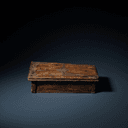
The flagship instrument of Baroque music, the harpsichord was indispensable in every aristocratic court. Christian Ludwig, a well-known musical patron, certainly owned an example of French or Flemish craftsmanship — a symbol of cultural refinement and membership in the elite.
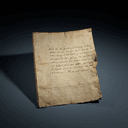
Before music printing became widespread, compositions circulated as carefully calligraphed manuscript copies. The six Brandenburg Concertos that Bach sent to the Margrave in 1721 were precisely such an autograph manuscript — today preserved in Berlin.
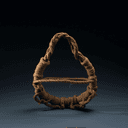
An unmistakable symbol of European nobility in the early 18th century, the powdered wig defined social rank and was required at all official occasions. Christian Ludwig, a member of the House of Hohenzollern, wore one during audiences and court concerts.

An emblematic instrument of Baroque aristocracy, used both in the hunt and in music — Bach features it notably in the First Brandenburg Concerto. Hunting was a social ritual and a seigneurial privilege in which the Margrave regularly took part.
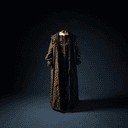
Baroque court dress consisted of lavishly ornate garments covered in embroidery and gilding, visually marking out the nobility during ceremonies. These pieces signalled the wearer's rank and wealth within the Hohenzollern aristocratic hierarchy.

Both a means of transport and a prestige symbol, the richly decorated coach allowed the Margrave to travel between Berlin and his territory of Schwedt, publicly displaying his rank and dynastic power.
School Curriculum
Vocabulary & Tags
Key Vocabulary
Tags
Lieu
Daily Life
Morning
Christian Ludwig begins his day assisted by valets who help him don his ceremonial attire according to a precise ritual. Following a private morning Mass in the castle chapel, he receives his stewards to attend to the administrative affairs of his Margraviate of Schwedt.
Afternoon
Afternoons are devoted to audiences, diplomatic correspondence written in French, and walks through the formal French-style gardens of his residence. A rehearsal with his chamber orchestra often occupies an hour or two, with the Margrave listening as his musicians perform the latest compositions received.
Evening
Evenings feature private concerts or intimate dinners in the company of noble guests. The court musicians perform suites, sonatas, and concertos; sometimes a small ballet or a miniature lyric entertainment is arranged for the guests in the French fashion imported from Versailles.
Food
The Margrave's table reflects aristocratic luxury: roasted meats, game from his hunting parties, freshwater fish from the Oder, elaborate pastries, and French wines. Official meals follow a strict ceremonial protocol with numerous courses and silverware bearing the Hohenzollern coat of arms.
Clothing
Christian Ludwig wears the typical court dress of the early eighteenth century: an embroidered silk or velvet justaucorps, a matching waistcoat, breeches, white silk stockings, and shoes with silver buckles. A powdered wig with long curls completes the ensemble, marking his place among the high nobility of the House of Hohenzollern.
Housing
The Margrave resides primarily in Berlin in an aristocratic private mansion, and stays at the Schwedt an der Oder castle. These Baroque residences combine grand state rooms decorated in the French style, more intimate private apartments, a court chapel, and a music room suited to chamber concerts.
Historical Timeline
Period Vocabulary
Visual Style
Portrait de cour baroque allemand dans la tradition d'Antoine Pesne, avec décor palatial doré, draperies cramoisies, perruque poudrée et attributs musicaux évoquant le mécénat aristocratique des Hohenzollern.
Sound Ambience
Ambiance de musique de chambre baroque dans un palais germanique du début du XVIIIe siècle, entre répétitions orchestrales intimistes, cors de chasse lointains et fastes aristocratiques feutrés à la lueur des chandelles.