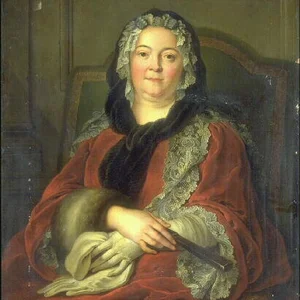

French novelist and salonnière (1682–1749), she hosted one of the most influential literary salons of the eighteenth century in Paris. The mother who abandoned d'Alembert at birth, she is the author of sentimental and historical novels such as the Mémoires du comte de Comminge.
Claudine Guérin de Tencin(1682 — 1749)
Claudine Guérin de Tencin
France
9 min read
Frequently asked questions
Key Facts
- Born in 1682 in Grenoble into a noble family from the Dauphiné region
- Abandoned her illegitimate son Jean le Rond d'Alembert at birth in 1717, who would become a great Encyclopédiste philosopher
- Published her first novel, Mémoires du comte de Comminge, in 1735
- Her salon on the rue Saint-Honoré brought together Fontenelle, Marivaux, Montesquieu, and Helvétius
- She died in 1749, leaving a body of fiction comprising three major works
Works & Achievements
A sentimental and tragic novel considered her masterpiece, narrating an impossible love between two lovers separated by social conventions and religious life. Published anonymously, it was immediately praised by critics and went through several reprints in the 18th century.
A historical novel inspired by the episode of the Burghers of Calais (1347), blending patriotic heroism with romantic passion. It reflects Tencin's interest in national history and her mastery of the complex intrigue novel.
Tencin's last major novel, exploring the torments of passion and the obstacles imposed by society on individuals guided by their hearts. This work confirms her style: spare writing, subtle psychology, tragic endings.
More than a simple social gathering, Tencin's salon was a true laboratory of the Enlightenment where major philosophical and literary texts were discussed. She notably fostered Marivaux's career and maintained a constant intellectual dialogue with Montesquieu.
Anecdotes
In 1717, Claudine de Tencin gave birth to a son whom she abandoned on the steps of the church of Saint-Jean-le-Rond in Paris, in the middle of winter. The child was taken in by a glazier's wife and placed in the care of the public welfare authorities. This abandoned child grew up to become Jean le Rond d'Alembert, one of the greatest mathematicians of the 18th century and co-editor of the *Encyclopédie* with Diderot.
In 1726, a man named Charles de La Fresnaie shot himself in Claudine de Tencin's apartment, leaving a letter holding her responsible for his misfortune. She was arrested and imprisoned in the Bastille for several weeks before being cleared of all charges. This scandalous episode did not prevent her from rebuilding her reputation and reopening her salon.
Claudine de Tencin had been forced by her family to enter the convent of Montfleury, near Grenoble, at the age of thirteen. She eventually obtained a papal dispensation from her vows, thanks to the influence of her brother Pierre, who became a cardinal. This hard-won freedom allowed her to settle in Paris and lead the worldly and intellectual life she had always aspired to.
Her salon on the rue Saint-Honoré was nicknamed the “bureau d'esprit” (salon of wit) by her contemporaries. Every week she gathered Fontenelle, Marivaux, Montesquieu, and Marmontel there, and Montesquieu read passages from *The Spirit of the Laws* before it was even published. This salon was one of the intellectual laboratories of the nascent Enlightenment.
Claudine de Tencin published her novels anonymously, as was common practice for women writers in the 18th century. Her *Mémoires du comte de Comminge* was initially attributed to a male author. It was only after her death that her entire body of fiction was definitively attributed to her, revealing one of the most important female voices in Enlightenment literature.
Primary Sources
I had not yet reached sixteen years of age when my father returned from a long absence. He was of a harsh and inflexible character; his passions, long thwarted, had only grown more bitter. Adelaïde de Lussan was the only person he had forbidden me to love.
Glory and love are the two passions that hold the greatest sway over noble souls; but when they are found together, glory must always prevail over feelings that concern only ourselves.
There is no feeling sweeter than love when it is returned; there is none more cruel when fate stands against its happiness and the conventions of the world smother the stirrings of the heart.
Key Places
Claudine de Tencin was born in Grenoble in 1682 into a family of Dauphinois robe nobility. It was at the Convent of Montfleury, near Grenoble, that she was compelled to take her religious vows before obtaining her papal dispensation.
It was in her Parisian apartment on the Rue Saint-Honoré that Claudine hosted her celebrated literary salon, bringing together the greatest minds of the nascent Enlightenment. This venue was a nerve center of Parisian intellectual life from 1726 to 1749.
It was on the steps of this small church adjoining Notre-Dame de Paris that Claudine abandoned her newborn son in 1717. The child was baptized Jean le Rond, a name taken from the church, before going on to become the mathematician d'Alembert.
Following the scandal of Charles de La Fresnaie's suicide in her apartment in 1726, Claudine de Tencin was imprisoned in the Bastille. She remained there for a few weeks before being exonerated and released.
Claudine de Tencin frequented the royal court during the Regency and the reign of Louis XV, seeking to win favors for her brother the cardinal. Her political maneuvers at Versailles earned her as many admirers as enemies.
Liens externes & ressources
See also
Related Characters
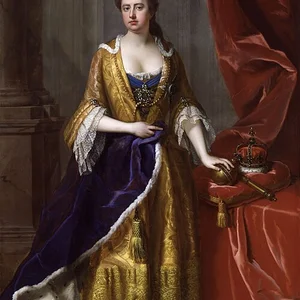
Anne of Great Britain
1665 — 1714
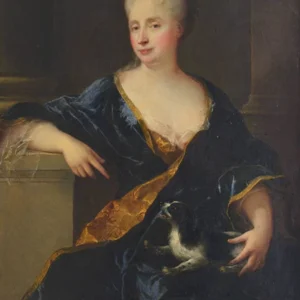
Anne Thérèse de Marguenat de Courcelles, marquise de Lambert
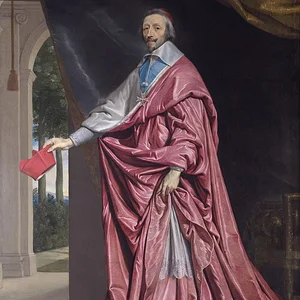
Cardinal de Richelieu
1585 — 1642
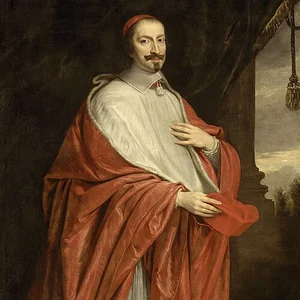
Cardinal Mazarin
1602 — 1661
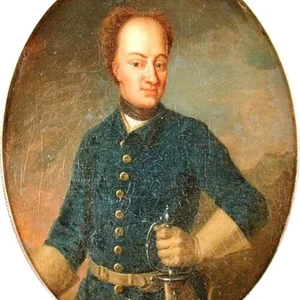
Charles XII of Sweden
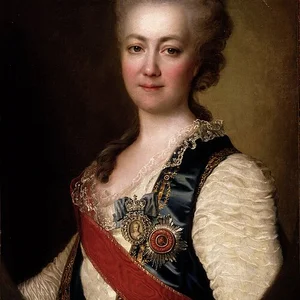
Ekaterina Vorontsova-Dashkova
1743 — 1810