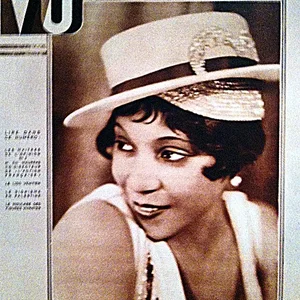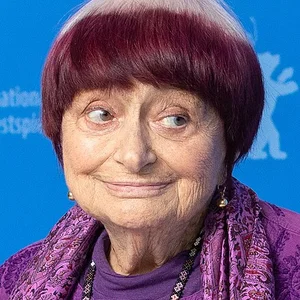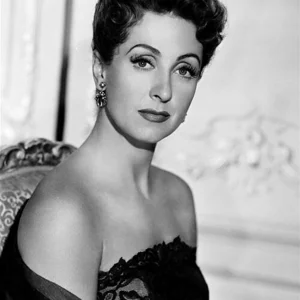

French actress born in 1917 and died in 2017, Danielle Darrieux is one of the greatest stars of French cinema. Her exceptional eight-decade career saw her work under the direction of the finest filmmakers.
Danielle Darrieux(1917 — 2017)
Danielle Darrieux
France
8 min read
Frequently asked questions
Key Facts
- Born on May 1, 1917 in Bordeaux, she made her film debut at age 14 in 1931
- She rose to fame with Mayerling (1936) alongside Charles Boyer
- She appeared in more than 100 films over the course of her career
- She continued acting into very old age, most notably in 8 Women (2002) by François Ozon
- She died on October 17, 2017 at the age of 100
Works & Achievements
Danielle Darrieux's first film, directed by Wilhelm Thiele, in which she plays a young pianist at the age of 14. This film marks the beginning of one of the longest careers in the history of world cinema.
Anatole Litvak's film in which Darrieux plays Baroness Marie Vetsera, the tragic lover of Crown Prince Rudolf of Austria, opposite Charles Boyer. The film catapults her to international stardom and earns her offers from Hollywood.
Max Ophüls's film adapted from Arthur Schnitzler, in which Danielle Darrieux is one of the central figures in a Viennese romantic roundelay. Regarded as a masterpiece of postwar French cinema.
Max Ophüls's film in which she plays a worldly countess whose tragic fate unfolds through a pair of earrings that pass from hand to hand. Presented at Cannes, it was unanimously hailed as an absolute masterpiece of European cinema.
Jacques Demy's musical in which Danielle Darrieux, at 50, sings and dances alongside Catherine Deneuve and Françoise Dorléac. A dazzling testament to her versatility and undiminished energy.
François Ozon's musical murder mystery bringing together eight major French actresses. At 85, Danielle Darrieux plays the mischievous grandmother, and the ensemble cast wins a Silver Bear at the Berlin Film Festival.
Anecdotes
Danielle Darrieux made her film debut at just 14 years old, in 1931, in *Le Bal* directed by Wilhelm Thiele. Discovered at an audition, she was cast as a young pianist, and the film was an immediate success. This first attempt was a masterstroke: the young actress became a star almost overnight.
In 1936, Anatole Litvak's *Mayerling*, in which she played Baroness Marie Vetsera opposite Charles Boyer, launched her onto the international stage. Hollywood offered her contracts, but Danielle Darrieux refused to settle permanently in America, choosing to remain loyal to French cinema — a rare decision for a star of her caliber at the time.
In 1942, Danielle Darrieux took part in a trip to Germany organized by Continental Films, a Nazi production company operating in occupied France. She claimed she agreed to go in an attempt to secure the release of her fiancé Porfirio Rubirosa, who had been interned by the Germans. This episode remains one of the most controversial of her career and illustrates the moral dilemmas faced by artists under the Occupation.
In 1967, Jacques Demy gave her a second wind in *The Young Girls of Rochefort*, alongside Catherine Deneuve and Françoise Dorléac. At 50, Danielle Darrieux sang and danced with a lightness that dazzled critics, proving that her talent carried across the decades without fading.
In 2002, François Ozon brought together eight of France's greatest actresses — including Isabelle Huppert, Catherine Deneuve, and Emmanuelle Béart — in *8 Women*, a musical murder mystery. Danielle Darrieux, at 85, played the eldest with disarming wit, and the entire cast received a collective Silver Bear at the Berlinale.
Primary Sources
I was fourteen years old, I didn't know what I was doing. They said: act, and I acted. I wasn't afraid of anything because I didn't know there was anything to be afraid of.
I never had any other goal than to obtain the release of the man I loved. I signed nothing, approved nothing, celebrated nothing for the occupier.
I had the extraordinary luck of never being bored in this profession. Each film was a new life, a new face, a new way of existing.
Danielle Darrieux is the very soul of French cinema. For more than fifty years, she has embodied with incomparable grace all that is most profound and most human in our cinema.
Key Places
Birthplace of Danielle Darrieux, born on May 1, 1917, in this major city in southwestern France. It was in this bourgeois setting that she grew up before moving to Paris to try her luck in show business.
The heart of French artistic life where Danielle Darrieux built her career, from her first auditions to major world premieres. In the 20th century, Paris was the world capital of European cinema.
France's principal film production complex, where Danielle Darrieux shot a large portion of her career. These studios hosted the greatest productions of classic French cinema from the 1930s through the 1970s.
Danielle Darrieux travelled to Berlin in 1942 as part of a trip organized by Continental Films, the German production company operating in occupied France. This controversial episode, which she justified by her fiancé's imprisonment, would leave a lasting mark on her biography.
A commune in the Île-de-France region where Danielle Darrieux spent her final years and passed away on October 17, 2017, at the age of 100, after the longest career in the history of French cinema.
Typical Objects
Bound typescript containing the dialogue, stage directions, and lines the actress must learn before shooting begins. Danielle Darrieux studied hundreds of them over her eight-decade career.

Professional camera used on major French film sets from the 1930s to the 1960s. It was before these imposing machines that Danielle Darrieux built her legend, learning to perform for the lens rather than the theatre stage.
Dress or suit designed by leading Parisian couturiers (Balenciaga, Balmain, Givenchy) to dress actresses on screen. In the 1950s, cinema wardrobes were often signed by haute couture houses, reinforcing the glamorous image of the stars.
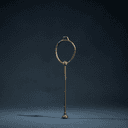
Hinged wooden board struck in front of the camera to synchronize picture and sound during filming. A universal symbol of the seventh art, it marked the rhythm of working days on the sets where Danielle Darrieux performed.
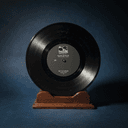
Shellac audio medium used in the 1930s–1950s to distribute music. Danielle Darrieux recorded several film songs on these fragile discs, which were the primary means of bringing music to the general public at the time.
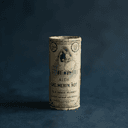
Large colour-printed poster plastered on city walls to announce a film's release. Danielle Darrieux's face graced hundreds of French and foreign posters throughout the twentieth century, shaping her image as a star.
School Curriculum
Vocabulary & Tags
Key Vocabulary
Daily Life
Morning
On a film set in the 1940s and 1950s, the day starts early: Danielle Darrieux would arrive at the studio by 7 a.m. to spend time with the makeup artist and hairdresser. These preparation sessions, often lasting an hour, were an opportunity to review her lines and talk through scenes with the director before the first takes.
Afternoon
Shoots stretched across long hours, punctuated by rehearsals, lighting adjustments, and multiple takes. The afternoon was reserved for the most demanding scenes, when the studio's artificial lighting replaced the sun. Between takes, the actress would wait in her dressing room, study the next day's scenes, or give interviews to the entertainment press.
Evening
After the day's shooting wrapped, Danielle Darrieux returned to her Parisian life: dinners with friends from the arts world, theatre or cinema premieres, or quiet evenings at home. During a film's promotional run, her evenings filled with social engagements, advance screenings, and gala events.
Food
Like many actresses of the era who kept a careful eye on their figure, Danielle Darrieux followed a light, balanced diet — classically French and upper-middle-class in character: a starter, main course, and dessert eaten in the dining room, but in modest portions. Classic French cooking — braised meats, seasonal vegetables, cheeses — formed the backbone of her meals.
Clothing
On set, Danielle Darrieux wore costumes designed by the Parisian couture houses that dressed French cinema's golden age. In everyday life, she embraced the elegant, understated style of the Parisian bourgeoise during the *Trente Glorieuses*: tailored suits, simple evening dresses, and gloves and hats for formal occasions.
Housing
Danielle Darrieux lived primarily in Paris, in apartments in the capital's upscale neighborhoods, in keeping with the status of the era's major stars. She also owned a country house in the Île-de-France region, where she retreated to recharge between shoots and where she ultimately spent her final years.
Historical Timeline
Period Vocabulary
Liens externes & ressources
Références
Œuvres
Les Demoiselles de Rochefort
1967
8 femmes
2002