 Flip the card
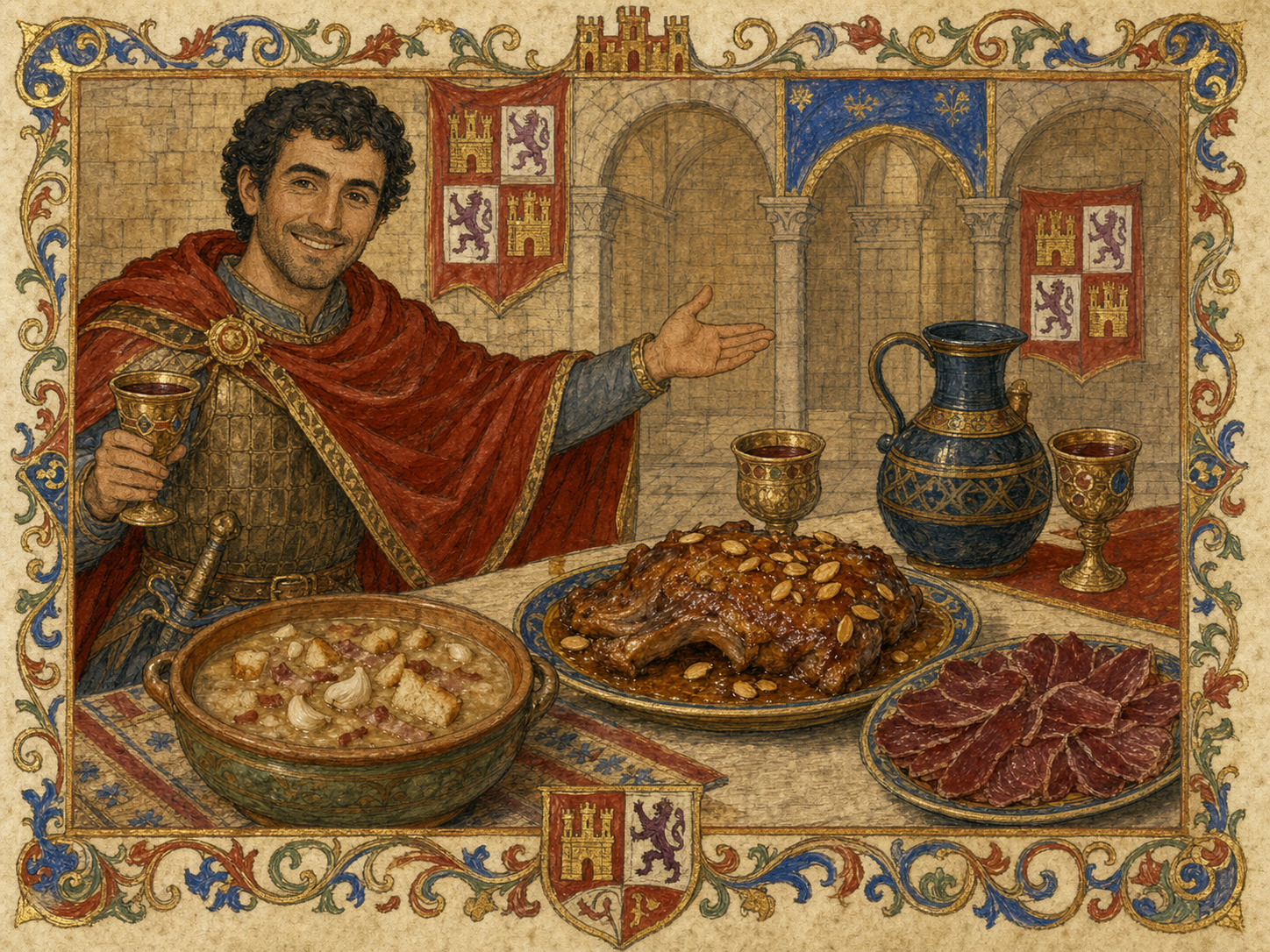
El Cid at the table
On the menu
The Castilian Table Between Cross and Crescent
At the table of an 11th-century Castilian knight, there is neither "appetizer" nor "dessert": first come the sopas and bread, the nourishing base that opens every meal; then comes roasted or stewed meat, the centerpiece reserved for days of strength and celebration; the whole is washed down with wine cut with water. But as Rodrigo fights alongside Moorish lords as well as against them, his table mingles the Christian heritage of the North (bread, lard, game) with the refinement of al-Andalus (almonds, honey, saffron, sweet-and-sour agridulce). Field rations — salted meats, almond pastes — are kept apart, in the rider's saddlebags.
Signature : Agridulce of Almonds and Honey (Andalusian Heritage)
The sweet-and-sour marriage of honey, ground almonds, and spices (cinnamon, saffron) is the hallmark of al-Andalus cuisine that Castilians adopted. On the reconquered lands of Toledo and then Valencia, El Cid ate at this frontier of flavors: it perfumes both his festive meat and his saddle provisions.
click to flip back
El Cid at the table
5 period recipes
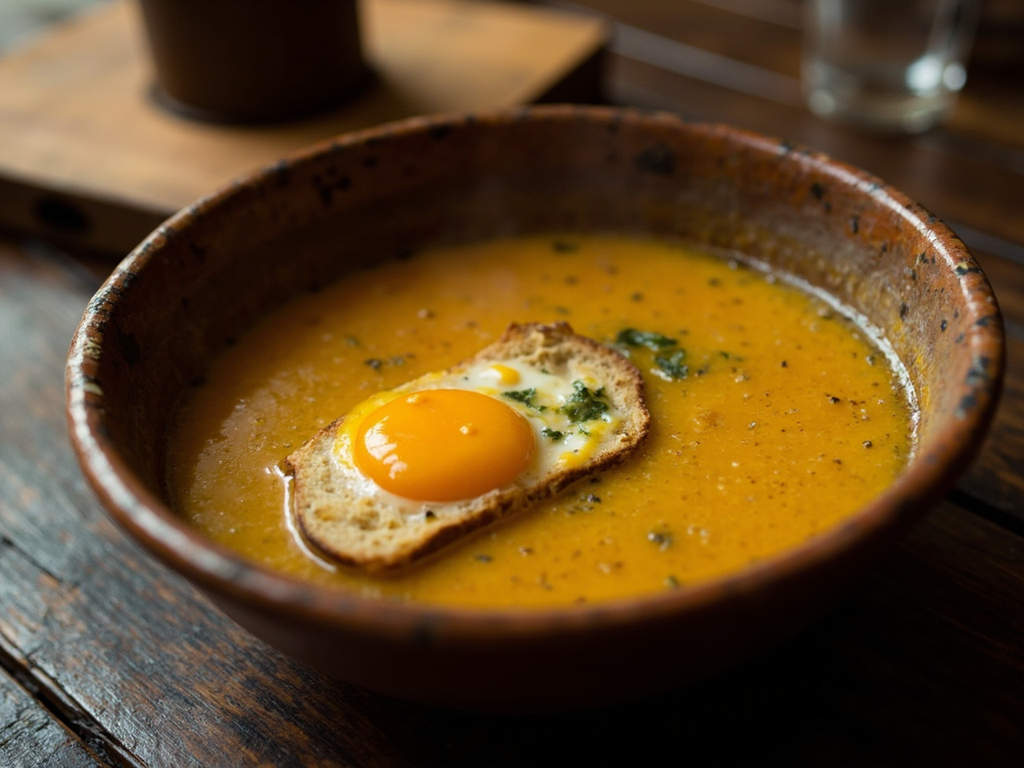 Everyday
Sopas de ajo del camino (Garlic and Lard Bread Soup)
Sopas — the bread foundation that opens the meal
🧂 🍄· 30 min
View the recipe
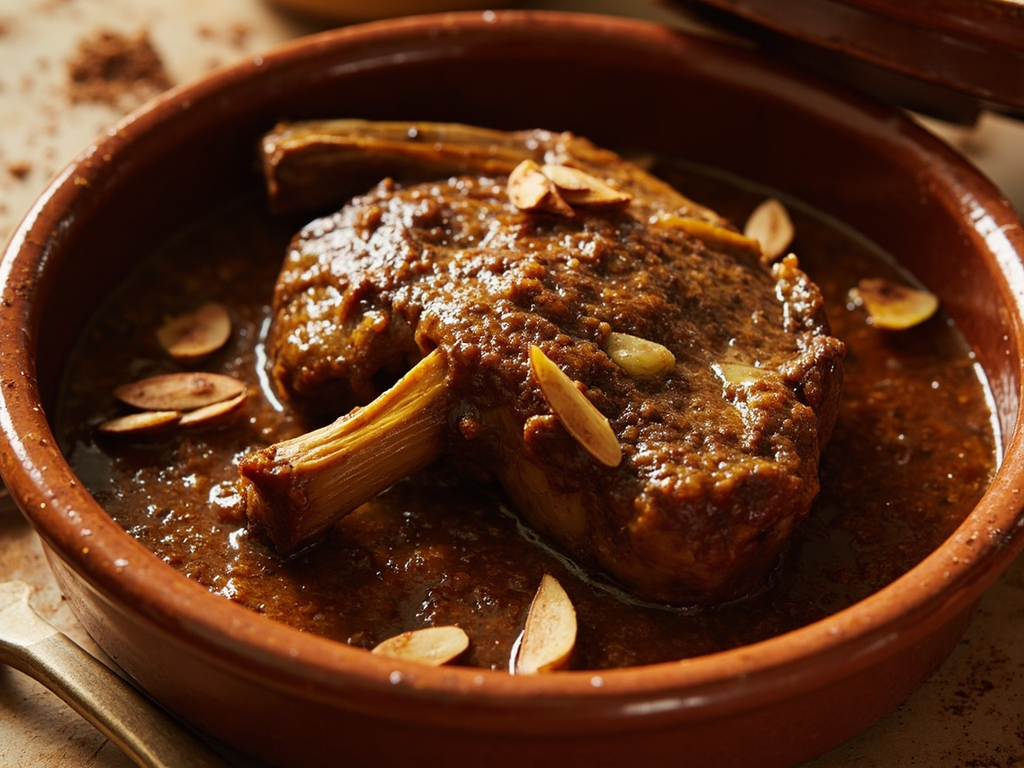 Festive
Cordero a la miel y almendras (Lamb with Honey and Almonds, al-Andalus Style)
The centerpiece — meat for feast days and victory
🍯 🧂 🌶️· 2 h 30
View the recipe
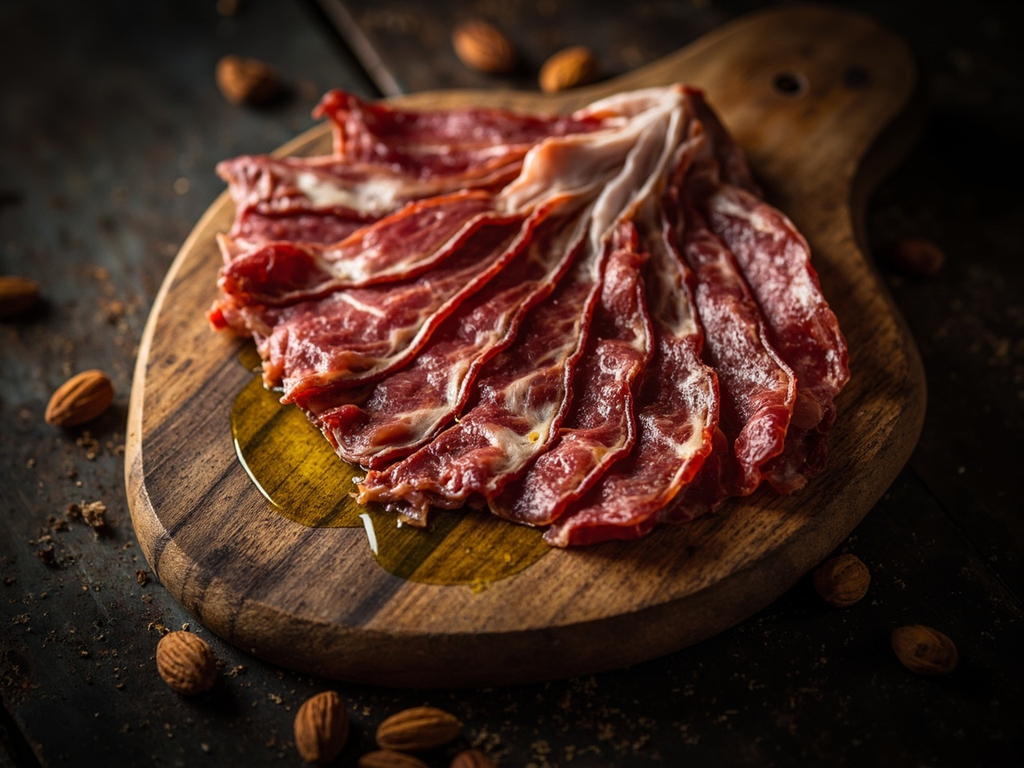 Preserving
Cecina — Dried Meat of the Rider
Las viandas de la silla — saddle provisions that keep
🧂 🍄 🫙· 3 to 6 weeks of drying
View the recipe
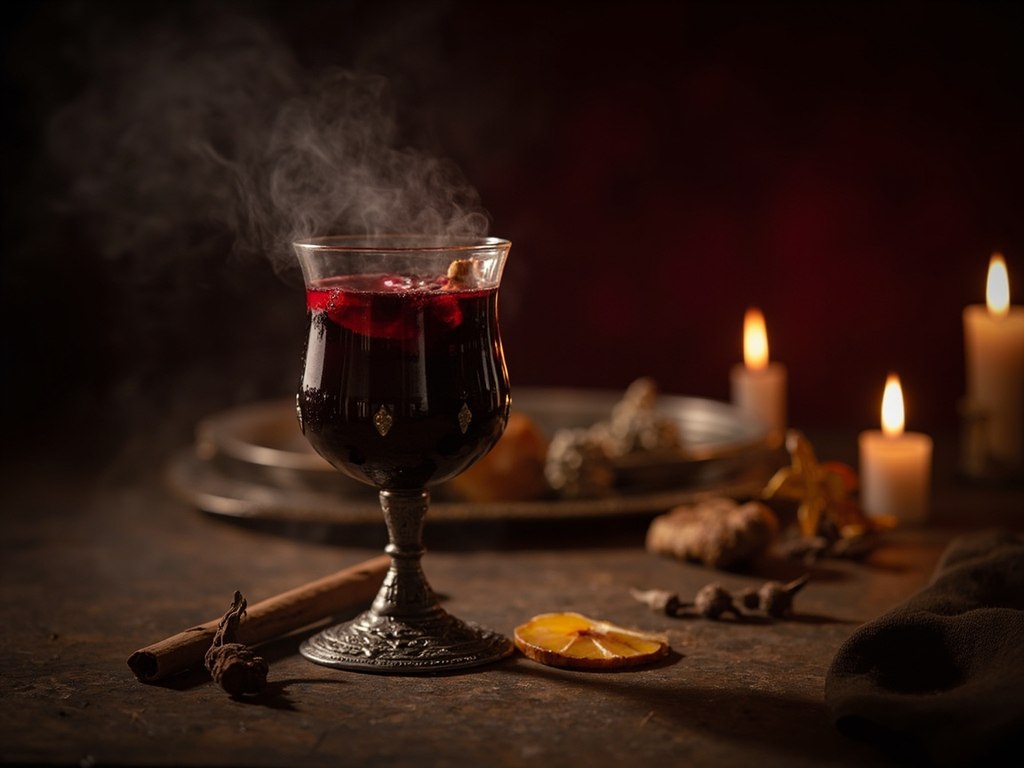 Drink
DrinkHipocrás — Spiced Wine of the Lord
El vino especiado — the honor drink at the end of the feast
🍯 🌶️· 40 min
View the recipe
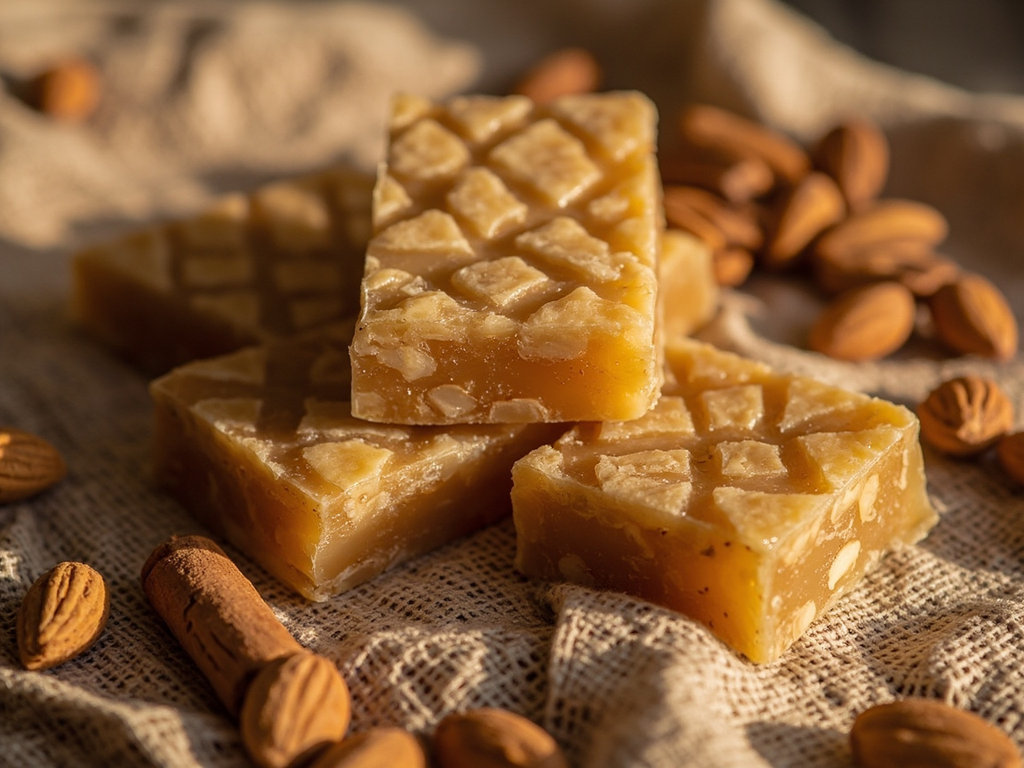 Travel
Alajú — Almond, Honey and Spice Paste for the Road
El dulce de camino — the dense sweet that travels in saddlebags
🍯 🌶️· 45 min + cooling
View the recipe