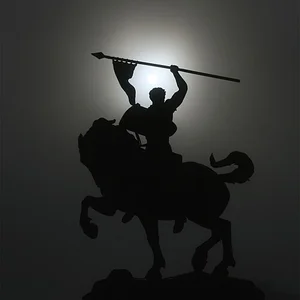

Rodrigo Díaz de Vivar (1043-1099), nicknamed El Cid (meaning 'the Lord' in Arabic), was a Castilian knight who became a legendary figure of the Reconquista. A mercenary warrior and military strategist, he fought both for and against Christian kingdoms, ultimately serving the cause of Castile. His epic tale, immortalized in the Cantar de Mio Cid, made him a symbol of chivalric honor and the struggle against Muslim rule in medieval Hispania.
El Cid
El Cid
royaume de Castille
8 min read
Frequently asked questions
Key Facts
- 1043: Birth of Rodrigo Díaz de Vivar in Castile
- 1064: Takes part in the siege of Toledo alongside King Ferdinand of Castile
- 1084-1094: Exiled, becomes a mercenary and commands forces for both Muslim and Christian kingdoms
- 1094: Conquers Valencia and establishes an independent principality
- 1099: Dies in Valencia; his sword and his legend live on through the epic poem Cantar de Mio Cid
Works & Achievements
A medieval Castilian epic that immortalizes the exploits of El Cid and stands as one of the earliest major works of Spanish literature. This heroic poem transformed the historical figure into a legend of medieval Christendom.
A major contribution to the reconquest of Toledo alongside King Alfonso VI, a key event in the Castilian Reconquista that significantly weakened Muslim presence on the Iberian Peninsula.
El Cid fought against the Almoravids alongside Alfonso VI in this decisive battle. Despite the Christian defeat, his role reinforced his reputation as a great military strategist.
El Cid seized the city of Valencia through siege and ruled it as an independent prince for five years, establishing his own state and demonstrating his political and military autonomy.
El Cid won a decisive victory against Muslim forces near Valencia, consolidating his control over the region and his reputation for invincibility in combat.
El Cid entered the service of the Muslim king of Zaragoza, illustrating the political and military pragmatism of medieval warriors that transcended religious divides and cementing his status as a leading mercenary commander.
Through his deeds and his legend, El Cid became the symbol of the medieval Castilian chivalric ideal, combining martial virtue, feudal loyalty, and Christian faith in the Iberian reconquest.
Anecdotes
In 1081, Rodrigo Díaz de Vivar was exiled by King Alfonso VI of Castile after carrying out an unauthorized raid against the lands of the taifa king of Toledo. The young knight became a mercenary, serving several masters — both Christian and Muslim — and earning his reputation as a formidable and opportunistic warrior. This period of exile strengthened his legend, casting him as an independent hero loyal to honor rather than power.
El Cid conquered the city of Valencia in 1094 after a lengthy siege, becoming master of this important Mediterranean city. He ruled Valencia autonomously for five years, proving that he was far more than a passing mercenary. This spectacular victory made him a major figure of the Reconquista and inspired the Cantar de Mio Cid.
According to chronicles, El Cid is said to have requested that his body be mounted on his horse after his death in 1099, in order to intimidate the Muslim forces besieging Valencia. This anecdote, recorded in medieval sources, symbolizes the legendary strength of the man that endured even beyond his death, fueling the mythology that surrounds him.
El Cid served the taifa king Al-Muqtadir of Zaragoza from around 1081 to 1086, fighting against other Muslim kingdoms on behalf of an Arab prince. This alliance with a Muslim lord shows that the conflicts of the medieval period were not simple religious wars, but complex power struggles in which political interests often outweighed matters of faith.
Primary Sources
De los sos ojos tan fuertemientre llorando, tornaba la cabeza e estávalos catando. Vio puertas abiertas e udos sin candados, alcandaras vadas sin palomas e sin garzones, e tornosse a la ciudad con grande dolor.
Roderico vero Didaci filius, qui vulgo Cid vocabatur, vir fortissimus et strenuissimus in bellis, multis annis sub rege Alphonso Sextus militavit.
El Cid Ruy Díaz fue muy estimado e honrado, e fue sseñor de Valencia, et gano muchas batallas contra los moros.
Yo, Rodrigo Díaz, otorgo e confirmo las heredades e possessiones que he ganado con mi espada.
Key Places
A small Castilian village near Burgos, birthplace of Rodrigo Díaz de Vivar in 1043. This place symbolizes the humble origins of the future hero of the Reconquista.
A major Castilian city where El Cid grew up and received his knightly training. The Cathedral of Burgos today houses his presumed remains, making it a central site of his legacy.
The former capital of the Taifa of Toledo. El Cid served as a mercenary for several Muslim kingdoms before ultimately committing to the Christian cause, fighting in campaigns around this strategically vital region.
El Cid conquered and ruled the city of Valencia between 1094 and 1099, achieving his greatest political and military triumph by taking control of this important Mediterranean city.
The site of a major battle in 1086 in which El Cid fought alongside Christian kings against the Almoravids. The battle highlights his role as a military strategist during the Reconquista.
A monastery near Burgos where, according to tradition, El Cid entrusted his wife Ximena and his children before setting out on his campaigns. The site commemorates El Cid's connection to medieval chivalric spirituality.
Typical Objects
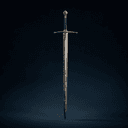
The legendary sword of El Cid, which became a symbol of his martial power. This mythical weapon represents the knight's outstanding prowess in battle and features prominently in the Cantar de Mio Cid.
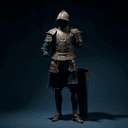
Typical 11th-century military equipment including helmet, breastplate, and limb protection. It illustrates El Cid's status as a professional warrior and reflects the evolution of medieval combat techniques.
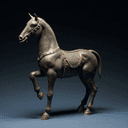
The noble steed essential to any medieval knight, a symbol of prestige and battlefield effectiveness. El Cid was renowned for his cavalry skills and his revolutionary equestrian strategies.
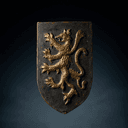
The heraldic symbol of Castile in the 11th century, representing El Cid's allegiance to the kingdom. It embodies his role as an emblematic figure of the Christian Reconquista.

The nickname 'El Cid' comes from the Arabic 'as-sayyid' (the lord), reflecting the multicultural Iberian world in which Christians and Muslims coexisted and influenced one another.

A 12th-century epic poem recounting the deeds of El Cid, compiled and preserved in written form. This document is essential for understanding the legend and the idealization of the historical figure.
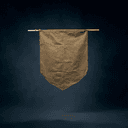
A standard symbolizing the Christian struggle against Muslim rule in Hispania. It represents the religious and military context of the Reconquista, in which El Cid played a major role.

11th-century Castilian currency used by El Cid in his dealings as a mercenary and feudal lord. They reflect his economic standing and his shifting political alliances.
School Curriculum
Vocabulary & Tags
Key Vocabulary
Daily Life
Morning
El Cid begins his day before dawn, attending mass in the chapel of the castle or a nearby monastery — a common practice among Castilian lords. After this religious devotion, he inspects his armor and martial equipment, or receives reports from his squires on the horses and supplies at his camp.
Afternoon
The afternoon is devoted to military training: horsemanship drills, sword fighting, lance work, and mounted combat — all essential to maintaining his reputation as a feared warrior. He may also take part in diplomatic negotiations with other lords, administer his Castilian lands, or plan strategies for upcoming military campaigns.
Evening
In the evening, El Cid shares a meal with his men-at-arms and companions in the great hall of the castle, strengthening feudal bonds. He listens to the ballads of troubadours recounting his deeds, relaxes with his family or court, then retires to rest before the next day.
Food
His diet, typical of the Castilian nobility, includes bread, meat (horse, mutton, game), cheese, and dried fruits. Fresh vegetables are scarce; the meal is rounded out with watered wine and beer — common medieval drinks valued for their safety over untreated water.
Clothing
El Cid wears a wool or linen tunic covered by leather and iron armor that grew progressively more sophisticated over his lifetime. His clothing reflects his status as a warrior: a sword (Tizona in legend), a lord's cloak, and the insignia of Castilian power.
Housing
He lives in the Castilian fortresses and castles he occupies or governs, such as Burgos or Valencia in the later years of his life. These residences feature defensive walls, great halls, spacious stables, and chapels — symbols of feudal power in medieval Hispania.
Historical Timeline
Period Vocabulary
Visual Style
Un style inspiré des enluminures manuscrites romanes et des tapisseries médiévales espagnoles, combinant la richesse ornementale du XIe siècle avec une atmosphère épique et dramatique. L'éclairage doré du coucher de soleil met en relief l'armure chevaleresque et les détails héraldiques, tandis que la palette évoque l'or bruni et les teintes précieuses des arts médiévaux hispaniques.
Sound Ambience
Une ambiance sonore guerrière et légendaire capturant les champs de bataille castillans du XIe siècle, mêlant les bruits de combat médiéval, les cris des guerriers, les instruments de l'époque et les échos de la rencontre entre mondes chrétien et musulman.
Liens externes & ressources
Références
Œuvres
Cantar de Mio Cid
XIIe siècle (composition)
Siège de Tolède
1085
Bataille de Sagrajas
1086
Conquête de Valence
1094
Bataille de Cuarte
1094
Service mercenaire auprès d'Al-Muqtadir
1081-1090 (environ)
Légitimation de l'honneur chevaleresque chrétien
XIe-XIIe siècles