 flip
flipSopas de ajo del camino (Garlic and Lard Bread Soup)
Sopas de ajo del camino (Garlic and Lard Bread Soup)
Why this dish? Before dawn, when Rodrigo and his mesnada break camp, the stale bread from the day before is thrown into a broth of garlic and lard: this is the soldier's and lord's breakfast, hot, quick, and filling enough to last until battle.
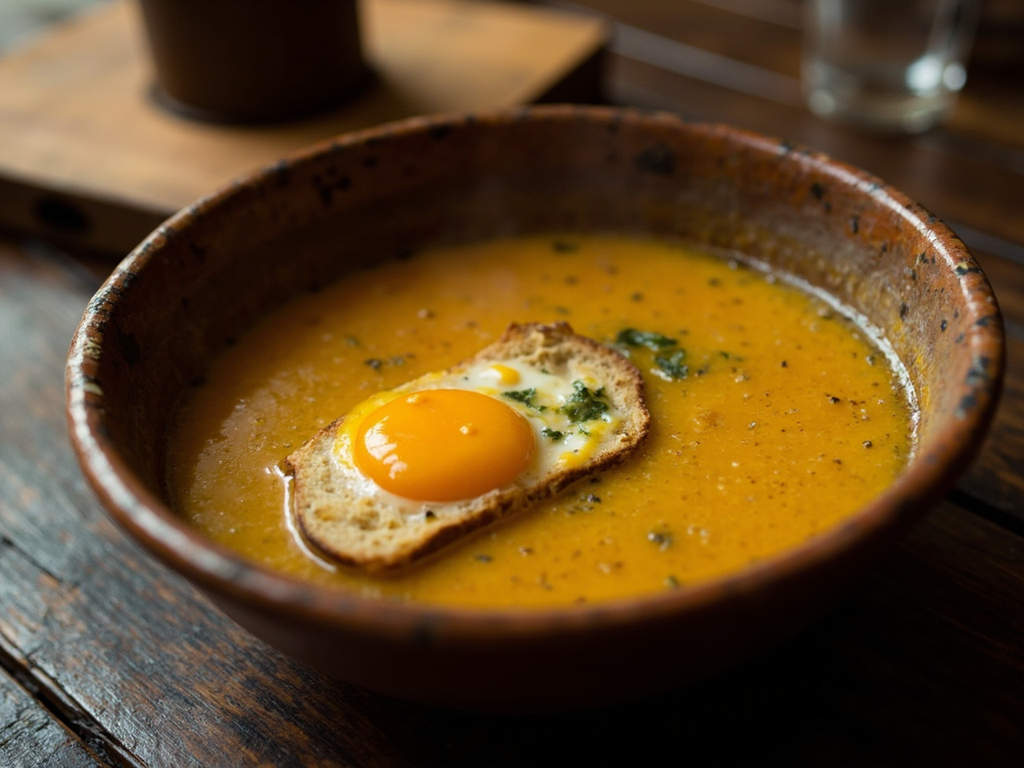
A humble and fortifying soup: hard bread soaked, garlic browned in fat, paprika... no, no paprika before 1492 — here garlic and saffron provide color and flavor. A poached egg is sometimes added on days of strength.
Listen well, you who read me: a man who must ride before the rooster crows does not fill himself with delicate dishes. I brown the garlic in lard until it sings in the pot, I throw in yesterday's bread and hot water, and I let it all come together like a good troop closing ranks. A pinch of saffron from Toledo, an egg if God grants it, and there you have enough to stay in the saddle until midday. Thus my vassals ate, and thus their lord ate — the same bowl, for shared bread builds loyalty.
- •Rye or wheat bread, stale — a few hard slices (soaking and thickening base)
- •Garlic — a good head (aromatic soul)
- •Lard or rendered pork fat — a piece (cooking fat)
- •Saffron — a few threads (golden color and fragrance)
- •Water or game broth — enough (liquid)
- •Egg — 1 if available (enrichment for days of strength)
Sopas de ajo del camino (Garlic and Lard Bread Soup)
A humble and fortifying soup: hard bread soaked, garlic browned in fat, paprika... no, no paprika before 1492 — here garlic and saffron provide color and flavor. A poached egg is sometimes added on days of strength.
Why this dish? Before dawn, when Rodrigo and his mesnada break camp, the stale bread from the day before is thrown into a broth of garlic and lard: this is the soldier's and lord's breakfast, hot, quick, and filling enough to last until battle.
Listen well, you who read me: a man who must ride before the rooster crows does not fill himself with delicate dishes. I brown the garlic in lard until it sings in the pot, I throw in yesterday's bread and hot water, and I let it all come together like a good troop closing ranks. A pinch of saffron from Toledo, an egg if God grants it, and there you have enough to stay in the saddle until midday. Thus my vassals ate, and thus their lord ate — the same bowl, for shared bread builds loyalty.
Ingredients (period version)
- Rye or wheat bread, stale — a few hard slices (soaking and thickening base)
- Garlic — a good head (aromatic soul)
- Lard or rendered pork fat — a piece (cooking fat)
- Saffron — a few threads (golden color and fragrance)
- Water or game broth — enough (liquid)
- Egg — 1 if available (enrichment for days of strength)
Ingredients
- Stale country bread — 150 g (base)
- Garlic — 6 cloves (aromatic)
- Lard or olive oil — 2 tbsp (cooking)
- Saffron — 1 pinch (10 threads) (color and fragrance)
- Chicken broth or water — 1 liter (liquid)
- Eggs — 2 (binding)
- Salt — to taste (seasoning)
Method
- Brown the sliced garlic in lard over low heat, without burning.
- Add the bread pieces and sauté briefly to absorb the fat.
- Pour in the hot broth, add saffron and salt, and simmer for 15 minutes until the bread breaks down.
- Crack the eggs into the simmering soup and cook for 2-3 minutes (poached) or beat to thicken.
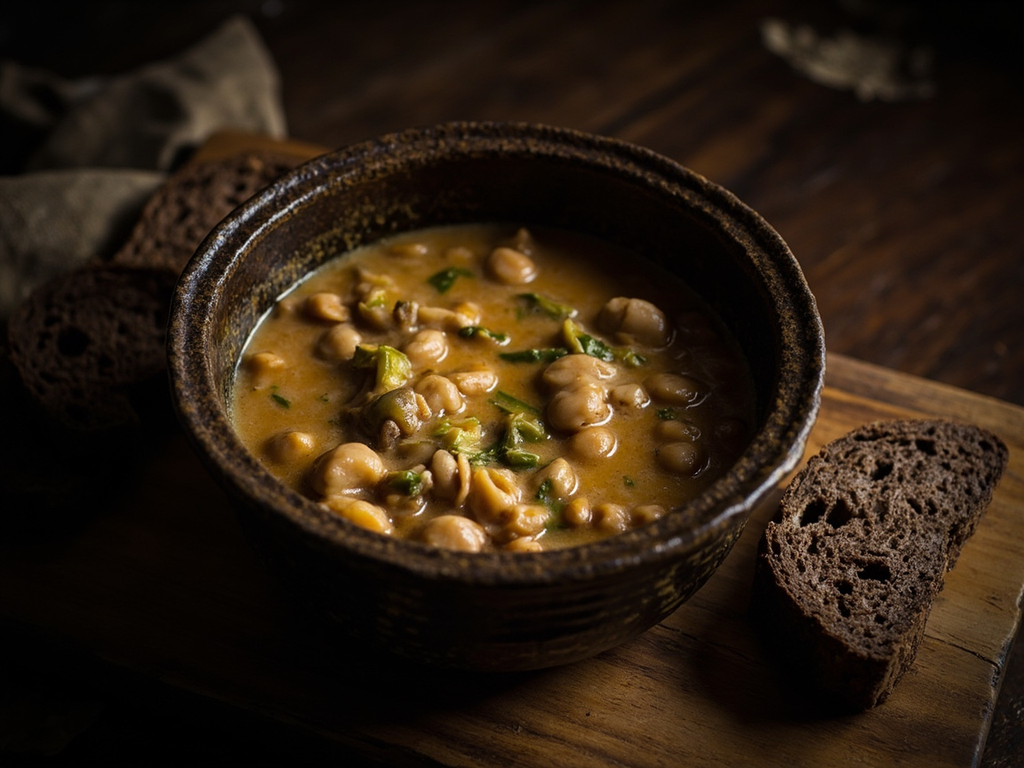
- Serve piping hot in an earthenware bowl.
How it was made : Sopas (from the idea of soaked bread) were the staple food of all medieval Iberia, from shepherds to lords: bread was never thrown away, but resurrected in broth. The garlic version has survived almost unchanged through the centuries — chili and pimentón would only color the recipe after 1492.
The contemporary twist : Served in individual cazuelas and baked for 5 minutes to gratin the egg: the 'Sopa de ajo del Campeador'.
El Cid · Charactorium