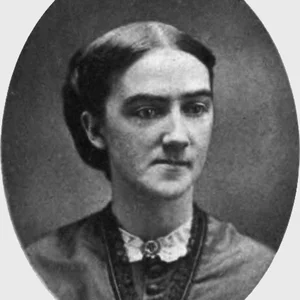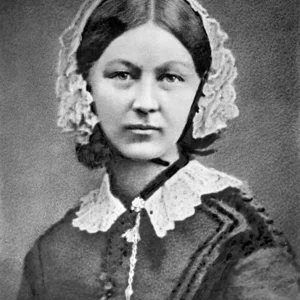

British nurse and statistician (1820–1910), she revolutionized hospital care during the Crimean War. A pioneer of public health, she founded the first secular nursing school and used statistics to demonstrate the critical importance of hygiene.
Florence Nightingale(1820 — 1910)
Florence Nightingale
Royaume-Uni de Grande-Bretagne et d'Irlande
8 min read
Frequently asked questions
Famous Quotes
« I cannot, but God can.»
« Statistics is the most important of the sciences, for without it we cannot guide human actions.»
Key Facts
- 1820: born in Florence, Italy, into a British aristocratic family
- 1854–1856: cares for British soldiers in Crimea and dramatically reduces mortality through improved hygiene
- 1858: publishes 'Notes on Matters Affecting the Health, Efficiency and Hospital Administration of the British Army', a groundbreaking statistical report
- 1860: founds the Nightingale Training School for nurses at St Thomas' Hospital in London
- 1907: first woman to be awarded the Order of Merit by King Edward VII
Works & Achievements
The first nursing manual aimed at the general public, translated into multiple languages. It laid the foundations of a scientific approach to care and was used in nursing schools for decades.
A technical work addressed to hospital architects and administrators, advocating building designs that promote ventilation and hygiene. It transformed hospital construction across Europe.
A major innovation in statistical visualization, this circular chart demonstrated that most soldiers died from preventable diseases rather than from wounds. This work laid the foundations of modern epidemiological medicine.
The world's first secular and professional nursing school, funded by the Nightingale Fund established after the Crimean War. Its graduates spread across the world to found new schools.
A comprehensive 830-page report on the causes of mortality in the British Army. Its recommendations led to sweeping reforms in military hospitals and the sanitation of barracks.
A statistical study on the health of British soldiers in India that led to major sanitary reforms in the colonies and significantly reduced mortality from infectious diseases.
Anecdotes
Florence Nightingale made nightly rounds at the Scutari hospital, lantern in hand, to watch over the wounded soldiers of the Crimean War. The men would kiss her shadow on the wall as a sign of gratitude, earning her the poetic nickname 'The Lady with the Lamp'.
Florence was not only a nurse — she was also a gifted mathematician. She invented a type of circular chart, the 'polar area diagram' (also known as the rose diagram), to visually show politicians that the majority of soldiers were dying not from battle wounds, but from preventable infections caused by poor sanitary conditions.
Before leaving for Crimea, Florence raised a small owl she had found at the foot of the Parthenon in Athens, which she named Athena. She carried it everywhere in her pocket. Athena died shortly before Florence's departure for Crimea — Florence had it stuffed and kept it with great care.
In her later years, Florence Nightingale lived almost exclusively in her London bedroom, receiving officials, doctors, and reformers at her bedside. Although bedridden for decades due to an illness contracted in Crimea, she continued to write reports, letters, and health policies that influenced the entire world.
In 1907, King Edward VII awarded her the Order of Merit — she was the first woman ever to receive the honour. When she died in 1910, her family declined the offer of a state funeral at Westminster Abbey, honouring her wish for a simple burial in Hampshire.
Primary Sources
The very first requirement in a hospital is that it should do the sick no harm. It is quite surprising that, whereas it seems a commonly received idea among men and even among women themselves that it requires nothing but a disappointment in love, or incapacity in other things, to turn a woman into a good nurse, we should universally consider almost any part of a man's business as requiring instruction.
It may seem a strange principle to enunciate as the very first requirement in a Hospital that it should do the sick no harm. It is quite certain, however, that the actual mortality in hospitals, especially in those of large crowded cities, is very much higher than any calculation founded on the mortality of the same class of diseases among patients treated out of hospital would lead us to expect.
I have read with interest your note. Our mortality in the Crimea from disease alone was at the rate of 1,173 per 1,000 per annum — being at the rate of dying off the whole British Army in the Crimea twice over in one year from disease alone.
We have now four miles of beds — and not eighteen inches apart. We have our quarters in one tower of the Barrack, and all this fresh influx has been laid down between us and the main guard in two corridors with a line of beds down the middle.
Key Places
A former Ottoman barracks converted into a military hospital, this is where Nightingale treated thousands of British soldiers and reduced the mortality rate from 42% to 2% in less than a year through radical sanitary reforms.
Florence Nightingale's birthplace in 1820, from which she took her first name. Her parents, English aristocrats travelling across Europe, had a custom of naming their children after the places where they were born.
The Nightingale family estate where Florence spent much of her childhood and adolescence. It was here that she learned Latin, Greek, and mathematics, and developed her passion for caring for the poor.
It was at this London hospital that Nightingale founded the Nightingale Training School in 1860 — the world's first secular nursing school — which became the model for nurse training in many countries.
A pioneering Protestant institution for the training of caregivers, where Nightingale studied in 1850 and 1851. This experience gave her the theoretical and practical foundations she would go on to revolutionise.
Typical Objects

Florence carried a lantern during her nightly rounds at the Scutari hospital, earning her the nickname 'The Lady with the Lamp'. This object became the universal symbol of the nursing profession.

Nightingale invented this type of circular chart to visualize the causes of soldier mortality during the Crimean War. It is one of the first modern uses of statistics applied to public health.

Florence meticulously recorded her observations on patients' conditions and the sanitary state of hospitals. These notes fed into her official reports and her advocacy for reform.

Nightingale's nurses wore a plain dark dress, a white apron, and a cap. This uniform marked a break from the chaotic and unprofessional image of caregivers at the time.

At Scutari, medical supplies were critically scarce. Nightingale funded out of her own pocket the purchase of medicines, linen, and surgical equipment for wounded soldiers.

Bedridden for decades, Nightingale wrote thousands of letters to ministers, physicians, and policymakers to advance her sanitary reforms. Her correspondence amounts to more than 200 volumes of archives.
School Curriculum
Vocabulary & Tags
Key Vocabulary
Daily Life
Morning
At Scutari, Florence rose before dawn to oversee the preparation of patients' meals and inspect the state of the wards. She organized the work of her nursing teams, assigned tasks, and checked hygiene conditions — floor cleaning, air circulation, and dressing changes.
Afternoon
Afternoons were devoted to writing detailed reports on supply needs, mortality rates, and patients' conditions. She met with military doctors — often hostile to her presence — to negotiate resources and defend her nurses' right to provide care.
Evening
Each evening, after the patients had settled for the night, Florence made her famous nocturnal rounds by the light of her lamp, sometimes covering more than six kilometres through the corridors. She would sit at the bedside of the dying to keep them company and recorded the condition of each patient.
Food
In the difficult conditions at Scutari, Florence ate simply — broths, bread, and dried vegetables, similar to the improved rations she worked so hard to secure for the soldiers. Back in England and bedridden, her meals were prepared by her household staff according to medical instructions.
Clothing
In the hospital, Florence wore a dark wool dress (slate grey or navy blue), a spotless white apron, and a cotton cap. She had imposed a standardised uniform on her nurses to professionalise their image and distinguish them from makeshift helpers.
Housing
At Scutari, Florence was housed in a tower of the Selimiye Barracks, in spartan rooms she shared with other nurses. Back in London, she spent decades in her room at 10 South Street, Mayfair, where she received visitors while bedridden, surrounded by papers and reports.
Historical Timeline
Period Vocabulary
Visual Style
Style réaliste victorien inspiré des peintres préraphaélites : éclairage dramatique à la lampe à huile sur fond de salle d'hôpital en pierre, palette de bleus nuit, gris ardoise, ivoire et ambre chaud.
Sound Ambience
L'ambiance sonore évoque l'hôpital militaire de Scutari en 1854-1856 : gémissements des soldats blessés, froissement des uniformes d'infirmières, crépitement des lampes à huile et grattement de la plume sur le papier lors des rondes nocturnes de Florence.
Liens externes & ressources
Références
Œuvres
Notes on Nursing: What It Is, and What It Is Not
1859
Notes on Hospitals
1859
Diagramme en rose des vents (Mortality of the British Army)
1858
Nightingale Training School for Nurses (St Thomas' Hospital)
1860
Rapport à la Commission royale sur la santé de l'armée
1857-1858
Observations on the Evidence contained in the Stational Reports submitted to the Royal Commission on the Sanitary State of the Army in India
1863