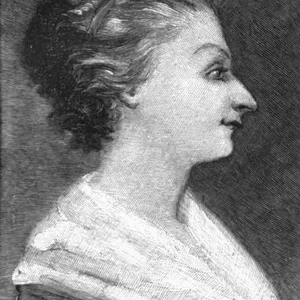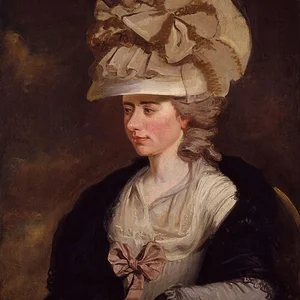

English novelist, playwright, and diarist (1752-1840), Frances Burney published Evelina anonymously in 1778, an epistolary novel that was an immediate success. A forerunner of Jane Austen, she documented eighteenth-century English society with great perceptiveness in her journals and correspondence.
Frances Burney(1752 — 1840)
Frances Burney
royaume de Grande-Bretagne, Royaume-Uni de Grande-Bretagne et d'Irlande
8 min read
Frequently asked questions
Famous Quotes
« Nothing is a greater impediment to being on good terms with others than being ill at ease with yourself.»
Key Facts
- 1778: Anonymous publication of Evelina, an immediate success that revealed her as a novelist
- 1786-1791: Second Keeper of the Robes to Queen Charlotte, giving her firsthand experience of court life
- 1793: Marriage to French general Alexandre d'Arblay, followed by years of exile in France
- 1811: Mastectomy without anesthesia, described with clinical precision in a celebrated letter
- Her journals span seventy-two years of English social, political, and literary life
Works & Achievements
Burney's first novel, published anonymously at age 26. This epistolary novel follows a young woman through London society and was an immediate success with figures such as Samuel Johnson, who read it in a single night.
A more ambitious novel dealing with inheritance, marriage, and social conventions. It contains the phrase 'pride and prejudice' which would directly inspire the title of Jane Austen's novel published twenty years later.
Published by subscription — Jane Austen was among the subscribers — this novel explores the lives of young people confronted with social expectations and errors of judgment, with a characteristic satirical wit.
Burney's last novel, written during her years of exile in France. It explores the difficulties faced by women without means in English society during the revolutionary era, and is considered the most political of her writings.
A posthumous publication of her diaries and correspondence spanning more than sixty years, from 1768 to 1840. These texts constitute a major historical source on social, cultural, and political life in England and France.
Anecdotes
Frances Burney had been writing in secret since childhood, fearing ridicule. At the age of fifteen, she burned all her manuscripts, including a novel titled The History of Caroline Evelyn, convinced that writing was not suitable for a young girl. Yet she continued to write in secret and published Evelina in 1778 without having told her father beforehand.
When Evelina appeared anonymously in 1778, its success was immediate and overwhelming. Figures such as Samuel Johnson and Edmund Burke vied to uncover the identity of the mysterious author. When it was revealed that the author was the daughter of musicologist Charles Burney, London's literary society was astonished that a twenty-six-year-old woman had produced such an accomplished work.
In 1786, Frances Burney was appointed Second Keeper of the Robes to Queen Charlotte. For five years, she lived at court under exhausting conditions, subject to rigid ceremony and constant surveillance. In her journal, she described this period as a gilded prison, recounting her growing despair until she was finally granted leave in 1791, her health severely impaired.
In September 1811, Frances Burney underwent a mastectomy to treat breast cancer, without general anesthesia — only a little opium and wine. After the operation, she wrote a nine-page letter to her sister Esther describing the procedure with striking precision. This account is today considered one of the most harrowing documents in medical history.
In 1815, Frances Burney was in Brussels when the Battle of Waterloo took place just a few kilometres away. She witnessed the panic spreading through the city, and the streams of wounded soldiers and refugees flooding the streets. Her letters describe those historic days with remarkable clarity, offering a valuable civilian account of the events surrounding the fall of Napoleon.
Primary Sources
Lady Howard does me but too much honour in her most partial selection; since, all that I know of Evelina, is from a journal in my own possession, the property of her own pen.
Yet — when the dreadful steel was plunged into the breast — cutting through veins — arteries — flesh — nerves — I needed no injunctions not to restrain my cries. I began a scream that lasted unintermittingly during the whole time of the incision.
The whole of this unfortunate business has been the result of PRIDE and PREJUDICE.
O, how I long to be away! I could weep an hour at a time, for the heaviness of this captivity — I, who have always been mistress of my own time and actions.
The terror of the inhabitants was extreme, the streets filled with soldiers, wounded men, and fugitives, all in the utmost confusion and dismay.
Key Places
Frances Burney's birthplace, where she was born in 1752. The Burney family lived there before moving to London.
The Burney family's London home, a genuine intellectual salon frequented by Samuel Johnson, David Garrick, and the circles of the English Enlightenment. Frances spent her formative years there and wrote *Evelina* within its walls.
Frances Burney lived here as Second Keeper of the Robes to Queen Charlotte between 1786 and 1791, an experience she described as oppressive despite its outward prestige.
It was at Mickleham that Frances met the French émigré Alexandre d'Arblay. The couple then settled in Great Bookham, where Frances wrote *Camilla* and built their family home with the novel's proceeds.
Frances Burney lived here from 1801 to 1812 with her husband, who had been reinstated in the Napoleonic army. It was in Paris that she underwent a mastectomy in 1811, leaving behind a remarkably vivid written account of the ordeal.
In 1815, Frances Burney was in Brussels during the Waterloo campaign. Her letters bear witness to the panic and chaos that gripped the city during those decisive days for Europe.
Typical Objects

Frances Burney wrote with a goose quill from childhood, often at night by candlelight to avoid being caught. Her personal diaries, kept for over sixty years, run to several thousand handwritten pages.

She began keeping a diary at the age of sixteen and never stopped. These notebooks are one of the richest sources on English social and cultural life in the eighteenth century.

Evelina is composed entirely of letters, a format very popular in the eighteenth century for exploring characters' feelings and psychology with intimacy. Copies were passed from hand to hand in drawing rooms.

During her five years of service to Queen Charlotte, Frances had to wear elaborate, expensive, and restrictive court dresses — symbols of a rigid etiquette she described with irony in her letters.
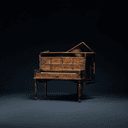
The daughter of the great musicologist Charles Burney, Frances grew up surrounded by celebrated musicians such as Haydn. Music was ever-present in her home and fed the sensitivity that shines through in her novels.

Frances often wrote in secret after the rest of the household had gone to bed, by the dim light of a candle, to conceal her literary activity from those around her.
School Curriculum
Vocabulary & Tags
Key Vocabulary
Tags
Daily Life
Morning
Frances rose early to write before the household stirred, making the most of the morning quiet to work on her novels and journal. During her years at court, her mornings were entirely taken up by service to Queen Charlotte — dressing her, reading to her, and waiting endlessly in antechambers.
Afternoon
Her London afternoons were often devoted to social calls, her father's literary salons, or walks in the city's gardens. At court, afternoons unfolded in rigid ceremony with little personal freedom, which she experienced as a genuine intellectual constraint.
Evening
Evenings at the Burney household on St. Martin's Street were enlivened by concerts, literary discussions, and visits from writers and musicians. Frances attended these gatherings where Samuel Johnson, Edmund Burke, and David Garrick mingled, feeding the keen social observation she channels in her novels.
Food
The diet of England's prosperous middle classes in the eighteenth century centred on roast beef, stews, boiled vegetables, and sweet puddings. During her years in France, Frances adapted to Parisian cuisine, evoking in her letters the meals and culinary habits so different from those she had known in England.
Clothing
Frances wore the typical dress of well-bred English women: a long-sleeved silk or cotton gown, a whalebone corset, layered petticoats, and a white cotton cap. At Queen Charlotte's court, she was required to wear elaborate ceremonial robes at considerable expense, in keeping with a very strict dress code.
Housing
The Burney family lived in a well-furnished townhouse on St. Martin's Street in London, frequented by the intellectual elite of the day. After her marriage in 1793, Frances lived in a modest country house in Surrey, which she and her husband built in part with the proceeds from Camilla, before settling in Paris and eventually returning permanently to England.
Historical Timeline
Period Vocabulary
Liens externes & ressources
Références
Œuvres
Evelina, or The History of a Young Lady's Entrance into the World
1778
Cecilia, or Memoirs of an Heiress
1782
Camilla, or A Picture of Youth
1796
The Wanderer, or Female Difficulties
1814
Diary and Letters of Madame d'Arblay
1842-1846 (posthume)