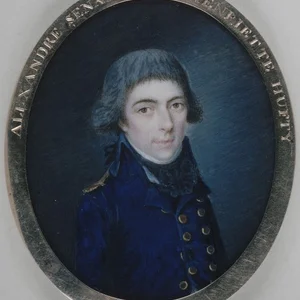
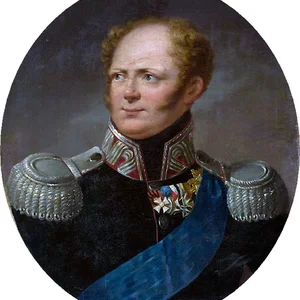
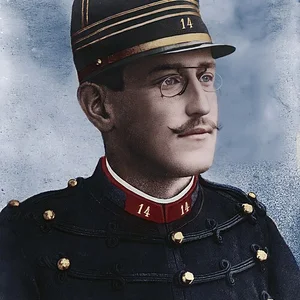
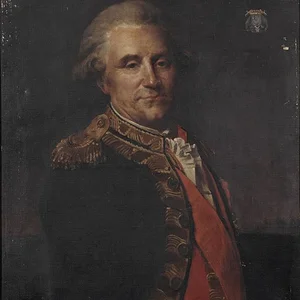
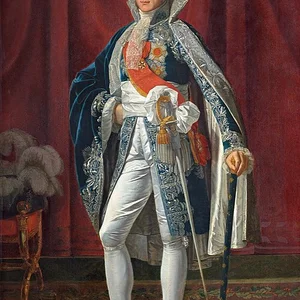
A French divisional general of the First Empire, François Barthélemy Béguinot built his career in the Revolutionary and Napoleonic armies. He took part in the major military campaigns of the late 18th and early 19th centuries.
François Barthélemy Béguinot
François Barthélemy Béguinot
8 min read
Frequently asked questions
Key Facts
- Appointed divisional general under the First Empire
- Military career began during the French Revolution
- Belonged to the generation of officers who rose through Revolutionary meritocracy
- Served during the major campaigns of the Napoleonic era
Works & Achievements
Béguinot earned his stripes in the armies of the French Revolution, taking part in the wars against the European coalitions that sought to crush the nascent Republic. This baptism by fire was the crucible of his entire career.
During the Consulate period, Béguinot distinguished himself in the campaigns that consolidated France's military position in Europe, accumulating the experience needed to rise to senior ranks.
As a division general, Béguinot took part in the great Napoleonic offensives across Europe, commanding units engaged in the maneuvers and battles characteristic of large-scale imperial warfare.
Promotion to the rank of division general, reserved for officers who had proved their abilities across multiple engagements, represents the defining achievement and crowning glory of Béguinot's military career.
Anecdotes
François Barthélemy Béguinot embodies the great social transformation brought about by the French Revolution: born into modest circumstances, he climbed every rung of the military hierarchy through merit alone, reaching the rank of général de division at a time when, under the *Ancien Régime*, only nobles could aspire to such positions. The law of 19 Floréal Year II (1794) had officially enshrined this revolutionary principle of advancement by talent.
Like many generals of the First Empire, Béguinot had to contend with the hardships of winter campaigns: in Prussia or Poland, French armies frequently lacked shoes, greatcoats, and provisions, forcing officers to requisition the bare essentials from villages along their route in order to keep their troops together in temperatures of -20°C.
Promotion to the rank of général de division — the highest field distinction under the Empire after the marshal's baton — required having successfully commanded across multiple theaters of operation, proving oneself in both the lightning attack so favored by Napoleon and in stubborn defensive action. It was the crowning achievement of a demanding *cursus honorum*, the reward for years of relentless campaigning.
The generals of the First Empire maintained intensive correspondence with the imperial general staff: every troop movement, every engagement, every casualty report had to be recorded in detailed dispatches sent to Paris, making these officers as much military administrators as battlefield commanders.
Napoleon personally bestowed the Legion of Honor on his generals during grand ceremonies, often on the battlefield itself in the aftermath of a victory. This gesture, highly deliberate in its symbolism, forged a powerful emotional bond between the Emperor and his officers, who pledged him a loyalty that was nearly absolute.
Primary Sources
Orders of movement, campaign reports, and citations addressed to divisional generals appear in the imperial correspondence, bearing witness to the meticulous organization of the Napoleonic armies and the missions entrusted to each corps commander.
The official bulletins reported on battles and named the officers who had distinguished themselves; they were the primary vehicle for public information on the campaigns and an irreplaceable primary source for identifying the generals engaged.
The military archives preserve the service records of generals from the Revolution and the Empire, including successive promotions, campaigns undertaken, wounds received, and decorations awarded.
This 27-volume compilation, published under the Restoration, reconstructs the revolutionary and imperial campaigns from official reports and the testimonies of officers who served in the great French armies.
Key Places
A landmark of French military memory, Les Invalides housed soldiers and officers wounded or disabled in war. It was the site of grand imperial military ceremonies, and Napoleon had the remains of his generals transferred there.
The Château de Vincennes holds the military archives of the Revolutionary and Imperial periods, including the service records of generals. It is the primary source for tracing the careers of officers such as Béguinot.
A strategic crossing point between France and Germany, Strasbourg was the launching ground for many military campaigns of the Revolutionary and Imperial eras toward Austria and Prussia. The armies of the Republic gathered their forces there before crossing the Rhine.
Site of the Battle of Austerlitz on 2 December 1805, widely regarded as Napoleon's tactical masterpiece. The divisional generals of the Grande Armée played a decisive role in encircling the combined Austro-Russian armies.
Site of the Battle of the Nations (16–19 October 1813), the largest battle of the Napoleonic era with more than 500,000 combatants. The French defeat there was decisive and sounded the death knell of Napoleon's domination over Europe.
Typical Objects

Both a ceremonial and combat weapon worn at the belt, the general's sabre was often richly decorated with a gilded metal guard and a blade engraved with the arms of the Empire. It symbolised at once the rank, authority, and military courage of its bearer.

An indispensable optical instrument for any field commander, the spyglass allowed officers to observe enemy movements, assess terrain, and coordinate manoeuvres from a distance. Napoleonic generals never parted with this tool on the battlefield.

The blue coat with gold embroidery, adorned with gold-fringed epaulettes and topped with a plumed bicorne hat, immediately set the major general apart during parades and on the battlefield. Every codified detail — braid, lapel colour — indicated the wearer's precise rank.

Topographic maps and compasses were the daily working tools of every senior officer, used to plan marches, select defensive positions, and coordinate attacks with other army corps. Without them, no great Napoleonic manoeuvre was conceivable.

Founded by Napoleon in 1802, the *Légion d'honneur* was the Empire's highest decoration, presented personally by the Emperor at grand ceremonies. Major generals were almost invariably holders of it, typically at the rank of *commandeur* or grand officer.

Carried by general officers during reviews and ceremonies, the baton symbolised the authority delegated by the State over the troops under its holder's command. It visually distinguished the commanding officer from his subordinates.
School Curriculum
Vocabulary & Tags
Key Vocabulary
Daily Life
Morning
The general rose at dawn, the hour when military encampments stirred to the sound of the bugle. He received overnight reports from his aides-de-camp, then inspected the disposition of his troops and the state of food and ammunition supplies before making any operational decisions.
Afternoon
The afternoon was devoted to directing operations: moving across the terrain with a spyglass, conferring with regimental colonels, dispatching couriers to headquarters, and studying maps. On campaign, these hours swung between tense waiting and intense engagements that demanded split-second decisions.
Evening
In the evening, the general drafted his reports for the imperial high command, detailing the day's movements, casualties sustained, and the objectives for the following day. A frugal meal shared with his personal staff — often in a requisitioned farmhouse or beneath a command tent — brought the day to a close.
Food
On campaign, senior officers ate better than the rank and file, yet still depended on the uncertainties of the supply chain: vegetable soup, boiled or roasted meat, coarse bread, and wine or brandy were the daily staples. In garrisons or in Paris, generals adopted the prosperous bourgeois table of their era.
Clothing
The division general's blue coat with white lapels and gold embroidery was completed by epaulettes with heavy gold fringe, riding boots, and a bicorne hat adorned with a tricolor cockade. On campaign, a long grey or blue greatcoat provided protection from the rain and cold of lengthy winter marches.
Housing
In garrison, division generals were billeted in requisitioned private townhouses or apartments made available by local authorities. On campaign, they occupied the best house to be found in whatever village they passed through, maps spread across the table and sentries posted at the doors.
Historical Timeline
Period Vocabulary
Liens externes & ressources
Références
Œuvres
Service dans les armées révolutionnaires
1792-1799
Commandement lors des campagnes du Consulat
1799-1804
Commandement en tant que général de division sous l'Empire
1804-1814
Accession au grade de général de division
Premier Empire