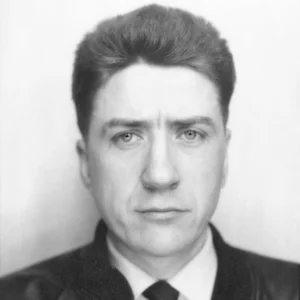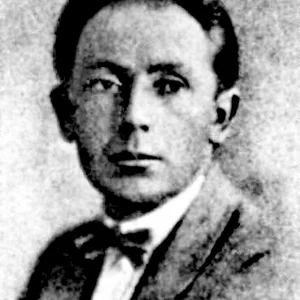

German film director (1888–1931), a central figure of Expressionist cinema. He made Nosferatu (1922) and The Last Laugh (1924), two foundational works in the art of filmmaking.
Friedrich Wilhelm Murnau(1888 — 1931)
F. W. Murnau
Allemagne
8 min read
Frequently asked questions
Key Facts
- Born on December 28, 1888, in Bielefeld, Germany
- Directed Nosferatu, a Symphony of Horror in 1922, an unauthorized adaptation of Dracula
- Made The Last Laugh (1924), groundbreaking for its complete absence of intertitles
- Left for Hollywood in 1926 and directed Sunrise (1927), honored at the first Academy Awards
- Died in a car accident on March 11, 1931, in California
Works & Achievements
An unauthorized adaptation of Bram Stoker's Dracula, considered the first great horror film in cinema history. Max Schreck's performance as Count Orlok, the expressionist visual effects, and the use of natural locations make it a foundational masterpiece.
A groundbreaking film in which Murnau tells the story of a hotel doorman's downfall without using a single intertitle — relying entirely on image and camera movement. The "unchained camera" technique he pioneered here would have a lasting influence on cinema worldwide.
A major UFA production adapting the universal Faust myth, featuring monumental sets and spectacular special effects for the time. Murnau's last great German film before his departure for Hollywood, it brings together all his formal research on light and framing.
Murnau's first American film, regularly ranked among the greatest films in cinema history. It won a special award at the first Academy Awards ceremony for "unique and artistic production," honoring its formal genius over its modest commercial success.
Murnau's final film, co-directed with documentarian Robert Flaherty and shot in Tahiti with non-professional actors. A swan song of exceptional formal beauty, it was released in theaters one week after its director's death.
Anecdotes
Nosferatu (1922) was filmed without the permission of Bram Stoker's widow — the author of the novel Dracula. Florence Stoker sued the producer and obtained a court order for the destruction of all copies. Fortunately, a few prints had already circulated abroad, allowing this masterpiece to survive to the present day.
To film The Last Laugh (1924), Murnau invented what became known as the “unchained camera” (entfesselte Kamera): he mounted the device on a bicycle, a wheelchair, and even a suspended cable to create movements previously thought impossible. This technical revolution allowed him to tell the story entirely through images, without a single intertitle — a first in the history of cinema.
Friedrich Wilhelm Plumpe — his real name — adopted the pseudonym “Murnau” as a tribute to the Bavarian town of Murnau am Staffelsee, where he loved to stay and paint. This region was also frequented by Wassily Kandinsky and Franz Marc, founders of the expressionist movement Der Blaue Reiter, whose aesthetic influence left a deep mark on his films.
Murnau was recruited to Hollywood by William Fox in 1926 with an exceptional contract and rare artistic freedom. His film Sunrise (1927) won a special award at the very first Oscar ceremony for “unique and artistic production,” but his formal demands quickly clashed with the commercial imperatives of the American studios.
Murnau died in a car accident on March 11, 1931, at just 42 years old, one week before the New York premiere of his final film Tabu. Several Hollywood stars attended his funeral; his body was then repatriated to Germany for burial.
Primary Sources
Nosferatu! That name still rings out like the cry of the death-bird… Were you to speak this word with a pure soul, the frightening images of ancient terror would come back to life.
The camera must be freed from its fixity. It must see like a human eye — in motion, in emotion, in life. The viewer must feel what the character feels, not observe them from the outside.
This tale would be little more than a story like any other, if life did not sometimes take cruel pleasure in mocking men without mercy.
A Song of Two Humans — a story of a Man and a Woman — of their love, their struggle, their reconciliation. This song of the two humans is of no place and every place; you might hear it anywhere at any time.
The light here has a purity I had never seen before. I want to capture the life of these people as it is, without artifice, before it disappears.
Key Places
City in North Rhine-Westphalia where Friedrich Wilhelm Plumpe was born on December 28, 1888. Growing up in a prosperous middle-class family, he developed a strong taste for painting and literature from an early age.
The nerve center of German Expressionist cinema in the 1920s. Murnau shot his major works here with UFA's elite technical and artistic teams, benefiting from the largest soundstages and the finest set designers in Europe.
Medieval Hanseatic towns and coastal landscapes of northern Germany used as natural settings for *Nosferatu* (1922). The Gothic streets of Wismar and the lakeside scenery serve as the backdrop for the fictional town of Wisborg, deepening the film's eerie, fantastical atmosphere.
Murnau settled here in 1926 under contract with the Fox Film Corporation. He shot *Sunrise* (1927) and *City Girl* (1930), striving to bring his European artistic vision to the American commercial industry — achieving critical acclaim but facing constant tension with producers.
South Pacific island where Murnau filmed his final picture *Tabu* in 1929–1930, using non-professional Polynesian actors. The film reflects a newfound sensitivity to natural and human beauty, far removed from the artificial sets of the studio world.
The place where Murnau died on March 11, 1931, in a car accident on the coastal highway. He was 42 years old and never lived to see the release of *Tabu*, his artistic testament.
Typical Objects

A continuous-feed photographic device used to shoot silent films in the 1920s. Murnau used it in a revolutionary way by freeing it from its fixed tripod to create unprecedented expressive movements, laying the foundations of the modern cinematic vocabulary.

Cellulose nitrate film on which the images of silent movies were recorded. Highly flammable and chemically unstable, this stock is responsible for the loss of the vast majority of films from that era, including almost all original prints of Nosferatu.

Exaggerated theatrical makeup, rooted in Expressionism, used to transform actors into symbolic or terrifying figures. Max Schreck wore elaborate makeup to portray Count Orlok in Nosferatu, inspired by the masks of traditional theatre.

A written document describing the film's action scene by scene, along with its intertitles. Murnau crafted his scripts with a painter's precision, incorporating framing sketches and highly detailed lighting notes.

A device producing intense light through an electric arc, used both to illuminate sets on the soundstage and to project films in theatres. It made it possible to create the dramatic shadow play that is characteristic of Murnau's Expressionist style.

The UFA studios near Berlin were the largest in Europe in the 1920s. Murnau had monumental architectural sets built there with deliberately distorted perspectives, playing with proportions and shadows to heighten dramatic tension.
School Curriculum
Vocabulary & Tags
Key Vocabulary
Daily Life
Morning
Murnau rose early to prepare his shoots with a painter's meticulousness. He began his day studying his framing sketches and staging notes, checking every planned camera angle. His artistic and theatrical training drove him to conceive each sequence as a living tableau before he even set foot on set.
Afternoon
Afternoons were devoted to shooting on the UFA studio stages or on location, often long hours with his technical crews. A demanding perfectionist, Murnau could reshoot the same scene dozens of times to achieve the lighting or dramatic effect he was after — a quality that fascinated his collaborators as much as it exhausted them.
Evening
In the evenings, Murnau frequented Berlin's intellectual and artistic circles, rubbing shoulders with writers, Expressionist painters, and theater figures. He maintained friendships in the *Blaue Reiter* milieu and often attended Max Reinhardt's productions, continually deepening his thinking on the art of mise-en-scène.
Food
Like many cultivated German bourgeois of his era, Murnau enjoyed Central European cuisine — charcuterie, rye bread, dark beer. After settling in California, he adapted to American culinary habits, taking to the fruits and lighter fare of the coastal diet, while retaining a nostalgia for German family meals that surfaces in his letters.
Clothing
On set, Murnau wore practical, understated attire — a jacket, loose knickerbockers, and a hat — typical of European directors of the 1920s. In Hollywood he gradually adopted a more relaxed style, open-collared shirts and a panama hat under the California sun, without ever losing the quiet elegance of the cultivated German intellectual.
Housing
In Berlin during the 1920s, Murnau lived in comfortable apartments in bourgeois neighborhoods, surrounded by books, art reproductions, and production photographs. In Hollywood, Fox provided him with a sumptuous villa in Brentwood that he had decorated to his refined European taste, welcoming painters, writers, and exiled filmmakers in what became a genuine artistic salon.