
Daughter of Emperor Theodosius I, Galla Placidia was Augusta of the Western Roman Empire and regent for her son Valentinian III. A major political figure of the 5th century, she navigated barbarian invasions and court intrigues to preserve imperial power.
Galla Placidia(386 — 450)
Galla Placidia
Empire byzantin, Rome antique
8 min read
Frequently asked questions
Key Facts
- Born around 388, daughter of Emperor Theodosius I
- Captured by the Visigoths during the sack of Rome in 410, she married the Visigoth king Ataulf in 414
- Became Augusta and regent of the Western Roman Empire for her son Valentinian III from 423 onward
- Commissioned the Mausoleum of Galla Placidia in Ravenna, a masterpiece of early Christian art, around 430
- Died in 450 in Rome, having wielded decisive political influence for nearly three decades
Works & Achievements
A small Greek-cross building constructed in Ravenna, covered on the inside with mosaics of exceptional beauty depicting the starry sky, Christ the Good Shepherd, and martyrs. Listed as a UNESCO World Heritage Site, this mausoleum is one of the treasures of early Christian art.
A large basilica built in Ravenna at the initiative of Galla Placidia, of which only fragments survive. It bears witness to the policy of religious prestige pursued by the Augusta to assert the legitimacy of her power.
For more than ten years, Galla Placidia governed the Roman West de facto in the name of her young son Valentinian III. She upheld imperial authority in the face of barbarian kingdoms, rivalries between generals such as Aetius and Boniface, and pressure from the Eastern Empire.
Through her marriages, negotiations, and alliances, Galla Placidia was among the first to practice a diplomacy of integration with the barbarian peoples, seeking to make them allies (foederati) rather than enemies of the Empire.
Anecdotes
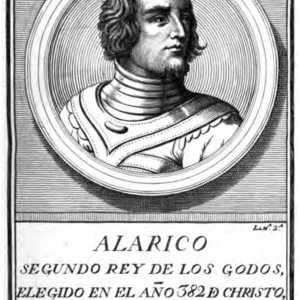
During the Visigoth sack of Rome in 410, Galla Placidia was taken as a prestigious hostage by King Alaric. Far from being mistreated, she lived among the Visigoths for several years, learning their customs. This gilded captivity would transform her life in unexpected ways.
In 414, Galla Placidia married the Visigoth king Ataulf in Narbonne at a ceremony blending Roman and barbarian rites. The groom presented the imperial princess with fifty young men each carrying two trays filled with gold and precious gems — plunder from the sack of Rome. This marriage symbolized an attempt to merge the Roman Empire with the barbarian peoples.
When her first son, whom she had named Theodosius in honor of her imperial father, died in infancy in Barcelona around 415, Galla Placidia had his body placed in a silver coffin. This profound grief left a lasting mark on the princess, who never forgot this child born between two civilizations.
Back in Ravenna after being exchanged as a diplomatic hostage, Galla Placidia initially refused to marry the powerful general Constantius, whom her brother Emperor Honorius had chosen for her. Forced to accept, she ultimately established herself as co-ruler and received the title of Augusta in 421 — a rare political recognition for a woman.
During her regency for her son Valentinian III (from 425 onward), Galla Placidia had a mausoleum built in Ravenna, adorned with mosaics of extraordinary beauty, now a UNESCO World Heritage Site. This building reflects her political instincts: by aligning herself with the Church, she legitimized an imperial power weakened by invasions.
Primary Sources
Olympiodorus describes the marriage of Galla Placidia and Ataulf at Narbonne, as well as the lavish gifts offered by the Visigothic king to the Augusta, including fifty young men carrying plundered Roman gold.
Prosper records the accession of Valentinian III and the regency of his mother Galla Placidia Augusta, emphasizing her central role in restoring imperial legitimacy in the West after the usurpation of John.
Sozomen recounts Galla Placidia's relations with Bishop Atticus of Constantinople during her forced stay in the East, illustrating her ties to religious authorities.
Jordanes evokes the fate of Galla Placidia in the context of the rising power of the Gothic peoples, describing her role as a living link between the Roman world and the barbarian kingdoms.
Fragments of correspondence show Galla Placidia seeking the support of her nephew, the Eastern emperor, to place her son Valentinian on the Western throne in 424–425.
Key Places
Capital of the Eastern Empire where Galla Placidia was raised after the death of her father Theodosius I, and where she took refuge with her children during the usurpation of John (423–425). There she sought the help of her nephew Theodosius II to restore her son to the throne.
Capital of the Western Roman Empire from 402 and main residence of Galla Placidia during her regency. There she had her famous mausoleum and the church of Santa Croce built, making Ravenna a center of Christian art in late antiquity.
City where Galla Placidia lived at the imperial court before the sack of 410, and where she died in November 450. Rome symbolized the continuity of Roman greatness that she strove throughout her life to preserve.
City in Gallia Narbonensis where the marriage of Galla Placidia to the Visigoth king Ataulf took place in 414, in a ceremony that blended Roman and barbarian traditions. This event symbolizes the fusion and tensions between two worlds.
City where Galla Placidia lived as a prisoner of the Visigoths following the assassination of Ataulf in 415, and where her son Theodosius died. This painful captivity ended with the diplomatic exchange that brought her back into the fold of the Empire.
Typical Objects

A gold headdress adorned with pearls and precious stones, symbol of the Augusta's dignity. Galla Placidia wore it during official ceremonies to assert her imperial legitimacy, as the daughter, wife, and mother of emperors.

Writing instruments used to draft imperial correspondence. Galla Placidia exchanged numerous diplomatic letters with Constantinople, Rome, and bishops to maintain her political network.

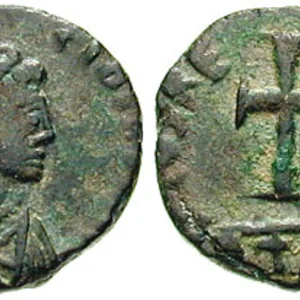
An imperial gold coin struck with the likeness of Galla Placidia during her reign as Augusta. Her portrait on the coinage was a political act asserting her co-sovereignty in the eyes of the entire Empire.

A precious casket containing saints' relics, an object of intense piety in the 5th century. Galla Placidia was deeply devout and made numerous donations to the Church, thereby strengthening her alliances with the clergy.

After the deaths of her son Theodosius and her husband Ataulf, Galla Placidia wore mourning dress according to Roman customs. The imperial purple mingled with the signs of grief, marking both the personal and political dimensions of her losses.

An artistic technique that Galla Placidia had used extensively in the religious buildings she commissioned in Ravenna. Her mausoleum preserves some of the finest examples from Late Antiquity, featuring representations of the starry sky rendered in lapis lazuli and gold.
School Curriculum
Vocabulary & Tags
Key Vocabulary
Tags
Daily Life
Morning
Galla Placidia began her day with morning prayers in the palatine chapel, in keeping with the deep Christian piety that defined her life. She then met with her advisors and secretaries to review dispatches from the provinces and from Constantinople, dictating imperial responses with the assistance of notaries.
Afternoon
Afternoons were devoted to official audiences in the throne room of the palace at Ravenna, where Galla Placidia received ambassadors, bishops, generals, and petitioners. Dressed in the purple *trabea* and diadem, she issued decisions in her own name or in that of her son, ensuring the continuity of imperial administration.
Evening
In the evenings, Galla Placidia oversaw the education of her children **Valentinian** and **Honoria**, ensuring they received training befitting their imperial rank. She also devoted time to reading religious texts and personal correspondence, maintaining a network of relationships with the great Roman aristocratic families.
Food
Like all late Roman aristocracy, Galla Placidia dined on refined dishes inspired by Greco-Roman cuisine: roasted meats, fish in sauce, legumes, white bread, fruit, and honey-based sweets. Court banquets followed a strict ceremonial, in which the seating of guests reflected political hierarchies.
Clothing
Galla Placidia wore the female imperial dress of late antiquity: a long silk tunic (*dalmatic*) embroidered with gold and purple, covered by a cloak (*chlamys*) fastened at the shoulder. A diadem of pearls and gold crowned her head during ceremonies, and her coin portraits show her in this official attire.
Housing
Galla Placidia resided primarily in the imperial palace at Ravenna, a city chosen as the capital of the Western Empire for its defensive position amid the marshes. This palace, now lost, included reception halls, private apartments decorated with mosaics and marble, gardens, and a private chapel. She also stayed in the palaces of Rome and Constantinople.
Historical Timeline
Period Vocabulary
Liens externes & ressources
Références
Œuvres
Mausolée de Galla Placidia (Ravenne)
vers 430-450
Église Santa Croce (Ravenne)
vers 417-425
Régence de l'Empire romain d'Occident (425-437 environ)
425-437
Politique diplomatique avec les royaumes barbares
414-450