Antiquity
Philosophers, emperors, strategists and poets of the Greco-Roman world and the great ancient civilisations.
423 characters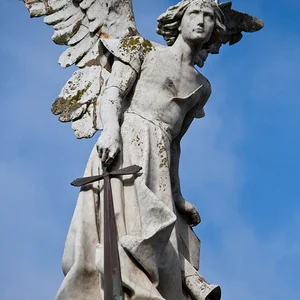
423 characters
Mythology(106)
Abaddon
A biblical figure from the Book of Revelation, Abaddon is the angel-king of the bottomless pit, whose Hebrew name means 'destruction.' He commands the devastating locusts during the fifth seal and embodies the ambiguous boundary between destroying angel and demonic power.
Achilles
Achilles is the greatest Greek warrior in mythology and the central hero of Homer's Iliad. Son of Thetis and Peleus, he is invulnerable except for his heel — his legendary weak point. He embodies the ideal of the Greek warrior hero, renowned for his strength, courage, and pride.
Achlys
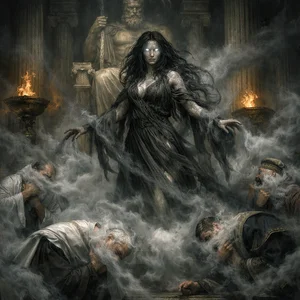
Greek deity personifying the darkness of death and the mist that veils the eyes of the dying. Rooted in Greek mythological tradition, she ranks among the primordial entities who preceded the Olympians.
Adam and Eve
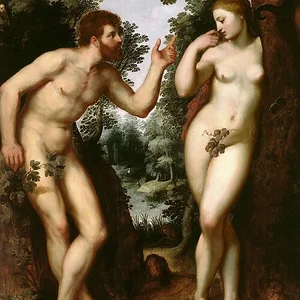
Adam and Eve are the first human beings according to biblical and Judeo-Christian tradition. Created in the image of God, they live in the Garden of Eden before committing the original sin by eating the forbidden fruit, which leads to their expulsion and marks the beginning of humanity.
Aeneas
Hero of Greco-Roman mythology, son of Aphrodite and Anchises. Aeneas is the central figure of Virgil's Aeneid, a Latin epic recounting his journey from Troy to Italy, where he becomes the mythical ancestor of ancient Rome and the Julio-Claudian dynasty.
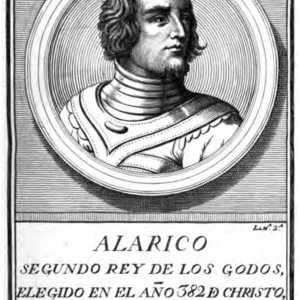
Alaric I
370 — 410
King of the Visigoths from 395 to 410, Alaric I is famous for leading the sack of Rome in 410, a symbolic event marking the beginning of the end of the Western Roman Empire.
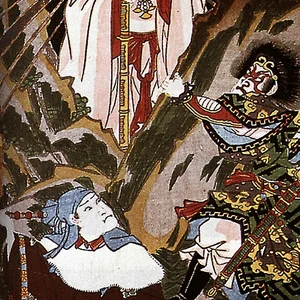
Amaterasu
Goddess of the sun and major deity of Japanese Shinto, venerated as the legendary ancestor of the imperial family. According to Japanese mythology, she is the most important of the kami (spirits) in the Shinto pantheon.
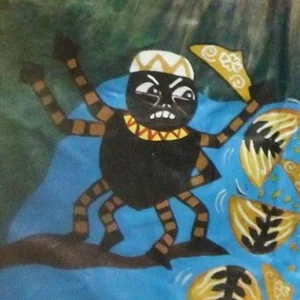
Anansi
Anansi is a cunning and mischievous spider from Akan and Ashanti mythology, originating in West Africa. A central figure in folk tales, he represents intelligence, trickery, and survival through wit. These stories crossed the Atlantic through the slave trade and continue to influence the oral traditions of the Caribbean and the Americas.
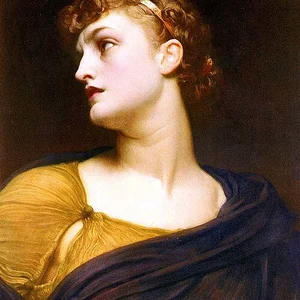
Antigone
Heroine of Greek mythology, daughter of Oedipus and Jocasta, princess of Thebes. Antigone embodies the conflict between divine law and human law by daring to defy the decree of King Creon in order to give her brother Polynices a proper burial, which leads to her condemnation to death.
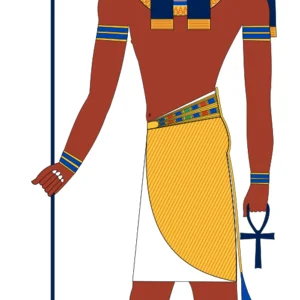
Anubis
Anubis is the funerary god of ancient Egypt, depicted with a black jackal's head. He is the protector of the dead and of cemeteries, and guides souls into the afterlife.
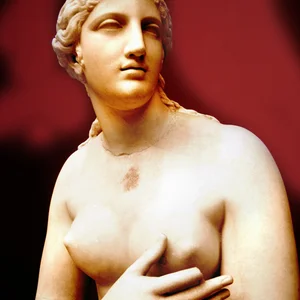
Aphrodite
Greek goddess of love, beauty, and fertility in ancient mythology. Venerated throughout Greece and the Roman Empire under the name Venus. A central figure in mythological narratives and ancient art.
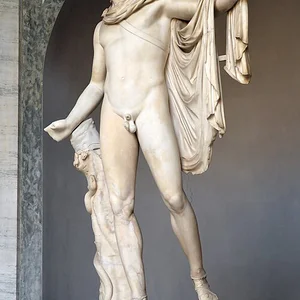
Apollo
Greek god of music, poetry, the sun, and prophecy, Apollo is one of the most important deities in Greek mythology. Son of Zeus and Leto, he embodies harmony, beauty, and knowledge. His cult spread throughout the ancient Greek world, most notably at Delphi, where his famous oracle was located.
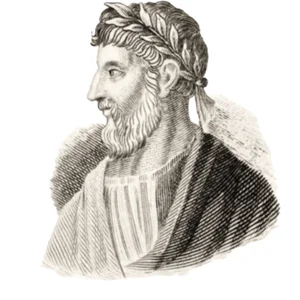
Apollonius of Rhodes
294 av. J.-C. — 214 av. J.-C.
Apollonius of Rhodes was a Greek poet and grammarian of the 3rd century BC, a major figure of Hellenistic literature. He directed the famous Library of Alexandria and composed the Argonautica, a great epic recounting the quest for the Golden Fleece by Jason and the Argonauts.
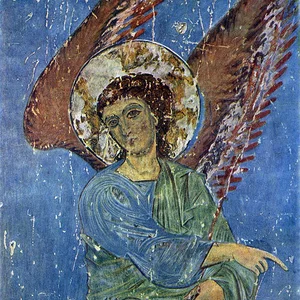
Archangel Gabriel
Archangel and divine messenger present in all three monotheistic religions. In Christianity, he announces to Mary the birth of Jesus. In Islam, he reveals the Quran to the prophet Muhammad.

Archangel Michael
Supreme archangel of the Abrahamic traditions, commander of the heavenly armies and protector of Israel in the Hebrew Bible. Victor over Satan in the Book of Revelation, he is venerated in Judaism, Christianity, and Islam.
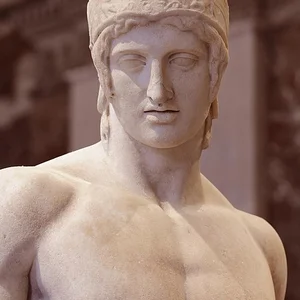
Ares
Ares is the god of war in ancient Greek mythology. Son of Zeus and Hera, he embodies violence, chaos, and the brutality of battle. He is one of the twelve major deities of Mount Olympus.
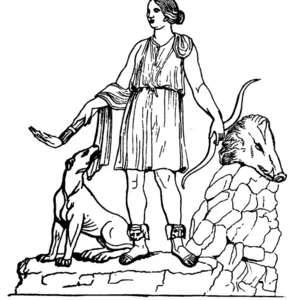
Artemis
Greek goddess of the hunt, the moon, and the wilderness, Artemis is one of the twelve major deities of Olympus. Twin sister of Apollo, she embodies independence and remains a virgin according to Greek mythology. She is the protector of young girls and wild animals.
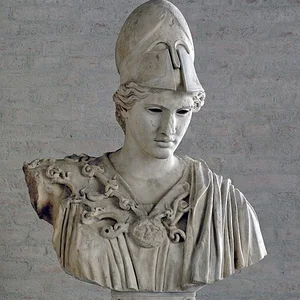
Athena
Athena is the Greek goddess of wisdom, military strategy, and the arts in ancient mythology. Patron of the city of Athens, she is depicted armed with an aegis and a spear, embodying intelligence and strategic thinking.
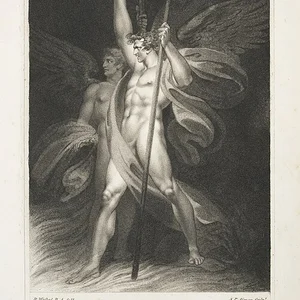
Beelzebub
An ancient Philistine deity (Baal-Zebub, "Lord of the Flies"), worshipped at Ekron. Reinterpreted in the Judeo-Christian tradition as one of the princes of demons, a central figure in medieval demonology.
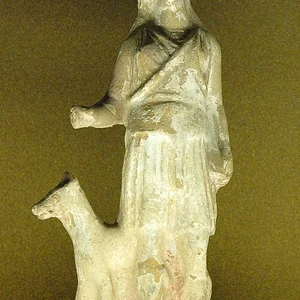
Bendis
Bendis is a Thracian goddess of the moon, the hunt, and the wild, often identified with the Greek Artemis. Her cult, introduced in Athens in the 5th century BC, was celebrated there with a public festival, the Bendideia.
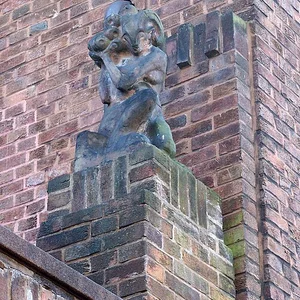
Bona Dea
Bona Dea (“the Good Goddess”) is a Roman deity of fertility, healing and chastity, worshipped exclusively by women. Her secret cult excluded men, and the empress Livia had her temple on the Aventine restored and rededicated.
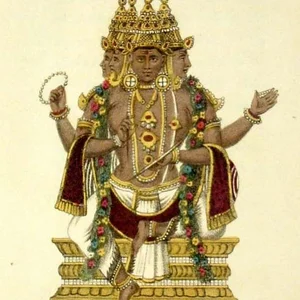
Brahma
Brahmā is the creator god in Hinduism, forming with Vishnu and Shiva the Trimūrti, the divine trinity of Hinduism. He is the master of the Vedas and cosmic knowledge, responsible for the creation of the universe and all living beings.
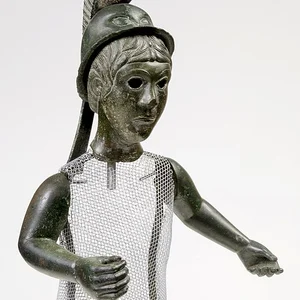
Brigantia
Brigantia is a Celtic goddess honoured in Roman Britain, notably by the **Brigantes** confederation in the north of present-day England. A tutelary and protective deity, she was associated through syncretism with the Roman **Minerva** and with **Victory**. She is often linked to the Irish goddess **Brigid**.
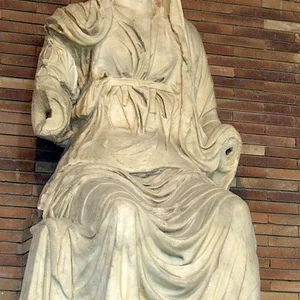
Ceres
Roman goddess of agriculture, harvests, and fertility, equivalent to the Greek Demeter. She is the origin of the word “cereals” and held a central place in Roman religion and daily life.

Chandika
Chandika, also called Chandi, is a fearsome form of the Great Goddess (Devi) in Hinduism. An embodiment of feminine energy (shakti), she is celebrated as the slayer of the buffalo-demon Mahishasura and the forces of chaos. Her worship is central to the sacred text *Devi Mahatmya*.
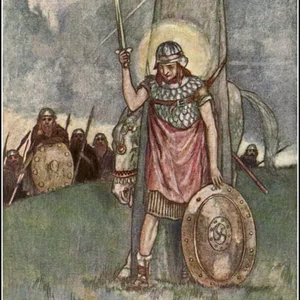
Cúchulainn
A mythological hero of the Irish tradition, Cúchulainn is the protagonist of the Ulster Cycle, a collection of Celtic legends. A legendary warrior figure, he embodies the ideal of the Celtic hero through his superhuman strength and code of honor.
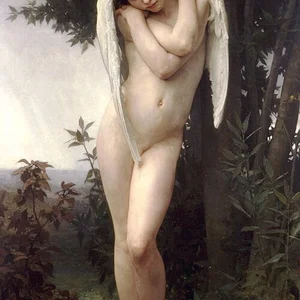
Cupid
God of love in Roman mythology, Cupid is the son of Venus and Mars (or Mercury, depending on the version). Armed with a bow and golden arrows, he strikes humans with romantic passion. His Greek equivalent is Eros.

Cybele
Cybele is the great mother goddess of Phrygian origin, mistress of wild nature, mountains, animals, and fertility. Adopted by the Greeks and then officially introduced to Rome in 204 BC under the name Magna Mater, she was honored there with a mystery cult famous for its ecstatic priests.
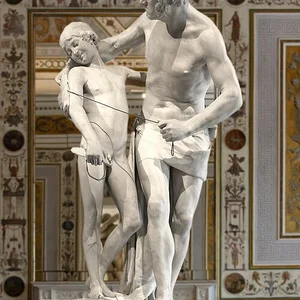
Daedalus and Icarus
Legendary figures from Greek mythology: Daedalus is a brilliantly skilled craftsman and inventor who builds the Labyrinth of Crete, while Icarus is his son. Their story illustrates the themes of ambition, disobedience, and the limits of human nature when faced with greater forces.
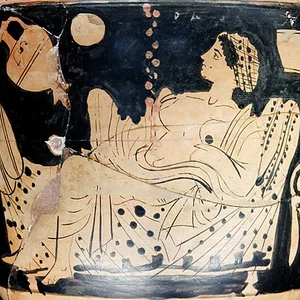
Danaë
Danaë is a princess of Argos, daughter of King Acrisius. Imprisoned by her father in a bronze chamber to prevent a prophecy, she is seduced by Zeus transformed into a shower of gold and gives birth to Perseus, the hero who will kill Medusa.
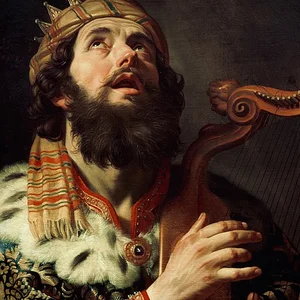
David
1038 av. J.-C. — 968 av. J.-C.
David is a major figure in the Hebrew Bible, the second king of Israel and Judah (c. 1038–968 BCE). Famous for his victory over the giant Goliath and for his psalms, he unified the Israelite kingdoms and established Jerusalem as the religious capital.
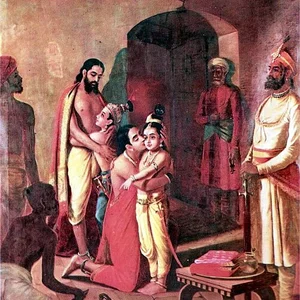
Devaki
In Hindu mythology, Devaki is the mother of the god Krishna, one of the major incarnations of Vishnu. Imprisoned by her brother, the tyrant Kamsa, she saw her first children killed before giving birth to Krishna, who was miraculously saved. She embodies maternal love and devotion.
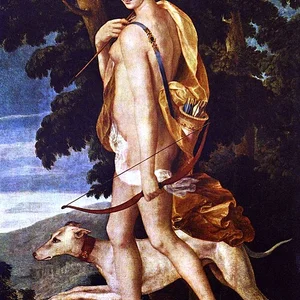
Diana
Diana is the Roman goddess of the hunt, the Moon, and the wild, identified with the Greek Artemis. Daughter of Jupiter and Latona, twin sister of Apollo, she is depicted as a huntress carrying a bow and arrows. An eternal virgin, she also protects women in childbirth and presides over lunar cycles.
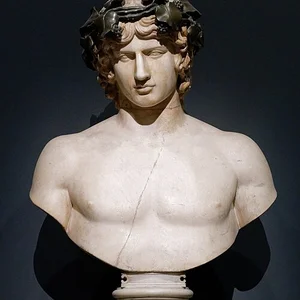
Dionysus
Greek god of wine, theater, fertility, and ecstasy, worshipped in ancient Greece. Son of Zeus and the mortal Semele, he embodies the duality between civilization and the wild, reason and intoxication. A central figure in mystery cults and ancient theatrical performances.
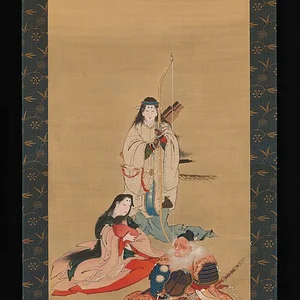
Empress Jingu
A legendary empress of Japan, Jingū is said to have reigned in the 3rd century according to Japanese chronicles. Tradition credits her with a military campaign against the Korean peninsula, carried out while she was pregnant. Her historical existence is unattested and she belongs to Japan's founding mythology.
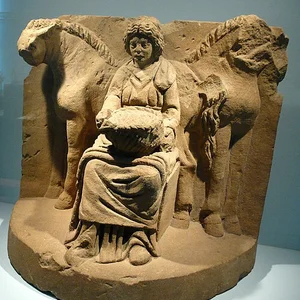
Epona
Epona is a goddess of Gaulish Celtic mythology, the protector of horses, mares, foals, donkeys and mules. Her cult, tied to fertility and the protection of riders, was widely adopted by the Roman cavalry and spread throughout the Empire.
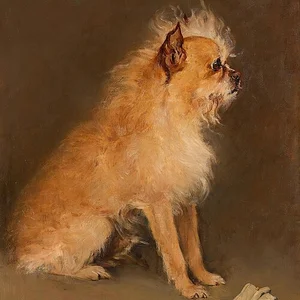
Griffin
The griffin is a legendary creature with the body of a lion and the head and wings of an eagle, a guardian of treasures and a symbol of power. Present as early as the ancient Near East and then in the Greco-Roman world, it travels through the imagination all the way to the medieval bestiary.
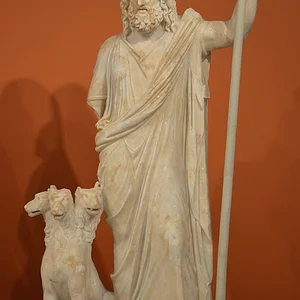
Hades
Hades is the god of the underworld and the dead in Greek mythology. Brother of Zeus and Poseidon, he rules over the realm of souls and the mineral riches of the earth. He is often portrayed as a just and unyielding god, though mortals feared him greatly.
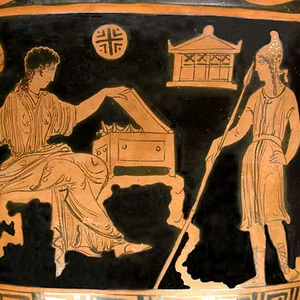
Helen of Troy
A central figure in Greek mythology, Helen is the wife of King Menelaus of Sparta. Her abduction by the Trojan prince Paris triggers the Trojan War, one of the greatest conflicts in ancient mythology. She symbolizes both ideal beauty and the destructive consequences of passion.
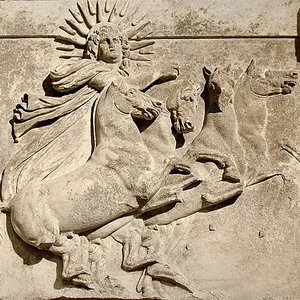
Helios
Helios is the sun god of Greek mythology, son of the Titan Hyperion and Theia. Each day, he crosses the sky in his fiery chariot pulled by four spirited horses, bringing light to mortals and gods alike.
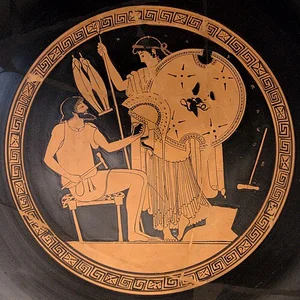
Hephaestus
Greek god of fire, the forge, and metalworking, Hephaestus is the patron of craftsmen and blacksmiths. Son of Zeus and Hera according to Greek mythology, he is depicted as a lame god who works in his underground workshop creating wondrous objects.
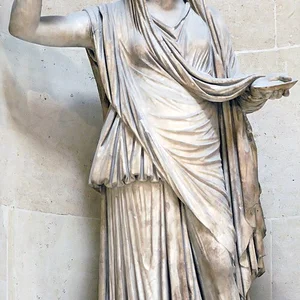
Hera
Hera is the queen of the gods and goddess of marriage in ancient Greek mythology. Wife of Zeus, she is venerated as the protector of marriage and family. Her legends reflect the values and conflicts of the Greek pantheon.
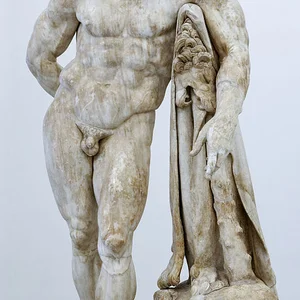
Hercules
Heracles is a hero of Greek mythology, son of the god Zeus and the mortal Alcmene. Famous for completing the twelve labors imposed by the goddess Hera, he embodies strength, courage, and perseverance. His story, passed down by Greek poets, has influenced Western literature and art for millennia.
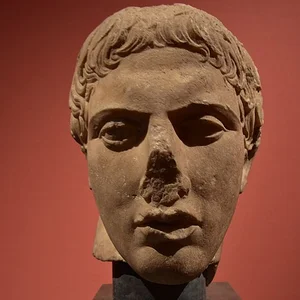
Hermes
Hermes is a major deity in Greek mythology, son of Zeus and Maia. He is venerated as the messenger of the gods, protector of commerce, travelers, and thieves, and identified with Mercury in Roman mythology.
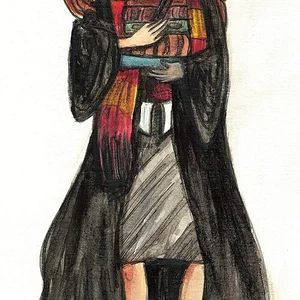
Hermione
Hermione Granger is a fictional character created by J.K. Rowling, the heroine of the "Harry Potter" series published from 1997 onward. Born to Muggle parents in 1979, she embodies the brilliant, studious, and loyal witch whose intelligence and courage play a decisive role in the fight against Voldemort.
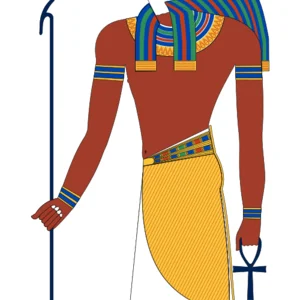
Horus
Horus is a major deity of ancient Egyptian mythology, depicted with the head of a falcon. Son of Osiris and Isis according to legend, he embodies the sky and the sun. He is one of the most important gods in the Egyptian pantheon, venerated since the Old Kingdom.
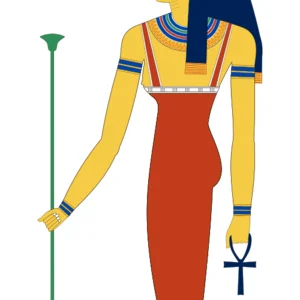
Isis
Isis is a major goddess of Egyptian mythology, associated with magic, motherhood, and protection. She is best known for having resurrected her husband Osiris after his murder by his brother Set, embodying the power of life and regeneration.
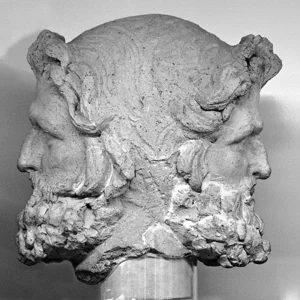
Janus
Janus is an ancient Roman deity depicted with two faces looking simultaneously toward the past and the future. God of beginnings, transitions, and doorways, he symbolizes thresholds and passages between two states. He was especially venerated at the New Year and at the start of any important undertaking.
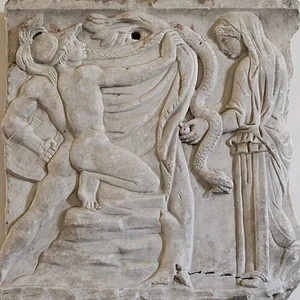
Jason
Jason is a hero of Greek mythology, son of Aeson and leader of the Argonauts. He undertakes a legendary quest to seize the Golden Fleece, a symbol of royal power. This adventure is one of the most celebrated in all of Greek mythology.
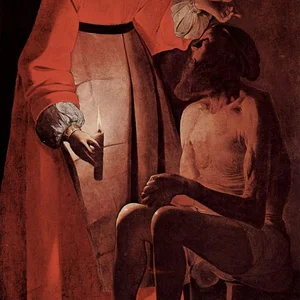
Job
A biblical figure from the Old Testament, the archetypal Righteous Man whose faith is tested through suffering. Job embodies the question of evil and divine providence in the face of undeserved trials. His story raises the timeless questions of human suffering and trust in God despite adversity.
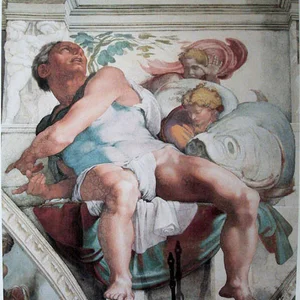
Jonas
822 av. J.-C. — 719 av. J.-C.
A biblical prophet from the kingdom of Israel (8th century BCE), Jonah is known for being sent by God to Nineveh to preach repentance. According to the Book of Jonah, he was swallowed by a great fish after attempting to flee his divine mission.
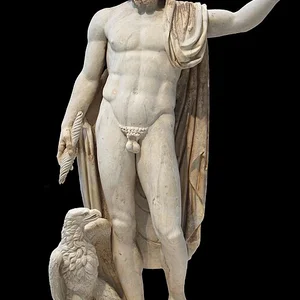
Jupiter
Jupiter is the supreme god of the Roman pantheon, master of the sky, lightning, and thunder. The Roman equivalent of Greek Zeus, he reigns over gods and men from Mount Olympus. He is the protector of Rome and the guarantor of cosmic order.
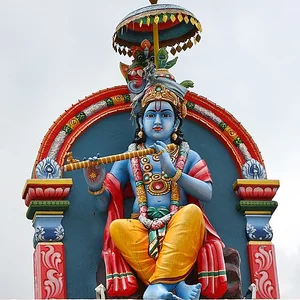
Krishna
3227 av. J.-C. — 3101 av. J.-C.
A major deity of Hinduism, Krishna is venerated as an avatar of Vishnu. A central figure of the Bhagavad Gita, he embodies divine wisdom and plays a crucial role in the Mahabharata epic as the spiritual guide of the warrior Arjuna.
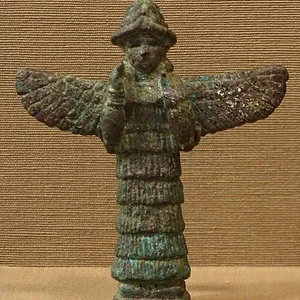
Lamassu
The lamassu is a protective deity of ancient Mesopotamia, depicted as a winged spirit with the body of a bull (or lion), the wings of an eagle and a bearded human head. Standing guard at the gates of Assyrian palaces and cities, these monumental figures warded off the forces of evil.
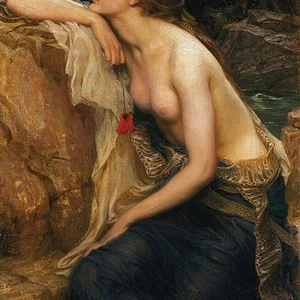
Lamia
Lamia is a figure from Greek mythology, a queen of Libya loved by Zeus. Struck by Hera's jealousy, who stole her children from her, she became a devastating monster who devoured the children of others.
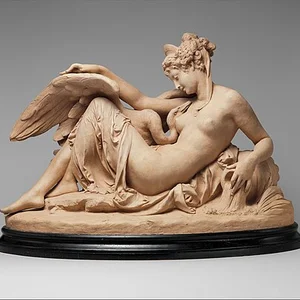
Leda
Queen of Sparta and figure from Greek mythology, Leda is seduced by Zeus in the form of a swan. From this union are born Helen of Troy, Clytemnestra, Castor, and Pollux — central figures of the Greek epic tradition.
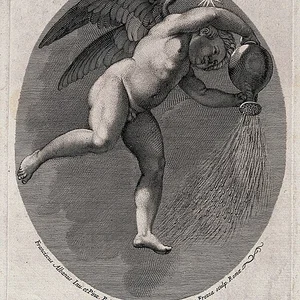
Lucifer
Latin name meaning 'Light-bearer', originally referring to the morning star (Venus). In Christian tradition, it designates the fallen angel cast from Heaven by God for his pride, becoming the figure of absolute Evil.
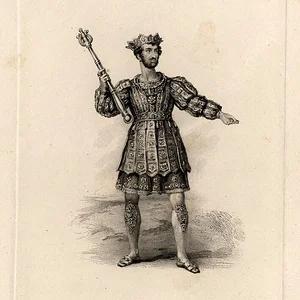
Mammon
Mammon is a demonic figure from the New Testament, a personification of material wealth and greed. Taken up in medieval literature and by Milton in Paradise Lost, he embodies the temptation of earthly riches over spiritual values.
Manticore
A fabulous creature of Persian origin, the manticore has the body of a lion, a human face, and a venomous scorpion tail. Described by Ctesias of Cnidus in the 5th century BC, it was later referenced by Pliny the Elder in his Natural History.
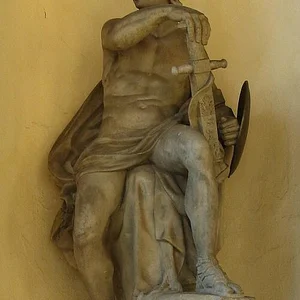
Mars
Roman god of war and protector of agriculture, Mars is one of the most venerated deities in the Roman pantheon. Legendary father of Romulus and Remus, he embodies Rome's military power and its destiny of conquest.
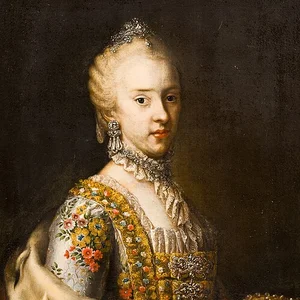
Mary of Nazareth
Mary of Nazareth is, according to the Gospels, the mother of Jesus of Nazareth. A central figure in Christianity and venerated in Islam under the name Maryam, she holds a major place in the religious and cultural history of the West.
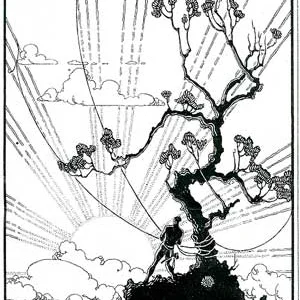
Maui
Demigod and trickster hero of Polynesian mythologies, Māui is one of the most celebrated figures in Pacific oral tradition. He accomplishes extraordinary feats: fishing islands up from the ocean floor, slowing the sun, and stealing fire from the gods to give to humankind.
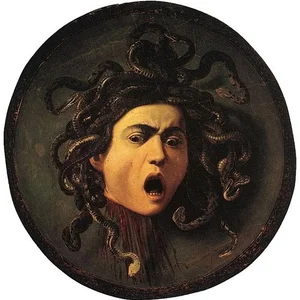
Medusa
In Greek mythology, Medusa is one of the three Gorgons — fearsome female monsters with snakes for hair whose gaze turns anyone who looks at them to stone. She is slain by the hero Perseus, who uses his shield as a mirror to face her without being petrified.

Metatron
Metatron is the highest of the angels in certain Jewish mystical traditions. Celestial scribe and chancellor of Heaven, he is said to be the angelic incarnation of the patriarch Enoch. He appears notably in Merkabah literature and in the Hebrew Book (3 Enoch).
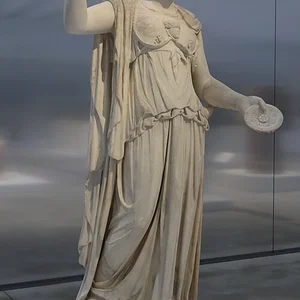
Minerva
Roman goddess of wisdom, the arts, and crafts, Minerva is the Roman equivalent of Athena in Greek mythology. Born fully armed from Jupiter's head, she protects Rome, artisans, and poets, and together with Jupiter and Juno forms the Capitoline Triad.
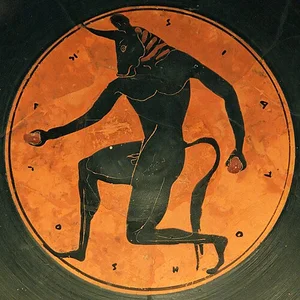
Minotaur
A monstrous creature of Greek mythology, half-man and half-bull, born from the unnatural union of Pasiphae and a bull sent by Poseidon. Imprisoned in the Labyrinth of Crete by King Minos, he was ultimately slain by the hero Theseus.
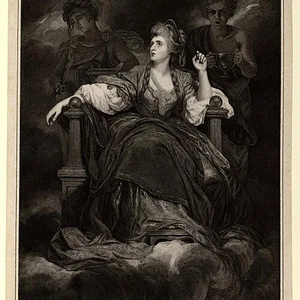
Muse
In Greek mythology, the Muses are the nine goddesses of the arts, sciences, and inspiration. Daughters of Zeus and the Titaness Mnemosyne (Memory), they preside over poetry, music, dance, and knowledge.
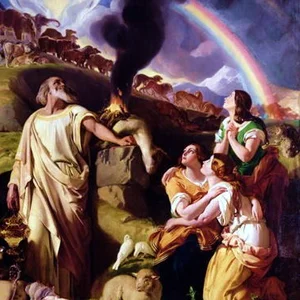
Noah
A biblical figure and patriarch in the Judeo-Christian tradition, Noah is the protagonist of the story of the Flood. According to the Bible, he built the Ark to save his family and the animals from the flood sent by God, thereby establishing a new covenant with humanity.
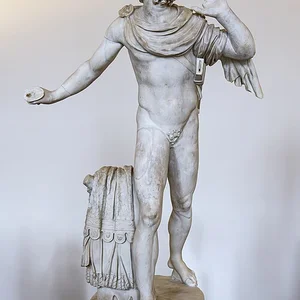
Odysseus
Legendary king of Ithaca, hero of Greek mythology celebrated for his intelligence and cunning. He is the central character of Homer's Odyssey, an epic poem recounting his ten years of wandering to return home after the Trojan War.
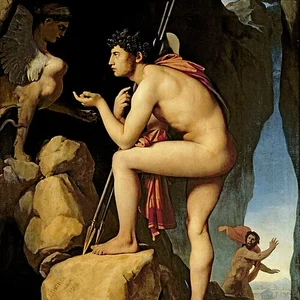
Oedipus
Legendary king of Thebes in Greek mythology, Oedipus is the hero of a classic tragedy exploring inevitable fate and destiny. Having unknowingly killed his father Laius and married his mother Jocasta, he embodies the archetype of a character caught in forces beyond his control.
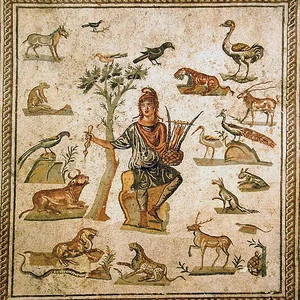
Orpheus
Legendary musician and poet of Greek mythology, son of Apollo and the Muse Calliope. He is famous for his magical lyre whose music enchanted gods, mortals, and nature alike. His love for Eurydice and his descent into the Underworld make up one of the greatest myths of Antiquity.
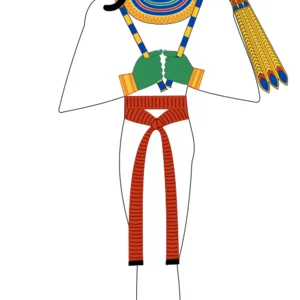
Osiris
Osiris is a major deity of ancient Egyptian mythology, associated with fertility, agriculture, and above all the afterlife and resurrection. According to Egyptian legend, he was killed by his brother Set and then resurrected by his wife Isis, becoming the king of the underworld and the symbol of eternal life.
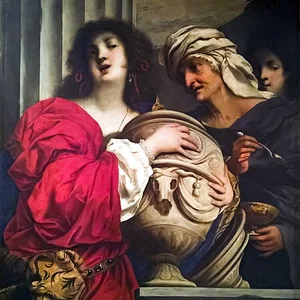
Pandora
Pandora is the first female figure in Greek mythology, created by the gods to punish humanity. She receives a jar (or box) containing all the evils of the world, which she opens out of curiosity, releasing suffering among humankind. Her myth illustrates the consequences of disobedience and the human condition.
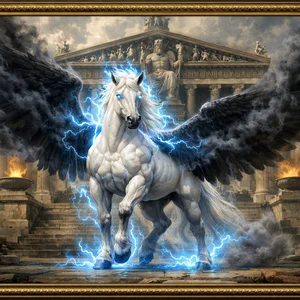
Pegasus
Winged horse of Greek mythology, born from the blood of Medusa when Perseus severed her head. Tamed by the hero Bellerophon with a golden bridle, he helped him defeat the Chimera. He ended his celestial journey among the stars, transformed into a constellation by Zeus.
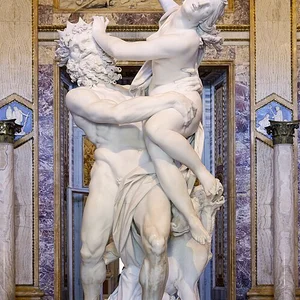
Persephone
Persephone is a goddess of Greek mythology, daughter of Demeter and Zeus. Abducted by Hades, the god of the Underworld, she becomes queen of the dead and rules alongside her husband. Her myth explains the changing of the seasons: her annual return to her mother brings about spring and summer.
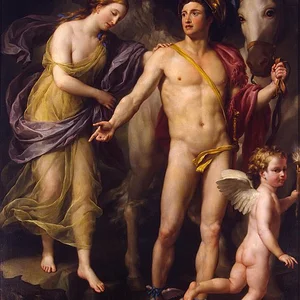
Perseus
Perseus is a hero of Greek mythology, son of Zeus and Danaë. He is famous for slaying the Gorgon Medusa and rescuing the princess Andromeda from a sea monster. His exploits make him one of the most important heroes in Greek mythology.

Philostratus of Athens
300 — ?
Greek writer and sophist of the 2nd–3rd century AD, Philostratus of Athens is celebrated for his Life of Apollonius of Tyana and his Lives of the Sophists. He moved in the literary circle of Empress Julia Domna in Rome.
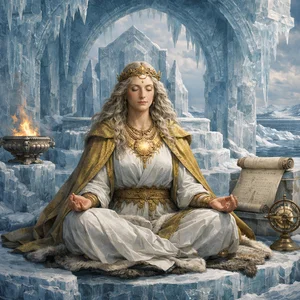
Phoebe
50 — 100
Titaness of brilliance and prophecy in Greek mythology, Phoebe is the daughter of Gaia and Ouranos, wife of the Titan Coeus. Mother of Leto, she is the grandmother of Apollo and Artemis, and is said to have held the oracle of Delphi before passing it on to her grandson.
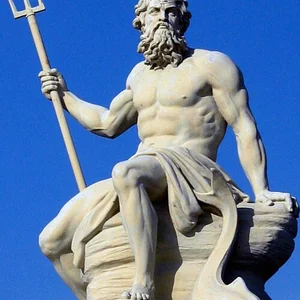
Poseidon
Greek god of the sea, oceans, and earthquakes, worshipped in ancient Greek mythology. Brother of Zeus and Hades, Poseidon rules over the seas and is often depicted wielding a trident. A central figure of the Olympian pantheon, he embodies the power of marine and seismic forces.
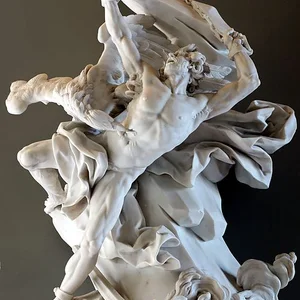
Prometheus
A Titan of Greek mythology, Prometheus is the symbol of human progress and rebellion against divine authority. He stole fire from the heavens to give it to humankind, transforming their condition and granting them access to civilization. Punished by Zeus for this act of defiance, he embodied the values of humanity and self-sacrifice.
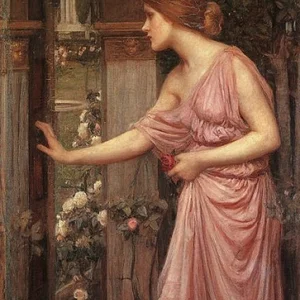
Psyche
Psyche is a mortal of extraordinary beauty whose legend tells of her love for Eros (Cupid). Her myth, transmitted by Apuleius, symbolizes the soul's journey toward divine perfection through trial and love.
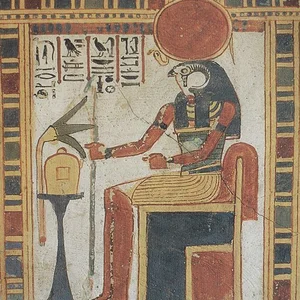
Ra
Ra is the principal solar deity of ancient Egypt, worshipped as the creator of the world and king of the gods. He embodies the life-giving power of the sun and its daily journey across the sky. His cult spanned more than three millennia of Egyptian civilization.
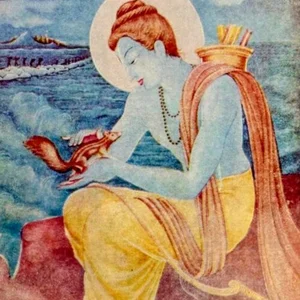
Rama
Rāma is the seventh avatar (incarnation) of the god Vishnu in Hindu mythology. The central hero of the Rāmāyaṇa, one of the two great epics of ancient India, he embodies the values of dharma (duty) and virtue. His story, blending epic adventure with moral teachings, remains foundational to Hindu culture and religion.
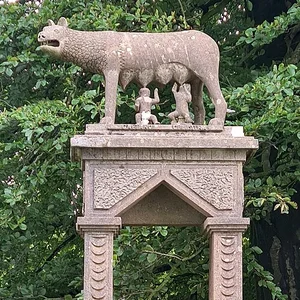
Romulus and Remus
Twin brothers of Roman mythology, legendarily raised by a she-wolf after being abandoned at birth. Romulus is presented as the founder and first king of Rome in 753 BC, while Remus is said to have perished during the founding of the city.
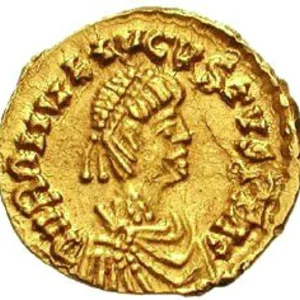
Romulus Augustulus
462 — ?
Last emperor of the Western Roman Empire, Romulus Augustulus reigned in 475–476 AD, placed on the throne by his father Orestes. Deposed at around age 15 by the Germanic chieftain Odoacer, his abdication marks the conventional end of the Western Roman Empire.
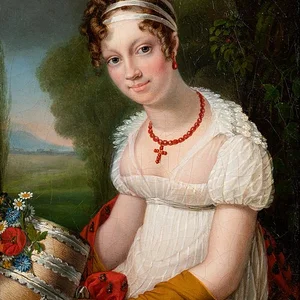
Saint George
Christian martyr of the 4th century, a Roman officer put to death under Diocletian around 303. His medieval legend — the fight against a dragon to rescue a princess — made him the symbol of chivalry and the victory of good over evil.
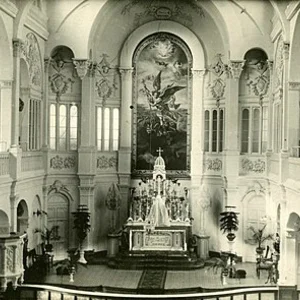
Saint Michael the Archangel
Commander of the heavenly armies in Jewish, Christian, and Muslim tradition, Saint Michael is first mentioned in the Book of Daniel (2nd century BC). Slayer of the dragon in the Book of Revelation, weigher of souls at the Last Judgment, he is also the patron of knights and the guardian saint of Mont-Saint-Michel.
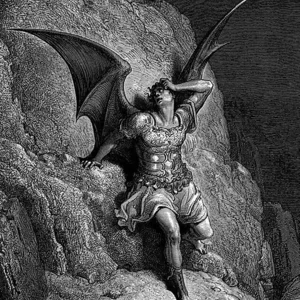
Samael
Samael is a malevolent angel in Jewish tradition, often identified with the Angel of Death and the Accuser (Satan). A central figure in Kabbalah and the Talmud, he embodies evil and opposition to the divine.
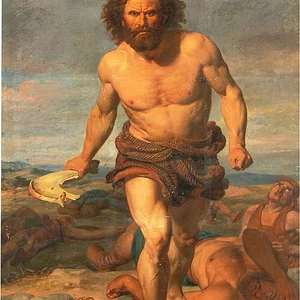
Samson
1117 av. J.-C. — 1077 av. J.-C.
Samson was a judge of Israel in antiquity, renowned for his superhuman strength granted by God. His exploits against the Philistines and his tragic relationship with Delilah make him a major figure in the Hebrew Bible.
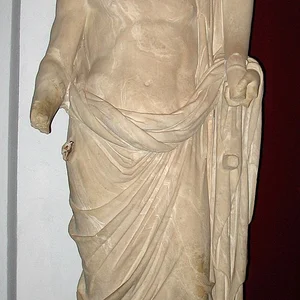
Saturn
Saturn is a major god of Roman mythology, assimilated with the Greek Cronus. God of agriculture, time, and abundance, he ruled over the Golden Age. His festival, the Saturnalia, was one of the most important celebrations in ancient Rome.
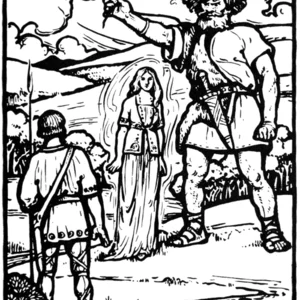
Scáthach
Scáthach is a legendary warrior and weapons master of Irish Celtic mythology. Living on the Isle of Skye, she trains the hero Cú Chulainn in the arts of combat and passes on to him the magical spear Gáe Bolg.
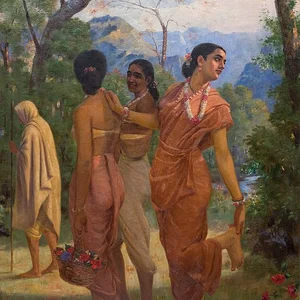
Shakuntala
Shakuntala is a heroine of Hindu mythology, the daughter of the ascetic Vishvamitra and the apsara Menaka. Raised in a hermitage, she marries King Dushyanta and becomes the mother of Bharata, the eponymous ancestor of the dynasty that gave India its name. Her story, told in the Mahabharata, was immortalized by the playwright Kalidasa.
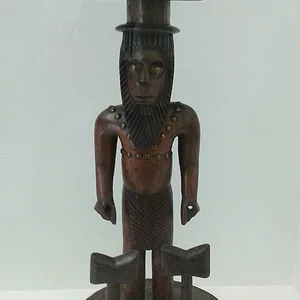
Shango
Shango is the orisha of thunder and lightning in the Yoruba religion of West Africa. A warrior deity associated with divine justice, he is depicted wielding a double axe (oshe) and rules over storms. His cult spread to the Americas through the African diaspora.

Simurgh
The Simurgh is a fabulous and benevolent bird from Persian mythology, a gigantic creature often described as nesting in the Tree of Life. A symbol of wisdom and healing, it protects and guides the heroes of the great Iranian epic tales.
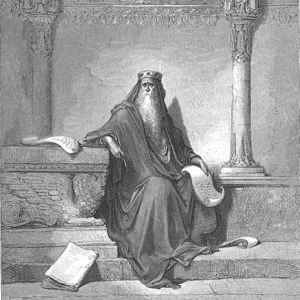
Solomon
989 av. J.-C. — 930 av. J.-C.
King of Israel (c. 970–931 BCE), son of David, renowned for his legendary wisdom and for building the Temple in Jerusalem. A major figure in the Hebrew Bible, he embodies justice and knowledge in the Judeo-Christian tradition.

Talos
Talos is a bronze giant from Greek mythology, forged by Hephaestus to guard the island of Crete. He circled it three times a day and drove off intruders by hurling rocks at them. His life hung on a single vein of ichor sealed by a nail in his ankle.

Tenazuchi
Tenazuchi is an earthly deity (kunitsukami) of Japanese Shinto mythology. Wife of Ashinazuchi and mother of Kushinada-hime, she appears in the myth where the god Susanoo saves her daughter from the eight-headed serpent Yamata-no-Orochi.
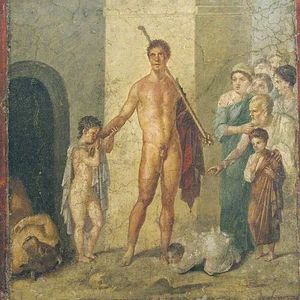
Theseus
Legendary hero of Greek mythology and king of Athens. Theseus is best known for slaying the Minotaur, a half-man half-bull monster imprisoned in the Labyrinth of Crete. He embodies the civilizing hero and unifier of Attica.
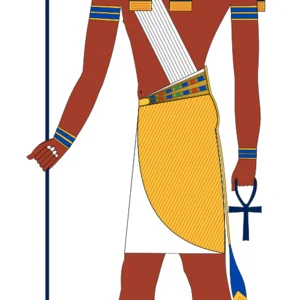
Thoth
Thoth is a deity of ancient Egyptian mythology, associated with wisdom, writing, and knowledge. Depicted with the head of an ibis or a baboon, he was venerated as the inventor of hieroglyphic writing and as the scribe of the gods.
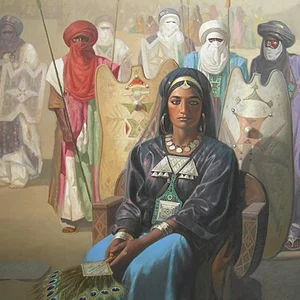
Tin Hinan
350 — ?
Legendary queen of the Tuareg people, Tin Hinan is considered by oral tradition to be the matriarchal ancestor of the Hoggar (Ahaggar) nobles. A founding figure said to have come from the Tafilalt region, according to stories passed down through generations, she is believed to have lived around the 4th–5th century CE.

Titus Vinius
12 — 69
Roman consul in 69 AD, Titus Vinius was one of Emperor Galba's most influential advisors. A central figure of the 'Year of the Four Emperors', he was assassinated during Otho's coup in January 69.
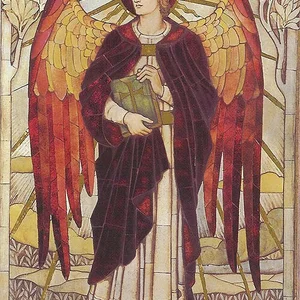
Uriel
Uriel is one of the major archangels of the Abrahamic traditions, whose name means "Fire of God" or "Light of God". He is associated with divine wisdom, repentance, and the guardianship of Eden with a flaming sword.

Venus
Venus is the Roman goddess of love, beauty, and fertility, equivalent to the Greek Aphrodite. Daughter of Jupiter according to some traditions, she plays a central role in Roman mythology and has inspired countless works of art throughout the centuries.
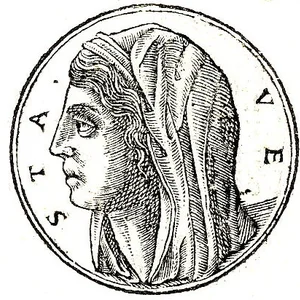
Vesta
Roman goddess of the hearth, sacred fire, and family. Her cult, one of the oldest in Rome, was maintained by the Vestal Virgins — priestesses bound to chastity who were charged with tending the eternal flame in the Temple of Vesta in the Forum.
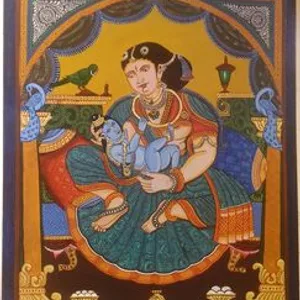
Yashoda
Yashoda is a central figure in Hindu mythology, the foster mother of the god Krishna. Wife of Nanda, chief of the cowherds of Vrindavan, she raises Krishna with unconditional maternal love, a symbol of devotion (bhakti) in Hinduism.
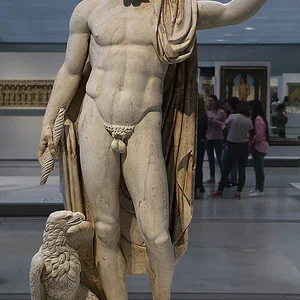
Zeus
Zeus is the king of the Olympian gods in ancient Greek mythology. God of the sky, lightning, and thunder, he embodies divine authority and celestial justice. A central figure in Greek religion, he was worshipped throughout the ancient Greek world.
Politics(78)
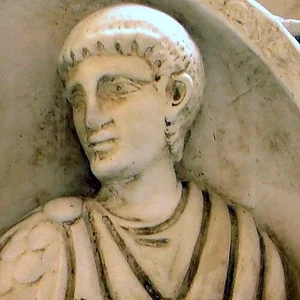
Aetius
390 — 454
Flavius Aetius was a Roman general and statesman of the 5th century, the dominant figure of the waning Western Roman Empire. Nicknamed “the last of the Romans,” he is famous for stopping Attila and the Huns at the Catalaunian Plains in 451.
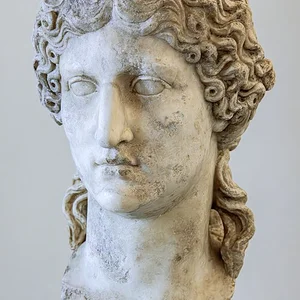
Agrippina the Elder
13 av. J.-C. — 33
Granddaughter of Augustus and wife of Germanicus, Agrippina the Elder played a major political role during the principate of Tiberius. Her opposition to the emperor led to her exile and death in captivity in AD 33.
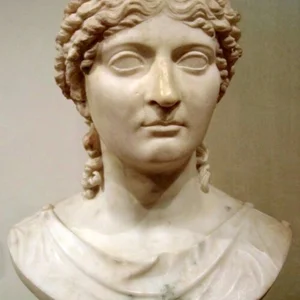
Agrippina the Younger
15 — 59
Agrippina the Younger (15–59 AD) was a Roman empress, sister of Caligula, and mother of Nero. She wielded considerable influence over imperial power, most notably by marrying her uncle, Emperor Claudius, and arranging for her son Nero to be adopted as his heir.
Alaric I
370 — 410
King of the Visigoths from 395 to 410, Alaric I is famous for leading the sack of Rome in 410, a symbolic event marking the beginning of the end of the Western Roman Empire.
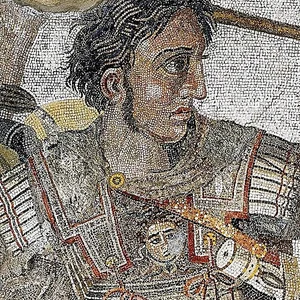
Alexander the Great
355 av. J.-C. — 322 av. J.-C.
King of Macedon and legendary conqueror, Alexander built one of the largest empires of the ancient world in less than thirteen years. Tutored by the philosopher Aristotle, he conquered the Achaemenid Persian Empire and extended his dominion as far as India, spreading Greek culture across Asia.
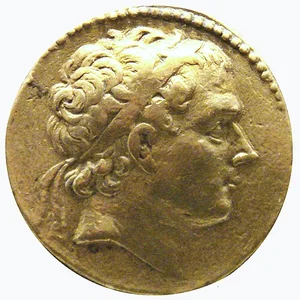
Antiochus III
241 av. J.-C. — 186 av. J.-C.
Antiochus III, known as the Great, was a Seleucid king who reigned from 223 to 187 BC. He restored the Seleucid Empire through vast campaigns into the East, but was defeated by Rome, which marked the rise of Roman power in the eastern Mediterranean.
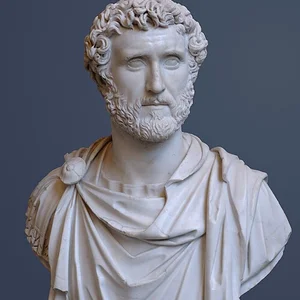
Antoninus Pius
86 — 161
Antoninus Pius was Roman emperor from 138 to 161, the third of the “good emperors” of the Antonine dynasty. His exceptionally long and peaceful reign remained a symbol of stability and prosperity for the Empire.
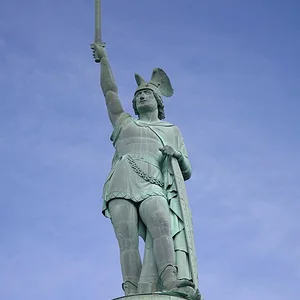
Arminius
16 av. J.-C. — 21
War chief of the Germanic Cherusci tribe. In 9 AD, he annihilated three Roman legions commanded by Varus in the Teutoburg Forest, lastingly halting Roman expansion east of the Rhine.
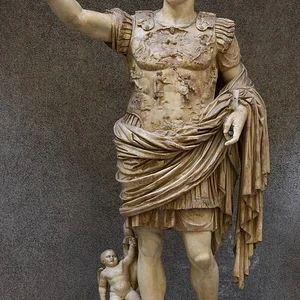
Augustus
62 av. J.-C. — 14
Augustus was the first Roman emperor, ruling from 27 BC to 14 AD. Grand-nephew and adopted son of Julius Caesar, he established a lasting political regime and brought peace after decades of civil wars. His reign marks the beginning of the Roman Empire and a period of cultural prosperity.
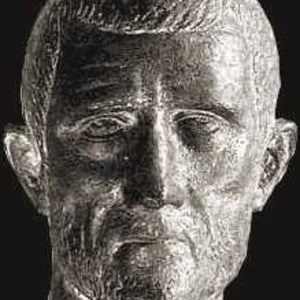
Aurelian
214 — 275
Aurelian was Roman emperor from 270 to 275, nicknamed “restorer of the world” (restitutor orbis). A general of Illyrian origin, he reunified the Roman Empire by reconquering the Gallic Empire and the kingdom of Palmyra, putting an end to the Crisis of the Third Century.

Avidius Cassius
130 — 175
A Roman general of Syrian origin, Avidius Cassius was one of the finest military commanders of the Antonine period. In 175, he wrongly proclaimed himself emperor, believing Marcus Aurelius to be dead, and was assassinated by his own soldiers after only three months of rule.
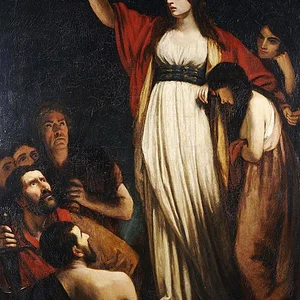
Boudicca
30 — 61
Queen of the Iceni, a Celtic people of Britain, she led a major revolt against Roman occupation around 60–61 AD. At the head of a coalition of British tribes, she destroyed Camulodunum, Londinium, and Verulamium before being defeated by the governor Paulinus.
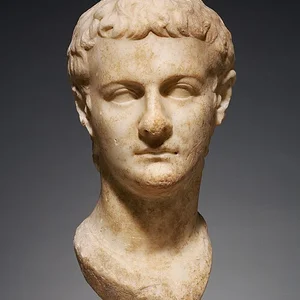
Caligula
12 — 41
The third Roman emperor, Caligula ruled from 37 to 41 AD. After a promising start, his reign descended into tyranny and extravagance. He was assassinated by officers of the Praetorian Guard.
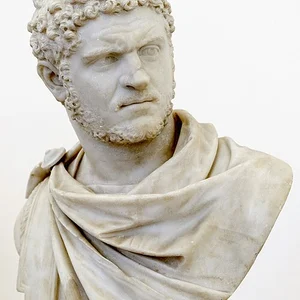
Caracalla
188 — 217
Roman Emperor from 211 to 217 AD, Caracalla is best known for the Edict of Caracalla (212 AD), which granted Roman citizenship to all free inhabitants of the Empire. Despite his reforms, his reign was marked by political instability and his assassination in 217 AD.
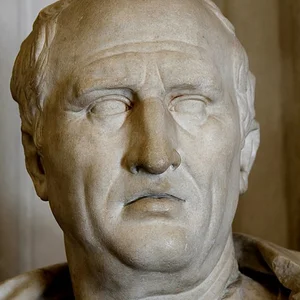
Cicero
106 av. J.-C. — 42 av. J.-C.
Roman orator, politician, and philosopher (106–43 BC), Cicero is one of the greatest figures of the Roman Republic. He left a lasting mark on Latin literature through his eloquence and philosophical works, becoming a model of rhetoric for centuries to come.
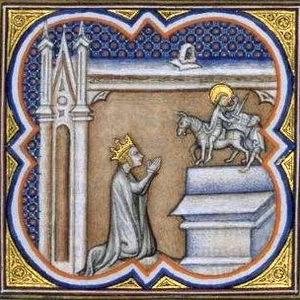
Clotilde
474 — 545
Queen of the Franks and wife of Clovis I, she played a decisive role in her husband's conversion to Christianity. Venerated as a saint by the Catholic Church, she embodies the bringing together of Frankish royalty and Christianity at the dawn of the Middle Ages.
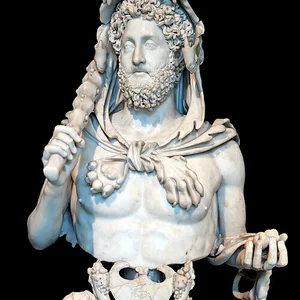
Commodus
161 — 192
Roman emperor from 180 to 192, son and successor of Marcus Aurelius. His authoritarian and eccentric reign marked the end of the Antonine dynasty and the close of the imperial golden age. He was assassinated in 192, opening a period of turmoil.
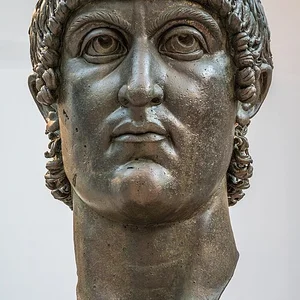
Constantine I
272 — 337
Roman Emperor from 306 to 337, Constantine I is renowned for establishing religious tolerance toward Christianity through the Edict of Milan in 313 and for founding Constantinople in 330. He marks the turning point of the Roman Empire toward Christianity and the East.
Cupid
God of love in Roman mythology, Cupid is the son of Venus and Mars (or Mercury, depending on the version). Armed with a bow and golden arrows, he strikes humans with romantic passion. His Greek equivalent is Eros.

Deng Sui
Empress then regent of Eastern Han China (1st–2nd century), she governed the empire for fifteen years with wisdom and firmness. She promoted education, reduced court expenditures, and effectively managed famines, earthquakes, and border tensions.
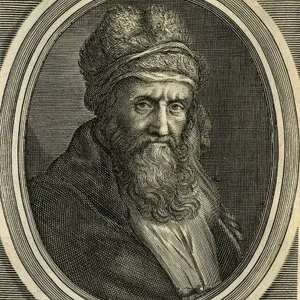
Diogenes Laërtius
A Greek biographer and doxographer of the 3rd century AD, Diogenes Laërtius is the author of Lives and Opinions of Eminent Philosophers, the principal source of knowledge about ancient Greek philosophers. His work compiles the biographies and views of more than 80 thinkers, from Thales to Epicurus.
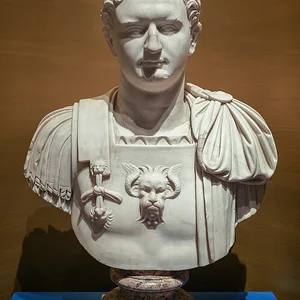
Domitian
51 — 96
Domitian (51–96) was the third and last emperor of the Flavian dynasty. His authoritarian reign was marked by persecutions of Christians and senators, but also by efficient provincial administration.
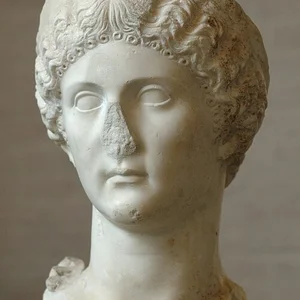
Drusilla
16 — 38
Julia Drusilla (16-38 AD) was a Roman princess of the Julio-Claudian dynasty, daughter of Germanicus and Agrippina the Elder, and the favorite sister of the emperor Caligula. Upon her death, she became the first Roman woman to be deified by the Senate.
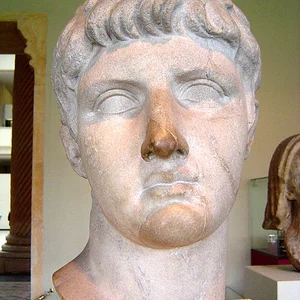
Drusus
37 av. J.-C. — 8 av. J.-C.
Roman general and statesman, son of Livia and stepson of Augustus. He led the campaigns of conquest in Germania as far as the Elbe before dying prematurely from the effects of a fall from his horse. He was the father of the emperor Claudius and of Germanicus.
Empress Jingu
A legendary empress of Japan, Jingū is said to have reigned in the 3rd century according to Japanese chronicles. Tradition credits her with a military campaign against the Korean peninsula, carried out while she was pregnant. Her historical existence is unattested and she belongs to Japan's founding mythology.
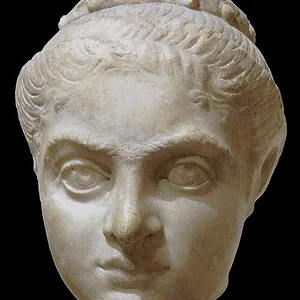
Fausta
289 — 326
Fausta was a Roman empress, daughter of Emperor Maximian and wife of Constantine I. Mother of three future emperors, she died in 326 under obscure circumstances, shortly after the execution of Prince Crispus.
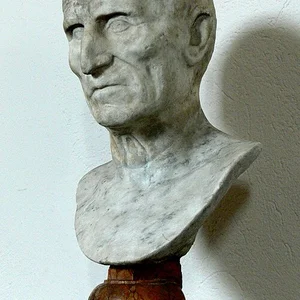
Galba
2 av. J.-C. — 69
Galba was the sixth Roman emperor, in power from 68 to 69. An elderly former governor from the high aristocracy, he came to the throne after the fall of Nero but was assassinated after only seven months of rule, opening the Year of the Four Emperors.
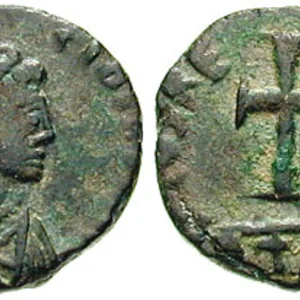
Galla Placidia
386 — 450
Daughter of Emperor Theodosius I, Galla Placidia was Augusta of the Western Roman Empire and regent for her son Valentinian III. A major political figure of the 5th century, she navigated barbarian invasions and court intrigues to preserve imperial power.
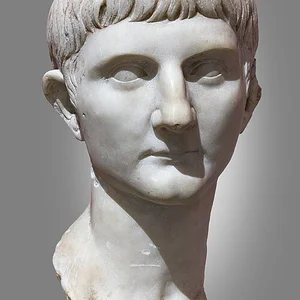
Germanicus
14 av. J.-C. — 19
Roman general of the early Empire, nephew and adopted son of the emperor Tiberius. Popular for his campaigns in Germania, he died in Syria in AD 19 under suspicious circumstances often blamed on Tiberius.
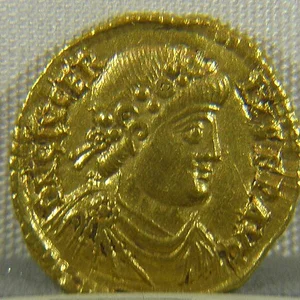
Glycerius
430 — 480
Glycerius was a Western Roman emperor who briefly reigned from 473 to 474, during the period of the Empire's collapse. Brought to power by the Burgundian general Gundobad, he was deposed by Julius Nepos and forced to become bishop of Salona.
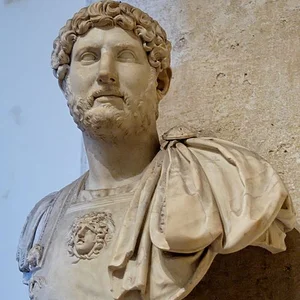
Hadrian
76 — 138
Hadrian was Roman emperor from 117 to 138 AD, successor to Trajan. A reformer and builder, he consolidated the Empire's borders and traveled to nearly all its provinces. A passionate admirer of Greek culture, he oversaw the construction of the Pantheon in Rome and Hadrian's Wall in Britannia.
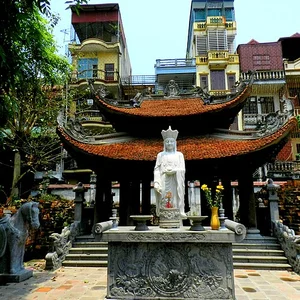
Hai Bà Trưng
Two Vietnamese sisters (died 43 CE) who led the first major uprising against Han rule in 40 CE. Trưng Trắc proclaimed herself queen after retaking 65 cities; defeated by General Mã Viện in 43 CE, they are revered as national heroines of Vietnam.
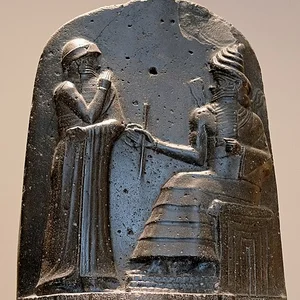
Hammurabi
1809 av. J.-C. — 1749 av. J.-C.
Sixth king of Babylon (1792–1750 BC), Hammurabi transformed a small kingdom into a regional empire. He is best known for promulgating the Code of Hammurabi, one of the oldest written compilations of laws in history.

Himiko
Queen and shamaness of the kingdom of Yamatai in Japan, mentioned in Chinese chronicles of the 3rd century. She ruled through her shamanic powers and conducted diplomacy with Wei China, which granted her an official title.
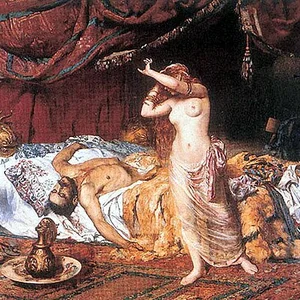
Ildico
500 — ?
Ildico was the last wife of Attila, King of the Huns, whom she married in 453. She was found in tears beside her husband's body the morning after their wedding night, his death remaining shrouded in mystery.
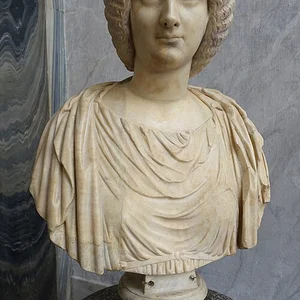
Julia Domna
165 — 217
Roman empress of Syrian origin and wife of Septimius Severus, she wielded considerable political influence and gathered around her a circle of philosophers and intellectuals. As the mother of Caracalla and Geta, she embodied female power at the very summit of the Roman Empire.
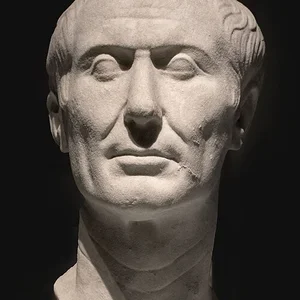
Julius Caesar
99 av. J.-C. — 43 av. J.-C.
Roman general and statesman (100–44 BC), Julius Caesar conquered Gaul between 58 and 50 BC and established his political dominance in Rome. His assassination in 44 BC hastened the fall of the Roman Republic.
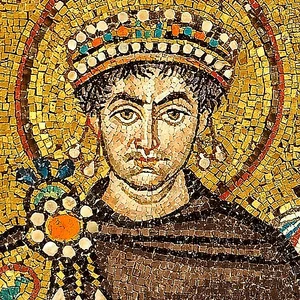
Justinian
482 — 565
Justinian was a Byzantine emperor who reigned from 527 to 565. He is famous for codifying Roman law in the Justinian Code and for conquering vast territories. His reign marks the height of the Byzantine Empire.
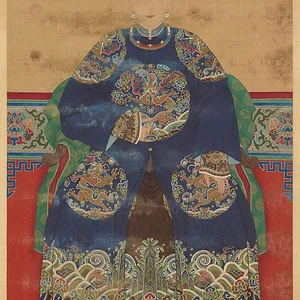
Lady Triệu
A Vietnamese warrior of the 3rd century, she led a revolt against Chinese Wu occupation at the age of 19. Known as 'Lady Triệu', she fought for six months before being defeated in 248 CE.
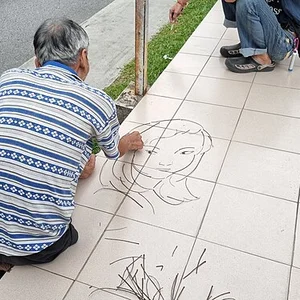
Man Thiện
A figure of Vietnamese tradition, Man Thiện is held to be the mother of the Trưng sisters (Trưng Trắc and Trưng Nhị). A descendant of the Hùng kings, she is said to have raised and supported her daughters in their uprising against the Chinese Han occupation, around 40 CE.
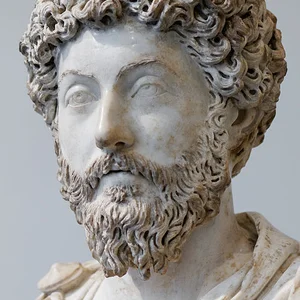
Marcus Aurelius
121 — 180
Roman Emperor from 161 to 180 and Stoic philosopher. Author of Meditations, personal reflections on wisdom and virtue. Represents the ideal of the philosopher-emperor in ancient Rome.
Mars
Roman god of war and protector of agriculture, Mars is one of the most venerated deities in the Roman pantheon. Legendary father of Romulus and Remus, he embodies Rome's military power and its destiny of conquest.
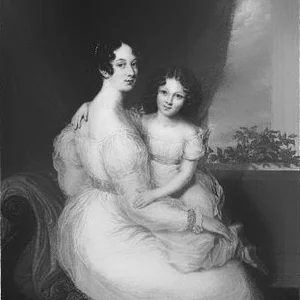
Mavia
400 — 425
Queen of the Tanukh Arabs in the 4th century, Mavia led a victorious war against the Roman Empire after the death of her husband. She negotiated peace from a position of strength and sent troops to defend Constantinople against the Goths.
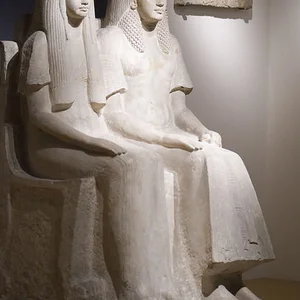
Maya
1400 av. J.-C. — 1300 av. J.-C.
Maya was a high dignitary of ancient Egypt who held important positions at the royal court. He is known for having served as Overseer of the Treasury under Tutankhamun and Horemheb, playing a key role in the administration of the kingdom.
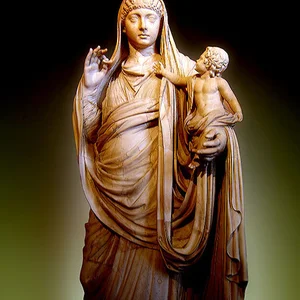
Messalina
20 — 48
Roman empress and third wife of Emperor Claudius (41–48 AD), Messalina wielded considerable political influence in Rome. She is remembered in antiquity for her palace intrigues and violent death, ordered by Claudius himself.
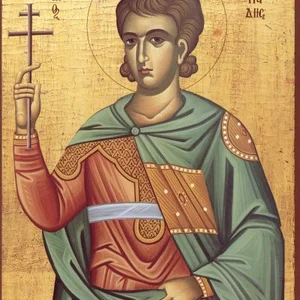
Miltiades
Miltiades was the 32nd bishop of Rome (pope) from 311 to 314. His pontificate coincided with the Constantinian turning point: the Edict of Milan (313) ended the persecutions and granted Christians freedom of worship within the Roman Empire.
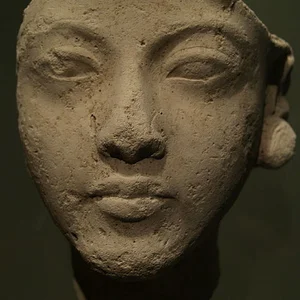
Nefertiti
1369 av. J.-C. — 1329 av. J.-C.
Nefertiti was the Great Royal Wife of Pharaoh Akhenaten, in the 14th century BC. She played an important role in the monotheistic religious reform of her era, promoting the cult of Aten, the sun god. Her idealized face, known through the famous bust, makes her one of the most depicted queens of Egypt.
Neoptolemus I
369 av. J.-C. — 350 av. J.-C.
Neoptolemus I was a historical king of Epirus in the 4th century BC, from the Aeacid dynasty of the Molossians. He is best known as the father of Olympias, wife of Philip II of Macedon, and thus the grandfather of Alexander the Great.
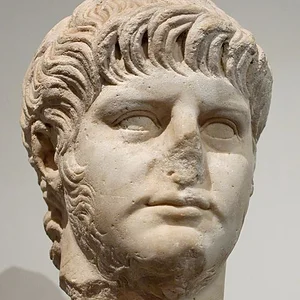
Nero
37 — 68
The fifth Roman emperor from 54 to 68, Nero is known for a reign marked by persecutions of Christians and the Great Fire of Rome in 64. The last representative of the Julio-Claudian dynasty, he consolidated imperial power against the Roman aristocracy.
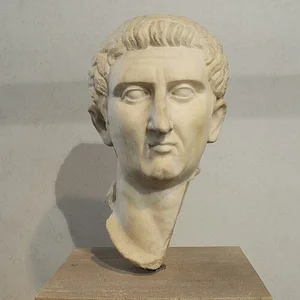
Nerva
30 — 98
Nerva was Roman emperor from 96 to 98 AD. Brought to power by the Senate after the assassination of Domitian, he founded the Antonine dynasty and the line of the “good emperors.” His brief reign was marked by a policy of appeasement and the adoption of Trajan as his successor.
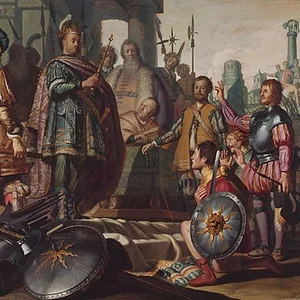
Orestes
399 — 499
Roman imperial prefect of Egypt in the early 5th century, based in Alexandria. A Christian but concerned with civil order, he opposed the growing grip of Bishop Cyril and was devastated by the murder of the philosopher Hypatia, his friend, in 415.
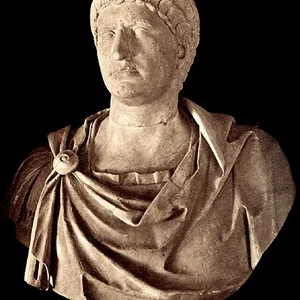
Otho
32 — 69
Otho was the seventh Roman emperor, in power for three months in the year 69. A former governor of Lusitania and companion of Nero, he came to the throne after having Galba assassinated, before being defeated by Vitellius and taking his own life.
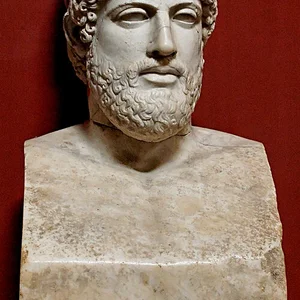
Pericles
493 av. J.-C. — 428 av. J.-C.
Pericles (495–429 BC) was an Athenian statesman who presided over the golden age of Athenian democracy in the 5th century BC. A dominant political leader for more than thirty years, he transformed Athens into the cultural and artistic center of ancient Greece, most notably by overseeing the construction of the Parthenon.
Philostratus of Athens
300 — ?
Greek writer and sophist of the 2nd–3rd century AD, Philostratus of Athens is celebrated for his Life of Apollonius of Tyana and his Lives of the Sophists. He moved in the literary circle of Empress Julia Domna in Rome.
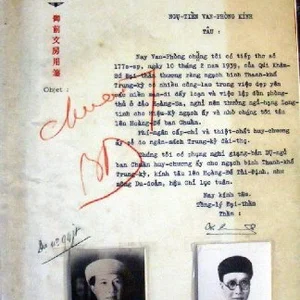
Phùng Thị Chính
Semi-legendary Vietnamese general who served under the Trưng sisters during the revolt against the rule of China's Han dynasty, around 40 AD. Tradition holds that she gave birth on the battlefield before returning to the fight, her newborn strapped to her back.
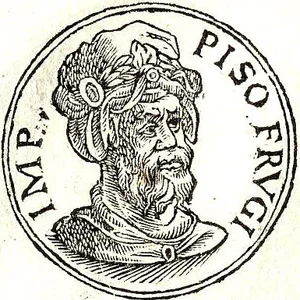
Piso
250 — 261
A Roman aristocrat of the 1st century, Gaius Calpurnius Piso was the figurehead of a sweeping conspiracy to overthrow the emperor Nero in 65 AD. The plot was uncovered, failed, and triggered a wave of deadly repression.

Poppaea Sabina
Poppaea Sabina (c. 30–65 AD) was the second wife of Emperor Nero. An ambitious woman of great beauty, she wielded considerable influence over Roman imperial politics.
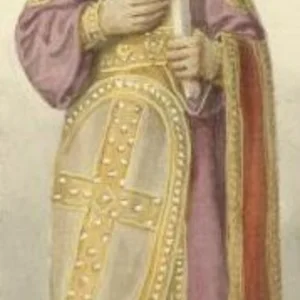
Pulcheria
399 — 453
Pulcheria (399-453) was an Eastern Roman (Byzantine) empress, daughter of Emperor Arcadius. As regent for her brother Theodosius II during his minority, she wielded major influence over the politics and religious affairs of the Empire for nearly half a century.
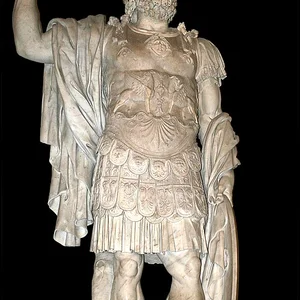
Pyrrhus
317 av. J.-C. — 271 av. J.-C.
Pyrrhus I (c. 319-272 BC) was king of Epirus and one of the most brilliant Hellenistic strategists. A cousin of Alexander the Great, he fought the Romans in Italy and the Carthaginians in Sicily, remaining the model of the general whose victories cost too much.
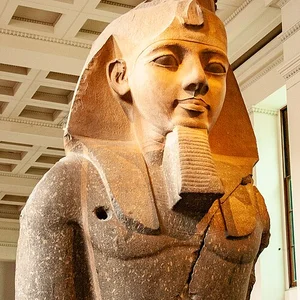
Ramesses II
1302 av. J.-C. — 1212 av. J.-C.
Ramesses II is one of the greatest pharaohs of ancient Egypt, who reigned for 66 years in the 13th century BC. He is famous for his colossal monuments, including the temples of Abu Simbel, and for the Battle of Kadesh against the Hittites.

Ren An
124 — 202
Officer and court official of the Han dynasty under Emperor Wu (2nd–1st century BC). He is primarily known as the recipient of Sima Qian's famous letter, in which the historian justifies his acceptance of castration in order to complete the Records of the Grand Historian.
Romulus Augustulus
462 — ?
Last emperor of the Western Roman Empire, Romulus Augustulus reigned in 475–476 AD, placed on the throne by his father Orestes. Deposed at around age 15 by the Germanic chieftain Odoacer, his abdication marks the conventional end of the Western Roman Empire.
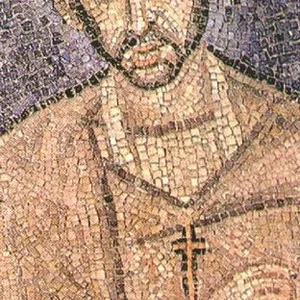
Saint Ambrose of Milan
339 — 397
Bishop of Milan from 374 to 397, Ambrose is one of the four Fathers of the Latin Church. A spiritual and political figure of Late Antiquity, he imposed public penance on Emperor Theodosius I and baptized Augustine of Hippo in 387.

Saint Denis (Martyr of Paris)
First bishop of Paris, sent on a mission to Gaul around 250 AD, Denis was beheaded on the hill of Montmartre during the Roman persecutions. According to legend, he picked up his severed head and walked to the site of his future basilica. He became the patron saint of France and a founding figure of Christianity in the Île-de-France region.
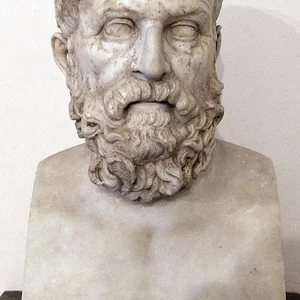
Solon
629 av. J.-C. — 559 av. J.-C.
Solon (629–559 BC) was an Athenian statesman and lawmaker who profoundly reformed the city of Athens in the early 6th century BC. His laws laid the foundations of Athenian democracy by limiting the power of the aristocracy and granting rights to citizens.
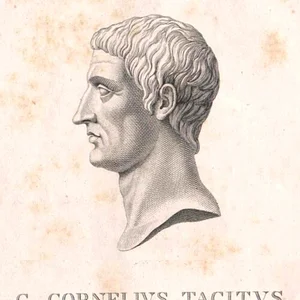
Tacitus
55 — 120
Tacitus is one of the greatest historians of ancient Rome. A senator and consul, he is the author of the Annals and the Histories, landmark works on the early Roman Empire. His incisive style and critical eye make him an irreplaceable witness to the imperial age.
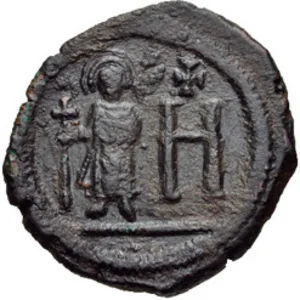
Theodosius
583 — 602
Byzantine emperor who reigned from 408 to 450, Theodosius II is known for consolidating the Eastern Empire and his devotion to Christianity. He ordered the construction of the famous Theodosian Walls around Constantinople and promulgated the Theodosian Code, a landmark collection of Roman laws.
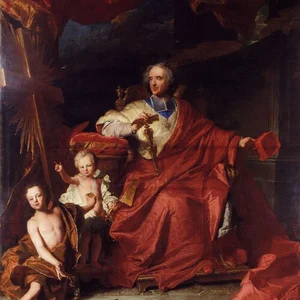
Theodosius I
Theodosius I was the last emperor to rule over the entire Roman Empire, both East and West. He made Nicene Christianity the official religion of the Empire through the Edict of Thessalonica in 380 and banned pagan worship.
Tin Hinan
350 — ?
Legendary queen of the Tuareg people, Tin Hinan is considered by oral tradition to be the matriarchal ancestor of the Hoggar (Ahaggar) nobles. A founding figure said to have come from the Tafilalt region, according to stories passed down through generations, she is believed to have lived around the 4th–5th century CE.
Titus Vinius
12 — 69
Roman consul in 69 AD, Titus Vinius was one of Emperor Galba's most influential advisors. A central figure of the 'Year of the Four Emperors', he was assassinated during Otho's coup in January 69.
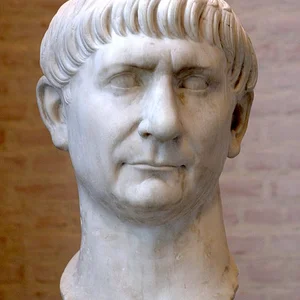
Trajan
53 — 117
Trajan (53–117) was the first Roman emperor born outside Italy, from the province of Hispania. His reign is considered the height of the Roman Empire, marked by major conquests and a generous social policy.
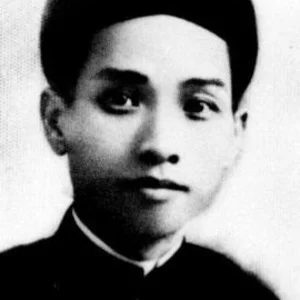
Trung Nhi
Younger sister of Trưng Trắc, she co-led the great Vietnamese revolt against Han Chinese domination in 40 CE. A formidable warrior, she played a key role in the temporary liberation of the country before their defeat by Chinese forces in 43 CE.

Trưng Trắc
Vietnamese national heroine who, alongside her sister Trưng Nhị, led a victorious revolt against Chinese Han rule in 40 CE. She briefly reigned over an independent kingdom before being defeated in 43 CE by the Chinese general Ma Yuan.

Varus
Roman general and statesman during the age of Augustus. As governor of Germania, he suffered a catastrophic defeat in AD 9 in the Teutoburg Forest, where three Roman legions were annihilated by a Germanic coalition led by Arminius. He took his own life on the battlefield.
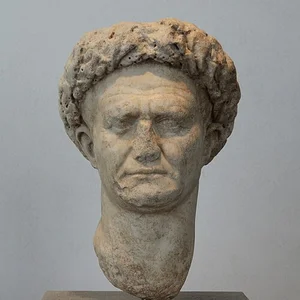
Vespasian
9 — 79
Vespasian (9–79 AD) was the ninth Roman emperor and founder of the Flavian dynasty. A general of equestrian background, he rose to power after the civil war of 69 AD. His reign marked a period of stability and reconstruction following the excesses of Nero.
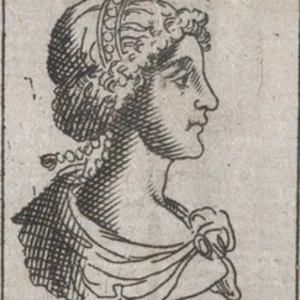
Vipsania
Vipsania Agrippina was a Roman citizen of the Augustan age, daughter of the general Agrippa and of Caecilia Pomponia Attica. The first wife of Tiberius, whom she loved, she was forced to divorce by Augustus for dynastic reasons. Her life illustrates the burden of imperial marriage politics.
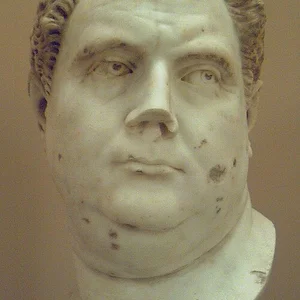
Vitellius
15 — 69
Aulus Vitellius was the eighth Roman emperor, proclaimed by the legions of Germania in 69 AD. His reign lasted only a few months before he was overthrown and killed by the supporters of Vespasian. He embodies the instability of the Year of the Four Emperors.
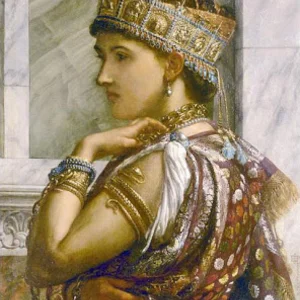
Zenobia
240 — 275
Queen of the Palmyrene Empire in the 3rd century, Zenobia ruled as regent in her son's name and expanded her empire to Egypt and Asia Minor, openly defying Rome. Defeated by Emperor Aurelian in 272, she remains the enduring symbol of an indomitable Eastern queen.
Spirituality(68)
Abaddon
A biblical figure from the Book of Revelation, Abaddon is the angel-king of the bottomless pit, whose Hebrew name means 'destruction.' He commands the devastating locusts during the fifth seal and embodies the ambiguous boundary between destroying angel and demonic power.
Achlys
Greek deity personifying the darkness of death and the mist that veils the eyes of the dying. Rooted in Greek mythological tradition, she ranks among the primordial entities who preceded the Olympians.
Alaric I
370 — 410
King of the Visigoths from 395 to 410, Alaric I is famous for leading the sack of Rome in 410, a symbolic event marking the beginning of the end of the Western Roman Empire.
Archangel Gabriel
Archangel and divine messenger present in all three monotheistic religions. In Christianity, he announces to Mary the birth of Jesus. In Islam, he reveals the Quran to the prophet Muhammad.
Archangel Michael
Supreme archangel of the Abrahamic traditions, commander of the heavenly armies and protector of Israel in the Hebrew Bible. Victor over Satan in the Book of Revelation, he is venerated in Judaism, Christianity, and Islam.
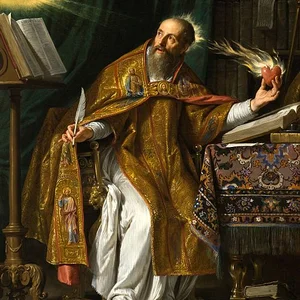
Augustine of Hippo
354 — 430
Christian theologian and philosopher of the 4th century, bishop of Hippo in North Africa. Author of the Confessions and The City of God, he is one of the most influential Latin Fathers of the Church in the history of Christianity.
Beelzebub
An ancient Philistine deity (Baal-Zebub, "Lord of the Flies"), worshipped at Ekron. Reinterpreted in the Judeo-Christian tradition as one of the princes of demons, a central figure in medieval demonology.
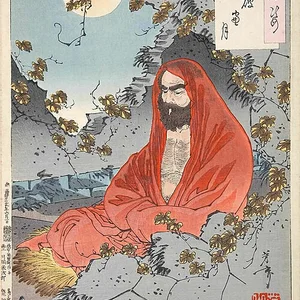
Bodhidharma
440 — 540
Buddhist monk, regarded as the founder of Chan Buddhism in China, from which Japanese Zen derives. According to tradition, he transmitted a form of Buddhism focused on meditation and the direct experience of awakening, beyond the scriptures.
Bona Dea
Bona Dea (“the Good Goddess”) is a Roman deity of fertility, healing and chastity, worshipped exclusively by women. Her secret cult excluded men, and the empress Livia had her temple on the Aventine restored and rededicated.
Brahma
Brahmā is the creator god in Hinduism, forming with Vishnu and Shiva the Trimūrti, the divine trinity of Hinduism. He is the master of the Vedas and cosmic knowledge, responsible for the creation of the universe and all living beings.
Brigantia
Brigantia is a Celtic goddess honoured in Roman Britain, notably by the **Brigantes** confederation in the north of present-day England. A tutelary and protective deity, she was associated through syncretism with the Roman **Minerva** and with **Victory**. She is often linked to the Irish goddess **Brigid**.
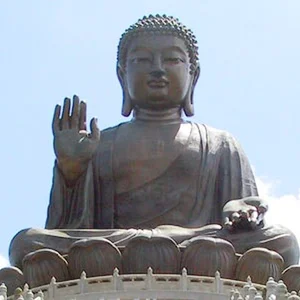
Buddha
vers 563 — vers 483 av. J.-C.
Siddhartha Gautama, founder of Buddhism
Ceres
Roman goddess of agriculture, harvests, and fertility, equivalent to the Greek Demeter. She is the origin of the word “cereals” and held a central place in Roman religion and daily life.
Chandika
Chandika, also called Chandi, is a fearsome form of the Great Goddess (Devi) in Hinduism. An embodiment of feminine energy (shakti), she is celebrated as the slayer of the buffalo-demon Mahishasura and the forces of chaos. Her worship is central to the sacred text *Devi Mahatmya*.
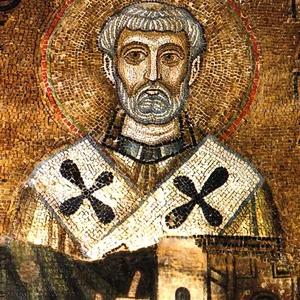
Clement of Rome
100 — 99
Bishop of Rome at the end of the 1st century, Clement is considered one of the earliest popes of the Christian Church. He is best known for his epistle to the Corinthians, a valuable testimony to the organization of the early Church.
Clotilde
474 — 545
Queen of the Franks and wife of Clovis I, she played a decisive role in her husband's conversion to Christianity. Venerated as a saint by the Catholic Church, she embodies the bringing together of Frankish royalty and Christianity at the dawn of the Middle Ages.
Cybele
Cybele is the great mother goddess of Phrygian origin, mistress of wild nature, mountains, animals, and fertility. Adopted by the Greeks and then officially introduced to Rome in 204 BC under the name Magna Mater, she was honored there with a mystery cult famous for its ecstatic priests.
Diana
Diana is the Roman goddess of the hunt, the Moon, and the wild, identified with the Greek Artemis. Daughter of Jupiter and Latona, twin sister of Apollo, she is depicted as a huntress carrying a bow and arrows. An eternal virgin, she also protects women in childbirth and presides over lunar cycles.
Domitian
51 — 96
Domitian (51–96) was the third and last emperor of the Flavian dynasty. His authoritarian reign was marked by persecutions of Christians and senators, but also by efficient provincial administration.
Epona
Epona is a goddess of Gaulish Celtic mythology, the protector of horses, mares, foals, donkeys and mules. Her cult, tied to fertility and the protection of riders, was widely adopted by the Roman cavalry and spread throughout the Empire.
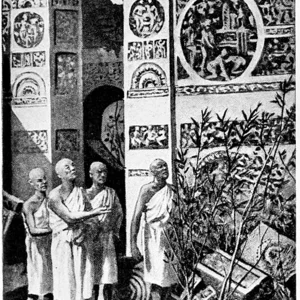
Faxian
337 — 422
A Chinese Buddhist monk of the 4th–5th century, Faxian undertook a long pilgrimage on foot to India to collect sacred texts. His travel account, titled *A Record of Buddhist Kingdoms*, stands as one of the earliest detailed descriptions of India and Central Asia written by a Chinese traveler.
Himiko
Queen and shamaness of the kingdom of Yamatai in Japan, mentioned in Chinese chronicles of the 3rd century. She ruled through her shamanic powers and conducted diplomacy with Wei China, which granted her an official title.
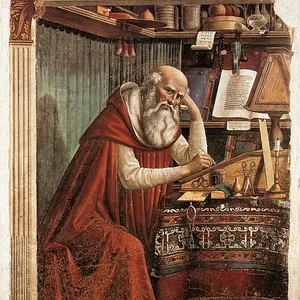
Jerome of Stridon
345 — 420
A Christian monk and scholar of the 4th century, Jerome of Stridon is celebrated for translating the Bible into Latin, producing the Vulgate. A Doctor of the Church, he was also a prolific letter writer and a passionate advocate of the ascetic life.

Jesus of Nazareth
First-century Jewish preacher from Galilee and the central figure of Christianity, which recognizes him as the Messiah and Son of God. His preaching, his crucifixion in Jerusalem under Pontius Pilate, and his disciples' proclamation of his resurrection gave rise to a new religion.
Lamassu
The lamassu is a protective deity of ancient Mesopotamia, depicted as a winged spirit with the body of a bull (or lion), the wings of an eagle and a bearded human head. Standing guard at the gates of Assyrian palaces and cities, these monumental figures warded off the forces of evil.
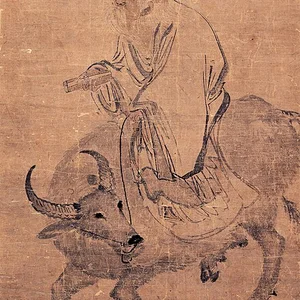
Laozi
vers VIe siècle av. J.-C.
Chinese philosopher, founder of Taoism
Lucifer
Latin name meaning 'Light-bearer', originally referring to the morning star (Venus). In Christian tradition, it designates the fallen angel cast from Heaven by God for his pride, becoming the figure of absolute Evil.
Mammon
Mammon is a demonic figure from the New Testament, a personification of material wealth and greed. Taken up in medieval literature and by Milton in Paradise Lost, he embodies the temptation of earthly riches over spiritual values.
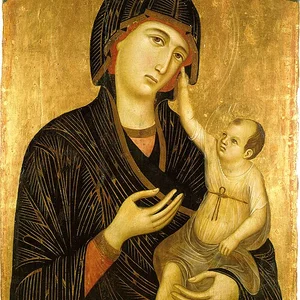
Mary (Mother of Jesus)
17 av. J.-C. — 48
Mother of Jesus of Nazareth, a central figure in Christianity. Venerated as Theotokos (Mother of God) in the Catholic and Orthodox traditions, she holds a major place in the history of monotheistic religions.
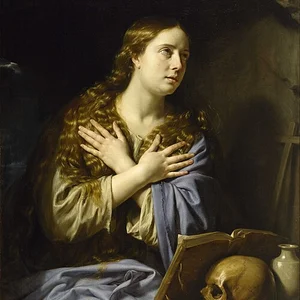
Mary Magdalene
Mary of Magdala, known as Mary Magdalene, is a disciple of Jesus of Nazareth mentioned in the Gospels. She is presented as the first witness to Christ's resurrection, earning her the title of “apostle to the apostles” in Christian tradition.
Mary of Nazareth
Mary of Nazareth is, according to the Gospels, the mother of Jesus of Nazareth. A central figure in Christianity and venerated in Islam under the name Maryam, she holds a major place in the religious and cultural history of the West.
Maui
Demigod and trickster hero of Polynesian mythologies, Māui is one of the most celebrated figures in Pacific oral tradition. He accomplishes extraordinary feats: fishing islands up from the ocean floor, slowing the sun, and stealing fire from the gods to give to humankind.
Maya
1400 av. J.-C. — 1300 av. J.-C.
Maya was a high dignitary of ancient Egypt who held important positions at the royal court. He is known for having served as Overseer of the Treasury under Tutankhamun and Horemheb, playing a key role in the administration of the kingdom.
Metatron
Metatron is the highest of the angels in certain Jewish mystical traditions. Celestial scribe and chancellor of Heaven, he is said to be the angelic incarnation of the patriarch Enoch. He appears notably in Merkabah literature and in the Hebrew Book (3 Enoch).
Miltiades
Miltiades was the 32nd bishop of Rome (pope) from 311 to 314. His pontificate coincided with the Constantinian turning point: the Edict of Milan (313) ended the persecutions and granted Christians freedom of worship within the Roman Empire.
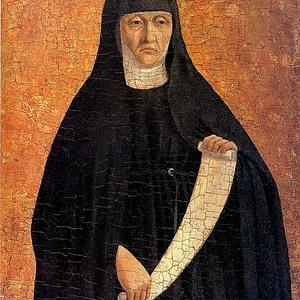
Monica
332 — 387
Mother of Saint Augustine, Monica is venerated as a saint in the Catholic Church for her unwavering faith. She prayed her entire life for her son's conversion. She died in Ostia in 387, shortly after witnessing his baptism by Saint Ambrose in Milan.
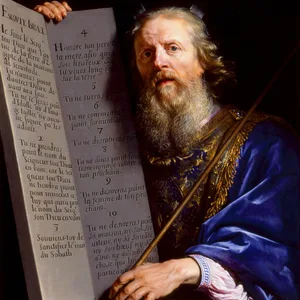
Moses
Moses is a central figure in the Hebrew Bible and Judaism. According to biblical tradition, he led the Hebrew people out of Egypt during the Exodus and received the Ten Commandments on Mount Sinai. He is venerated as the great lawgiver and prophet of the people of Israel.
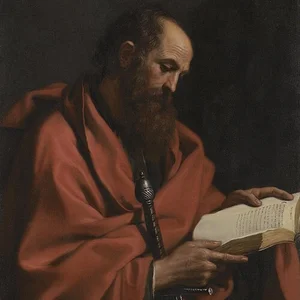
Paul of Tarsus
5 — 66
A Christian apostle and missionary of the 1st century, Paul of Tarsus played a decisive role in spreading Christianity throughout the Roman Empire. His epistles form an essential part of the New Testament.
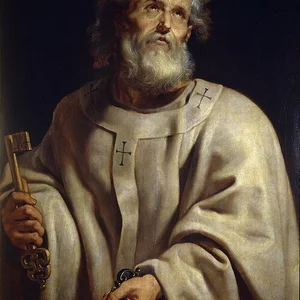
Peter
0 — 65
A fisherman from Galilee who became one of the twelve apostles of Jesus Christ, Peter is considered the first pope of the Catholic Church. He was martyred in Rome around 64–68 AD.
Phoebe
50 — 100
Titaness of brilliance and prophecy in Greek mythology, Phoebe is the daughter of Gaia and Ouranos, wife of the Titan Coeus. Mother of Leto, she is the grandmother of Apollo and Artemis, and is said to have held the oracle of Delphi before passing it on to her grandson.
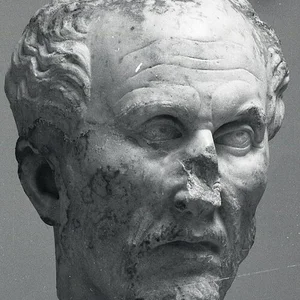
Plotinus
205 — 270
Plotinus is a philosopher of late antiquity, born in Egypt and active in Rome, regarded as the founder of Neoplatonism. His teaching, transmitted and organized by his disciple Porphyry in the *Enneads*, sets out a metaphysics of the One, from which all reality proceeds.
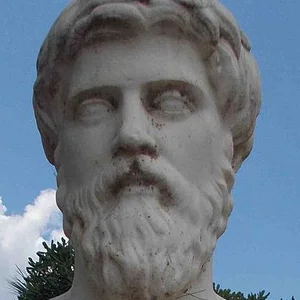
Plutarch
40 — 120
Greek philosopher, biographer, and moralist living under the Roman Empire (c. 46–120 AD). Author of the celebrated Parallel Lives, in which he compares great Greek and Roman figures. His Moralia establish him as a major reference in ancient thought.
Psyche
Psyche is a mortal of extraordinary beauty whose legend tells of her love for Eros (Cupid). Her myth, transmitted by Apuleius, symbolizes the soul's journey toward divine perfection through trial and love.
Saint Ambrose of Milan
339 — 397
Bishop of Milan from 374 to 397, Ambrose is one of the four Fathers of the Latin Church. A spiritual and political figure of Late Antiquity, he imposed public penance on Emperor Theodosius I and baptized Augustine of Hippo in 387.
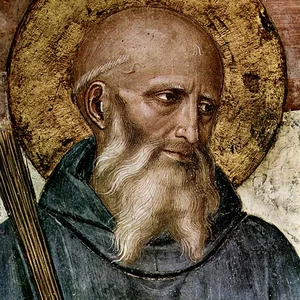
Saint Benedict of Nursia
480 — 547
An Italian Christian monk, Benedict of Nursia is regarded as the founder of Western monasticism. He wrote a monastic rule that organized community life around prayer and work, and founded the abbey of Monte Cassino.
Saint Denis (Martyr of Paris)
First bishop of Paris, sent on a mission to Gaul around 250 AD, Denis was beheaded on the hill of Montmartre during the Roman persecutions. According to legend, he picked up his severed head and walked to the site of his future basilica. He became the patron saint of France and a founding figure of Christianity in the Île-de-France region.
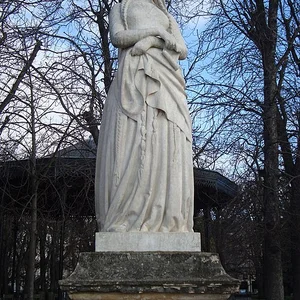
Saint Genevieve
A Gallo-Roman religious woman of the 5th century, Genevieve became the patron saint of Paris. According to tradition, she rallied the people of Paris in the face of the threat posed by Attila and his Huns in 451, urging them to pray rather than flee.
Saint George
Christian martyr of the 4th century, a Roman officer put to death under Diocletian around 303. His medieval legend — the fight against a dragon to rescue a princess — made him the symbol of chivalry and the victory of good over evil.

Saint James (Apostle)
Apostle of Jesus Christ and son of Zebedee, James the Greater was a fisherman in Galilee before following Christ. Beheaded around 44 AD under Herod Agrippa I, he was the first apostle to be martyred. His presumed tomb at Compostela (Spain) became one of the greatest pilgrimage sites of medieval Christendom.
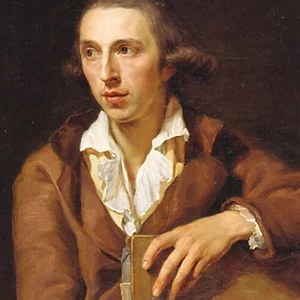
Saint John
Saint John is one of the twelve apostles of Jesus of Nazareth, traditionally identified as “the disciple whom Jesus loved.” Christian tradition attributes to him the fourth Gospel, three epistles, and the Book of Revelation.
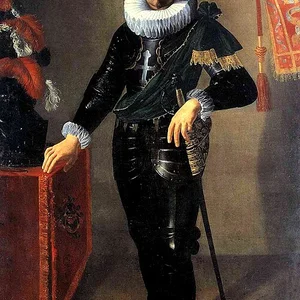
Saint Lazarus
A close friend of Jesus of Nazareth, Lazarus of Bethany was raised from the dead by Christ according to the Gospel of John (chapter 11). His resurrection is one of the foundational miracles of the New Testament and a central symbol of Christian faith in eternal life.
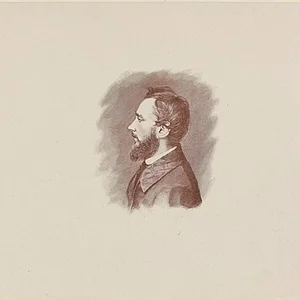
Saint Marcel of Paris
Bishop of Paris in the 5th century (c. 360–436), Saint Marcel is renowned for the legend in which he slew a dragon on the banks of the Bièvre. His tomb became a major pilgrimage site for Parisians of the early Middle Ages.
Saint Michael the Archangel
Commander of the heavenly armies in Jewish, Christian, and Muslim tradition, Saint Michael is first mentioned in the Book of Daniel (2nd century BC). Slayer of the dragon in the Book of Revelation, weigher of souls at the Last Judgment, he is also the patron of knights and the guardian saint of Mont-Saint-Michel.
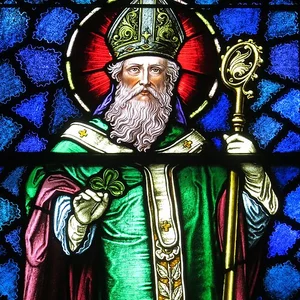
Saint Patrick
400 — 500
Saint Patrick was a fifth-century Christian missionary, regarded as the man who brought Christianity to Ireland. Captured young and enslaved in Ireland, he later returned there as a bishop to Christianize the island. He is the patron saint of Ireland.

Saint Philip (apostle)
One of the twelve apostles of Jesus, originally from Bethsaida in Galilee. He was among the first to be called and played a role as intermediary between Jesus and Greeks who came to meet him. Tradition holds that he died a martyr at Hierapolis in Phrygia.
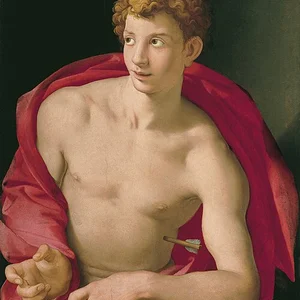
Saint Sebastian
Officer of the Praetorian Guard of Emperor Diocletian, secretly converted to Christianity. Condemned to death by arrows around 288, he survived before being beaten to death. He became one of the most depicted martyrs in Western art.
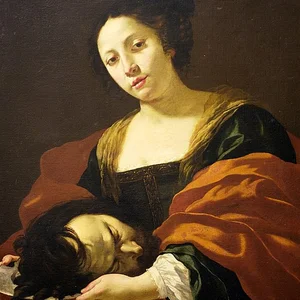
Salomé
14 — 62
Salomé is the daughter of Herodias and stepdaughter of Herod Antipas, tetrarch of Galilee in the 1st century. According to the Gospels, her dance so pleased Herod that he granted her any request she wished: at her mother's urging, she asked for the head of John the Baptist.
Samael
Samael is a malevolent angel in Jewish tradition, often identified with the Angel of Death and the Accuser (Satan). A central figure in Kabbalah and the Talmud, he embodies evil and opposition to the divine.
Saturn
Saturn is a major god of Roman mythology, assimilated with the Greek Cronus. God of agriculture, time, and abundance, he ruled over the Golden Age. His festival, the Saturnalia, was one of the most important celebrations in ancient Rome.
Shango
Shango is the orisha of thunder and lightning in the Yoruba religion of West Africa. A warrior deity associated with divine justice, he is depicted wielding a double axe (oshe) and rules over storms. His cult spread to the Americas through the African diaspora.
Simurgh
The Simurgh is a fabulous and benevolent bird from Persian mythology, a gigantic creature often described as nesting in the Tree of Life. A symbol of wisdom and healing, it protects and guides the heroes of the great Iranian epic tales.
Tenazuchi
Tenazuchi is an earthly deity (kunitsukami) of Japanese Shinto mythology. Wife of Ashinazuchi and mother of Kushinada-hime, she appears in the myth where the god Susanoo saves her daughter from the eight-headed serpent Yamata-no-Orochi.
Theodosius I
Theodosius I was the last emperor to rule over the entire Roman Empire, both East and West. He made Nicene Christianity the official religion of the Empire through the Edict of Thessalonica in 380 and banned pagan worship.
Titus Vinius
12 — 69
Roman consul in 69 AD, Titus Vinius was one of Emperor Galba's most influential advisors. A central figure of the 'Year of the Four Emperors', he was assassinated during Otho's coup in January 69.
Uriel
Uriel is one of the major archangels of the Abrahamic traditions, whose name means "Fire of God" or "Light of God". He is associated with divine wisdom, repentance, and the guardianship of Eden with a flaming sword.
Venus
Venus is the Roman goddess of love, beauty, and fertility, equivalent to the Greek Aphrodite. Daughter of Jupiter according to some traditions, she plays a central role in Roman mythology and has inspired countless works of art throughout the centuries.
Vesta
Roman goddess of the hearth, sacred fire, and family. Her cult, one of the oldest in Rome, was maintained by the Vestal Virgins — priestesses bound to chastity who were charged with tending the eternal flame in the Temple of Vesta in the Forum.
Yashoda
Yashoda is a central figure in Hindu mythology, the foster mother of the god Krishna. Wife of Nanda, chief of the cowherds of Vrindavan, she raises Krishna with unconditional maternal love, a symbol of devotion (bhakti) in Hinduism.
Military(44)
Aetius
390 — 454
Flavius Aetius was a Roman general and statesman of the 5th century, the dominant figure of the waning Western Roman Empire. Nicknamed “the last of the Romans,” he is famous for stopping Attila and the Huns at the Catalaunian Plains in 451.
Alaric I
370 — 410
King of the Visigoths from 395 to 410, Alaric I is famous for leading the sack of Rome in 410, a symbolic event marking the beginning of the end of the Western Roman Empire.
Antiochus III
241 av. J.-C. — 186 av. J.-C.
Antiochus III, known as the Great, was a Seleucid king who reigned from 223 to 187 BC. He restored the Seleucid Empire through vast campaigns into the East, but was defeated by Rome, which marked the rise of Roman power in the eastern Mediterranean.
Antoninus Pius
86 — 161
Antoninus Pius was Roman emperor from 138 to 161, the third of the “good emperors” of the Antonine dynasty. His exceptionally long and peaceful reign remained a symbol of stability and prosperity for the Empire.
Arminius
16 av. J.-C. — 21
War chief of the Germanic Cherusci tribe. In 9 AD, he annihilated three Roman legions commanded by Varus in the Teutoburg Forest, lastingly halting Roman expansion east of the Rhine.
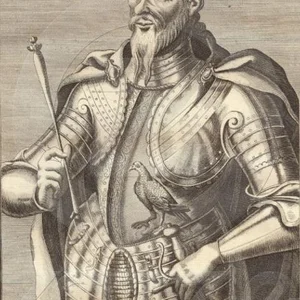
Attila
500 — 453
Attila was king of the Huns from 434 to 453. He conquered a vast empire across Eastern and Central Europe, directly threatening the Western Roman Empire through repeated invasions. He is remembered as one of the greatest warriors of Late Antiquity.
Aurelian
214 — 275
Aurelian was Roman emperor from 270 to 275, nicknamed “restorer of the world” (restitutor orbis). A general of Illyrian origin, he reunified the Roman Empire by reconquering the Gallic Empire and the kingdom of Palmyra, putting an end to the Crisis of the Third Century.
Avidius Cassius
130 — 175
A Roman general of Syrian origin, Avidius Cassius was one of the finest military commanders of the Antonine period. In 175, he wrongly proclaimed himself emperor, believing Marcus Aurelius to be dead, and was assassinated by his own soldiers after only three months of rule.
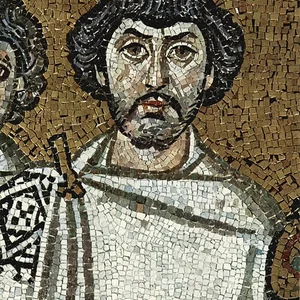
Belisarius
505 — 565
Belisarius was the greatest general of the Byzantine emperor Justinian I in the 6th century. The architect of the wars to reconquer the West, he took Africa back from the Vandals and Italy from the Ostrogoths, helping to advance the dream of restoring the Roman Empire.
Boudicca
30 — 61
Queen of the Iceni, a Celtic people of Britain, she led a major revolt against Roman occupation around 60–61 AD. At the head of a coalition of British tribes, she destroyed Camulodunum, Londinium, and Verulamium before being defeated by the governor Paulinus.
Commodus
161 — 192
Roman emperor from 180 to 192, son and successor of Marcus Aurelius. His authoritarian and eccentric reign marked the end of the Antonine dynasty and the close of the imperial golden age. He was assassinated in 192, opening a period of turmoil.
Domitian
51 — 96
Domitian (51–96) was the third and last emperor of the Flavian dynasty. His authoritarian reign was marked by persecutions of Christians and senators, but also by efficient provincial administration.
Drusus
37 av. J.-C. — 8 av. J.-C.
Roman general and statesman, son of Livia and stepson of Augustus. He led the campaigns of conquest in Germania as far as the Elbe before dying prematurely from the effects of a fall from his horse. He was the father of the emperor Claudius and of Germanicus.
Empress Jingu
A legendary empress of Japan, Jingū is said to have reigned in the 3rd century according to Japanese chronicles. Tradition credits her with a military campaign against the Korean peninsula, carried out while she was pregnant. Her historical existence is unattested and she belongs to Japan's founding mythology.
Galba
2 av. J.-C. — 69
Galba was the sixth Roman emperor, in power from 68 to 69. An elderly former governor from the high aristocracy, he came to the throne after the fall of Nero but was assassinated after only seven months of rule, opening the Year of the Four Emperors.
Galla Placidia
386 — 450
Daughter of Emperor Theodosius I, Galla Placidia was Augusta of the Western Roman Empire and regent for her son Valentinian III. A major political figure of the 5th century, she navigated barbarian invasions and court intrigues to preserve imperial power.
Germanicus
14 av. J.-C. — 19
Roman general of the early Empire, nephew and adopted son of the emperor Tiberius. Popular for his campaigns in Germania, he died in Syria in AD 19 under suspicious circumstances often blamed on Tiberius.
Glycerius
430 — 480
Glycerius was a Western Roman emperor who briefly reigned from 473 to 474, during the period of the Empire's collapse. Brought to power by the Burgundian general Gundobad, he was deposed by Julius Nepos and forced to become bishop of Salona.
Hadrian
76 — 138
Hadrian was Roman emperor from 117 to 138 AD, successor to Trajan. A reformer and builder, he consolidated the Empire's borders and traveled to nearly all its provinces. A passionate admirer of Greek culture, he oversaw the construction of the Pantheon in Rome and Hadrian's Wall in Britannia.
Hai Bà Trưng
Two Vietnamese sisters (died 43 CE) who led the first major uprising against Han rule in 40 CE. Trưng Trắc proclaimed herself queen after retaking 65 cities; defeated by General Mã Viện in 43 CE, they are revered as national heroines of Vietnam.
Julius Caesar
99 av. J.-C. — 43 av. J.-C.
Roman general and statesman (100–44 BC), Julius Caesar conquered Gaul between 58 and 50 BC and established his political dominance in Rome. His assassination in 44 BC hastened the fall of the Roman Republic.
Lady Triệu
A Vietnamese warrior of the 3rd century, she led a revolt against Chinese Wu occupation at the age of 19. Known as 'Lady Triệu', she fought for six months before being defeated in 248 CE.
Man Thiện
A figure of Vietnamese tradition, Man Thiện is held to be the mother of the Trưng sisters (Trưng Trắc and Trưng Nhị). A descendant of the Hùng kings, she is said to have raised and supported her daughters in their uprising against the Chinese Han occupation, around 40 CE.
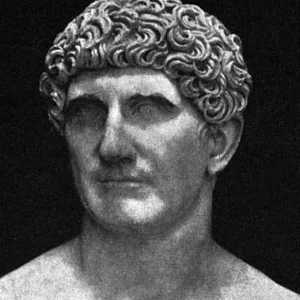
Mark Antony
82 av. J.-C. — 29 av. J.-C.
A Roman general of the 1st century BC, Mark Antony was one of the triumvirs who governed Rome after Caesar's assassination. Ally then rival of Octavian, he embodies the civil wars that tore the Roman Republic apart in its final years.
Mavia
400 — 425
Queen of the Tanukh Arabs in the 4th century, Mavia led a victorious war against the Roman Empire after the death of her husband. She negotiated peace from a position of strength and sent troops to defend Constantinople against the Goths.
Neoptolemus I
369 av. J.-C. — 350 av. J.-C.
Neoptolemus I was a historical king of Epirus in the 4th century BC, from the Aeacid dynasty of the Molossians. He is best known as the father of Olympias, wife of Philip II of Macedon, and thus the grandfather of Alexander the Great.
Phùng Thị Chính
Semi-legendary Vietnamese general who served under the Trưng sisters during the revolt against the rule of China's Han dynasty, around 40 AD. Tradition holds that she gave birth on the battlefield before returning to the fight, her newborn strapped to her back.
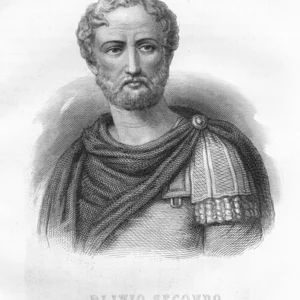
Pliny the Elder
20 — 79
Pliny the Elder was a Roman scholar and officer of the 1st century AD, author of the encyclopedic Natural History. A naturalist curious about everything, he died in 79 AD while attempting to observe the eruption of Mount Vesuvius that destroyed Pompeii.
Pyrrhus
317 av. J.-C. — 271 av. J.-C.
Pyrrhus I (c. 319-272 BC) was king of Epirus and one of the most brilliant Hellenistic strategists. A cousin of Alexander the Great, he fought the Romans in Italy and the Carthaginians in Sicily, remaining the model of the general whose victories cost too much.
Ren An
124 — 202
Officer and court official of the Han dynasty under Emperor Wu (2nd–1st century BC). He is primarily known as the recipient of Sima Qian's famous letter, in which the historian justifies his acceptance of castration in order to complete the Records of the Grand Historian.
Romulus Augustulus
462 — ?
Last emperor of the Western Roman Empire, Romulus Augustulus reigned in 475–476 AD, placed on the throne by his father Orestes. Deposed at around age 15 by the Germanic chieftain Odoacer, his abdication marks the conventional end of the Western Roman Empire.
Saint George
Christian martyr of the 4th century, a Roman officer put to death under Diocletian around 303. His medieval legend — the fight against a dragon to rescue a princess — made him the symbol of chivalry and the victory of good over evil.
Saint Michael the Archangel
Commander of the heavenly armies in Jewish, Christian, and Muslim tradition, Saint Michael is first mentioned in the Book of Daniel (2nd century BC). Slayer of the dragon in the Book of Revelation, weigher of souls at the Last Judgment, he is also the patron of knights and the guardian saint of Mont-Saint-Michel.
Scáthach
Scáthach is a legendary warrior and weapons master of Irish Celtic mythology. Living on the Isle of Skye, she trains the hero Cú Chulainn in the arts of combat and passes on to him the magical spear Gáe Bolg.
Tacitus
55 — 120
Tacitus is one of the greatest historians of ancient Rome. A senator and consul, he is the author of the Annals and the Histories, landmark works on the early Roman Empire. His incisive style and critical eye make him an irreplaceable witness to the imperial age.
Theodosius I
Theodosius I was the last emperor to rule over the entire Roman Empire, both East and West. He made Nicene Christianity the official religion of the Empire through the Edict of Thessalonica in 380 and banned pagan worship.
Titus Vinius
12 — 69
Roman consul in 69 AD, Titus Vinius was one of Emperor Galba's most influential advisors. A central figure of the 'Year of the Four Emperors', he was assassinated during Otho's coup in January 69.
Trajan
53 — 117
Trajan (53–117) was the first Roman emperor born outside Italy, from the province of Hispania. His reign is considered the height of the Roman Empire, marked by major conquests and a generous social policy.
Trung Nhi
Younger sister of Trưng Trắc, she co-led the great Vietnamese revolt against Han Chinese domination in 40 CE. A formidable warrior, she played a key role in the temporary liberation of the country before their defeat by Chinese forces in 43 CE.
Trưng Trắc
Vietnamese national heroine who, alongside her sister Trưng Nhị, led a victorious revolt against Chinese Han rule in 40 CE. She briefly reigned over an independent kingdom before being defeated in 43 CE by the Chinese general Ma Yuan.
Varus
Roman general and statesman during the age of Augustus. As governor of Germania, he suffered a catastrophic defeat in AD 9 in the Teutoburg Forest, where three Roman legions were annihilated by a Germanic coalition led by Arminius. He took his own life on the battlefield.
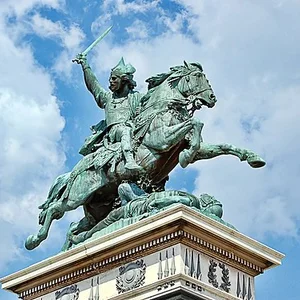
Vercingetorix
79 av. J.-C. — 45 av. J.-C.
Arverni chieftain (79–46 BC), Vercingetorix united the Gallic peoples against Julius Caesar's Roman invasion. Defeated at the Battle of Alesia in 52 BC, he stands as a symbol of Gallic resistance to Roman conquest.
Vespasian
9 — 79
Vespasian (9–79 AD) was the ninth Roman emperor and founder of the Flavian dynasty. A general of equestrian background, he rose to power after the civil war of 69 AD. His reign marked a period of stability and reconstruction following the excesses of Nero.
Vitellius
15 — 69
Aulus Vitellius was the eighth Roman emperor, proclaimed by the legions of Germania in 69 AD. His reign lasted only a few months before he was overthrown and killed by the supporters of Vespasian. He embodies the instability of the Year of the Four Emperors.
Philosophy(35)
Alaric I
370 — 410
King of the Visigoths from 395 to 410, Alaric I is famous for leading the sack of Rome in 410, a symbolic event marking the beginning of the end of the Western Roman Empire.
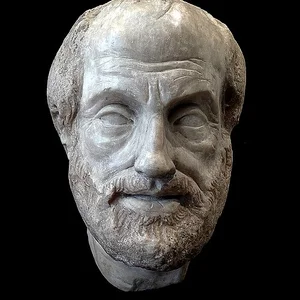
Aristotle
460 av. J.-C. — 401 av. J.-C.
Greek philosopher born in Stagira (384–322 BC), Aristotle founded his own school, the Lyceum, in Athens. He developed comprehensive systems of logic, metaphysics, ethics, and politics that profoundly influenced Western thought.
Augustine of Hippo
354 — 430
Christian theologian and philosopher of the 4th century, bishop of Hippo in North Africa. Author of the Confessions and The City of God, he is one of the most influential Latin Fathers of the Church in the history of Christianity.
Avidius Cassius
130 — 175
A Roman general of Syrian origin, Avidius Cassius was one of the finest military commanders of the Antonine period. In 175, he wrongly proclaimed himself emperor, believing Marcus Aurelius to be dead, and was assassinated by his own soldiers after only three months of rule.
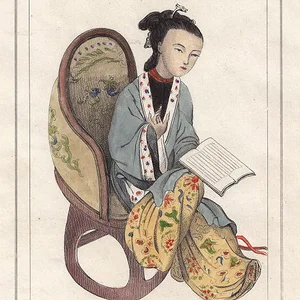
Ban Zhao
45 — 116
Ban Zhao (45–116) was China's first great female scholar, a historian and philosopher under the Eastern Han dynasty. She completed the works of her brother Ban Gu, most notably the Book of Han. Her treatise Lessons for Women (Nüjie) profoundly shaped Confucian thought on the role of women.
Bodhidharma
440 — 540
Buddhist monk, regarded as the founder of Chan Buddhism in China, from which Japanese Zen derives. According to tradition, he transmitted a form of Buddhism focused on meditation and the direct experience of awakening, beyond the scriptures.
Buddha
vers 563 — vers 483 av. J.-C.
Siddhartha Gautama, founder of Buddhism
Cicero
106 av. J.-C. — 42 av. J.-C.
Roman orator, politician, and philosopher (106–43 BC), Cicero is one of the greatest figures of the Roman Republic. He left a lasting mark on Latin literature through his eloquence and philosophical works, becoming a model of rhetoric for centuries to come.
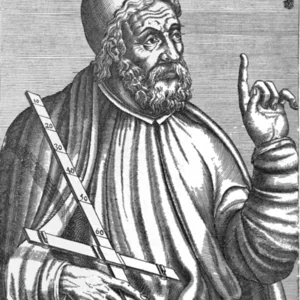
Claudius Ptolemy
100 — 170
Greek astronomer, mathematician, and geographer of the 2nd century, he developed a geocentric model of the universe that would dominate scientific thought for over 1,400 years. His encyclopedic work synthesizes ancient knowledge in astronomy, geography, and optics.
Diogenes Laërtius
A Greek biographer and doxographer of the 3rd century AD, Diogenes Laërtius is the author of Lives and Opinions of Eminent Philosophers, the principal source of knowledge about ancient Greek philosophers. His work compiles the biographies and views of more than 80 thinkers, from Thales to Epicurus.
Domitian
51 — 96
Domitian (51–96) was the third and last emperor of the Flavian dynasty. His authoritarian reign was marked by persecutions of Christians and senators, but also by efficient provincial administration.
Epictetus
50 — 138
Greek Stoic philosopher of the 1st–2nd century CE, born a slave in Hierapolis in Phrygia. He founded a school of philosophy in Nicopolis in Epirus, where he taught that virtue lies in accepting what does not depend on us. His teachings, compiled by his disciple Arrian in the Enchiridion, became a major reference of late Stoicism.
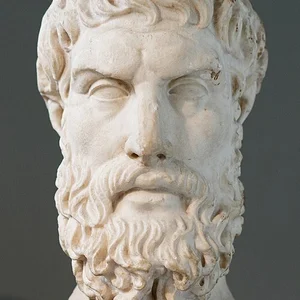
Epicurus
341 av. J.-C. — 269 av. J.-C.
Greek philosopher (341–270 BC) and founder of Epicureanism, a philosophical school based in Athens. He championed a conception of happiness grounded in the absence of pain (aponia) and fear (ataraxia), achieved through the measured satisfaction of natural and necessary desires.
Galen
129 — 300
A Greek physician of the 2nd century AD, Galen served as doctor to the Roman emperors and became the greatest medical theorist of antiquity. His work in anatomy and physiology, based on the dissection of animals, dominated Western medicine for over a thousand years.

Hypatia of Alexandria
vers 355/370 — 415
Greek mathematician, astronomer, and philosopher of the 4th–5th centuries, she taught in Alexandria and advanced the sciences of antiquity. An iconic figure of female scholarship, she was murdered in 415 during religious unrest.
Julia Domna
165 — 217
Roman empress of Syrian origin and wife of Septimius Severus, she wielded considerable political influence and gathered around her a circle of philosophers and intellectuals. As the mother of Caracalla and Geta, she embodied female power at the very summit of the Roman Empire.
Jupiter
Jupiter is the supreme god of the Roman pantheon, master of the sky, lightning, and thunder. The Roman equivalent of Greek Zeus, he reigns over gods and men from Mount Olympus. He is the protector of Rome and the guarantor of cosmic order.
Laozi
vers VIe siècle av. J.-C.
Chinese philosopher, founder of Taoism
Marcus Aurelius
121 — 180
Roman Emperor from 161 to 180 and Stoic philosopher. Author of Meditations, personal reflections on wisdom and virtue. Represents the ideal of the philosopher-emperor in ancient Rome.
Minerva
Roman goddess of wisdom, the arts, and crafts, Minerva is the Roman equivalent of Athena in Greek mythology. Born fully armed from Jupiter's head, she protects Rome, artisans, and poets, and together with Jupiter and Juno forms the Capitoline Triad.
Monica
332 — 387
Mother of Saint Augustine, Monica is venerated as a saint in the Catholic Church for her unwavering faith. She prayed her entire life for her son's conversion. She died in Ostia in 387, shortly after witnessing his baptism by Saint Ambrose in Milan.
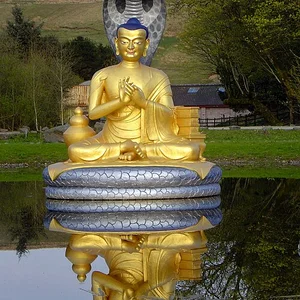
Nāgārjuna
150 — 250
Indian Buddhist philosopher and monk of the 2nd–3rd century CE, founder of the Madhyamaka school. He developed the concept of śūnyatā (emptiness) and had a major influence on Mahāyāna Buddhism.
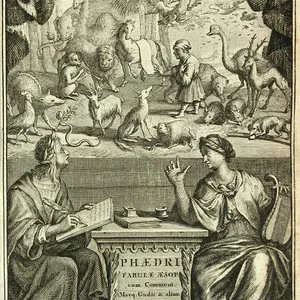
Phaedrus
20 av. J.-C. — 50
Phaedrus was a Latin fabulist of the 1st century AD, a freedman of Emperor Augustus. He was the first author to render Aesopian fables in Latin verse, leaving behind a collection in five books that had a lasting influence on European literature.
Philostratus of Athens
300 — ?
Greek writer and sophist of the 2nd–3rd century AD, Philostratus of Athens is celebrated for his Life of Apollonius of Tyana and his Lives of the Sophists. He moved in the literary circle of Empress Julia Domna in Rome.
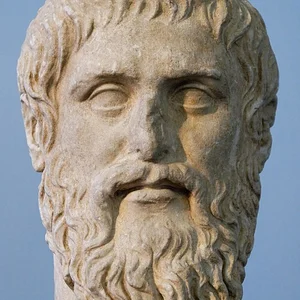
Plato
428 av. J.-C. — 348 av. J.-C.
Ancient Greek philosopher (428–348 BC), founder of the Academy in Athens. A student of Socrates, he developed the Theory of Forms, arguing that the visible world is merely a shadow of an intelligible reality. His influence on Western thought is foundational.
Pliny the Elder
20 — 79
Pliny the Elder was a Roman scholar and officer of the 1st century AD, author of the encyclopedic Natural History. A naturalist curious about everything, he died in 79 AD while attempting to observe the eruption of Mount Vesuvius that destroyed Pompeii.
Plotinus
205 — 270
Plotinus is a philosopher of late antiquity, born in Egypt and active in Rome, regarded as the founder of Neoplatonism. His teaching, transmitted and organized by his disciple Porphyry in the *Enneads*, sets out a metaphysics of the One, from which all reality proceeds.
Plutarch
40 — 120
Greek philosopher, biographer, and moralist living under the Roman Empire (c. 46–120 AD). Author of the celebrated Parallel Lives, in which he compares great Greek and Roman figures. His Moralia establish him as a major reference in ancient thought.
Proclus
412 — 485
Greek Neoplatonist philosopher of the 5th century, the last great master of the School of Athens. He was also an influential commentator on Greek mathematics, particularly on Euclid.
Psyche
Psyche is a mortal of extraordinary beauty whose legend tells of her love for Eros (Cupid). Her myth, transmitted by Apuleius, symbolizes the soul's journey toward divine perfection through trial and love.
Pythagoras
582 av. J.-C. — 490 av. J.-C.
Greek philosopher and mathematician (c. 580–495 BC) from the island of Samos. Founder of a philosophical community in southern Italy, he is famous for his work in geometry, particularly the theorem bearing his name that relates the sides of a right triangle.
Saint Ambrose of Milan
339 — 397
Bishop of Milan from 374 to 397, Ambrose is one of the four Fathers of the Latin Church. A spiritual and political figure of Late Antiquity, he imposed public penance on Emperor Theodosius I and baptized Augustine of Hippo in 387.
Seneca
4 av. J.-C. — 65
Roman Stoic philosopher (4 BC – 65 AD), Seneca left a lasting mark on ancient thought through his reflections on wisdom, virtue, and detachment from material wealth. Tutor to Emperor Nero, he was also a playwright and statesman, leaving a major body of written work including the celebrated Letters to Lucilius.
Socrates
469 av. J.-C. — 398 av. J.-C.
Athenian philosopher (469–399 BC) and founder of Western philosophy. He left no writings, yet profoundly influenced his contemporaries through his method of questioning known as maieutics. Condemned to death by the city of Athens, he stands as the embodiment of a philosopher's commitment to truth.
Titus Vinius
12 — 69
Roman consul in 69 AD, Titus Vinius was one of Emperor Galba's most influential advisors. A central figure of the 'Year of the Four Emperors', he was assassinated during Otho's coup in January 69.
Literature(34)
Aesop
619 av. J.-C. — 563 av. J.-C.
Aesop was an ancient Greek fabulist, author of fables featuring animals to convey moral lessons. His works, composed between the 7th and 6th centuries BC, have profoundly influenced Western literature and remain classics of children's literature.
Alaric I
370 — 410
King of the Visigoths from 395 to 410, Alaric I is famous for leading the sack of Rome in 410, a symbolic event marking the beginning of the end of the Western Roman Empire.
Apollonius of Rhodes
294 av. J.-C. — 214 av. J.-C.
Apollonius of Rhodes was a Greek poet and grammarian of the 3rd century BC, a major figure of Hellenistic literature. He directed the famous Library of Alexandria and composed the Argonautica, a great epic recounting the quest for the Golden Fleece by Jason and the Argonauts.
Augustine of Hippo
354 — 430
Christian theologian and philosopher of the 4th century, bishop of Hippo in North Africa. Author of the Confessions and The City of God, he is one of the most influential Latin Fathers of the Church in the history of Christianity.
Ban Zhao
45 — 116
Ban Zhao (45–116) was China's first great female scholar, a historian and philosopher under the Eastern Han dynasty. She completed the works of her brother Ban Gu, most notably the Book of Han. Her treatise Lessons for Women (Nüjie) profoundly shaped Confucian thought on the role of women.
Claudius Ptolemy
100 — 170
Greek astronomer, mathematician, and geographer of the 2nd century, he developed a geocentric model of the universe that would dominate scientific thought for over 1,400 years. His encyclopedic work synthesizes ancient knowledge in astronomy, geography, and optics.
Diogenes Laërtius
A Greek biographer and doxographer of the 3rd century AD, Diogenes Laërtius is the author of Lives and Opinions of Eminent Philosophers, the principal source of knowledge about ancient Greek philosophers. His work compiles the biographies and views of more than 80 thinkers, from Thales to Epicurus.
Domitian
51 — 96
Domitian (51–96) was the third and last emperor of the Flavian dynasty. His authoritarian reign was marked by persecutions of Christians and senators, but also by efficient provincial administration.
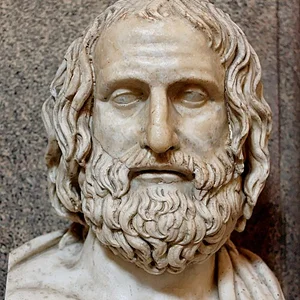
Euripides
480 av. J.-C. — 406 av. J.-C.
Euripides (480–406 BC) is one of the three great tragic playwrights of ancient Athens, alongside Aeschylus and Sophocles. Author of more than 90 plays, he stands out for his innovative approach to tragedy, portraying more human and psychologically complex characters, especially women.
Hadrian
76 — 138
Hadrian was Roman emperor from 117 to 138 AD, successor to Trajan. A reformer and builder, he consolidated the Empire's borders and traveled to nearly all its provinces. A passionate admirer of Greek culture, he oversaw the construction of the Pantheon in Rome and Hadrian's Wall in Britannia.
Hermione
Hermione Granger is a fictional character created by J.K. Rowling, the heroine of the "Harry Potter" series published from 1997 onward. Born to Muggle parents in 1979, she embodies the brilliant, studious, and loyal witch whose intelligence and courage play a decisive role in the fight against Voldemort.
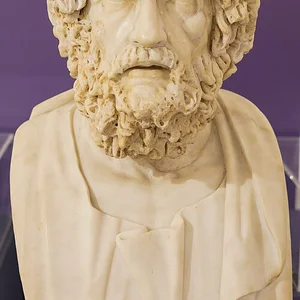
Homer
900 av. J.-C. — 800 av. J.-C.
Homer is an ancient Greek epic poet, traditionally dated to the 9th–8th century BC, recognized as the author of two major epics: the Iliad and the Odyssey. These two founding works of Western literature recount the Trojan War and the return of Odysseus, shaping ancient Greek culture and influencing world literature.
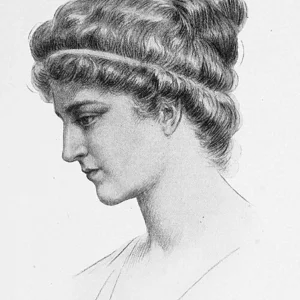
Hypatia
360 — 415
Mathematician, astronomer, and Neoplatonist philosopher from Alexandria (c. 360–415). Considered the first known female scientist in history, she led the philosophical school of Alexandria and was murdered by a fanatical Christian mob.
Jerome of Stridon
345 — 420
A Christian monk and scholar of the 4th century, Jerome of Stridon is celebrated for translating the Bible into Latin, producing the Vulgate. A Doctor of the Church, he was also a prolific letter writer and a passionate advocate of the ascetic life.
Jupiter
Jupiter is the supreme god of the Roman pantheon, master of the sky, lightning, and thunder. The Roman equivalent of Greek Zeus, he reigns over gods and men from Mount Olympus. He is the protector of Rome and the guarantor of cosmic order.
Mars
Roman god of war and protector of agriculture, Mars is one of the most venerated deities in the Roman pantheon. Legendary father of Romulus and Remus, he embodies Rome's military power and its destiny of conquest.
Monica
332 — 387
Mother of Saint Augustine, Monica is venerated as a saint in the Catholic Church for her unwavering faith. She prayed her entire life for her son's conversion. She died in Ostia in 387, shortly after witnessing his baptism by Saint Ambrose in Milan.
Nāgārjuna
150 — 250
Indian Buddhist philosopher and monk of the 2nd–3rd century CE, founder of the Madhyamaka school. He developed the concept of śūnyatā (emptiness) and had a major influence on Mahāyāna Buddhism.
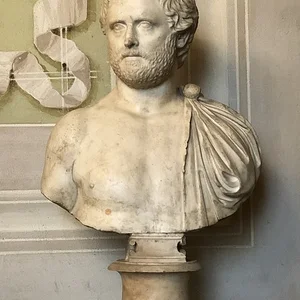
Ovid
42 av. J.-C. — 17
Ovid (43 BC – 17 AD) was a Roman poet of the Augustan age, author of the Metamorphoses, a landmark work of ancient literature. He transformed Greco-Roman mythology into narrative and musical poetry, profoundly influencing European culture.
Paul of Tarsus
5 — 66
A Christian apostle and missionary of the 1st century, Paul of Tarsus played a decisive role in spreading Christianity throughout the Roman Empire. His epistles form an essential part of the New Testament.

Pausanias
Pausanias was a Greek geographer and traveler of the 2nd century AD. His work, the “Description of Greece” (Periegesis), describes in detail the monuments, sanctuaries, cults, and works of art of the Greek cities. It is a primary archaeological and religious source.
Phaedrus
20 av. J.-C. — 50
Phaedrus was a Latin fabulist of the 1st century AD, a freedman of Emperor Augustus. He was the first author to render Aesopian fables in Latin verse, leaving behind a collection in five books that had a lasting influence on European literature.
Philostratus of Athens
300 — ?
Greek writer and sophist of the 2nd–3rd century AD, Philostratus of Athens is celebrated for his Life of Apollonius of Tyana and his Lives of the Sophists. He moved in the literary circle of Empress Julia Domna in Rome.
Pliny the Elder
20 — 79
Pliny the Elder was a Roman scholar and officer of the 1st century AD, author of the encyclopedic Natural History. A naturalist curious about everything, he died in 79 AD while attempting to observe the eruption of Mount Vesuvius that destroyed Pompeii.
Plutarch
40 — 120
Greek philosopher, biographer, and moralist living under the Roman Empire (c. 46–120 AD). Author of the celebrated Parallel Lives, in which he compares great Greek and Roman figures. His Moralia establish him as a major reference in ancient thought.
Ren An
124 — 202
Officer and court official of the Han dynasty under Emperor Wu (2nd–1st century BC). He is primarily known as the recipient of Sima Qian's famous letter, in which the historian justifies his acceptance of castration in order to complete the Records of the Grand Historian.
Romulus Augustulus
462 — ?
Last emperor of the Western Roman Empire, Romulus Augustulus reigned in 475–476 AD, placed on the throne by his father Orestes. Deposed at around age 15 by the Germanic chieftain Odoacer, his abdication marks the conventional end of the Western Roman Empire.
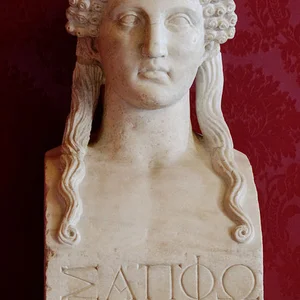
Sappho
650 av. J.-C. — 569 av. J.-C.
Greek lyric poet of the 7th century BCE, from the island of Lesbos. Recognized as one of the greatest poets of ancient Greece, she composed intimate lyric poems expressing personal emotions, particularly about love and friendship. Her work, largely lost, has profoundly influenced Western literature.
Shakuntala
Shakuntala is a heroine of Hindu mythology, the daughter of the ascetic Vishvamitra and the apsara Menaka. Raised in a hermitage, she marries King Dushyanta and becomes the mother of Bharata, the eponymous ancestor of the dynasty that gave India its name. Her story, told in the Mahabharata, was immortalized by the playwright Kalidasa.
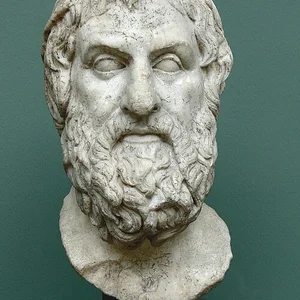
Sophocles
495 av. J.-C. — 405 av. J.-C.
Sophocles (495–405 BC) was a major Athenian playwright of ancient Greece. Author of tragedies such as Antigone and Oedipus Rex, he profoundly shaped the development of Western theatre by exploring moral dilemmas and human fate.
Suetonius
69 — 126
Suetonius was a Roman historian, grammarian, and rhetorician of the early 2nd century. As secretary to Emperor Hadrian, he is famous for his "Lives of the Twelve Caesars," a gallery of biographies of the first emperors rich in anecdotes and private details.
Tacitus
55 — 120
Tacitus is one of the greatest historians of ancient Rome. A senator and consul, he is the author of the Annals and the Histories, landmark works on the early Roman Empire. His incisive style and critical eye make him an irreplaceable witness to the imperial age.
Titus Vinius
12 — 69
Roman consul in 69 AD, Titus Vinius was one of Emperor Galba's most influential advisors. A central figure of the 'Year of the Four Emperors', he was assassinated during Otho's coup in January 69.
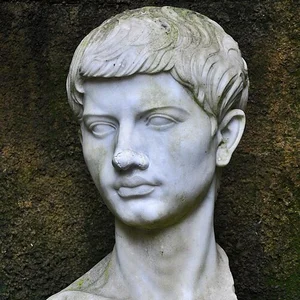
Virgil
69 av. J.-C. — 18 av. J.-C.
Virgil (70–19 BC) is the greatest poet of ancient Rome. Author of the Aeneid, the founding epic of Latin literature, he also composed the Eclogues and the Georgics. His work has profoundly influenced Western literature.
Sciences(20)
Alaric I
370 — 410
King of the Visigoths from 395 to 410, Alaric I is famous for leading the sack of Rome in 410, a symbolic event marking the beginning of the end of the Western Roman Empire.
Apollonius of Perga
261 av. J.-C. — 189 av. J.-C.
Apollonius of Perga was a Greek geometer and astronomer of the Hellenistic period. He is famous for his major treatise, the Conics, which studies the curves obtained by slicing a cone (ellipse, parabola, hyperbola). His work profoundly influenced mathematics and astronomy right up to the modern era.
Archimedes
286 av. J.-C. — 211 av. J.-C.
Greek mathematician and physicist from Sicily (c. 287–212 BC), Archimedes is one of the greatest scholars of Antiquity. He revolutionized mathematics and physics by developing innovative methods for calculating areas and volumes, and by formulating the principles of levers and buoyancy.
Aristotle
460 av. J.-C. — 401 av. J.-C.
Greek philosopher born in Stagira (384–322 BC), Aristotle founded his own school, the Lyceum, in Athens. He developed comprehensive systems of logic, metaphysics, ethics, and politics that profoundly influenced Western thought.
Aryabhata
476 — 550
Āryabhata was an Indian mathematician and astronomer born in 476, the first of the great scholars of India's classical age. Author of the Āryabhaṭīya, he set down major advances in arithmetic, algebra, and astronomy.
Cai Lun
48 — 121
An official at the imperial court during the Han dynasty, Cai Lun is credited with inventing paper in 105 AD. He refined a process using plant fibers, bark, and rags to produce a lightweight and inexpensive writing material.
Claudius Ptolemy
100 — 170
Greek astronomer, mathematician, and geographer of the 2nd century, he developed a geocentric model of the universe that would dominate scientific thought for over 1,400 years. His encyclopedic work synthesizes ancient knowledge in astronomy, geography, and optics.
Diogenes Laërtius
A Greek biographer and doxographer of the 3rd century AD, Diogenes Laërtius is the author of Lives and Opinions of Eminent Philosophers, the principal source of knowledge about ancient Greek philosophers. His work compiles the biographies and views of more than 80 thinkers, from Thales to Epicurus.
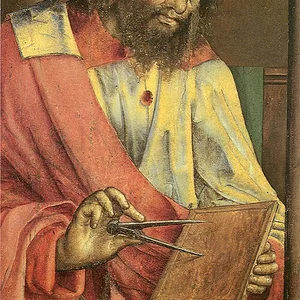
Euclid
333 av. J.-C. — 284 av. J.-C.
A Greek mathematician of Antiquity, Euclid lived in Alexandria in the 3rd century BC. He is the author of the Elements, the most influential mathematical work in history, which dominated the teaching of geometry for over 2,000 years.
Galen
129 — 300
A Greek physician of the 2nd century AD, Galen served as doctor to the Roman emperors and became the greatest medical theorist of antiquity. His work in anatomy and physiology, based on the dissection of animals, dominated Western medicine for over a thousand years.
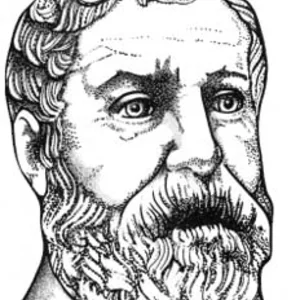
Hero of Alexandria
10 — 75
A Greek engineer and mathematician of the 1st century AD, Hero of Alexandria authored numerous mechanical inventions and foundational mathematical works. He designed the aeolipile, the first device to harness the power of steam, as well as automata and theatrical machines.

Hygiea
Hygiea is the Greek goddess of health, cleanliness, and hygiene. Daughter of Asclepius, god of medicine, she personified the prevention of disease. Her name gave rise to the word “hygiene” in all Western languages.
Hypatia
360 — 415
Mathematician, astronomer, and Neoplatonist philosopher from Alexandria (c. 360–415). Considered the first known female scientist in history, she led the philosophical school of Alexandria and was murdered by a fanatical Christian mob.
Hypatia of Alexandria
vers 355/370 — 415
Greek mathematician, astronomer, and philosopher of the 4th–5th centuries, she taught in Alexandria and advanced the sciences of antiquity. An iconic figure of female scholarship, she was murdered in 415 during religious unrest.
Jupiter
Jupiter is the supreme god of the Roman pantheon, master of the sky, lightning, and thunder. The Roman equivalent of Greek Zeus, he reigns over gods and men from Mount Olympus. He is the protector of Rome and the guarantor of cosmic order.
Philostratus of Athens
300 — ?
Greek writer and sophist of the 2nd–3rd century AD, Philostratus of Athens is celebrated for his Life of Apollonius of Tyana and his Lives of the Sophists. He moved in the literary circle of Empress Julia Domna in Rome.
Proclus
412 — 485
Greek Neoplatonist philosopher of the 5th century, the last great master of the School of Athens. He was also an influential commentator on Greek mathematics, particularly on Euclid.
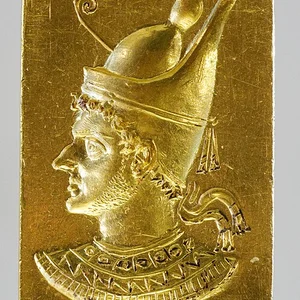
Ptolemy
250 — 350
A Greek astronomer and mathematician of the 2nd century CE, Ptolemy developed the geocentric model that dominated Western astronomy for over a thousand years. His major work, the Almagest, is a foundational treatise of ancient astronomy compiling observations and mathematical theories.
Pythagoras
582 av. J.-C. — 490 av. J.-C.
Greek philosopher and mathematician (c. 580–495 BC) from the island of Samos. Founder of a philosophical community in southern Italy, he is famous for his work in geometry, particularly the theorem bearing his name that relates the sides of a right triangle.
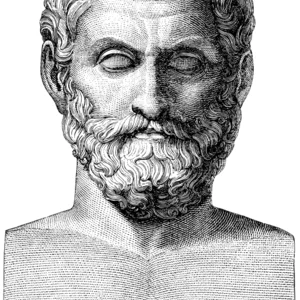
Thales
624 av. J.-C. — 545 av. J.-C.
A Greek philosopher and scholar of the 6th century BCE, Thales of Miletus is considered the founder of Greek geometry. He is famous for his geometric theorems — particularly the theorem bearing his name on the proportionality of line segments — and for his pioneering work in mathematics and astronomy.
Culture(11)
Griffin
The griffin is a legendary creature with the body of a lion and the head and wings of an eagle, a guardian of treasures and a symbol of power. Present as early as the ancient Near East and then in the Greco-Roman world, it travels through the imagination all the way to the medieval bestiary.
Mary (Mother of Jesus)
17 av. J.-C. — 48
Mother of Jesus of Nazareth, a central figure in Christianity. Venerated as Theotokos (Mother of God) in the Catholic and Orthodox traditions, she holds a major place in the history of monotheistic religions.
Mary of Nazareth
Mary of Nazareth is, according to the Gospels, the mother of Jesus of Nazareth. A central figure in Christianity and venerated in Islam under the name Maryam, she holds a major place in the religious and cultural history of the West.
Maui
Demigod and trickster hero of Polynesian mythologies, Māui is one of the most celebrated figures in Pacific oral tradition. He accomplishes extraordinary feats: fishing islands up from the ocean floor, slowing the sun, and stealing fire from the gods to give to humankind.
Pegasus
Winged horse of Greek mythology, born from the blood of Medusa when Perseus severed her head. Tamed by the hero Bellerophon with a golden bridle, he helped him defeat the Chimera. He ended his celestial journey among the stars, transformed into a constellation by Zeus.
Saint Denis (Martyr of Paris)
First bishop of Paris, sent on a mission to Gaul around 250 AD, Denis was beheaded on the hill of Montmartre during the Roman persecutions. According to legend, he picked up his severed head and walked to the site of his future basilica. He became the patron saint of France and a founding figure of Christianity in the Île-de-France region.
Saint James (Apostle)
Apostle of Jesus Christ and son of Zebedee, James the Greater was a fisherman in Galilee before following Christ. Beheaded around 44 AD under Herod Agrippa I, he was the first apostle to be martyred. His presumed tomb at Compostela (Spain) became one of the greatest pilgrimage sites of medieval Christendom.
Saint Lazarus
A close friend of Jesus of Nazareth, Lazarus of Bethany was raised from the dead by Christ according to the Gospel of John (chapter 11). His resurrection is one of the foundational miracles of the New Testament and a central symbol of Christian faith in eternal life.
Saint Marcel of Paris
Bishop of Paris in the 5th century (c. 360–436), Saint Marcel is renowned for the legend in which he slew a dragon on the banks of the Bièvre. His tomb became a major pilgrimage site for Parisians of the early Middle Ages.
Salomé
14 — 62
Salomé is the daughter of Herodias and stepdaughter of Herod Antipas, tetrarch of Galilee in the 1st century. According to the Gospels, her dance so pleased Herod that he granted her any request she wished: at her mother's urging, she asked for the head of John the Baptist.
Simurgh
The Simurgh is a fabulous and benevolent bird from Persian mythology, a gigantic creature often described as nesting in the Tree of Life. A symbol of wisdom and healing, it protects and guides the heroes of the great Iranian epic tales.
Society(9)
Deng Sui
Empress then regent of Eastern Han China (1st–2nd century), she governed the empire for fifteen years with wisdom and firmness. She promoted education, reduced court expenditures, and effectively managed famines, earthquakes, and border tensions.
Drusilla
16 — 38
Julia Drusilla (16-38 AD) was a Roman princess of the Julio-Claudian dynasty, daughter of Germanicus and Agrippina the Elder, and the favorite sister of the emperor Caligula. Upon her death, she became the first Roman woman to be deified by the Senate.
Hai Bà Trưng
Two Vietnamese sisters (died 43 CE) who led the first major uprising against Han rule in 40 CE. Trưng Trắc proclaimed herself queen after retaking 65 cities; defeated by General Mã Viện in 43 CE, they are revered as national heroines of Vietnam.
Ildico
500 — ?
Ildico was the last wife of Attila, King of the Huns, whom she married in 453. She was found in tears beside her husband's body the morning after their wedding night, his death remaining shrouded in mystery.
Messalina
20 — 48
Roman empress and third wife of Emperor Claudius (41–48 AD), Messalina wielded considerable political influence in Rome. She is remembered in antiquity for her palace intrigues and violent death, ordered by Claudius himself.
Peter
0 — 65
A fisherman from Galilee who became one of the twelve apostles of Jesus Christ, Peter is considered the first pope of the Catholic Church. He was martyred in Rome around 64–68 AD.
Poppaea Sabina
Poppaea Sabina (c. 30–65 AD) was the second wife of Emperor Nero. An ambitious woman of great beauty, she wielded considerable influence over Roman imperial politics.
Suetonius
69 — 126
Suetonius was a Roman historian, grammarian, and rhetorician of the early 2nd century. As secretary to Emperor Hadrian, he is famous for his "Lives of the Twelve Caesars," a gallery of biographies of the first emperors rich in anecdotes and private details.
Vipsania
Vipsania Agrippina was a Roman citizen of the Augustan age, daughter of the general Agrippa and of Caecilia Pomponia Attica. The first wife of Tiberius, whom she loved, she was forced to divorce by Augustus for dynastic reasons. Her life illustrates the burden of imperial marriage politics.
Technology(6)
Alaric I
370 — 410
King of the Visigoths from 395 to 410, Alaric I is famous for leading the sack of Rome in 410, a symbolic event marking the beginning of the end of the Western Roman Empire.
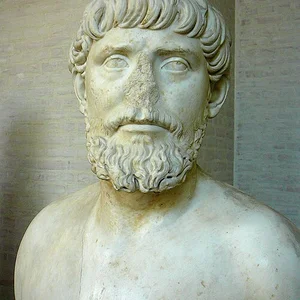
Apollodorus of Damascus
50 — 120
A Greek architect and engineer of Syrian origin, active under the emperor Trajan in the early 2nd century. The designer of Trajan's Forum and Trajan's Column in Rome, he was one of the greatest builders of Roman antiquity.
Cai Lun
48 — 121
An official at the imperial court during the Han dynasty, Cai Lun is credited with inventing paper in 105 AD. He refined a process using plant fibers, bark, and rags to produce a lightweight and inexpensive writing material.
Hero of Alexandria
10 — 75
A Greek engineer and mathematician of the 1st century AD, Hero of Alexandria authored numerous mechanical inventions and foundational mathematical works. He designed the aeolipile, the first device to harness the power of steam, as well as automata and theatrical machines.
Hypatia
360 — 415
Mathematician, astronomer, and Neoplatonist philosopher from Alexandria (c. 360–415). Considered the first known female scientist in history, she led the philosophical school of Alexandria and was murdered by a fanatical Christian mob.
Talos
Talos is a bronze giant from Greek mythology, forged by Hephaestus to guard the island of Crete. He circled it three times a day and drove off intruders by hurling rocks at them. His life hung on a single vein of ichor sealed by a nail in his ankle.
Visual Arts(6)
Apollodorus of Damascus
50 — 120
A Greek architect and engineer of Syrian origin, active under the emperor Trajan in the early 2nd century. The designer of Trajan's Forum and Trajan's Column in Rome, he was one of the greatest builders of Roman antiquity.
Cupid
God of love in Roman mythology, Cupid is the son of Venus and Mars (or Mercury, depending on the version). Armed with a bow and golden arrows, he strikes humans with romantic passion. His Greek equivalent is Eros.
Lamassu
The lamassu is a protective deity of ancient Mesopotamia, depicted as a winged spirit with the body of a bull (or lion), the wings of an eagle and a bearded human head. Standing guard at the gates of Assyrian palaces and cities, these monumental figures warded off the forces of evil.
Minerva
Roman goddess of wisdom, the arts, and crafts, Minerva is the Roman equivalent of Athena in Greek mythology. Born fully armed from Jupiter's head, she protects Rome, artisans, and poets, and together with Jupiter and Juno forms the Capitoline Triad.
Saint Sebastian
Officer of the Praetorian Guard of Emperor Diocletian, secretly converted to Christianity. Condemned to death by arrows around 288, he survived before being beaten to death. He became one of the most depicted martyrs in Western art.
Venus
Venus is the Roman goddess of love, beauty, and fertility, equivalent to the Greek Aphrodite. Daughter of Jupiter according to some traditions, she plays a central role in Roman mythology and has inspired countless works of art throughout the centuries.
Legendary Creatures(3)

Cthulhu
Cthulhu is a fictional cosmic entity created by American writer H.P. Lovecraft, first appearing in 1928 in the short story "The Call of Cthulhu." A monstrous, tentacled deity slumbering in the sunken city of R'lyeh, it embodies cosmic horror and humanity's insignificance before the unknown.

Mothman
The Mothman is a legendary North American creature described as a winged being with large red eyes. Its sightings were reported in Point Pleasant, West Virginia, between 1966 and 1967. Having become a major figure in cryptozoology, it inspires contemporary stories and folklore.
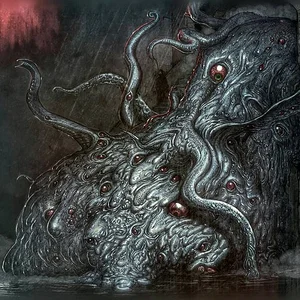
Shoggoth
The shoggoth is a fictional creature invented by American writer H. P. Lovecraft in his novella "At the Mountains of Madness" (1931). A formless, gelatinous protoplasmic mass, it belongs to the Cthulhu Mythos and has no real historical or folkloric existence.
Exploration(2)
Faxian
337 — 422
A Chinese Buddhist monk of the 4th–5th century, Faxian undertook a long pilgrimage on foot to India to collect sacred texts. His travel account, titled *A Record of Buddhist Kingdoms*, stands as one of the earliest detailed descriptions of India and Central Asia written by a Chinese traveler.
Pausanias
Pausanias was a Greek geographer and traveler of the 2nd century AD. His work, the “Description of Greece” (Periegesis), describes in detail the monuments, sanctuaries, cults, and works of art of the Greek cities. It is a primary archaeological and religious source.