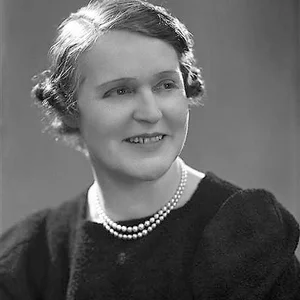

Germaine Tailleferre (1892-1983) was the only woman in the famous French musical collective known as 'Les Six'. A prolific composer, she created works for piano, orchestra, and opera, maintaining an elegant neoclassical style throughout a career spanning nearly seven decades.
Germaine Tailleferre(1892 — 1983)
Germaine Tailleferre
France
7 min read
Frequently asked questions
Key Facts
- Entered the Paris Conservatoire at age 12 and won several first prizes
- In 1920, she was identified as a member of the 'Groupe des Six' alongside Honegger, Milhaud, Poulenc, Auric, and Durey
- Composed the Concertino for Harp and Orchestra (1927), one of her most frequently performed works
- Lived in the United States during World War II before returning to France
- Continued composing into old age, leaving more than 300 works at her death in 1983
Works & Achievements
Ballet composed by Tailleferre, representative of her light and melodic style. This work illustrates her integration into the French musical movement of the early 20th century.
One of her most important compositions, demonstrating her mastery of concerto form and her modernist approach while maintaining an accessible harmonic language.
A chamber music composition reflecting her tireless work for this instrumental combination, a genre she practiced throughout her career.
Participation in the Les Six movement, a group of young French composers alongside Milhaud, Honegger, and Poulenc, bringing a unique feminine perspective to this collective.
Ballet composed with a scenario based on Andersen, showcasing her versatility in writing for dance and musical theater.
A major vocal work showing the evolution of her style toward more lyrical and expressive compositions, with rich orchestral accompaniment.
A prolific output of film scores and operettas, fields in which she achieved significant commercial success and wide recognition from French audiences.
Anecdotes
Germaine Tailleferre was the only woman in the Group of Six, a collective of young French composers in the 1920s who revolutionized modern music alongside Darius Milhaud, Arthur Honegger, and Georges Auric. Despite her immense talent, she often had to fight for recognition in a musical world dominated by men.
In 1926, she composed the ballet 'The Bird Seller' for Diaghilev's Ballets Russes, one of the most prestigious dance companies of the era. This high-profile commission demonstrated that she was respected as a professional composer on equal footing with her male peers.
During the Second World War, Germaine Tailleferre was forced to leave occupied France and went into exile in California from 1942 to 1946. She composed for films in Hollywood, contributing to the music of several important productions while waiting for her country's liberation.
Despite an impressive career with over 200 compositions to her name, Germaine Tailleferre remained far less celebrated than her male colleagues in the Group of Six for many years. It was not until the 1970s that musicologists and the public genuinely rediscovered the significance of her long-overlooked body of work.
She wrote works across every musical genre: symphonies, concertos, ballets, operas, chamber music, and even compositions for children. This remarkable versatility demonstrates the breadth of her talent and her adaptability as a composer.
Primary Sources
I began composing at a very young age, encouraged by my father, who was a knowledgeable music enthusiast. At the Paris Conservatoire, I studied harmony and composition — fields where women were rare at the time.
Germaine Tailleferre is the only woman in Les Six. She composes with remarkable ease and a natural grace that sets her work apart from that of her fellow members.
Your talent for composition is undeniable, dear Germaine. Keep developing your personal voice, far from the fleeting fashions that stir the Parisian musical world.
Germaine Tailleferre maintained her musical course with consistency, refusing easy compromises despite the pressures of the music market.
Key Places
Birthplace of Germaine Tailleferre in 1892. This town in the Yvelines department is where she grew up before pursuing her musical education in Paris.
The institution where Germaine Tailleferre studied composition and piano. She received her foundational musical training there under Gabriel Fauré and other leading masters.
The circle of Parisian composers in the 1920s of which Germaine Tailleferre was the only woman. She took part in the group's concerts and events throughout Paris.
A village in the Yvelines where Germaine Tailleferre lived for much of her life. She composed a significant portion of her musical output there.
Germaine Tailleferre taught and composed in the United States, particularly in California, where she lived in exile for a period of her career before returning to France.