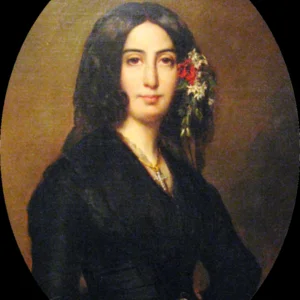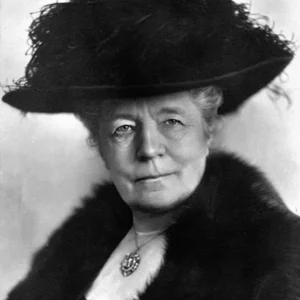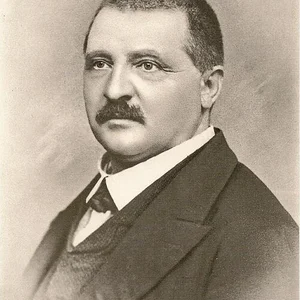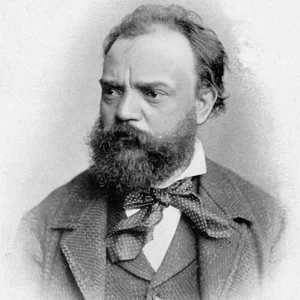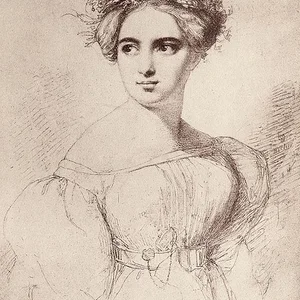
Portrait de Fanny Mendelssohn

Fanny Mendelssohn

Fanny Mendelssohn

1805 — 1847

Hambourg

MusicCompositeur/trice19th Century

Émotions disponibles (6)

N

Neutre

par défaut

I

Inspirée

P

Pensive

S

Surprise

T

Triste

F

Fière

Key Facts

    Works & Achievements

    Das Jahr (The Year) — piano cycle (1841)

    A masterpiece by Fanny Mendelssohn, this cycle of twelve piano pieces evokes each month of the year, inspired by her stay in Italy. Long unpublished, it was rediscovered and recorded from the 1980s onwards, revealing the full richness of her Romantic musical language.

    Trio in D minor Op. 11 for piano, violin and cello (1846)

    This ambitious work, published shortly before her death, is considered her musical testament. It reveals a mastery of sonata form and an expressive depth comparable to the finest pages of Romantic chamber music.

    Easter Cantata (Hiob) (1831)

    A large choral cantata composed by Fanny for the Sonntagsmusiken. She herself conducted the choir and orchestra, asserting her talent as a composer and ensemble conductor in a repertoire traditionally reserved for men.

    Collection of Lieder Op. 1 (1846)

    The first collection published under the name Fanny Hensel, it contains songs for voice and piano of great poetic sensitivity. Its publication represents a major symbolic act of emancipation for a woman composer of the 19th century.

    String Quartet in E-flat major (1834)

    A chamber music work of remarkable formal ambition for a composer self-taught in the genre. Remaining in manuscript until its posthumous publication, it bears witness to the diversity and depth of Fanny's output.

    Gartenlieder Op. 3 (Garden Songs) (1847)

    A collection of lieder for solo voice or vocal ensemble, published just before her death. These intimate melodies reflect the domestic and poetic world in which Fanny lived and created.

    Anecdotes

    Fanny Mendelssohn was considered by her own father to be the more musically gifted of the two Mendelssohn children, yet he forbade her from pursuing a career. In a letter from 1820, Abraham Mendelssohn wrote to her that music must remain an 'ornament' for her, while for her brother Felix it would be a 'profession'. This injustice perfectly illustrates the obstacles that talented women had to overcome in the 19th century.

    Some of the melodies published under Felix Mendelssohn's name were in fact composed by Fanny. Queen Victoria, a great admirer of these lieder, once asked Felix which was his favorite piece among those she had performed — he had to admit that the piece the Queen had chosen had been written by his sister. Fanny thus remained in the shadows, even when her genius was being celebrated.

    For many years, Fanny organized the famous 'Sonntagsmusiken' (Sunday Musics) at the family villa in Berlin. These private concerts brought together as many as two hundred guests, among them composers, poets, and intellectuals from across Europe. Fanny performed, conducted, and presented her own compositions there, creating a true musical salon that influenced Berlin's cultural life.

    Fanny did not publish her compositions under her own name until the age of forty, in 1846, despite the persistent opposition of her brother Felix. This collection of lieder was received with enthusiasm by critics. She died less than a year after this first publication, struck down by a stroke during a rehearsal. Felix, shattered by grief, followed her in death six months later.

    Fanny Mendelssohn composed more than 460 works over the course of her life, including a piano trio, a string quartet, cantatas, and more than 250 lieder. For a long time, these scores lay buried in the family archives. It was not until the 1980s that musicologists began to rediscover and record her work, finally restoring to her the place she deserves in the history of Romantic music.

    Primary Sources

    Letters from Fanny Mendelssohn to her brother Felix (1846)
    I must tell you that I am happy to have finally dared to publish. The critics are benevolent, and I feel that I have done something right for myself, whatever may come.
    Letter from Abraham Mendelssohn to his daughter Fanny (1820)
    Music will perhaps not become your profession, as it has for your brother Felix, but it can and must adorn your life, and remain for you a precious ornament.
    Private diary of Fanny Mendelssohn-Hensel (1831)
    Today I conducted my Easter Cantata before a large audience. I have never felt such satisfaction. I am a composer, and no one can take that away from me.
    Letter from Felix Mendelssohn to Marc-André Souchay (1842)
    My sister is a far better musician than I am, and I still learn from her every time we work together.

    Key Places

    Villa Mendelssohn, Leipziger Straße, Berlin

    Family home where Fanny spent most of her life and organized the Sonntagsmusiken. This private musical salon was one of the most influential cultural centers in Berlin during the 1830s–1840s.

    Hamburg, Germany

    Fanny Mendelssohn's birthplace, born on November 14, 1805 into a cultured Jewish family. Hamburg was at the time a major commercial and cultural hub of the German-speaking world.

    Rome, Italy

    Fanny stayed here with her painter husband from 1839 to 1840. This trip to Italy was a period of great creativity: she composed the cycle Das Jahr there and met numerous European artists.

    Leipzig, Germany

    Felix Mendelssohn's city, where he founded the Conservatory in 1843. Fanny visited on several occasions to see her brother and attend concerts at the Gewandhaus.

    Paris, France

    Fanny received piano lessons here from pianist Marie Bigot in 1816. Paris was at the time the musical capital of Europe, frequented by Chopin, Liszt, and the great Romantic virtuosos.
    Typical Objects

    Érard Pianoforte

    Fanny played on a pianoforte with English action mechanism, the instrument of choice among Romantic pianists. Her nimble fingers and remarkable technique earned her comparisons to the greatest performers of her era.

    Manuscript scores

    Fanny wrote out her scores by hand with great care, often illustrated with small drawings by her husband Wilhelm Hensel. These manuscripts are today preserved at the Berlin State Library.

    Conductor's lectern

    During the Sonntagsmusiken, Fanny conducted the orchestra and choir assembled in the grand hall of the Mendelssohn villa from a central lectern. Leading an ensemble was an exceedingly rare activity for a woman at that time.

    Rome travel notebook

    During her stay in Italy between 1839 and 1840, Fanny kept a journal and composed the cycle Das Jahr, drawing inspiration from the landscapes and seasons. This notebook blended musical notes with personal impressions.

    Quill and ink for correspondence

    Fanny maintained an extensive correspondence with her brother Felix, exchanging thoughts on their compositions, their reading, and European musical life. These letters constitute a precious historical source on the cultural life of the 19th century.

    Concert dress

    For the Sunday concerts, Fanny wore gowns of silk or velvet, in keeping with the bourgeois Berlin fashion of the 1830s–1840s, featuring a fitted bodice, puffed sleeves, and a full skirt with early crinoline.

    School Curriculum

    LycéeÉducation musicale

    Vocabulary & Tags

    Key Vocabulary

    Tags

    Fanny MendelssohnmusiquecompositeurCompositeurromantismeRomantismefeminismeFéminisme, droits des femmes

    Daily Life

    Morning

    Fanny rose early and devoted the first hours of the morning to composition, before the household awoke. She worked at her desk or at the pianoforte in the drawing room, taking advantage of the quiet to jot down her musical ideas in her manuscript score notebooks.

    Afternoon

    The afternoon was devoted to teaching piano to her son Sebastian, to correspondence with Felix and other musicians across Europe, and to preparing the Sonntagsmusiken. She also received artists, writers, and musicians passing through Berlin.

    Evening

    Evenings, especially Sundays, were dominated by concerts in the large family drawing room. Fanny would play, sing, and conduct the ensembles. On other evenings, the family gathered to read poetry, discuss philosophy, or play chamber music.

    Food

    Like any bourgeois Berlin family of the 19th century, the Mendelssohn-Hensels shared hearty meals consisting of cold cuts, breads, soups, roast pork or veal, and pastries. Coffee and tea accompanied the long evenings of work and conversation.

    Clothing

    Fanny wore dresses in the Biedermeier fashion: fitted bodices with lace collars, puffed sleeves, long skirts in silk or printed muslin. For the Sunday concerts, she opted for more elegant outfits in velvet or silk, with discreet jewelry inherited from the family.

    Housing

    The family lived in a large villa with a garden on Leipziger Straße in Berlin, a property belonging to the Mendelssohns. The house included a vast music salon that could accommodate two hundred people, private apartments, a studio for Wilhelm Hensel, and a garden where Fanny loved to stroll for inspiration.

    Historical Timeline

    1805Naissance de Fanny Mendelssohn à Hambourg dans une famille juive cultivée et aisée.
    1811La famille Mendelssohn se convertit au luthéranisme et s'installe à Berlin.
    1816Fanny commence des leçons de piano avec Ludwig Berger et Marie Bigot à Paris.
    1820Lettre d'Abraham Mendelssohn à Fanny lui signifiant que la musique ne peut être qu'un ornement pour une femme.
    1822Carl Friedrich Zelter, professeur des enfants Mendelssohn, signale le talent exceptionnel de Fanny à Goethe.
    1829Fanny épouse le peintre Wilhelm Hensel ; elle prend le nom de Fanny Hensel. Felix dirige la redécouverte de la Passion selon saint Matthieu de Bach.
    1830Naissance du fils unique de Fanny, Sebastian Ludwig Hensel.
    1831Fanny compose sa grande Cantate de Pâques et anime régulièrement les Sonntagsmusiken à Berlin.
    1839Séjour à Rome avec son mari ; Fanny compose le cycle Das Jahr (L'Année), chef-d'œuvre pour piano.
    1843Felix Mendelssohn fonde le Conservatoire de Leipzig, symbole de la reconnaissance institutionnelle de la musique classique en Allemagne.
    1846Fanny publie enfin ses premières œuvres sous son propre nom, malgré l'opposition initiale de Felix : le recueil Op. 1 de lieder.
    1847Fanny Mendelssohn meurt à Berlin d'une attaque cérébrale le 14 mai, lors d'une répétition. Felix décède le 4 novembre de la même année.
    1850Publication posthume de plusieurs œuvres de Fanny par son mari Wilhelm Hensel.
    1987Redécouverte et enregistrement du cycle Das Jahr, relançant l'intérêt musicologique pour l'œuvre de Fanny Mendelssohn.

    Period Vocabulary

    Lied (pl. Lieder)A melody for voice and piano set to a poetic text, a genre typical of German Romanticism. The lieder of Schubert, Schumann, and Fanny Mendelssohn are among the most celebrated in the repertoire.
    SonntagsmusikA musical concert held on Sundays in a private bourgeois salon. The Mendelssohns' Sonntagsmusiken in Berlin were renowned throughout Europe for their quality and cultivated audience.
    SalonA social and cultural gathering held in a private bourgeois or aristocratic setting in the 19th century, where literature, politics, music, and art were discussed.
    BiedermeierThe dominant cultural and artistic style in Central Europe from 1815 to 1848, celebrating domestic life, comfortable bourgeois interiors, and private arts such as chamber music and intimate painting.
    PianoforteA struck-string instrument and forerunner of the modern piano, lighter in build and brighter in tone. In the 19th century, it was the centerpiece of bourgeois domestic musical life.
    CantataA musical composition for voices and instruments, often set to a religious or secular text. Fanny composed several cantatas that she herself conducted at her Berlin concerts.
    Chamber musicMusic composed for a small instrumental ensemble (2 to 9 musicians), intended to be performed in intimate settings such as a private salon rather than a large concert hall.
    OrnamentationIn Romantic music, ornamentation refers to notes added by the performer (trills, mordents, turns) to embellish the melody. Fanny was renowned for her refined ornamentation at the piano.
    Opus (Op.)A Latin term meaning 'work', used to number a composer's compositions in order of publication. Fanny only published works under her own name from Op. 1 onwards in 1846.
    RomanticismA 19th-century artistic, literary, and musical movement that valued the expression of emotions, imagination, and individual sensibility, as a reaction against Enlightenment rationalism. Fanny Mendelssohn is one of its representative figures.

    Gallery

    
Portrait of Fanny Hensel

    Portrait of Fanny Hensel

    Живописное обозрение 1890, № 01-26 (1 янв. - 24 июня); № 27-52 (1 июля - 23 дек.) Page 0199

    Живописное обозрение 1890, № 01-26 (1 янв. - 24 июня); № 27-52 (1 июля - 23 дек.) Page 0199

    
German:  Mädchenbildnis (Fanny Mendelssohn?)Portrait of a Girl (Fanny Mendelssohn?)title QS:P1476,de:"Mädchenbildnis (Fanny Mendelssohn?)"label QS:Lde,"Mädchenbildnis (Fanny Mendelssohn?)"label QS:Le

    German: Mädchenbildnis (Fanny Mendelssohn?)Portrait of a Girl (Fanny Mendelssohn?)title QS:P1476,de:"Mädchenbildnis (Fanny Mendelssohn?)"label QS:Lde,"Mädchenbildnis (Fanny Mendelssohn?)"label QS:Le

    Fanny Mendelssohn-Mendelssohnhaus-Leipzig

    Fanny Mendelssohn-Mendelssohnhaus-Leipzig

    Fannymendelssohn-improved

    Fannymendelssohn-improved

    Fanny.Hensel.Bueste.von.Lore.Plietzsch.2015

    Fanny.Hensel.Bueste.von.Lore.Plietzsch.2015

    Fanny Hensel Klaviertrio op. 11 Anfang Lied

    Fanny Hensel Klaviertrio op. 11 Anfang Lied

    
The Music Room of Fanny Hensel (nee Mendelssohn)title QS:P1476,en:"The Music Room of Fanny Hensel (nee Mendelssohn)"label QS:Len,"The Music Room of Fanny Hensel (nee Mendelssohn)"

    The Music Room of Fanny Hensel (nee Mendelssohn)title QS:P1476,en:"The Music Room of Fanny Hensel (nee Mendelssohn)"label QS:Len,"The Music Room of Fanny Hensel (nee Mendelssohn)"

    PPN663944058 Fanny Hensel, geb. Mendelsohn-Bartholdy (1847)

    PPN663944058 Fanny Hensel, geb. Mendelsohn-Bartholdy (1847)

    
Woman's Exhibition, 1900, Earl's Court, London, S.W. : official fine art, historical and general catalogue

    Woman's Exhibition, 1900, Earl's Court, London, S.W. : official fine art, historical and general catalogue

    Visual Style

    Style Biedermeier berlinois : intérieur bourgeois chaleureux, lumière tamisée aux bougies, palette veloutée de bleus prussiens et de verts profonds, atmosphère intime et cultivée du Romantisme allemand.

    #F5EDD6
    #1E3A5F
    #2D5A3D
    #C8922A
    #7A3B2E
    AI Prompt
    Biedermeier style Berlin interior, early 19th century Romantic era. A cultivated bourgeois salon with tall windows and warm candlelight, mahogany furniture and velvet drapes in deep green and burgundy. A woman in a silk empire-waist dress with puffed sleeves sits at a grand Érard pianoforte. Watercolor and pen sketches are pinned to the walls. Soft chiaroscuro lighting, inspired by German Romantic painting. Color palette: warm ivory, deep Prussian blue, rich forest green, golden amber, earthy sienna. Painterly texture, intimate and refined atmosphere.

    Sound Ambience

    L'ambiance sonore des Sonntagsmusiken berlinoises : pianoforte romantique, lieder pour voix et piano, murmures d'un salon cultivé du XIXe siècle.

    AI Prompt
    A Berlin bourgeois drawing room in the 1830s: the warm sound of a Érard pianoforte playing romantic lieder and piano miniatures, the rustle of silk dresses and the murmur of a distinguished audience of artists and intellectuals. Candlelight flickers. A soprano voice rises delicately above the piano. Through the tall windows, the faint sounds of horse-drawn carriages on cobblestones. Between pieces, the clink of teacups and the soft buzz of literary conversation in German and French. The atmosphere is intimate yet vibrant with creative energy.

    Portrait Source

    Wikimedia Commons — domaine public — her later husband, Wilhelm Hensel (1794-1861) — 1829